
Inspection and Test Plan for Method Statement – Standing Seam Metal Roof Cladding System Installation
AI-assisted inspection and test plan connected to a method statement, with PDF and Excel export.
More than a static template
Unlike a downloadable Word or PDF template, this ITP is an AI-assisted editable starting point directly connected to its method statement. Every inspection activity, hold point, and acceptance criterion is structured and ready to adapt to your project.
- AI-assisted customization — Tailor inspection activities and acceptance criteria to your specific project scope.
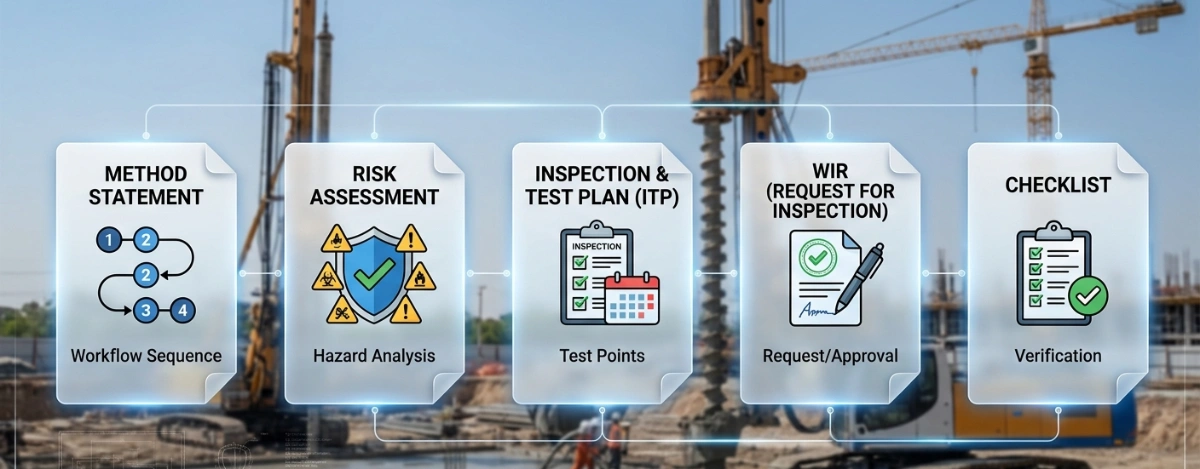
- Linked method statement — This ITP is connected to the corresponding method statement describing the work sequence.
- Multiple export formats — Download as a formatted PDF or editable Excel spreadsheet.
- Editable starting point, not a final document — Review and verify all content against your project specifications and standards before use.
What you can customize
When you save this ITP to your account, every inspection row becomes editable. You can add, remove, or modify:
- Inspection activity — Description of what is being inspected.
- Inspection type — Hold point (H), Witness point (W), Review (R), or Monitor (M).
- Responsibility — Contractor, subcontractor, engineer, or client.
- Frequency — How often the inspection occurs.
- Acceptance criteria — Referenced standard or specification requirement.
- Records — Forms, test reports, or checklists required as evidence.
Why this ITP is used
To verify that critical stages of the standing seam roofing works meet specifications, standards, and manufacturer requirements.
Who uses this inspection and test plan
Contractor QA/QC, Roofing Supervisor, Consultant/Engineer, and Manufacturer’s Technical Representative.
When this ITP is prepared and submitted
From material receipt through each installation stage, with specific hold and witness points at first-article and critical details.
Who receives or approves this ITP
Consultant/Engineer for review and approval before works.
Inspection scope
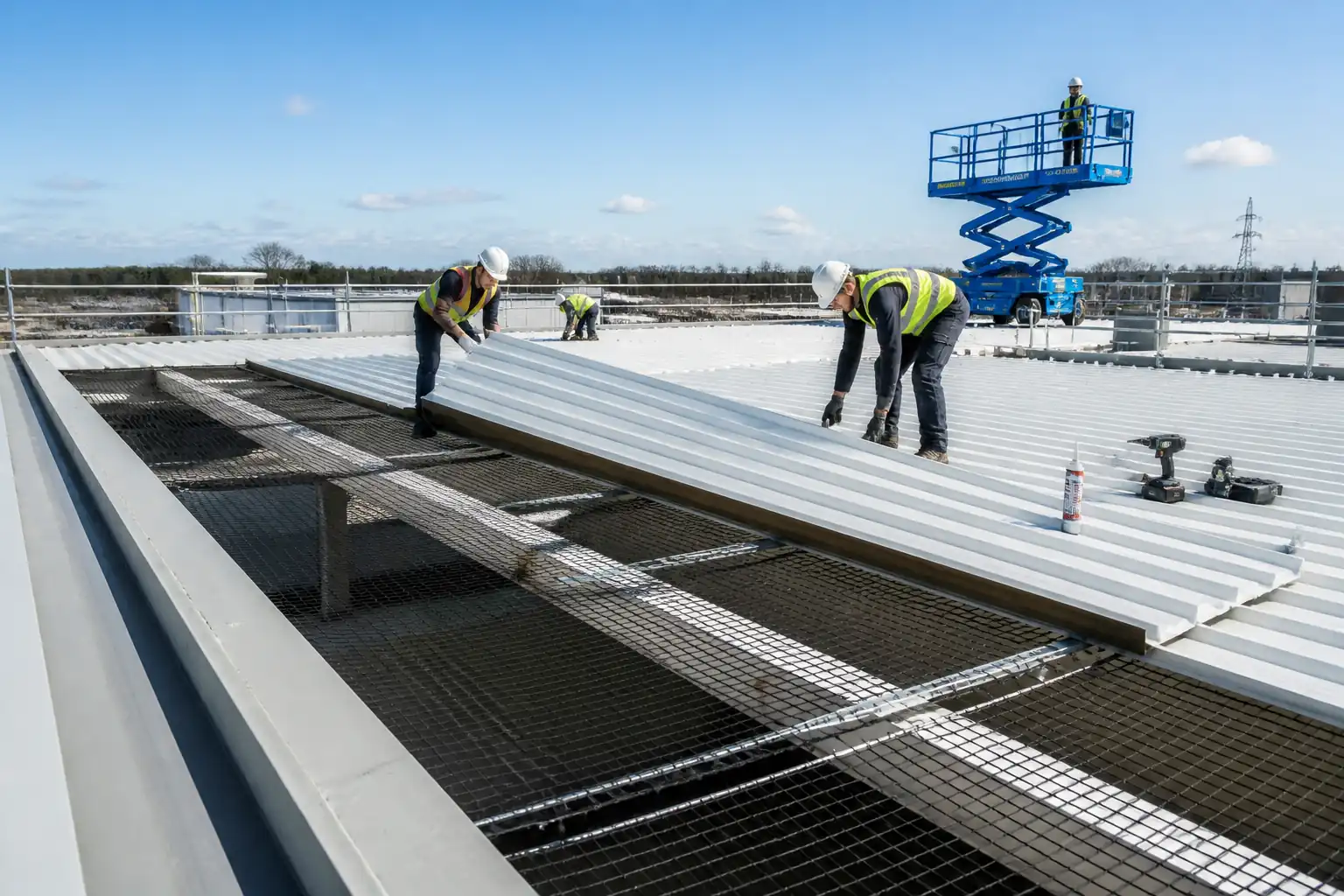
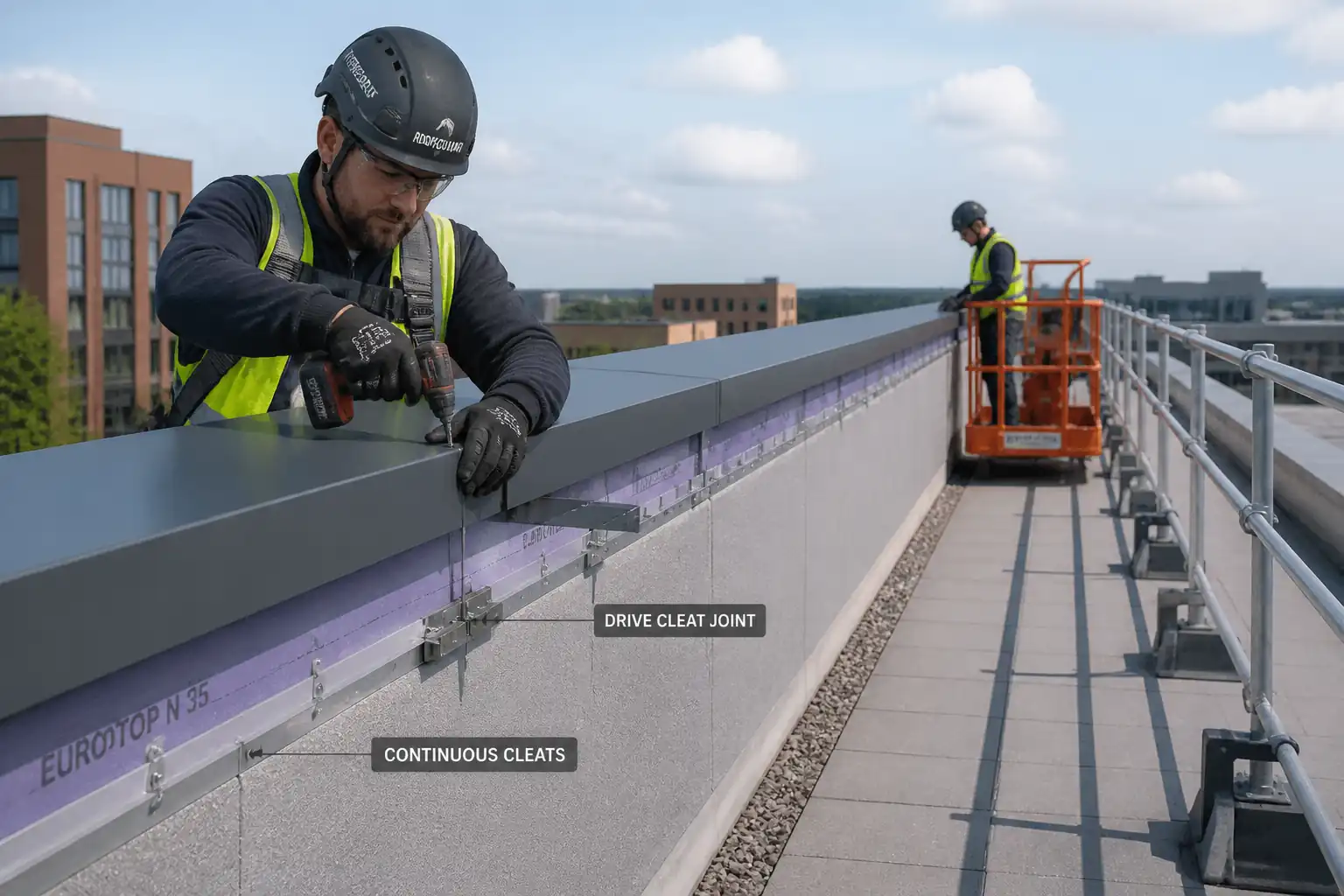
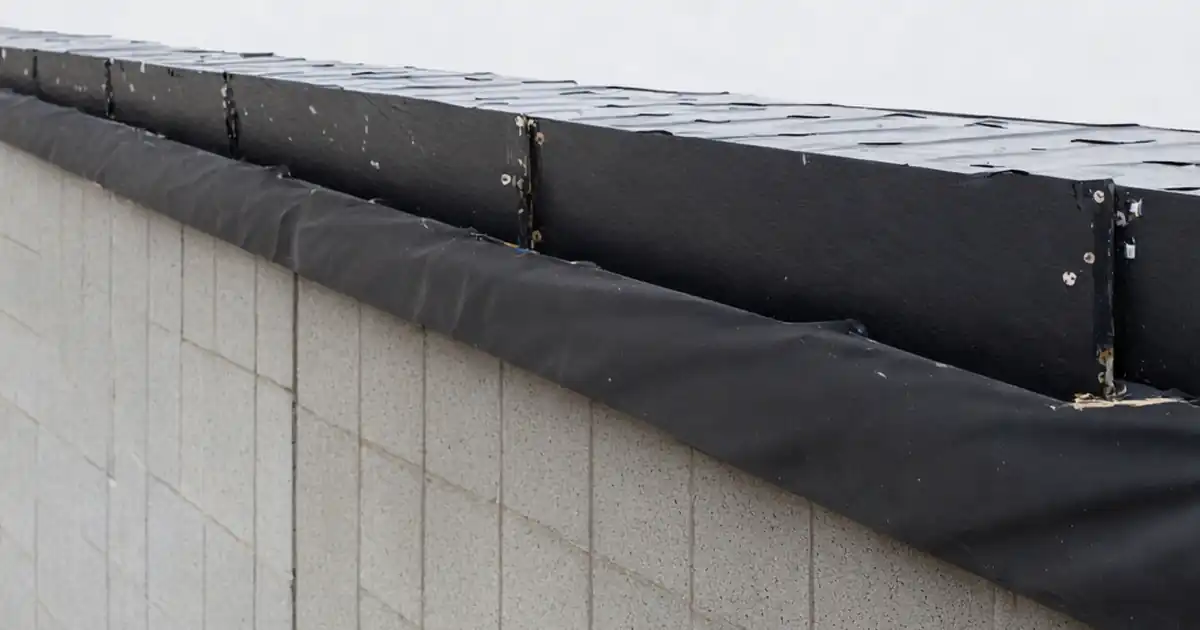
Materials verification, substrate acceptance, VCL continuity and adhesion, spacer/clip installation and pull-out, insulation thickness and joints, panel geometry, first panel alignment, mechanical seaming, and flashings.
Typical hold, witness, and review points
Substrate acceptance (HOLD), clip/halter installation with pull-out (HOLD), first 10 m seaming (HOLD), first panel alignment (HOLD), VCL and flashings (WITNESS).
Typical inspection records
Inspection requests, checklists, torque logs, pull-out test reports, seam QC logs, photos, batch records, as-builts, warranties.
Important approval note
This ITP is an AI-assisted editable starting point, not a pre-approved document. Before use on any project, all inspection activities, hold points, and acceptance criteria must be reviewed and approved by the relevant parties (superintendent, principal contractor, or client representative) in accordance with your contract and project quality plan.
Always verify acceptance criteria against your applicable drawings, specifications, and regulatory requirements. Hold points must be confirmed with the relevant authority before work proceeds past that point.
Inspection and test plan
| Activity | Inspection / Test | Acceptance Criteria | Responsibility | Record |
|---|---|---|---|---|
| Materials receipt and storage | Verify approvals, batch numbers, storage conditions, certificates | Conform to approved submittals; no damage; certificates available | Contractor QA/QC; Consultant witness | IR, MTCs, delivery notes |
| Purlin alignment and substrate acceptance | Survey line/level/spacing; torque spot checks | Line/level within specified tolerances; substrate dry/clean; torques verified | Contractor Engineer; Consultant hold | IR, survey sheet, photos |
| VCL installation | Lap width, tape adhesion peel checks, continuity at penetrations | Laps ≥150 mm; continuous seal; adhesion ≥10 N/25 mm [Verify] | Contractor QA/QC; Consultant witness | IR, checklist, photos |
| Spacer brackets/rails installation | Plane/level survey; torque verification | Plane within ±3 mm over 10 m; torque within OEM range | Contractor QA/QC; Consultant witness | IR, torque log, survey report |
| Clip/halter installation and pull-out tests | Spacing vs clip schedule; fastener embedment; pull-out tests | Complies with schedule; embedment adequate; pull-out ≥ required capacity [Verify] | Contractor QA/QC; Consultant hold | IR, pull-out test report, photos |
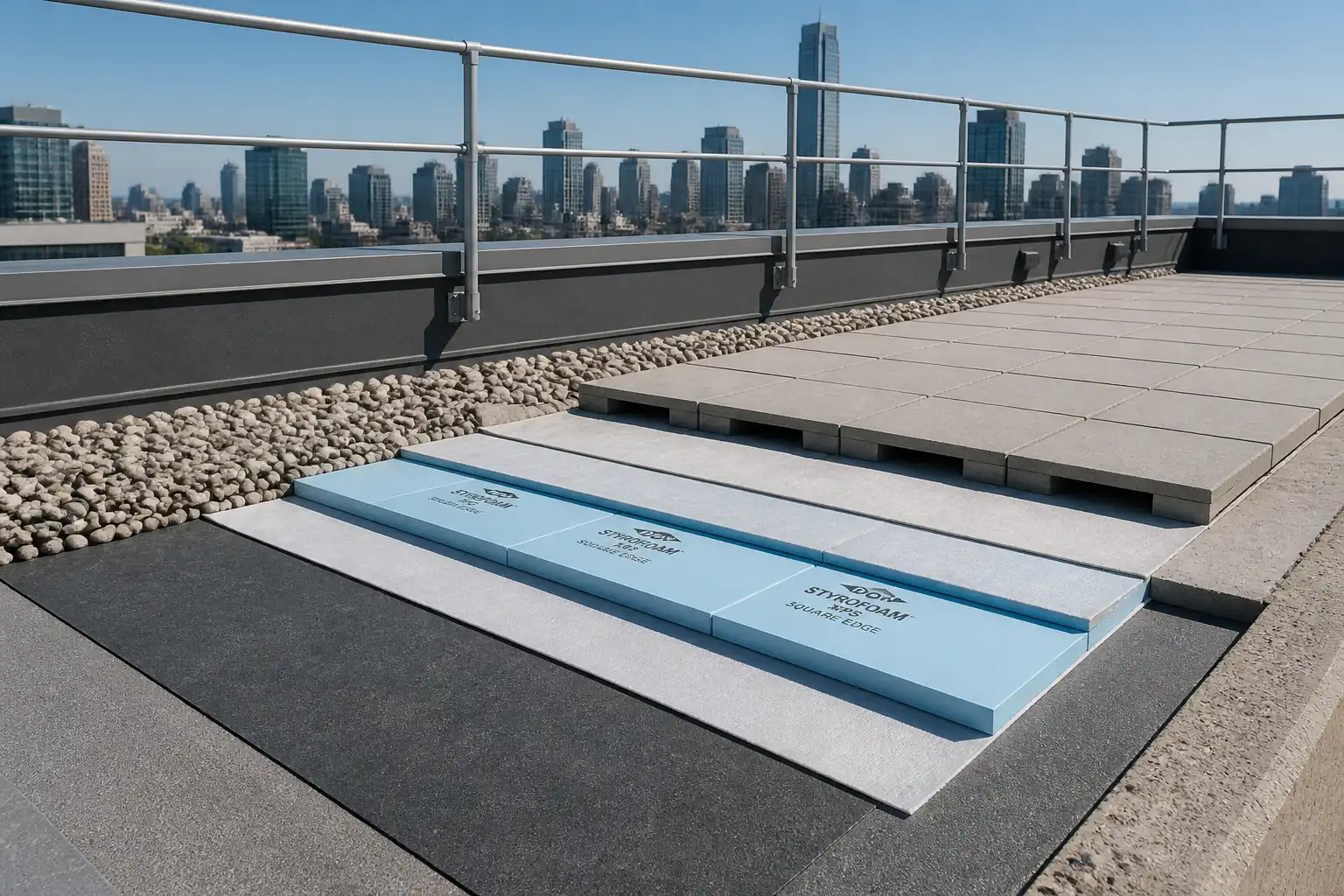
| Insulation installation | Thickness, joint staggering, gaps, moisture check | Thickness per design; gaps <2 mm; staggered joints; dry | Contractor QA/QC; Consultant witness | Checklist, IR, photos |
| Breather membrane (if specified) | Laps, taping, drainage continuity | Laps ≥100 mm; intact and watertight; no ponding paths | Contractor QA/QC | Checklist/photos |
| Panel profiling (site/factory) | Panel dimensions; rib/seam geometry with gauge | Within dimensional tolerances; no coating damage | Contractor QA/QC; Supplier rep witness | QC sheet, photos |
| First panel placement and alignment | Set-out and alignment check | First panel true to datum within ±5 mm over 10 m | Contractor QA/QC; Consultant hold | IR, photos |
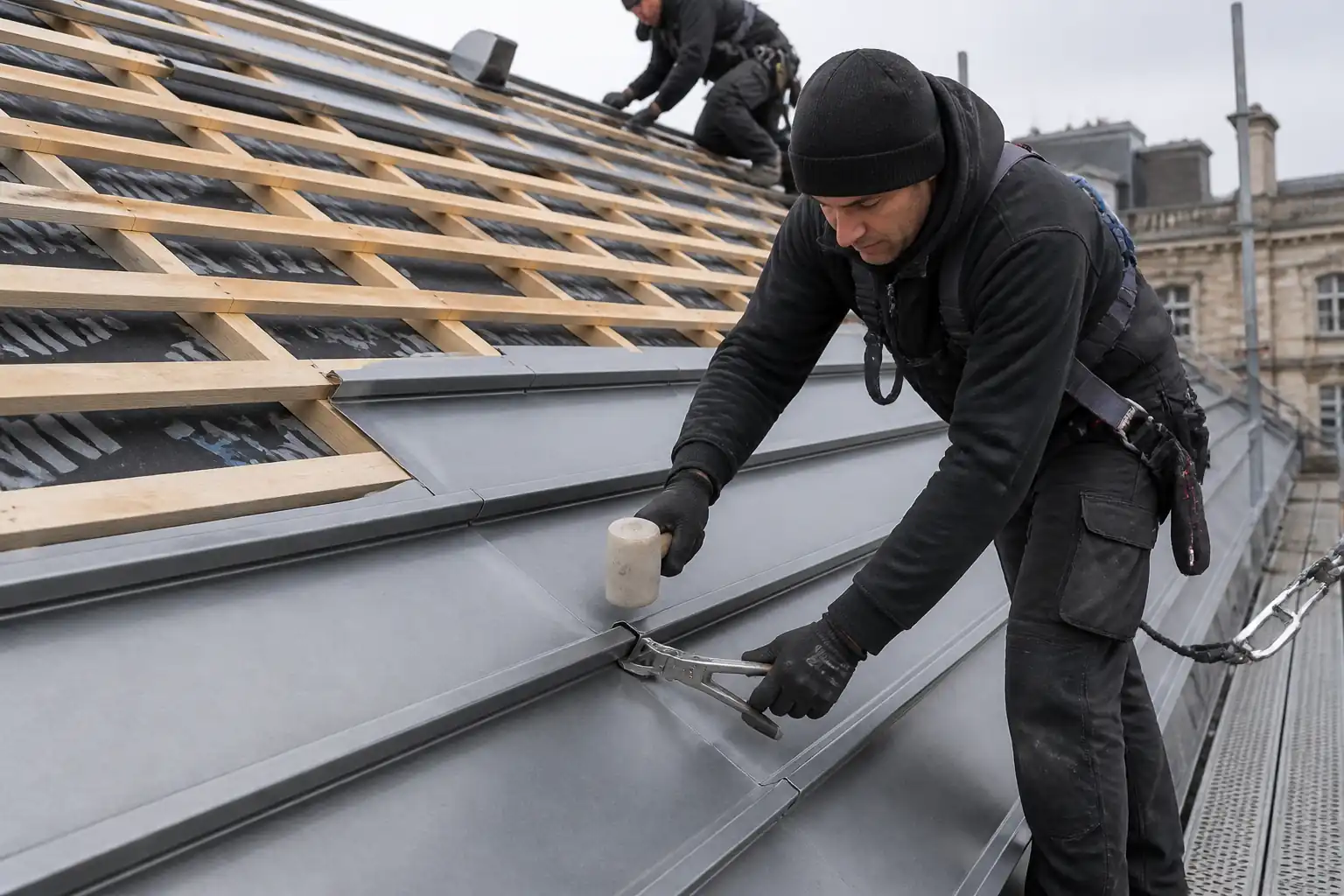
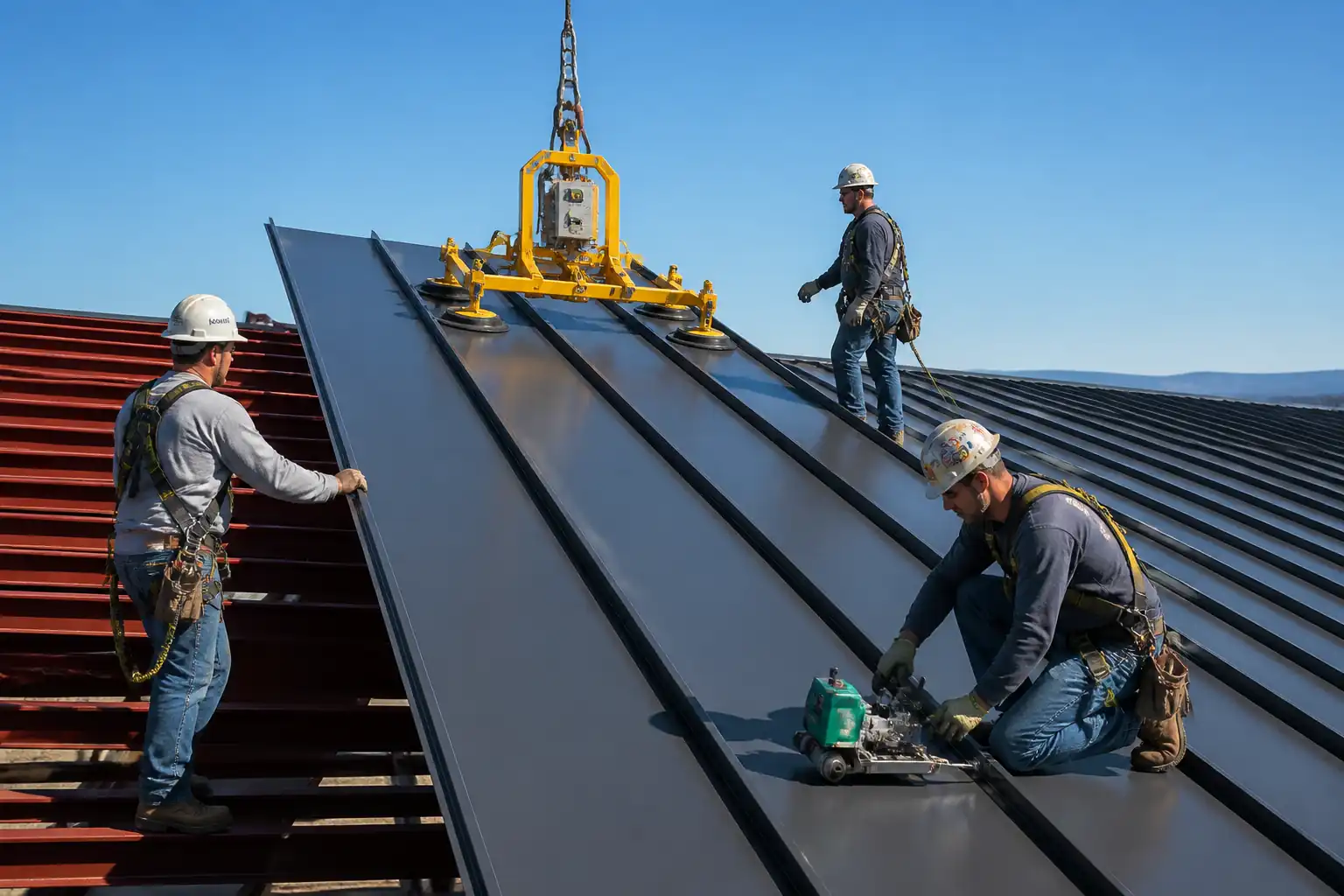
| Mechanical seaming (first 10 m) | Seam gauge/probe; visual for continuity/cracking | Seam height as specified; full lock; no coating cracks; probe cannot enter >5 mm | Contractor QA/QC; Supplier rep; Consultant hold | Seam QC log, photos |
| Ongoing seaming and panel installation | Sampling per lot: seam gauge, clip engagement | Consistent results matching first-article | Contractor QA/QC | Daily checklist |
| Flashings (ridge/valley/eaves/abutting) | Fixings concealed; sealant continuity; expansion provisions | As per details; continuous seal; correct laps; movement allowed | Contractor QA/QC; Consultant witness | IR, photos |
| Final inspection and documentation | Close-out of NCRs; completeness of records; visual watertightness check after rainfall or agreed method | All ITP items signed; no visible defects or leaks; documents submitted | Contractor QA/QC; Consultant witness | Handover dossier, warranties, as-builts |
This table is a read-only public reference. Download the PDF or Excel version, or customize this ITP to edit it for your project.
Frequently asked questions
Related method statement
This Inspection and Test Plan is associated with the Method Statement – Standing Seam Metal Roof Cladding System Installation method statement, which describes the step-by-step construction sequence, resources, materials, equipment, safety controls, and environmental controls for this activity.
View the Method Statement – Standing Seam Metal Roof Cladding System Installation method statement →Continue with related inspection, method statement, article, and checklist resources.