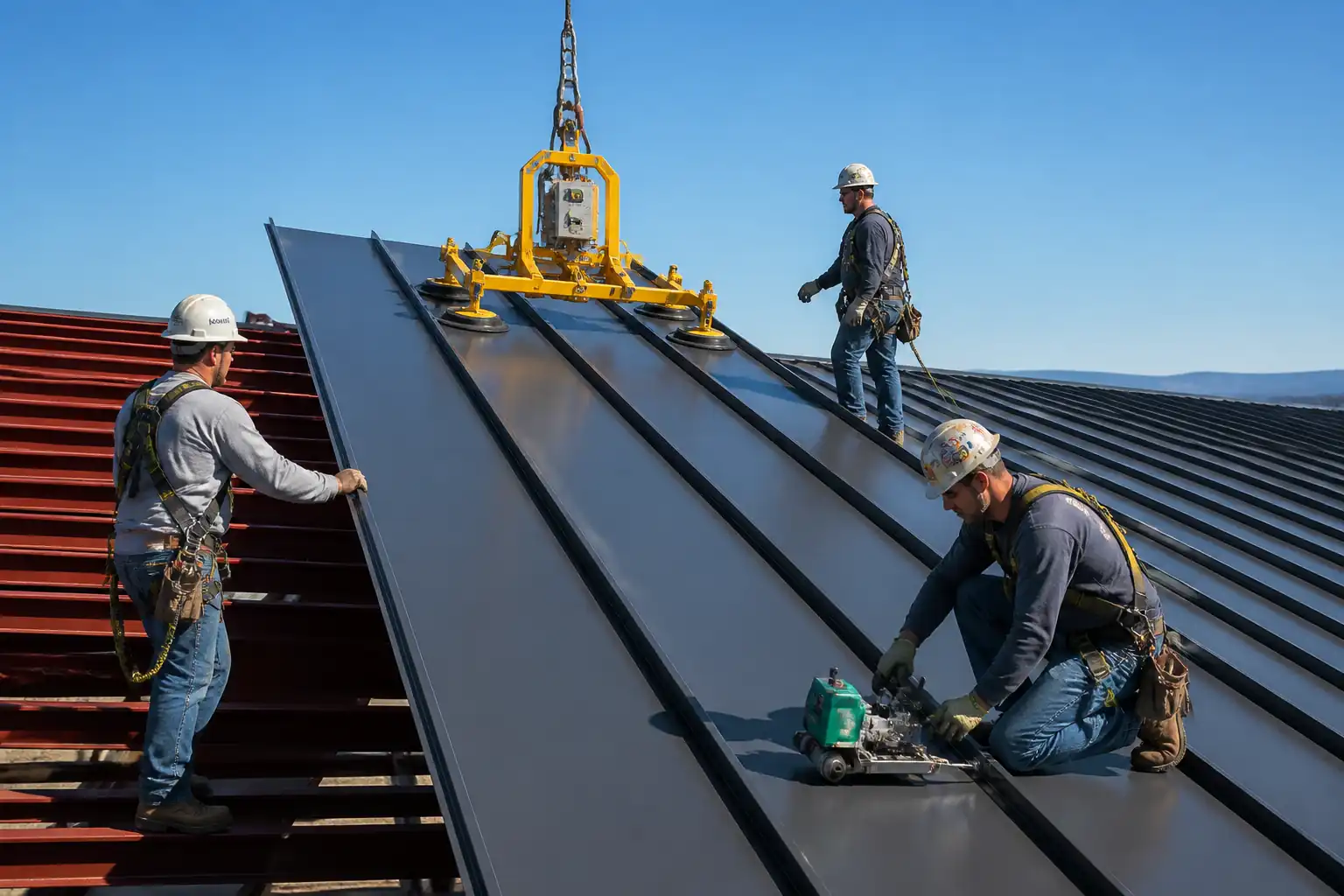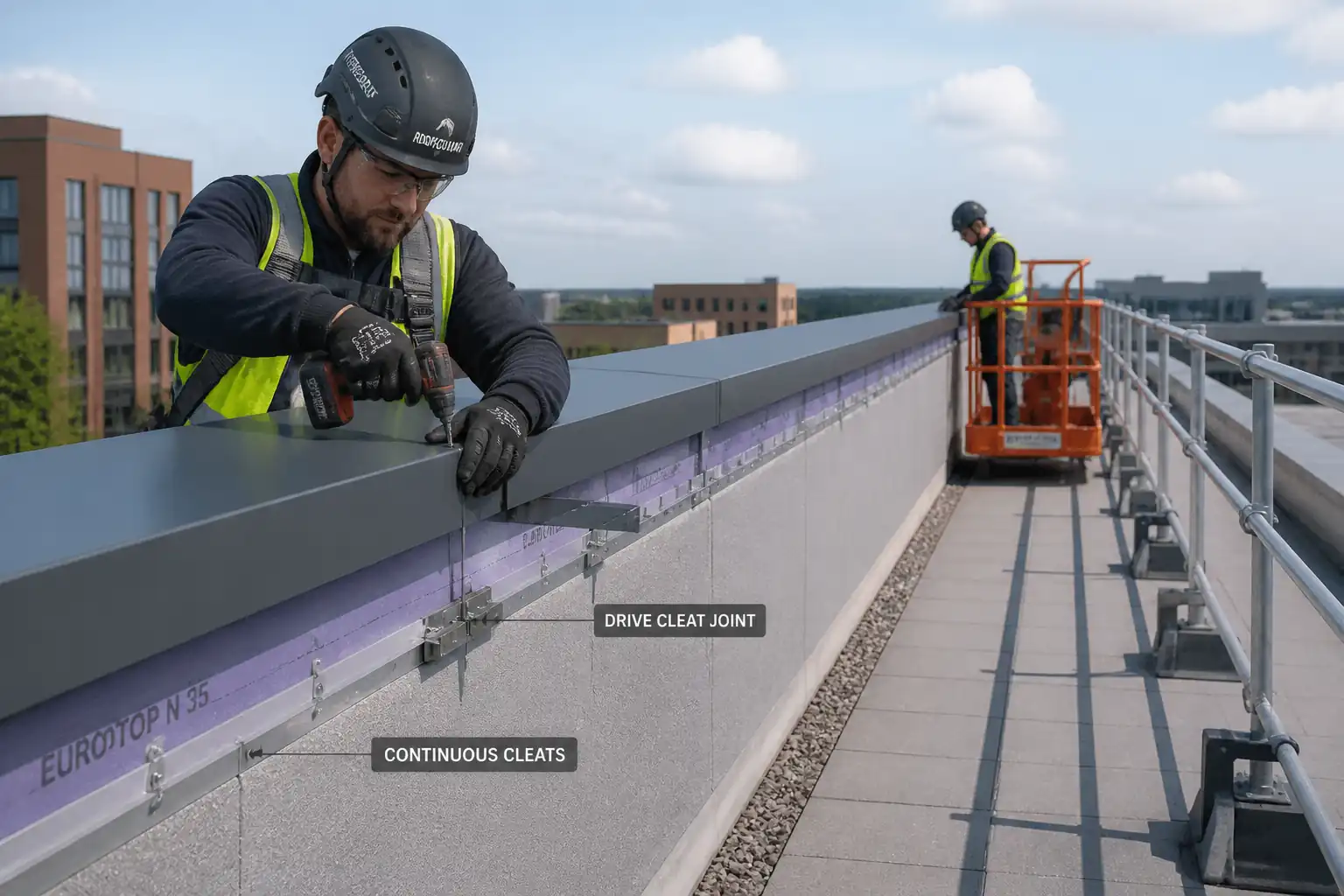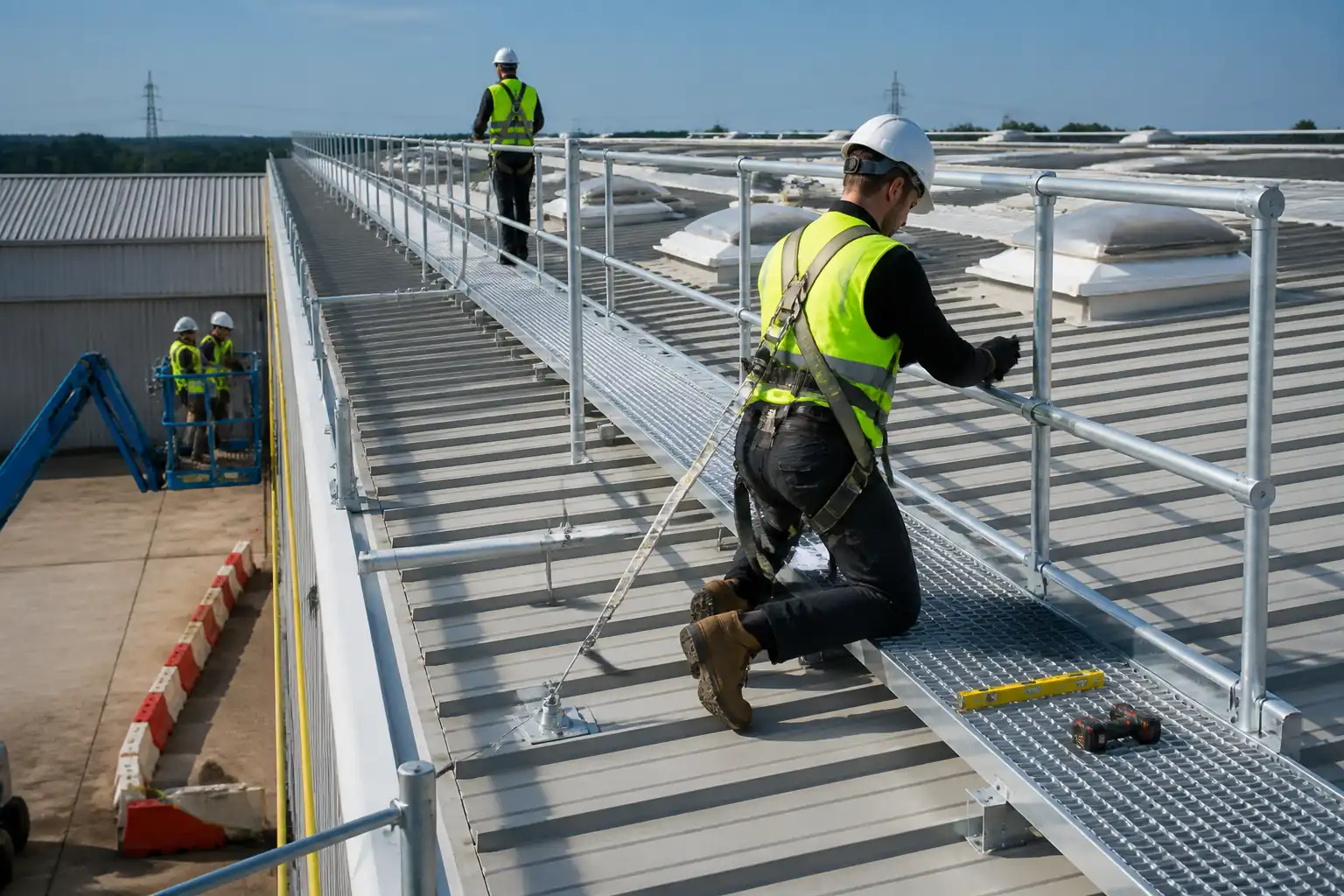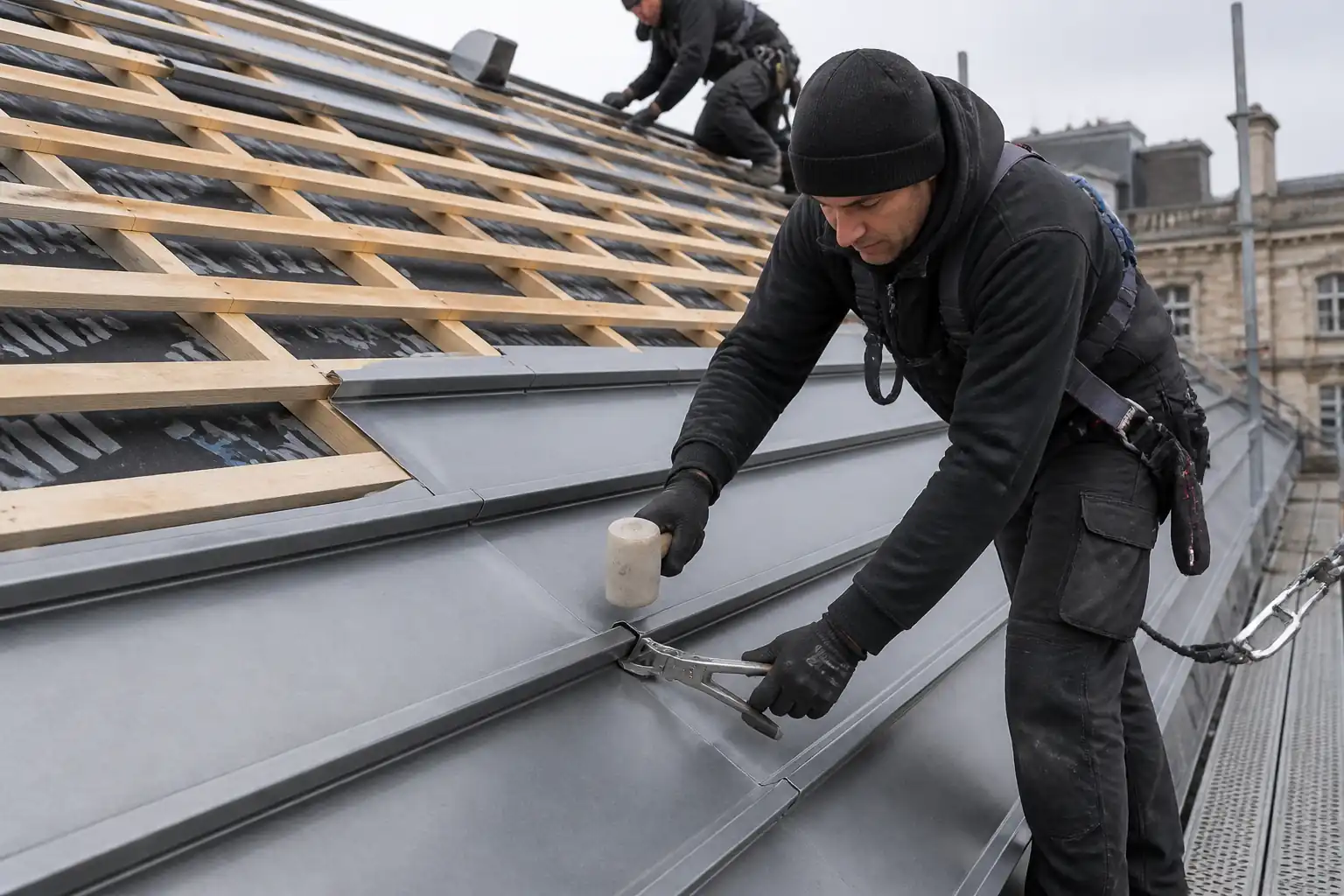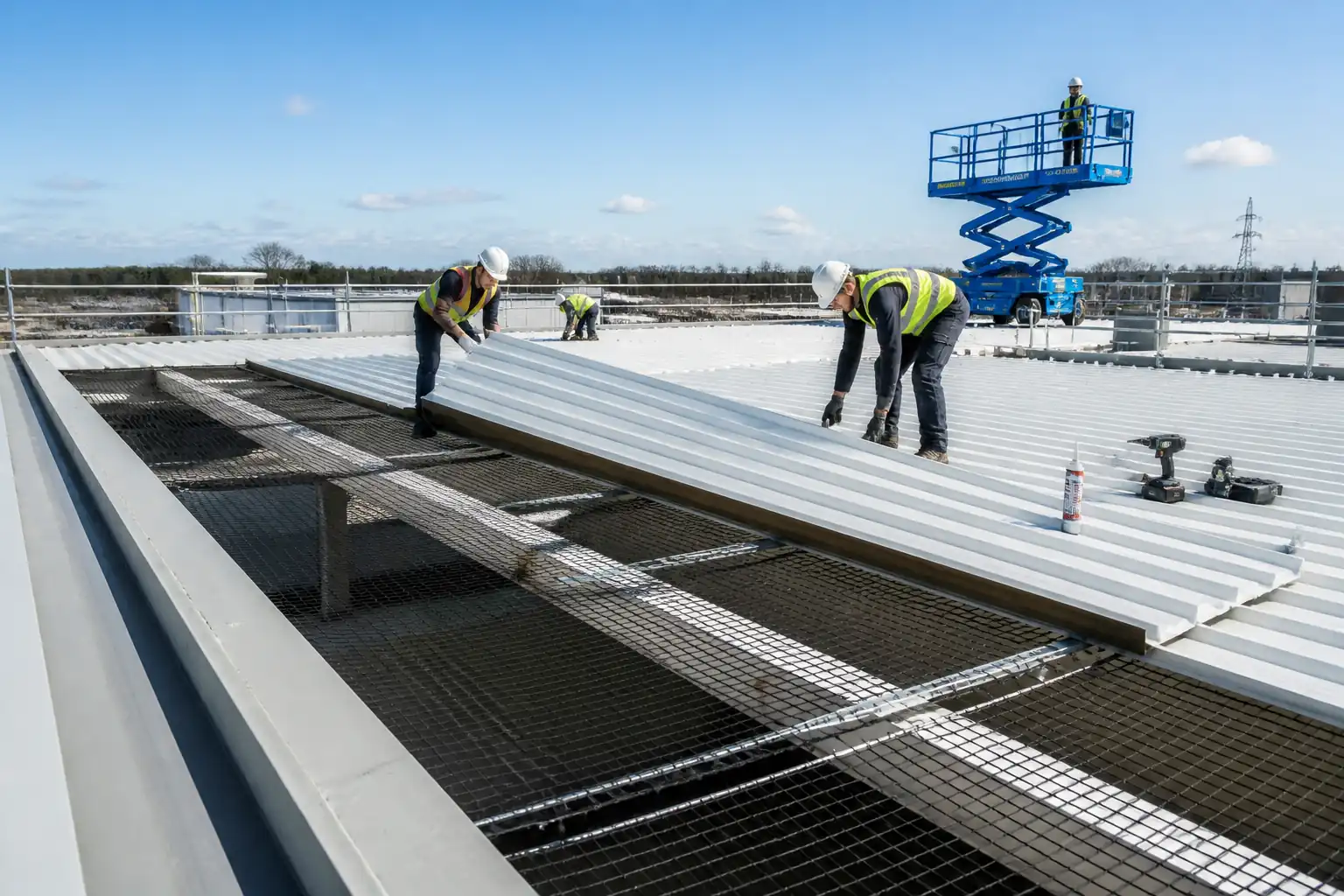

Inspection and Test Plan for Method Statement: Over-Roofing Refurbishment Using Lightweight Metal Sheets Over Existing Corrugated Roofs
AI-assisted inspection and test plan connected to a method statement, with PDF and Excel export.
More than a static template
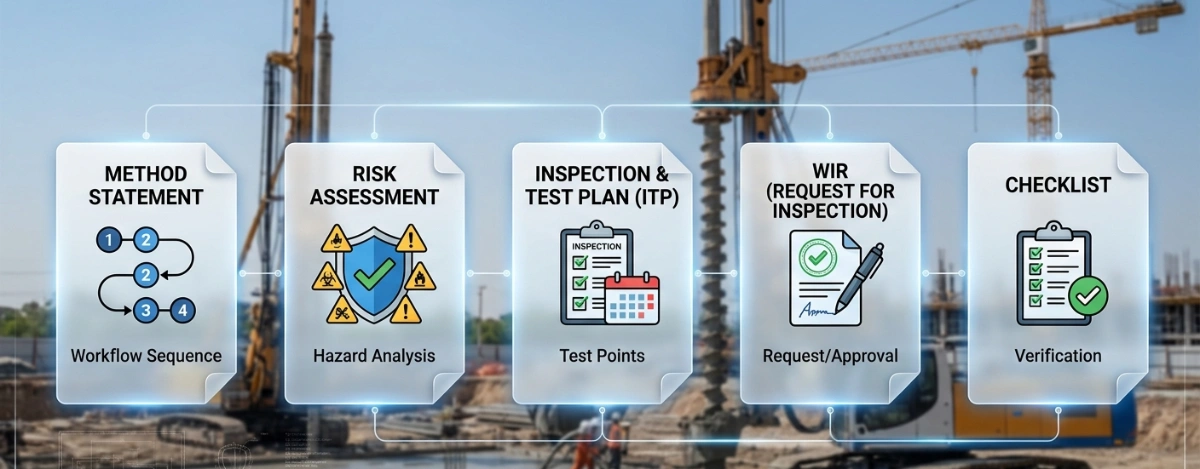
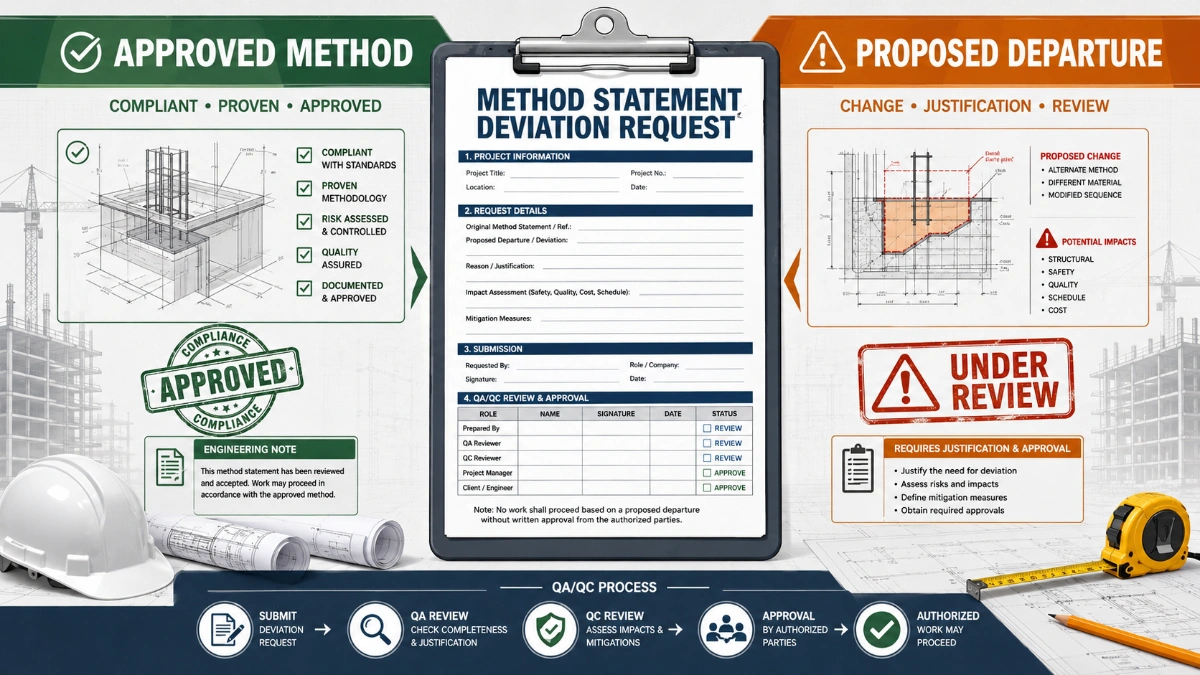
Unlike a downloadable Word or PDF template, this ITP is an AI-assisted editable starting point directly connected to its method statement. Every inspection activity, hold point, and acceptance criterion is structured and ready to adapt to your project.
- AI-assisted customization — Tailor inspection activities and acceptance criteria to your specific project scope.
- Linked method statement — This ITP is connected to the corresponding method statement describing the work sequence.
- Multiple export formats — Download as a formatted PDF or editable Excel spreadsheet.
- Editable starting point, not a final document — Review and verify all content against your project specifications and standards before use.
What you can customize
When you save this ITP to your account, every inspection row becomes editable. You can add, remove, or modify:
- Inspection activity — Description of what is being inspected.
- Inspection type — Hold point (H), Witness point (W), Review (R), or Monitor (M).
- Responsibility — Contractor, subcontractor, engineer, or client.
- Frequency — How often the inspection occurs.
- Acceptance criteria — Referenced standard or specification requirement.
- Records — Forms, test reports, or checklists required as evidence.
Why this ITP is used
To ensure all critical inspections and tests are performed, recorded, and accepted before progressing, achieving safe and compliant installation.
Who uses this inspection and test plan
Site engineers, QA/QC, roofing supervisors, HSE managers, and client representatives.
When this ITP is prepared and submitted
From pre-start approvals through installation, watertightness checks, and final handover.
Who receives or approves this ITP
Client/Engineer for approval prior to commencement.
Inspection scope
Covers design approvals, asbestos controls, temporary works, pull-out tests, material inspections, installation stages, laps/flashings, and final acceptance.
Typical hold, witness, and review points
Hold: structural verification, pull-out tests, first-bay benchmark, final inspection. Witness: safety nets, spacer rails, flashings/gutters, watertightness as specified.
Typical inspection records
Approval registers, permits, pull-out test reports, torque logs, checklists, certificates (LOLER, EN 1263), material certs, photos, as-builts, warranties.
Important approval note
This ITP is an AI-assisted editable starting point, not a pre-approved document. Before use on any project, all inspection activities, hold points, and acceptance criteria must be reviewed and approved by the relevant parties (superintendent, principal contractor, or client representative) in accordance with your contract and project quality plan.
Always verify acceptance criteria against your applicable drawings, specifications, and regulatory requirements. Hold points must be confirmed with the relevant authority before work proceeds past that point.
Inspection and test plan
| Activity | Inspection / Test | Acceptance Criteria | Responsibility | Record |
|---|---|---|---|---|
| Review AFC drawings/specs and RAMS | Document review and approvals | All required approvals in place | PM / QA/QC | Approval Register |
| Structural survey verification | Joint inspection; measurements/photos | Supports adequate per design; remediation plan if required | Site Engineer / Structural Engineer | Survey Report |
| Asbestos survey/PoW confirmation | Permit/PoW; air monitoring plan (if applicable) | Compliance with local asbestos regulations | Asbestos Consultant / HSE | Asbestos Permit; PoW; Clearance (if any) |
| Temporary works (edge protection, walkways) | Visual and dimensional checks | Installed per TWD; inspections logged | TWC / HSE | TW Inspection Record |
| Safety netting installation | Tag/cert check; anchor log; overlap check | EN 1263 compliance; valid tags; correct overlap/clearance | FASET Contractor / QA | Net Certs; Checklists |
| On-site pull-out tests | Pull-out to failure or specified load | Characteristic resistance ≥ design requirement [Verify] | QA/QC / Manufacturer Rep | Test Report |
| Material deliveries (sheets, rails, fasteners, sealants) | Visual; certs check; quantity | Correct spec; undamaged; certs available | QA/QC | Delivery/CoC/DoP |
| Set-out checks | Tape/laser checks of lines/levels | Within stated tolerances | Site Engineer | Set-out Record |
| Bracket installation | Spacing/torque/washer compression | Per fixing schedule; torque range per manufacturer | Roofing Supervisor / QA | Checklist; Torque Log |
| Spacer rail installation | Line/level/stability | Straightness/level tolerances met | QA/QC / Site Engineer | Inspection Checklist |
| VCL/Insulation (if specified) | Continuity; thickness; joints | Sealed laps; thickness per design | QA/QC | Inspection Checklist |
| First-bay sheeting (benchmark) | Alignment; fastener type/spacing/torque; sealant | Meets design/manufacturer requirements | QA/QC / Client Rep | Benchmark Sign-off |
| Ongoing sheeting and laps | Fixing count; stitch spacing; sealant continuity | Per schedule/spec; no swarf | QA/QC | Daily QA Logs; Photos |
| Flashings, ridges, gutters | Lap lengths; fixings; falls | Per detail; watertight; correct falls/outlets | QA/QC | Inspection Checklist |
| Watertightness check (selective) | Visual post-rain or controlled hose | No leaks observed | QA/QC / Client Rep | Test Records |
| Final inspection and documentation | Walkdown; documentation review | All NCRs closed; ITP complete; O&M/warranties issued | PM / QA/QC / Client Rep | Handover Dossier |
This table is a read-only public reference. Download the PDF or Excel version, or customize this ITP to edit it for your project.
Frequently asked questions
Related method statement
This Inspection and Test Plan is associated with the Method Statement: Over-Roofing Refurbishment Using Lightweight Metal Sheets Over Existing Corrugated Roofs method statement, which describes the step-by-step construction sequence, resources, materials, equipment, safety controls, and environmental controls for this activity.
View the Method Statement: Over-Roofing Refurbishment Using Lightweight Metal Sheets Over Existing Corrugated Roofs method statement →Continue with related inspection, method statement, article, and checklist resources.