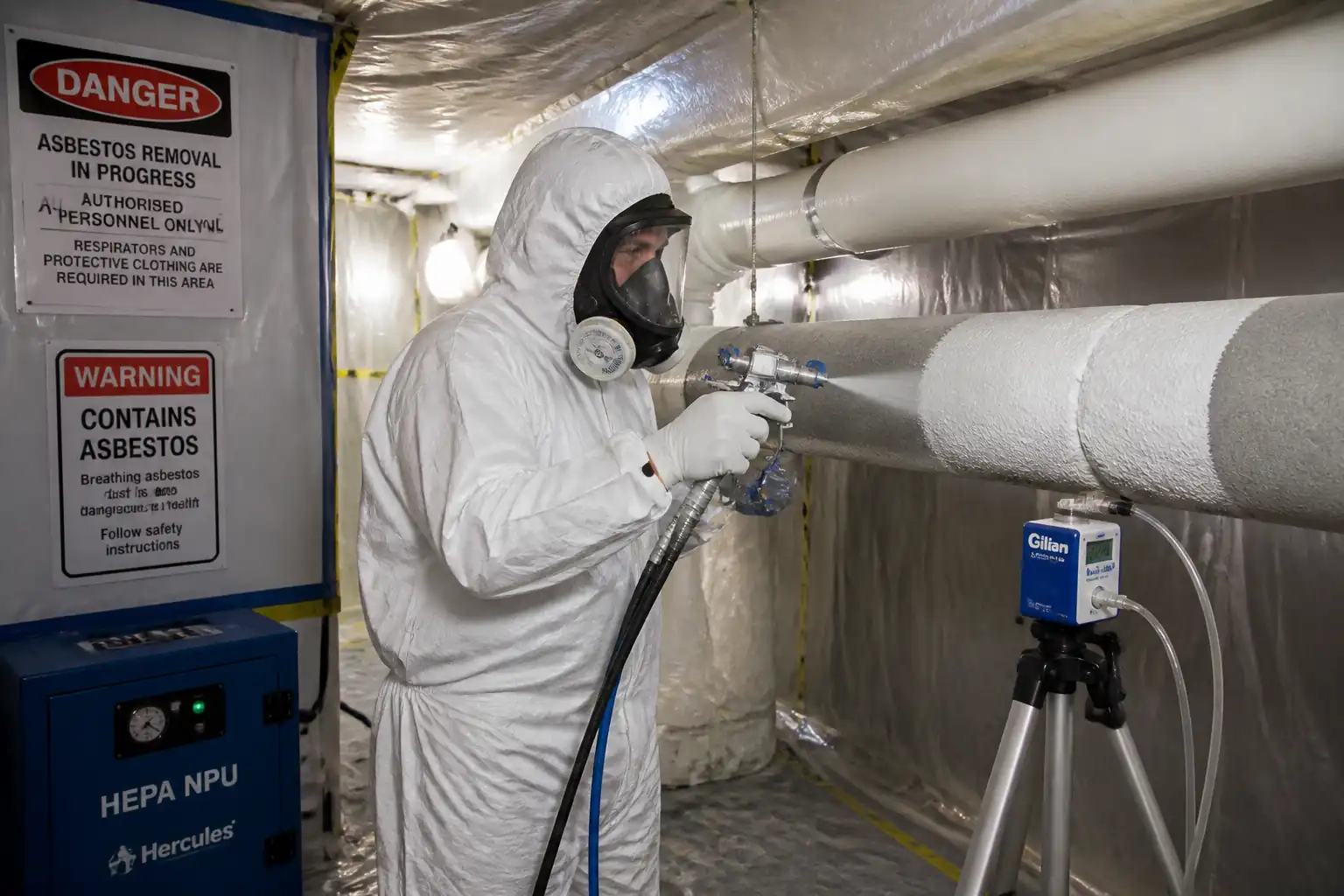

Method Statement: Encapsulation of Asbestos-Containing Materials (ACMs) Using Bridging Encapsulant – Method Statement
AI-assisted method statement with matching ITP, PDF download, and Excel export.
More than a static template
Unlike a downloadable Word or PDF template, this method statement is an AI-assisted editable starting point connected directly to a matching Inspection and Test Plan. Every section is structured, project-adaptable, and ready to export.
- AI-assisted drafting — Customize every section with AI for your specific project scope.
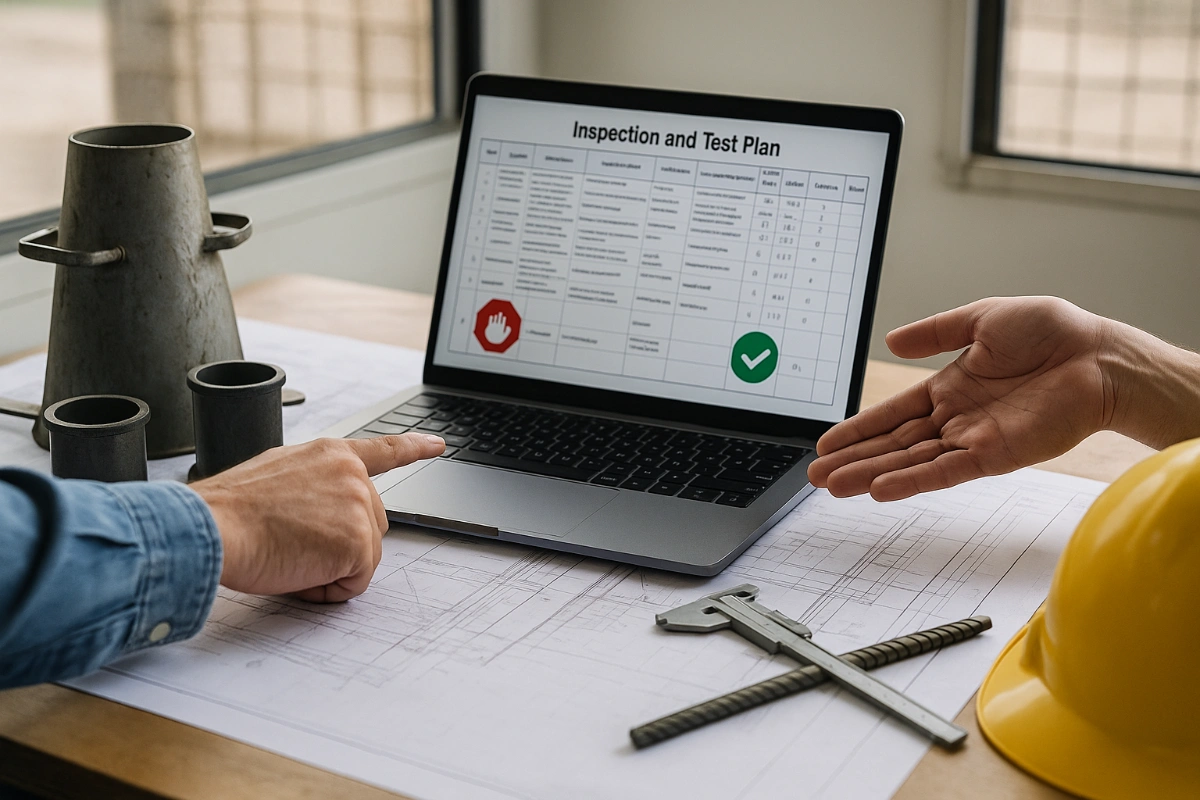
- Linked ITP — A matching inspection and test plan is generated alongside the method statement.
- Multiple export formats — Download as a formatted PDF or editable Excel spreadsheet.
- Editable starting point, not a final document — Review, verify, and adjust all content against your project requirements before use.
Static template vs. Quollnet workflow
| Feature | Static template | Quollnet |
|---|---|---|
| Project-specific content | Manual fill-in required | AI-assisted customization |
| Linked ITP | Separate document, no link | Matching ITP included |
| Export formats | Usually PDF only | PDF and Excel |
| Structured sections | Free-form layout | 13 standardized sections |
| Saved to your account | Local file only | Cloud-saved, reusable |
| Content accuracy | You verify everything | AI-assisted, you still verify |
| Cost | Often free but time-intensive | Free to customize and download |
What you can customize
When you save this method statement to your account, every section becomes editable. The following 13 sections are included:
- Scope — Defines the activity and its boundaries.
- References — Standards, specifications, and drawings.
- Responsibilities — Roles and accountabilities.
- Resources — Labour, plant, and equipment summary.
- Materials — Materials and compliance requirements.
- Equipment — Tools and equipment details.
- Prerequisites — Hold points and pre-conditions.
- Method sequence — Step-by-step construction sequence.
- Safety controls — HSE risk controls and PPE.
- Environmental controls — Environmental mitigation measures.
- QA/QC — Quality inspection and test requirements.
- ITP — Inspection and Test Plan table (has its own page).
- Attachments — Referenced drawings and documentation.
Why this method statement is used
This method statement is used to define and communicate the approved procedure for carrying out method statement: encapsulation of asbestos-containing materials (acms) using bridging encapsulant on site. It ensures the work is planned in advance, the correct resources and controls are in place, and all personnel understand responsibilities, sequence, quality requirements, and safety controls before work begins. It aligns site execution with the documented scope and acceptance expectations.
Who uses this method statement
This method statement is used by contractors, site supervisors, project engineers, QA/QC engineers, HSE officers, consultants, and client representatives. It serves as a shared reference for planning, execution, supervision, inspection, and approval of the activity on site.
When it is prepared and submitted
The method statement is prepared before the work activity starts and submitted as part of the pre-construction documentation package for review and approval.
Who reviews or approves it
The method statement is usually submitted to the client representative, consultant, resident engineer, or project management consultant for review and approval before the work commences.
Important approval note
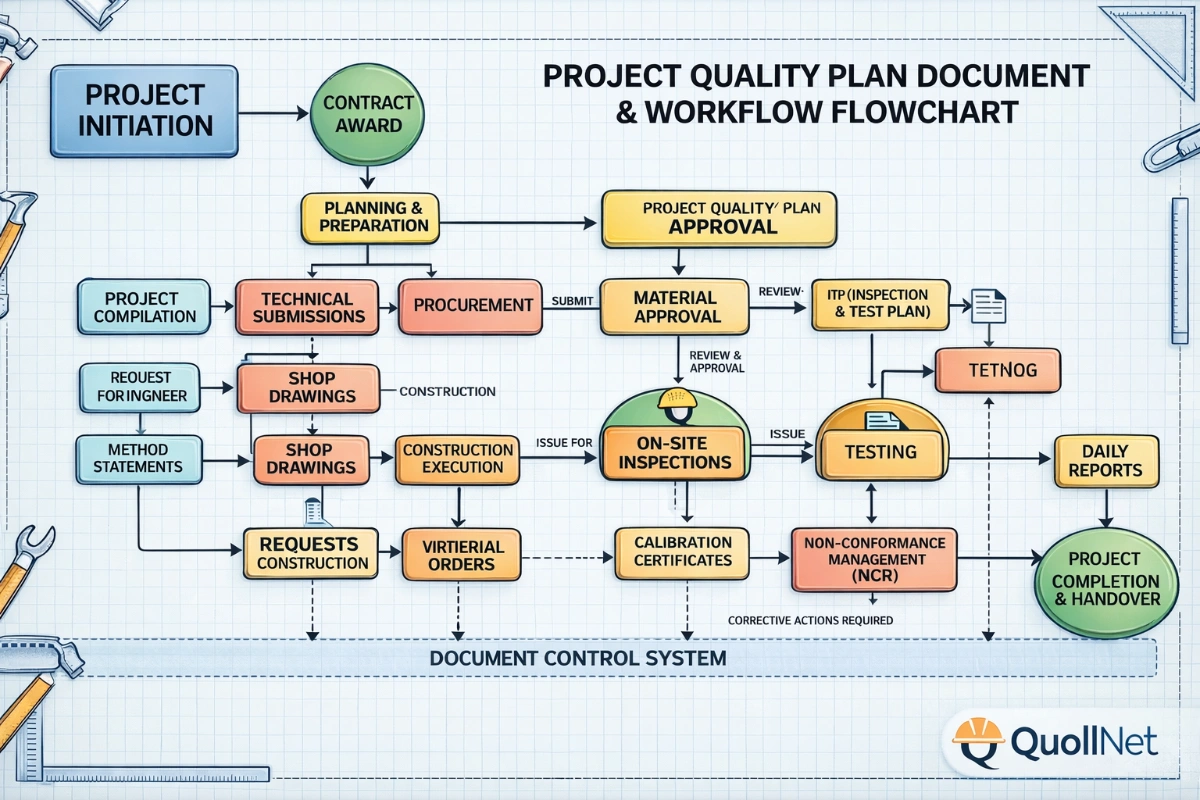
This method statement is an AI-assisted editable starting point, not a pre-approved document. Before use on any project, all content must be reviewed and approved by the relevant parties (superintendent, principal contractor, or client representative) in accordance with your contract and project quality plan.
For example: if your specification requires a departure from a referenced standard, that departure must be documented and approved separately — this method statement will not capture that automatically. Always verify against your applicable drawings, specifications, and regulatory requirements.
Method statement content
Scope
Work Summary
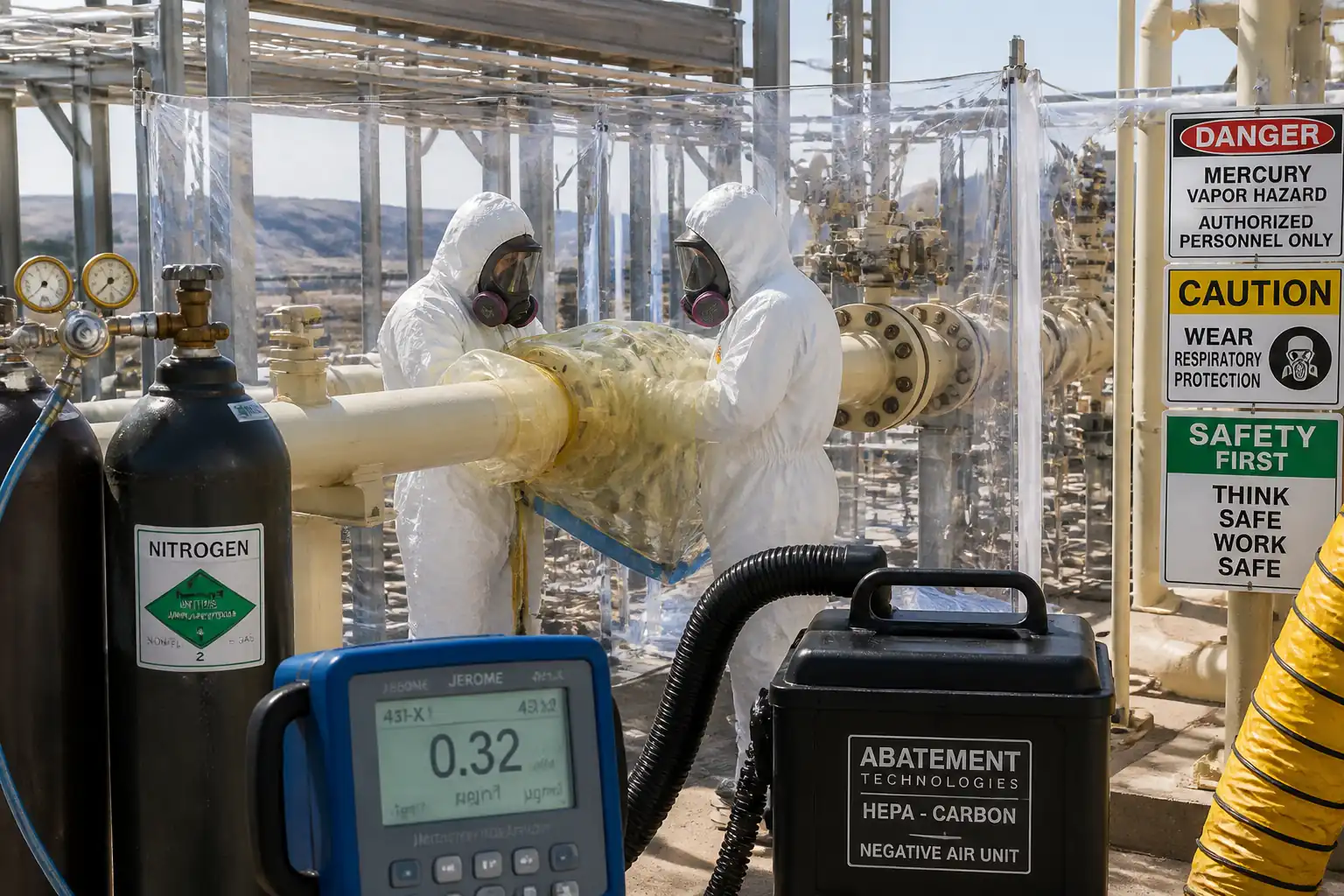
- Encapsulation of identified asbestos-containing materials (ACMs) using a compatible bridging encapsulant without disturbing the substrate.
- Activities include controlled area setup, background and during-works air monitoring, surface preparation (non-destructive), application of primer (if required) and bridging encapsulant, wet film thickness (WFT) and dry film thickness (DFT) verification using gauges/witness panels, labelling of encapsulated ACMs, demobilization, final reassurance/clearance testing as required, and update of the asbestos register and long-term management plan.
Exclusions
- Removal of ACMs (this method specifically covers encapsulation). Removal requires a separate licensed removal method statement where applicable.
- Structural repairs not related to encapsulation integrity.
Constraints and Assumptions
- Works executed by competent asbestos personnel; licensing and notifications as required by local regulations [Verify per project HSE plan and local regulations].
- Encapsulant selection must be proven compatible with the ACM and environment (thermal, moisture, fire rating) per manufacturer’s data and project specifications.
- Encapsulation is only used where ACM is stable enough to accept encapsulant and where future management/inspection is feasible.
References
| Document Type | Reference / Number | Revision | Notes |
|---|---|---|---|
| HSE HSG248 Asbestos: The Analysts’ Guide (UK) [or equivalent national guidance] | Air sampling strategies, clearance/reassurance testing. [Verify jurisdiction] | ||
| HSE HSG247 Asbestos: The Licensed Contractors’ Guide (UK) [or equivalent] | Enclosures, NPUs, hygiene, work methods. [Verify jurisdiction] | ||
| ISO/IEC 17025 | Accreditation of testing laboratories for asbestos fibre counting/analysis. | ||
| HSE MDHS 39/4 or NIOSH 7400/7402 (PCM/TEM) [Verify per local standard] | Methods for asbestos fibre sampling and counting; TEM confirmation where specified. | ||
| ISO 2808; ASTM D4414 | Determination of coating film thickness (DFT/WFT) using appropriate gauges/techniques. | ||
| EN 1822 (HEPA H14 classification) | Performance classification for HEPA filters in NPUs/H-class vacuums. | ||
| BS EN 60335-2-69 (H-Class vacuum) | Safety requirements for industrial vacuum cleaners (Type H for hazardous dust). | ||
| ASTM E2356 | Practice for building asbestos surveys (for background and register context). | ||
| OSHA 29 CFR 1926.1101 / EPA AHERA 40 CFR 763 (US) or local asbestos regulations | Exposure limits, work practices, and clearance criteria where applicable. [Verify jurisdiction] | ||
| Manufacturer’s Technical Data Sheets (TDS) and Safety Data Sheets (SDS) for encapsulant/primer | Mixing, application, cure, compatibility, fire rating, maintenance. |
Responsibilities
| Role | Responsibility | Name / Party |
|---|---|---|
| Project Manager | Project Manager | Main Contractor |
| Asbestos Supervisor | Asbestos Supervisor (Site) | Licensed/Competent Asbestos Contractor [Verify] |
| Asbestos Operatives | Asbestos Operatives | Asbestos Contractor |
| Analyst/Hygienist | Independent Analyst / Occupational Hygienist | Independent Laboratory |
| HSE Advisor | HSE Advisor | Main Contractor |
| Engineer | Client/Engineer’s Representative | Client/Engineer |
Resources
| Resource Type | Description | Quantity | Remarks |
|---|---|---|---|
| Personnel | 1 | [Verify licensing requirement per jurisdiction] | |
| Personnel | 2–6 [Verify per scope] | ||
| Personnel | 1 | ||
| Personnel | 1–2 |
Materials
| Material | Specification / Grade | Quantity | Remarks |
|---|---|---|---|
| Bridging Encapsulant (intumescent or non-intumescent as specified) | Total target DFT: 500–750 µm (20–30 mil) in 2–3 coats [Verify per TDS]; service temp and moisture limits per TDS. | Water-based, low-VOC preferred; flame spread Class 0/Euroclass B-s1,d0 [Verify]; compatible with ACM and environment. | |
| Primer/Sealer | Manufacturer-approved for ACM substrates; low-odor/water-based preferred; application rate per TDS. | If required by TDS for porous/alkaline substrates (e.g., AIB, cement). | |
| Asbestos Warning/Encapsulation Labels | Min 100×50 mm; wording per local regulations; include date, product, batch, thickness. | Label resistant to moisture/UV; permanent adhesive. | |
| Masking Films/Tapes/Polythene | 200–300 µm sheeting; low-tack tape for sensitive surfaces; flame-retardant grade within enclosures. | For masking adjacent areas; remove post-cure. |
Equipment
| Equipment | Capacity / Type | Quantity | Inspection Required |
|---|---|---|---|
| Airless Spray Unit (or HVLP for small works) | 3300 psi max; flow ≥1.5 L/min [Verify] | PAT test; guards; hoses rated and inspected | |
| Type H Vacuum Cleaner | ≥ 35 L; 99.95% efficiency @ MPPS (H14) | DOP/PAO test cert [Verify] | |
| Negative Pressure Unit (NPU) | ≥ 8–12 ACH; ≥ -5 Pa enclosure pressure [Verify] | Smoke test; pressure log | |
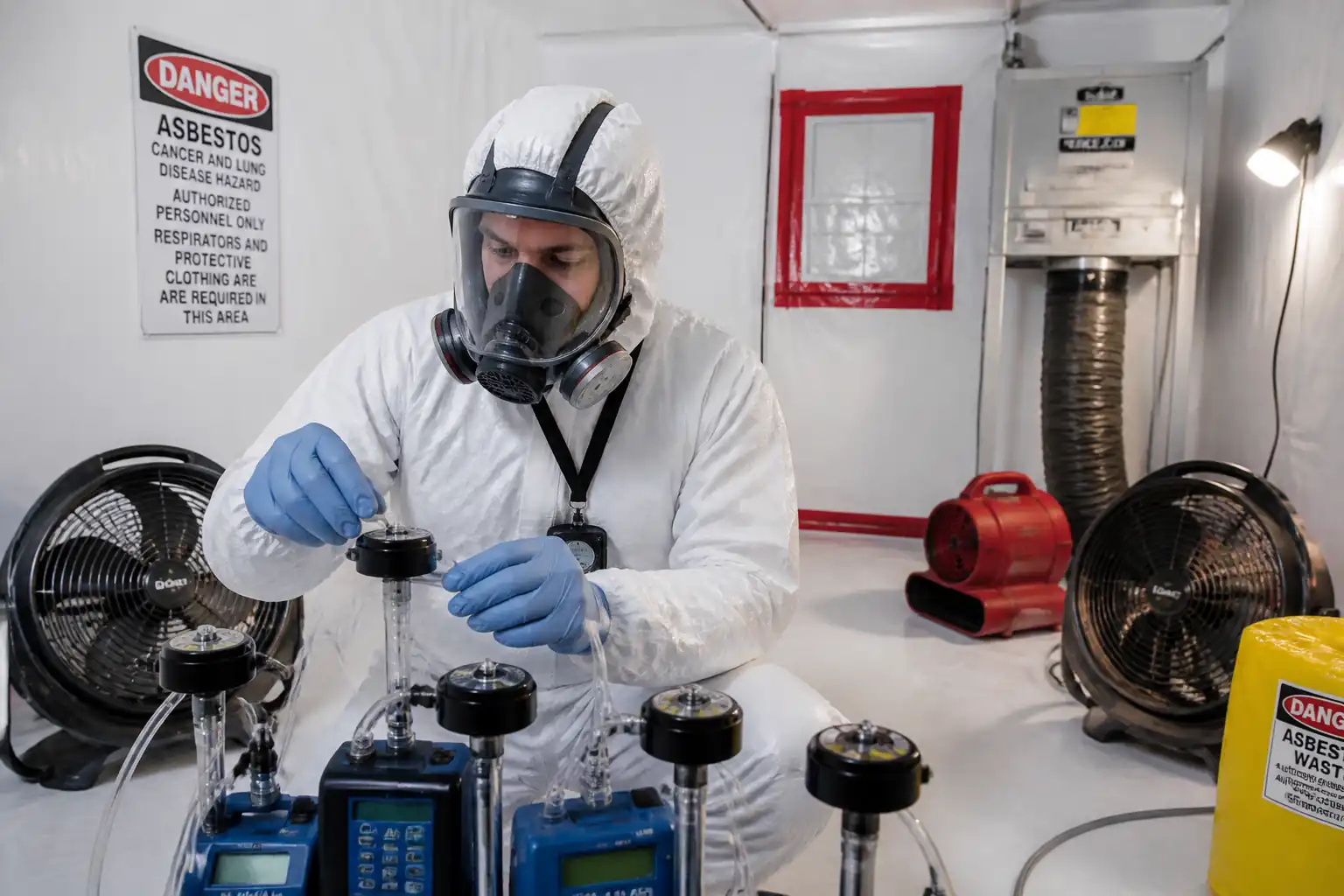
| Personal/Area Air Sampling Pumps | 0.5–2.5 L/min adjustable | Pre/post calibration ±5% | |
| Wet/Dry Film Thickness Gauges & Witness Panels | Zero/functional check daily | ||
| Mobile Tower/MEWP | Pre-use inspection; LOLER/annual cert [Verify] |
Prerequisites
Approvals and Notifications
- Approved Plan of Work (PoW), Risk Assessment, and this Method Statement/ITP by Client/Engineer.
- Licensing/competence verified for asbestos contractor where required; operatives medically fit; RPE fit-test certificates current.
- Regulatory notifications submitted where applicable (e.g., notifiable non-licensed work or licensed work) [Verify per local regulations].
Site Readiness
- Latest asbestos survey and register reviewed; locations and ACM types confirmed.
- Services isolated/protected as required (electrical/HVAC dampers closed and sealed, fire alarm isolation with impairment permit where necessary).
- Permits: Permit to Work, Working at Height permit (if applicable), Confined Space permit (if applicable), Hot Work not anticipated.
Equipment and Materials Readiness
- Encapsulant/primer approved submittals, batch records, TDS/SDS on site.
- Calibration certificates for air pumps and gauges; PAT tests for electrical tools; NPU HEPA/DOP test certificates.
- Hygiene and decontamination arrangements proportional to risk (e.g., 3-stage airlock and decon unit for enclosure works; local decon area for small non-licensed tasks) [Verify].
Trials and Mock-ups
- Small test patch (0.25–0.5 m²) on representative substrate to confirm compatibility, coverage, and adhesion; cure and inspect after 24–48 h before full rollout.
Briefings
- Daily task briefings and HSE induction for all personnel; emergency procedures for fibre release, fire, medical.
Method Sequence
| Step | Activity | Description | Responsibility | Inspection / Hold Point |
|---|---|---|---|---|
| 1 | Pre-start verification | Confirm approvals, notifications, permits, competencies, calibrations, and availability of materials and SDS. | Asbestos Supervisor / PM | Document review |
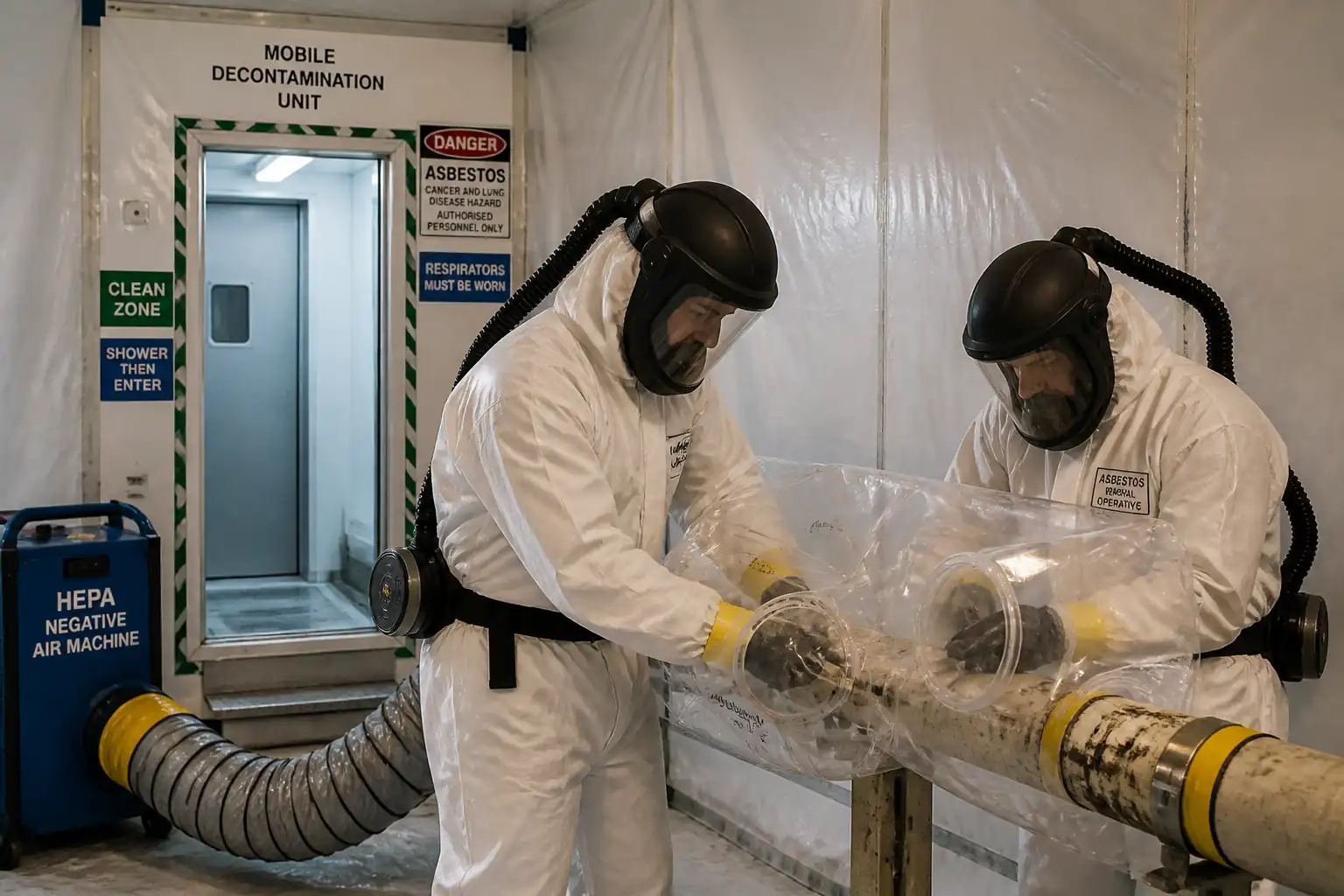
| 2 | Establish controlled area/enclosure | Define work boundary; install barriers/signage; set up enclosure if required; seal penetrations; install NPU(s), viewing panel, manometer; isolate HVAC; lay protection and tack mats; set up waste receptacles. | Asbestos Supervisor | Visual and smoke test (if enclosure) |
| 3 | Background air monitoring | Conduct pre-works background sampling in and around the work area using calibrated pumps and cassettes. | Independent Analyst | Sampling and lab analysis |
| 4 | Surface preparation (non-destructive) | Visually inspect ACM; remove loose surface dust using Type H vacuum; damp-wipe adjacent non-ACM; repair minor defects with approved mastic where specified; no sanding/scraping/abrasion of ACM permitted; ensure dry, sound surface as allowed by condition. | Asbestos Operatives | In-process |
| 5 | Masking/containment for overspray | Mask adjacent surfaces, plant, and floors as needed; protect with flame-retardant polythene within enclosure. | Asbestos Operatives | Visual |
| 6 | Test patch application and evaluation | Apply primer/encapsulant to test patch per TDS; record WFT; allow to cure 24–48 h; evaluate for softening, discoloration, bleeding, or loss of integrity. | Asbestos Supervisor | Visual and tactile assessment |
| 7 | Mixing and environmental checks | Mix encapsulant per TDS; verify ambient conditions (T 5–35°C, RH <85%, substrate >3°C above dew point) [Verify]; ensure ventilation controlled without compromising enclosure pressure. | Asbestos Operatives | Instrument checks |
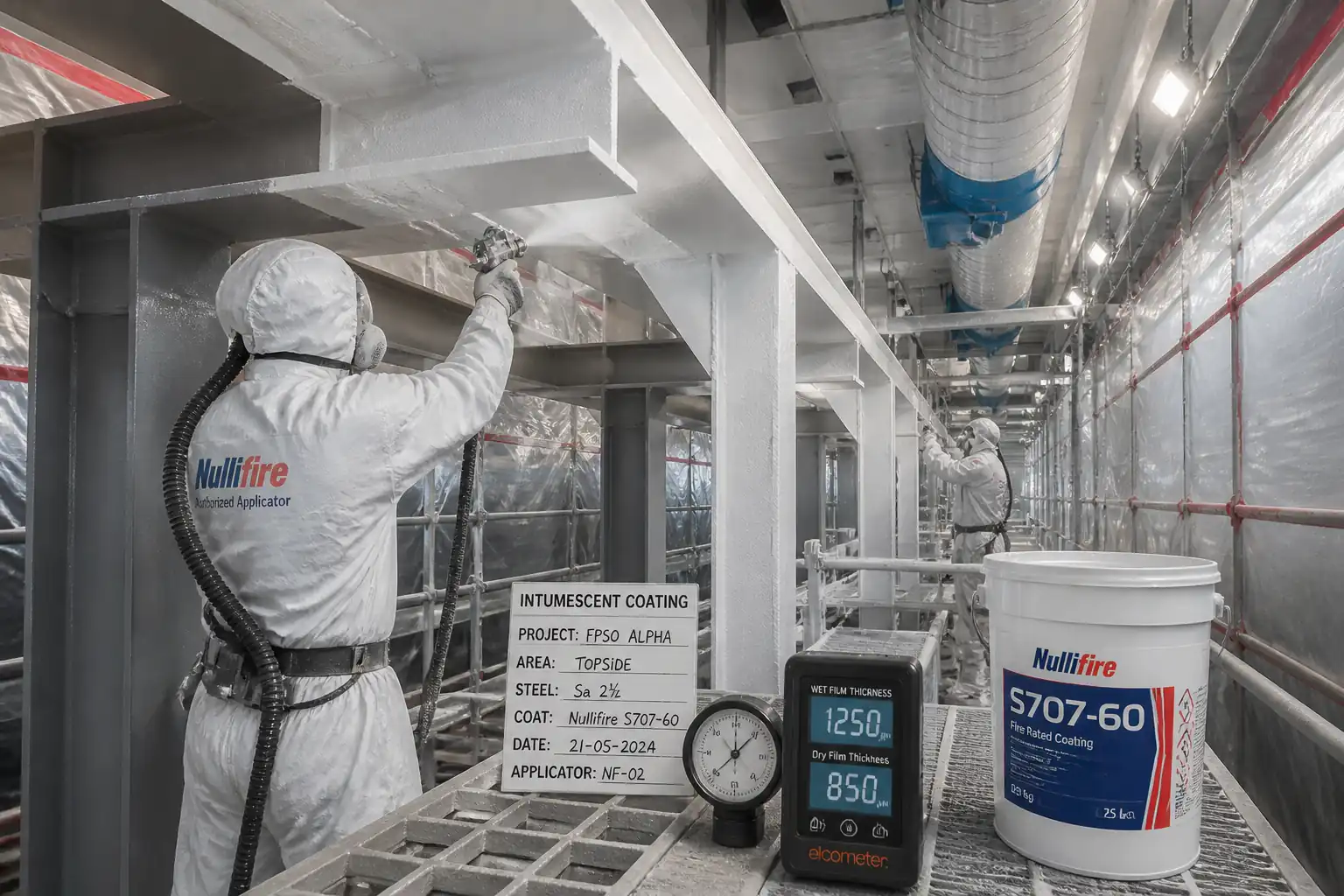
| 8 | Apply first coat (bridging encapsulant) | Apply by airless spray/brush/roller per TDS. Target WFT per coat: 250–375 µm (10–15 mil) [Verify]. Measure WFT at minimum 3 points per 10 m² using comb gauge/witness strips; adjust application rate accordingly. | Asbestos Operatives | In-process |
| 9 | Inter-coat inspection and recoat | Allow to cure per TDS (typ. 4–24 h) [Verify]; inspect for defects; apply second coat to reach cumulative target. Maintain enclosure/controls and conduct during-works air monitoring. | Asbestos Supervisor / Analyst | Visual; air monitoring |
| 10 | Final coat and thickness confirmation | Apply final coat to achieve total target DFT of 500–750 µm (20–30 mil) [Verify]. Where DFT cannot be directly measured on substrate, use pre-weighed/ measured witness coupons or removable gauge strips placed adjacent and measure with micrometer after cure. Record coverage rate (L/m²). | Asbestos Operatives / QA | Final thickness verification |
| 11 | Defect repair and touch-up | Identify and rectify pinholes, thin areas, or mechanical damage; re-measure WFT/DFT locally as required. | Asbestos Operatives | Follow-up |
| 12 | Demobilization and cleaning | Remove masking; damp-wipe; Type H vacuum clean; maintain controls until air tests satisfactory. Dispose of consumables as asbestos waste. | Asbestos Operatives | Visual |
| 13 | Final air monitoring and clearance/reassurance | Conduct reassurance testing or 4-stage clearance (if enclosure used) per local guidance. | Independent Analyst | Sampling and analysis |
| 14 | Labelling and handover documentation | Apply durable asbestos encapsulation labels; update asbestos register with as-built data (locations, product, batch, thickness, photos, date); issue long-term management plan update with re-inspection intervals. | Asbestos Supervisor / PM | Visual; document review |
Health and Safety Controls
Key Hazards and Controls
1) Hazard: Asbestos fibre release during preparation and spraying
- Likely consequence: Inhalation causing asbestosis, lung cancer, mesothelioma
- Engineering/procedural controls: Controlled area or enclosure; NPUs to maintain ≥ -5 Pa (if enclosure); prohibit sanding/abrasion; use Type H vacuuming and damp-wiping; minimize airflow disturbances; staged work with background and during-works air monitoring; stop-work trigger if ≥0.01 f/cc or >2× background sustained [Verify thresholds].
- Required PPE: Disposable Type 5/6 coveralls with hood, P3-filter RPE (half/full-face as assessed), nitrile gloves, safety goggles, safety boots with overshoes as required.
- Collective measures: Barriers/signage, entry log, decontamination arrangements (3-stage airlock where required), tack mats, controlled waste stations.
- Inspection/permit/supervision: Approved PoW and Permit to Work; enclosure smoke test and pressure logs; RPE fit-test records; supervision by Asbestos Supervisor; independent Analyst monitoring.
2) Hazard: Working at height (ceilings, high-level services)
- Likely consequence: Fall from height causing serious injury
- Engineering/procedural controls: Use MEWP or mobile towers (EN 1004); avoid ladders except for short-duration low-risk tasks; edge protection/guardrails; exclusion zones below.
- PPE: Harness and lanyard for MEWP where required, helmet with chin strap, non-slip footwear.
- Collective measures: MEWP/tower rescue plan; trained operators (IPAF); spotter.
- Inspection/permit/supervision: Pre-use inspection, LOLER certificates; Working at Height permit.
3) Hazard: Chemical exposure (encapsulant/primer)
- Likely consequence: Skin/eye irritation, respiratory irritation, solvent exposure, fire (if solvent-based)
- Engineering/procedural controls: Prefer water-based, low-VOC products; local ventilation compatible with enclosure; decant/mix in bunded area; follow SDS; no ignition sources for flammable products.
- PPE: Chemical-resistant gloves (nitrile), splash goggles/face shield, coveralls; appropriate RPE.
- Collective measures: Spill kits, fire extinguisher (CO2/water-mist), designated storage.
- Inspection/permit/supervision: SDS available; COSHH assessment; HSE inspections [Verify per project HSE plan].
4) Hazard: Electrical hazards from spray equipment and NPUs
- Likely consequence: Electric shock, burns, fire
- Engineering/procedural controls: 110 V center-tapped transformer or RCD-protected circuits; PAT-tested equipment; cable management off floor where possible.
- PPE: Electrically rated gloves when required, dry gloves/boots.
- Collective measures: Lockout/Tagout of nearby circuits where required.
- Inspection/permit/supervision: Electrical permit/authorization; PAT logs; daily visual checks.
5) Hazard: Slips, trips, and falls due to hoses, wet floors, overspray
- Likely consequence: Sprains, fractures
- Engineering/procedural controls: Hose routing overhead or along protected edges; immediate clean-up; use anti-slip mats; maintain clear walkways.
- PPE: Safety boots with slip-resistant soles.
- Collective measures: Good housekeeping, lighting ≥200 lux.
- Inspection/permit/supervision: Supervisor walkdowns; housekeeping checklists.
6) Hazard: Manual handling of equipment and materials
- Likely consequence: Musculoskeletal injury
- Engineering/procedural controls: Use trolleys/MEWPs for lifting; team lifts; keep container sizes manageable.
- PPE: Gloves with grip, supportive footwear.
- Collective measures: Manual handling training; lift plans for heavy items.
- Inspection/permit/supervision: Supervisor oversight.
7) Hazard: Noise from NPUs/compressors/sprayers
- Likely consequence: Hearing damage
- Engineering/procedural controls: Use quieter equipment; position NPUs away from personnel; exposure time management.
- PPE: Hearing protection to achieve effective SNR [Verify per noise assessment].
- Collective measures: Noise signage; rotation of tasks.
- Inspection/permit/supervision: Noise assessment; equipment maintenance.
8) Hazard: Confined or poorly ventilated spaces (plant rooms/voids)
- Likely consequence: Asphyxiation, heat stress
- Engineering/procedural controls: Evaluate for confined space; forced ventilation compatible with negative pressure; temperature/humidity monitoring; work-rest cycles; hydration.
- PPE: RPE as assessed; heat stress mitigation.
- Collective measures: Confined Space permit if applicable; standby attendant.
- Inspection/permit/supervision: Gas testing if required; permit controls; supervision.
Note: Where exact control requirements depend on local law or project HSE plan, verify and implement accordingly [Verify per project HSE plan and local regulations].
Environmental Controls
Environmental Risks and Controls
- Fibre release to environment: Use intact enclosures or sealed controlled areas; maintain negative pressure and capture via HEPA filtration; seal HVAC; do not use compressed air; double-bag waste; transport by licensed carrier [Verify jurisdiction].
- VOC emissions/odour: Select low-VOC, water-based encapsulants; provide controlled ventilation/exhaust via HEPA where feasible without compromising pressure; schedule works during low-occupancy hours.
- Overspray/spills: Masking and drip control; use bunded mixing area with spill kits; immediate containment and wipe-up using disposable wipes; prohibit wash water discharge to drains; collect and dispose as hazardous waste if contaminated.
- Waste management: All contaminated consumables (wipes, filters, PPE, masking) to asbestos waste per local codes (e.g., EWC 17 06 05* in EU) [Verify]; red/clear bagging with hazard labels; maintain Waste Transfer Notes and consignment documentation.
- Noise: Position NPUs and compressors to minimize nuisance; comply with local limits and working hours; use acoustic shrouds where practicable.
- Energy: Shut down plant when not required; maintain NPUs at required airflow only; maintain filters to avoid inefficiency.
- Incident response: Fibre release or significant spill—stop work, evacuate, implement emergency PoW, notify stakeholders and authorities per regulations.
Quality Assurance and Quality Control
QA/QC Plan
- Submittals: Encapsulant/primer TDS & SDS; equipment certifications; calibration certificates; RAMS/ITP approvals.
- Qualifications: Verify licenses/competence; RPE fit tests; medicals.
- Calibration: Air sampling pumps calibrated pre- and post-sampling within ±5% of set flow with traceable calibrator; WFT/DFT gauges function-checked daily; manometers zeroed.
- Environmental conditions: Record temperature, RH, and dew point each shift/start of coat and when conditions change.
- Thickness control: WFT checks minimum 3 per 10 m² per coat; use witness coupons/strips for DFT; calculate coverage (L/m²) and reconcile with theoretical.
- Air monitoring: Background, leak/during-works, personal exposure (as required), reassurance/clearance. Action limits and stop-work triggers defined in PoW [Verify per local standard].
- Nonconformities: Record defects or air exceedances; implement stop-work, root cause analysis, and corrective measures; re-test and re-inspect.
- Documentation: Maintain logs for WFT/DFT, environmental, air monitoring, pressure, smoke test, label register, photographic records, waste consignment, and training/induction.
- Handover: Provide as-built dossier: approvals, logs, test results, photos, label map, updated asbestos register, management plan addendum with inspection intervals (6–12 months or per Client).
Attachments
- Manufacturer TDS/SDS for encapsulant and primer
- Sample forms: Prestart Checklist, Enclosure Smoke Test & Pressure Log, WFT/DFT Logs, Environmental Log, Air Monitoring Chain-of-Custody, Final Inspection Checklist, Label Register
- Calibration certificates (air pumps, manometers), PAT test records, HEPA integrity test certificates
- Risk Assessment and Plan of Work (PoW)
- Emergency and Incident Response Plan (asbestos fibre release)
- Example Asbestos Register update template and Management Plan Addendum
- Training and RPE fit-test records
- Waste management plan and consignment note template
This content is a read-only public reference. Download or customize to get an editable version.
ITP preview
The first inspection activities from the linked ITP for Method Statement: Encapsulation of Asbestos-Containing Materials (ACMs) Using Bridging Encapsulant:
| Activity | Inspection / Test | Acceptance Criteria | Responsibility | Record |
|---|---|---|---|---|
| Approval of PoW/Method/ITP and competencies | Document review | Approved documents; licenses/competence and RPE fit-test records verified. | PM / Client Rep | Approval Sign-off; Competency Matrix |
| Equipment certifications and calibration | Certs for NPUs (HEPA), Type H vac, PAT; pump calibration pre/post | Valid within due dates; pump drift ≤5%. | Asbestos Supervisor / Analyst | Cert Pack; Calibration Logs |
| Controlled area/enclosure setup | Smoke test; pressure measurement; ACH calc | No leaks; ≥ -5 Pa; ≥ 8–12 ACH; signage in place. | Asbestos Supervisor / Client Rep | Smoke Test Report; Pressure/ACH Log |
Showing 3 of 13 inspection activities. View full ITP →
Related Inspection and Test Plan
An Inspection and Test Plan (ITP) is available for Method Statement: Encapsulation of Asbestos-Containing Materials (ACMs) Using Bridging Encapsulant. The ITP defines the inspection activities, acceptance criteria, hold and witness points, responsible parties, and records required to verify the work described in this method statement.
View the Method Statement: Encapsulation of Asbestos-Containing Materials (ACMs) Using Bridging Encapsulant ITP →Frequently asked questions
Continue with related Quollnet resources connected to this method statement.