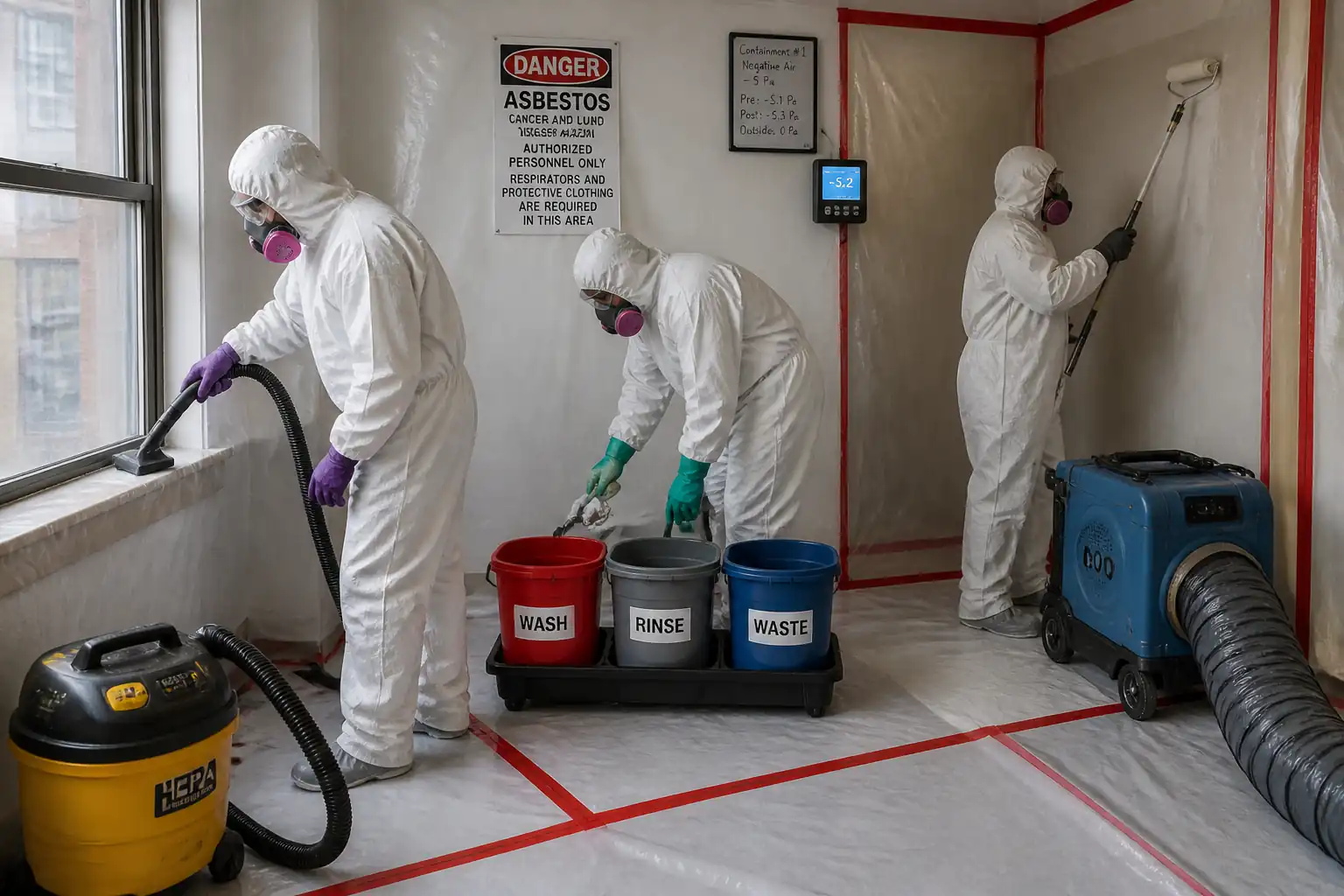

Method Statement: Lead Dust Cleanup, Decontamination, HEPA Vacuuming, Wet Wiping, Encapsulation, Waste Disposal, and Post-Cleanup Lead Wipe Clearance – Method Statement
AI-assisted method statement with matching ITP, PDF download, and Excel export.
More than a static template
Unlike a downloadable Word or PDF template, this method statement is an AI-assisted editable starting point connected directly to a matching Inspection and Test Plan. Every section is structured, project-adaptable, and ready to export.
- AI-assisted drafting — Customize every section with AI for your specific project scope.
- Linked ITP — A matching inspection and test plan is generated alongside the method statement.
- Multiple export formats — Download as a formatted PDF or editable Excel spreadsheet.
- Editable starting point, not a final document — Review, verify, and adjust all content against your project requirements before use.
Static template vs. Quollnet workflow
| Feature | Static template | Quollnet |
|---|---|---|
| Project-specific content | Manual fill-in required | AI-assisted customization |
| Linked ITP | Separate document, no link | Matching ITP included |
| Export formats | Usually PDF only | PDF and Excel |
| Structured sections | Free-form layout | 13 standardized sections |
| Saved to your account | Local file only | Cloud-saved, reusable |
| Content accuracy | You verify everything | AI-assisted, you still verify |
| Cost | Often free but time-intensive | Free to customize and download |
What you can customize
When you save this method statement to your account, every section becomes editable. The following 13 sections are included:
- Scope — Defines the activity and its boundaries.
- References — Standards, specifications, and drawings.
- Responsibilities — Roles and accountabilities.
- Resources — Labour, plant, and equipment summary.
- Materials — Materials and compliance requirements.
- Equipment — Tools and equipment details.
- Prerequisites — Hold points and pre-conditions.
- Method sequence — Step-by-step construction sequence.
- Safety controls — HSE risk controls and PPE.
- Environmental controls — Environmental mitigation measures.
- QA/QC — Quality inspection and test requirements.
- ITP — Inspection and Test Plan table (has its own page).
- Attachments — Referenced drawings and documentation.
Why this method statement is used
This method statement is used to define and communicate the approved procedure for carrying out method statement: lead dust cleanup, decontamination, hepa vacuuming, wet wiping, encapsulation, waste disposal, and post-cleanup lead wipe clearance on site. It ensures the work is planned in advance, the correct resources and controls are in place, and all personnel understand responsibilities, sequence, quality requirements, and safety controls before work begins. It aligns site execution with the documented scope and acceptance expectations.
Who uses this method statement
This method statement is used by contractors, site supervisors, project engineers, QA/QC engineers, HSE officers, consultants, and client representatives. It serves as a shared reference for planning, execution, supervision, inspection, and approval of the activity on site.
When it is prepared and submitted
The method statement is prepared before the work activity starts and submitted as part of the pre-construction documentation package for review and approval.
Who reviews or approves it
The method statement is usually submitted to the client representative, consultant, resident engineer, or project management consultant for review and approval before the work commences.
Important approval note
This method statement is an AI-assisted editable starting point, not a pre-approved document. Before use on any project, all content must be reviewed and approved by the relevant parties (superintendent, principal contractor, or client representative) in accordance with your contract and project quality plan.
For example: if your specification requires a departure from a referenced standard, that departure must be documented and approved separately — this method statement will not capture that automatically. Always verify against your applicable drawings, specifications, and regulatory requirements.
Method statement content
Scope
Work Summary
- Post-demolition lead dust cleanup and decontamination of interior spaces including: containment setup, negative air establishment, HEPA vacuuming, wet wiping, repeat HEPA vacuuming, encapsulation of approved residual surfaces, and management of all lead-containing waste.
- Post-cleanup visual inspection and independent clearance wipe sampling; dismantling containment after clearance achieved.
Areas
- Interior rooms, corridors, stairwells, mechanical rooms, and any connected spaces potentially impacted by demolition dust migration.
Inclusions
- Isolation of HVAC and openings; surface cleaning of floors, walls, ceilings, fixtures, ledges, window sills/troughs, radiators, cabinets, and equipment exteriors.
- Application of lead paint encapsulant to specified residual substrates in sound condition.
- Packaging, labeling, transport, and disposal of lead-containing waste per applicable regulations.
- Documentation: logs, checklists, manometer records, equipment certificates, training records, chain-of-custody, lab results, and waste manifests.
Exclusions
- Structural demolition, abrasive blasting, chemical stripping, and removal of intact LBP systems not designated for encapsulation.
- Restoration of finishes beyond encapsulation unless specified.
References
| Document Type | Reference / Number | Revision | Notes |
|---|---|---|---|
| Regulation | OSHA 29 CFR 1926.62 | ||
| Regulation | OSHA 29 CFR 1910.134 | ||
| Regulation | 40 CFR 745 | ||
| Guideline | HUD Guidelines (latest edition) | ||
| ASTM Standard | ASTM E1728 | ||
| ASTM Standard | ASTM E1792 | ||
| ASTM Standard | ASTM E1186 | Reference practice for smoke/visual leak checks of containment | |
| ASTM Standard | ASTM E1795/E1797/E1869 | ||
| EPA Method | SW-846 1311 | ||
| Standard | IEST/ISO/EN (HEPA) | Use manufacturer certification within 12 months [Verify] |
Responsibilities
| Role | Responsibility | Name / Party |
|---|---|---|
| Client Rep | Approval/Witness | Client |
| PM | Management | Contractor |
| Supervisor | Supervision | Contractor |
| Competent Person | HSE Compliance | Contractor |
| IH/Assessor | Third-Party | Independent |
| QA/QC | QA/QC | Contractor |
| HSE | HSE | Contractor |
| Env. Manager | Environmental | Contractor |
| Operatives | Execution | Contractor |
| Lab | Testing | Independent |
Resources
| Resource Type | Description | Quantity | Remarks |
|---|---|---|---|
| Manpower | Lead Abatement Supervisor (1); Competent Person (1); HSE Officer (1); QA/QC Engineer (1); Industrial Hygienist (as needed); Lead-certified operatives (4–12) [Verify] | As required | |
| Training | OSHA lead awareness/worker training; EPA RRP certification (if applicable); respirator fit tests (annual); first aid; equipment operators trained; encapsulant applicator training (manufacturer) | ||
| Monitoring | Personal air monitoring for initial exposure assessment; real-time differential pressure logging; manometer checks; smoke tests for leakage (as applicable) |
Materials
| Material | Specification / Grade | Quantity | Remarks |
|---|---|---|---|
| PE sheeting | Clear/black 6-mil | As required | |
| Tape & zippers | As required | ||
| Filters | IEST/EN 1822 | Per equipment | |
| Detergent | As required | ||
| Wipes | ASTM E1792 | Per sampling plan | |
| Encapsulant | Manufacturer datasheet [Verify] | Per take-off | |
| Bags/Drums | UN/DOT rated [Verify] | As required | |
| Signage | As required |
Equipment
| Equipment | Capacity / Type | Quantity | Inspection Required |
|---|---|---|---|
| Portable HEPA | ≥ 135 CFM typical [Verify] | 1 per 2 operatives [Verify] | Yes |
| NAMs | 1,000–2,000 CFM each [Verify] | As calculated | Yes |
| Manometer | 1 per containment | Yes | |
| Sprayer | Tip 0.017–0.021 in [Verify] | As required | Yes |
| As required | Yes |
Prerequisites
Administrative
- Approved method statement and ITP; risk assessment/JHA completed and briefed.
- Notifications submitted to authorities where required (e.g., state/local health department) [Verify].
- Submittals approved: HEPA certification, encapsulant datasheets, PPE program, training records, waste management plan.
Site and Occupancy
- Areas vacated by occupants; access controlled; “Danger—Lead Work Area” signage installed.
- HVAC isolated: shut down impacted AHUs; seal returns/supplies with 6-mil poly and tape.
- Sensitive equipment and finishes protected or removed.
Utilities & Permits
- Electrical supply arranged for NAMs and vacuums; cords routed to avoid trip hazards.
- Permits: hot work N/A unless specified; work-at-height permits if required; waste transport permits [Verify].
Baseline Measurements (if specified)
- Optional pre-clean baseline dust-wipe sampling to inform scope and establish transformation metrics [Verify].
- Initial exposure assessment per OSHA 1926.62(d): personal air sampling to set respiratory protection level.
Emergency Preparedness
- Spill kits for liquid cleaners/encapsulant; first-aid and eyewash; emergency contact list posted.
Method Sequence
| Step | Activity | Description | Responsibility | Inspection / Hold Point |
|---|---|---|---|---|
| 1 | Mobilization & briefing | Deliver materials/equipment; conduct induction and toolbox talk on lead hazards, sequence, and emergency procedures. | Lead Abatement Supervisor / HSE | Attendance verified |
| 2 | Containment setup | Install 6-mil poly on floors/walls; seal penetrations; construct decon/anteroom; install zipper doors; place sticky mats at exits. | Lead-Certified Operatives | Visual |
| 3 | Negative pressure & ventilation | Install NAMs and ducting; start HEPA units; establish ≥ 0.02 in. w.g. (5 Pa) negative pressure and target 4–6 ACH [Verify]. | Lead Abatement Supervisor | Manometer logging |
| 4 | Gross debris removal | Mist debris lightly to suppress dust; collect using shovels/pans; place into 6-mil bags or drums; no dry sweeping. | Operatives | Supervisor check |
| 5 | First pass HEPA vacuuming (top-down) | HEPA vacuum ceilings, upper walls, fixtures, ducts exteriors, ledges, window sills/troughs, and floors. Use brush/crevice tools; slow overlapping strokes (~1 ft/s). | Operatives | QA/QC spot checks |
| 6 | Wet wiping/mopping | Use 3-bucket method (detergent/wash, rinse, clean); dedicated microfiber cloths/mops. Change solution every 10–20 m² or when visibly dirty [Verify]. Wipe sills/troughs thoroughly. | Operatives | Supervisor observation |
| 7 | Drying & second HEPA vacuum | Allow surfaces to dry; perform second HEPA vacuum on all surfaces (especially floors and carpet edges if present). | Operatives | QA/QC verification |
| 8 | Encapsulation (where specified) | Prepare sound, clean, dry surfaces; mask adjacent areas; apply encapsulant per manufacturer (typically 2 coats, cross-rolled). Measure WFT each coat to achieve specified DFT (e.g., 10–20 mils DFT total) [Verify]. | Encapsulant Applicator | In-process QC |
| 9 | Interim visual inspection | Supervisor/QA perform top-down visual check under bright light. Re-clean localized areas if required. | Supervisor / QA/QC | Visual |
| 10 | Clearance wipe sampling (independent) | Independent assessor collects wipes per ASTM E1728 using ASTM E1792 wipes. Typical minimum: 1 floor sample/room; 1 interior sill/room; 1 trough/room (if present); include field blank(s) [Verify plan/jurisdiction]. | Industrial Hygienist / Risk Assessor | Sampling oversight |
| 11 | Re-clean & re-test (if needed) | If any result exceeds limits, repeat Steps 5–7 on affected rooms; re-sample those locations until passing. | Supervisor / IH | Follow-up sampling |
| 12 | Waste management & off-haul | Double-bag or drum wastes; label as “Lead-Containing Waste.” Determine hazardous classification via TCLP where required. Store in secure, covered area with secondary containment. Arrange transport/disposal to approved facility. | Environmental Manager | Container inspection |
| 13 | Demobilization | After clearance achieved, switch off NAMs, seal filters, dismantle containment carefully (wet-wipe as removed), remove equipment, reopen HVAC after verification. | Supervisor | Final walkthrough |
Health, Safety, and Risk Controls
Key Hazards and Controls
- Lead dust inhalation/ingestion
- Consequence: Acute/long-term toxicity, elevated blood lead levels.
- Engineering/procedural controls: Negative pressure containment (≥ 0.02 in. w.g.), HEPA filtration, wet methods, no dry sweeping, dedicated decon room, hygiene facilities (handwash), no eating/drinking in work area.
- PPE: Half-face elastomeric respirator with P100 filters (upgrade per exposure monitoring), disposable hooded coveralls, nitrile gloves (double-glove), safety glasses/goggles.
- Collective measures: Access control, signage, worker rotation to minimize exposure.
-
Inspection/permits/supervision: Initial exposure assessment per OSHA 1926.62(d); respirator program per 1910.134; competent person oversight; medical surveillance where required.
-
Containment breach/negative pressure loss
- Consequence: Dust migration, cross-contamination.
- Controls: Continuous manometer with alarm; documented hourly checks; smoke tests at critical barriers; redundant NAM or backup power (if critical) [Verify feasibility].
- PPE: As above.
- Collective: Double-door entry; sticky mats; tool/equipment decon.
-
Inspection: Hold point—containment verification before works; log reviews by QA/HSE.
-
Slips, trips, and falls (wet floors, cords, poly wrinkles)
- Consequence: Sprains/fractures.
- Controls: Cord management; non-slip shoe covers; staged cleaning to keep egress paths dry; good lighting.
- PPE: Slip-resistant footwear, gloves.
- Collective: Housekeeping schedule; cord covers.
-
Inspection: Daily HSE walkdowns; rectify within shift.
-
Work at height (ladders/step-ups for high surfaces)
- Consequence: Falls causing serious injury.
- Controls: Only industrial step ladders; maintain 3-point contact; spotter where needed; prohibit overreach; use mobile platforms if duration/height warrants.
- PPE: Fall protection if guardrails absent and exposure > threshold [Verify law]; hard hats.
- Collective: Eliminate need by extendable tools when feasible.
-
Inspection: Pre-use ladder inspection; work-at-height permit where applicable.
-
Chemical exposure (detergents/encapsulant)
- Consequence: Skin/eye irritation, VOC exposure.
- Controls: Use low-VOC products; ventilation; follow SDS; mixing/dilution per manufacturer; keep containers closed.
- PPE: Chemical-resistant gloves (nitrile), splash goggles, coveralls; respirator if required by SDS/exposure.
- Collective: Spill kits and secondary containment.
-
Inspection: SDS available; HAZCOM training per 29 CFR 1910.1200.
-
Manual handling and repetitive strain
- Consequence: Musculoskeletal disorders.
- Controls: Team lifts for NAMs; use dollies; job rotation; micro-breaks.
- PPE: Work gloves, supportive footwear.
- Collective: Mechanical aids.
-
Inspection: HSE supervision.
-
Electrical hazards from equipment
- Consequence: Shock, fire.
- Controls: PAT-tested equipment where applicable; GFCI/RCD-protected circuits; dry handling; cable management.
- PPE: Dielectric gloves if needed; non-conductive footwear.
- Collective: Lockout of non-required circuits [Verify].
-
Inspection: Pre-use checks; defective kit tagged out.
-
Waste handling and transport
- Consequence: Exposure, spills, regulatory non-compliance.
- Controls: Double-bagging; drum liners; proper labels; sealed containers; dolly use; route planning.
- PPE: As for lead handling.
- Collective: Dedicated waste staging area with secondary containment.
-
Inspection: Container integrity checks; manifest verification.
-
Noise and vibration (NAMs, vacuums)
- Consequence: Hearing loss, discomfort.
- Controls: Low-noise equipment; limit exposure time.
- PPE: Hearing protection when >85 dBA TWA.
- Collective: Administrative controls.
- Inspection: Spot noise checks [Verify].
[Verify per project HSE plan and local regulations]
Environmental Controls
Controls to Prevent Pollution and Nuisance
- Dust and Air Emissions
- Maintain negative pressure and HEPA filtration; seal exhaust duct to exterior away from intakes/occupied areas; change pre-filters when ΔP indicates loading per OEM.
- Wastewater
- Collect mop/wash water; do not discharge to storm drains; containerize and dispose per local regulations or sanitary sewer with approval [Verify]. Record volumes.
- Solid Waste
- Segregate lead-containing waste; label containers; perform TCLP for waste classification where required; store under cover with spill pallets; maintain inventory.
- Noise and Working Hours
- Adhere to local noise limits and permitted hours; select low-noise equipment where possible.
- Spills and Leaks
- Secondary containment for liquids/encapsulant; spill kits available; report and remediate immediately.
- Protection of Adjacent Areas
- Block/cover return air paths; seal doors/penetrations; establish clean corridor outside containment; protective floor coverings for egress routes.
- Transport
- Use permitted carriers; secure loads; maintain manifests and weigh tickets.
[Verify per project environmental plan and local regulations]
Quality Assurance and Quality Control
Submittals
- Equipment HEPA certifications (within 12 months) and NAM/HEPA filter data sheets.
- Encapsulant manufacturer data (application method, WFT/DFT, cure time), color samples.
- Training and certifications (lead worker/supervisor, RRP, respirator fit testing).
- Waste management plan and disposal facility approvals.
Controls and Records
- Differential pressure: log at ≤ 60-min intervals; alarm set at -0.02 in. w.g. threshold.
- Cleaning sequence verification: checklists for first HEPA, wet wipe, second HEPA.
- Encapsulant application: record ambient temperature/RH; WFT readings each coat; coverage rate vs. theoretical; cure verification per TDS.
- Equipment maintenance: pre-use checklists; filter change logs; calibration certificates (manometers within 12 months).
- Sampling QA: independent sampler; use field blanks (≥ 5% of total) [Verify]; NLLAP lab; chain-of-custody.
- Acceptance criteria: visual clean; clearance wipes within jurisdictional standards (e.g., floors ≤ 10 µg/ft²; sills ≤ 100 µg/ft²; troughs ≤ 400 µg/ft²) [Verify].
- Nonconformance: issue NCR for failed clearance; corrective action—re-clean affected rooms; re-sample until pass.
Handover
- Compile QA dossier: approvals, pressure logs, cleaning and inspection checklists, WFT/DFT logs, lab reports, waste manifests, photo records, clearance certificate.
Attachments
- Manufacturer data sheets: HEPA units, filters, encapsulant (including WFT/DFT targets and cure times).
- Equipment calibration and HEPA/PAO/DOP certificates (≤ 12 months) [Verify].
- Training/competency records, medical surveillance (as required), respirator fit tests.
- Risk Assessment/JHA and emergency response plan.
- Waste management plan, disposal facility acceptance letters, transport permits.
- Sampling plan, chain-of-custody templates, example lab report.
- Daily checklists: containment, cleaning sequence, pressure logs, WFT/DFT logs, corrective actions.
This content is a read-only public reference. Download or customize to get an editable version.
ITP preview
The first inspection activities from the linked ITP for Method Statement: Lead Dust Cleanup, Decontamination, HEPA Vacuuming, Wet Wiping, Encapsulation, Waste Disposal, and Post-Cleanup Lead Wipe Clearance:
| Activity | Inspection / Test | Acceptance Criteria | Responsibility | Record |
|---|---|---|---|---|
| Containment installation | Visual inspection; smoke test if specified | Continuous seals; protected penetrations; functional decon entry | Lead Abatement Supervisor / QA | Containment checklist, photos |
| Negative pressure establishment | Manometer reading and data logging | ≥ 0.02 in. w.g. (5 Pa) negative pressure; target ≥ 4–6 ACH [Verify] | Supervisor / QA | Pressure logs, calibration certs |
| Equipment readiness (HEPA vacs/NAMs) | Pre-use inspection; certificate check | HEPA/PAO/DOP cert within 12 months; intact seals/hoses; pre-filters installed | QA / HSE | Pre-use checklists, certs |
Showing 3 of 11 inspection activities. View full ITP →
Related Inspection and Test Plan
An Inspection and Test Plan (ITP) is available for Method Statement: Lead Dust Cleanup, Decontamination, HEPA Vacuuming, Wet Wiping, Encapsulation, Waste Disposal, and Post-Cleanup Lead Wipe Clearance. The ITP defines the inspection activities, acceptance criteria, hold and witness points, responsible parties, and records required to verify the work described in this method statement.
View the Method Statement: Lead Dust Cleanup, Decontamination, HEPA Vacuuming, Wet Wiping, Encapsulation, Waste Disposal, and Post-Cleanup Lead Wipe Clearance ITP →