
Inspection and Test Plan for Method Statement: Contaminated Soil Excavation and Remediation Works
AI-assisted inspection and test plan connected to a method statement, with PDF and Excel export.
More than a static template
Unlike a downloadable Word or PDF template, this ITP is an AI-assisted editable starting point directly connected to its method statement. Every inspection activity, hold point, and acceptance criterion is structured and ready to adapt to your project.
- AI-assisted customization — Tailor inspection activities and acceptance criteria to your specific project scope.
- Linked method statement — This ITP is connected to the corresponding method statement describing the work sequence.
- Multiple export formats — Download as a formatted PDF or editable Excel spreadsheet.
- Editable starting point, not a final document — Review and verify all content against your project specifications and standards before use.
What you can customize
When you save this ITP to your account, every inspection row becomes editable. You can add, remove, or modify:
- Inspection activity — Description of what is being inspected.
- Inspection type — Hold point (H), Witness point (W), Review (R), or Monitor (M).
- Responsibility — Contractor, subcontractor, engineer, or client.
- Frequency — How often the inspection occurs.
- Acceptance criteria — Referenced standard or specification requirement.
- Records — Forms, test reports, or checklists required as evidence.
Why this ITP is used
To assure that excavation, handling, transport, and validation of contaminated soils meet specification and regulatory requirements.
Who uses this inspection and test plan
Project Managers, Site Managers, HSE, Environmental Scientists, Quality Managers, and Client Representatives.
When this ITP is prepared and submitted
From pre-start permitting through excavation, transport, validation, backfilling, and final handover.
Who receives or approves this ITP
Client/Engineer and Regulators as required.
Inspection scope
Permits, monitoring setup, excavation controls, stockpiles, sampling QA/QC, loadout, validation, backfill acceptance, compaction, and final inspection.
Typical hold, witness, and review points
Permit-to-dig; first excavation; sampling events; first waste load; validation sampling; backfill release; final walkdown.
Typical inspection records
Permits, monitoring logs, calibration certs, CoC and lab CoAs, consignment notes, weighbridge tickets, inspection forms, as-builts, completion certificate.
Important approval note
This ITP is an AI-assisted editable starting point, not a pre-approved document. Before use on any project, all inspection activities, hold points, and acceptance criteria must be reviewed and approved by the relevant parties (superintendent, principal contractor, or client representative) in accordance with your contract and project quality plan.
Always verify acceptance criteria against your applicable drawings, specifications, and regulatory requirements. Hold points must be confirmed with the relevant authority before work proceeds past that point.
Inspection and test plan
| Activity | Inspection / Test | Acceptance Criteria | Responsibility | Record |
|---|---|---|---|---|
| Permits and Pre-start Approvals | Verify RAMS, PTD, TMP, facility pre-acceptance, emergency plan | All approvals in place and in date; roles assigned; inductions complete | PM / HSE | Approval register, inductions |
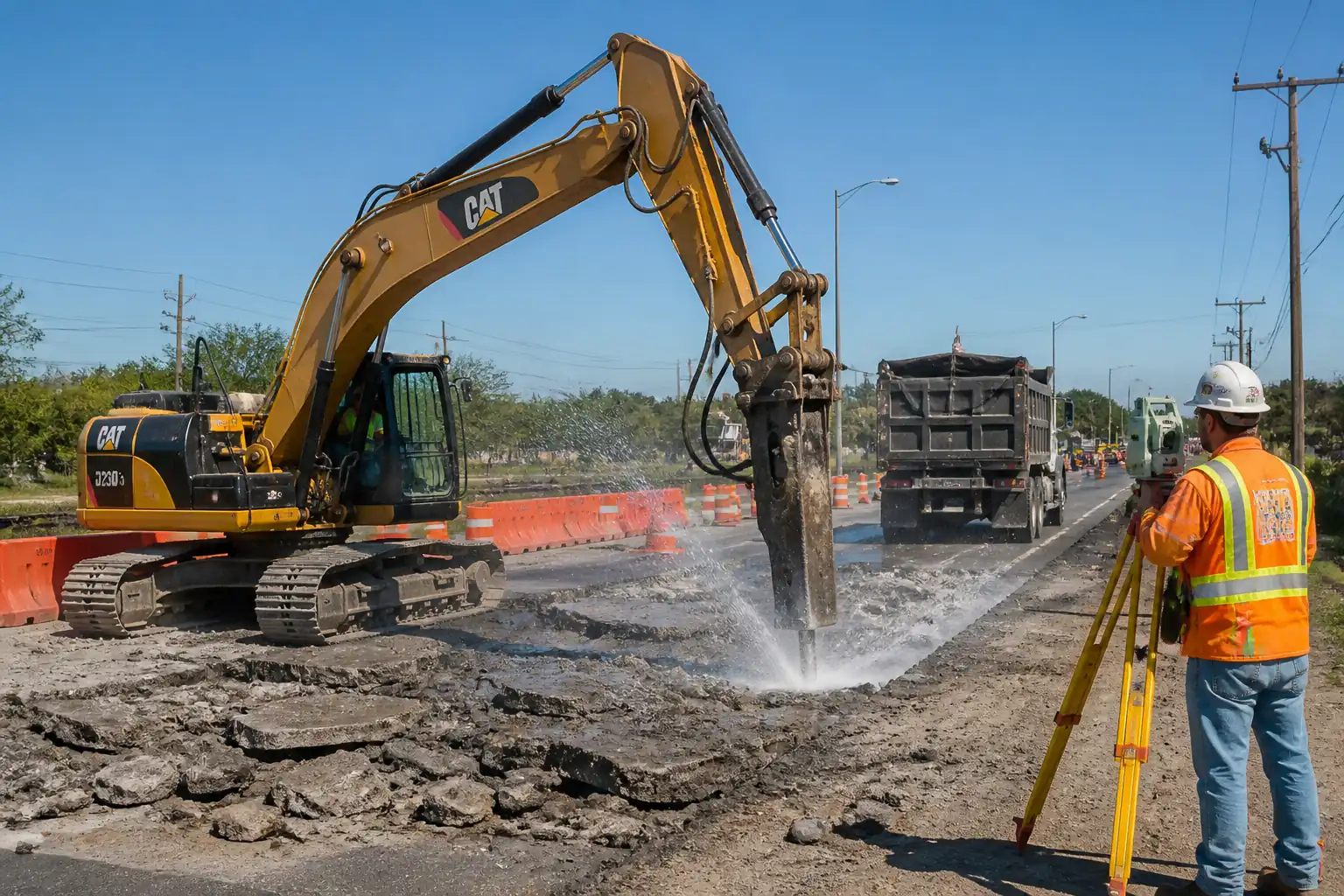
| Utilities Clearance | GPR/EML scans and potholing records | All known services located/marked; PTD signed | Site Manager / Surveyor | PTD, scan maps, photos |
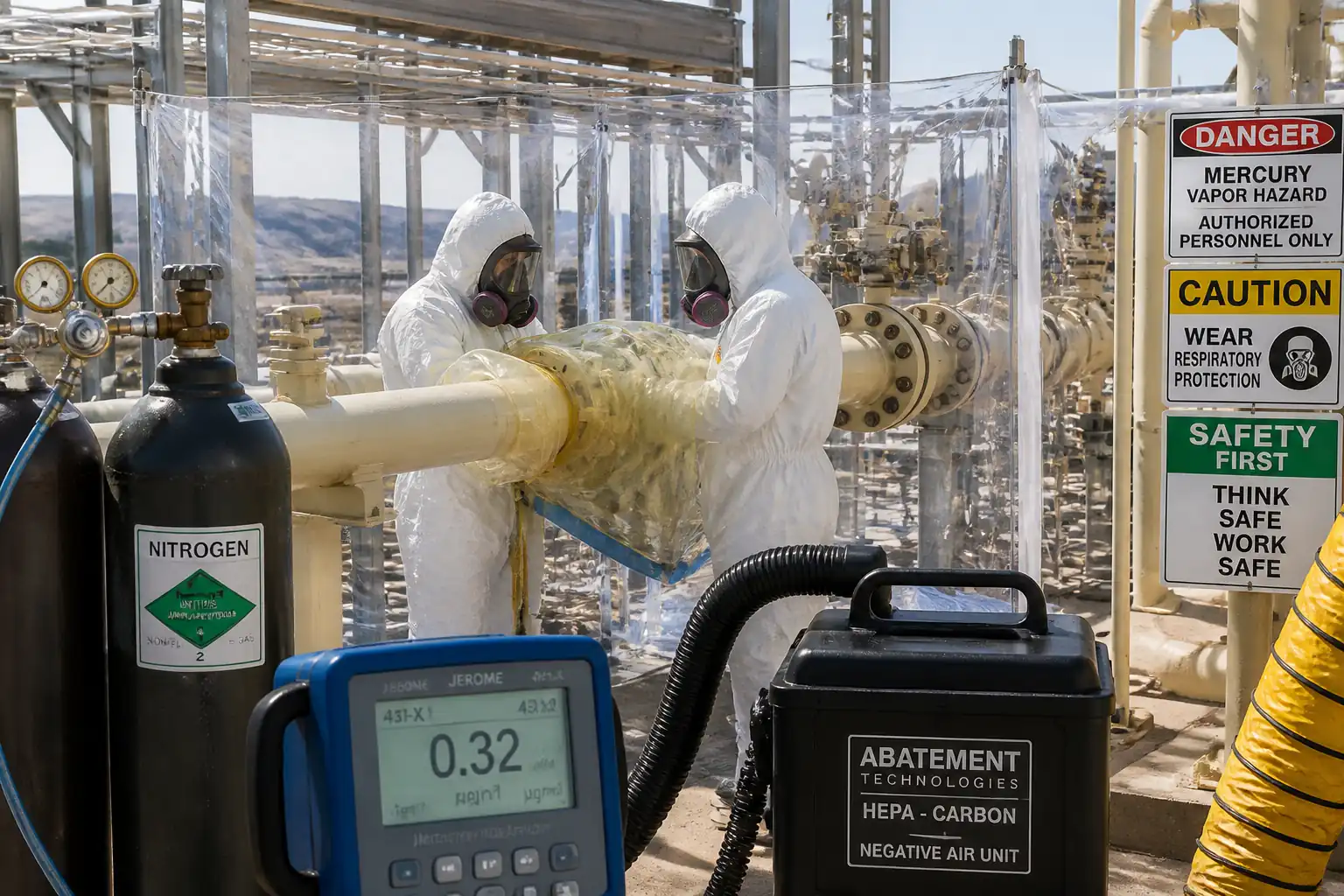
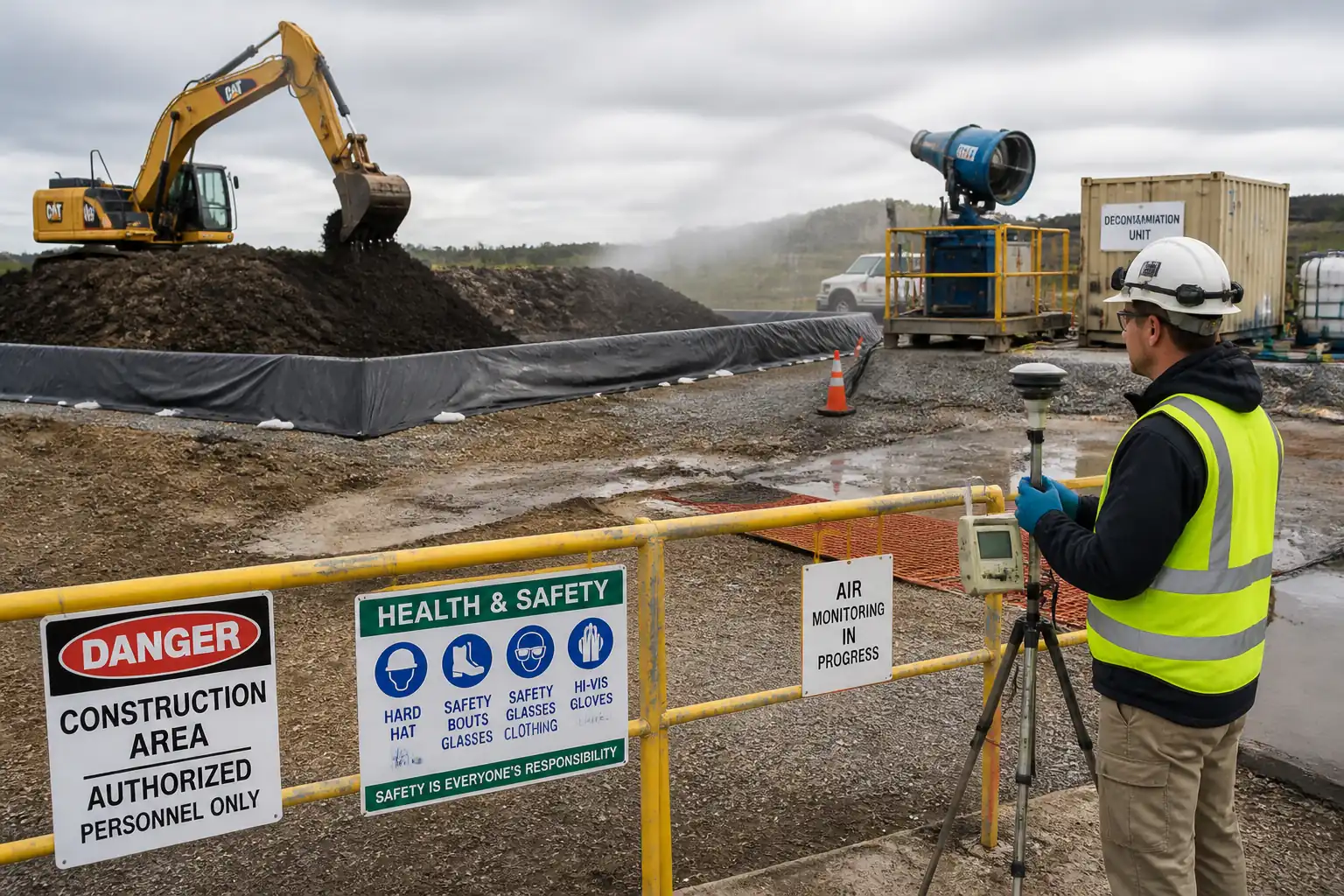
| Environmental Monitoring Setup | Calibration/bump tests; siting per wind | Cal certs current; alarms set; baseline logged | Env. Scientist | Cal logs; baseline sheets |
| Stockpile Pad and Containment | Liner integrity; bunds; covers | No punctures; bund continuous; covers secured | HSE / Site Manager | Pad inspection form |
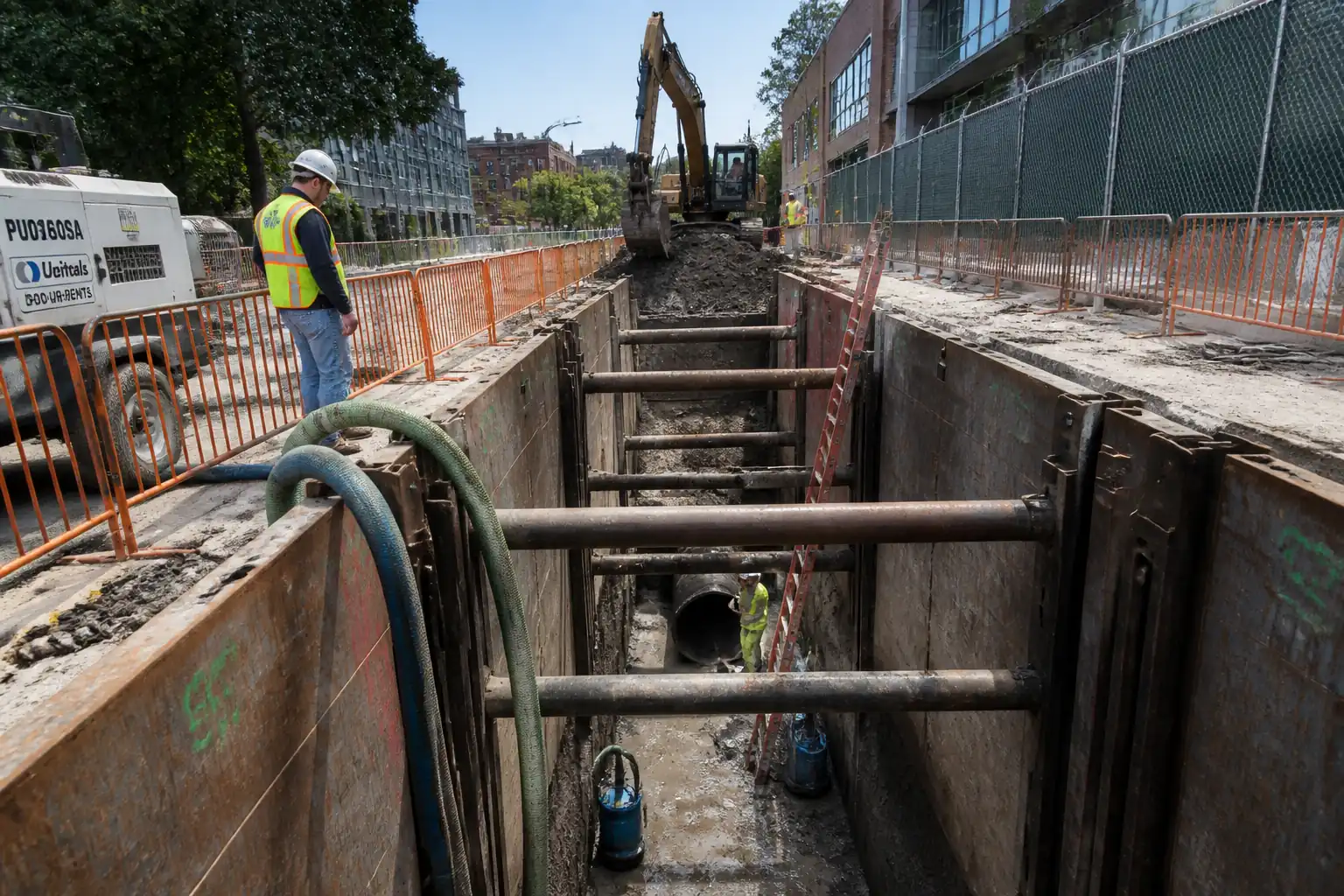
| Controlled Excavation | Slope/shoring compliance; dust/VOC within limits | Stability maintained; no exceedances; suppression effective | Site Manager / HSE | Daily reports; monitor logs |
| Waste Segregation and Labelling | Labels, separation distances, covers | Correct hazard class; 1 m separation; covers on | Foreman / HSE | Stockpile register |
| WAC/Classification Sampling | Sampling density; QC samples (≥10%); preservation | Plan followed; QC within control limits | Env. Scientist / Quality | COC; lab CoA; field logs |
| Loadout and Transport | Load cover; clean wheels; paperwork | Consignment note valid; no leakage; weigh ticket obtained | Foreman / Carrier | Manifests; tickets; photos |
| Validation Sampling of Excavation | Sampling grid and methods; labs selected | Results ≤ cleanup criteria; data completeness ≥95% | Env. Scientist / Client (witness) | CoC; lab CoA; maps |
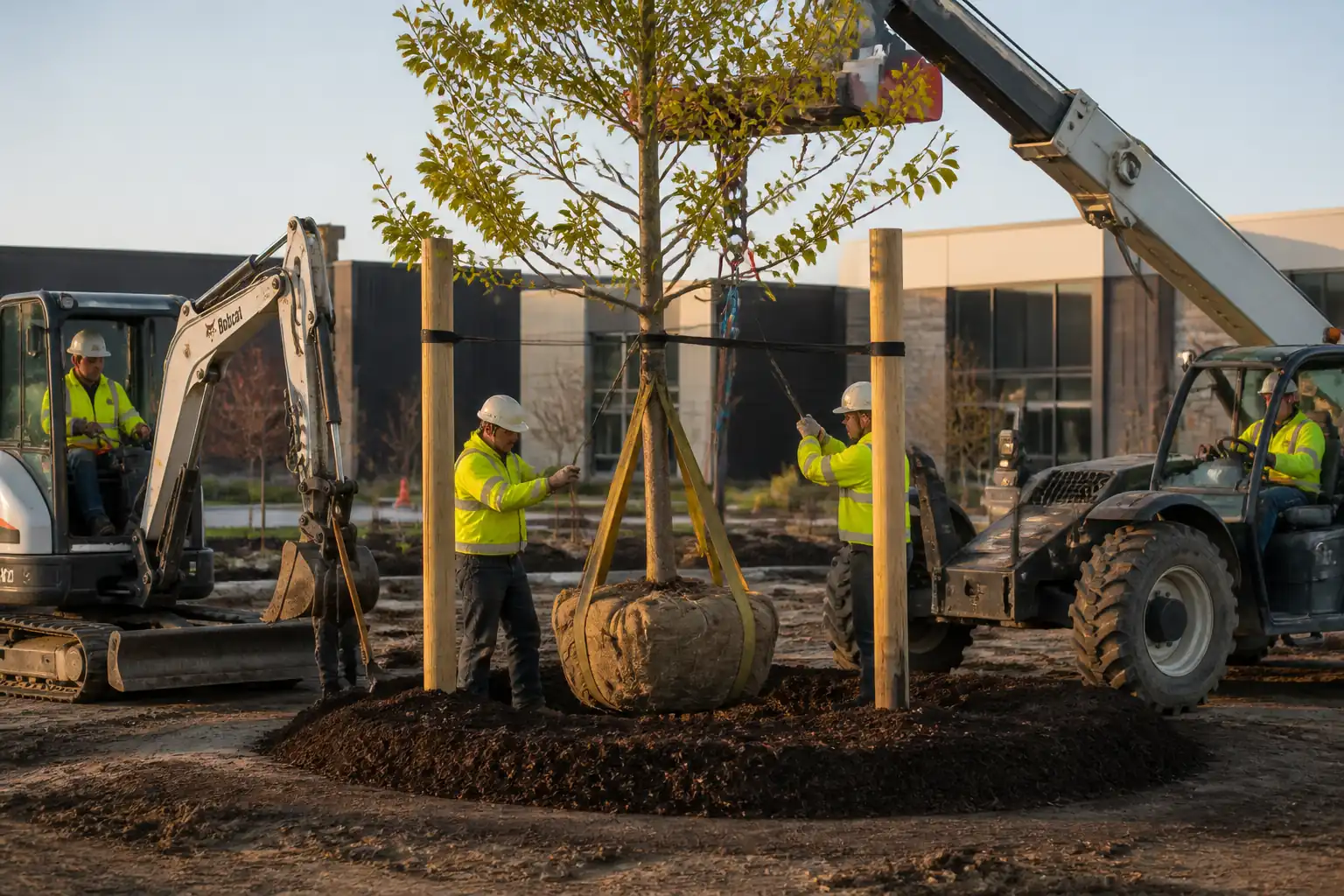
| Backfill Material Acceptance | Supplier CoC; chemical analysis; gradation | Meets clean fill criteria; free of debris/organics | Quality / Env. | Certificates; lab reports |
| Compaction Testing | FDT/nuclear density per lot | ≥95% MDD (ASTM D698) or per spec | Quality | Test reports |
| Final Inspection and Handover | Documentation completeness; reinstatement quality | All NCRs closed; records complete; area safe and clean | PM / Client | Handover certificate; dossier |
This table is a read-only public reference. Download the PDF or Excel version, or customize this ITP to edit it for your project.
Frequently asked questions
Related method statement
This Inspection and Test Plan is associated with the Method Statement: Contaminated Soil Excavation and Remediation Works method statement, which describes the step-by-step construction sequence, resources, materials, equipment, safety controls, and environmental controls for this activity.
View the Method Statement: Contaminated Soil Excavation and Remediation Works method statement →Continue with related inspection, method statement, article, and checklist resources.