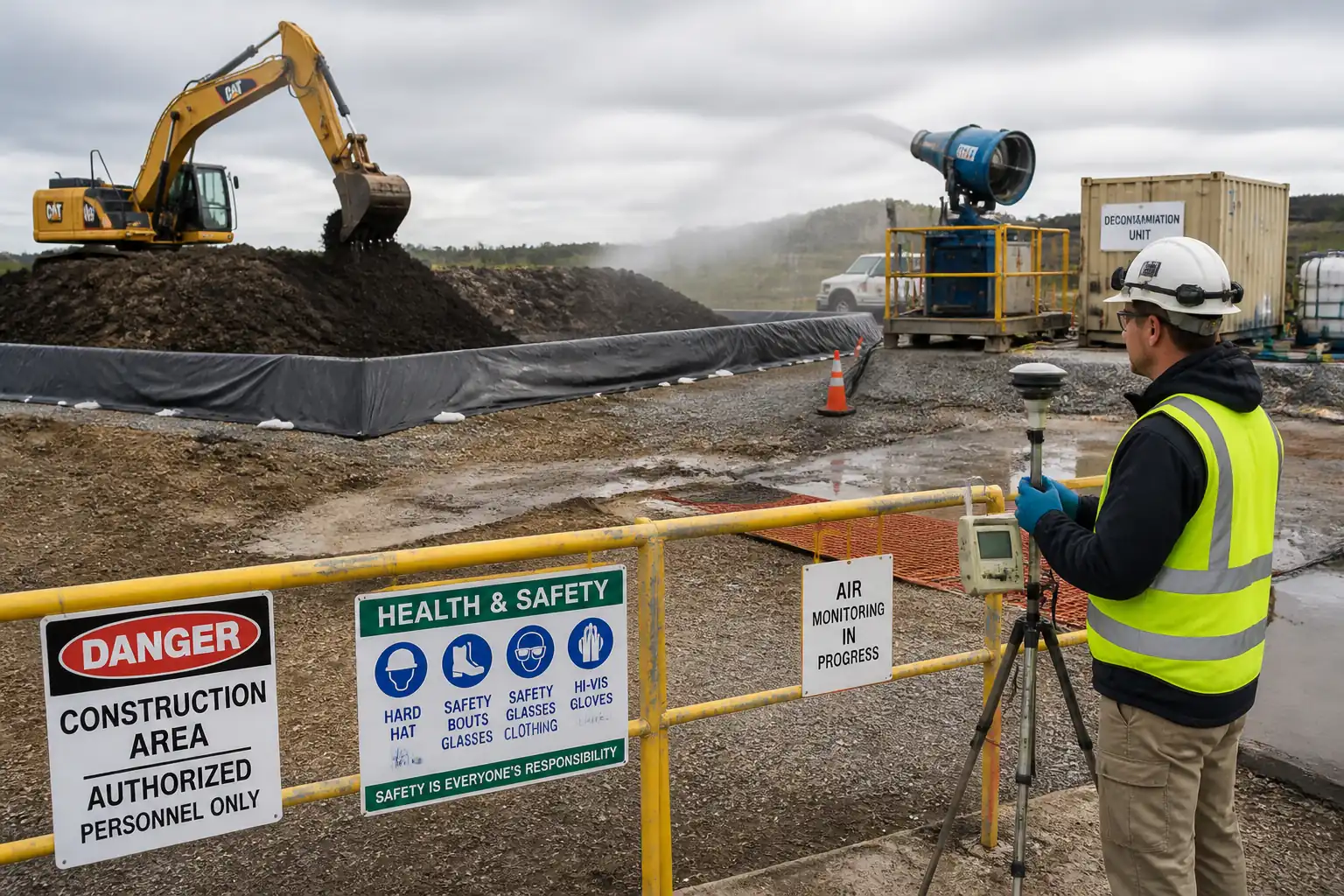

Method Statement: Contaminated Soil Excavation and Remediation Works – Method Statement
AI-assisted method statement with matching ITP, PDF download, and Excel export.
More than a static template
Unlike a downloadable Word or PDF template, this method statement is an AI-assisted editable starting point connected directly to a matching Inspection and Test Plan. Every section is structured, project-adaptable, and ready to export.
- AI-assisted drafting — Customize every section with AI for your specific project scope.
- Linked ITP — A matching inspection and test plan is generated alongside the method statement.
- Multiple export formats — Download as a formatted PDF or editable Excel spreadsheet.
- Editable starting point, not a final document — Review, verify, and adjust all content against your project requirements before use.
Static template vs. Quollnet workflow
| Feature | Static template | Quollnet |
|---|---|---|
| Project-specific content | Manual fill-in required | AI-assisted customization |
| Linked ITP | Separate document, no link | Matching ITP included |
| Export formats | Usually PDF only | PDF and Excel |
| Structured sections | Free-form layout | 13 standardized sections |
| Saved to your account | Local file only | Cloud-saved, reusable |
| Content accuracy | You verify everything | AI-assisted, you still verify |
| Cost | Often free but time-intensive | Free to customize and download |
What you can customize
When you save this method statement to your account, every section becomes editable. The following 13 sections are included:
- Scope — Defines the activity and its boundaries.
- References — Standards, specifications, and drawings.
- Responsibilities — Roles and accountabilities.
- Resources — Labour, plant, and equipment summary.
- Materials — Materials and compliance requirements.
- Equipment — Tools and equipment details.
- Prerequisites — Hold points and pre-conditions.
- Method sequence — Step-by-step construction sequence.
- Safety controls — HSE risk controls and PPE.
- Environmental controls — Environmental mitigation measures.
- QA/QC — Quality inspection and test requirements.
- ITP — Inspection and Test Plan table (has its own page).
- Attachments — Referenced drawings and documentation.
Why this method statement is used
This method statement is used to define and communicate the approved procedure for carrying out method statement: contaminated soil excavation and remediation works on site. It ensures the work is planned in advance, the correct resources and controls are in place, and all personnel understand responsibilities, sequence, quality requirements, and safety controls before work begins. It aligns site execution with the documented scope and acceptance expectations.
Who uses this method statement
This method statement is used by contractors, site supervisors, project engineers, QA/QC engineers, HSE officers, consultants, and client representatives. It serves as a shared reference for planning, execution, supervision, inspection, and approval of the activity on site.
When it is prepared and submitted
The method statement is prepared before the work activity starts and submitted as part of the pre-construction documentation package for review and approval.
Who reviews or approves it
The method statement is usually submitted to the client representative, consultant, resident engineer, or project management consultant for review and approval before the work commences.
Important approval note
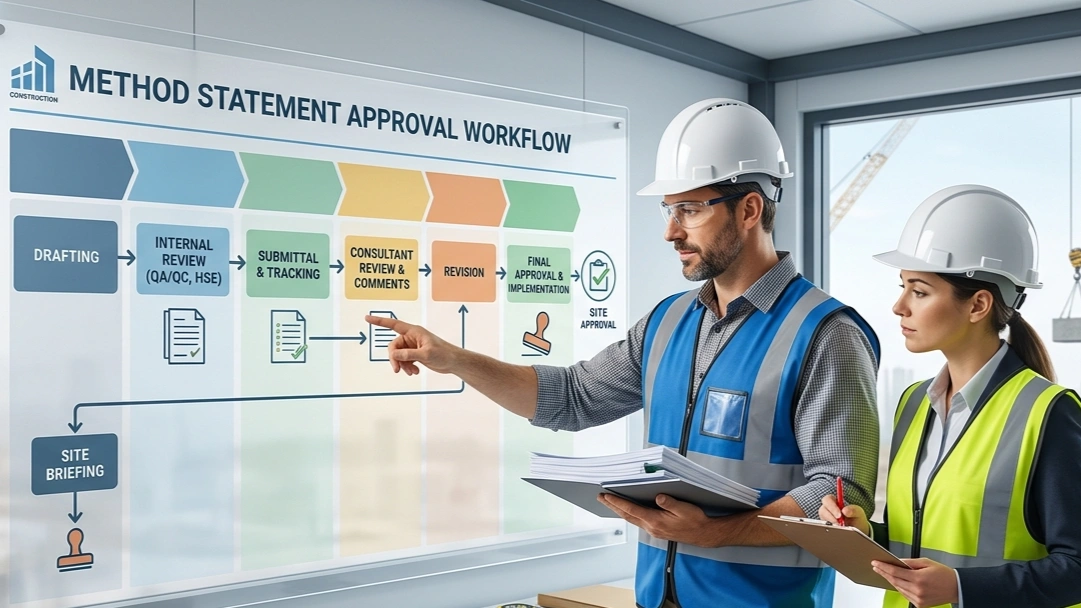
This method statement is an AI-assisted editable starting point, not a pre-approved document. Before use on any project, all content must be reviewed and approved by the relevant parties (superintendent, principal contractor, or client representative) in accordance with your contract and project quality plan.
For example: if your specification requires a departure from a referenced standard, that departure must be documented and approved separately — this method statement will not capture that automatically. Always verify against your applicable drawings, specifications, and regulatory requirements.
Method statement content
Scope
Overview
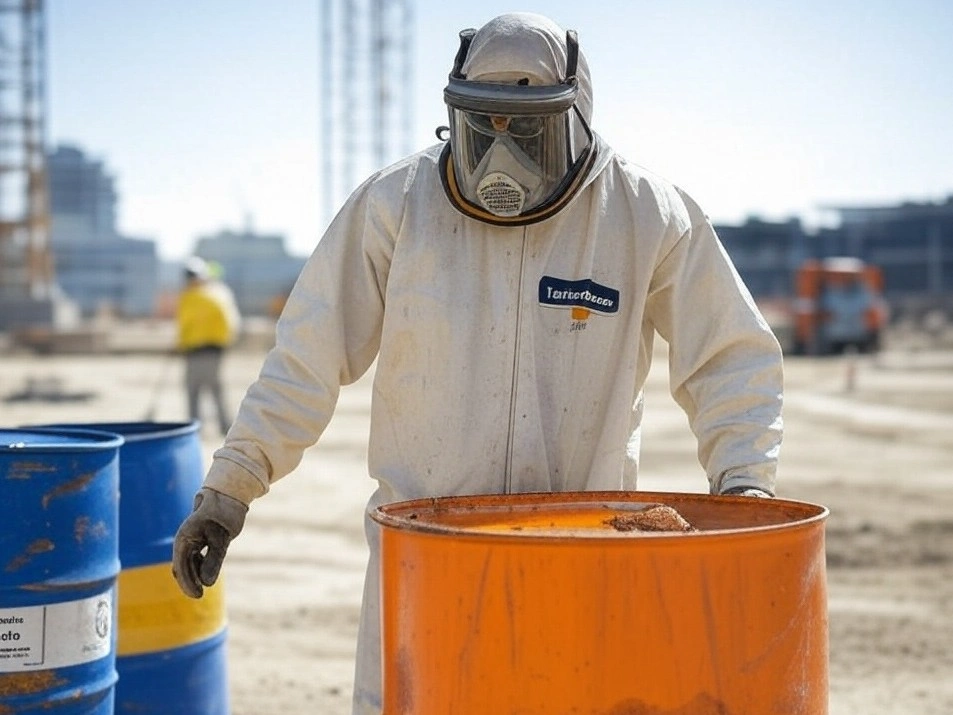
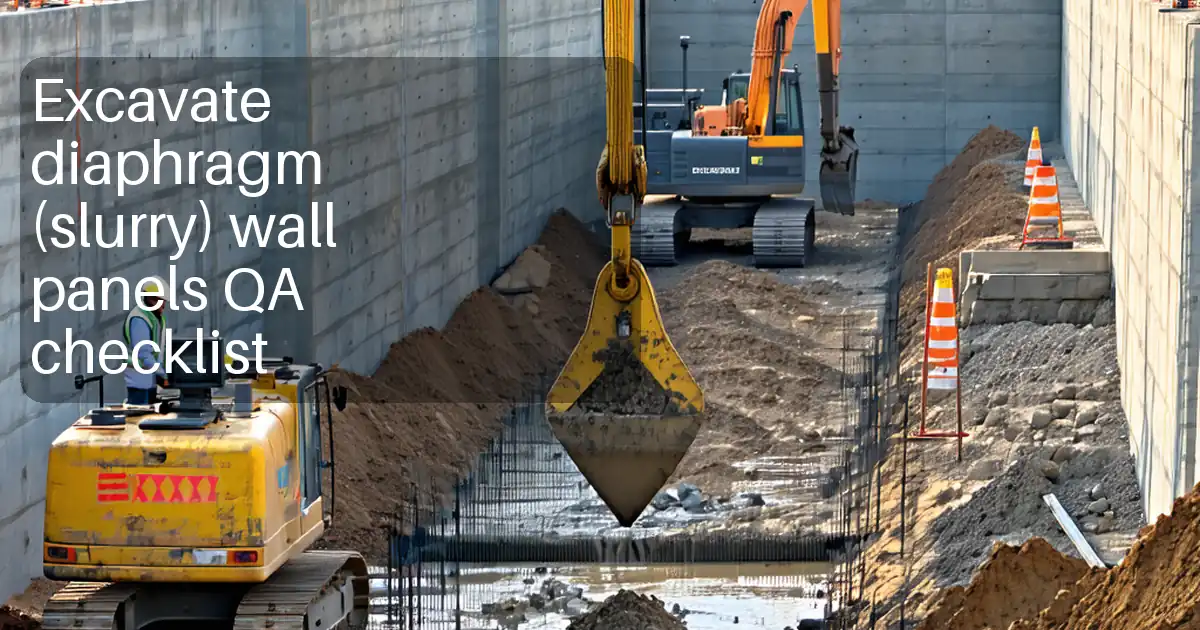
This method statement covers contaminated soil excavation and remediation works including: hazardous material identification; delineation and segregation; controlled excavation; engineering controls (dust/VOC suppression, decontamination); environmental and occupational exposure monitoring; temporary stockpiling; waste classification; controlled loading and transportation; disposal/ treatment documentation; validation sampling and laboratory analysis; QA/QC inspections; and regulatory compliance records prior to backfilling and area reinstatement.
Inclusions
- Pre-construction investigations, permits, notifications, and risk assessments.
- Establishment of exclusion zones, decontamination facilities, wheel-wash, stormwater/sediment controls.
- Real-time monitoring: VOCs, dust (PM10/PM2.5), explosive/toxic gases, noise, and odour checks.
- Segregation of soils/wastes by contamination type and hazard class; asbestos-in-soil and tar-bound materials where encountered.
- Controlled excavation and stockpiling on impermeable base with containment and covers.
- Sampling for waste classification (hazardous/non-hazardous) and WAC/leachability as required.
- Transport with licensed carriers to pre-approved facilities; manifests/consignment notes and weighbridge tickets.
- Validation sampling of excavation base/sidewalls against cleanup criteria.
- Backfilling with certified clean material and compaction; reinstatement to design levels.
- Comprehensive records: chain of custody, calibration certificates, monitoring logs, as-built dig plans, and completion report.
Exclusions
- In-situ remediation technologies (e.g., SVE, ISCO) unless specifically instructed.
- Radiological contamination management beyond screening and referral pathway. [Verify per project scope]
- Groundwater remediation (separate method if required).
Constraints
- Works shall cease and area secured upon discovery of unexpected hazardous materials (e.g., free asbestos, drums, unexploded ordnance, radioactive sources) pending specialist assessment and client direction.
References
| Document Type | Reference / Number | Revision | Notes |
|---|---|---|---|
| ISO 18400 series – Soil quality: Sampling (planning, techniques, quality control) | Sampling plans and validation sampling design. | ||
| EN 14899 – Characterization of waste: Sampling of waste materials | Waste classification and WAC sampling framework. | ||
| EN 12457-2 – Leaching; compliance test for leachability of granular waste and sludges | Landfill acceptance testing (WAC). | ||
| ASTM D2487/D2488 – Standard Practice for Classification/Description of Soils (USCS) | Soil classification for reporting and re-use assessments. | ||
| NIOSH/OSHA/ACGIH – Occupational exposure limits and sampling methods for airborne contaminants [Verify per local regulation] | Exposure monitoring and action limits. | ||
| ISO/IEC 17025 – General requirements for competence of testing and calibration laboratories | Analytical laboratory accreditation. | ||
| BS 5975 – Temporary works procedures and the permissible stress design of falsework | Excavation support/temporary works management. | ||
| EN 1997-1 (Eurocode 7) – Geotechnical design | Excavation stability and earthworks design. | ||
| ADR/IMDG/DOT 49 CFR – Transport of dangerous goods by road/sea [Verify per jurisdiction] | Hazardous waste transport and vehicle requirements. | ||
| IAQM/WHO – Construction dust and PM monitoring guidance [Verify per local guidance] | Real-time PM action levels and reporting. | ||
| ISO 22262 (asbestos); HSG248 (UK) or local asbestos regulations [Verify] | Asbestos identification and control in soils. | ||
| ISO 14001 – Environmental management systems (reference framework) | Controls for environmental protection and documentation. |
Responsibilities
| Role | Responsibility | Name / Party |
|---|---|---|
| PM | Lead | Contractor |
| Site Manager | Control | Contractor |
| HSE Manager | HSE | Contractor |
| Env. Scientist | Environmental | Contractor |
| Quality Manager | QA/QC | Contractor |
| Surveyor | Survey | Contractor |
| Foreman | Supervision | Contractor |
| Operator/Banksman | Operations | Contractor |
| Lab | Lab | Subcontractor |
| Carrier/Facility | Waste | Subcontractor |
Resources
| Resource Type | Description | Quantity | Remarks |
|---|---|---|---|
| Personnel | General operatives trained in contamination awareness and decontamination. | As required | |
| Personnel | Competent person for hazardous materials oversight (asbestos, tar-bound, solvents). | 1 | |
| Personnel | Deploy/maintain monitoring instruments and collect samples. | 1–2 per shift [Verify] | |
| Personnel | Traffic management and wheel-wash control. | 1–2 |
Materials
| Material | Specification / Grade | Quantity | Remarks |
|---|---|---|---|
| HDPE liner | ≥1.0 mm; chemical resistant | As required | |
| Non-woven geotextile | Chemical resistant | As required | |
| Granular fill | 95% MDD (ASTM D698) [Verify] | As per drawings | |
| Absorbents | Oil/chem rated | Per 100 m of site [Verify] | |
| Bottles/vials | EPA/ISO compliant | Per sampling plan |
Equipment
| Equipment | Capacity / Type | Quantity | Inspection Required |
|---|---|---|---|
| Excavators | 2–3 | Yes | |
| Vac truck | 1 | Yes | |
| Bowser/mister | 1–2 | Yes | |
| Monitors | As plan | Yes | |
| Decon station | 1 | Yes | |
| Wheel wash/sweeper | 1 each | Yes | |
| As required | Yes |
Prerequisites
- Approved Remediation/Soil Management Plan, Method Statement, and Task Risk Assessment.
- Permits/Notifications: excavation permit, permit-to-dig, waste movement notifications/consignment pre-approvals, traffic management plan, discharge permits for decon water if applicable. [Verify per local regulations]
- Utility clearance: desktop records review; PAS 128/GPR and EML tracing; potholing to confirm.
- Baseline environmental survey: weather, background dust (PM), VOCs, noise, and odour logs.
- Emergency Response Plan: spill response, fire, first aid, heat stress, exposure/incident reporting.
- Decontamination area established; wheel wash operational; site fencing and signage erected; spill kits positioned.
- Monitoring equipment calibrated; action levels set; alarm verification done; calibration certificates filed.
- Pre-acceptance from receiving waste facilities; EWC/LoW or local waste codes; classification decision tree/documents ready. [Verify]
- Laboratory contracted (ISO/IEC 17025) with bottle kits and CoC forms; cooler/ice logistics arranged.
- Briefings/inductions: contamination awareness, PPE/RPE fit-testing, asbestos awareness (if applicable), permit-to-dig, plant–people interface.
- Temporary works design for excavations where required (shoring, batter, benching) approved by TWC.
- Weather and wind management plan; odour suppressant available if required.
Method Sequence
| Step | Activity | Description | Responsibility | Inspection / Hold Point |
|---|---|---|---|---|
| 1 | Site Establishment and Controls | Install fencing, signage, access control, wheel wash, decon unit, impermeable stockpile pads with bunds; deploy boundary monitors (PM10/PM2.5, meteorological, VOC). | Site Manager / HSE | Pre-start HSE inspection |
| 2 | Utilities Clearance and Mark-Up | Scan with GPR/EML; mark services; pothole to verify; set exclusion distances; brief plant operators; install protective matting/plates if required. | Surveyor / Site Manager | Permit-to-dig sign-off |
| 3 | Baseline and Ongoing Monitoring | Record background PM and VOCs; set alarm thresholds; implement continuous real-time monitoring upwind/downwind; record 15-min averages and instantaneous alarms; odour checks each hour. | Env. Scientist | Instrument bump/zero checks |
| 4 | Excavation – Controlled | Excavate in defined grids/lifts (e.g., 0.5–1.0 m) using low-agitation techniques; maintain dust suppression; avoid mixing clean and impacted soils; maintain stable slopes or shoring per design. | Foreman / Operator | HSE and Env. inspections |
| 5 | Segregation and Stockpiling | Place soils by hazard class on lined/bermed pads; label piles; cover with tarps; manage run-on/runoff; maintain minimum 1 m separation between piles; leachate containment. | Foreman / HSE | Stockpile inspections 2x/day |
| 6 | Waste Classification Sampling (WAC/Leachability) | Collect representative composite and discrete samples per ISO 18400/EN 14899; include trip/field blanks and duplicates (≥10%); preserve and cool; ship same day with CoC. | Env. Scientist | Witness by Quality/Client (as required) |
| 7 | Unexpected Finds Procedure | Stop-work, make safe, expand exclusion; notify PM/HSE/Client; specialist assessment; update RAMS; regulator notification if required; resume only after written clearance. | Site Manager / HSE | Hold point |
| 8 | Loading and Transport | Inspect loads for correct classification; cover/tarp; clean wheels; issue consignment notes; ADR-compliant vehicles and drivers; route per TMP; no overloading or leakage. | Foreman / Carrier | Gate checks each load |
| 9 | Validation Sampling of Excavation | After reaching design depth/visual/field-screening endpoint, collect base and sidewall samples on grid; frequency typical 1 sample/10–25 linear m of sidewall and 1/100–250 m² of base [Verify]; analyze for COPCs. | Env. Scientist | Hold point for Client witness |
| 10 | Backfilling and Compaction | Upon acceptance of validation results, place certified clean fill in layers (150–300 mm) and compact to 95% MDD (ASTM D698) or as specified; maintain moisture within ±2% OMC. | Foreman / QA | FDT/Nuclear gauge tests per lot |
| 11 | Reinstatement | Reconstruct pavements/landscaping/services per design; remove temporary works; final clean; reopen area post-HSE/Client walkdown. | Site Manager | Final inspection |
| 12 | Handover and Reporting | Compile completion report: monitoring data, waste volumes/routes, disposal CoAs, validation lab results, as-built dig extents, NCRs/CARs, lessons learned. | PM / Quality / Env. | Document review |
Safety Controls
Task-Specific Hazards and Controls
1) Underground utility strike
- Consequence: Electrocution, explosion, flooding, service outage.
- Engineering/procedural control: PAS 128 survey, GPR/EML scan, potholing, permit-to-dig, exclusion zones; vacuum excavation within 1.5 m of live services [Verify].
- PPE: Dielectric gloves (if required), arc-rated clothing near HV, safety boots, eye protection, helmet.
- Collective measures: Physical barriers, spotter/banksman, plant–people segregation (minimum 5 m).
- Inspection/permit: PTD signed daily; utility plans on site; supervision by Site Manager.
2) Excavation collapse/ingress
- Consequence: Entrapment, serious injury/fatality.
- Control: Temporary works design per BS 5975/EN 1997-1; compliant shoring/benching; safe access/egress every 7.5–10 m; keep surcharge ≥1 m from edge.
- PPE: Hard hat, boots, gloves, hi-vis.
- Collective: Edge protection, barriers, excavation inspections each shift and after rain.
- Inspection/permit: Excavation inspection register; TWC approval.
3) Exposure to hazardous substances (VOCs, PAHs, metals, asbestos, solvents)
- Consequence: Acute/chronic illness, sensitization, cancer.
- Control: Zoning (hot/warm/cold); wet methods; misting; minimal drop heights; source covers; real-time PID/PM monitoring with action levels (e.g., VOC > 5 ppm above background 15-min triggers escalation; PM10 > 250 μg/m³ 15-min triggers suppression/stop) [Verify]; asbestos-in-soil procedures; hygiene rules (no eating/drinking in hot zone).
- PPE: Type 5/6 coveralls; chemical-resistant/nitrile gloves; safety goggles; steel-toe, chemical-resistant boots; RPE—half mask with P3/P100 + A1 organic vapor filters or powered air unit as assessed; fit-test required.
- Collective: Decontamination unit; negative pressure enclosure for small hot spots if needed; administrative exposure rotation.
- Inspection/permit: Air monitoring logs; RPE checks; medical surveillance if required by law [Verify].
4) Plant–people interface and traffic
- Consequence: Struck-by, crush injury.
- Control: One-way systems; banksman; exclusion zones; reversing alarms/cameras; segregated walkways.
- PPE: Hi-vis class 3, hard hat, boots, gloves.
- Collective: Physical barriers, traffic marshals, speed limits ≤10 km/h.
- Inspection/permit: TMP approval; daily briefings.
5) Fire/explosion (hydrocarbon vapours)
- Consequence: Burns, blast injury.
- Control: Continuous LEL monitoring; eliminate ignition sources; ATEX-rated equipment where necessary; no hot works without permit; spill control.
- PPE: Flame-resistant outerwear if risk assessed; gloves, goggles.
- Collective: Fire extinguishers (foam/dry powder) within 25 m; no-smoking policy.
- Inspection/permit: Hot work permit; gas test records.
6) Heat stress/cold stress in PPE
- Consequence: Heat exhaustion/hypothermia.
- Control: Work/rest regime; shade/heated shelters; hydration; buddy system.
- PPE: Cooling vests in heat; thermal layers in cold.
- Collective: Schedule high-exertion tasks during favorable periods.
- Inspection/permit: HSE monitoring; first aid presence.
7) Biological and sharps hazards
- Consequence: Infection, laceration.
- Control: Visual inspection; pickers/tongs; sharps boxes; vaccination program where required.
- PPE: Cut-resistant gloves, boots, eye protection.
- Collective: Exclusion and controlled removal by trained personnel.
- Inspection/permit: Incident reporting; sharps disposal records.
8) Noise and vibration
- Consequence: Hearing damage, nuisance.
- Control: Maintain plant; limit idling; schedule; barriers.
- PPE: Ear defenders to achieve <85 dBA at ear.
- Collective: Boundary noise checks; community notifications if required.
- Inspection/permit: Noise monitoring records.
9) Decontamination effluent handling
- Consequence: Chemical exposure, slips, environmental release.
- Control: Bunded decon area; tested filtration; licensed disposal; non-slip mats.
- PPE: Chemical gloves, goggles, waterproof boots.
- Collective: Controlled drainage to tank.
- Inspection/permit: Discharge permit, tank inspection logs.
[All controls to be verified per project HSE plan and local regulations]
Environmental Controls
Key Environmental Risks and Mitigations
- Dust migration (PM10/PM2.5)
- Consequence: Nuisance, health impacts offsite.
- Control: Continuous dust monitoring upwind/downwind; misting; speed control; covering stockpiles; halt works if PM10 15-min average exceeds action level (e.g., 250 μg/m³ above background) [Verify].
-
Inspection/records: Monitor logs; daily dashboards.
-
VOC/odour release
- Consequence: Odour complaints, health symptoms.
- Control: Rapid cover of exposed soils; odour suppressants (biodegradable) as needed; minimize drop heights; scheduling with wind conditions.
-
Records: Odour patrol sheets; complaints log.
-
Sediment-laden runoff and leachate
- Consequence: Watercourse pollution, permit breach.
- Control: Berms, silt fences, straw wattles; lined pads; contained drainage to tank; treat/dispose under permit.
-
Records: Inspection after rainfall; discharge volumes/CoC.
-
Cross-contamination of clean areas
- Consequence: Secondary pollution, rework.
- Control: Zoning; wheel wash; dedicated plant for hot zone; drip trays under static plant; decon of tools/boots.
-
Records: Wheel wash logs; housekeeping audits.
-
Waste misclassification/incorrect disposal
- Consequence: Regulatory non-compliance, fines.
- Control: Pre-acceptance by facility; proper EWC/LoW or local waste codes; consignment notes; GPS-tracked loads.
-
Records: Manifests, weighbridge tickets, acceptance confirmations.
-
Noise and community impacts
- Consequence: Complaints, restrictions.
- Control: Working hours; acoustic barriers; advance notices; complaint hotline.
-
Records: Noise logs; community communications file.
-
Biodiversity and archaeology (if applicable)
- Consequence: Habitat/heritage damage.
- Control: Ecological/archaeological watching brief as required; stop-work protocol.
-
Records: Watching brief reports.
-
Carbon and fuel management
- Consequence: Excess emissions, spills.
- Control: Anti-idle policy; low-sulfur fuels; spill kits; secondary containment for fuel stores.
- Records: Fuel logs; spill reports.
QA/QC
Quality Assurance and Control Plan
- ITP Implementation
- Hold points: Permit-to-dig approval; first excavation in each area; first waste load; validation sampling; backfill release; final acceptance.
-
Witness points: Monitoring setup/calibration; sampling events; compaction tests.
-
Monitoring and Instrument QA
- PID/FID: Daily bump using certified isobutylene (e.g., 100 ppm) and annual calibration certificate; record correction factors [Verify].
- Multi-gas: Daily bump test; 6–12 month calibration per manufacturer [Verify].
- Dust monitors: Zero/span checks daily; filter/optics maintenance per OEM.
-
Noise meter: Class 1; annual calibration; field check before shift.
-
Sampling QA/QC
- Sampling per ISO 18400/EN 14899; field duplicates/blanks ≥10%; trip blanks for VOCs each cooler; cool to ≤6°C; hold times per lab.
- Chain of custody with unique sample IDs; custody seals intact.
-
Laboratory: ISO/IEC 17025 accredited; methods typically USEPA SW-846 (e.g., 8260 VOCs, 8270 SVOCs, 6010/6020 metals, 7471 Hg, 8082 PCBs), TPH (8015), asbestos (ISO 22262) [Verify per project COPCs].
-
Acceptance Criteria
- Air: VOCs, PM10/PM2.5 below project action levels; LEL <10% at all times [Verify].
- Waste: Classification aligned with regulations; WAC/leachability meeting receiving facility permit.
- Validation: All analytes ≤ cleanup criteria (risk-based/site-specific) [Verify].
-
Backfill: Meets chemical clean fill criteria and compaction requirements.
-
Documentation and Records
- Daily site diary; photo logs; monitoring downloads; calibration certs.
- Consignment notes, weighbridge tickets, facility acceptance emails/letters.
- As-built excavation plans (GIS/CAD) with coordinates and depths; sample locations.
-
NCR/CAR management where deviations occur; lessons learned.
-
Data Management
-
Data QA review; outlier checks; apply qualifiers as per lab narrative; version-controlled reporting.
-
Training & Competency
- Inductions; task-specific briefings; RPE fit-test certificates; operator licenses recorded.
Attachments
- Site layout with hot/warm/cold zones, monitoring locations, wheel wash, stockpile pads.
- Permit-to-dig and utility survey records; GPR/EML plots; potholing logs.
- Traffic Management Plan and delivery route map.
- Decontamination procedure and schematic; effluent handling permit (if applicable).
- Instrument calibration certificates; daily bump/zero logs.
- Sampling and Analysis Plan (SAP); Chain of Custody template; laboratory accreditation.
- Waste classification summaries; facility pre-acceptance letters; consignment note template.
- Emergency Response Plan; spill response flowchart.
- As-built excavation and sample location drawings (GIS/CAD shapefiles and PDFs).
- Template checklists: stockpile inspection, gate loadout, daily HSE/Env. inspections.
This content is a read-only public reference. Download or customize to get an editable version.
ITP preview
The first inspection activities from the linked ITP for Method Statement: Contaminated Soil Excavation and Remediation Works:
| Activity | Inspection / Test | Acceptance Criteria | Responsibility | Record |
|---|---|---|---|---|
| Permits and Pre-start Approvals | Verify RAMS, PTD, TMP, facility pre-acceptance, emergency plan | All approvals in place and in date; roles assigned; inductions complete | PM / HSE | Approval register, inductions |
| Utilities Clearance | GPR/EML scans and potholing records | All known services located/marked; PTD signed | Site Manager / Surveyor | PTD, scan maps, photos |
| Environmental Monitoring Setup | Calibration/bump tests; siting per wind | Cal certs current; alarms set; baseline logged | Env. Scientist | Cal logs; baseline sheets |
Showing 3 of 12 inspection activities. View full ITP →
Related Inspection and Test Plan
An Inspection and Test Plan (ITP) is available for Method Statement: Contaminated Soil Excavation and Remediation Works. The ITP defines the inspection activities, acceptance criteria, hold and witness points, responsible parties, and records required to verify the work described in this method statement.
View the Method Statement: Contaminated Soil Excavation and Remediation Works ITP →Frequently asked questions
Continue with related Quollnet resources connected to this method statement.