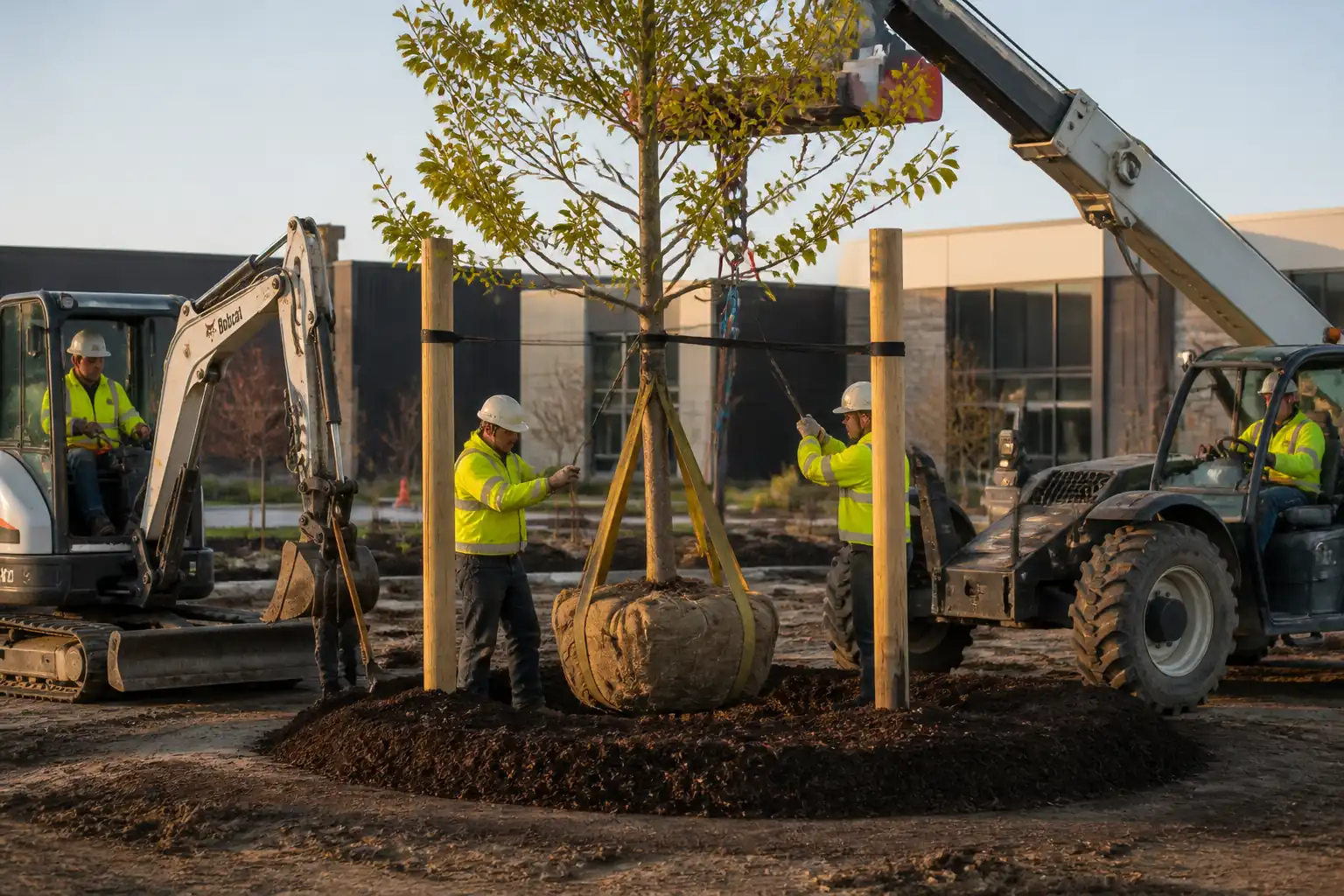

Method Statement: Planting of Trees, Palms, and Shrubs (Excavation, Root Ball Prep, Soil Amendment, Staking/Guying, Initial Deep Watering, Mulch) – Method Statement
AI-assisted method statement with matching ITP, PDF download, and Excel export.
More than a static template
Unlike a downloadable Word or PDF template, this method statement is an AI-assisted editable starting point connected directly to a matching Inspection and Test Plan. Every section is structured, project-adaptable, and ready to export.
- AI-assisted drafting — Customize every section with AI for your specific project scope.
- Linked ITP — A matching inspection and test plan is generated alongside the method statement.
- Multiple export formats — Download as a formatted PDF or editable Excel spreadsheet.
- Editable starting point, not a final document — Review, verify, and adjust all content against your project requirements before use.
Static template vs. Quollnet workflow
| Feature | Static template | Quollnet |
|---|---|---|
| Project-specific content | Manual fill-in required | AI-assisted customization |
| Linked ITP | Separate document, no link | Matching ITP included |
| Export formats | Usually PDF only | PDF and Excel |
| Structured sections | Free-form layout | 13 standardized sections |
| Saved to your account | Local file only | Cloud-saved, reusable |
| Content accuracy | You verify everything | AI-assisted, you still verify |
| Cost | Often free but time-intensive | Free to customize and download |
What you can customize
When you save this method statement to your account, every section becomes editable. The following 13 sections are included:
- Scope — Defines the activity and its boundaries.
- References — Standards, specifications, and drawings.
- Responsibilities — Roles and accountabilities.
- Resources — Labour, plant, and equipment summary.
- Materials — Materials and compliance requirements.
- Equipment — Tools and equipment details.
- Prerequisites — Hold points and pre-conditions.
- Method sequence — Step-by-step construction sequence.
- Safety controls — HSE risk controls and PPE.
- Environmental controls — Environmental mitigation measures.
- QA/QC — Quality inspection and test requirements.
- ITP — Inspection and Test Plan table (has its own page).
- Attachments — Referenced drawings and documentation.
Why this method statement is used
This method statement is used to define and communicate the approved procedure for carrying out method statement: planting of trees, palms, and shrubs (excavation, root ball prep, soil amendment, staking/guying, initial deep watering, mulch) on site. It ensures the work is planned in advance, the correct resources and controls are in place, and all personnel understand responsibilities, sequence, quality requirements, and safety controls before work begins. It aligns site execution with the documented scope and acceptance expectations.
Who uses this method statement
This method statement is used by contractors, site supervisors, project engineers, QA/QC engineers, HSE officers, consultants, and client representatives. It serves as a shared reference for planning, execution, supervision, inspection, and approval of the activity on site.
When it is prepared and submitted
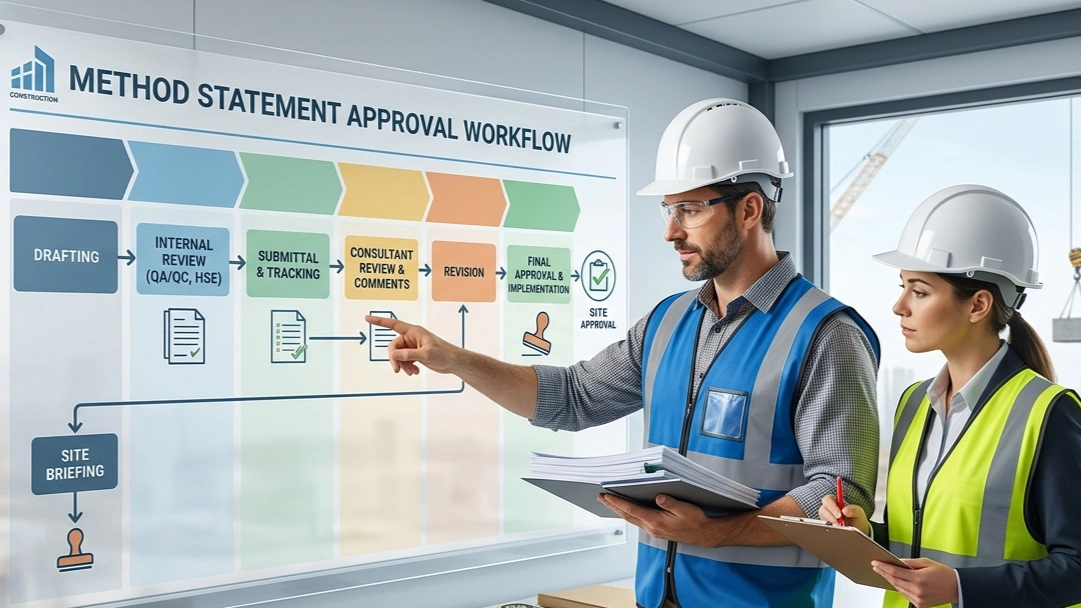
The method statement is prepared before the work activity starts and submitted as part of the pre-construction documentation package for review and approval.
Who reviews or approves it
The method statement is usually submitted to the client representative, consultant, resident engineer, or project management consultant for review and approval before the work commences.
Important approval note
This method statement is an AI-assisted editable starting point, not a pre-approved document. Before use on any project, all content must be reviewed and approved by the relevant parties (superintendent, principal contractor, or client representative) in accordance with your contract and project quality plan.
For example: if your specification requires a departure from a referenced standard, that departure must be documented and approved separately — this method statement will not capture that automatically. Always verify against your applicable drawings, specifications, and regulatory requirements.
Method statement content
Scope
Work Included
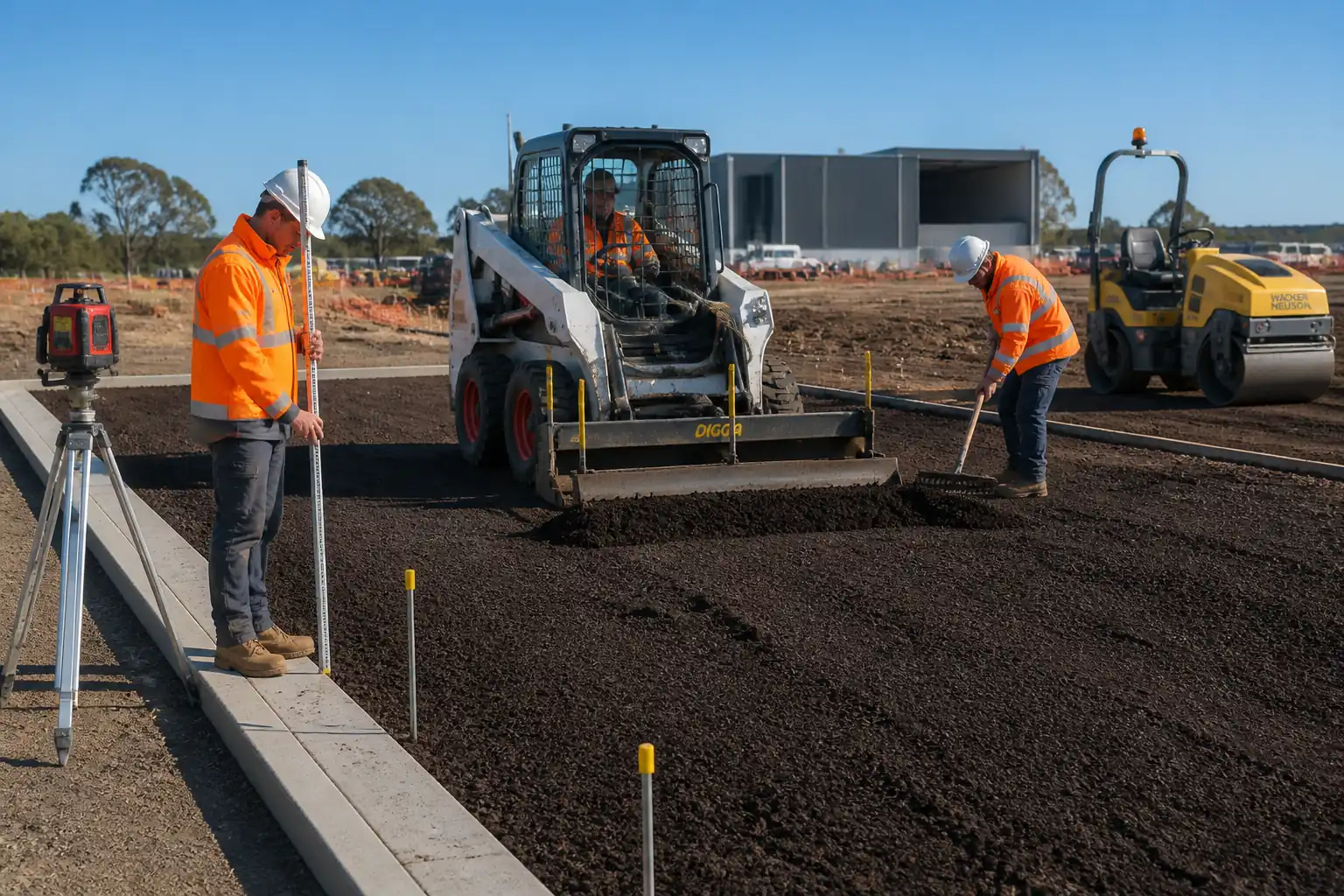
- Setting out and excavation of planting pits for trees, palms, and shrubs.
- Handling, temporary storage, and preparation of nursery stock (root ball/container plants).
- Soil improvement and backfill mixing with approved amendments and conditioners.
- Placement, alignment, and planting at correct depth and orientation.
- Installation of stakes, ties, and guying systems (including anchors and protective padding) as required.
- Initial deep watering and formation of watering basins/rings; connection to temporary or permanent irrigation points where provided.
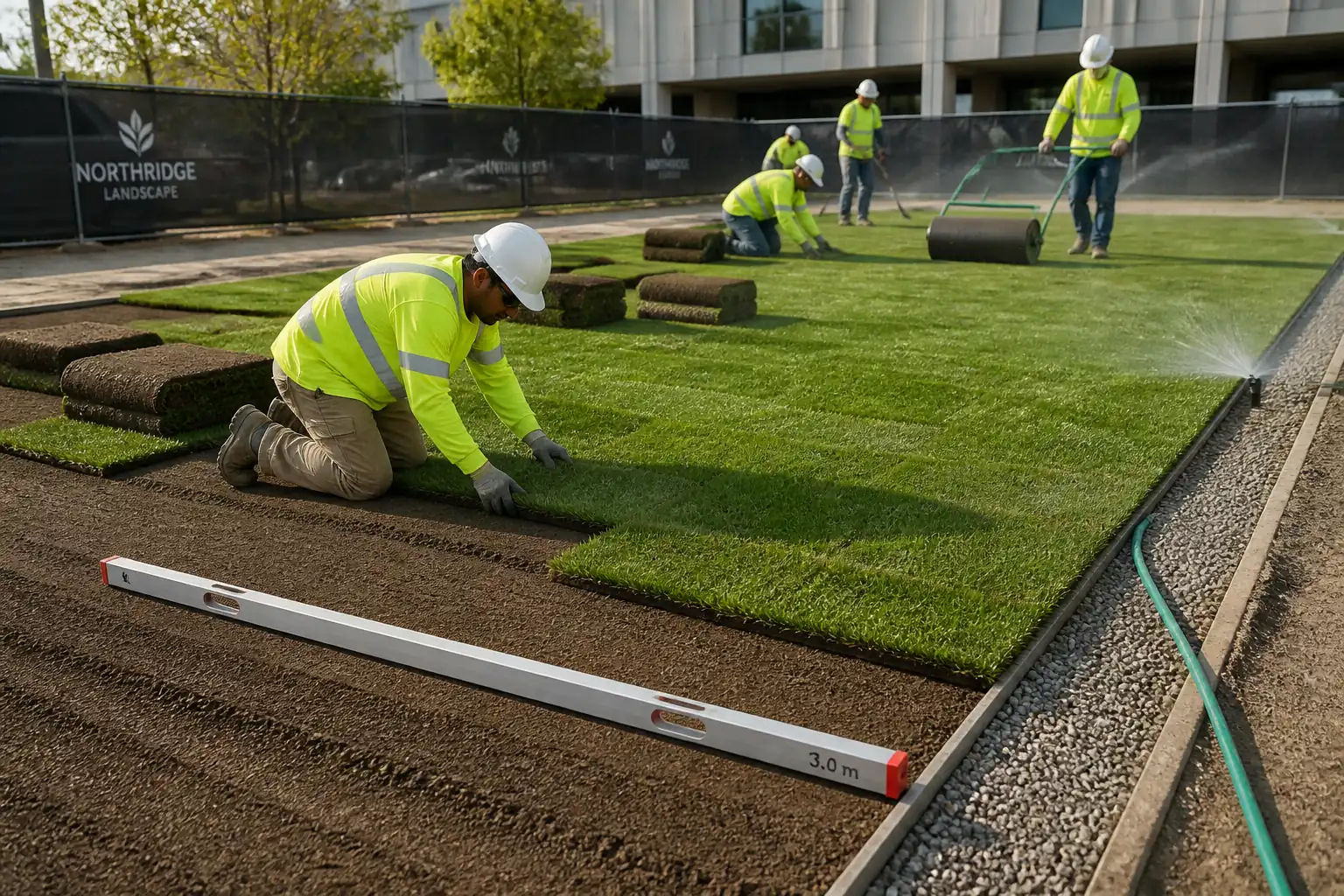
- Application of organic mulch around planted stock.
- Protection of newly planted areas until handover; initial establishment checks.
Exclusions
- Permanent irrigation system installation and commissioning (unless noted otherwise).
- Hard landscape/edging works not directly related to planting pits.
- Tree surgery beyond minor corrective pruning of damaged roots/branches.
- Long-term maintenance beyond the defined defects liability/establishment period [Verify per project specifications].
Locations
- All planting areas and tree pits shown on the Issued for Construction (IFC) drawings [Verify per project drawings].
Key Objectives
- Plant stock to industry standards with correct pit sizing, soil quality, placement depth, structural support, and moisture regime to ensure healthy establishment and minimize mortality.
References
| Document Type | Reference / Number | Revision | Notes |
|---|---|---|---|
| Standard | BS 3936; ANSI Z60.1 | Use project-specified standard if mandated [Verify per project specifications]. | |
| Standard | BS 8545 | ||
| Standard | BS 4428 | ||
| Standard | BS 3882; ASTM D5268 | ||
| Test Method | ASTM D4972; USBR EC; BS EN 13039 | Test method selection to be confirmed by Project Specifications [Verify]. | |
| Standard | ISO 9001; ISO 14001; ISO 45001 | Apply per project management system. |
Responsibilities
| Role | Responsibility | Name / Party |
|---|---|---|
| Project Manager | Project Manager | Main Contractor |
| Engineer/Architect | Resident Engineer / Landscape Architect | Employer’s Representative |
| Supervisor | Landscape Site Supervisor | Landscape Subcontractor |
| HSE Manager | HSE Manager | Main Contractor |
| QA/QC Engineer | QA/QC Engineer | Main Contractor |
Resources
| Resource Type | Description | Quantity | Remarks |
|---|---|---|---|
| Manpower | Landscape foreman + planters | 1 foreman + 4–8 planters [Verify per workload] | |
| Manpower | Banksman and rigger for tree/palm lifts | 2–3 persons [Verify] | |
| Service | Third-party lab technician | As required |
Materials
| Material | Specification / Grade | Quantity | Remarks |
|---|---|---|---|
| Nursery Stock | Caliper/height/spread per drawings; root ball/container sizes per ANSI Z60.1 [Verify]. | Per BOQ | |
| Palms | Height/clear trunk per drawings; root ball per nursery standard [Verify]. | Per BOQ | |
| Topsoil | pH 5.5–7.5; EC < 2.0 dS/m; OM 3–10%; texture sandy loam/loam [Verify]. | As required | |
| Compost/Organic Amendment | Screened 0–20 mm; EC < 3 dS/m; pathogen/weed free [Verify]. | Typically 20–30% by volume of backfill [Verify] | |
| Mulch | Particle size 10–40 mm; no fines excess; no dyed wood [Verify]. | Apply 50–75 mm depth [Verify] | |
| Stakes, Ties, Guy Wires, Anchors | Timber stakes typically 50×50 mm or Ø75 mm; galvanized guys; UV-stable ties [Verify]. | Per detail | |
| Water | Free of oils/contaminants [Verify]. | As required |
Equipment
| Equipment | Capacity / Type | Quantity | Inspection Required |
|---|---|---|---|
| Mini-excavator 3–8 t | 1–2 units | ||
| Telehandler 2–4 t; Crane per lift plan | As needed | ||
| Bowser 1–5 m³ | 1 | ||
| pH meter; EC meter | Set | ||
| Hand tools | Sets | ||
| Screw/drive anchors | Per tree/palm |
Prerequisites
Pre-Start Approvals
- Method Statement and ITP approved by Engineer.
- Shop drawings/details for tree pits, staking/guying, mulch edges approved.
- Plant procurement submittals: nursery source, sizes, root ball/container specs, phytosanitary certificates, and delivery schedule approved.
Permits and Surveys
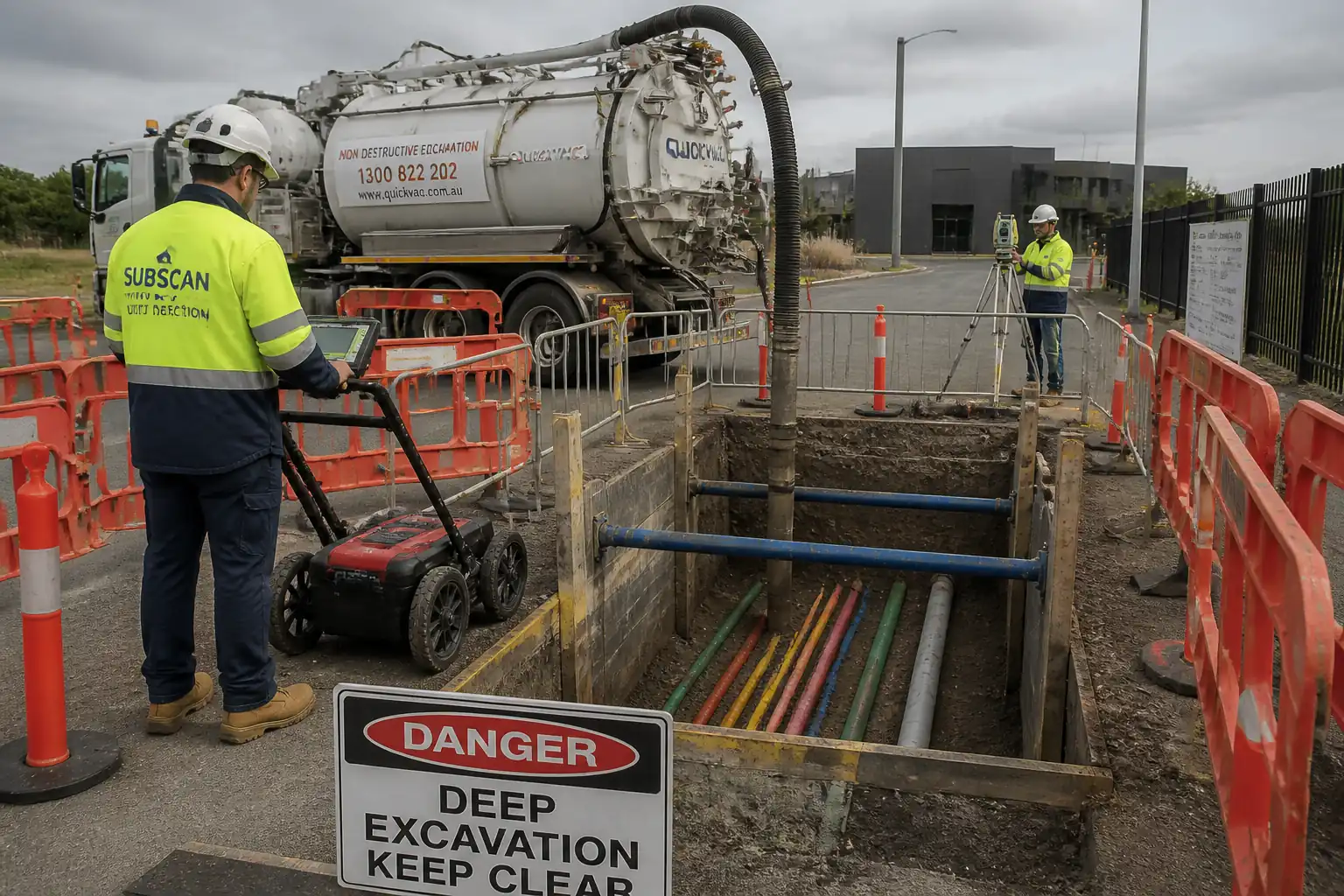
- Permit-to-dig and underground services clearance with CAT/Genny and/or GPR. Mark utilities; maintain exclusion zones [Verify per project HSE plan and local regulations].
- Lifting plan and certified operators for handling large trees/palms.
Site Readiness
- IFC setting out points and levels available. Protection of existing trees’ Root Protection Areas (RPA) installed per BS 5837 principles [Verify where applicable].
- Temporary storage shaded area prepared; watering available.
- Soil test results available or sampling plan in place (pH, EC, texture, organic matter). Amendments approved based on results.
Materials and Equipment
- Confirm delivery sequence to minimize storage time. Ensure slings, padding, stakes, anchors, ties, mulch, and water bowsers available.
Weather Constraints
- Avoid planting during extreme heat, high winds, waterlogged or frozen ground, or sandstorms. If unavoidable, increase shading, windbreaks, and post-plant irrigation accordingly [Verify per project specifications].
Briefings
- Toolbox talk covering lifting, excavation hazards, manual handling, plant interface, and biological hazards (mould/pests).
Method Sequence
| Step | Activity | Description | Responsibility | Inspection / Hold Point |
|---|---|---|---|---|
| 1 | Setting Out | Mark pit centers and extents per drawings. Verify clearances to utilities, pavements, structures, and sightlines. | Landscape Supervisor | Engineer to witness layout prior to excavation |
| 2 | Excavation of Pits | Excavate pits with vertical or stepped sides. Roughen pit walls, avoid glazing. Break up base 150–200 mm. Remove deleterious material and standing water. | Landscape Crew | QC check pit size/condition |
| 3 | Soil Testing/Verification | Collect samples if not done. Field-check pH/EC for rapid verification. Confirm amendment prescription before backfilling. | QA/QC + Lab | Hold point until results accepted |
| 4 | Soil Amendment Mixing | Pre-mix backfill: typically 70–80% site/imported topsoil + 20–30% compost by volume. Blend uniformly; add wetting agents or bio-stimulants only if specified. | Landscape Crew | QC verify blend and moisture |
| 5 | Plant Delivery & Storage | Unload using slings under root ball or pallet forks. Store in shaded, wind-protected area. Keep root balls moist; do not remove burlap/wire until in pit. | Landscape Supervisor | QC/Engineer to inspect stock on arrival |
| 6 | Root Ball/Container Preparation | For balled/burlapped: set plant in pit, then cut and fold back/remove top 1/3 of wire basket and burlap; remove all twine. For container plants: loosen and correct circling roots, prune only damaged roots. | Landscape Crew | Supervisor to verify |
| 7 | Placement & Orientation | Lower plant centrally onto firm, level base. Ensure root flare at or slightly above finished grade (trees). For palms, set at original nursery line; orient to prevailing wind and best visual face. | Landscape Crew + Banksman | Engineer witness |
| 8 | Backfilling & Watering-In | Backfill in 150–200 mm lifts. Lightly tamp by hand and water-in each lift to remove air pockets. Form a 1.0–1.5 m diameter watering berm for trees; proportionally smaller for shrubs. | Landscape Crew | QC check backfill quality/voids |
| 9 | Staking/Guying Installation (Trees) | Install staking per size: small trees single low stake; larger trees twin stakes with crossbar; semi-mature trees use 3-point guying with ground anchors. Fit cushioned ties below lower third of stem, not at crown. | Landscape Crew | Engineer/QC witness |
| 10 | Guying/Bracing (Palms) | Use 3–4 guy lines equally spaced with padded battens at contact points. Avoid nails/screws into trunk. Tension evenly; check bud verticality. | Landscape Crew | Supervisor check |
| 11 | Initial Deep Watering | Apply slow, deep watering immediately after planting: Trees: 40–60 L per 25 mm trunk caliper; Palms: 100–200 L depending on height; Shrubs: 10–20 L per shrub [Verify per project specifications and climate]. | Landscape Crew | QC to confirm volumes |
| 12 | Mulch Application | Apply organic mulch in an even layer 50–75 mm thick, extending to edge of berm. Keep 50–100 mm clear of stems/trunks to prevent rot. | Landscape Crew | QC visual check |
| 13 | Final Inspection & Documentation | Verify pit finish, alignment, supports, watering, mulch, and cleanliness. Remove surplus soil/waste. Update as-builts and tag plants if required. | QA/QC + Engineer | Hold point for acceptance |
| 14 | Initial Establishment Period (Early Care) | For first 4–8 weeks: inspect weekly for stability, moisture, pests; re-tension guys at 7 and 30 days; top-up mulch as needed; irrigation 2–3 times/week or per soil moisture [Verify per project specifications]. | Landscape Supervisor | Routine checks |
Health, Safety, and Environment (HSE) – Safety Controls
Principal Task-Specific Hazards and Controls
1) Underground Utility Strike
- Likely consequence: Electrocution, gas release, service outage.
- Engineering/procedural control: Permit-to-dig; CAT/Genny and/or GPR scan; trial holes by hand; mark and maintain exclusion zones; excavate with banksman guidance.
- Required PPE: Dielectric gloves when near electrical markers, safety boots, eye protection, high-vis, helmet.
- Collective measure: Physical barriers and signage over known service corridors.
- Inspection/permit/supervision: PTW approval; HSE and Supervisor to sign off utility clearance before excavation [Verify per project HSE plan and local regulations].
2) Lifting and Handling of Heavy Root Balls/Trees/Palms
- Likely consequence: Crush injuries, dropped load, musculoskeletal strain.
- Engineering/procedural control: Lift plan; rated slings/spreader bars; tag lines; no lifting by trunk; certified operators and banksman; exclusion zone during lifts.
- Required PPE: Helmet with chin strap, gloves, safety boots, high-vis, eye protection.
- Collective measure: Barricade lifting radius; radio comms.
- Inspection/permit/supervision: Daily pre-use checks on lifting gear; current certificates; competent rigger supervision.
3) Pit/Excavation Collapse or Falls Into Open Pits
- Likely consequence: Entrapment, falls, sprains.
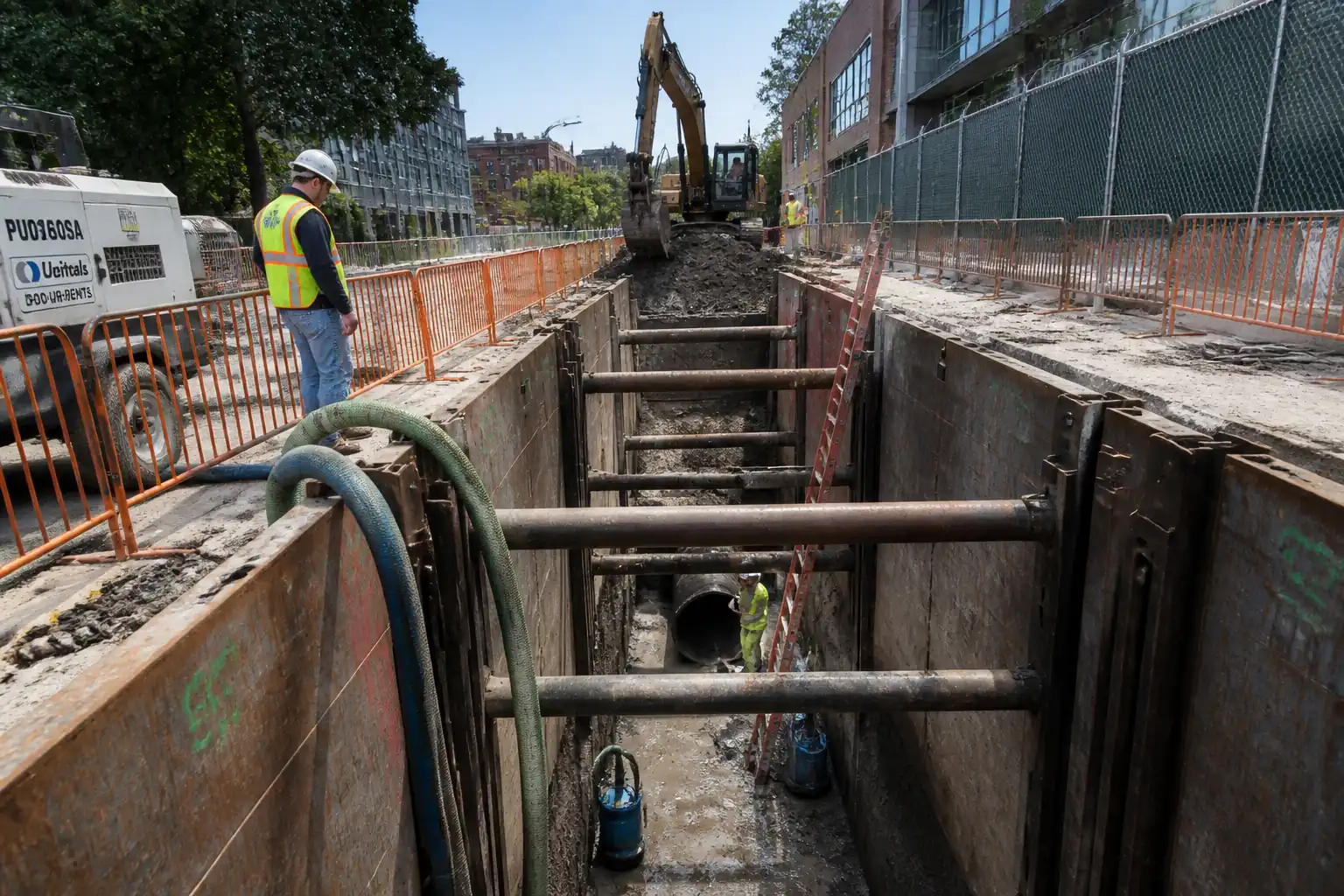
- Engineering/procedural control: Batter sides or use trench sheets for unstable soils; keep spoil ≥600 mm from pit edges; cover or barricade pits when unattended; safe access/egress.
- Required PPE: Helmet, boots, gloves.
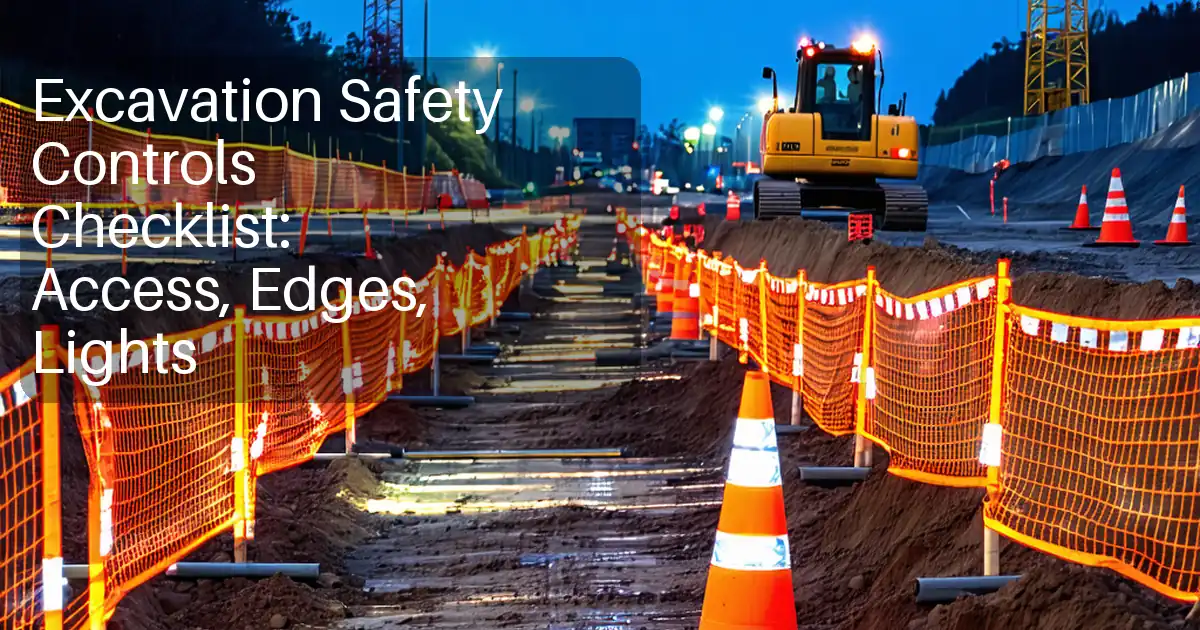
- Collective measure: Edge barriers/fencing and warning lights.
- Inspection/permit/supervision: Supervisor to inspect excavation stability at start of each shift and after rainfall.
4) Struck-by/Plant Interface
- Likely consequence: Impact injuries from moving plant/vehicles.
- Engineering/procedural control: Segregated pedestrian routes; banksman for reversing; spotters during maneuvering of telehandler/crane.
- Required PPE: High-vis, helmet, boots.
- Collective measure: Traffic management plan and barriers.
- Inspection/permit/supervision: Daily plant inspections; driver certification verification.
5) Manual Handling and Repetitive Strain
- Likely consequence: Back injuries, strains.
- Engineering/procedural control: Use mechanical aids; team lifts; training on posture; limit single-lift weights per HSE policy.
- Required PPE: Gloves with grip, supportive boots.
- Collective measure: Work rotation to limit fatigue.
- Inspection/permit/supervision: Supervisor to enforce manual handling limits.
6) Biological/Allergen Exposure (Mould, Dust, Organic Mulch)
- Likely consequence: Respiratory irritation, dermatitis.
- Engineering/procedural control: Dampen mulch before handling; avoid tipping into wind; wash facilities available; safe handling of compost.
- Required PPE: FFP2/FFP3 mask as needed, nitrile gloves, eye protection.
- Collective measure: Localized misting to suppress dust.
- Inspection/permit/supervision: HSE spot checks; COSHH-type assessments where applicable [Verify per project HSE plan and local regulations].
7) Working Near Roads or Public Areas
- Likely consequence: Third-party incidents.
- Engineering/procedural control: Temporary traffic management with approved signage; delineators; time-restricted works.
- Required PPE: Class-compliant high-vis, helmet.
- Collective measure: Pedestrian detours and barriers.
- Inspection/permit/supervision: Traffic management plan approval; regular inspections.
8) Heat Stress/Dehydration (Hot Climates)
- Likely consequence: Heat exhaustion/heat stroke.
- Engineering/procedural control: Work-rest cycles; shaded rest areas; potable water and electrolyte plan; schedule heavy lifts early/late.
- Required PPE: Breathable high-vis, sun protection (hat/neck flap), sunscreen.
- Collective measure: On-site cooling station.
- Inspection/permit/supervision: Supervisor to monitor WBGT/temperature index and adjust schedule.
9) Use of Hand Tools and Cutting Utilities (Knives/Secateurs)
- Likely consequence: Cuts, punctures.
- Engineering/procedural control: Sharp tools in good order; cut away from body; tool lanyards at height; training.
- Required PPE: Cut-resistant gloves, eye protection.
- Collective measure: Tool control and storage rack.
- Inspection/permit/supervision: Toolbox talk; periodic checks.
Environmental Controls
Key Environmental Risks and Controls
- Soil Erosion and Sediment Runoff
- Control: Perimeter silt fences or compost socks; cover stockpiles; avoid over-excavation; reinstate promptly.
-
Inspection: Daily visual checks, post-rainfall inspections.
-
Topsoil/Amendment Quality and Contamination
- Control: Source-approved materials; test pH/EC/OM; reject contaminated loads; store on geotextile to prevent intermixing.
-
Inspection: Delivery tickets and QC sampling.
-
Protection of Existing Trees and Root Protection Areas (RPA)
- Control: Install tree protection fencing; no storage, plant, or vehicle traffic within RPA; use load-spread mats if access unavoidable.
-
Inspection: Weekly checks; record breaches and corrective actions.
-
Water Use and Runoff
- Control: Metered watering; adjust volumes to avoid runoff; use non-potable non-saline sources where approved; prevent discharge to drains.
-
Inspection: Watering logs; visual checks for pooling/erosion.
-
Waste Management
- Control: Segregate green waste; chip or recycle where approved; dispose of wire/burlap/plastic per waste plan; no burning.
-
Inspection: Waste transfer notes; skip audits.
-
Noise and Dust
- Control: Maintain plant; limit working hours; damp down mulch/soil; avoid idling.
-
Inspection: Supervisor spot checks; complaints log.
-
Invasive/Weed Species Transfer
- Control: Verify mulch/compost certification (e.g., PAS 100); clean equipment before site entry; remove and bag invasive plant fragments.
-
Inspection: Material certificates; site entry checks.
-
Fuel/Oil Spills from Plant
- Control: Drip trays; spill kits; refuel in designated area away from drains; immediate cleanup.
-
Inspection: Daily plant checks; spill log.
-
Habitat/Seasonal Restrictions
- Control: If near sensitive habitats, time works to avoid nesting seasons; ecologist input where required [Verify per project environmental plan].
QA/QC
Key Quality Requirements and Tolerances
- Pit Dimensions
- Trees/Shrubs: Diameter ≥1.5–2.0× root ball diameter; depth to position root flare at or 25–50 mm above finished grade after settlement [Verify per project specifications].
- Palms: Pit dia ≥ root ball + 300 mm; depth to nursery line; base level and firm.
- Pit Preparation
- Base decompacted 150–200 mm; sides roughened (no glazing); remove debris and water.
- Soil/Backfill
- Topsoil per BS 3882/ASTM D5268; pH 5.5–7.5; EC <2.0 dS/m; OM 3–10% [Verify].
- Backfill blend typically 70–80% soil + 20–30% compost by volume; uniform mixing; moisture friable; contaminants <0.5% vol.
- Plant Placement
- Root flare visible post-backfill; crown vertical within ±2°; position within ±50 mm horizontally.
- Container plants: circling roots corrected; burlap/wire removed from top third of B&B balls; no twine left.
- Staking/Guying
- Correct configuration per size and exposure; ties cushioned; no trunk damage; guys at 30–45°; re-tension at 7 and 30 days.
- Watering
- Initial deep watering volumes: Trees 40–60 L per 25 mm caliper; Palms 100–200 L; Shrubs 10–20 L [Verify per climate/spec].
- No runoff; moisture to 300–400 mm depth.
- Mulch
- Organic mulch 50–75 mm depth; 50–100 mm clear of trunk/stem; even coverage.
Inspection and Testing
- Hold points: soil test acceptance, first pit inspection, first planting of each type (tree/palm/shrub), staking/guying arrangement, and final lot inspection.
- Sampling/testing frequency: One composite soil test per 200 m³ of topsoil or per batch/delivery [Verify]; field pH/EC spot checks daily during backfilling as needed.
Records and Submittals
- Delivery inspection reports (plant stock, topsoil, mulch, amendments).
- Soil laboratory test reports and field meter logs.
- ITP checklists for each activity; photo records before/after planting.
- As-built planting schedule with species, sizes, locations, quantities.
- Nonconformance and corrective action reports where applicable.
Defects and Corrective Measures
- If settlement exposes roots: add backfill and re-form berm; re-water.
- If leaning/instability: re-seat root ball, adjust guying tension, or re-anchor.
- If waterlogging: improve drainage per approved detail (sumps/perforated lateral) [Verify].
Attachments
- Typical planting pit details for trees, palms, and shrubs (sections and plans).
- Standard details for staking (single, double, and guying with anchors) and tie padding.
- Example checklists: Delivery Inspection; Pit Inspection; First Plant Placement; Staking/Guying; Mulch; Final Acceptance.
- Soil testing plan and sampling schematic.
- Lifting plan excerpt for large trees/palms.
- As-built planting schedule template.
This content is a read-only public reference. Download or customize to get an editable version.
ITP preview
The first inspection activities from the linked ITP for Method Statement: Planting of Trees, Palms, and Shrubs (Excavation, Root Ball Prep, Soil Amendment, Staking/Guying, Initial Deep Watering, Mulch):
| Activity | Inspection / Test | Acceptance Criteria | Responsibility | Record |
|---|---|---|---|---|
| Pre-start Submittals Approval | Approved method, ITP, shop drawings, and plant/material submittals. | Engineer / QA-QC | Approved submittals set | |
| Permit-to-Dig & Utility Clearance | PTW issued; utility scan/trial holes completed and documented. | HSE / Site Supervisor | PTW; utility clearance records | |
| Setting Out Verification | Locations/levels within ±25 mm of design; clearances confirmed. | Engineer / Surveyor | Setting-out checklist/photos |
Showing 3 of 11 inspection activities. View full ITP →
Related Inspection and Test Plan
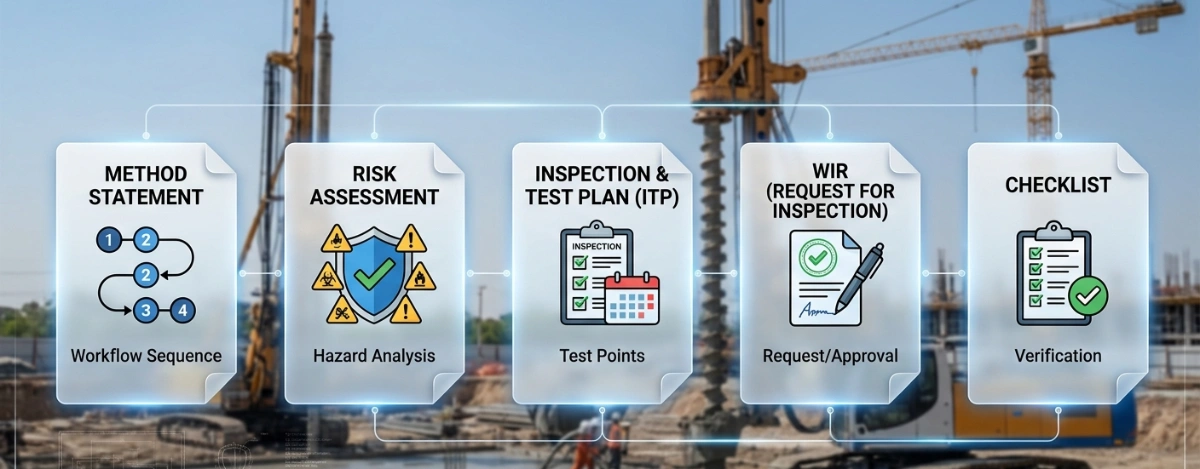
An Inspection and Test Plan (ITP) is available for Method Statement: Planting of Trees, Palms, and Shrubs (Excavation, Root Ball Prep, Soil Amendment, Staking/Guying, Initial Deep Watering, Mulch). The ITP defines the inspection activities, acceptance criteria, hold and witness points, responsible parties, and records required to verify the work described in this method statement.
View the Method Statement: Planting of Trees, Palms, and Shrubs (Excavation, Root Ball Prep, Soil Amendment, Staking/Guying, Initial Deep Watering, Mulch) ITP →Frequently asked questions
Continue with related Quollnet resources connected to this method statement.