The checklist
Preparation
- Gather necessary tools and safety gear, including pressure gauges, leak detectors, and personal protective equipment (PPE).
- Review all safety protocols and emergency procedures before commencing the inspection.
Initial Checks
- Verify that all gas lines are accessible and free from obstructions.
- Confirm that all valves are properly labeled and operational.
Pressure Testing
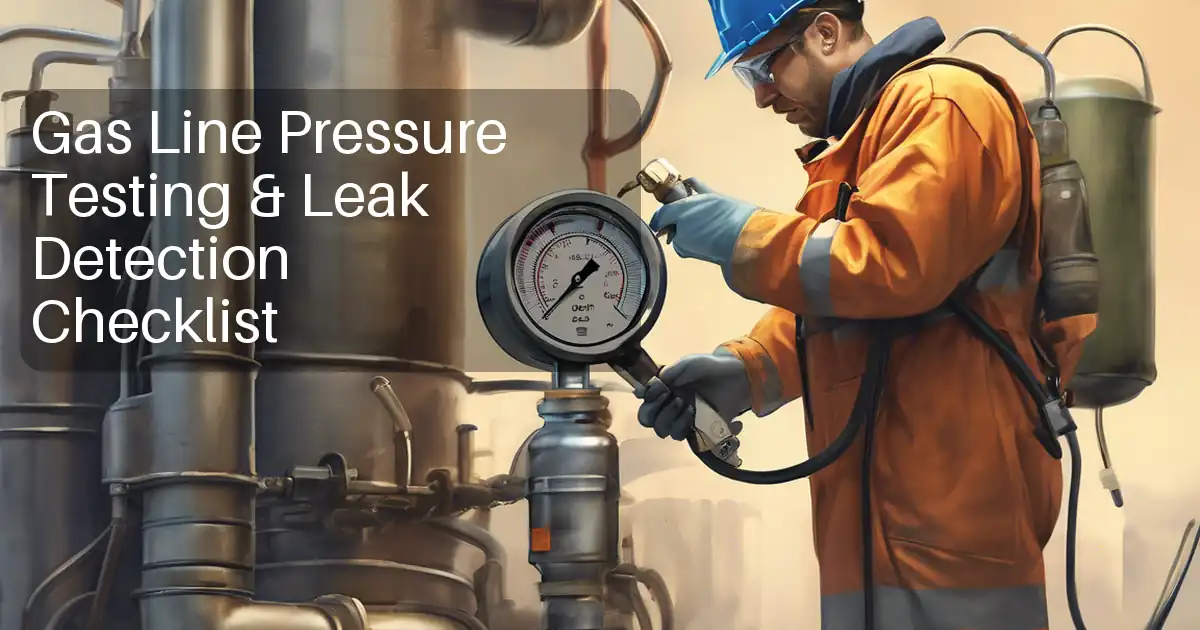
- Connect pressure gauge to the test point and ensure a secure fit.
- Gradually increase pressure to the required test level, monitoring for stability.
- Record pressure levels at regular intervals to ensure consistency.
Leak Detection
- Apply a leak detection fluid on joints and connections, watching for bubbling.
- Use electronic gas detectors to scan for leaks in hard-to-reach areas.
- Inspect all fittings and connections visually for any signs of wear or damage.
Post-Inspection
- Depressurize the system safely and remove testing equipment.
- Document all findings, including any detected leaks or pressure discrepancies.
- Ensure all tools are accounted for and store them appropriately.
- Review safety protocols to ensure no steps were overlooked during the inspection.
Preview the printable checklist
Preview page one below. Open the image or download the PDF for all pages.

At a glance
- Ensure safety by identifying leaks early and maintaining gas line integrity.
- Comprehensive pressure testing safeguards against potential hazards.
- Interactive online checklist with tick, comment, and export features secured by QR code.
- Adheres to industry standards ensuring compliance and reliability.
How to Use the Gas Line Pressure Testing and Leak Detection Checklist
- Click the “Use this checklist” button to launch interactive mode.
- Tick each item online as you complete it.
- Add comments on individual items or the entire checklist.
- Click Share or Download to export your completed checklist as PDF or Excel.
Understanding Gas Line Pressure Testing
Gas line pressure testing is a critical component in ensuring the safety and efficiency of gas distribution systems. It involves applying pressure to the gas lines to detect any weaknesses or potential leaks that could lead to catastrophic failures. Proper testing helps prevent accidents and ensures compliance with safety standards.
- Ensures the integrity of gas lines.
- Prevents potential hazards.
- Complies with industry safety standards.
- Identifies weaknesses before use.
Effective Leak Detection Strategies
Leak detection is essential in maintaining the safety and functionality of gas systems. Various methods, such as using leak detection fluids and electronic detectors, help identify leaks that might not be visible. Implementing effective leak detection strategies minimizes risks and enhances safety.
- Utilizes advanced detection technologies.
- Prevents unnoticed leaks.
- Enhances overall system safety.
- Minimizes environmental impact.