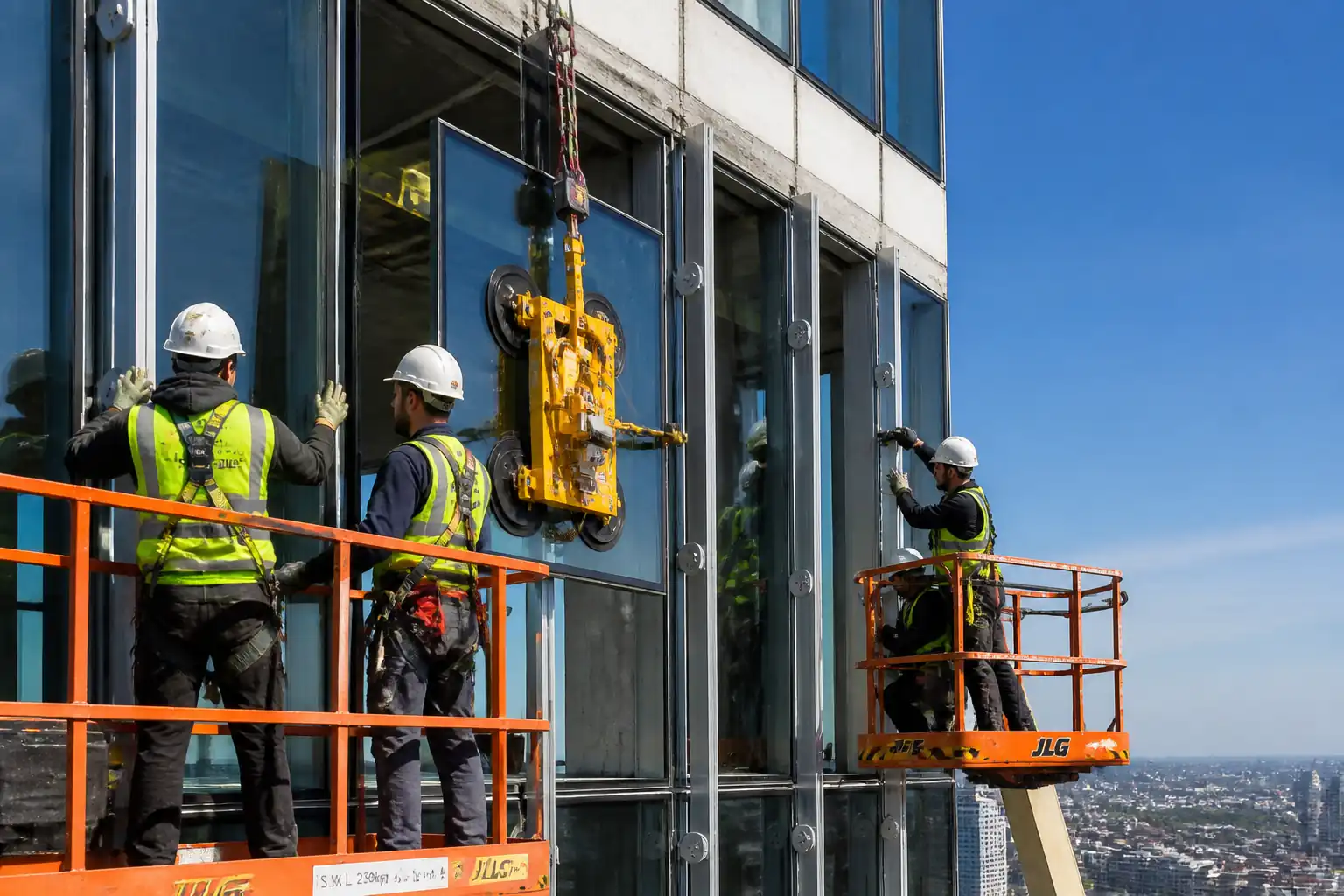

Inspection and Test Plan for Method Statement – Aluminium Composite Material (ACM) Cladding Installation with Fire-Safe Rainscreen System
AI-assisted inspection and test plan connected to a method statement, with PDF and Excel export.
More than a static template
Unlike a downloadable Word or PDF template, this ITP is an AI-assisted editable starting point directly connected to its method statement. Every inspection activity, hold point, and acceptance criterion is structured and ready to adapt to your project.
- AI-assisted customization — Tailor inspection activities and acceptance criteria to your specific project scope.
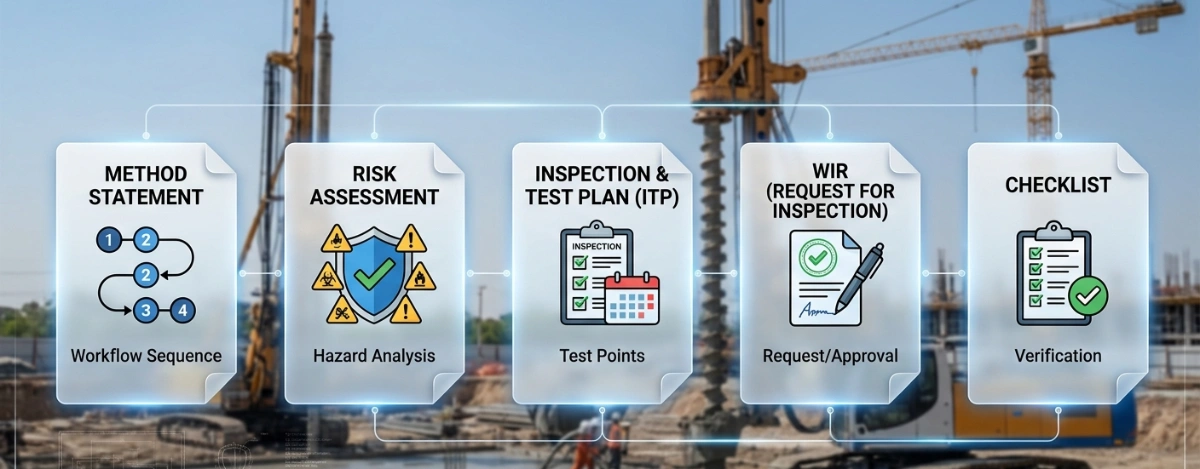
- Linked method statement — This ITP is connected to the corresponding method statement describing the work sequence.
- Multiple export formats — Download as a formatted PDF or editable Excel spreadsheet.
- Editable starting point, not a final document — Review and verify all content against your project specifications and standards before use.
What you can customize
When you save this ITP to your account, every inspection row becomes editable. You can add, remove, or modify:
- Inspection activity — Description of what is being inspected.
- Inspection type — Hold point (H), Witness point (W), Review (R), or Monitor (M).
- Responsibility — Contractor, subcontractor, engineer, or client.
- Frequency — How often the inspection occurs.
- Acceptance criteria — Referenced standard or specification requirement.
- Records — Forms, test reports, or checklists required as evidence.
Why this ITP is used
To ensure each critical step of the façade installation meets contractual, structural, and fire safety requirements with documented evidence.
Who uses this inspection and test plan
Main contractor QA/QC, façade subcontractor, Engineer, and third-party testers.
When this ITP is prepared and submitted
From material receipt through installation to final inspection and handover.
Who receives or approves this ITP
Engineer / Consultant / Authority Having Jurisdiction (as applicable).
Inspection scope
Materials verification, anchors/brackets, rails alignment, membranes, cavity barriers/fire stops, insulation, panel fabrication, installation, sealant joints, interfaces, and field water testing.
Typical hold, witness, and review points
Anchor proof load testing; fire barriers prior to closure; first installed bay (benchmark); final pre-handover inspection.
Typical inspection records
Approved submittals, torque logs, pull-test certificates, barrier photo records, alignment checklists, sealant logs, water test reports, as-builts, O&M manuals.
Important approval note
This ITP is an AI-assisted editable starting point, not a pre-approved document. Before use on any project, all inspection activities, hold points, and acceptance criteria must be reviewed and approved by the relevant parties (superintendent, principal contractor, or client representative) in accordance with your contract and project quality plan.
Always verify acceptance criteria against your applicable drawings, specifications, and regulatory requirements. Hold points must be confirmed with the relevant authority before work proceeds past that point.
Inspection and test plan
| Activity | Inspection / Test | Acceptance Criteria | Responsibility | Record |
|---|---|---|---|---|
| Material approvals – ACM, subframe, anchors, insulation, barriers, sealants | Submittal review vs specs and fire strategy | Approvals issued; EN 13501-1/-2 classifications compliant; system test evidence (NFPA 285/BS 8414) where required [Verify]. | QA/QC; Engineer | Approved submittals; certificates |
| Delivery inspection and storage | Visual inspection; moisture/damage checks | No damage; protective film intact; correct labels/batches; dry, flat storage. | Storekeeper; QA/QC | Delivery notes; inspection photos |
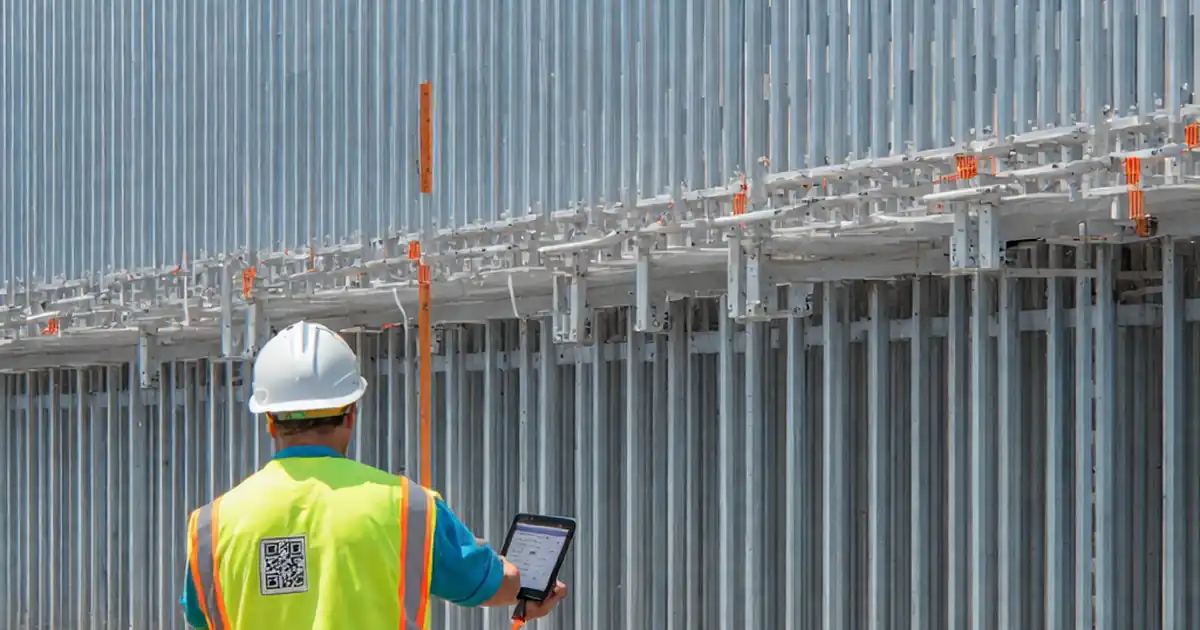
| Setting-out verification | Survey check vs grid and shop drawings | Bracket marks within ±3 mm; reference datums established. | Site Engineer | Survey report |
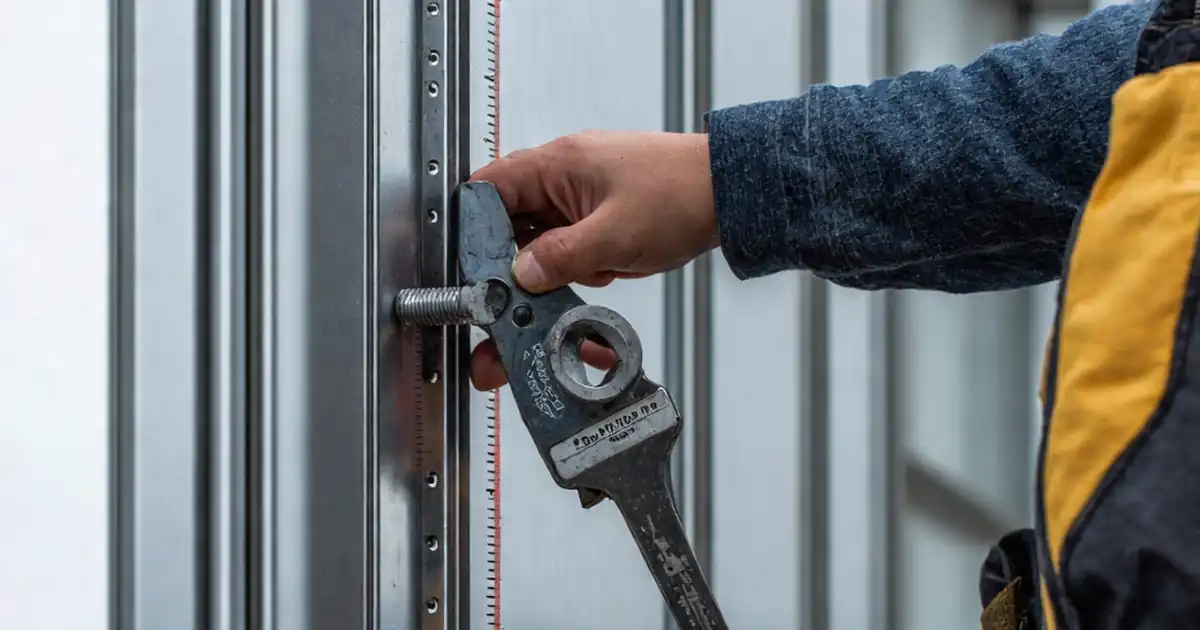
| Bracket and anchor installation | Visual; torque verification | Embedment/edge distances per design; torque within mfr range; isolators installed. | Façade Supervisor; QA/QC | Torque logs; photos |
| HOLD POINT – Anchor proof load testing | Pull-out at 1.5× service load, 60 s hold [Verify] | No failure; displacement ≤ 1.0 mm [Verify]; sample frequency: 2% per type/elevation, min 5 [Verify]. | QA/QC; Testing Agency; Engineer | Test certificates |
| Rail installation and alignment | Laser plumb/level; straightedge | ±3 mm in 3 m; ±5 mm overall; joints/allowances per design. | Façade Supervisor; QA/QC | Alignment checklist |
| Membrane installation (if any) | Lap and adhesion checks | Laps: vertical ≥150 mm, horizontal ≥100 mm; taped seams; damage repaired. | Façade Supervisor; QA/QC | Inspection sheet |
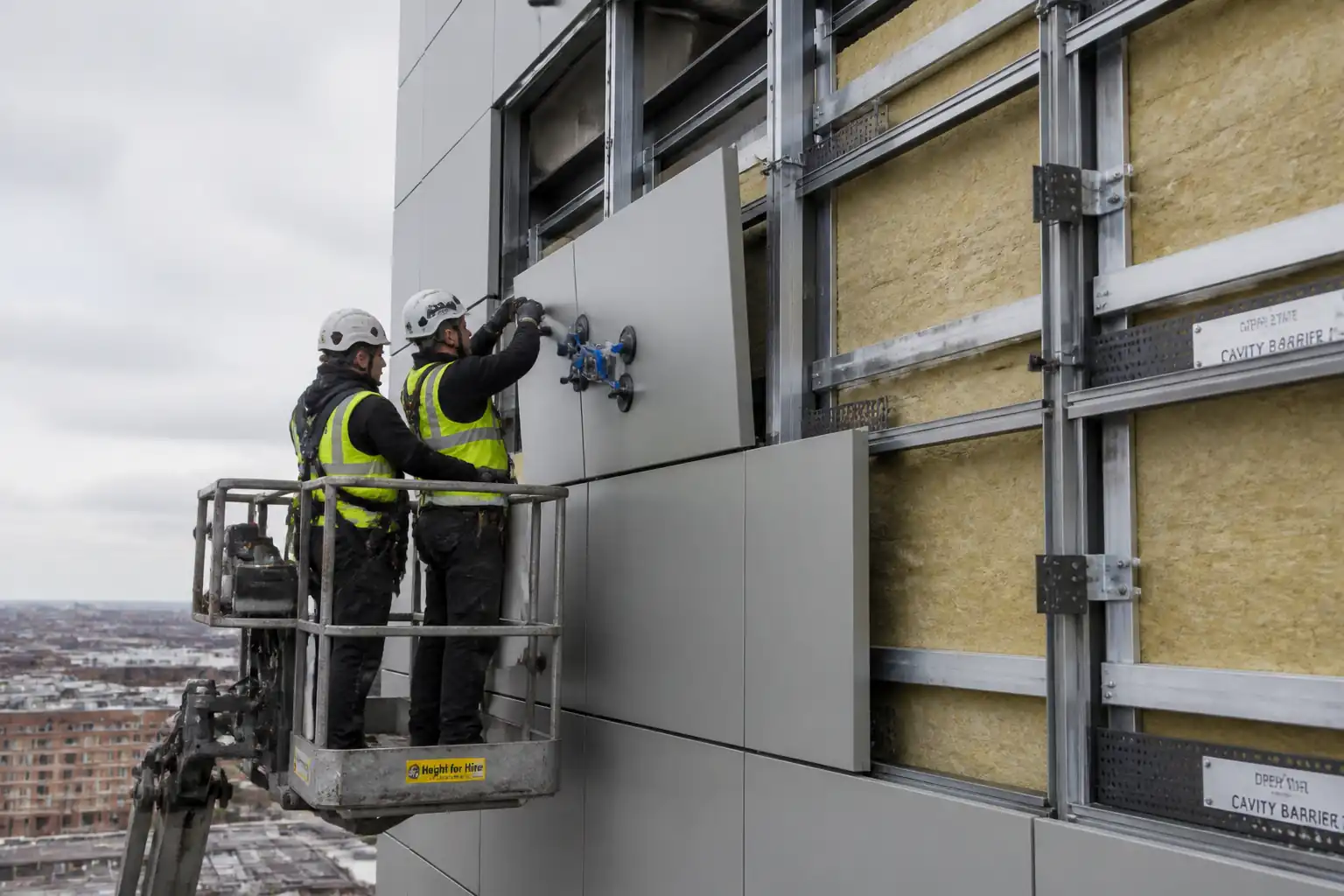
| Cavity barriers and fire stops | Continuity check; fixings count; orientation | Per Fire Strategy rating (e.g., EI60) [Verify]; no gaps; compression per TDS. | Façade Supervisor; QA/QC; Engineer | Photos; checklist; marked-up drawings |
| HOLD POINT – Fire barriers prior to closure | Witness inspection | ITP sign-off; NCRs closed; permission to proceed. | QA/QC; Engineer | Signed hold point release |
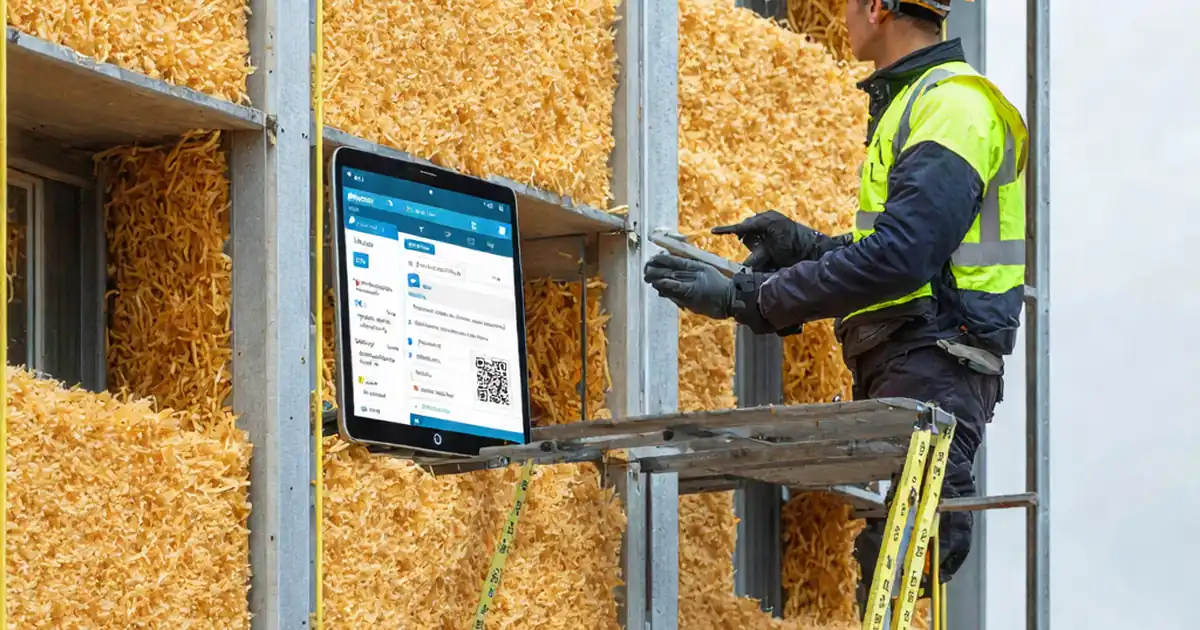
| Insulation installation | Coverage and fixing checks | Full coverage; fixings density per design (e.g., 4–6/m²) [Verify]; no gaps/sag. | Façade Supervisor; QA/QC | Inspection record |
| Panel fabrication QC | Dimensional and coating checks | Dimensional ±1 mm; squareness ≤2 mm; no coating defects. | Fabrication QC | Fabrication QC sheets |
| HOLD POINT – First installed bay (benchmark) | Flatness and joint checks | Gap 15 mm ±2 mm [Verify]; flatness ≤2 mm/1 m; colour/finish accepted. | QA/QC; Engineer | Benchmark approval |
| Panel installation (production) – cassette or wet-seal | Ongoing dimensional checks; sealant adhesion (if applicable) | Alignment within tolerances; fixings secure; sealant geometry/adhesion per TDS. | Façade Supervisor; QA/QC | Daily QC sheets; sealant logs |
| Interfaces/flashings | Visual; water-shedding checks | Correct laps; ventilation/drainage continuity; sealed fixings. | Façade Supervisor; QA/QC | Interface checklist |
| Field water test (if specified) | AAMA 501.2 or CWCT hose test | No uncontrolled water ingress per standard/test protocol. | Testing Agency; QA/QC | Test report |
| Final inspection and documentation | Comprehensive walkdown | All ITP points signed; punch-list cleared; O&M/warranties submitted. | QA/QC; Engineer | Final acceptance; O&M; as-builts |
This table is a read-only public reference. Download the PDF or Excel version, or customize this ITP to edit it for your project.
Frequently asked questions
Related method statement
This Inspection and Test Plan is associated with the Method Statement – Aluminium Composite Material (ACM) Cladding Installation with Fire-Safe Rainscreen System method statement, which describes the step-by-step construction sequence, resources, materials, equipment, safety controls, and environmental controls for this activity.
View the Method Statement – Aluminium Composite Material (ACM) Cladding Installation with Fire-Safe Rainscreen System method statement →Continue with related inspection, method statement, article, and checklist resources.