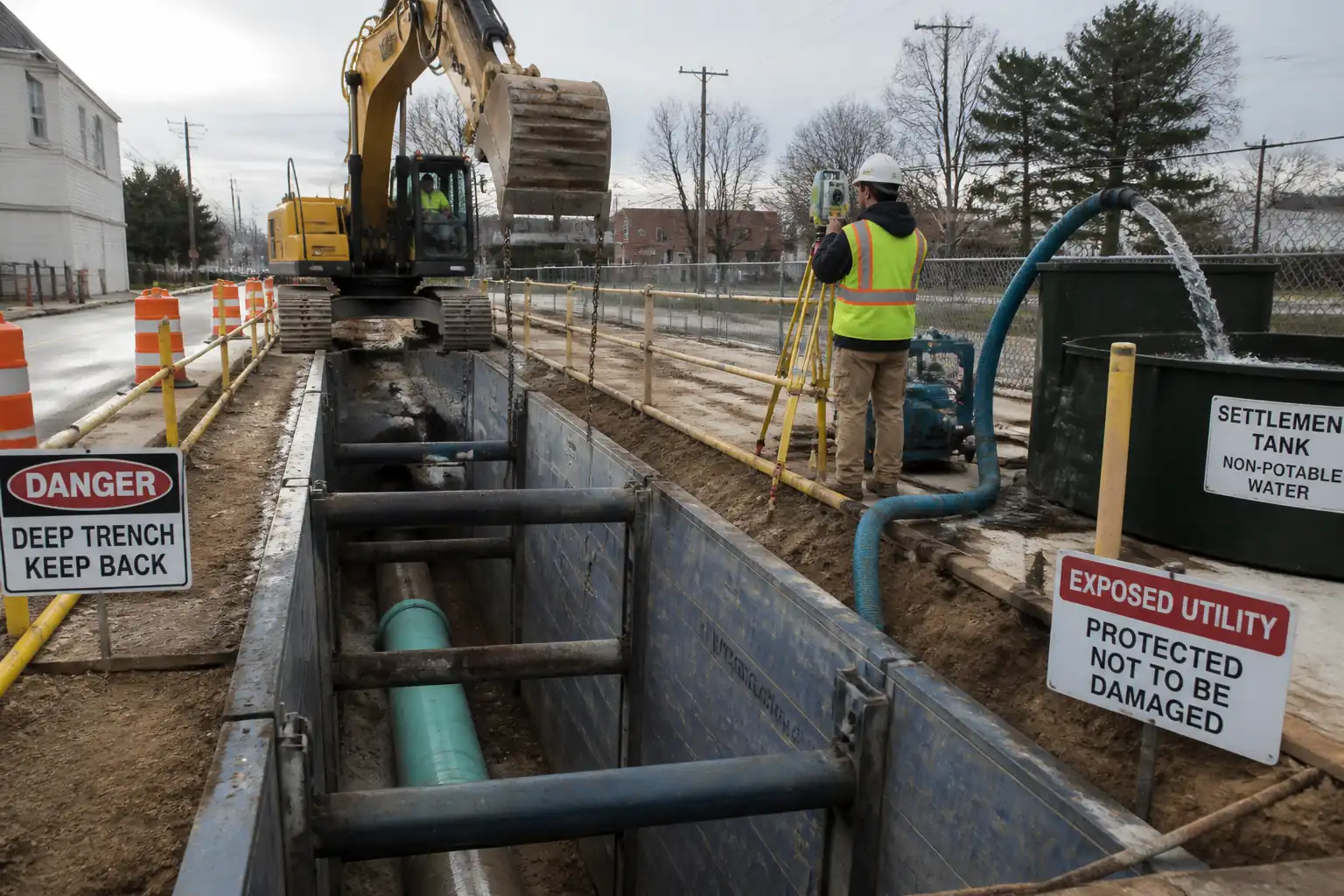

Inspection and Test Plan for Method Statement: Common Trench Excavation for Utility Corridors
AI-assisted inspection and test plan connected to a method statement, with PDF and Excel export.
More than a static template
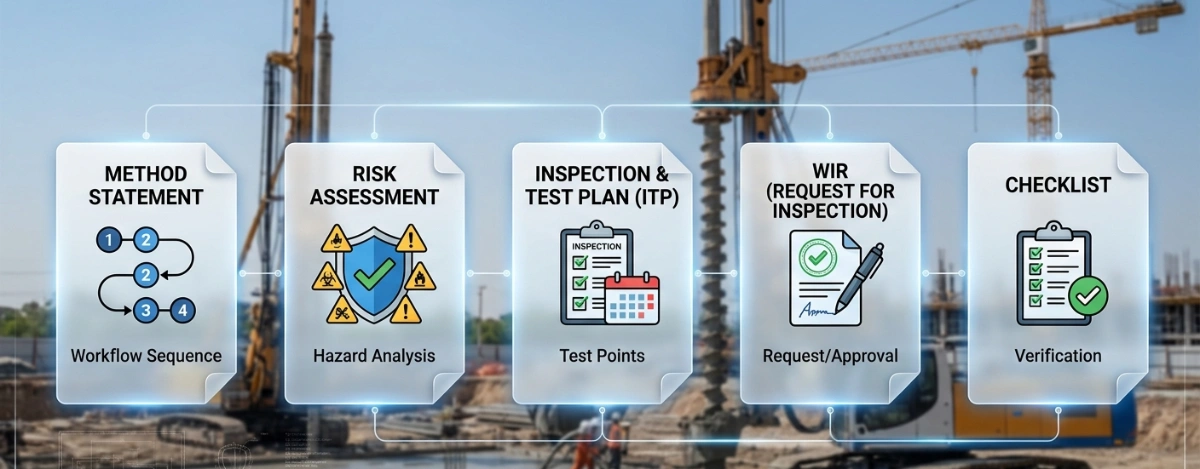
Unlike a downloadable Word or PDF template, this ITP is an AI-assisted editable starting point directly connected to its method statement. Every inspection activity, hold point, and acceptance criterion is structured and ready to adapt to your project.
- AI-assisted customization — Tailor inspection activities and acceptance criteria to your specific project scope.
- Linked method statement — This ITP is connected to the corresponding method statement describing the work sequence.
- Multiple export formats — Download as a formatted PDF or editable Excel spreadsheet.
- Editable starting point, not a final document — Review and verify all content against your project specifications and standards before use.
What you can customize
When you save this ITP to your account, every inspection row becomes editable. You can add, remove, or modify:
- Inspection activity — Description of what is being inspected.
- Inspection type — Hold point (H), Witness point (W), Review (R), or Monitor (M).
- Responsibility — Contractor, subcontractor, engineer, or client.
- Frequency — How often the inspection occurs.
- Acceptance criteria — Referenced standard or specification requirement.
- Records — Forms, test reports, or checklists required as evidence.
Why this ITP is used
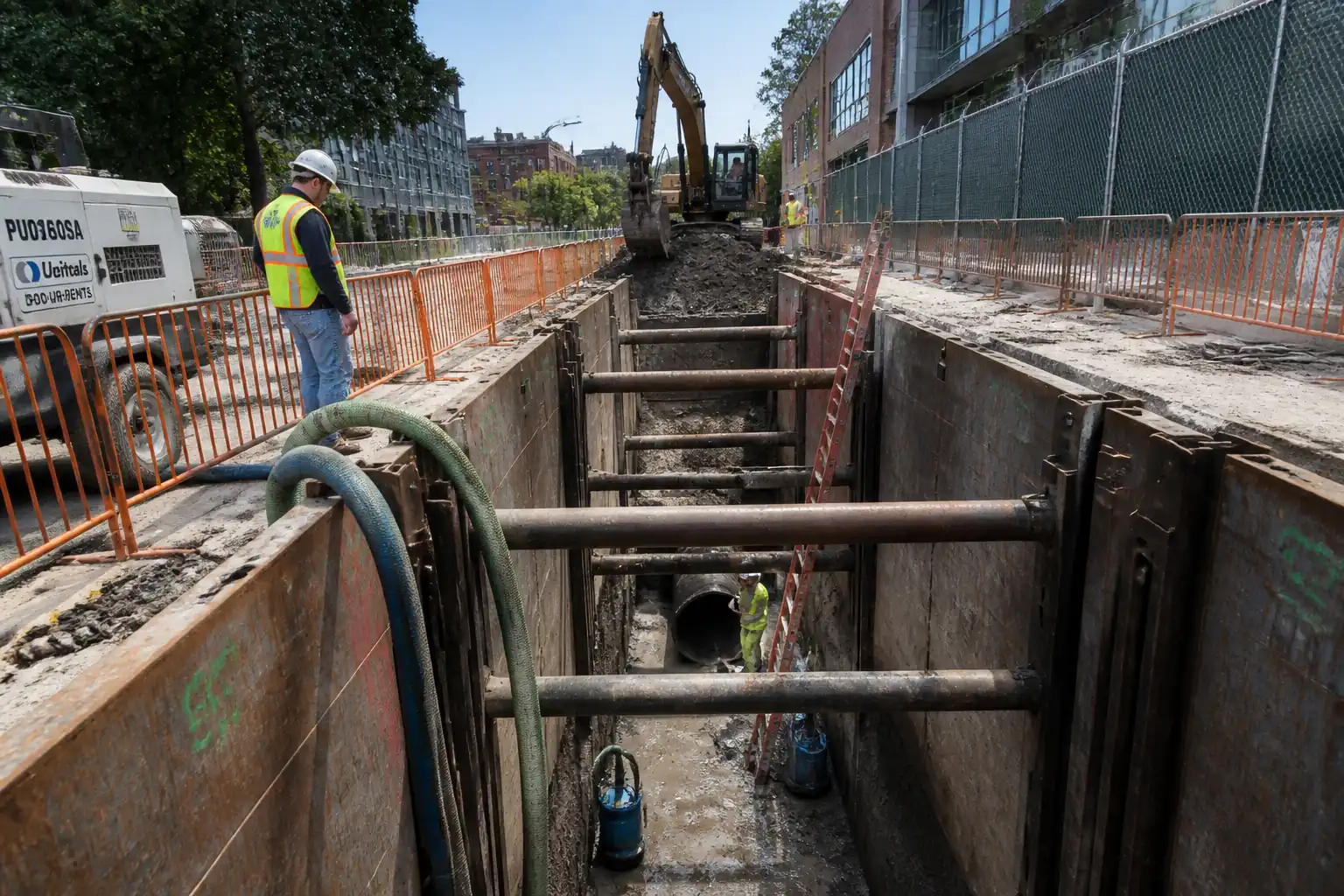
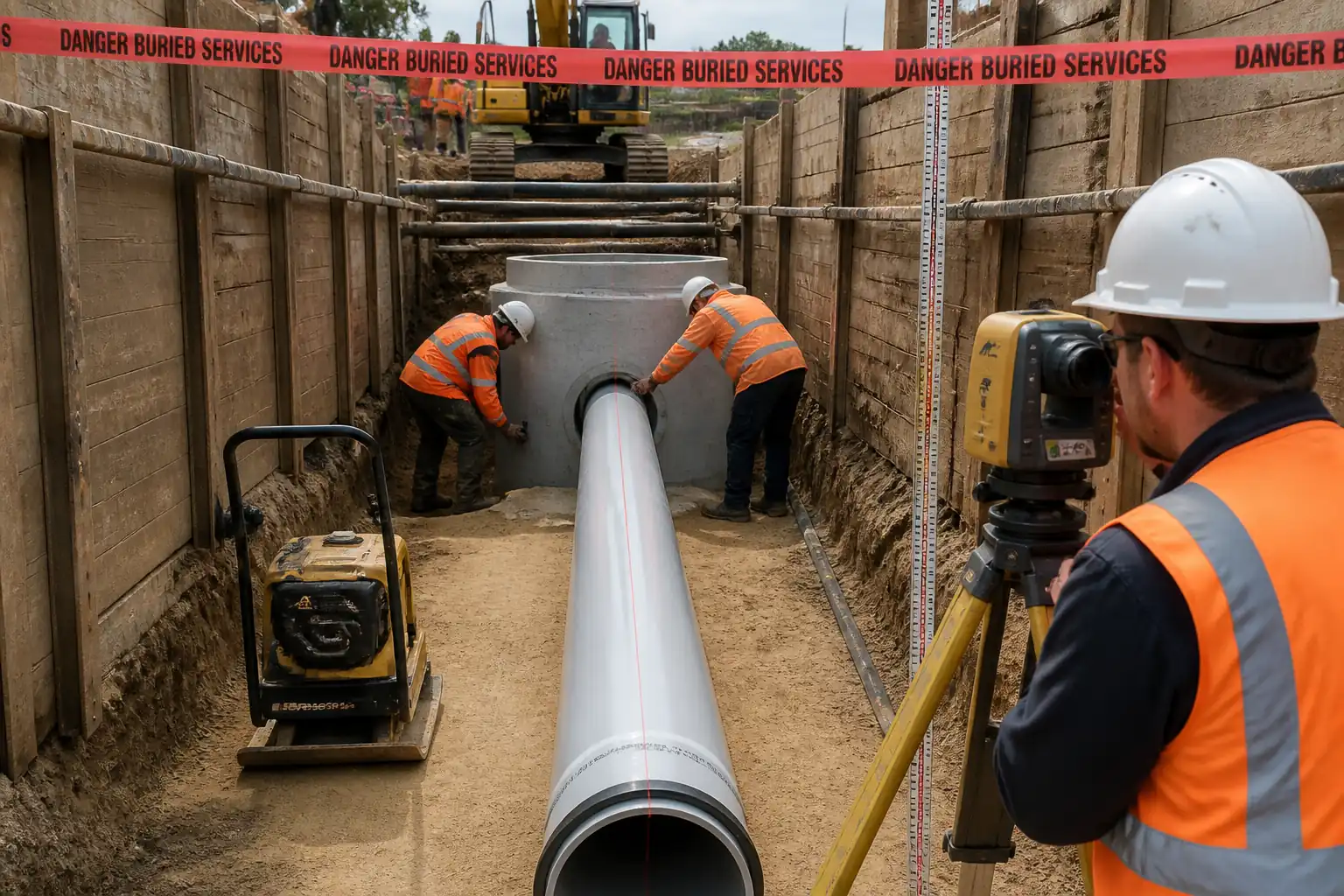
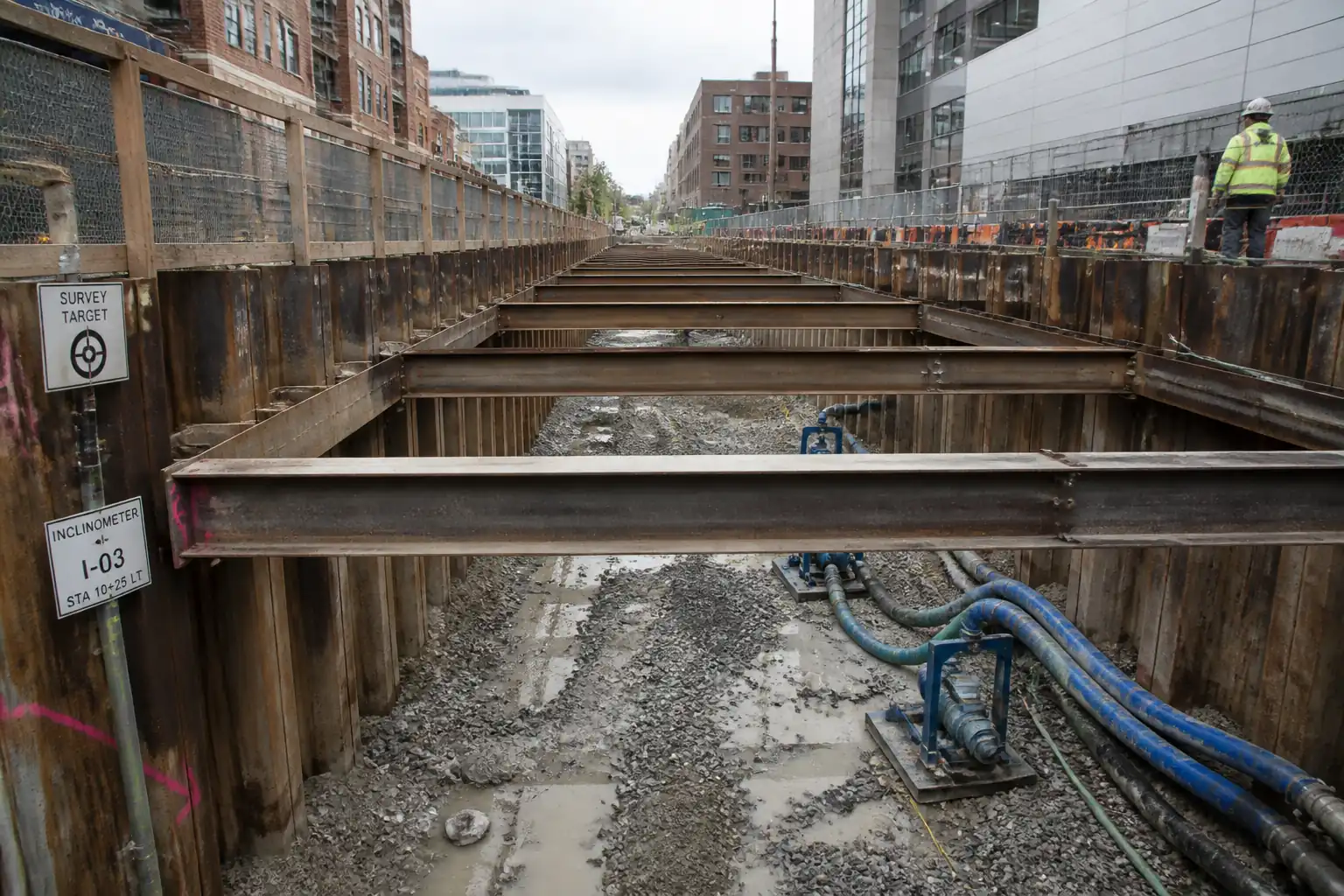
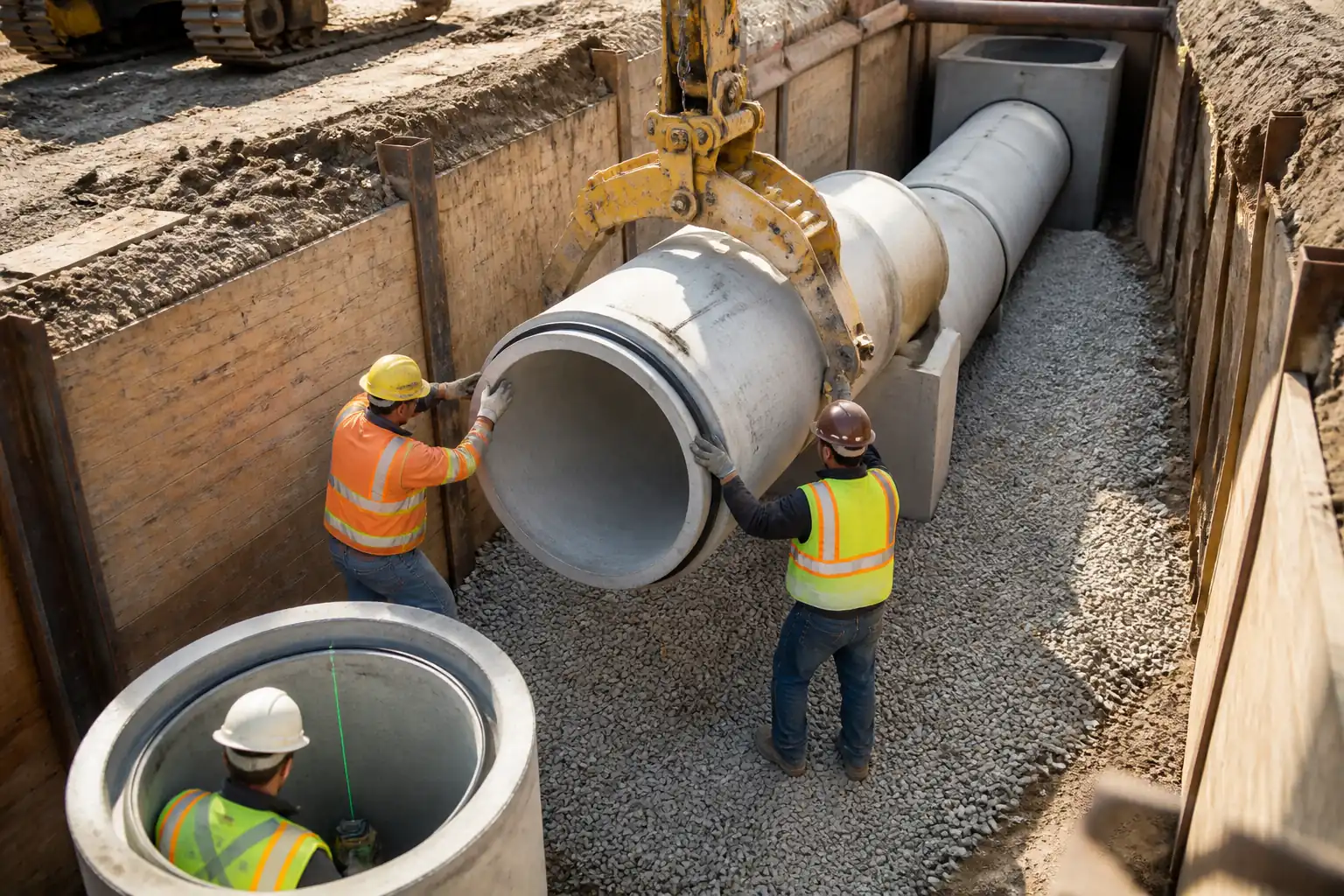
To verify trench works meet safety, geometry, stability, and compaction requirements before pipe/duct installation.
Who uses this inspection and test plan
Site engineers, QA/QC staff, supervisors, TWC/TWD, and the Engineer/Employer’s Representative.
When this ITP is prepared and submitted
From pre-start permitting through formation approval and release for installation, with records compiled daily.
Who receives or approves this ITP
The ITP is usually submitted to the client representative, consultant, resident engineer, or project management consultant for review and approval before the related work activity starts.
Inspection scope
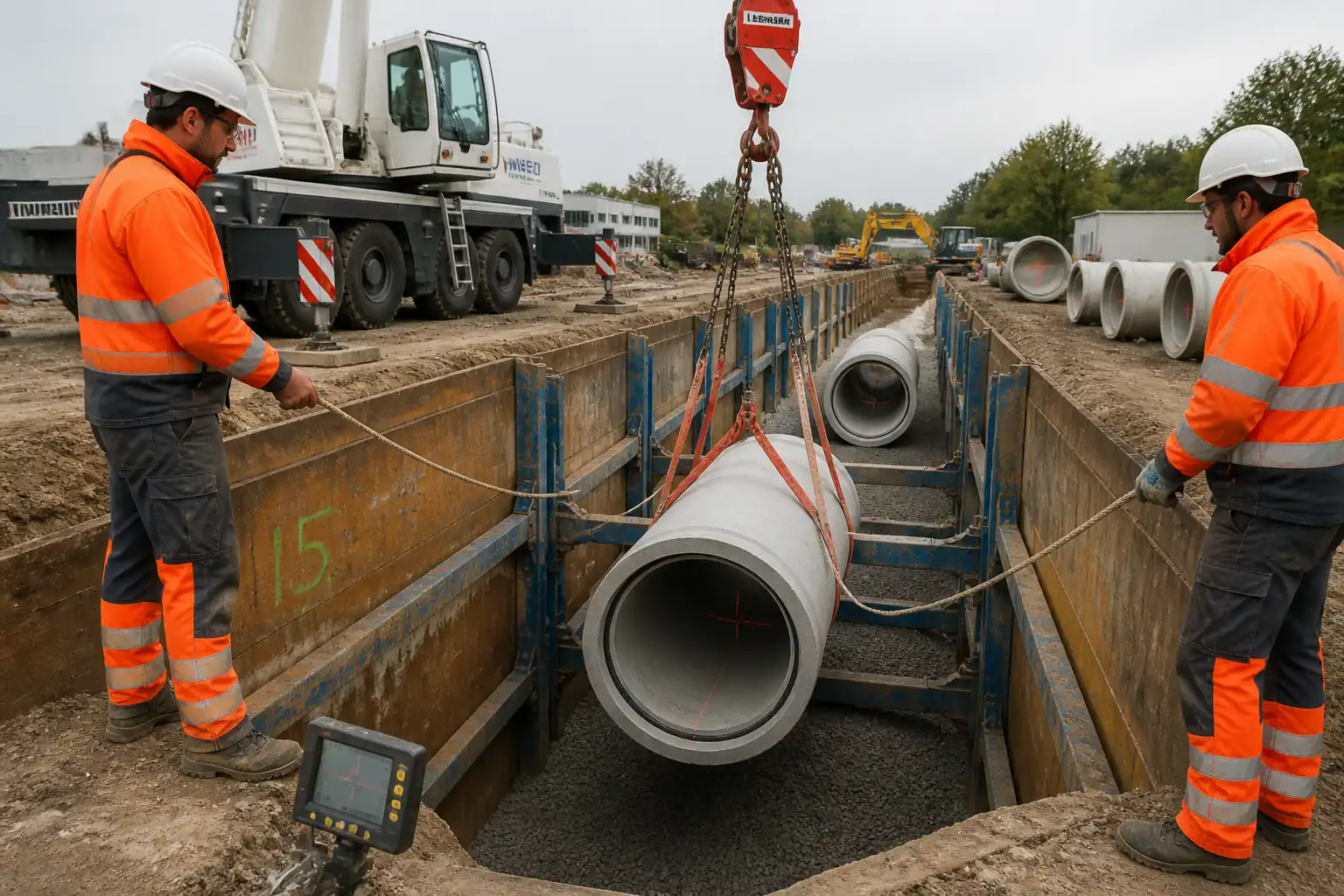
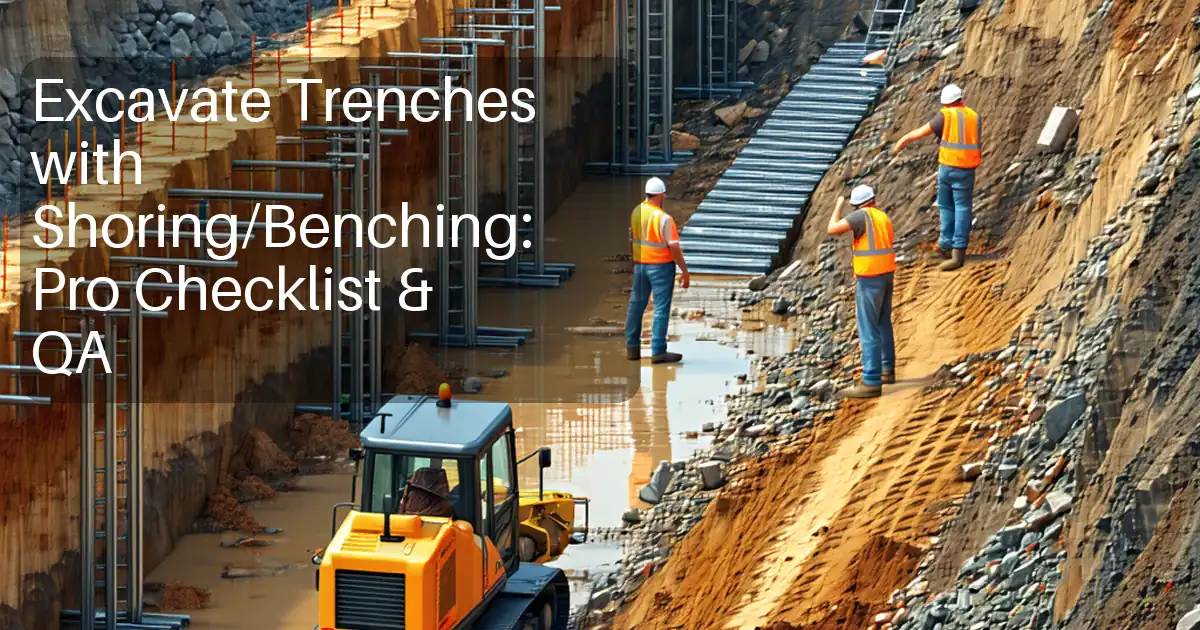
Permits, survey controls, utility exposure, staged excavation, trench support, groundwater control, formation geometry and compaction, geotextile where specified.
Typical hold, witness, and review points
Utility exposure confirmation, first bay of trench support, formation approval, and pre-installation release.
Typical inspection records
Permits, set-out checks, daily inspections, density test reports, dewatering logs, photos, and release certificates.
Important approval note
This ITP is an AI-assisted editable starting point, not a pre-approved document. Before use on any project, all inspection activities, hold points, and acceptance criteria must be reviewed and approved by the relevant parties (superintendent, principal contractor, or client representative) in accordance with your contract and project quality plan.
Always verify acceptance criteria against your applicable drawings, specifications, and regulatory requirements. Hold points must be confirmed with the relevant authority before work proceeds past that point.
Inspection and test plan
| Activity | Inspection / Test | Acceptance Criteria | Responsibility | Record |
|---|---|---|---|---|
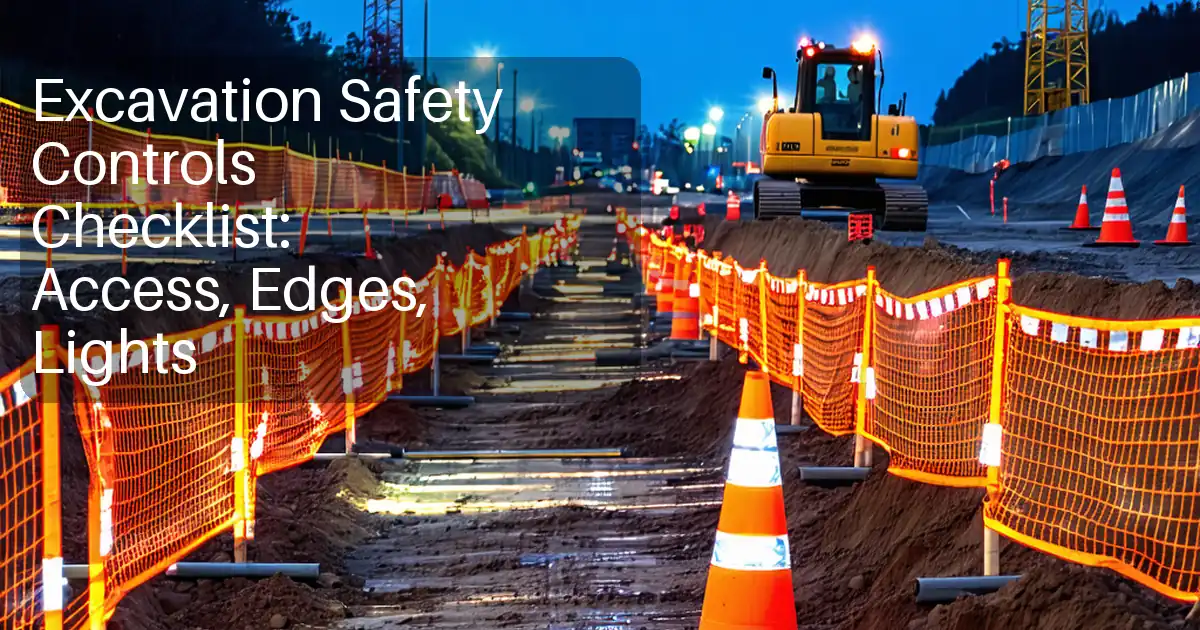
| Permits and pre-start controls | Verify RA/MS approval, Permit to Dig, TWD approval, TM plan | All approvals current; workforce briefed; exclusion zones set. | PM / HSE / Supervisor | Pre-start checklist; permits filed |
| Setting out | Alignment/level check against IFC | Chainage/offset ±20 mm; invert stakes ±5 mm | Surveyor / QA/QC | Set-out records; independent check sheet |
| Utility detection & potholing | Scan results; exposed utility survey; photos | Utilities positively identified; clearances adequate or mitigation agreed. | Utility Coordinator / Engineer | Potholing logs; marked-up drawings |
| Excavation to first stage | Visual stability; edge protection; spoil setback | No undercutting; spoil ≥0.5–1.0 m from edge [Verify]. | Supervisor / HSE | Daily excavation report; photos |
| Trench support/battering installation | Temporary works inspection | Per TWD; safe access provided; no distress. | TWC / Supervisor | TW inspection sheet; permit-to-excavate |
| Groundwater control setup | Pump test/logs; discharge quality check (if required) | Water level ≥300 mm below formation; discharge within consent. | Dewatering Specialist | Pump logs; water quality logs |
| Formation level and condition | Survey at 10–20 m intervals; visual for soft spots | -0/+20 mm; gradient within tolerance; firm base. | Site Engineer / QA/QC | Formation inspection/approval |
| Formation/blinding compaction | Field density (ASTM D6938/D1556) & moisture | ≥95% MDD (ASTM D698) [Verify]; moisture within specified band. | QA/QC | Density test reports |
| Geotextile placement (if specified) | Check overlaps, integrity | Overlap ≥300 mm; undamaged; correct class. | Supervisor / QA/QC | Inspection sheet; photos |
| Pre-installation release | Consolidated QA review | All preceding ITP steps accepted; records complete. | Engineer / QA/QC | Release/hold-point sign-off |
This table is a read-only public reference. Download the PDF or Excel version, or customize this ITP to edit it for your project.
Frequently asked questions
Related method statement
This Inspection and Test Plan is associated with the Method Statement: Common Trench Excavation for Utility Corridors method statement, which describes the step-by-step construction sequence, resources, materials, equipment, safety controls, and environmental controls for this activity.
View the Method Statement: Common Trench Excavation for Utility Corridors method statement →Continue with related inspection, method statement, article, and checklist resources.