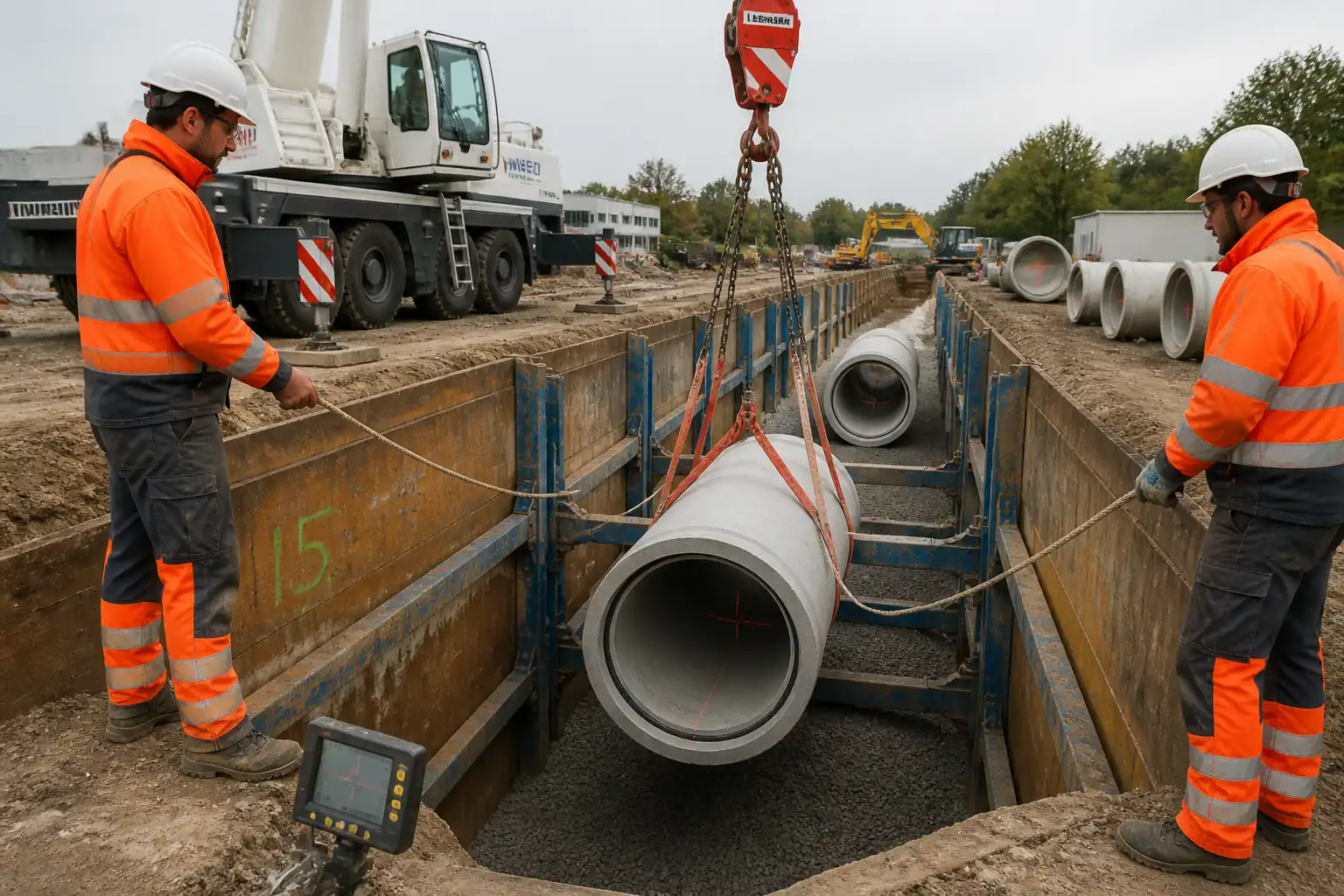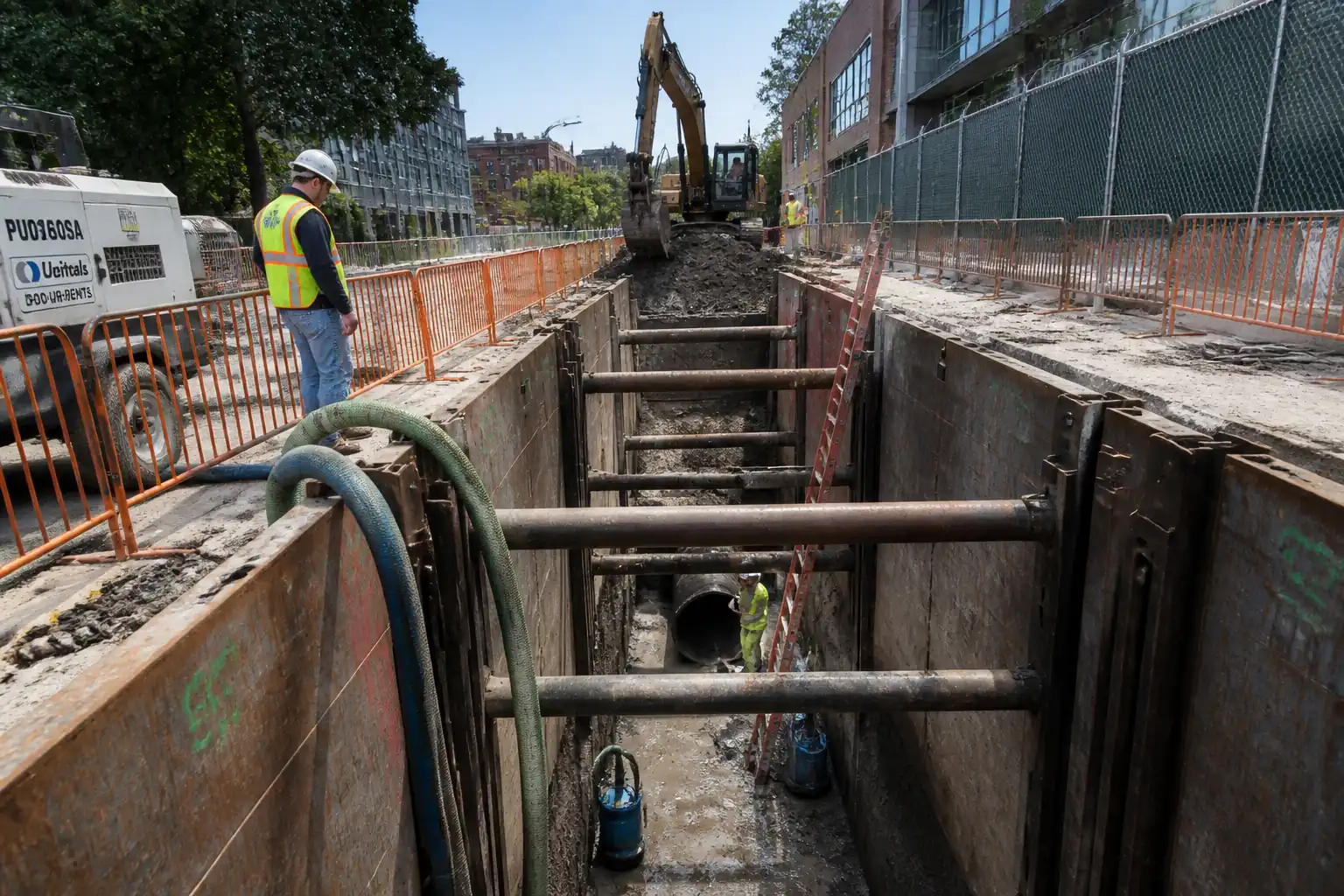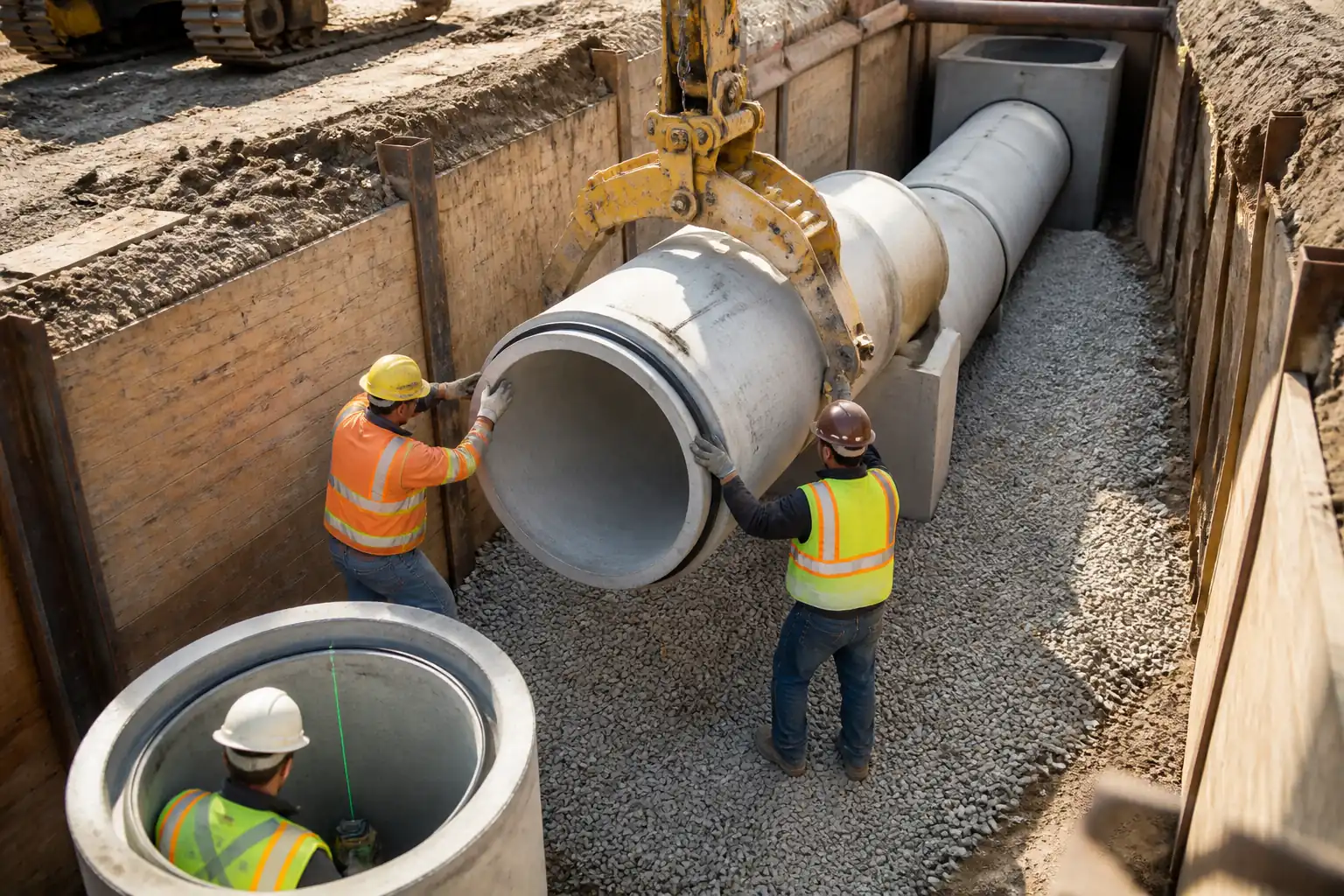

Inspection and Test Plan for Method Statement: Excavation, Bedding, and Installation of Precast Concrete Stormwater Pipes with Shoring, Laser Alignment, Rubber Ring Joints, Surround Compaction, and Air Testing
AI-assisted inspection and test plan connected to a method statement, with PDF and Excel export.
More than a static template
Unlike a downloadable Word or PDF template, this ITP is an AI-assisted editable starting point directly connected to its method statement. Every inspection activity, hold point, and acceptance criterion is structured and ready to adapt to your project.
- AI-assisted customization — Tailor inspection activities and acceptance criteria to your specific project scope.
- Linked method statement — This ITP is connected to the corresponding method statement describing the work sequence.
- Multiple export formats — Download as a formatted PDF or editable Excel spreadsheet.
- Editable starting point, not a final document — Review and verify all content against your project specifications and standards before use.
What you can customize
When you save this ITP to your account, every inspection row becomes editable. You can add, remove, or modify:
- Inspection activity — Description of what is being inspected.
- Inspection type — Hold point (H), Witness point (W), Review (R), or Monitor (M).
- Responsibility — Contractor, subcontractor, engineer, or client.
- Frequency — How often the inspection occurs.
- Acceptance criteria — Referenced standard or specification requirement.
- Records — Forms, test reports, or checklists required as evidence.
Why this ITP is used
To verify that stormwater pipe installation meets design, standards (EN 1610/BS EN 1916), and contract requirements before covering works.
Who uses this inspection and test plan
Contractor QA/QC, Site Engineer, TWC, HSE, and the Engineer/Client for surveillance and acceptance.
When this ITP is prepared and submitted
From material receipt through trenching, laying, backfilling, and testing, prior to reinstatement and handover.
Who receives or approves this ITP
Engineer/Client Representative for approval and witnessing.
Inspection scope
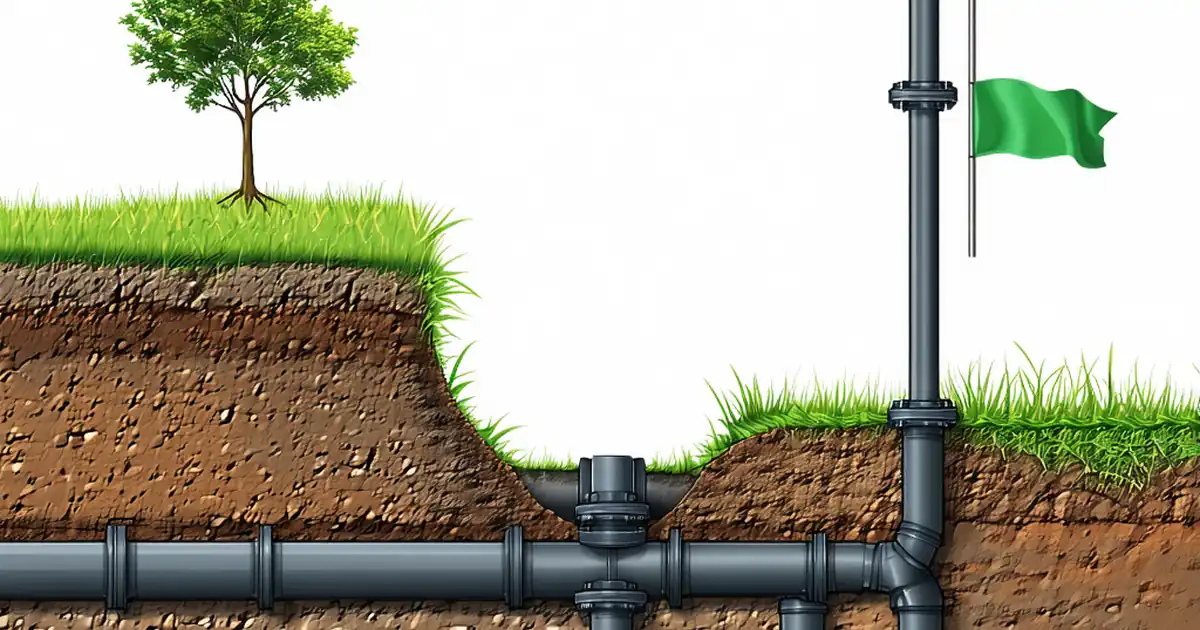
Covers material compliance, trench stability and support, bedding, joint assembly and alignment, compaction, air testing, and as-built survey.
Typical hold, witness, and review points
Hold: Bedding approval; Section air test. Witness: First joint, surround to 150 mm above crown, backfill layers.
Typical inspection records
Material certs, trench inspection logs, bedding/compaction records, air test certificates, calibration certs, as-built survey, NCR/CAR if any.
Important approval note
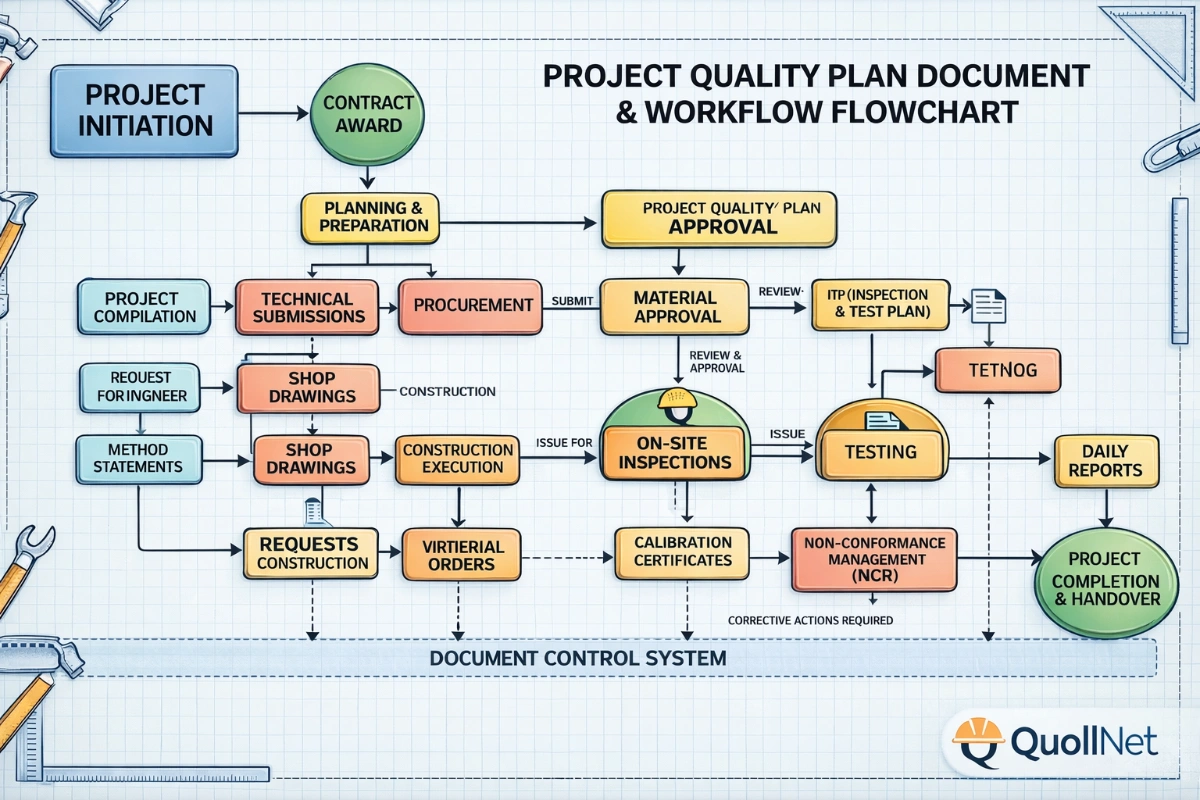
This ITP is an AI-assisted editable starting point, not a pre-approved document. Before use on any project, all inspection activities, hold points, and acceptance criteria must be reviewed and approved by the relevant parties (superintendent, principal contractor, or client representative) in accordance with your contract and project quality plan.
Always verify acceptance criteria against your applicable drawings, specifications, and regulatory requirements. Hold points must be confirmed with the relevant authority before work proceeds past that point.
Inspection and test plan
| Activity | Inspection / Test | Acceptance Criteria | Responsibility | Record |
|---|---|---|---|---|
| Material receipt – pipes and gaskets | Check CoC/CoA; visual for defects; confirm joint type/ring size | Conform to BS EN 1916/BS 5911 and BS EN 681-1; no damage to sealing faces | QA/QC Engineer / Foreman | Material inspection form; delivery notes |
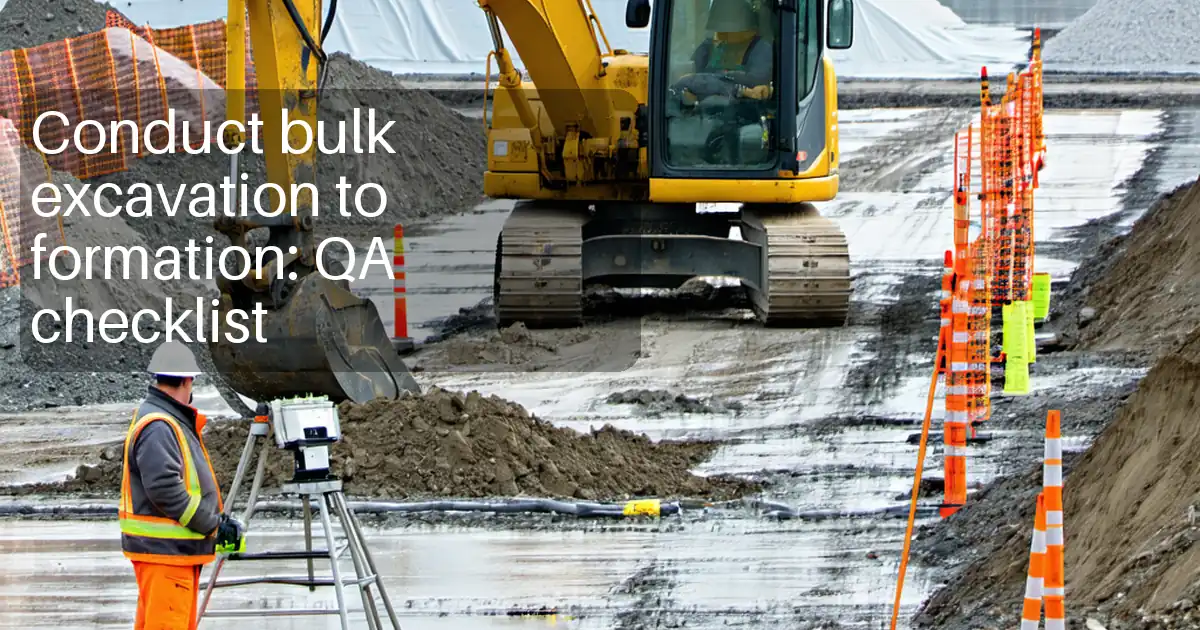
| Trench excavation and support | Check width, depth, support per TWD; spoil setback; access/egress | Stable, shored trench per TWD; dimensions within tolerance; safe access | TWC / Foreman / HSE | Trench inspection log; permit-to-excavate |
| Bedding preparation (Class B) | Thickness and profile; material compliance | ≥100 mm thickness; level ±10 mm; aggregate per BS EN 13242 | QA/QC / Site Engineer | Bedding inspection sheet; test reports |
| Pipe laying – jointing and alignment | Witness mark, ring seating, laser alignment, invert levels | Joint fully home or gap per spec; ring not displaced; line ±10 mm; level ±6 mm/10 m [Verify] | Site Engineer / Foreman | Joint checklist; as-laid level sheet |
| Sidefill and surround compaction | Method compaction; density testing if specified | Void-free haunch; surround to ≥150 mm above crown; density per spec [typ. ≥95% MDD] | QA/QC / Foreman | Compaction records; photos |
| Backfill above pipe zone | Field density tests at specified frequency | Compaction meets specification; no damage to pipeline | QA/QC / Foreman | Density test reports |
| Air testing of pipeline section | Low-pressure air test per EN 1610 (pressure/time by DN) or ASTM C969 if specified | Meets code allowable pressure drop/time or infiltration/exfiltration rate [Verify] | QA/QC / Site Engineer; Engineer witness | Signed test certificate; gauge calibration |
| As-built survey | Check inverts, line, cover vs design | Within specified geometric tolerances [Verify] | Surveyor / QA/QC | As-built drawings, CSV/XYZ files |
This table is a read-only public reference. Download the PDF or Excel version, or customize this ITP to edit it for your project.
Frequently asked questions
Related method statement
This Inspection and Test Plan is associated with the Method Statement: Excavation, Bedding, and Installation of Precast Concrete Stormwater Pipes with Shoring, Laser Alignment, Rubber Ring Joints, Surround Compaction, and Air Testing method statement, which describes the step-by-step construction sequence, resources, materials, equipment, safety controls, and environmental controls for this activity.
View the Method Statement: Excavation, Bedding, and Installation of Precast Concrete Stormwater Pipes with Shoring, Laser Alignment, Rubber Ring Joints, Surround Compaction, and Air Testing method statement →Continue with related inspection, method statement, article, and checklist resources.