
Inspection and Test Plan for Method Statement – Installation of Metal Parapet Coping Caps and Flashings
AI-assisted inspection and test plan connected to a method statement, with PDF and Excel export.
More than a static template
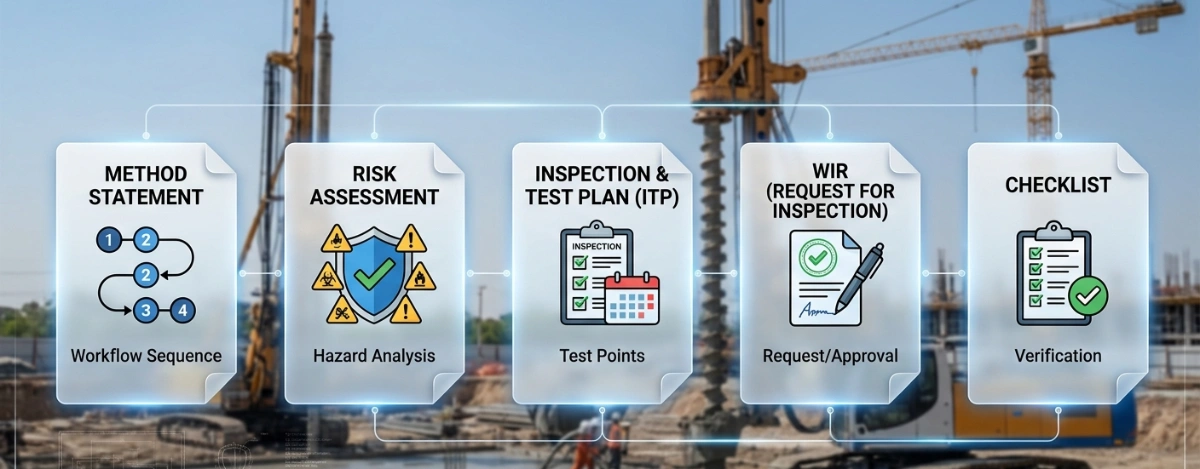
Unlike a downloadable Word or PDF template, this ITP is an AI-assisted editable starting point directly connected to its method statement. Every inspection activity, hold point, and acceptance criterion is structured and ready to adapt to your project.
- AI-assisted customization — Tailor inspection activities and acceptance criteria to your specific project scope.
- Linked method statement — This ITP is connected to the corresponding method statement describing the work sequence.
- Multiple export formats — Download as a formatted PDF or editable Excel spreadsheet.
- Editable starting point, not a final document — Review and verify all content against your project specifications and standards before use.
What you can customize
When you save this ITP to your account, every inspection row becomes editable. You can add, remove, or modify:
- Inspection activity — Description of what is being inspected.
- Inspection type — Hold point (H), Witness point (W), Review (R), or Monitor (M).
- Responsibility — Contractor, subcontractor, engineer, or client.
- Frequency — How often the inspection occurs.
- Acceptance criteria — Referenced standard or specification requirement.
- Records — Forms, test reports, or checklists required as evidence.
Why this ITP is used
To verify each critical step meets specification and standards, delivering durable, watertight, and compliant parapet edge detailing.
Who uses this inspection and test plan
QA/QC Engineers, Site Engineers, Supervisors, and the Consultant/Client for surveillance and approvals.
When this ITP is prepared and submitted
Applied from pre-start through final inspection, with hold and witness points at key milestones (substrate, cleats, joints, and handover).
Who receives or approves this ITP
Consultant/Client for review, approval, and surveillance.
Inspection scope
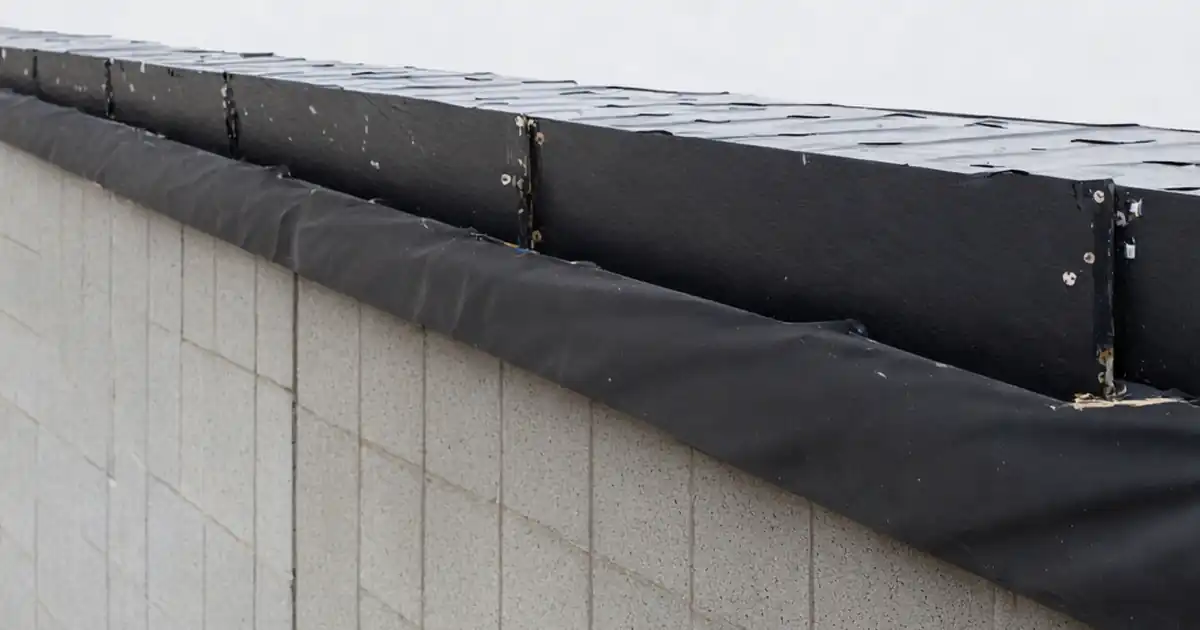
Covers documentation, substrate condition, underlayment adhesion, cleat fixing quality, jointing/expansion gaps, flashing tie-ins, and final appearance/watertightness.
Typical hold, witness, and review points
Hold: Substrate acceptance, cleat fixing verification, final inspection. Witness: Underlayment installation, corners/end dams, joint gaps/drive cleats.
Typical inspection records
Pre-start checklist, substrate and underlayment inspections, cleat/fastener logs, pull-out tests, joint gap logs, final inspection and punch list close-out.
Important approval note
This ITP is an AI-assisted editable starting point, not a pre-approved document. Before use on any project, all inspection activities, hold points, and acceptance criteria must be reviewed and approved by the relevant parties (superintendent, principal contractor, or client representative) in accordance with your contract and project quality plan.
Always verify acceptance criteria against your applicable drawings, specifications, and regulatory requirements. Hold points must be confirmed with the relevant authority before work proceeds past that point.
Inspection and test plan
| Activity | Inspection / Test | Acceptance Criteria | Responsibility | Record |
|---|---|---|---|---|
| Pre-Installation Review | Check approvals: shop drawings, materials, mock-up | All submittals approved; mock-up accepted; permits in place. | QA/QC Engineer / Consultant | ITP Pre-Start Checklist |
| Substrate Inspection | Levels/plumbness per tolerance | Top level ±5 mm in 3 m; face plumb ±5 mm in 3 m; sound, dry substrate. | QA/QC Engineer / Consultant | Substrate Inspection Record |
| Underlayment Installation | Adhesion (hand peel), lap width | Full bond; laps sealed; laps ≥ 75–100 mm [Verify]. | QA/QC Engineer | Underlayment Inspection Sheet |
| Cleat Fixing | Random torque check; initial pull-out tests | Spacing 200–300 mm o/c; edge distance 25–40 mm; pull-out ≥ 1.0–1.5 kN [Verify]. | QA/QC Engineer / Consultant | Cleat Installation Checklist; Pull-Test Report |
| Corners/End Dams | Visual continuity of tapes/sealant | Tight fits; end dams ≥25 mm; no gaps/voids. | QA/QC Engineer | Corner Inspection Record |
| Joints & Drive Cleats | Measure joint gap; verify one-side-fixed splice | Gap per calc/approved detail (typ. 6–12 mm Al; 4–8 mm steel) [Verify]; drive cleat seated; free movement. | QA/QC Engineer / Consultant | Joint Inspection Log |
| Flashing Tie-ins | Sealant adhesion (field check) | Shingle to shed water; sealant bead continuous 6–10 mm; no incompatibility staining. | QA/QC Engineer / Roofing Rep | Flashing/Tie-in Record |
| Final Inspection | Straightedge/laser; optional hose test (agreed) | Reveal uniform ±3 mm; deviation ≤ 3 mm in 3 m; no damage; no visible leaks on test. | QA/QC Engineer / Consultant | Final Inspection Report; Punch List Close-Out |
This table is a read-only public reference. Download the PDF or Excel version, or customize this ITP to edit it for your project.
Frequently asked questions
Related method statement
This Inspection and Test Plan is associated with the Method Statement – Installation of Metal Parapet Coping Caps and Flashings method statement, which describes the step-by-step construction sequence, resources, materials, equipment, safety controls, and environmental controls for this activity.
View the Method Statement – Installation of Metal Parapet Coping Caps and Flashings method statement →Continue with related inspection, method statement, article, and checklist resources.