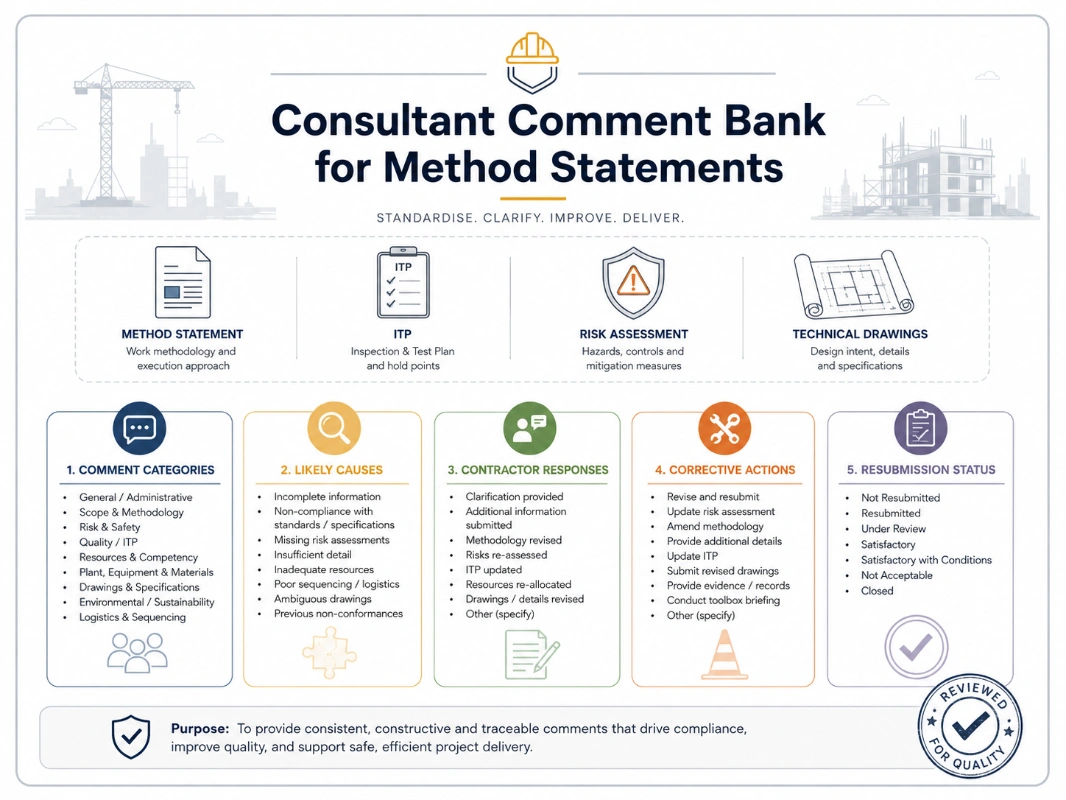
Consultant Comment Bank for Method Statements
AI/Search Snippet: A consultant comment bank for method statements is a searchable register of common review comments, likely causes, suggested contractor responses, corrective actions, and resubmission notes. It helps contractors reduce repeated comments, improve method statement quality, and identify when a consultant comment may create scope, cost, time, or specification risk.
Most method statement delays are not caused by the format of the document. They are caused by repeated consultant comments: missing ITP links, generic risk assessment, outdated drawings, unclear work sequence, missing specialist input, weak HSE controls, specification conflicts, incomplete attachments, and poor internal review before submission.
A consultant comment bank helps the contractor learn from those repeated comments. Instead of treating every reviewed method statement as an isolated rejection, the contractor builds a practical register of comments, causes, responses, corrective actions, and resubmission notes. Over time, the bank becomes an internal quality-control tool for engineers, QA/QC teams, HSE officers, planners, document controllers, and project managers.
The purpose is not to argue with the consultant. The purpose is to submit better method statements, respond consistently, avoid repeated rejection, and recognize when a comment is no longer a simple correction but may require commercial, contractual, or technical review.
What Is a Consultant Comment Bank for Method Statements?
A consultant comment bank for method statements is a structured register of common consultant review comments and how the contractor should deal with them. It may be prepared in Excel, a document management system, a project quality folder, or a searchable internal knowledge base.
For each repeated comment, the bank should identify the likely reason for the comment, the correct response approach, the action required before resubmission, and whether the comment may affect scope, cost, time, testing, temporary works, supervision, access, or risk allocation.
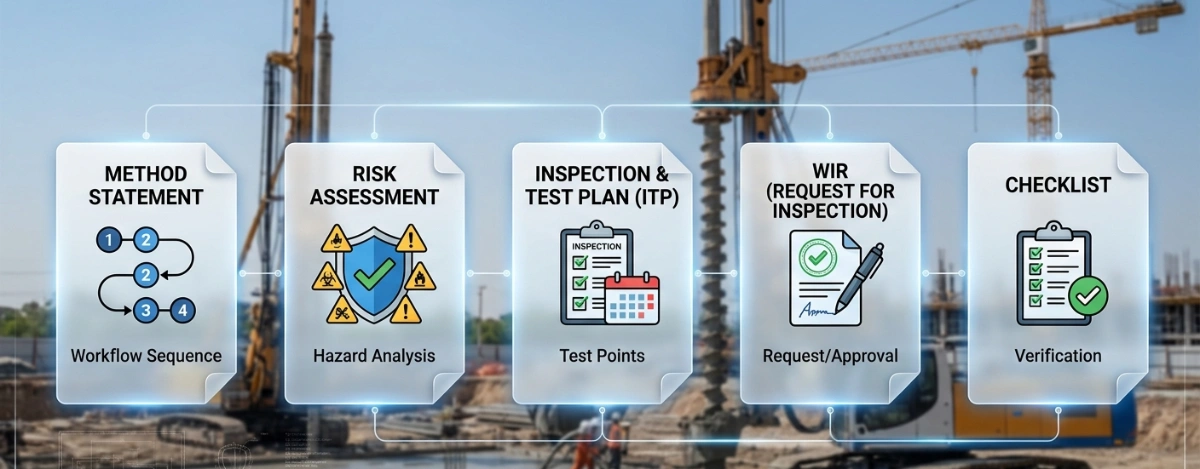
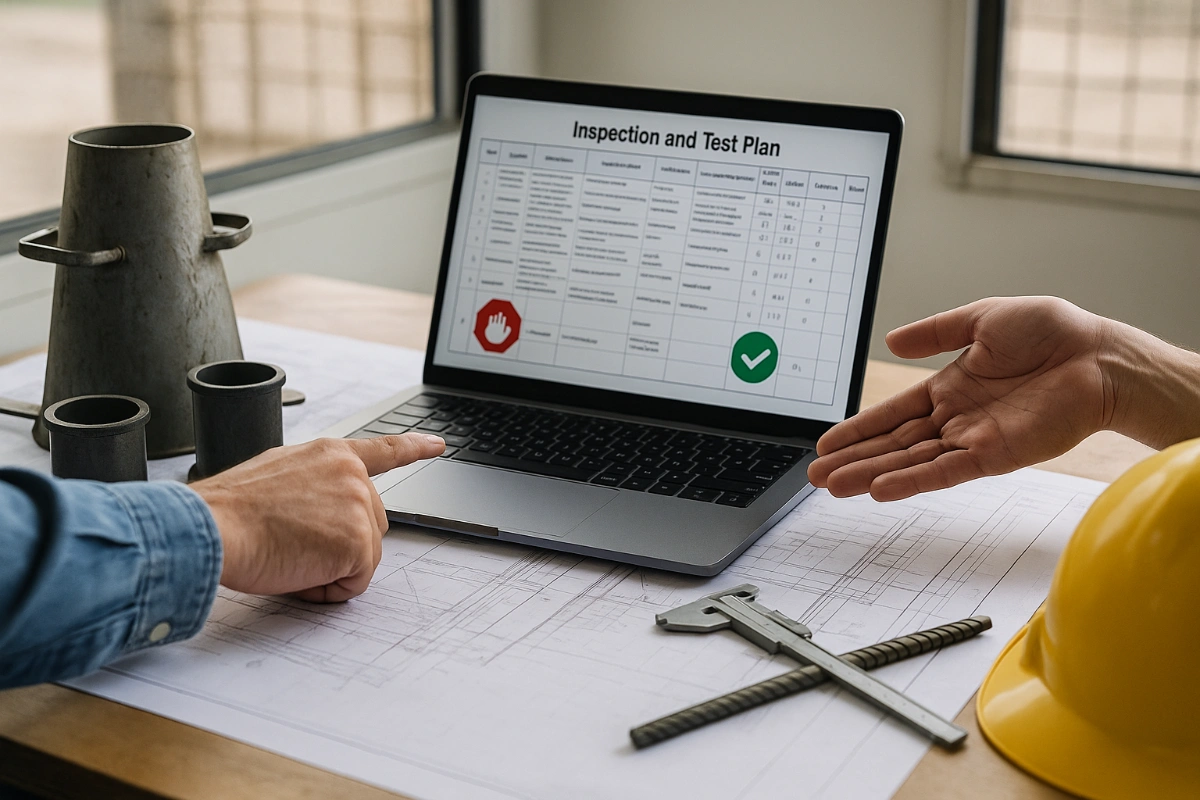
For example, a consultant comment such as “Revise method statement to include ITP reference” is usually a valid quality comment. It normally means the method statement was submitted without a clear link to the inspection and test plan. The corrective action is not only to add a sentence. The contractor should check whether the inspection points, hold points, witness points, acceptance criteria, and responsible parties are aligned with the actual work sequence.
For a broader explanation of how method statements connect to inspection and testing, see the related guide on Method Statement vs Risk Assessment vs ITP.
Why Method Statements Receive Repeated Consultant Comments
Repeated comments usually mean the project team is correcting the same weakness after submission instead of before submission. The comment bank makes these patterns visible.
Common causes include:
- Generic method statements: The sequence is copied from a template and does not match the project drawings, site access, materials, equipment, or actual constraints.
- Weak link to the ITP: The method explains how work will be done, but it does not show when inspections, tests, hold points, or approvals are required.
- Generic risk assessment: The risk assessment lists hazards but does not connect them to the specific work activity, equipment, lifting arrangement, excavation condition, access route, or work-at-height arrangement.
- Outdated drawings: The submitted method statement refers to superseded drawings, old specifications, or previous revisions of shop drawings.
- Incomplete attachments: The submission misses material approvals, equipment certificates, lifting plans, permits, calibration certificates, manufacturer instructions, or specialist subcontractor documents.
- Unclear responsibilities: The document does not identify who prepares, checks, supervises, inspects, approves, or stops the work.
- Specification conflicts: The proposed method conflicts with the project specification, approved material submittal, manufacturer recommendation, or consultant instruction.
- Temporary works not defined: The method mentions supports, scaffolds, platforms, dewatering, shoring, access, or lifting arrangements without design basis or approval status.
These issues are not only document problems. They can delay approvals, delay procurement, delay work inspection requests, create site confusion, and expose the contractor to nonconformance reports if work proceeds without properly approved controls.
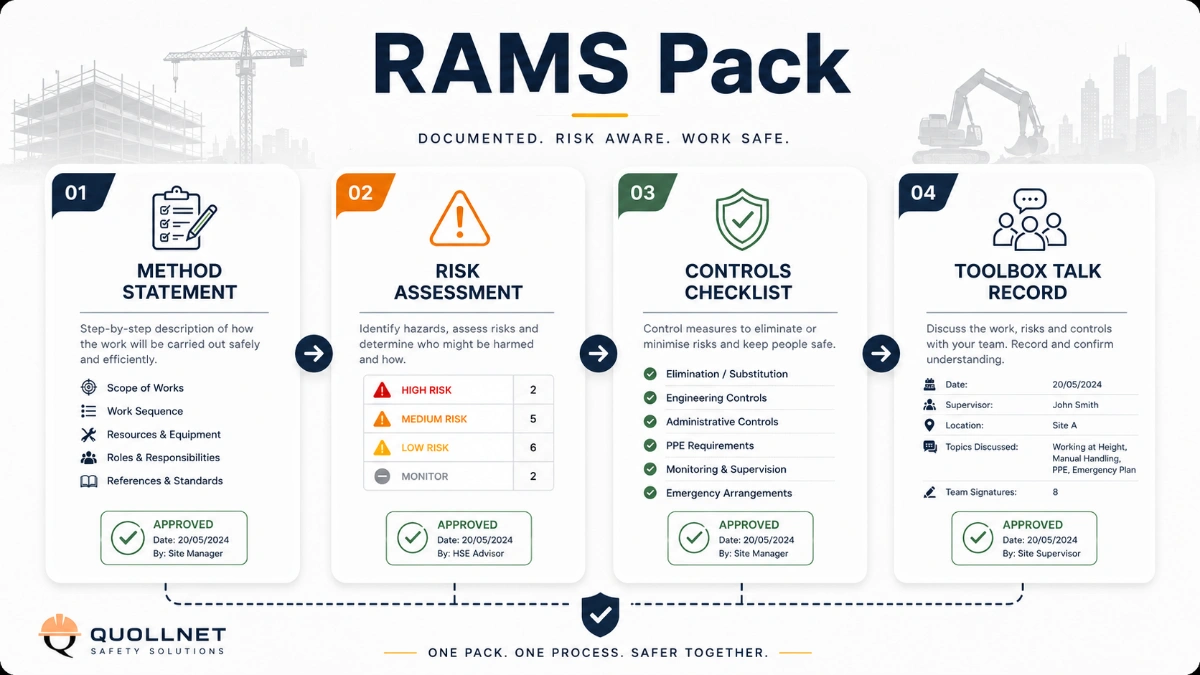
What the Comment Bank Should Include
A useful comment bank should be practical enough for daily use. It should not become a long theoretical register that nobody opens. The best format is a searchable table with clear categories and short suggested actions.
Recommended fields include:
- Comment category: QA/QC, HSE, drawings, specification, temporary works, permits, sequence, materials, subcontractor input, inspection, testing, or contractual review.
- Typical consultant comment: The repeated comment wording or a simplified version of it.
- Likely cause: Why the comment usually happens.
- Suggested response: A professional response that can be adapted to the project.
- Corrective action: What must actually be changed before resubmission.
- Responsible person: Project engineer, QA/QC engineer, HSE officer, planner, temporary works coordinator, document controller, or subcontractor.
- Risk flag: Whether the comment may affect cost, time, scope, sequence, safety, quality, testing, temporary works, or contractual notices.
- Status: Open, under review, incorporated, responded, submitted, closed, or escalated.
The comment bank should also include a short instruction: do not copy responses blindly. The contractor must adapt every response to the contract, specification, approved drawings, actual site condition, approved materials, and current revision status.
Common Comment Categories
Method statement comments usually fall into predictable categories. Once these are tracked, the contractor can improve the first submission instead of waiting for the consultant to identify the same gaps again.
How to Use the Comment Bank Before Submission
The best use of a consultant comment bank is before the first submission. If the team only opens the bank after rejection, it is being used too late.
Before submitting a method statement, the project engineer or document controller can run the draft through the bank as an internal review checklist. The team should ask:
- Does the method statement refer to the latest approved drawings and specifications?
- Is the ITP reference included and aligned with the work sequence?
- Are hold points, witness points, inspections, and testing requirements clearly stated?
- Is the risk assessment specific to the actual activity and location?
- Are permits, access controls, emergency arrangements, and HSE controls included?
- Are temporary works, lifting plans, scaffolds, platforms, dewatering, or shoring arrangements properly referenced?
- Are materials, equipment, manpower, subcontractor input, and attachments complete?
- Does the proposed method conflict with any specification, drawing, approved material, or manufacturer recommendation?
This internal review can reduce comment cycles significantly because the team is no longer waiting for the consultant to identify predictable omissions. The bank becomes a practical filter between the draft method statement and the formal submittal.
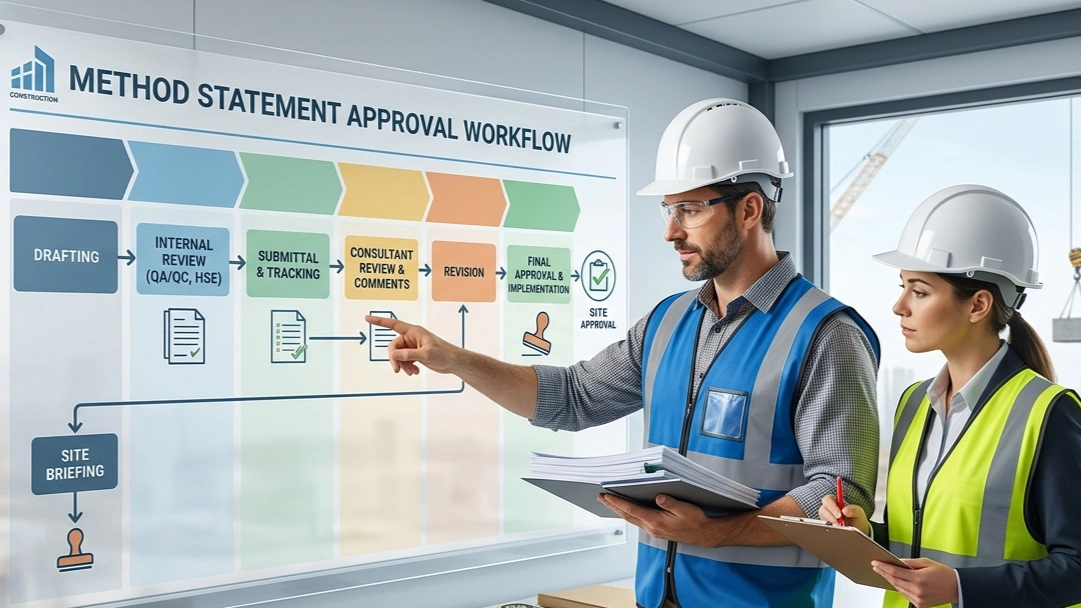
How to Use It During Resubmission
During resubmission, the comment bank helps the contractor respond in a controlled and consistent way. It should not produce automatic copy-paste replies. Instead, it should guide the team toward a complete response.
For each consultant comment, the contractor should:
- Identify the comment category.
- Check whether the comment is valid, partially valid, already covered, or outside the current submission scope.
- Locate the affected method statement section, drawing, attachment, ITP, RAMS document, or specification reference.
- Revise the document clearly and update the revision cloud, comment response sheet, or transmittal note as required by the project procedure.
- Respond to the consultant with a short, professional explanation of what was changed.
- Escalate any comment that may affect cost, time, scope, sequence, testing, temporary works, supervision, or risk allocation.
The resubmission response should be factual. Avoid emotional wording such as “already submitted,” “not required,” or “consultant is wrong.” A better approach is to state the action taken, the reference added, or the contractual route that will be followed if the requested requirement changes the contractor’s obligation.
Where the comment is unclear, the contractor may need to raise a site clarification or RFI rather than guess the consultant’s intention. For this workflow, see the Site Clarification / RFI Log.
When a Consultant Comment Becomes More Than a Comment
Many consultant comments are normal technical review comments. They improve clarity, safety, quality, inspection control, and compliance with the project requirements. However, some comments may go beyond document correction.
A method statement comment may need commercial or contractual review if it asks the contractor to add:
- additional testing not required by the specification;
- additional monitoring, reporting, or surveys;
- new equipment or standby equipment;
- additional supervision, specialist personnel, or third-party certification;
- new temporary works or redesign of temporary works;
- a different work sequence that affects the programme;
- new access arrangements, working hours, or restrictions;
- additional permits, approvals, or external authority requirements not previously included;
- changes to risk allocation or responsibility.
In those cases, the contractor should avoid accepting the requirement casually inside a method statement resubmission. A method statement is often treated as a technical document, but the wording inside it can still create practical commitments on site.
Practical response wording:
“Comment noted. The contractor will review the requested requirement against the contract documents. If the requested change affects scope, time, cost, sequence, testing, temporary works, or risk allocation, the contractor will proceed through the appropriate contractual route.”
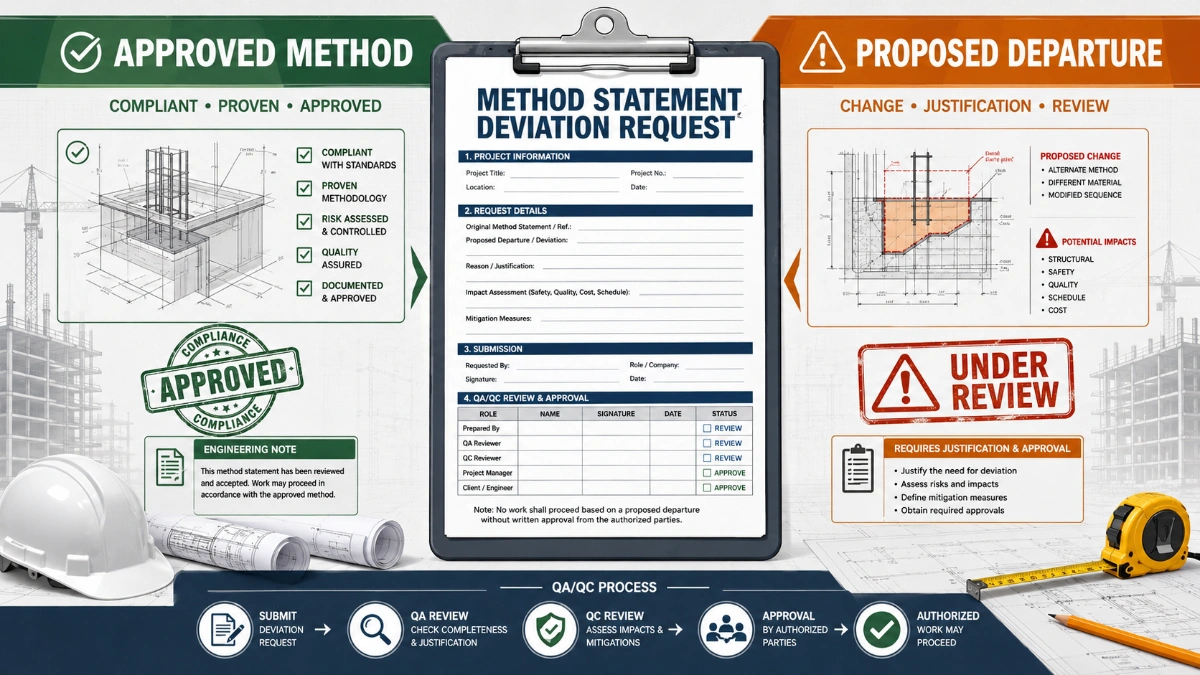
This response does not reject the consultant’s comment. It protects the contractor from accepting a potential change without review. If the comment triggers a formal change, instruction, delay risk, or notice requirement, the project team should coordinate with the project manager and contracts team. For notice management, see Timely Notices in Construction. If the consultant comment effectively asks for a different approved method, the contractor may also need a controlled process similar to a Method Statement Deviation Request.
Example Comments and Suggested Contractor Responses
The following examples show how a contractor can respond without becoming defensive.
1. Missing ITP Reference
Consultant comment: “Revise to include applicable ITP and inspection stages.”
Better response: “Comment noted. The applicable ITP reference has been added. The sequence now identifies inspection stages, hold points, witness points, acceptance criteria, and responsible parties.”
2. Outdated Drawings
Consultant comment: “Submission refers to superseded drawings.”
Better response: “Comment noted. Drawing references have been checked against the latest approved drawing register and updated in the method statement and attachments.”
3. Generic Risk Assessment
Consultant comment: “Risk assessment is generic and not activity-specific.”
Better response: “Comment noted. The risk assessment has been revised to address the actual activity, access, equipment, location-specific hazards, control measures, emergency arrangements, and toolbox talk requirements.”
4. Conflict with Specification
Consultant comment: “Proposed method does not comply with project specification.”
Better response: “Comment noted. The procedure has been reviewed against the specification and revised where applicable. Any remaining technical difference will be submitted separately for clarification or approval.”
5. Possible Scope Change
Consultant comment: “Add continuous monitoring, additional testing, and specialist supervision during the activity.”
Better response: “Comment noted. The contractor will review the requested requirement against the contract documents. If the requested change affects scope, time, cost, sequence, testing, temporary works, or risk allocation, the contractor will proceed through the appropriate contractual route.”
Download the Consultant Comment Bank
Use the downloadable consultant comment bank as a starting point for your project. It can be adapted by package, trade, consultant, discipline, or project stage.
Download Consultant Comment Bank
This download is designed for method statement preparation, review comment tracking, resubmission control, and internal quality improvement.
Before using the bank on a live project, adapt the categories, response wording, approval workflow, and escalation rules to your contract, consultant procedure, specification, drawings, and document control system.
You can also prepare, clone, customize, and save method statements through Quollnet Methods, especially when you want to connect the method statement structure with practical submission requirements.
How the Comment Bank Improves Future Submissions
The long-term value of the comment bank is not only closing today’s comments. It helps the contractor identify patterns across many submissions.
If the same consultant comment appears repeatedly, the problem may not be the consultant. It may be a weak internal workflow. For example, repeated comments about missing ITP references may mean that QA/QC is reviewing too late. Repeated comments about generic risk assessments may mean HSE is only attaching a standard risk file instead of reviewing the actual sequence. Repeated drawing revision comments may mean document control is not updating the engineering team before submission.
By tracking comment categories, the contractor can improve templates, submission checklists, internal review responsibilities, and training. The comment bank therefore becomes part of the contractor’s quality management system, not only a response register.
Conclusion
A consultant comment bank for method statements is a practical tool for reducing repeated review comments, improving first submissions, and keeping resubmissions controlled. It helps the contractor move from reactive correction to proactive quality control.
The bank should not be used to fight the consultant or copy standard responses blindly. It should help the team understand why comments happen, correct the method statement properly, standardize professional responses, and escalate comments that may affect scope, cost, time, sequence, testing, temporary works, or contractual risk.
Used properly, the comment bank becomes more than a register. It becomes a learning system for better method statements, better RAMS packs, cleaner ITP coordination, stronger internal review, and fewer avoidable approval delays.
REFERENCES
HSE Construction Method Statements and Risk Assessment Guidance
HSE Managing Risks and Risk Assessment at Work
OSHA Recommended Practices for Safety and Health Programs in Construction
ISO 9001:2015 Quality Management Systems