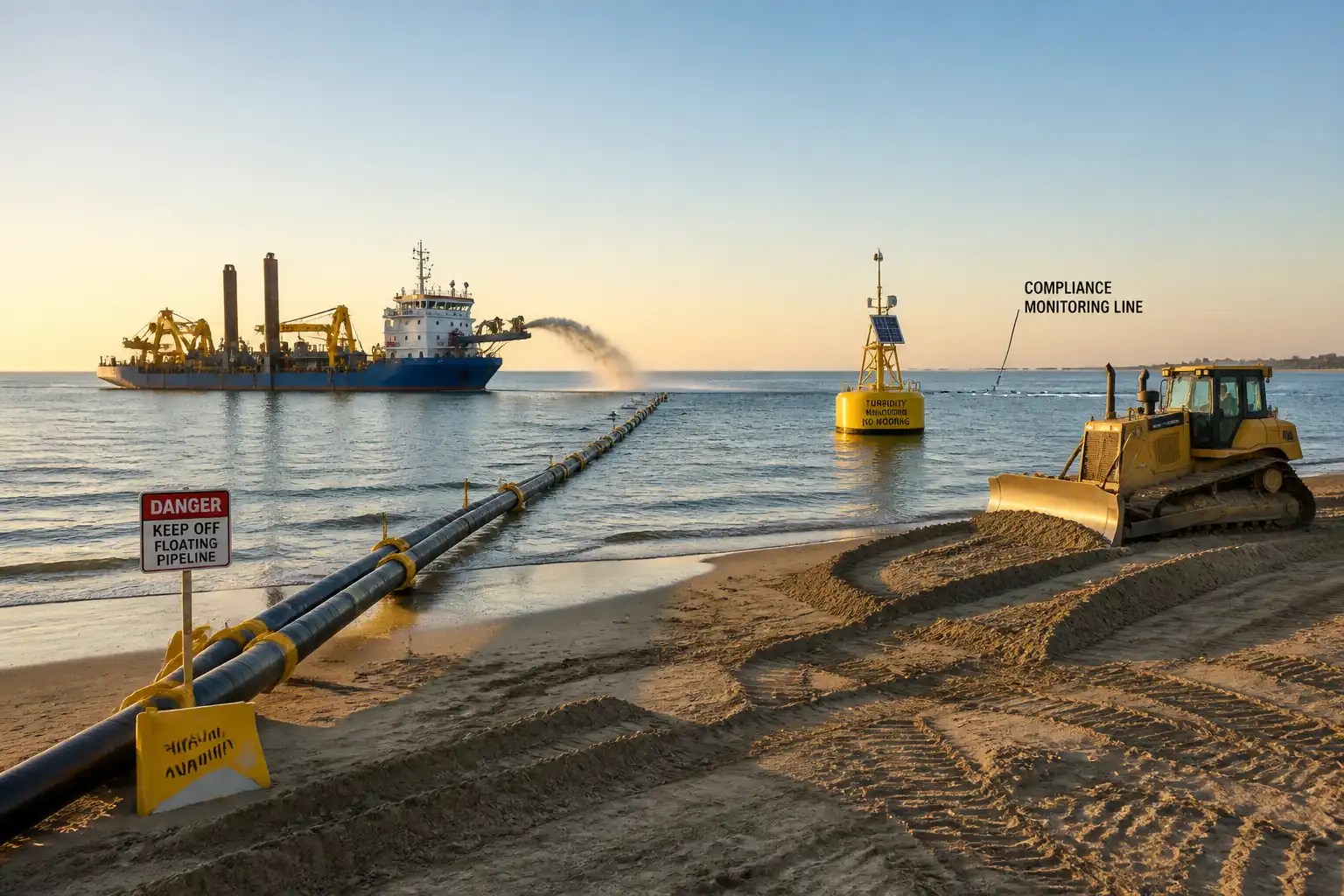

Inspection and Test Plan for Method Statement: Beneficial Reuse of Dredged Material for Beach Nourishment and Habitat Creation
AI-assisted inspection and test plan connected to a method statement, with PDF and Excel export.
More than a static template
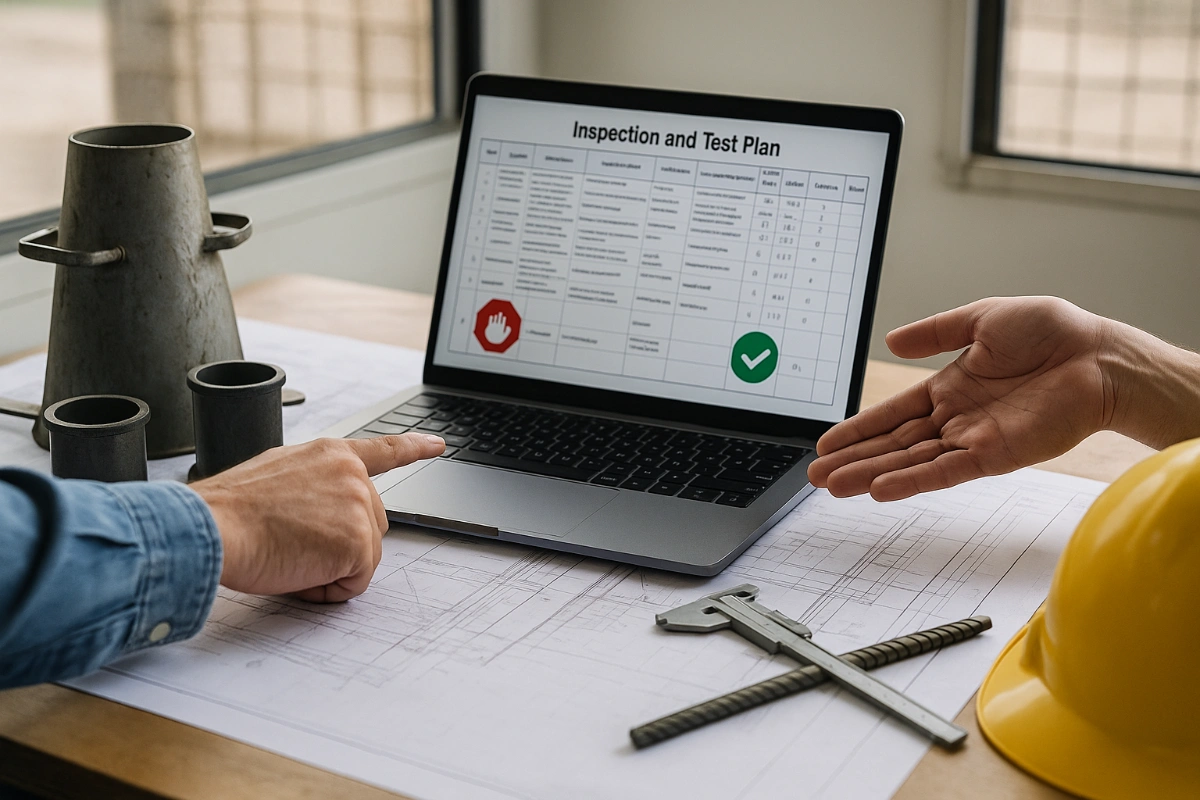
Unlike a downloadable Word or PDF template, this ITP is an AI-assisted editable starting point directly connected to its method statement. Every inspection activity, hold point, and acceptance criterion is structured and ready to adapt to your project.
- AI-assisted customization — Tailor inspection activities and acceptance criteria to your specific project scope.
- Linked method statement — This ITP is connected to the corresponding method statement describing the work sequence.
- Multiple export formats — Download as a formatted PDF or editable Excel spreadsheet.
- Editable starting point, not a final document — Review and verify all content against your project specifications and standards before use.
What you can customize
When you save this ITP to your account, every inspection row becomes editable. You can add, remove, or modify:
- Inspection activity — Description of what is being inspected.
- Inspection type — Hold point (H), Witness point (W), Review (R), or Monitor (M).
- Responsibility — Contractor, subcontractor, engineer, or client.
- Frequency — How often the inspection occurs.
- Acceptance criteria — Referenced standard or specification requirement.
- Records — Forms, test reports, or checklists required as evidence.
Why this ITP is used
To verify that placed material, water quality, and finished levels meet design and permit requirements.
Who uses this inspection and test plan
Contractor QA/QC, Environmental Team, Surveyors, and the Engineer for hold/witness approvals.
When this ITP is prepared and submitted
From pre-construction through production, as-built acceptance, and demobilization.
Who receives or approves this ITP
The ITP is usually submitted to the client representative, consultant, resident engineer, or project management consultant for review and approval before the related work activity starts.
Inspection scope
Permits and controls, pipeline testing, baseline and compliance turbidity, grain size tests, interim and final surveys, environmental inspections.
Typical hold, witness, and review points
First production grain size (Hold), environmental compliance sampling as specified (Hold), as-built acceptance (Hold), pipeline pressure test (Witness).
Typical inspection records
Approval registers, lab reports, calibration logs, survey reports, turbidity data, NCRs, and as-built package.
Important approval note
This ITP is an AI-assisted editable starting point, not a pre-approved document. Before use on any project, all inspection activities, hold points, and acceptance criteria must be reviewed and approved by the relevant parties (superintendent, principal contractor, or client representative) in accordance with your contract and project quality plan.
Always verify acceptance criteria against your applicable drawings, specifications, and regulatory requirements. Hold points must be confirmed with the relevant authority before work proceeds past that point.
Inspection and test plan
| Activity | Inspection / Test | Acceptance Criteria | Responsibility | Record |
|---|---|---|---|---|
| Pre-construction approvals | Verify permits, EMP, ITP approved | All approvals on file; kick-off held | Project Manager / Engineer | Approval register |
| Survey control establishment | Check ties to benchmarks | Horizontal/vertical closure within spec | Survey Lead | Control report |
| Pipeline hydrostatic test (WP-PT1) | Hydrostatic pressure test | No leaks at 1.25× WP for ≥30 min [Verify] | Superintendent / QA | Pressure test certificate |
| Baseline turbidity logging | Continuous logging; manual grabs | Stable background dataset established | Environmental Manager | Baseline WQ report |
| First production material approval (HP-GS1) | ASTM D6913/D7928/D1140 | Meets design gradation/fines | QA/QC Manager / Engineer | Lab report; hold release |
| Ongoing grain size verification (HP-GS2 if nonconforming) | ASTM D6913/D7928/D1140 | Frequency per plan; results within limits | QA/QC Manager | Lab reports; NCR if out of spec |
| Real-time turbidity compliance | ISO 7027/EPA 180.1 continuous | Not exceeding permit thresholds [Verify] | Environmental Team | Data logs; exceedance forms |
| Environmental compliance sampling (HP-ENV2) | Permit methods (e.g., TSS, chems) | Within permit limits | Environmental Manager / Lab | Lab certificates; CoC |
| Interim surveys/template checks | RTK/echosounder QA | Within interim control tolerances | Survey Lead | Interim survey report |
| Beach/habitat finished levels (HP-ASB) | As-built survey and calc check | Within ±0.15 m beach, ±0.10 m habitat [Verify] | Survey Lead / QA / Engineer | As-built package; hold release |
| Wildlife protection inspections | Daily pre-start checks | No active nests within buffer; observers in place | Env. Scientist/Observer | Observer logs |
| Demobilization inspection | Visual inspection | Area clean; temporary works removed | Superintendent / Engineer | Demob checklist |
This table is a read-only public reference. Download the PDF or Excel version, or customize this ITP to edit it for your project.
Frequently asked questions
Related method statement
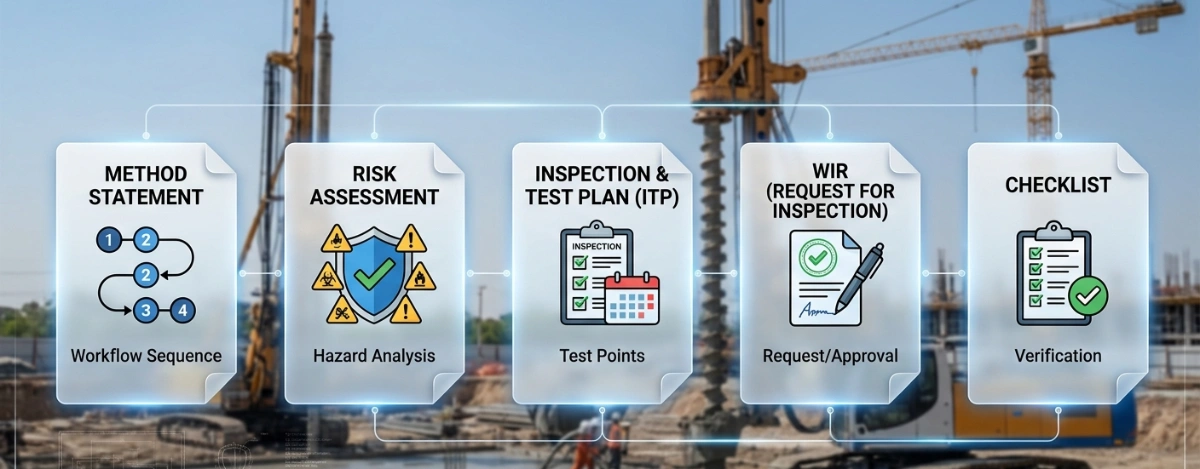
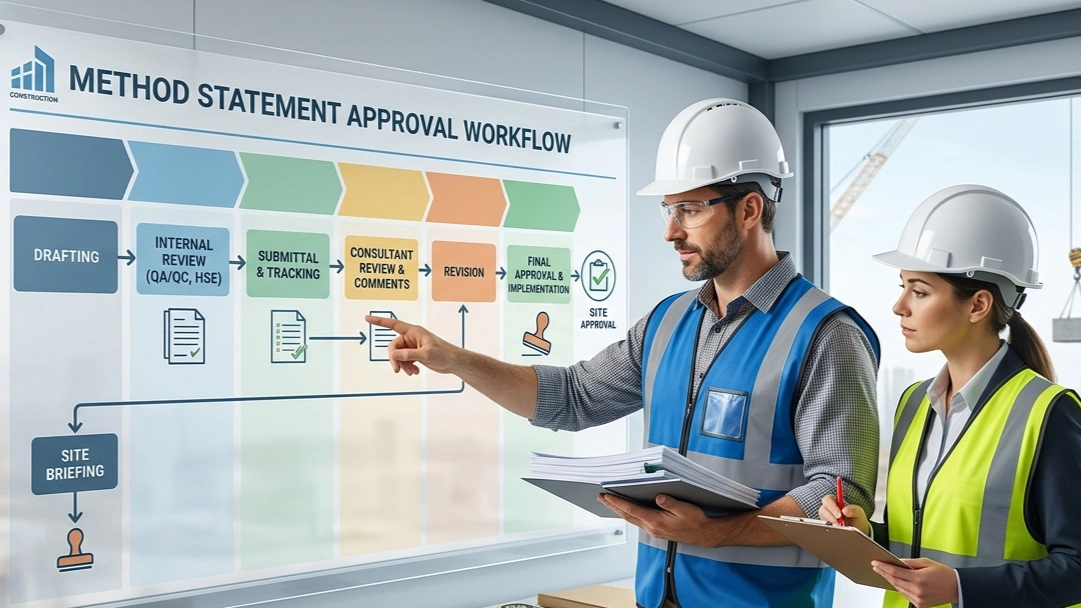
This Inspection and Test Plan is associated with the Method Statement: Beneficial Reuse of Dredged Material for Beach Nourishment and Habitat Creation method statement, which describes the step-by-step construction sequence, resources, materials, equipment, safety controls, and environmental controls for this activity.
View the Method Statement: Beneficial Reuse of Dredged Material for Beach Nourishment and Habitat Creation method statement →Continue with related inspection, method statement, article, and checklist resources.