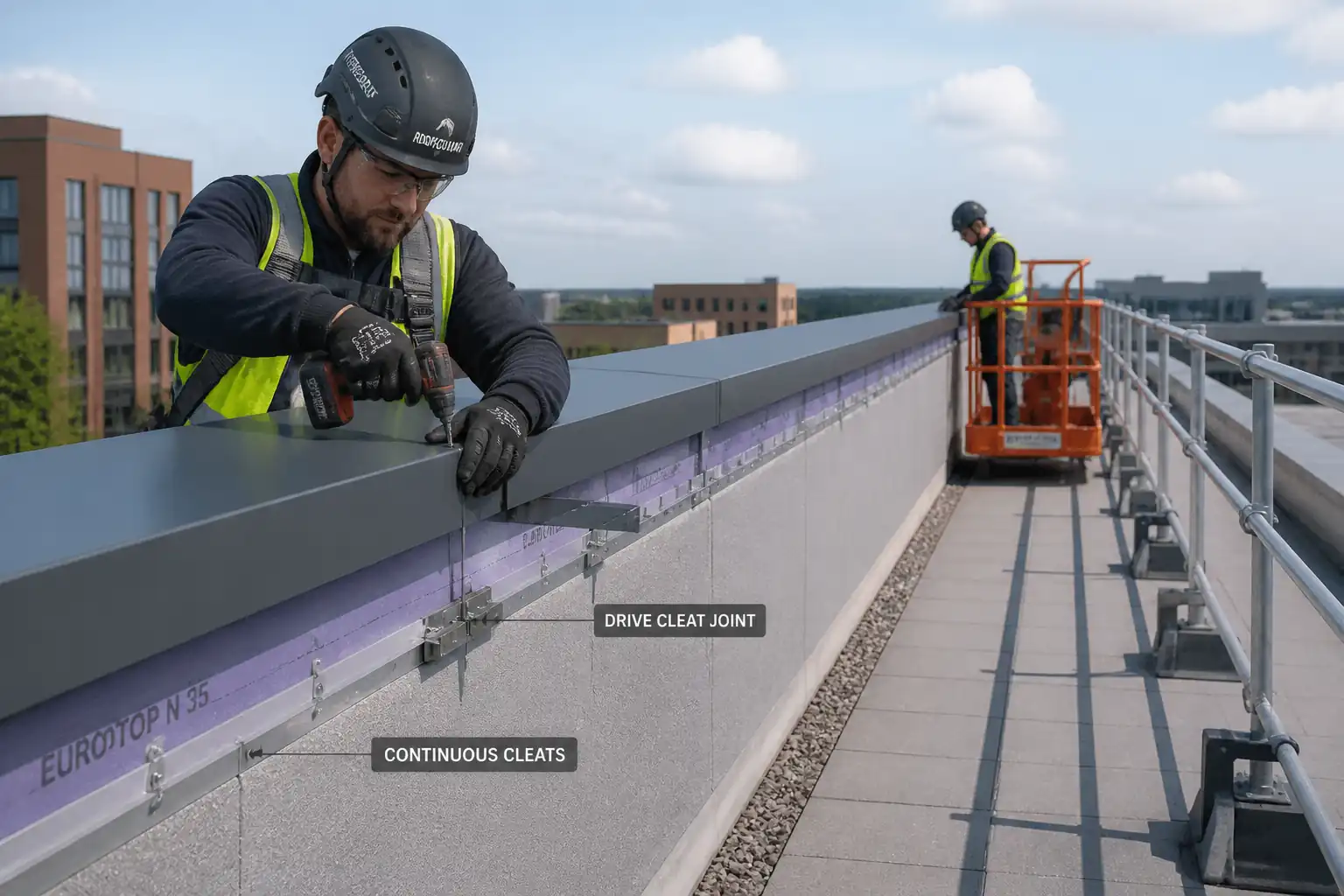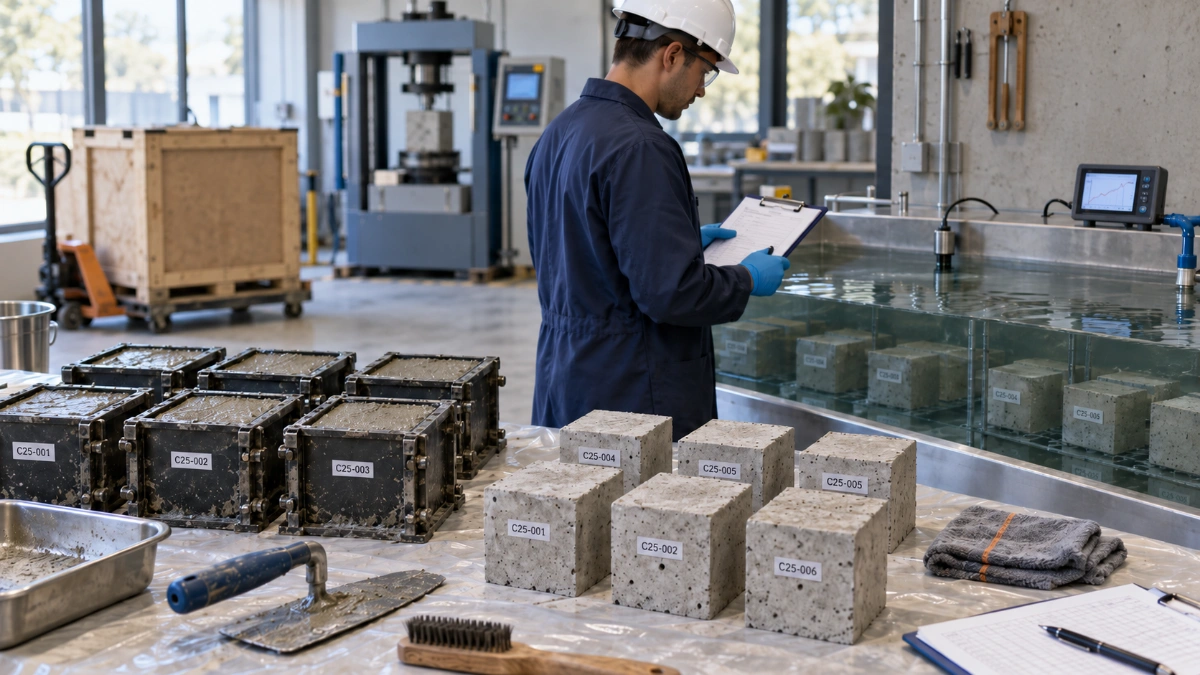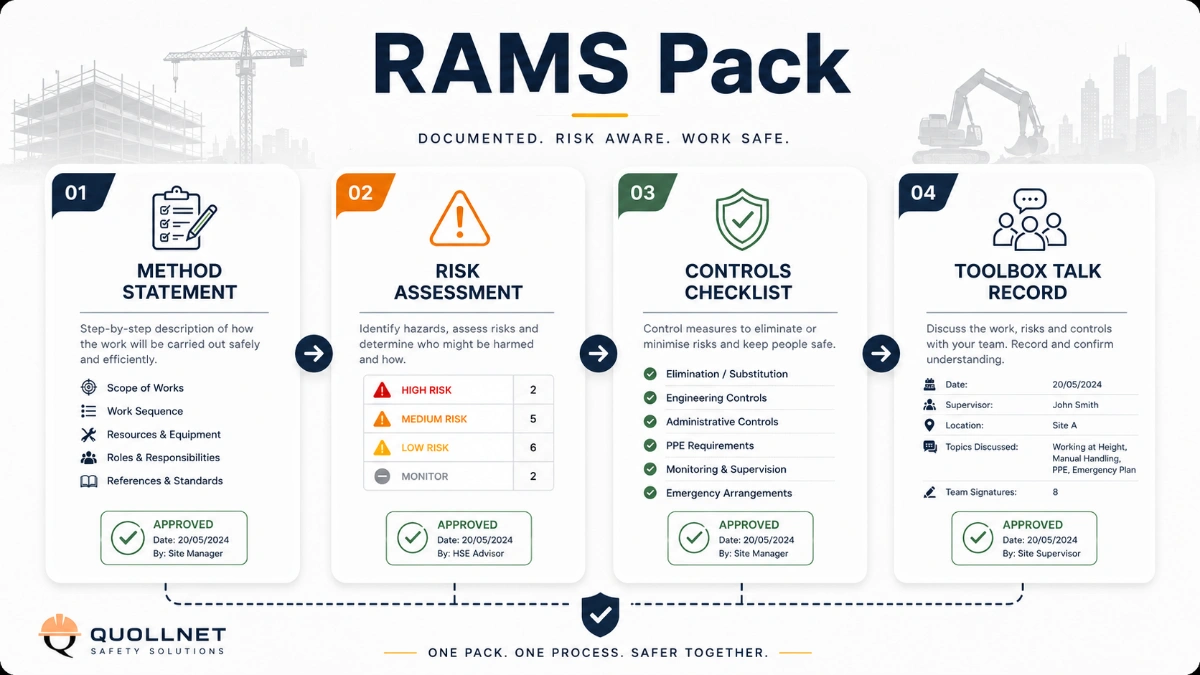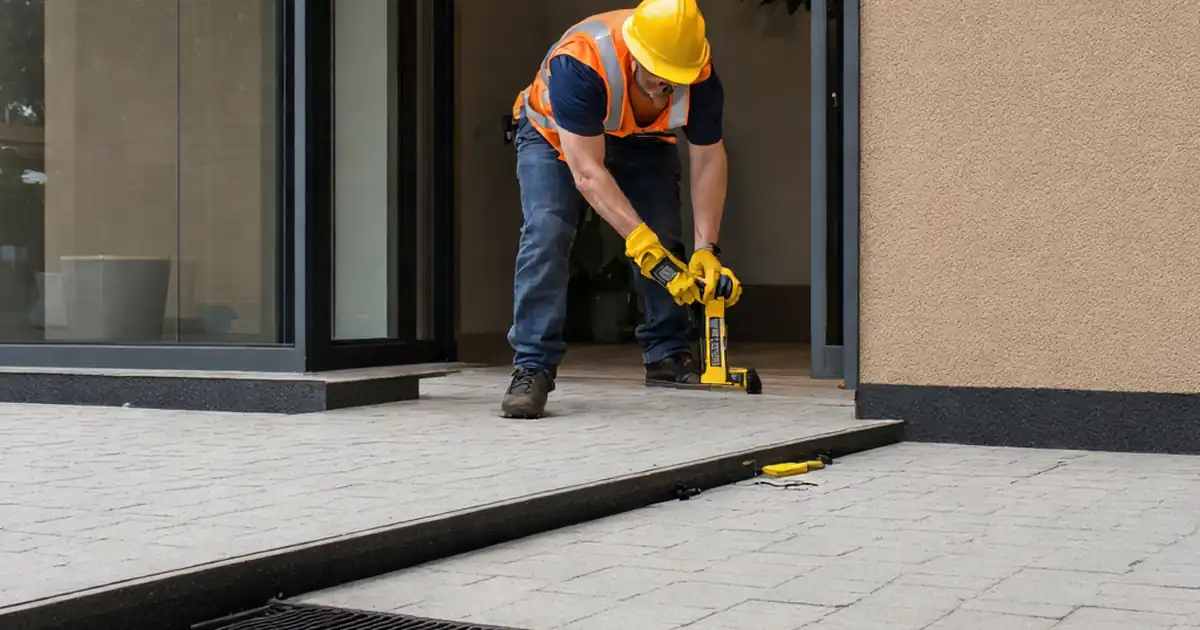

Method Statement: External Timber Cladding Oiling and Weather-Protection Treatment – Method Statement
AI-assisted method statement with matching ITP, PDF download, and Excel export.
More than a static template
Unlike a downloadable Word or PDF template, this method statement is an AI-assisted editable starting point connected directly to a matching Inspection and Test Plan. Every section is structured, project-adaptable, and ready to export.
- AI-assisted drafting — Customize every section with AI for your specific project scope.
- Linked ITP — A matching inspection and test plan is generated alongside the method statement.
- Multiple export formats — Download as a formatted PDF or editable Excel spreadsheet.
- Editable starting point, not a final document — Review, verify, and adjust all content against your project requirements before use.
Static template vs. Quollnet workflow
| Feature | Static template | Quollnet |
|---|---|---|
| Project-specific content | Manual fill-in required | AI-assisted customization |
| Linked ITP | Separate document, no link | Matching ITP included |
| Export formats | Usually PDF only | PDF and Excel |
| Structured sections | Free-form layout | 13 standardized sections |
| Saved to your account | Local file only | Cloud-saved, reusable |
| Content accuracy | You verify everything | AI-assisted, you still verify |
| Cost | Often free but time-intensive | Free to customize and download |
What you can customize
When you save this method statement to your account, every section becomes editable. The following 13 sections are included:
- Scope — Defines the activity and its boundaries.
- References — Standards, specifications, and drawings.
- Responsibilities — Roles and accountabilities.
- Resources — Labour, plant, and equipment summary.
- Materials — Materials and compliance requirements.
- Equipment — Tools and equipment details.
- Prerequisites — Hold points and pre-conditions.
- Method sequence — Step-by-step construction sequence.
- Safety controls — HSE risk controls and PPE.
- Environmental controls — Environmental mitigation measures.
- QA/QC — Quality inspection and test requirements.
- ITP — Inspection and Test Plan table (has its own page).
- Attachments — Referenced drawings and documentation.
Why this method statement is used
This method statement is used to define and communicate the approved procedure for carrying out method statement: external timber cladding oiling and weather-protection treatment on site. It ensures the work is planned in advance, the correct resources and controls are in place, and all personnel understand responsibilities, sequence, quality requirements, and safety controls before work begins. It aligns site execution with the documented scope and acceptance expectations.
Who uses this method statement
This method statement is used by contractors, site supervisors, project engineers, QA/QC engineers, HSE officers, consultants, and client representatives. It serves as a shared reference for planning, execution, supervision, inspection, and approval of the activity on site.
When it is prepared and submitted
The method statement is prepared before the work activity starts and submitted as part of the pre-construction documentation package for review and approval.
Who reviews or approves it
The method statement is usually submitted to the client representative, consultant, resident engineer, or project management consultant for review and approval before the work commences.
Important approval note
This method statement is an AI-assisted editable starting point, not a pre-approved document. Before use on any project, all content must be reviewed and approved by the relevant parties (superintendent, principal contractor, or client representative) in accordance with your contract and project quality plan.
For example: if your specification requires a departure from a referenced standard, that departure must be documented and approved separately — this method statement will not capture that automatically. Always verify against your applicable drawings, specifications, and regulatory requirements.
Method statement content
Scope
Inclusions
- External timber cladding oiling and weather-protection treatment to new or previously oiled softwood/hardwood claddings, soffits, and screens.
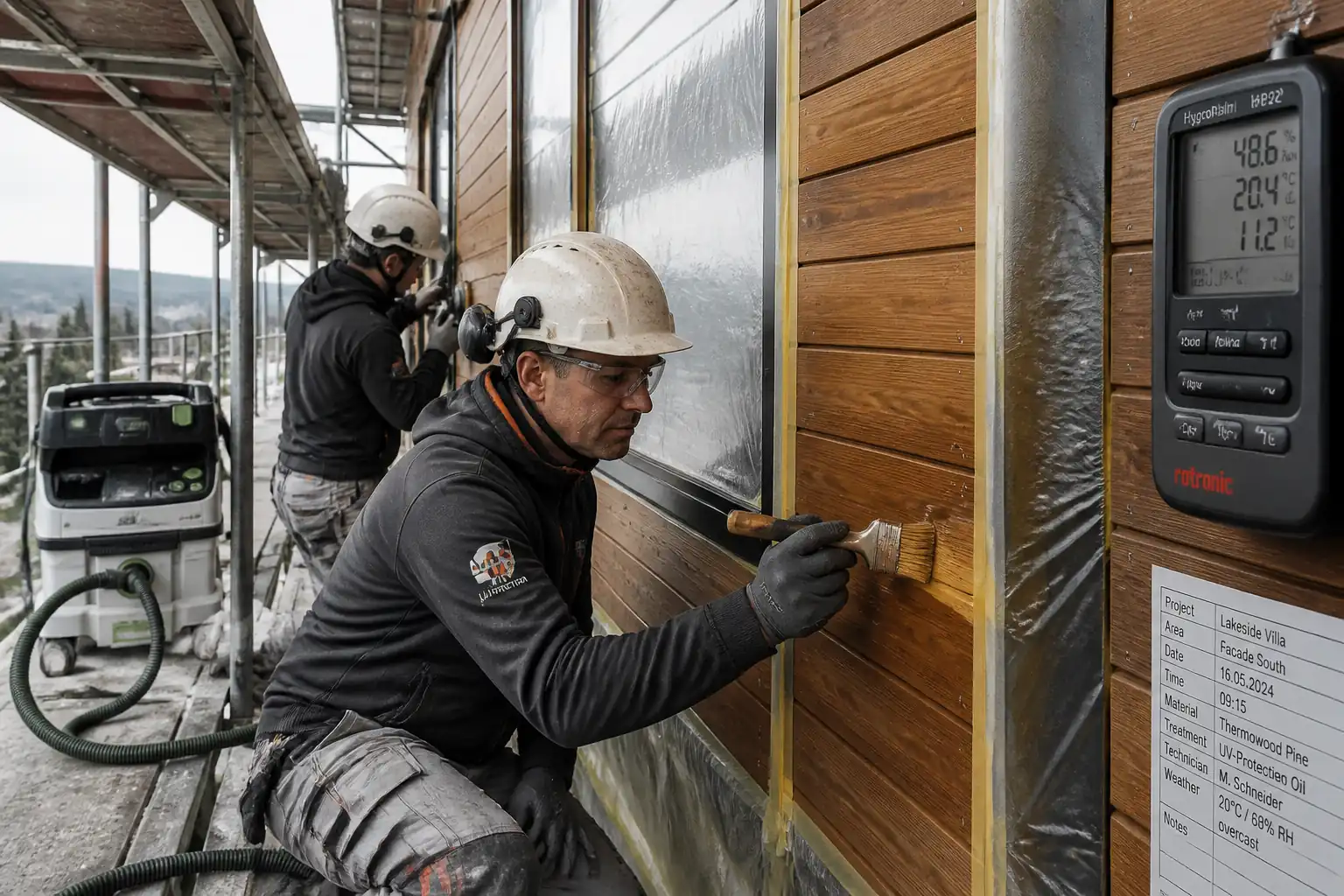
- Preparatory works: protection of adjacent surfaces, power sanding and de-nibbing, dust removal, moisture content measurement, climatic condition tracking.
- Application of UV-resistant natural penetrating oil by brush, including enhanced end-grain treatment.
- Monitoring of oil penetration time and wiping/removal of excess to avoid surface film and stickiness.
- Post-application inspections: uniformity, coverage, beading test (after cure), and photographic records.
- Establishment of maintenance schedule and logs, including conditions-based inspections.
Exclusions
- Interior timber finishes (unless specifically instructed).
- Film-forming varnishes and opaque paints.
- Structural timber repairs or replacement.
- Remediation of biological attack (fungus/insects); to be treated separately if identified.
Work areas
- All elevations with external timber cladding, soffits, fins, and architectural screens as indicated on drawings [Verify per project drawings].
Interfaces
- Façade substructure works, weatherproofing membranes, metal joint trims, glazing interfaces, sealants, and scaffolding/MEWP access.
Constraints
- Application only within approved climatic windows and substrate moisture content limits.
- Protection from precipitation and dust during and after application for the specified curing period.
References
| Document Type | Reference / Number | Revision | Notes |
|---|---|---|---|
| BS EN 927 (series) | Use for performance categories, natural weathering, water-vapour permeability, and test methods. [Verify relevant parts] | ||
| BS EN 335 | Classify exposure (e.g., Class 3 for external above-ground). Guides protection strategy. | ||
| ASTM D4442 | Laboratory reference; field readings by calibrated meters correlated per ASTM D4444. | ||
| ASTM D4444 | Follow for calibration/verification of field moisture meter readings. | ||
| ISO 8502-4 | Applied here for dew point methodology; ensure substrate temperature ≥3°C above dew point before coating. | ||
| BS 6150 | General workmanship principles applicable to timber finishing outdoors. | ||
| EU 2004/42/EC [or local regulation] | Verify product VOC class and site controls per local law. [Verify per project HSE plan and local regulations] |
Responsibilities
| Role | Responsibility | Name / Party |
|---|---|---|
| Project Manager | Overall delivery, resources, programme, coordination with façade and access trades. | Contractor |
| Site Engineer / Supervisor | Daily supervision, sequence control, mock-up arrangement, acceptance checks, records. | Contractor |
| QA/QC Engineer | ITP compliance, inspections, test frequency, hold/witness coordination, records control. | Contractor |
| HSE Officer | Task-specific risk assessments, permits, site monitoring, toolbox talks, incident reporting. | Contractor |
| Coating Applicators | Sanding, cleaning, masking, application, wiping excess, housekeeping. | Contractor |
| Access Supervisor | Scaffold/MEWP planning, inspections, handover, and use supervision. | Contractor |
| Manufacturer’s Representative (if required) | Verify product selection, dilution (if any), application guidance, and training (as required). | Supplier |
| Engineer/Client Representative | Approve mock-up, first-of-kind, and completed works per ITP. | Employer/Engineer |
Resources
| Resource Type | Description | Quantity | Remarks |
|---|---|---|---|
| Manpower | Experienced with exterior penetrating oils and façade works. | 4–8 persons [Verify per area] | |
| Manpower | Leads team, ensures sequence adherence and finish quality. | 1 | |
| Manpower | Task risk controls and monitoring. | 1 (shared) | |
| Manpower | Inspections and records. | 1 (shared) |
Materials
| Material | Specification / Grade | Quantity | Remarks |
|---|---|---|---|
| UV-resistant natural penetrating exterior wood oil | Coverage 8–14 m²/L/coat [Verify per datasheet]; 2 coats typical; low-VOC compliant [Verify local law]. | Colour/tint per approved sample; batch log required. | |
| Manufacturer-approved thinner/solvent (if required) | Compatibility per product datasheet. | ||
| Low-tack UV-stable masking tape and protective sheeting | Suitable for exterior; clean release from metals and glass. | ||
| Abrasives (sandpaper discs/sheets) | P120–P150 (prep), P150–P180 (finish), optional P220 (edge de-nib). | Do not polish above P180 before oiling to avoid closing grain. | |
| Cleaning wipes/cloths and tack rags (non-wax) | No silicone or wax residues. | ||
| Exterior wood cleaner/brightener (e.g., oxalic acid-based) | Follow SDS and dilution rates [Verify per datasheet]. | Trial on inconspicuous area before full use. | |
| Metal disposal bins with self-closing lids and water | Fire-resistant containers for oil-soaked rags. |
Equipment
| Equipment | Capacity / Type | Quantity | Inspection Required |
|---|---|---|---|
| Random-orbit sanders | 125–150 mm pad, variable speed | Pre-use checks; PAT tested | |
| Dust extractor (vacuum) | M-class filtration | Filter condition and suction check | |
| Wood moisture meter | Range 6–30% MC | Calibration within 12 months | |
| Hygro-thermometer / Dew point meter | ±0.5°C, ±3% RH (typical) | Calibration check | |
| Infrared surface thermometer | -20 to 300°C | Battery and spot ratio check | |
| Brushes and back-brushing tools | 50–100 mm widths | Clean, lint-free | |
| Scaffolding/MEWP | As per access plan | PTW; daily/weekly inspections | |
| Fire extinguishers | Suitable for flammable liquids | In-date inspection tag | |
| Spill response kit | Oil/solvent compatible | Complete and accessible |
Prerequisites
Submittals and Approvals
- Product datasheets, SDS, colour/tint selections, and application instructions – approved prior to procurement.
- Method Statement and ITP – approved prior to work.
- Mock-up panel (min 1 m² per timber species/profile) – approved for colour/finish, penetration, and wiping standard; retained as quality benchmark.
Access and Protection
- Confirm scaffold/MEWP availability, inspections, and tie-ins; exclusion zones established.
- Mask and protect adjacent elements (metal trims, glazing, sealants, pavements) with UV-stable tapes and sheeting.
Tools, Calibrations, and Permits
- Calibration certificates: moisture meter, hygro-thermometer/dew point meter (within 12 months) and PAT for electrical tools.
- Permits to Work: Work at Height, Hot Work (if any), MEWP, and Solvent handling as applicable [Verify per project HSE plan and local regulations].
Material Handling
- Verify batch numbers, storage in covered, ventilated area within 5–25°C; keep containers sealed. Shake/stir per datasheet before use.
Surface Condition
- Timber fixed, dry, clean, sound, free from loose fibres, extractive bleed, mould, or contamination. Any biological growth treated and neutralized; let dry fully.
Weather Window (typical – verify per datasheet)
- Ambient and substrate temperature: 10–30°C.
- Relative humidity: <80%.
- Substrate temperature ≥3°C above dew point (ISO 8502-4 principle).
- No rain, heavy fog, or condensation risk during application and for 24 h after; provide temporary weather protection as needed.
Method Sequence
| Step | Activity | Description | Responsibility | Inspection / Hold Point |
|---|---|---|---|---|
| 1 | Pre-start briefing and area sign-off | Conduct TBT focusing on dust, solvents, work at height, and oily rag fire risk. Confirm permits, calibrations, access, exclusion zones, and emergency arrangements. | Foreman / HSE Officer | Permit check; attendance recorded |
| 2 | Climatic and moisture verification | Measure ambient T/RH/wind; calculate dew point and check substrate temperature. Take timber MC readings: minimum 10 readings per elevation or 10% of boards (whichever greater). | QA/QC + Site Engineer | Hygro/thermo/dew point; moisture meter |
| 3 | Protection of adjacent elements | Mask metal trims, glazing, and junctions using UV-stable tape and sheeting. Establish drip/paint catchments and drain covers. | Applicators | Visual |
| 4 | Power sanding and de-nibbing | Sand along grain using random-orbit sanders with extraction: P120–P150 initial to remove weathering/raised fibres; finish P150–P180. De-nib edges with P220 if required. Avoid polishing above P180. | Applicators | Visual and touch inspection; dust extraction functional |
| 5 | Dust removal and surface cleaning | Vacuum with M-class extractor; wipe with lint-free cloths lightly dampened with compatible solvent if specified. Allow solvent flash-off. | Applicators | White-cloth test; visual |
| 6 | Mock-up/benchmark confirmation | Reconfirm approved sample panel and finish standard accessible on site. If not available, produce fresh mock-up and obtain approval. | QA/QC + Engineer | Witness/hold point |
| 7 | First coat application (brush) | Stir oil thoroughly. Apply by brush along grain, working into profile. Treat end-grain and high-absorbency areas first. Maintain wet edge to avoid lap marks. | Applicators (supervised) | In-process visual; coverage tracking |
| 8 | Penetration time monitoring | Allow penetration 15–30 minutes (timed). Observe absorbency; re-brush dry spots to redistribute. | Applicators | Timer-controlled check |
| 9 | Excess oil wiping/back-brushing | Before surface tack develops, wipe off/burnish with lint-free cloths; remove all surface sheen/pools, especially on horizontal or sheltered areas. | Applicators | Visual; touch (no tack) |
| 10 | Second coat (if required) | Apply wet-on-wet to high-absorbency zones within 20–45 min OR as a full second coat after initial cure per datasheet. Repeat wipe-off. | Applicators | In-process visual |
| 11 | Curing protection | Maintain protection from rain/condensation/dust for min 24 h at 20°C/50% RH (adjust per datasheet). | Foreman | Daily check |
| 12 | Finish inspection and tests | Inspect uniformity, colour, masking lines, absence of runs. After full cure, perform water beading test on representative areas. | QA/QC + Engineer | Hold/witness as per ITP |
| 13 | Demasking and housekeeping | Remove masking within 24–48 h to avoid residue. Clean area, dispose wastes per regulations. | Applicators | Visual |
| 14 | Maintenance schedule and log issuance | Establish maintenance plan: inspection every 6–12 months; cleaning; re-oiling typically every 12–36 months depending on exposure, colour fade, and water beading loss [Verify per project/species]. Provide O&M manual and log templates. | Project Manager + QA/QC | Document review |
Health & Safety Controls
Key Hazards, Consequences, and Controls
1) Working at height (scaffolds/MEWPs)
- Consequence: Falls causing serious injury or fatality.
- Engineering/procedural control: Certified scaffold with guardrails/toe boards; MEWP with correct SWL; pre-use checks; exclusion zones; 100% tie-off in MEWP; rescue plan.
- Required PPE: Safety harness with lanyard (MEWP), hard hat, non-slip safety boots, gloves, eye protection.
- Collective measures: Edge protection, barricades, signage, tool lanyards.
- Inspection/permit/supervision: PTW for work at height; daily MEWP checks; weekly scaffold inspections by competent person; supervisor presence. [Verify per project HSE plan and local regulations]
2) Wood dust (carcinogenic for some hardwoods)
- Consequence: Respiratory disease, dermatitis, explosion risk in confined dust accumulation.
- Controls: Power sanders connected to M-class extractor; local extraction; wet-wipe after sanding; prohibit dry sweeping.
- PPE: FFP3 disposable respirator or half-mask with P3 filters, goggles, gloves, long sleeves.
- Collective: Enclose/segregate work area; dust barriers.
- Inspection/permit/supervision: LEV checks; filter change records; atmospheric dust spot checks where required.
3) Hand-arm vibration (HAV)
- Consequence: HAVS, numbness.
- Controls: Low-vibration sanders; job rotation; exposure monitoring with A(8) calculations; maintain pads/discs to reduce vibration; warm-up breaks in cold weather.
- PPE: Anti-vibration gloves (supplementary only), warm gloves.
- Collective: Task time limits displayed on board.
- Inspection/permit/supervision: Tool vibration data recorded; supervisor monitors exposure logs.
4) Solvent/chemical exposure from oils and cleaners
- Consequence: Dermal/eye irritation, CNS effects, fire.
- Controls: Use low-VOC products where possible; decant in ventilated area; no ignition sources; follow SDS; use small containers at height; keep lids closed.
- PPE: Chemical-resistant gloves (nitrile), goggles/face shield for decanting, coveralls.
- Collective: Ventilation and outdoor dilution; spill kits.
- Inspection/permit/supervision: COSHH assessment; chemical handling permit if required; SDS on site; first aid eyewash available.
5) Fire and spontaneous combustion of oily rags
- Consequence: Fire spread, burns, property damage.
- Controls: Store oil-soaked rags in water-filled, self-closing metal bins; remove daily to designated waste area; no hot works nearby; class B extinguishers ready.
- PPE: As above plus flame-retardant coveralls if specified.
- Collective: Smoking ban; hot-work segregation.
- Inspection/permit/supervision: Fire watch as required; housekeeping inspections.
6) Contact with live services/adjacent trades interfaces
- Consequence: Strikes, electrical shock, damage to finishes.
- Controls: Service isolation or covers; pre-task coordination; tool cable management and PAT-tested equipment.
- PPE: Dielectric gloves where required; standard PPE.
- Collective: Cable routing overhead and away from walkways.
- Inspection/permit/supervision: PAT tags verified; coordination meetings recorded.
7) Manual handling of access equipment and materials
- Consequence: Strains, crush injuries.
- Controls: Team lifts, mechanical aids, staged material drops close to workface.
- PPE: Safety footwear, gloves.
- Collective: Clear routes and housekeeping.
- Inspection/permit/supervision: Lifting plan for heavy items; supervisor oversight.
8) Weather exposure (heat, UV, wind, rain)
- Consequence: Heat stress, sunburn, slippery surfaces.
- Controls: Work scheduling to avoid extremes; anti-slip measures; weather monitoring.
- PPE: Sun protection, weather-appropriate clothing.
- Collective: Shelters for breaks.
- Inspection/permit/supervision: HSE to monitor WBGT where required.
Note: All controls to be verified against the Project HSE Plan and local regulations.
Environmental Controls
Environmental Risks and Controls
- VOC and odour emissions
- Impact: Air quality nuisance.
- Controls: Select low-VOC oil where feasible; minimize open containers; avoid application in high winds; maintain SDS ventilation guidance; schedule outside sensitive hours.
-
Monitoring: Complaints register; spot VOC checks if required by permit. [Verify per local regulations]
-
Spills and staining of soil/paving/drains
- Impact: Watercourse contamination; surface staining.
- Controls: Secondary containment trays; ground protection mats; drain covers; immediate spill response with absorbents; no washing into drains.
-
Monitoring: Spill log; inspect protection daily.
-
Waste generation (oily rags, used abrasives, empty containers)
- Impact: Fire risk; hazardous waste.
-
Controls: Segregate wastes; store oily rags in water-filled metal bins; classify waste per local codes (e.g., 08 01 11, 08 01 12, 15 02 02) [Verify per local regulations]; licensed disposal with consignment notes.
-
Noise from sanding
- Impact: Nuisance to neighbours; worker exposure.
-
Controls: Limit working hours; maintain equipment; use acoustic barriers if needed; hearing protection for workers.
-
Timber dust release outdoors
- Impact: Nuisance, allergen exposure.
-
Controls: On-tool extraction; vacuum with M-class; no dry sweeping; damp-wipe finishes.
-
Resource efficiency
- Impact: Excess material consumption; waste.
- Controls: Track coverage vs. datasheet; mix only daily requirements; reseal containers promptly; rotate stock FIFO.
Quality Assurance / Quality Control
Acceptance Criteria
- Moisture content before coating: ≤18% MC; target 12–16% [Verify per project specifications and timber species].
- Climatic window during application: Ambient/substrate 10–30°C; RH <80%; substrate ≥3°C above dew point; no rain/condensation for 24 h post-application [Verify per datasheet].
- Surface preparation: Uniform sanding P150–P180 finish; no glazing/burnishing; dust-free (white-cloth test pass).
- Application: Uniform colour and grain highlight; no sags/runs/lap marks; coverage within manufacturer’s range (typ. 8–14 m²/L/coat) recorded by area; no surface film or tackiness after wipe-off.
- Post-cure: Water droplet beading within 1–2 minutes; no staining of adjacent trims; masking lines crisp without residue.
- Documentation: Batch numbers, times, coverage logs, climatic/MC readings, photos, and sign-offs complete.
Testing and Inspection Frequencies
- Moisture readings: Minimum 10 readings per elevation or 10% of boards, whichever is greater, per work shift.
- Climatic checks: At start, every 2 hours during application, and upon weather change.
- Visual checks: Continuous; formal inspection per elevation or 100 m², whichever comes first.
- Beading test: 1 test per elevation after full cure (24–72 h depending on product) [Verify per datasheet].
Records
- Calibration certificates; MC and climatic logs; ITP checklists; IRs; NCR/CAR (if any) and closeout; O&M manual; maintenance schedule/log templates; training records/toolbox talks.
Nonconformance and Rectification
- If MC/climate outside limits: stop work; re-measure after conditions stabilize.
- If lap marks/glossy film: re-wet with oil, back-brush, and wipe; if cured, lightly abrade and re-apply.
- If poor repellency after cure: additional oil application after light abrasion and cleaning; consult manufacturer.
Attachments
- Approved product datasheets and SDS (all chemicals).
- Mock-up approval records and benchmark photos.
- Checklists: Preparation, Application, Wipe-Off, Final Inspection.
- Logs: Climatic, Moisture Content, Coverage, Penetration Time, Oily Rag Disposal, Maintenance Schedule template.
- Permits to Work (Work at Height, MEWP, Chemical Handling as applicable).
- Calibration certificates (moisture meter, hygro-thermo/dew point devices, PAT testing).
- Risk Assessment and COSHH assessments for products used.
This content is a read-only public reference. Download or customize to get an editable version.
ITP preview
The first inspection activities from the linked ITP for Method Statement: External Timber Cladding Oiling and Weather-Protection Treatment:
| Activity | Inspection / Test | Acceptance Criteria | Responsibility | Record |
|---|---|---|---|---|
| Pre-start documentation | Approved MS/ITP, SDS, datasheets available | All approvals in place | QA/QC Engineer | Document register |
| Equipment and calibration | Calibration certificates valid (<12 months) | Compliant instruments | QA/QC Engineer | Calibration log |
| Climatic conditions | T/RH, substrate temp, dew point | T 10–30°C; RH <80%; Tsubstrate ≥ Tdew+3°C | Site Engineer / QA | Climatic log |
Showing 3 of 14 inspection activities. View full ITP →
Related Inspection and Test Plan
An Inspection and Test Plan (ITP) is available for Method Statement: External Timber Cladding Oiling and Weather-Protection Treatment. The ITP defines the inspection activities, acceptance criteria, hold and witness points, responsible parties, and records required to verify the work described in this method statement.
View the Method Statement: External Timber Cladding Oiling and Weather-Protection Treatment ITP →Frequently asked questions
Continue with related Quollnet resources connected to this method statement.