
Inspection and Test Plan for Method Statement for Internal Cement Plastering Works
AI-assisted inspection and test plan connected to a method statement, with PDF and Excel export.
More than a static template
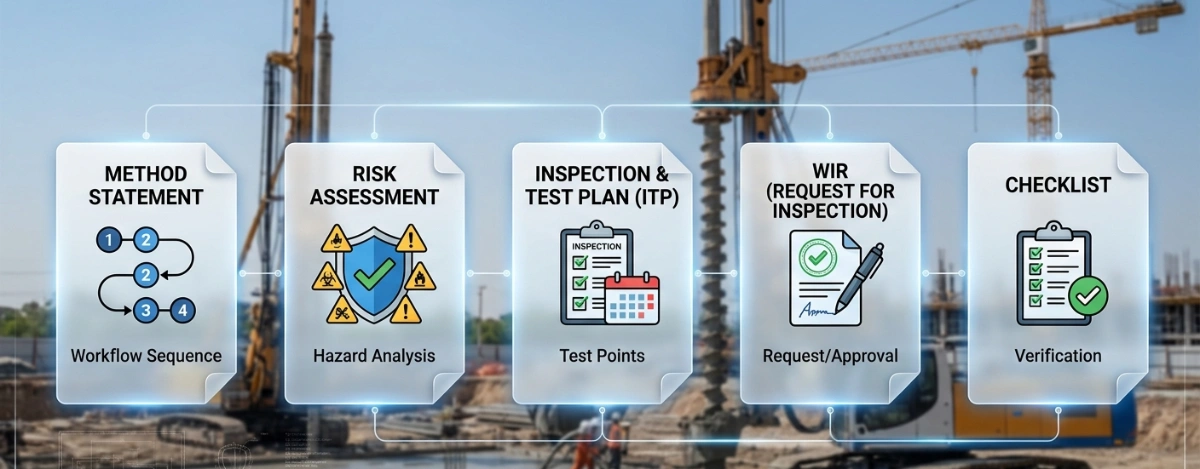
Unlike a downloadable Word or PDF template, this ITP is an AI-assisted editable starting point directly connected to its method statement. Every inspection activity, hold point, and acceptance criterion is structured and ready to adapt to your project.
- AI-assisted customization — Tailor inspection activities and acceptance criteria to your specific project scope.
- Linked method statement — This ITP is connected to the corresponding method statement describing the work sequence.
- Multiple export formats — Download as a formatted PDF or editable Excel spreadsheet.
- Editable starting point, not a final document — Review and verify all content against your project specifications and standards before use.
What you can customize
When you save this ITP to your account, every inspection row becomes editable. You can add, remove, or modify:
- Inspection activity — Description of what is being inspected.
- Inspection type — Hold point (H), Witness point (W), Review (R), or Monitor (M).
- Responsibility — Contractor, subcontractor, engineer, or client.
- Frequency — How often the inspection occurs.
- Acceptance criteria — Referenced standard or specification requirement.
- Records — Forms, test reports, or checklists required as evidence.
Why this ITP is used
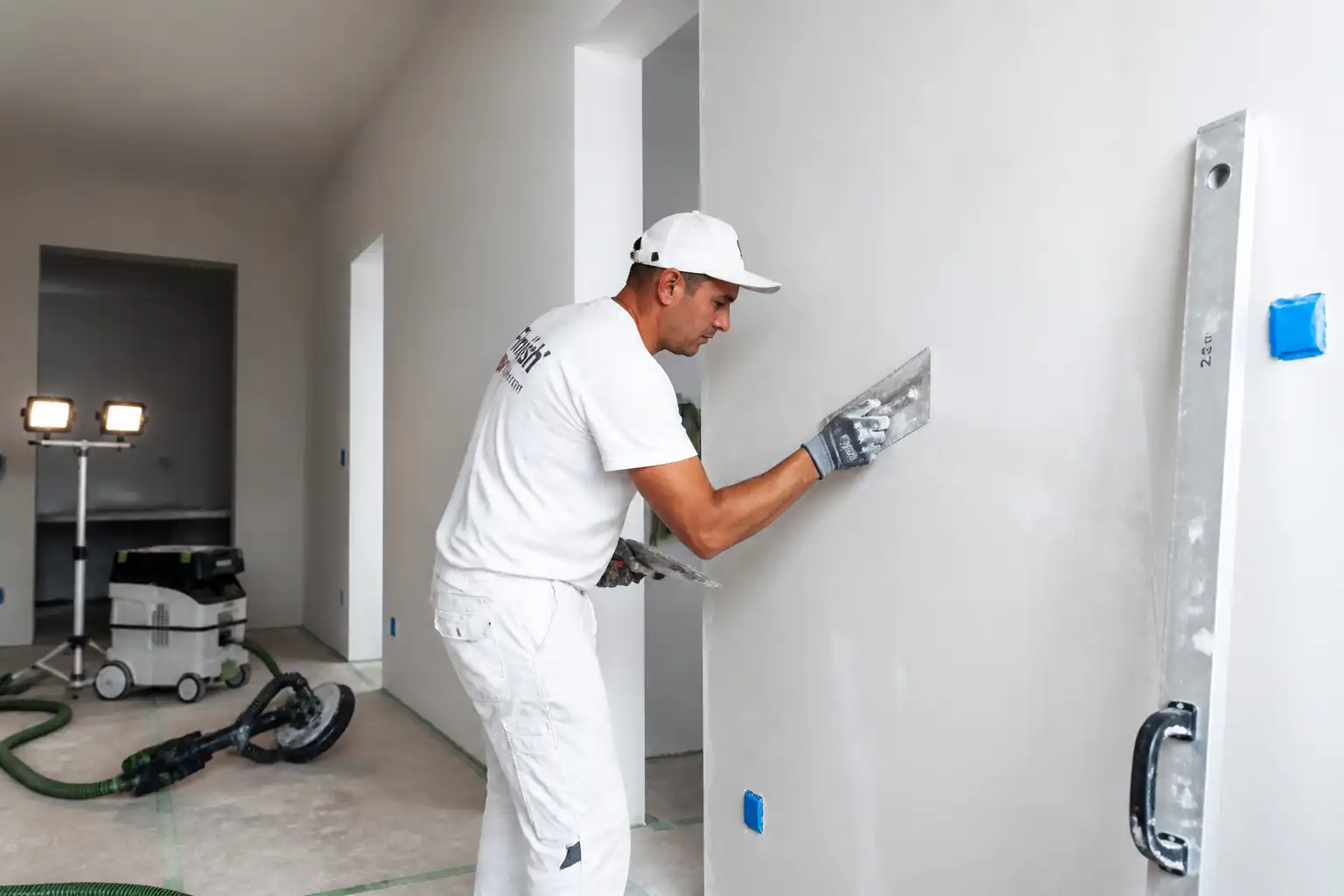
To control and verify that internal plastering meets specifications for materials, workmanship, tolerances, adhesion, and readiness for paint.
Who uses this inspection and test plan
QA/QC engineers, site engineers, consultants, and third-party labs for tests and approvals.
When this ITP is prepared and submitted
From material receipt through substrate acceptance, during application and curing, and at final pre-paint inspection.
Who receives or approves this ITP
Engineer/Consultant for review, surveillance, and hold-point approvals.
Inspection scope
Materials verification, substrate readiness, mock-up approval, beads/mesh installation, screed alignment, mixing controls, application quality, geometry, curing, adhesion, and final acceptance.
Typical hold, witness, and review points
Hold: Substrate readiness, screed guide alignment, final pre-paint acceptance. Witness: Beads/mesh installation, finishing, adhesion tests.
Typical inspection records
Material certificates, IRs, checklists, alignment sheets, batching logs, curing logs, test reports, photos, and final approval forms.
Important approval note
This ITP is an AI-assisted editable starting point, not a pre-approved document. Before use on any project, all inspection activities, hold points, and acceptance criteria must be reviewed and approved by the relevant parties (superintendent, principal contractor, or client representative) in accordance with your contract and project quality plan.
Always verify acceptance criteria against your applicable drawings, specifications, and regulatory requirements. Hold points must be confirmed with the relevant authority before work proceeds past that point.
Inspection and test plan
| Activity | Inspection / Test | Acceptance Criteria | Responsibility | Record |
|---|---|---|---|---|
| Material receipt and storage | Check certificates, labels, condition, storage off ground and dry | Materials comply with approvals; no damage or contamination; valid certificates. | QA/QC Engineer / Storekeeper | Material inspection report, delivery tickets |
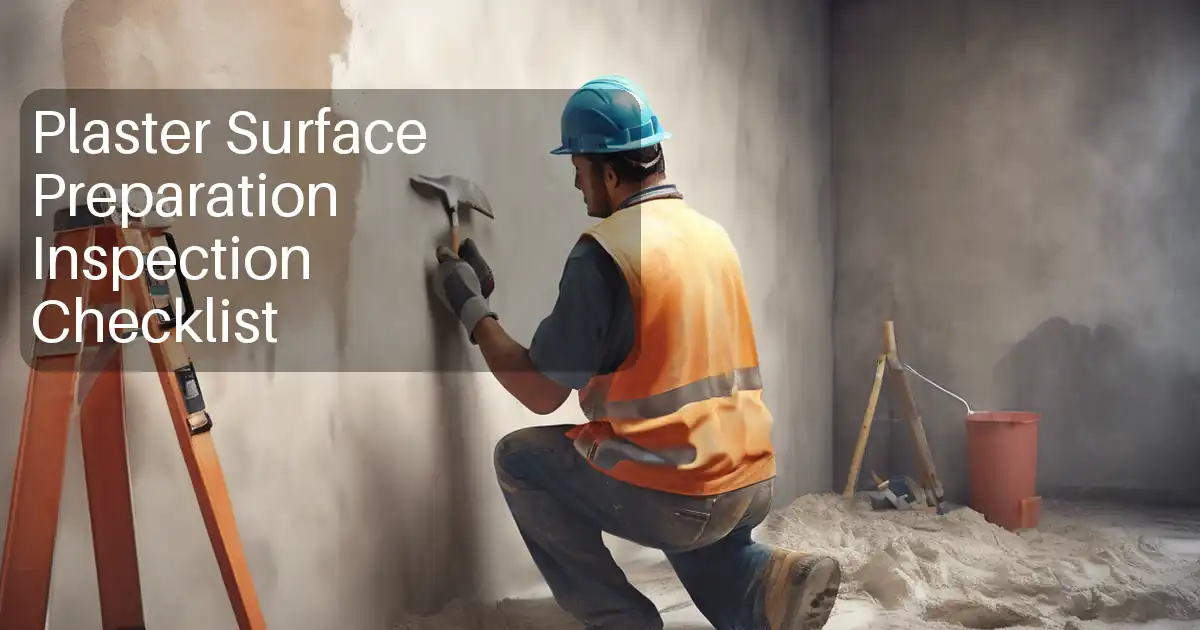
| Substrate readiness (Hold Point) | Visual, tap test, moisture (no free water), check MEP closures | Sound, clean, roughened or bond coat applied; interfaces identified; datum set. H: Work cannot proceed without sign-off. | QA/QC Engineer / Engineer | IR/Checklist with Engineer sign-off |
| Mock-up inspection (Hold/Witness) | Review finish, thickness, beads/mesh, curing method | Mock-up meets specified finish/tolerance; benchmark established. H/W as designated. | QA/QC / Engineer | Mock-up approval memo/photos |
| Beads and mesh installation (Witness) | Alignment, fixity, mesh placement and laps | Beads plumb/level ±2 mm; mesh correctly located and embedded; joints not bridged. | QA/QC / Engineer | Inspection record/photos |
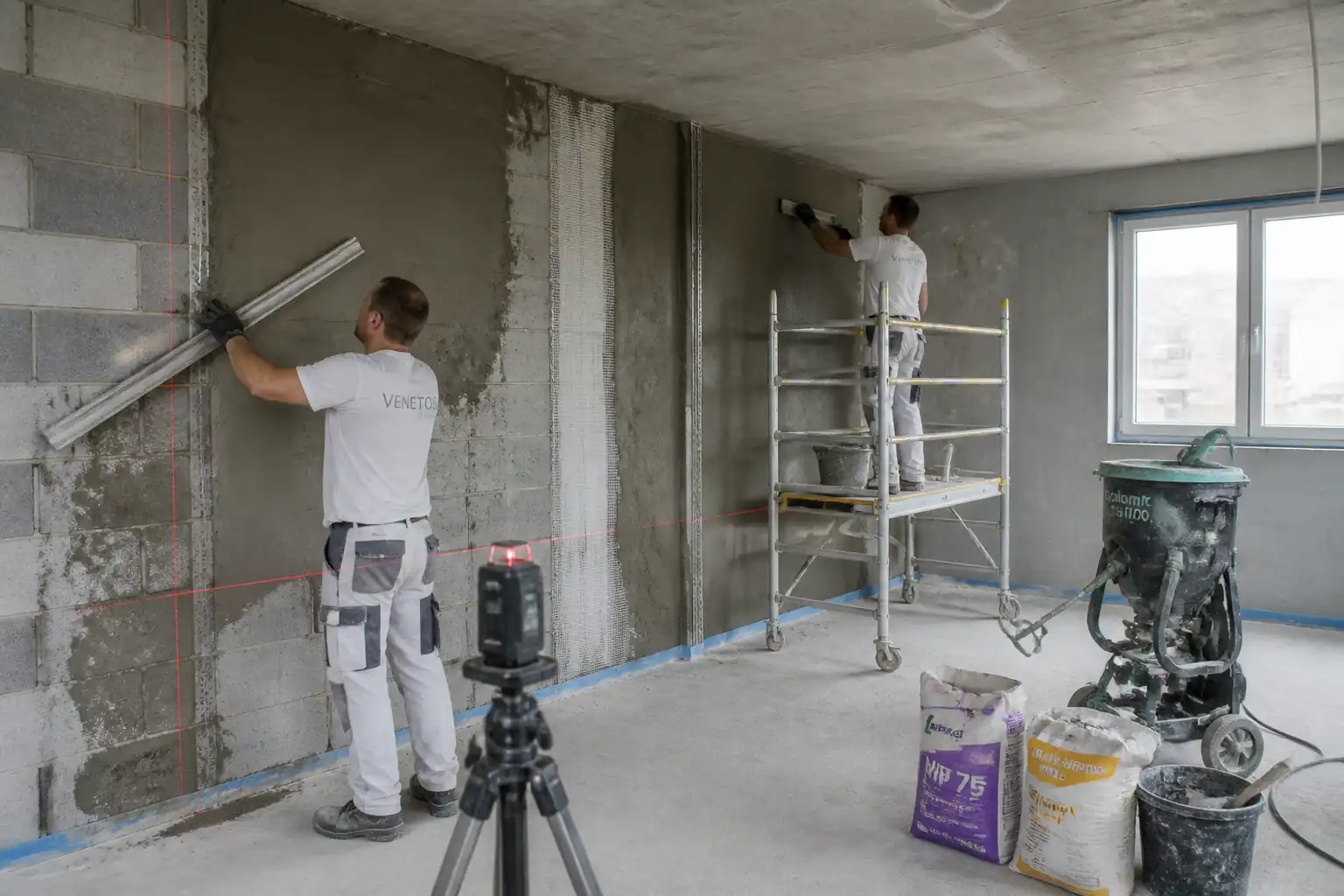
| Screed pads/guides alignment (Hold Point) | Laser/level and straightedge readings | Guides within ±3 mm over 2 m; plane to datum. H: Proceed to plaster only after approval. | Site Engineer / QA/QC / Engineer | Alignment check sheet, IR |
| Mixing controls | Batch proportions; optional flow test ASTM C1437 | Proportions within approved range; no retempering; admixtures per data sheet. | QA/QC / Foreman | Batching log |
| Application first/second coats | Coverage, compaction, scratch key, intercoat time | Uniform coats; scratch depth ~3 mm; intercoat 24–48 h [Verify]; no voids. | QA/QC / Foreman | Process checklist |
| Thickness verification | Pin gauge/spot checks at 1 per 10 m² | 12–15 mm total thickness ±2 mm [Verify]. | QA/QC | Thickness log |
| Flatness/plumb check | 2 m straightedge; plumb with level/plumb bob | Flatness ≤3 mm/2 m; plumb/level ≤3 mm/2 m [Verify]. | QA/QC / Engineer (Witness) | Geometry checklist |
| Curing monitoring | Daily check of moisture maintenance | Curing conducted for 3–7 days; no surface dusting/cracking attributable to rapid drying. | Foreman / QA/QC | Curing log |
| Adhesion pull-off test (Witness) | EN 1015-12 pull-off | ≥0.20–0.30 MPa depending on substrate and spec [Verify]. | Third-Party Lab / QA/QC | Lab report |
| Final pre-paint acceptance (Hold Point) | Visual, thickness, geometry, moisture ≤5% [Verify], pH ≤9–10 [Verify] | Crack width ≤0.2 mm; sound surface; tolerances met; documentation complete. H: Release to painting upon approval. | QA/QC / Engineer | Final IR, punch list closeout |
This table is a read-only public reference. Download the PDF or Excel version, or customize this ITP to edit it for your project.
Frequently asked questions
Related method statement
This Inspection and Test Plan is associated with the Method Statement for Internal Cement Plastering Works method statement, which describes the step-by-step construction sequence, resources, materials, equipment, safety controls, and environmental controls for this activity.
View the Method Statement for Internal Cement Plastering Works method statement →Continue with related inspection, method statement, article, and checklist resources.