
Inspection and Test Plan for Method Statement – Skim Coat Application on Plastered Surfaces
AI-assisted inspection and test plan connected to a method statement, with PDF and Excel export.
More than a static template
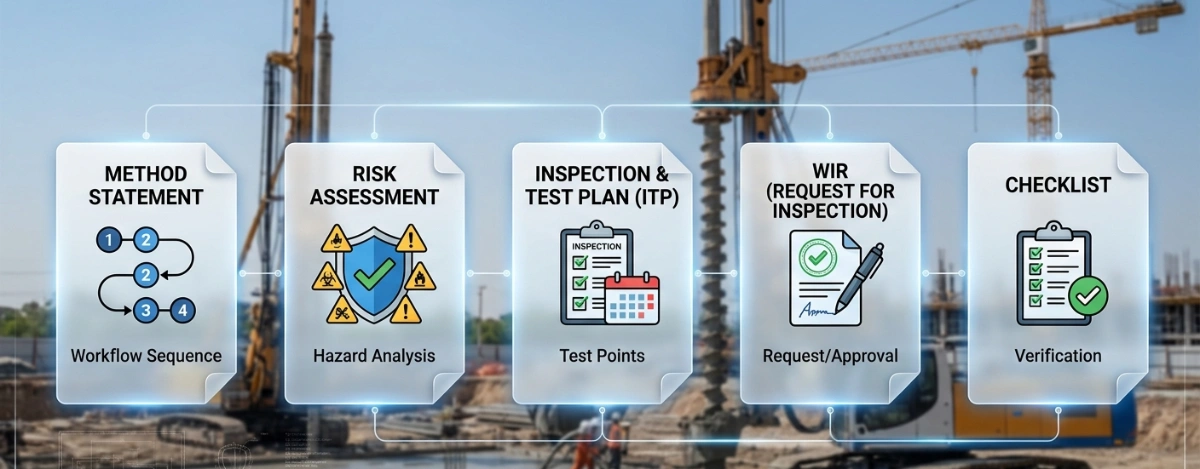
Unlike a downloadable Word or PDF template, this ITP is an AI-assisted editable starting point directly connected to its method statement. Every inspection activity, hold point, and acceptance criterion is structured and ready to adapt to your project.
- AI-assisted customization — Tailor inspection activities and acceptance criteria to your specific project scope.
- Linked method statement — This ITP is connected to the corresponding method statement describing the work sequence.
- Multiple export formats — Download as a formatted PDF or editable Excel spreadsheet.
- Editable starting point, not a final document — Review and verify all content against your project specifications and standards before use.
What you can customize
When you save this ITP to your account, every inspection row becomes editable. You can add, remove, or modify:
- Inspection activity — Description of what is being inspected.
- Inspection type — Hold point (H), Witness point (W), Review (R), or Monitor (M).
- Responsibility — Contractor, subcontractor, engineer, or client.
- Frequency — How often the inspection occurs.
- Acceptance criteria — Referenced standard or specification requirement.
- Records — Forms, test reports, or checklists required as evidence.
Why this ITP is used
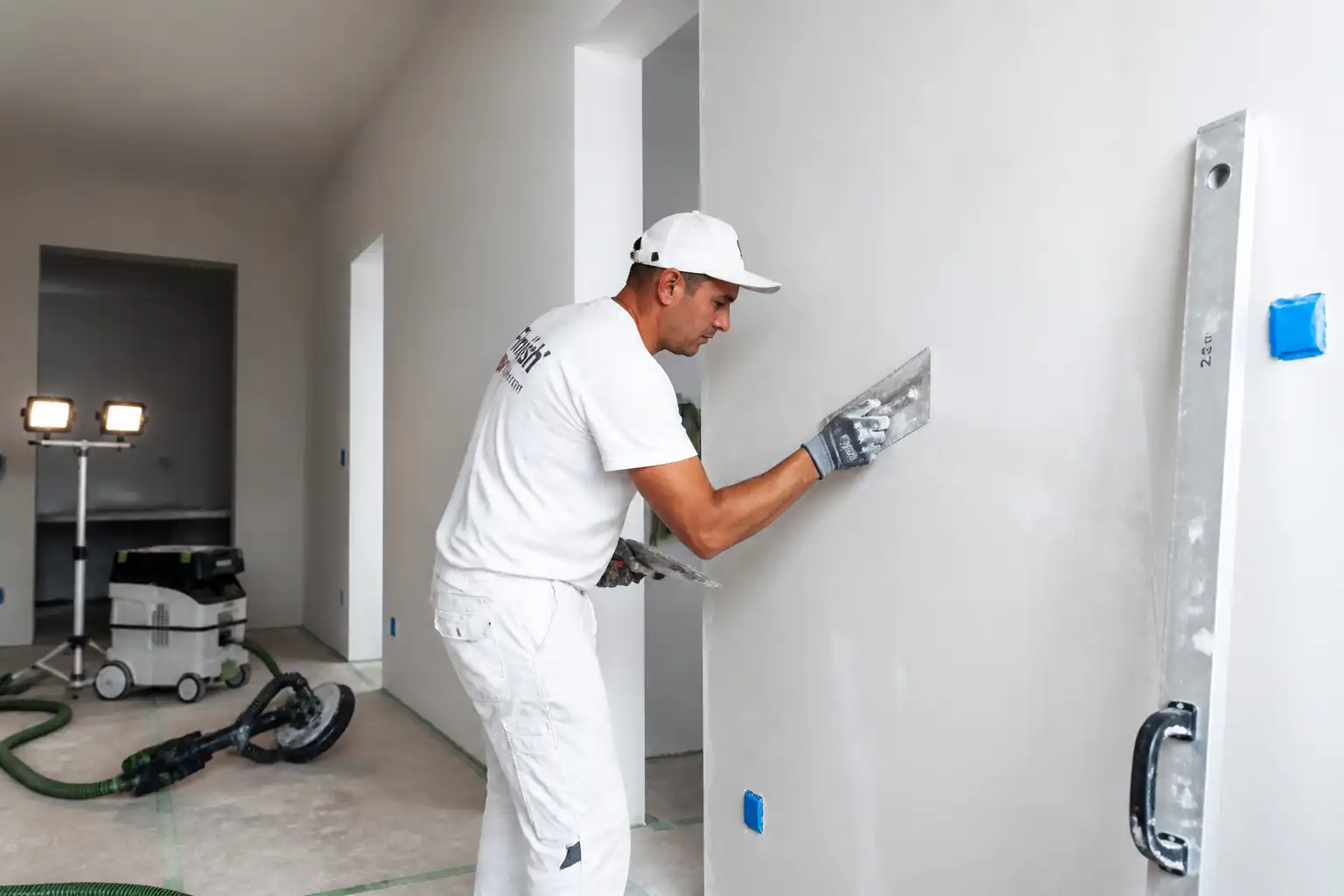
To verify that skim coat works meet specified tolerances and finish quality before handover to painting.
Who uses this inspection and test plan
Contractor QC, Site Engineers, Finishing Supervisors, and the Client/Consultant for hold/witness sign-offs.
When this ITP is prepared and submitted
From pre-works substrate inspection through final acceptance prior to painting.
Who receives or approves this ITP
Consultant/Engineer for review and approval.
Inspection scope
Covers substrate condition, environmental controls, mixing, application thickness, flatness, visual finish, and adhesion when specified.
Typical hold, witness, and review points
HP1 substrate acceptance; HP2 first-coat inspection; HP3 final acceptance prior to paint.
Typical inspection records
ITR/IR approvals, moisture/pH logs, mixing logs, environmental logs, flatness logs, adhesion reports, NCRs, and handover certificates.
Important approval note
This ITP is an AI-assisted editable starting point, not a pre-approved document. Before use on any project, all inspection activities, hold points, and acceptance criteria must be reviewed and approved by the relevant parties (superintendent, principal contractor, or client representative) in accordance with your contract and project quality plan.
Always verify acceptance criteria against your applicable drawings, specifications, and regulatory requirements. Hold points must be confirmed with the relevant authority before work proceeds past that point.
Inspection and test plan
| Activity | Inspection / Test | Acceptance Criteria | Responsibility | Record |
|---|---|---|---|---|
| HP1 – Substrate acceptance | Visual soundness; cleanliness; key/texture; hammer tap | Substrate sound, clean, free of laitance/contaminants; defects identified and repaired | QC Engineer (W), Consultant (H) | IR/ITR – HP1; photos |
| Moisture and pH testing | Moisture meter; ASTM D4263 plastic sheet (indicative); pH strips | Moisture and pH within product/paint limits (e.g., ≤5% moisture; pH ≤9) [Verify] | QC Engineer | Moisture/pH log |
| Crack/defect repair verification | Visual, tap test after cure | Repairs fully bonded, flush, and dry; tape embedded with no blisters | QC Engineer | Repair checklist |
| Primer/bonding application (if required) | Coverage rate by area; uniformity | Uniform primer coat; dry per PDS before skim | Site Engineer / QC | Primer application log |
| Mixing control | Check water/powder ratio; pot life tracking | Consistent mix; no re-tempering beyond pot life | Finishing Supervisor / QC | Mixing log |
| First coat application | Thickness spot checks (≥3/10 m²); coverage | 1–3 mm per pass; continuous film; no voids [Verify] | Finishing Supervisor / QC | In-process sheet |
| HP2 – First coat inspection | Straightedge check; visual under raking light | Deviation typically ≤3 mm under 2 m; defects rectified before 2nd coat [Verify] | QC Engineer (W), Consultant (H) | IR/ITR – HP2 |
| Second/finish coat application | Thickness spot checks; visual | Total thickness 2–5 mm; uniform smooth finish [Verify] | Finishing Supervisor / QC | In-process sheet |
| Drying/curing verification | Touch/mark test; temp/RH log | Dry and firm; recoat/sand only after PDS time achieved | Site Engineer / QC | Env. log |
| Sanding/finishing check | Visual under 500–1000 lux raking light | No visible ridges, scratches, or pinholes | QC Engineer | Finishing checklist |
| Flatness verification | 2 m straightedge at ≥1/20 m² | Final deviation ≤2 mm (high-finish) or ≤3 mm (standard) [Verify] | QC Engineer | Flatness log |
| Adhesion test (if specified) | EN 1542 pull-off | ≥0.5 MPa or project requirement [Verify] | Independent Lab / QC | Lab test report |
| HP3 – Final acceptance prior to paint | Visual, flatness, thickness records reviewed | All criteria met; punch items closed | QC Engineer (W), Consultant (H) | IR/ITR – HP3; handover certificate |
This table is a read-only public reference. Download the PDF or Excel version, or customize this ITP to edit it for your project.
Frequently asked questions
Related method statement
This Inspection and Test Plan is associated with the Method Statement – Skim Coat Application on Plastered Surfaces method statement, which describes the step-by-step construction sequence, resources, materials, equipment, safety controls, and environmental controls for this activity.
View the Method Statement – Skim Coat Application on Plastered Surfaces method statement →Continue with related inspection, method statement, article, and checklist resources.