
Inspection and Test Plan for Method Statement: Installation of Internal Timber Doors and Frames
AI-assisted inspection and test plan connected to a method statement, with PDF and Excel export.
More than a static template
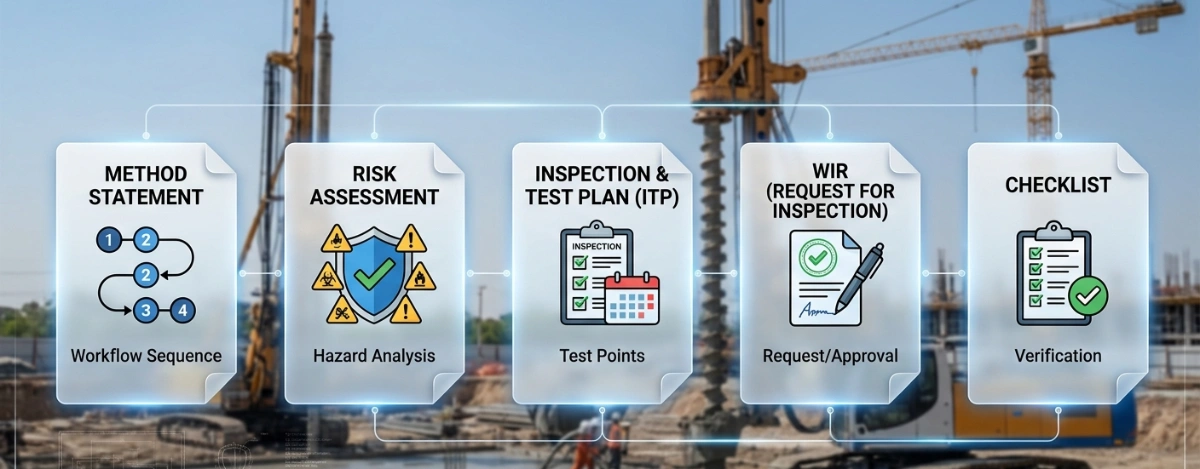
Unlike a downloadable Word or PDF template, this ITP is an AI-assisted editable starting point directly connected to its method statement. Every inspection activity, hold point, and acceptance criterion is structured and ready to adapt to your project.
- AI-assisted customization — Tailor inspection activities and acceptance criteria to your specific project scope.
- Linked method statement — This ITP is connected to the corresponding method statement describing the work sequence.
- Multiple export formats — Download as a formatted PDF or editable Excel spreadsheet.
- Editable starting point, not a final document — Review and verify all content against your project specifications and standards before use.
What you can customize
When you save this ITP to your account, every inspection row becomes editable. You can add, remove, or modify:
- Inspection activity — Description of what is being inspected.
- Inspection type — Hold point (H), Witness point (W), Review (R), or Monitor (M).
- Responsibility — Contractor, subcontractor, engineer, or client.
- Frequency — How often the inspection occurs.
- Acceptance criteria — Referenced standard or specification requirement.
- Records — Forms, test reports, or checklists required as evidence.
Why this ITP is used
To ensure doors and frames meet specified performance and workmanship requirements with documented inspections and tests.
Who uses this inspection and test plan
Contractor QA/QC, Site Engineers, Supervisors, and the Consultant/Client for witnessing and acceptance.
When this ITP is prepared and submitted
From material delivery through installation to final handover of each doorset.
Who receives or approves this ITP
Consultant/Engineer for review and witnessing per ITP.
Inspection scope
Covers materials verification, opening/set-out, frame positioning/fixing, perimeter treatment, ironmongery, seals, and operational performance.
Typical hold, witness, and review points
Hold: pre-fix frame alignment, door hung/gap verification, seals for fire/smoke doors, final acceptance. Witness: opening set-out, fixing, ironmongery, closer setup.
Typical inspection records
MIRs, IRs with photos, gap logs, closer timing/force checks, permits, calibration certs, as-built records, O&M documents.
Important approval note
This ITP is an AI-assisted editable starting point, not a pre-approved document. Before use on any project, all inspection activities, hold points, and acceptance criteria must be reviewed and approved by the relevant parties (superintendent, principal contractor, or client representative) in accordance with your contract and project quality plan.
Always verify acceptance criteria against your applicable drawings, specifications, and regulatory requirements. Hold points must be confirmed with the relevant authority before work proceeds past that point.
Inspection and test plan
| Activity | Inspection / Test | Acceptance Criteria | Responsibility | Record |
|---|---|---|---|---|
| Material delivery inspection (doors, frames, ironmongery) | Verify against approvals; check damage; check fire labels/DoP | Conforms to approved submittals; labels intact; moisture 8–12% where measured | Contractor QC (Perform) / Consultant (Review) | MIR, delivery photos |
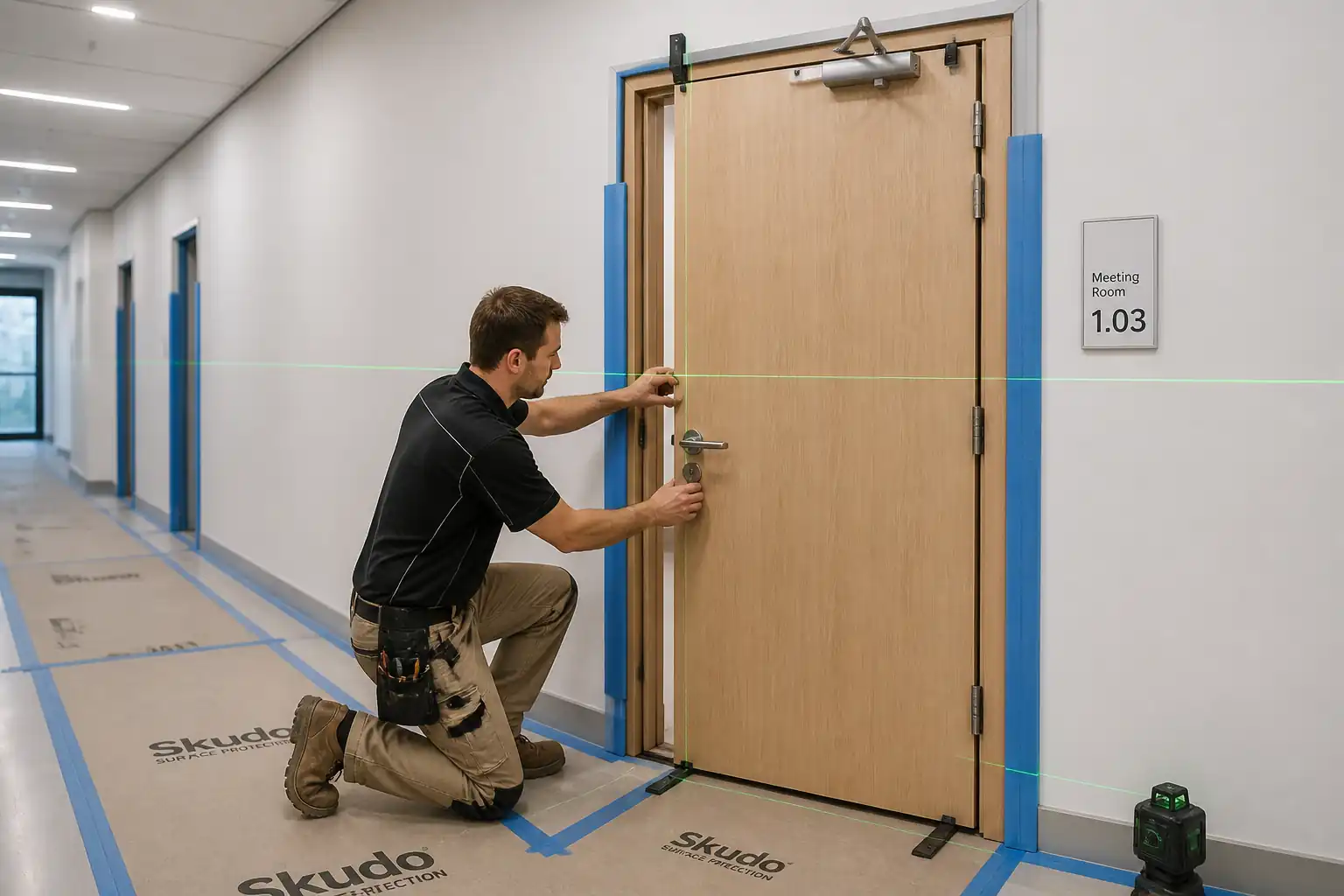
| Opening verification and set-out | Measure SO vs FOD, plumb/level/square | SO within tolerance; datum confirmed; swing/handing per schedule | Contractor QC (Perform) / Consultant (Witness) | IR, checklist |
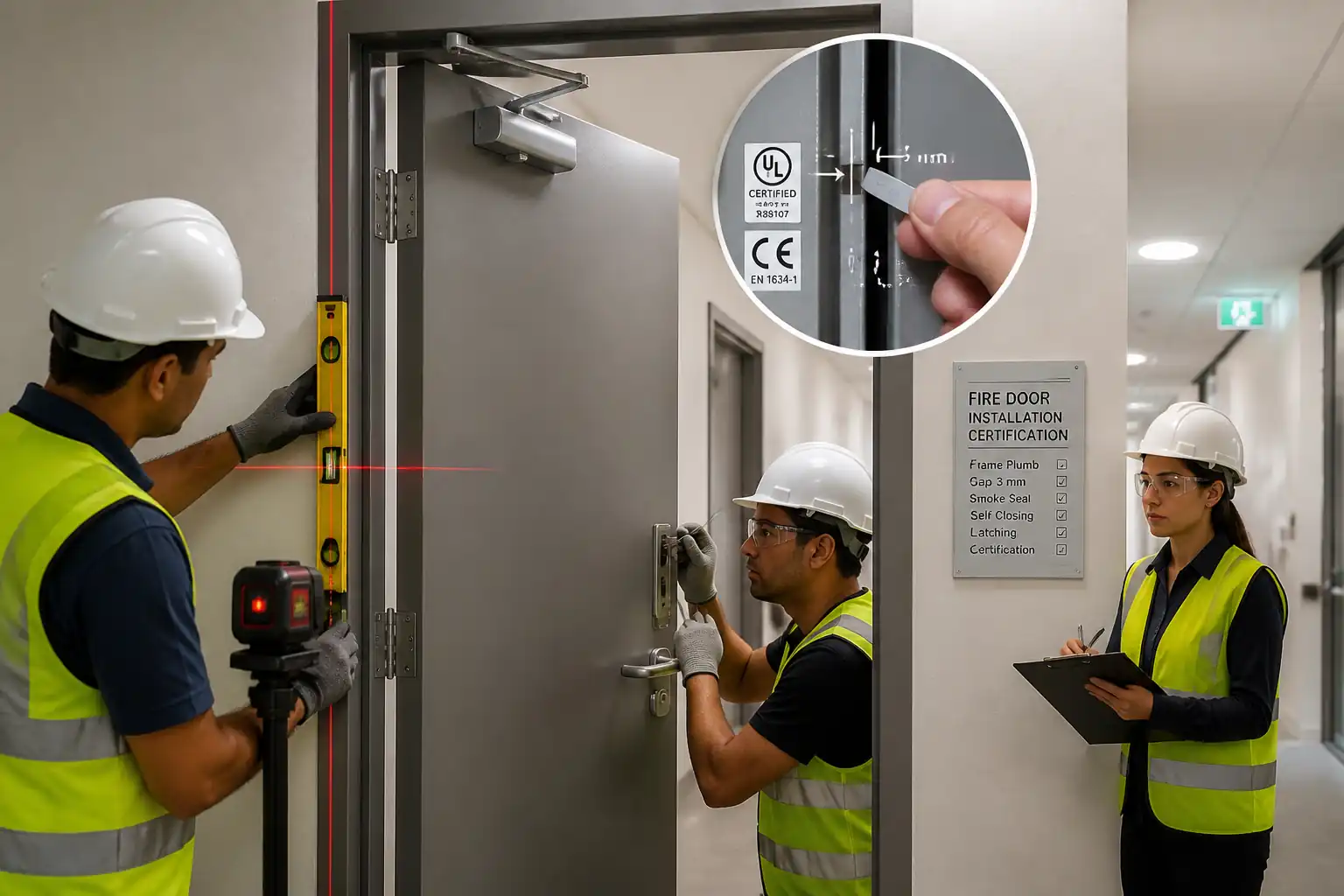
| Frame positioned, plumbed, squared (pre-fix) | Level/plumb; diagonal check | Plumb/level ±1 mm/m; diagonal ≤3 mm | Contractor QC (Hold) / Consultant (Hold) | IR |
| Permanent fixing and packing of frame | Check anchor spacing/edge distances; packers at fixings | 150–250 mm from corners; 450–600 mm c/c; embed ≥40–60 mm; frame not bowed | Contractor QC (Perform) / Consultant (Witness) | IR, photos |
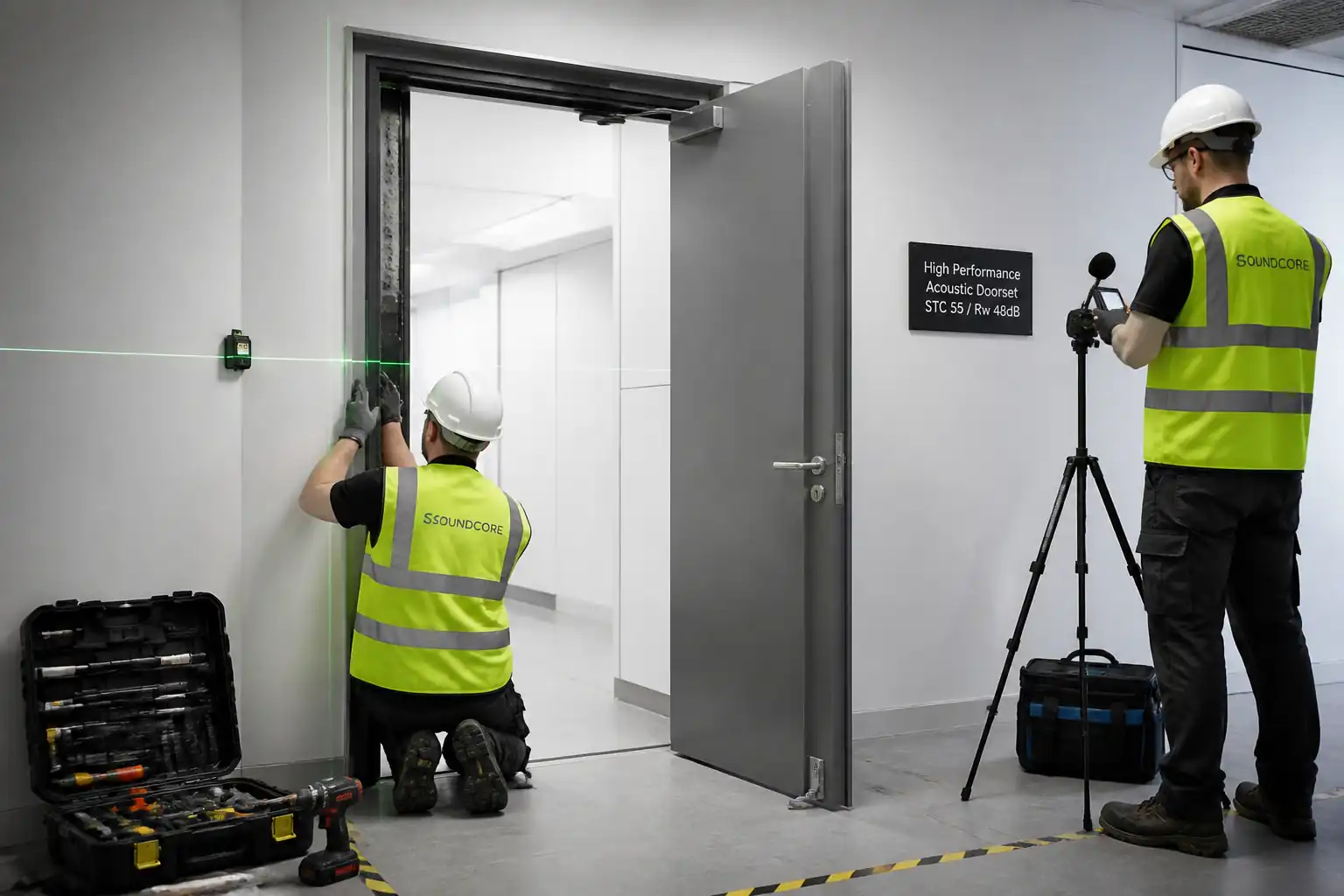
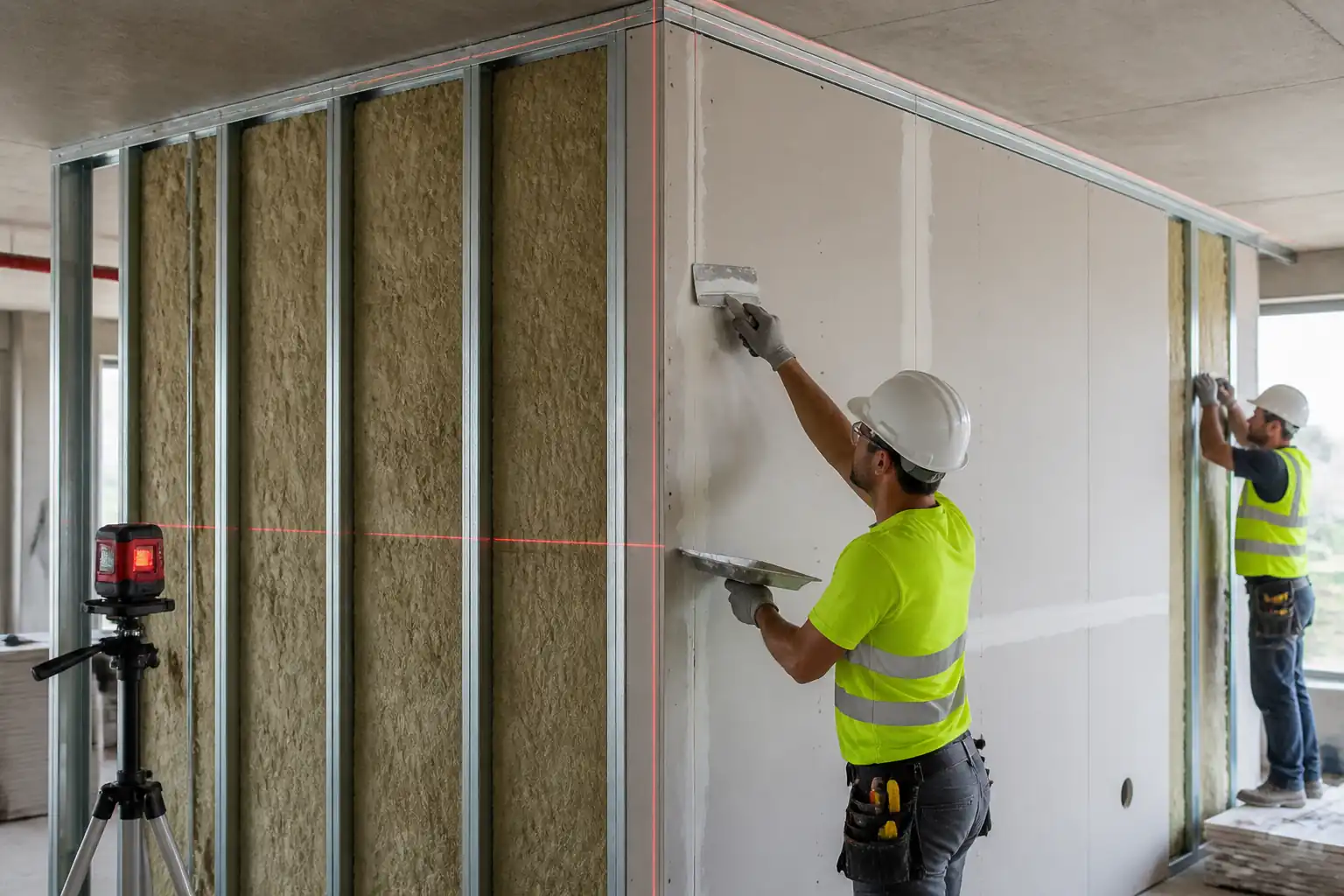
| Perimeter gap treatment (foam/wool, sealant) | Continuity and grade | Backfill continuous; correct fire/acoustic grade; neat finish | Contractor QC (Perform) / Consultant (Witness) | IR, photos |
| Hinges fitted (with intumescent pads if FD) | Position/grade/screw type | Positions per method; hinge grade per schedule; pads fitted on FD | Contractor QC (Perform) / Consultant (Witness) | IR, photos |
| Door hung and gaps verified | Feeler gauge measurements | 2–3 mm gaps to jamb/head; threshold per spec; no bind | Contractor QC (Hold) / Consultant (Hold) | IR, gap log |
| Locks/latches/handles installed | Function test; latch throw; alignment | Latch throw ≥12 mm; smooth operation; hardware per schedule | Contractor QC (Perform) / Consultant (Witness) | IR |
| Closer installation and adjustment | Closing time; latching; opening force (if applicable) | Closing 3–7 s [Verify]; positive latching; accessible force limits met [Verify] | Contractor QC (Perform) / Consultant (Witness) | IR |
| Seals (intumescent/smoke/acoustic) continuity | Visual continuity; type/size check | Continuous, correct type; unpainted; drop seal active | Contractor QC (Hold for FD/Smoke) / Consultant (Hold) | IR, photos |
| Interface with finishes and protection | Visual finish; joint quality; protection fitted | Neat mitres; sealant smooth/continuous; no damage; protection in place | Contractor QC (Perform) / Consultant (Review) | IR |
| Final operation test and documentation | Full functional demonstration; documentation check | All tests pass; as-built photos; O&M complete; zero snags | Contractor QC (Hold) / Consultant-Client (Hold) | IR, Handover pack |
This table is a read-only public reference. Download the PDF or Excel version, or customize this ITP to edit it for your project.
Frequently asked questions
Related method statement
This Inspection and Test Plan is associated with the Method Statement: Installation of Internal Timber Doors and Frames method statement, which describes the step-by-step construction sequence, resources, materials, equipment, safety controls, and environmental controls for this activity.
View the Method Statement: Installation of Internal Timber Doors and Frames method statement →Continue with related inspection, method statement, article, and checklist resources.