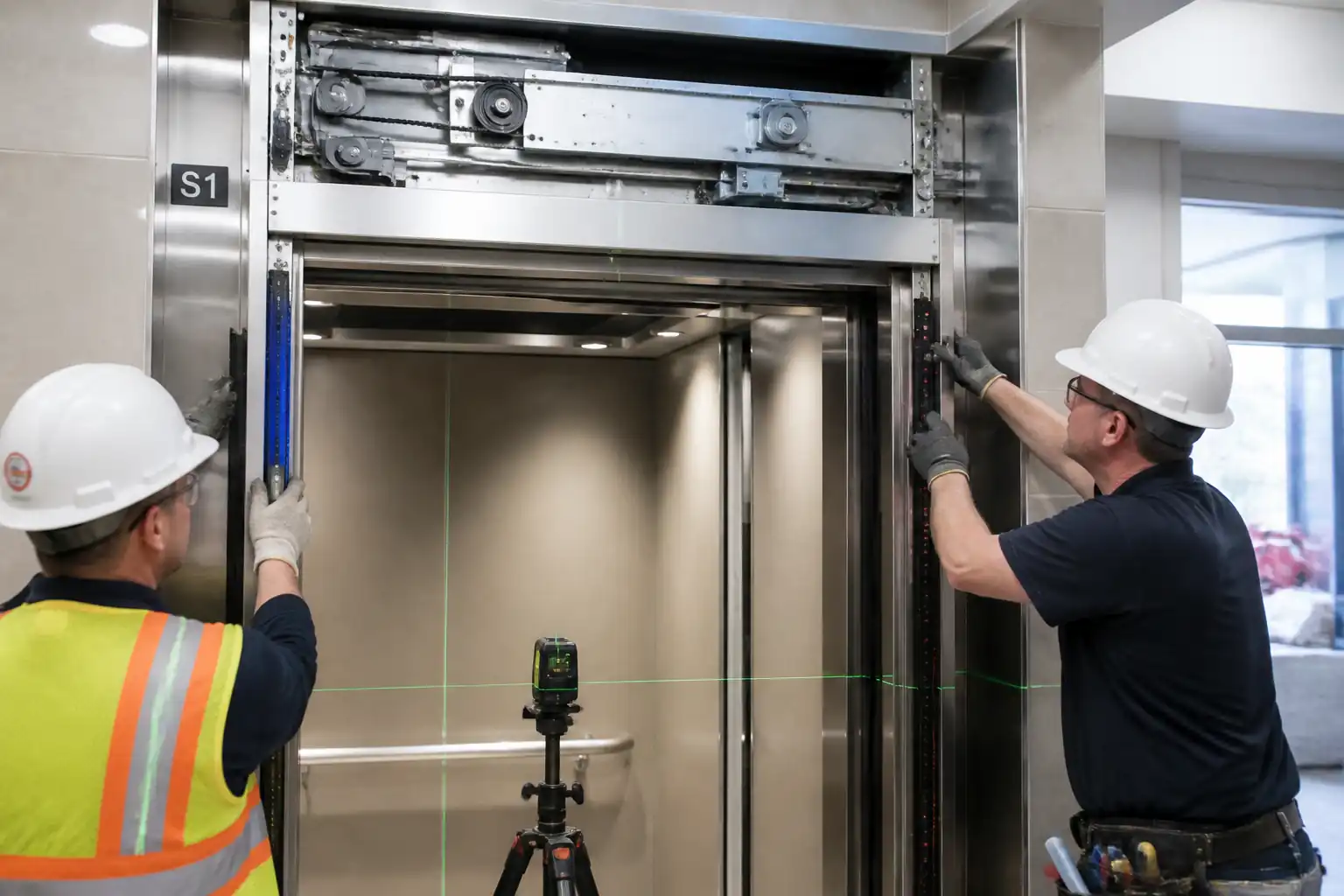

Inspection and Test Plan for Method Statement: Elevator Door Operator and Landing Door Installation (Header, Panels, Sills, Interlocks, Closers, Light Curtain)
AI-assisted inspection and test plan connected to a method statement, with PDF and Excel export.
More than a static template
Unlike a downloadable Word or PDF template, this ITP is an AI-assisted editable starting point directly connected to its method statement. Every inspection activity, hold point, and acceptance criterion is structured and ready to adapt to your project.
- AI-assisted customization — Tailor inspection activities and acceptance criteria to your specific project scope.
- Linked method statement — This ITP is connected to the corresponding method statement describing the work sequence.
- Multiple export formats — Download as a formatted PDF or editable Excel spreadsheet.
- Editable starting point, not a final document — Review and verify all content against your project specifications and standards before use.
What you can customize
When you save this ITP to your account, every inspection row becomes editable. You can add, remove, or modify:
- Inspection activity — Description of what is being inspected.
- Inspection type — Hold point (H), Witness point (W), Review (R), or Monitor (M).
- Responsibility — Contractor, subcontractor, engineer, or client.
- Frequency — How often the inspection occurs.
- Acceptance criteria — Referenced standard or specification requirement.
- Records — Forms, test reports, or checklists required as evidence.
Why this ITP is used
To ensure each entrance meets code, OEM, and project requirements with verified records at defined hold and witness points.
Who uses this inspection and test plan
QA/QC engineers, lift installers, electricians, and the supervising consultant or third-party inspector.
When this ITP is prepared and submitted
From material receipt through installation, commissioning, and final handover of each entrance.
Who receives or approves this ITP
Engineer/Consultant for approval before works and for sign-off at hold/witness points.
Inspection scope
Dimensional checks, anchoring, electrical tests, operator setup, timings, kinetic energy, light curtain response, zone unlock, and fire label verification.
Typical hold, witness, and review points
Sill installation, KE test, zone unlock, and fire rating verification are typical HOLD/WITNESS stages.
Typical inspection records
Receiving reports, setting-out sheets, torque/anchor logs, electrical test sheets, KE certificates, detector/zone test sheets, and handover dossier.
Important approval note
This ITP is an AI-assisted editable starting point, not a pre-approved document. Before use on any project, all inspection activities, hold points, and acceptance criteria must be reviewed and approved by the relevant parties (superintendent, principal contractor, or client representative) in accordance with your contract and project quality plan.
Always verify acceptance criteria against your applicable drawings, specifications, and regulatory requirements. Hold points must be confirmed with the relevant authority before work proceeds past that point.
Inspection and test plan
| Activity | Inspection / Test | Acceptance Criteria | Responsibility | Record |
|---|---|---|---|---|
| Receiving inspection – doors, operator, detectors | Verify quantity, damage, data plates, certificates (EN 81-58 for landing doors) | Matches submittals; no damage; certificates available. | QA/QC | Material Receiving Report |
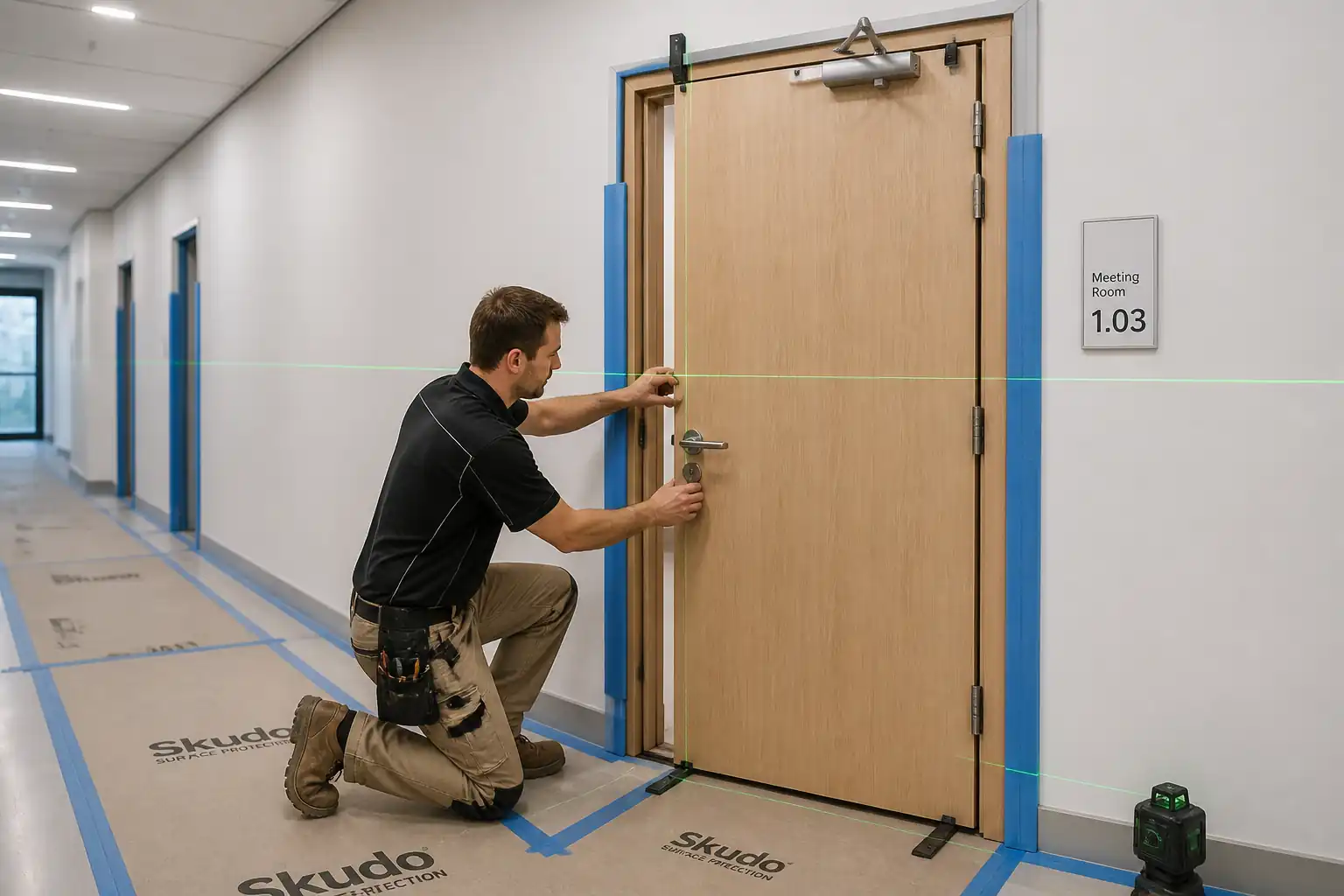
| Setting-out and opening verification | Width/height/plumb/level survey | Within drawing tolerances [Verify]. | Supervisor/QA | Setting-out Sheet |
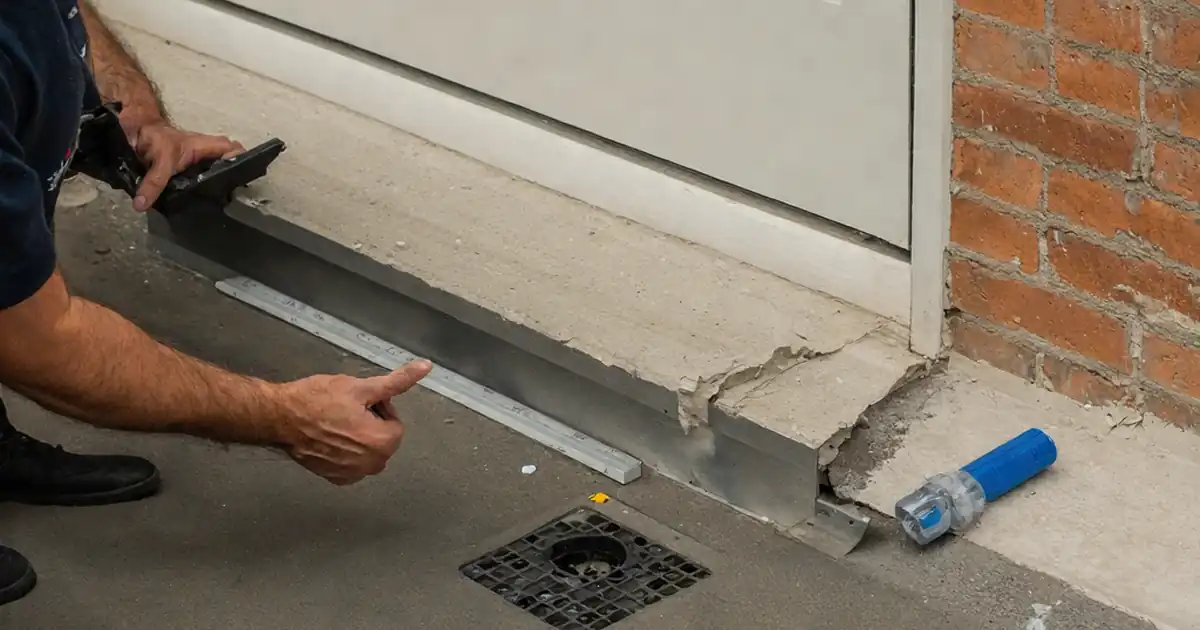
| Sill installation | Levelness/straightness; fixing type and torque | Level ±0.5 mm/m; anchors per ETA; torque per MFR. | QA/QC | Sill Checklist & Torque Log |
| Frame/jamb and header fixing | Plumb/level; anchor installation | Plumb ≤1 mm/m; header level ±1 mm; fixings correct. | QA/QC | Frame Install Report |
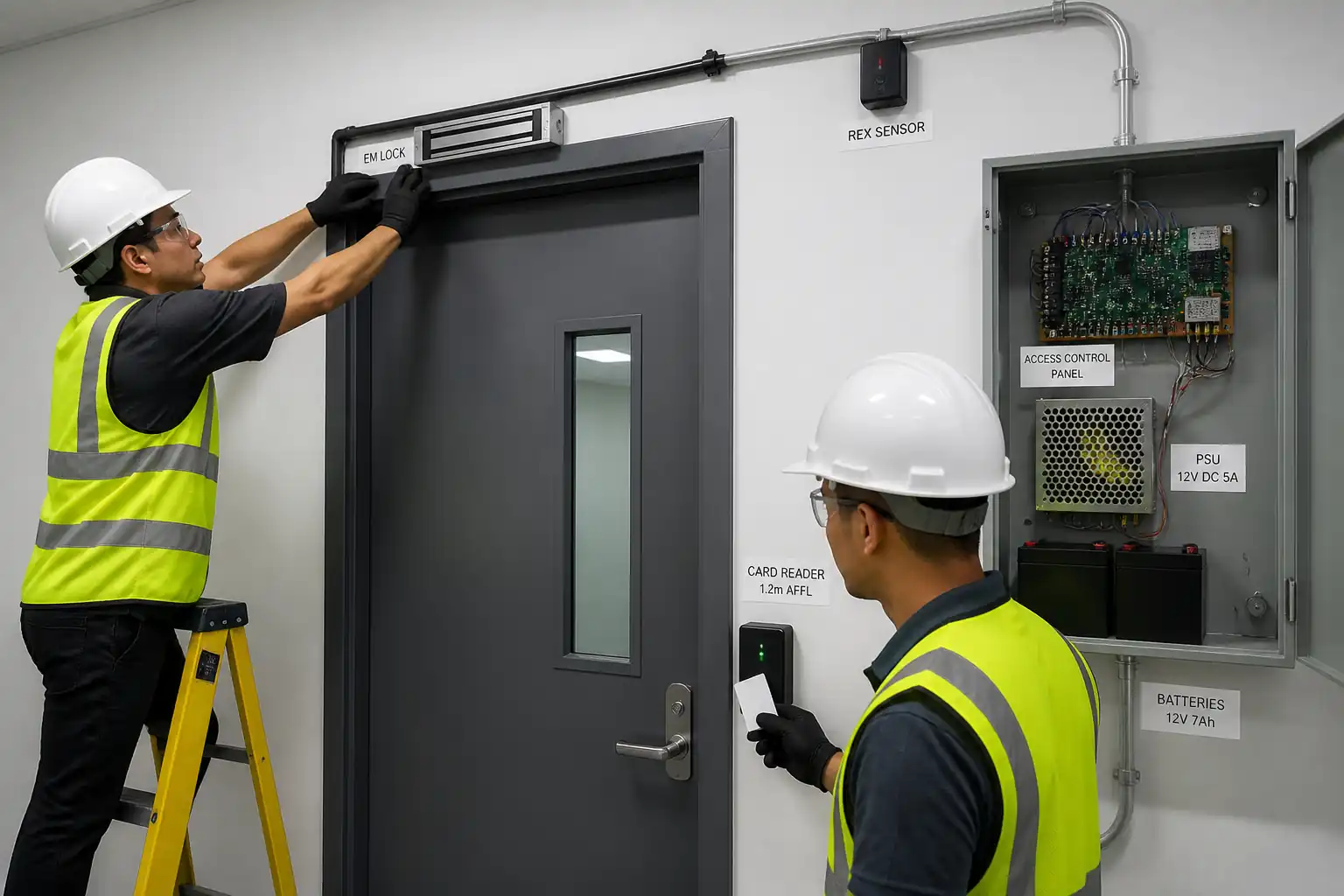
| Interlock installation and wiring | Latch engagement; contact changeover; key function | Positive lock; correct electrical states; key-controlled release. | QA/QC/Electrician | Interlock Test Sheet |
| Car operator installation | Mechanical installation, torque, free travel | Per OEM torque; no binding; guards in place. | QA/QC | Operator Install Record |
| Electrical tests (pre-energization) | Continuity, polarity, IR, earth bond | IR ≥1 MΩ (power)/≥0.5 MΩ (control) [Verify]; earth ≤0.1 Ω [Verify]. | Electrician/QA | Electrical Test Sheet |
| Operator parameterization | OEM commissioning routine | Parameters set per spec; no faults. | Installer/OEM | Commissioning Report |
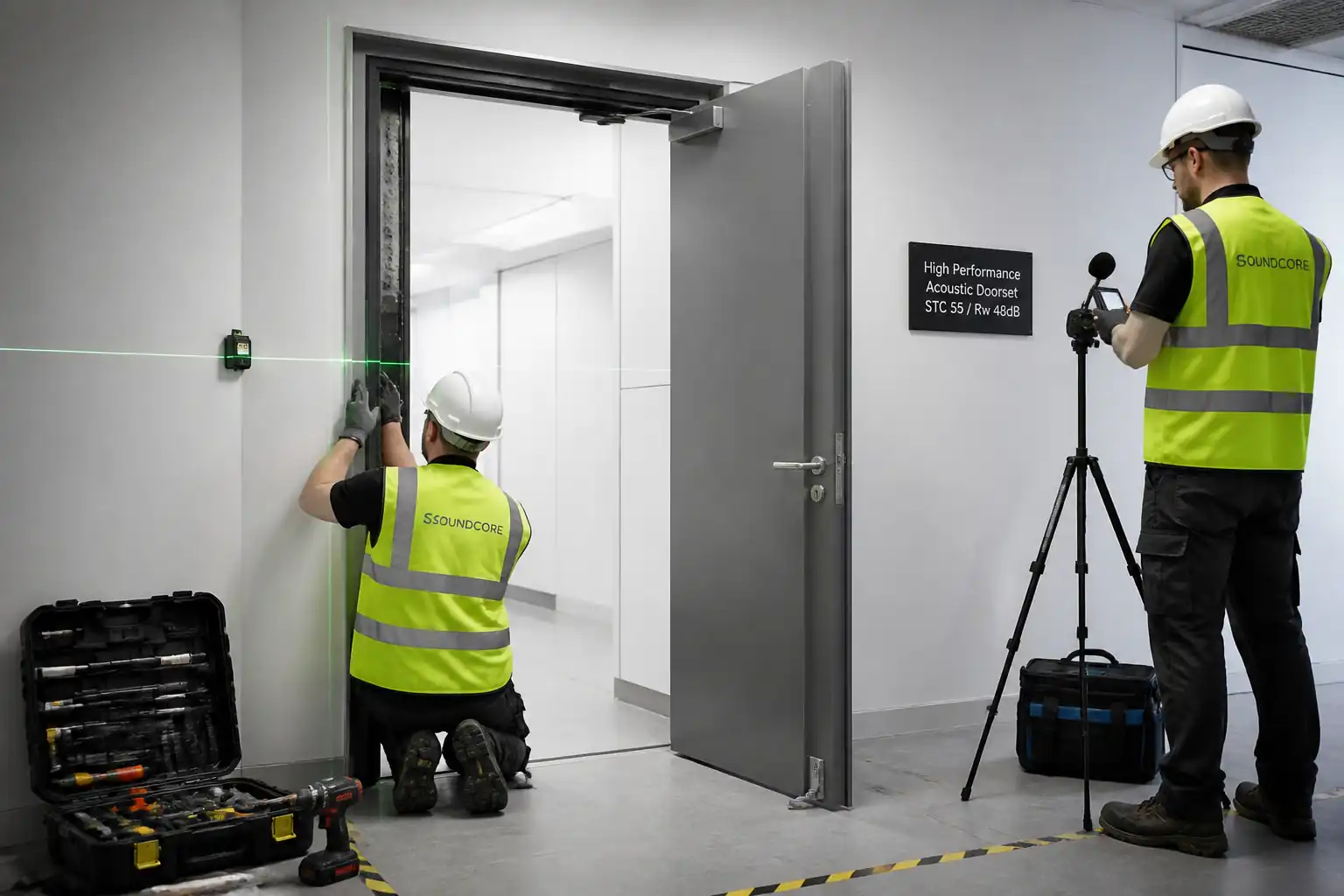
| Door opening/closing time test | Stopwatch/data logger over 3 cycles | Within OEM/project range; smooth motion. | QA/QC/Consultant | Door Time Test Record |
| Kinetic energy test | KE measurement near closing (25–50 mm) | KE ≤10 J [Verify jurisdiction/spec]. | QA/QC/Consultant | KE Test Certificate |
| Light curtain (reopening) test | 50 mm rod across heights/positions; record response time | Detect and reopen/stop ≤0.2 s; no contact with object [Verify]. | QA/QC | Detector Test Sheet |
| Zone unlock check | Attempt unlock outside zone; verify unlock within zone only | Unlock only within defined zone (typ. ±100–200 mm) and car stopped [Verify]. | QA/QC/Consultant | Zone Unlock Record |
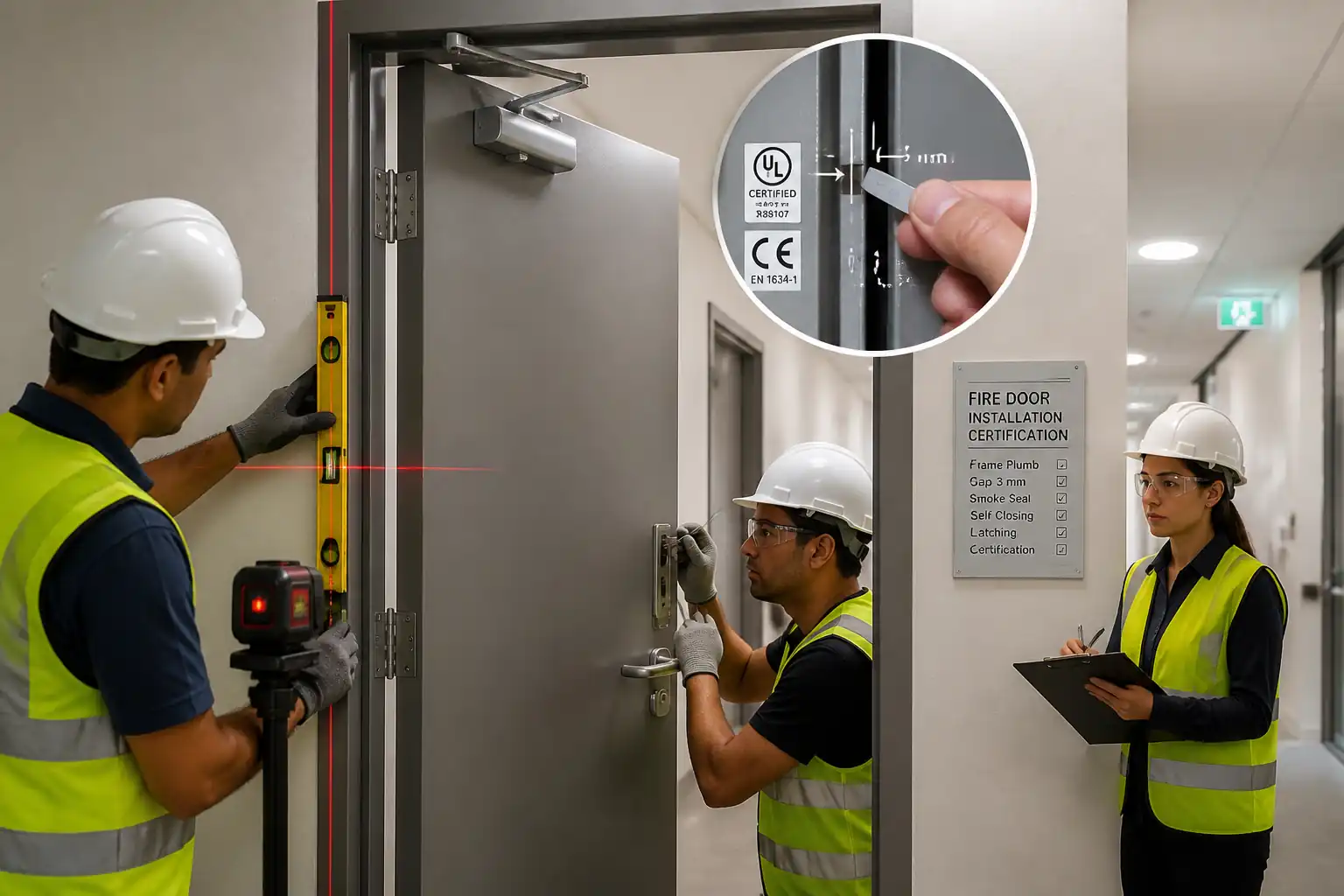
| Fire-rated landing door certification verification | Check labels/ID vs certificates and schedule | Rating matches specification and location; labels intact. | QA/QC/Consultant | Fire Door Verification Log |
| Final inspection and documentation | Snag closeout; document completeness | All ITP items signed; O&M submitted. | QA/QC | Handover Dossier |
This table is a read-only public reference. Download the PDF or Excel version, or customize this ITP to edit it for your project.
Frequently asked questions
Related method statement
This Inspection and Test Plan is associated with the Method Statement: Elevator Door Operator and Landing Door Installation (Header, Panels, Sills, Interlocks, Closers, Light Curtain) method statement, which describes the step-by-step construction sequence, resources, materials, equipment, safety controls, and environmental controls for this activity.
View the Method Statement: Elevator Door Operator and Landing Door Installation (Header, Panels, Sills, Interlocks, Closers, Light Curtain) method statement →Continue with related inspection, method statement, article, and checklist resources.