
Inspection and Test Plan for Method Statement – Installation of Fire-Rated Doors and Frames with Certified Hardware, Smoke/Intumescent Seals, Interfaces and Testing
AI-assisted inspection and test plan connected to a method statement, with PDF and Excel export.
More than a static template
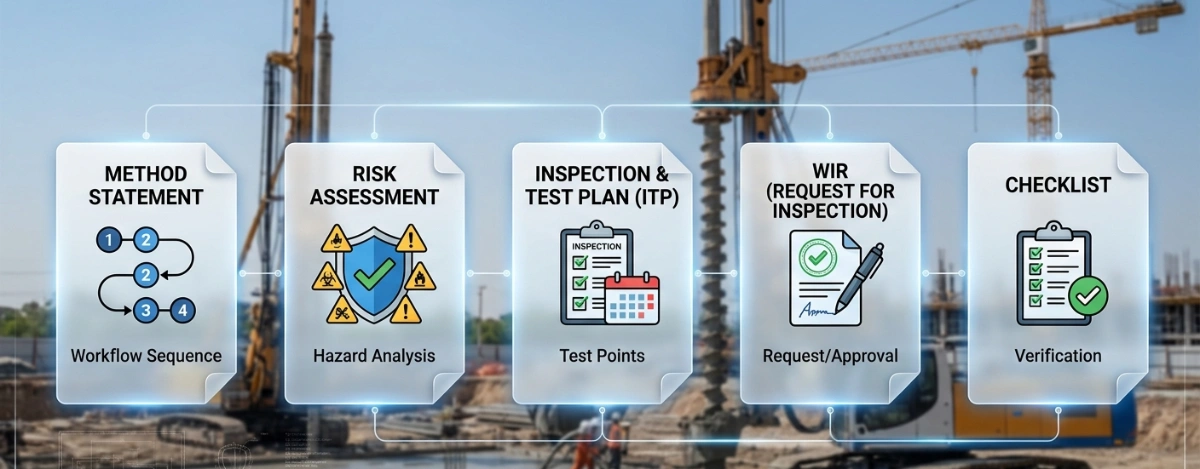
Unlike a downloadable Word or PDF template, this ITP is an AI-assisted editable starting point directly connected to its method statement. Every inspection activity, hold point, and acceptance criterion is structured and ready to adapt to your project.
- AI-assisted customization — Tailor inspection activities and acceptance criteria to your specific project scope.
- Linked method statement — This ITP is connected to the corresponding method statement describing the work sequence.
- Multiple export formats — Download as a formatted PDF or editable Excel spreadsheet.
- Editable starting point, not a final document — Review and verify all content against your project specifications and standards before use.
What you can customize
When you save this ITP to your account, every inspection row becomes editable. You can add, remove, or modify:
- Inspection activity — Description of what is being inspected.
- Inspection type — Hold point (H), Witness point (W), Review (R), or Monitor (M).
- Responsibility — Contractor, subcontractor, engineer, or client.
- Frequency — How often the inspection occurs.
- Acceptance criteria — Referenced standard or specification requirement.
- Records — Forms, test reports, or checklists required as evidence.
Why this ITP is used
To verify each installed fire door assembly complies with approved test evidence, codes, and project specifications through documented inspections.
Who uses this inspection and test plan
QA/QC engineers, site engineers, certified installers, fire-stopping specialists, MEP/FA engineers, and the Engineer/AHJ.
When this ITP is prepared and submitted
From material receipt to final handover, with hold/witness points at critical stages (frame fix, fire-stopping, gaps, hardware, and functional tests).
Who receives or approves this ITP
Engineer/Consultant and, where required, the Authority Having Jurisdiction (AHJ).
Inspection scope
Material certification, dimensional control, anchorage, perimeter fire-stopping, smoke/intumescent seals, hardware compatibility, and functional performance.
Typical hold, witness, and review points
Hold: Frame anchorage, perimeter fire-stopping, functional/FA interface, final acceptance. Witness: Leaf hanging/gaps, hardware, smoke/drop seals, glazing.
Typical inspection records
Label logs, survey reports, anchor/torque logs, fire-stopping tags and batch certs, gap gauge logs, functional test sheets, FA interface reports, calibration certs.
Important approval note
This ITP is an AI-assisted editable starting point, not a pre-approved document. Before use on any project, all inspection activities, hold points, and acceptance criteria must be reviewed and approved by the relevant parties (superintendent, principal contractor, or client representative) in accordance with your contract and project quality plan.
Always verify acceptance criteria against your applicable drawings, specifications, and regulatory requirements. Hold points must be confirmed with the relevant authority before work proceeds past that point.
Inspection and test plan
| Activity | Inspection / Test | Acceptance Criteria | Responsibility | Record |
|---|---|---|---|---|
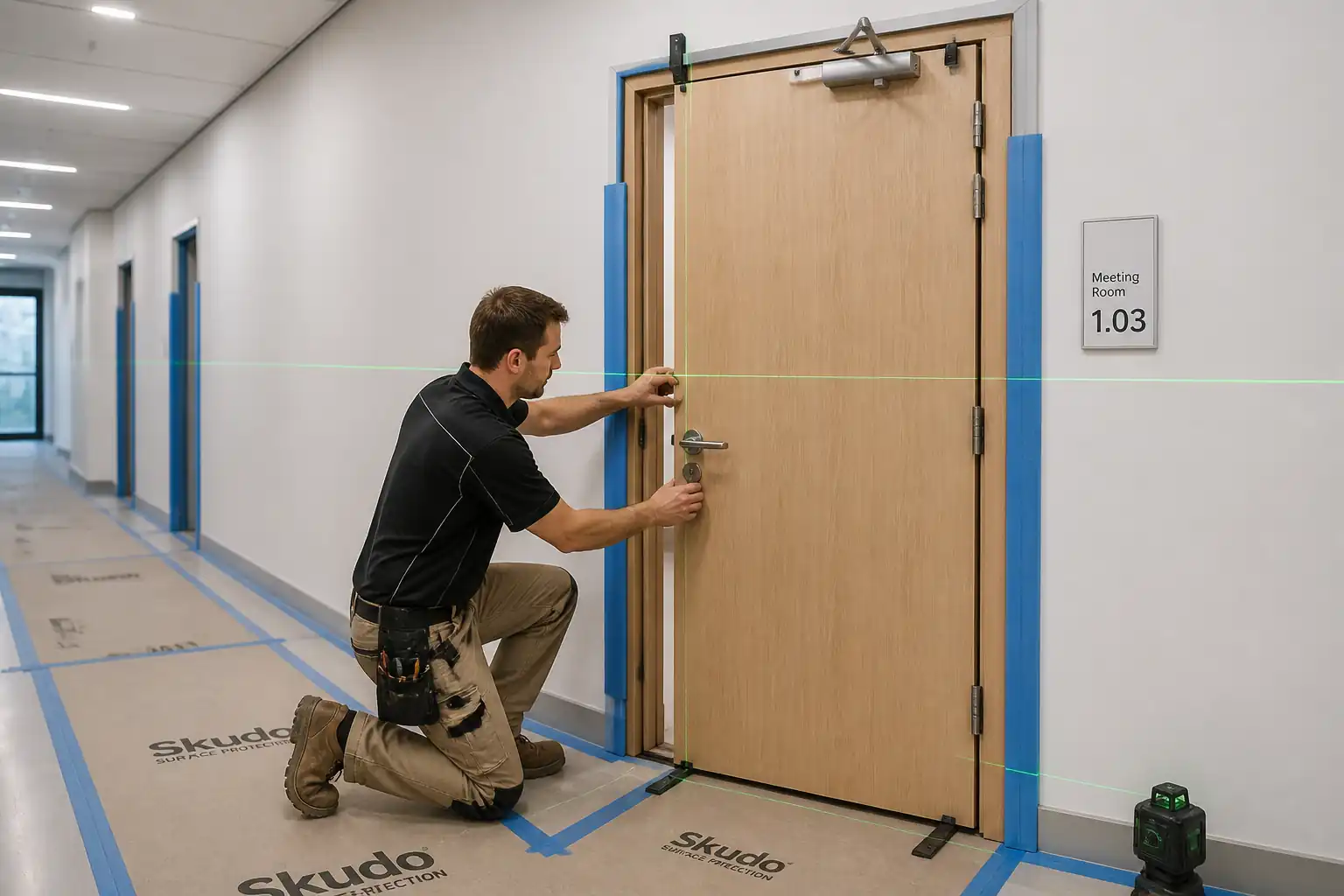
| Materials receipt and label verification | Check labels, ratings, sizes, handing against schedule; record serial numbers. | 100% match to approved submittals; labels intact and legible. | QA/QC Engineer | Material receipt/label log, photos |
| Openings survey and substrate verification | Measure opening, plumb/level/square; verify substrate for anchors; confirm wall FR. | Opening-to-frame clearance 10–20 mm [Verify]; plumb ≤3 mm/2 m; head level ≤3 mm. | Site Engineer | Survey report |
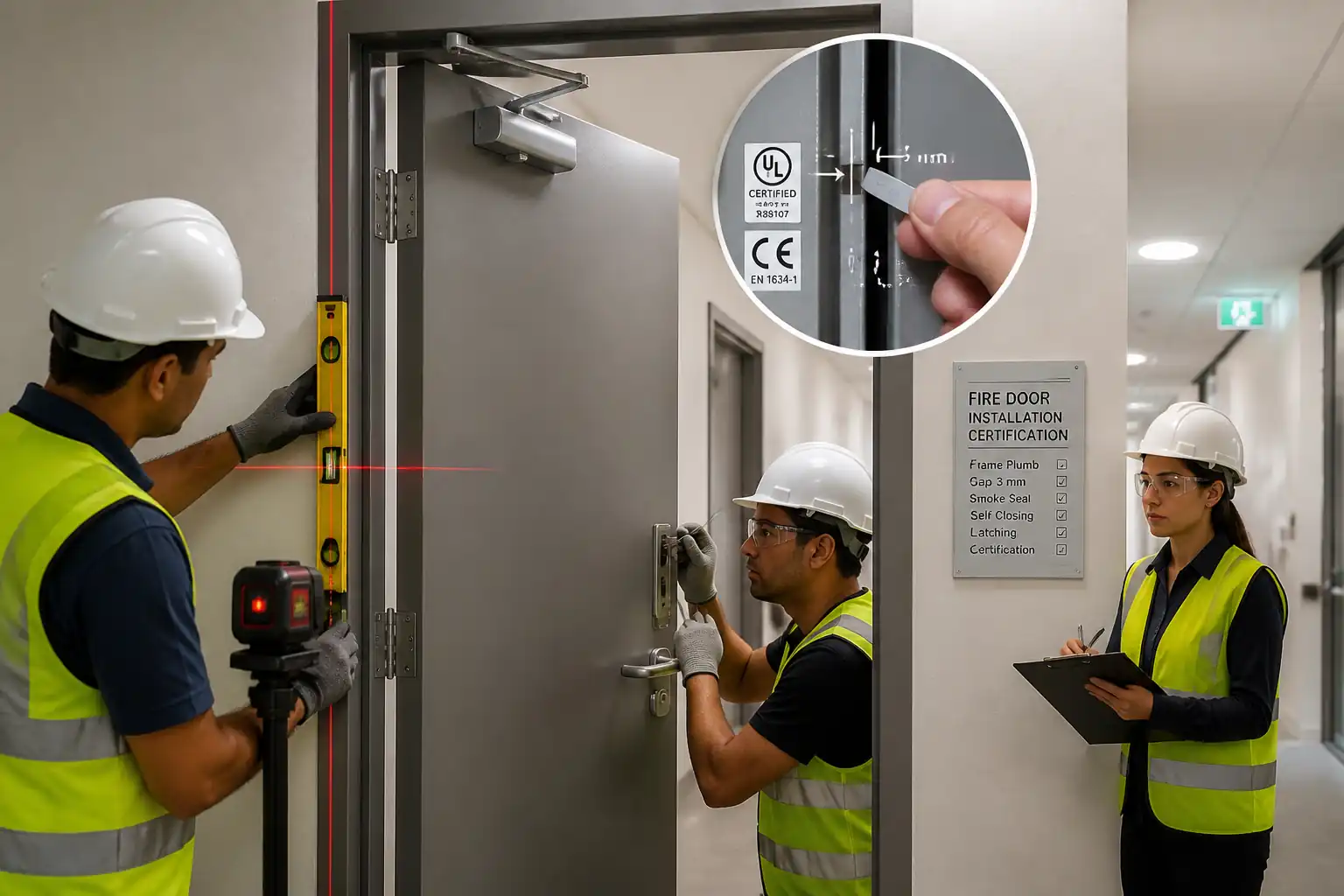
| Frame positioning and anchorage (Hold Point) | Verify shims/packers non-combustible; anchors type/spacing/torque; frame plumb/level/diagonals. | Spacing ≤600 mm c/c and within 150–250 mm of corners; plumb ≤2 mm/1 m; diagonals ≤3 mm difference; torque per manufacturer [Verify]. | QA/QC + Installer | Anchor log, calibration certs, photos |
| Perimeter fire-stopping at frame/wall (Hold Point) | Check materials and installation against tested/assessed system; continuity both sides. | Matches approved detail; mineral wool density/compaction correct; sealant depth/coverage complete; FR not less than wall/door rating. | QA/QC + Fire Stopping Specialist | Fire-stopping inspection record, batch certs, photos |
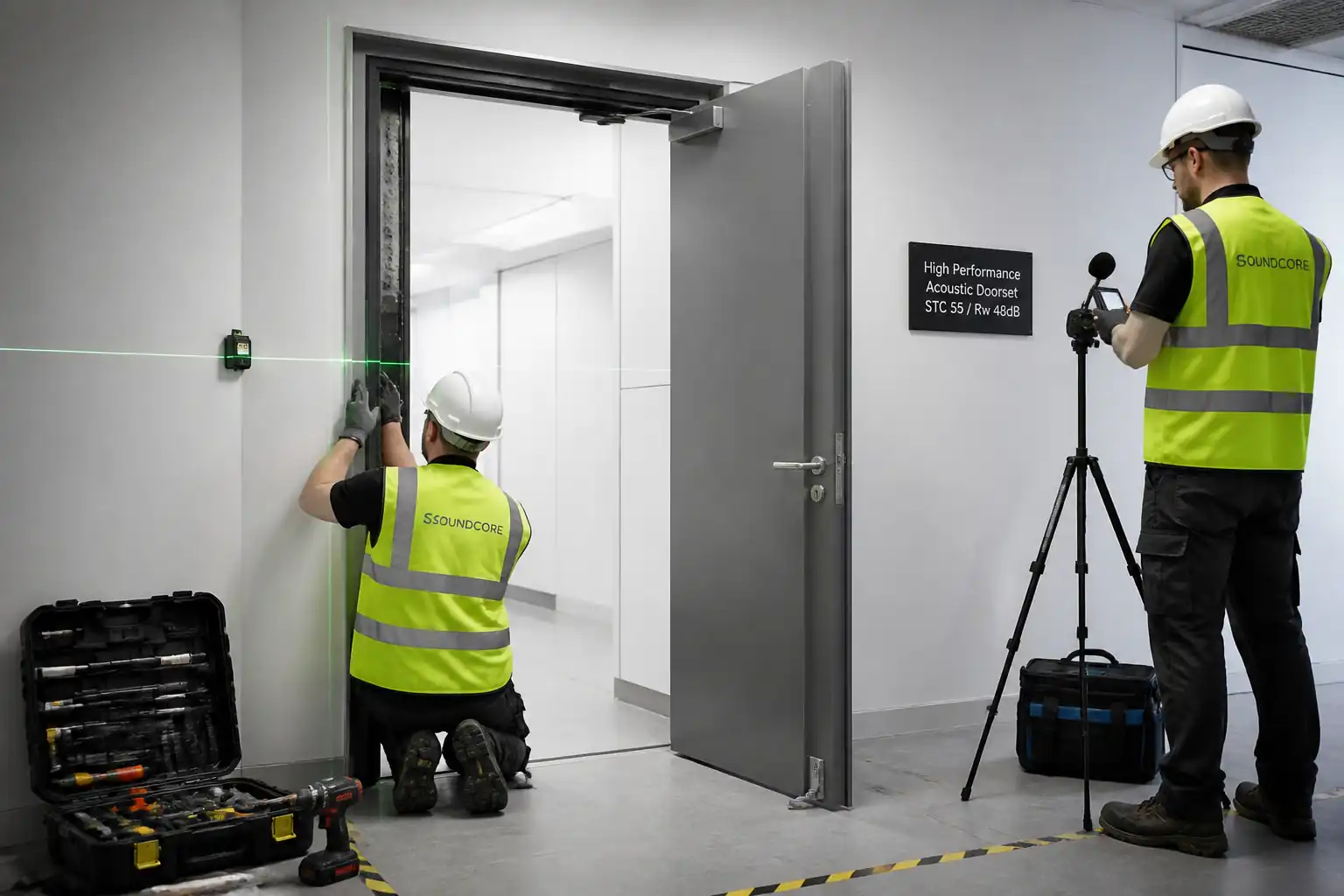
| Door leaf hanging and gap verification (Witness) | Measure head/jamb/threshold gaps; check swing and bind-free operation. | Head/jamb 2–4 mm; threshold per requirement: ≤3 mm with smoke control or effective drop seal; otherwise ≤6–10 mm [Verify]. | QA/QC + Installer | Gap gauge log, photos |
| Hardware installation and torque checks (Witness) | Verify hardware types/handing; torque-check representative screws/bolts; confirm intumescent pads/liners if required. | Hardware matches schedule/test evidence; torque within manufacturer range [Verify]; no unapproved field cut-outs. | QA/QC + Installer | Hardware checklist, torque log |
| Smoke/drop seals installation (Witness) | Check continuity and seating; smoke pencil or light test at perimeter; adjust drop seal. | Continuous contact without binding; no paint bridging; joints tight. | QA/QC + Installer | Seal inspection record, photos |
| Vision panel/glazing installation (if any) (Witness) | Verify glass type/thickness; intumescent liners/beads per system; fixings and clearances. | Matches tested glazing system; neat finish; no damage. | QA/QC + Installer | Glazing checklist, photos |
| Functional testing and FA interface (Hold/Witness) | Cycle test; verify self-closing/latching; panic device force; hold-open release via alarm; signage check. | Self-closing from any open angle; latching positive; closer closing time typically 3–7 s [Verify]; panic force ≤80 N [Verify]; alarm releases hold-open. | QA/QC + Electrical Engineer + Installer | Functional test sheet, FA test report, photos/videos |
| Final inspection / documentation (Hold) | Comprehensive review of installation, finishes, labels, records, and tagging. | Zero Category A defects; all documents complete; AHJ comments closed. | QA/QC + Engineer + AHJ (as required) | Completion certificate, handover pack |
This table is a read-only public reference. Download the PDF or Excel version, or customize this ITP to edit it for your project.
Frequently asked questions
Related method statement
This Inspection and Test Plan is associated with the Method Statement – Installation of Fire-Rated Doors and Frames with Certified Hardware, Smoke/Intumescent Seals, Interfaces and Testing method statement, which describes the step-by-step construction sequence, resources, materials, equipment, safety controls, and environmental controls for this activity.
View the Method Statement – Installation of Fire-Rated Doors and Frames with Certified Hardware, Smoke/Intumescent Seals, Interfaces and Testing method statement →Continue with related inspection, method statement, article, and checklist resources.