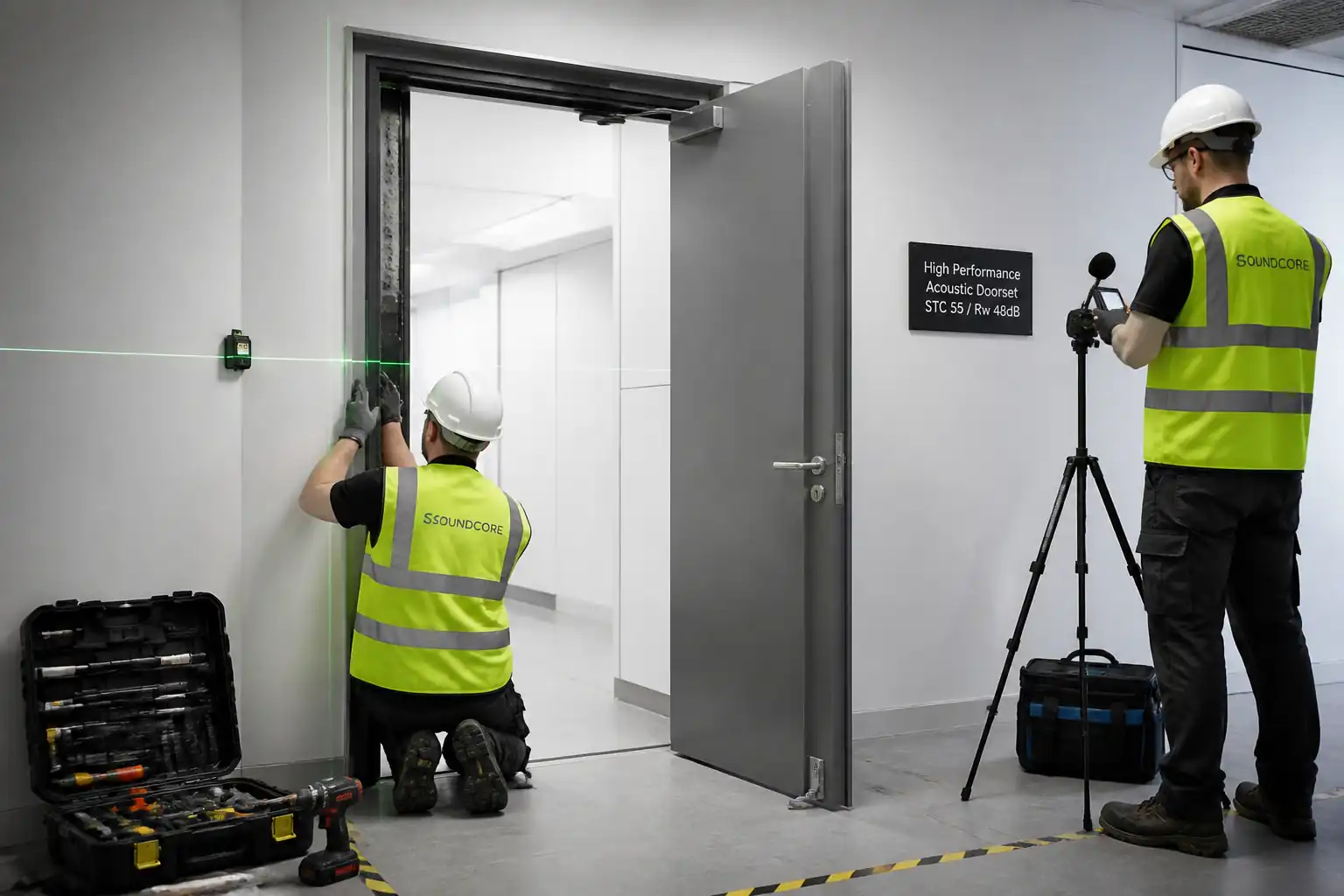

Method Statement – Acoustic Door Installation Works – Method Statement
AI-assisted method statement with matching ITP, PDF download, and Excel export.
More than a static template
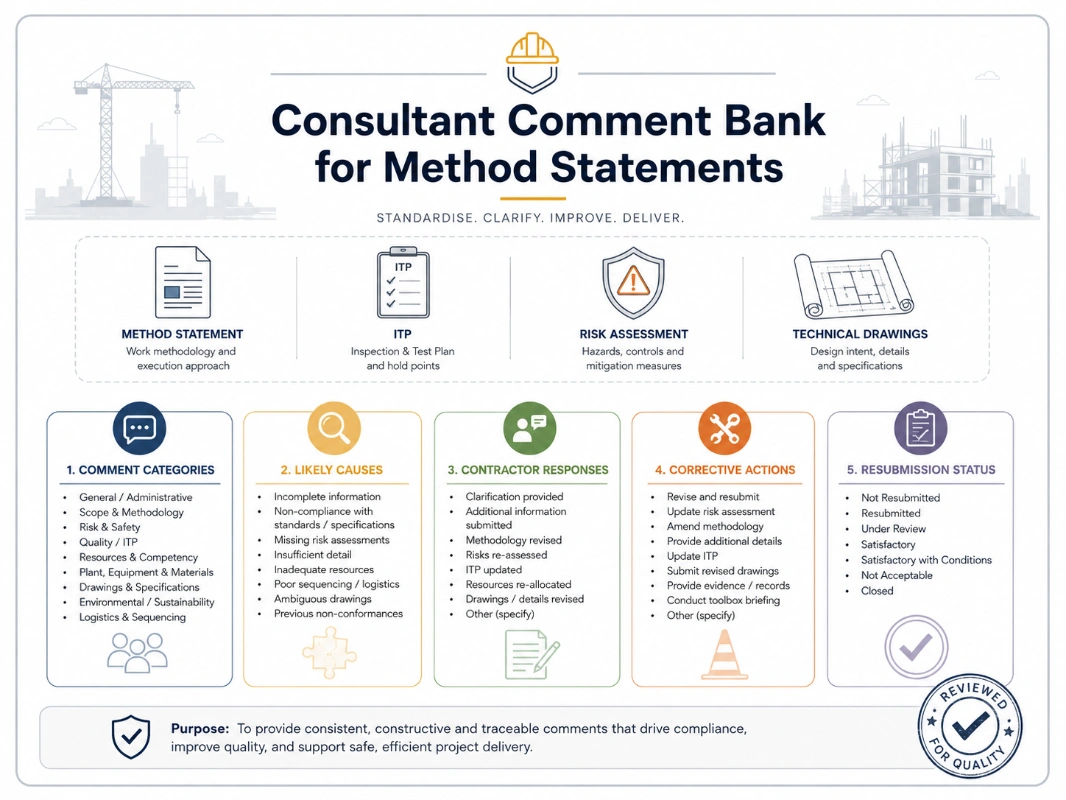
Unlike a downloadable Word or PDF template, this method statement is an AI-assisted editable starting point connected directly to a matching Inspection and Test Plan. Every section is structured, project-adaptable, and ready to export.
- AI-assisted drafting — Customize every section with AI for your specific project scope.
- Linked ITP — A matching inspection and test plan is generated alongside the method statement.
- Multiple export formats — Download as a formatted PDF or editable Excel spreadsheet.
- Editable starting point, not a final document — Review, verify, and adjust all content against your project requirements before use.
Static template vs. Quollnet workflow
| Feature | Static template | Quollnet |
|---|---|---|
| Project-specific content | Manual fill-in required | AI-assisted customization |
| Linked ITP | Separate document, no link | Matching ITP included |
| Export formats | Usually PDF only | PDF and Excel |
| Structured sections | Free-form layout | 13 standardized sections |
| Saved to your account | Local file only | Cloud-saved, reusable |
| Content accuracy | You verify everything | AI-assisted, you still verify |
| Cost | Often free but time-intensive | Free to customize and download |
What you can customize
When you save this method statement to your account, every section becomes editable. The following 13 sections are included:
- Scope — Defines the activity and its boundaries.
- References — Standards, specifications, and drawings.
- Responsibilities — Roles and accountabilities.
- Resources — Labour, plant, and equipment summary.
- Materials — Materials and compliance requirements.
- Equipment — Tools and equipment details.
- Prerequisites — Hold points and pre-conditions.
- Method sequence — Step-by-step construction sequence.
- Safety controls — HSE risk controls and PPE.
- Environmental controls — Environmental mitigation measures.
- QA/QC — Quality inspection and test requirements.
- ITP — Inspection and Test Plan table (has its own page).
- Attachments — Referenced drawings and documentation.
Why this method statement is used
This method statement is used to define and communicate the approved procedure for carrying out method statement – acoustic door installation works on site. It ensures the work is planned in advance, the correct resources and controls are in place, and all personnel understand responsibilities, sequence, quality requirements, and safety controls before work begins. It aligns site execution with the documented scope and acceptance expectations.
Who uses this method statement
This method statement is used by contractors, site supervisors, project engineers, QA/QC engineers, HSE officers, consultants, and client representatives. It serves as a shared reference for planning, execution, supervision, inspection, and approval of the activity on site.
When it is prepared and submitted
The method statement is prepared before the work activity starts and submitted as part of the pre-construction documentation package for review and approval.
Who reviews or approves it
The method statement is usually submitted to the client representative, consultant, resident engineer, or project management consultant for review and approval before the work commences.
Important approval note
This method statement is an AI-assisted editable starting point, not a pre-approved document. Before use on any project, all content must be reviewed and approved by the relevant parties (superintendent, principal contractor, or client representative) in accordance with your contract and project quality plan.
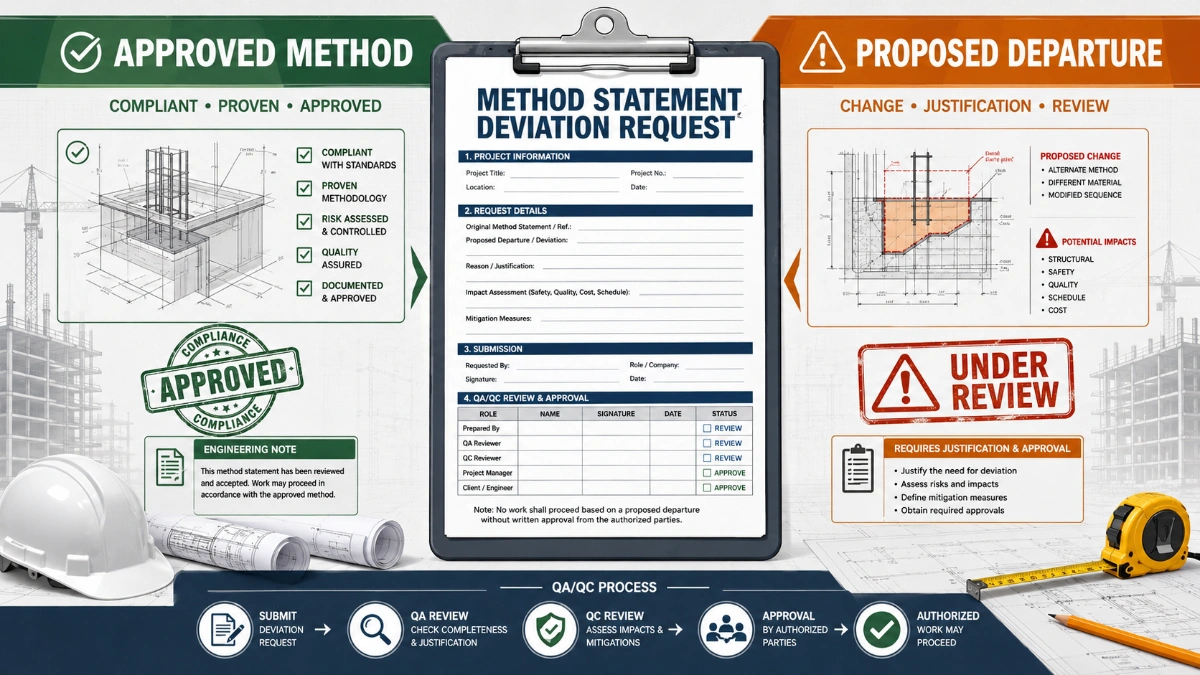
For example: if your specification requires a departure from a referenced standard, that departure must be documented and approved separately — this method statement will not capture that automatically. Always verify against your applicable drawings, specifications, and regulatory requirements.
Method statement content
Scope
Summary
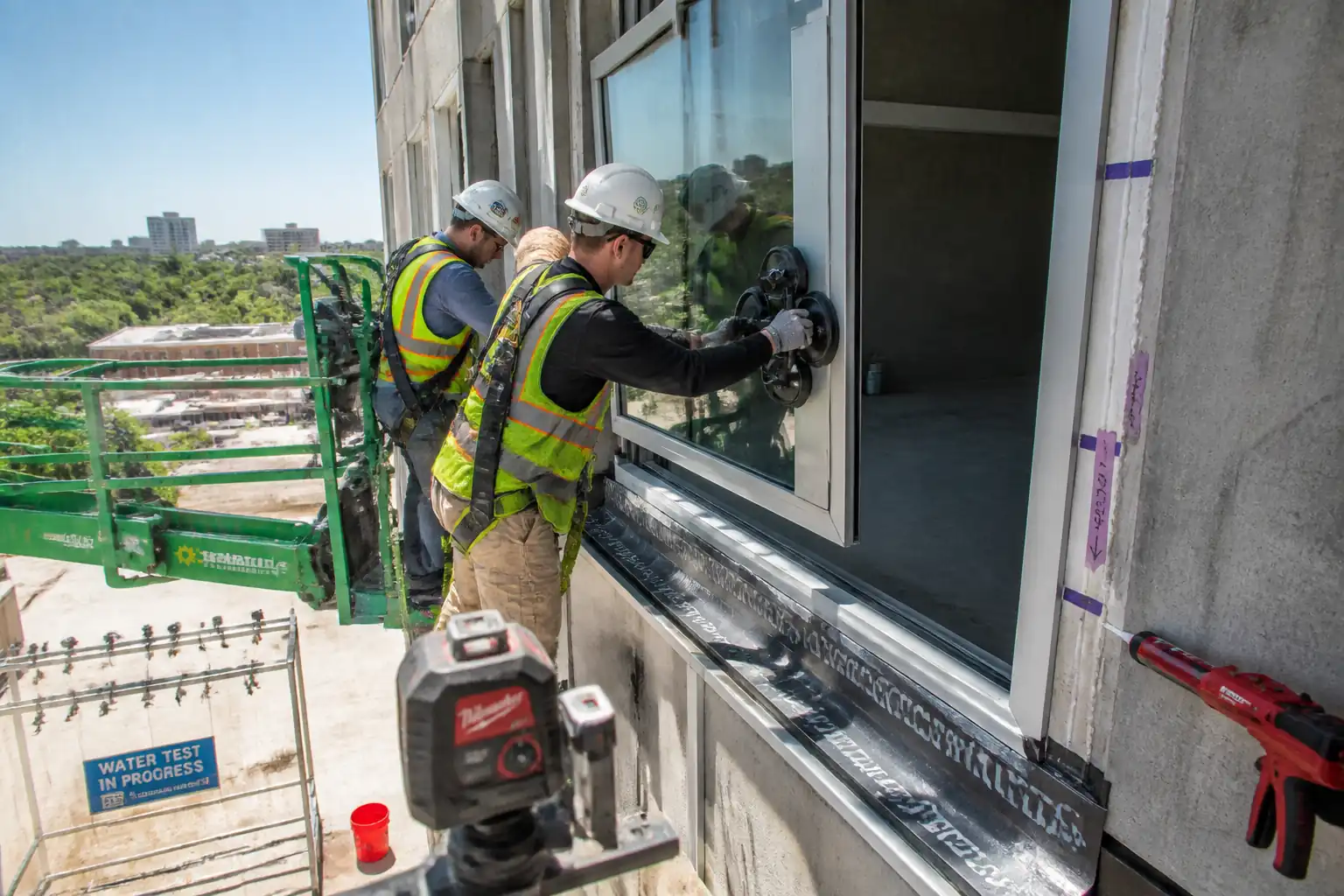
This method statement covers procurement, receipt, installation, isolation, sealing, threshold detailing, operational testing, acoustic performance verification, QA/QC inspections, documentation, and handover of certified acoustic door assemblies. It applies to single and double-leaf timber or steel acoustic doorsets installed in concrete, masonry, or framed partitions.
Inclusions
- Supply and installation of certified acoustic doorsets (leaf, frame, seals, hardware as specified)
- Frame isolation measures and non-bridging packing
- Perimeter acoustic sealing (head, jambs) and threshold detailing (automatic drop seals, saddles, ramps)
- Double-door meeting stile solutions (astragals, interleaf seals) as specified
- Operational testing and adjustments (closing, latching, seal compression)
- Field acoustic verification testing where specified
- QA/QC inspections, hold/witness points, test records, and handover documentation
Exclusions [Verify per project specifications]
- Fire-stopping beyond the acoustic assembly unless noted
- Structural alterations to openings
- Electrical works (e.g., access control) except hardware integration within the door package where specified
- Final painting/finishing unless part of the doorset supply
Performance Targets
- Assemblies to achieve the specified laboratory rating (e.g., STC/Rw 35–55 typical range) based on certified test reports [Verify per project specifications]
- Field performance target (where required): DnT,w or R′w within 3–7 dB of the certified lab rating depending on project criteria [Verify per project specifications]
- Operational: full closing and positive latching from 90° without assistance; uniform seal contact; threshold light-tightness (no continuous light gaps) and acceptable drag.
Interfaces
- Partition/wall trade for prepared openings and tolerances
- Finishes for adjacent wall and floor protection
- MEP for concealed services in fixing zones
- Access control/security for hardware integration
- Fire-stopping contractor if door is also fire-rated (UL/EN listings) [Verify per project specifications]
References
| Document Type | Reference / Number | Revision | Notes |
|---|---|---|---|
| Contract Documents | Project Specifications; IFC Drawings; Approved Shop Drawings | Latest approved issue governs. | |
| Manual/Guide | OEM Installation Manuals and Data Sheets | Follow manufacturer as primary reference when more stringent. | |
| Standard | ISO 10140 series; ASTM E90; ASTM E413; BS EN ISO 717-1 | Lab rating (Rw/STC) reference. | |
| Standard | ISO 16283-1; ASTM E336 | Field airborne sound insulation measurement. | |
| Standard | ASTM C920; ISO 11600 | Sealant classification and performance. | |
| Standard | ANSI/BHMA A156 Series [Verify applicable parts per hardware schedule] | Closers, hinges, latches, automatic door bottoms, etc. | |
| Standard/Guide | BS 8233 [Guidance]; relevant national building regulations for acoustic separation | For context; project specs prevail. | |
| Standard | BS EN 1634-1 / UL 10C; NFPA 80 [if fire-rated – Verify per project] | Only where acoustic door is also fire-rated. | |
| Standard | ISO 45001; ISO 14001; ISO 9001 [Management Systems] | Project HSE and QA systems. |
Responsibilities
| Role | Responsibility | Name / Party |
|---|---|---|
| PM | Project Manager | Contractor |
| SE | Site Engineer | Contractor |
| QA/QC | QA/QC Engineer | Contractor |
| HSE | HSE Officer | Contractor |
| Supervisor | Foreman/Supervisor | Contractor |
| Specialist | Acoustic Specialist (Independent) | Third-party |
| Design | Design Manager | Contractor |
| Consultant | Consultant/Engineer | Employer’s Representative |
Resources
| Resource Type | Description | Quantity | Remarks |
|---|---|---|---|
| Manpower | Fit frames, seals, thresholds, and hardware. | As scheduled | |
| Manpower | Handling, drilling support, cleaning. | As required | |
| Specialist | Field verification per ISO 16283-1/ASTM E336. | 1–2 engineers | |
| Specialist | Technical oversight for first-of-kind installation and adjustments. | As required |
Materials
| Material | Specification / Grade | Quantity | Remarks |
|---|---|---|---|
| Acoustic doorset | Rating per schedule [Verify]. Fire rating if applicable [Verify]. | As per BOQ | Provide certificates per ISO 10140 / ASTM E90 reports. |
| EPDM/Silicone/Neoprene | Compression set and sound leakage performance per OEM. | ||
| Aluminium/steel case with resilient insert | ANSI/BHMA A156 applicable part [Verify]. | ||
| Aluminium/steel/bronze with neoprene insert | Profile per detail; non-slip finish. | ||
| Mineral wool | Density 25–45 kg/m³ [Verify]. | ||
| Polyethylene/EVA | 25%–50% compression fit. | ||
| Elastomeric sealant | ASTM C920, ISO 11600; Low-VOC [Verify]. | ||
| EPDM/neoprene/cork-rubber | Compressible, closed structure. | ||
| M8 sleeve anchors/#10 screws; HDPE shims | Embedment per OEM/structural notes [Verify]. | ||
| As scheduled | ANSI/BHMA A156 series [Verify parts]. |
Equipment
| Equipment | Capacity / Type | Quantity | Inspection Required |
|---|---|---|---|
| Laser level | 1 set | ||
| SDS-plus/SDS-max | As required | ||
| Calibrated | 1 | ||
| Set | |||
| As required | |||
| 1 set | |||
| 1 | |||
| As required | |||
| As required |
Prerequisites
Submittals and Approvals
- Product data: certified acoustic ratings (ISO 10140/ASTM E90 reports) with exact model numbers
- Shop drawings: head/jamb/threshold details; integration with floor finishes; door schedule
- Method Statement and ITP approval
- Hardware schedule and keying; closer data and templates
- Samples/first-of-kind mock-up where specified
Calibrations and Competence
- Calibration certificates: laser, torque tools, SLM, acoustic calibrator (valid ≤12 months)
- Installer competency records; toolbox talks specific to acoustic sealing and isolation
Site Readiness
- Openings dimensionally verified; substrate sound and dry
- Rough opening tolerance: width/height to suit frame with 10–15 mm perimeter cavity typical [Verify]
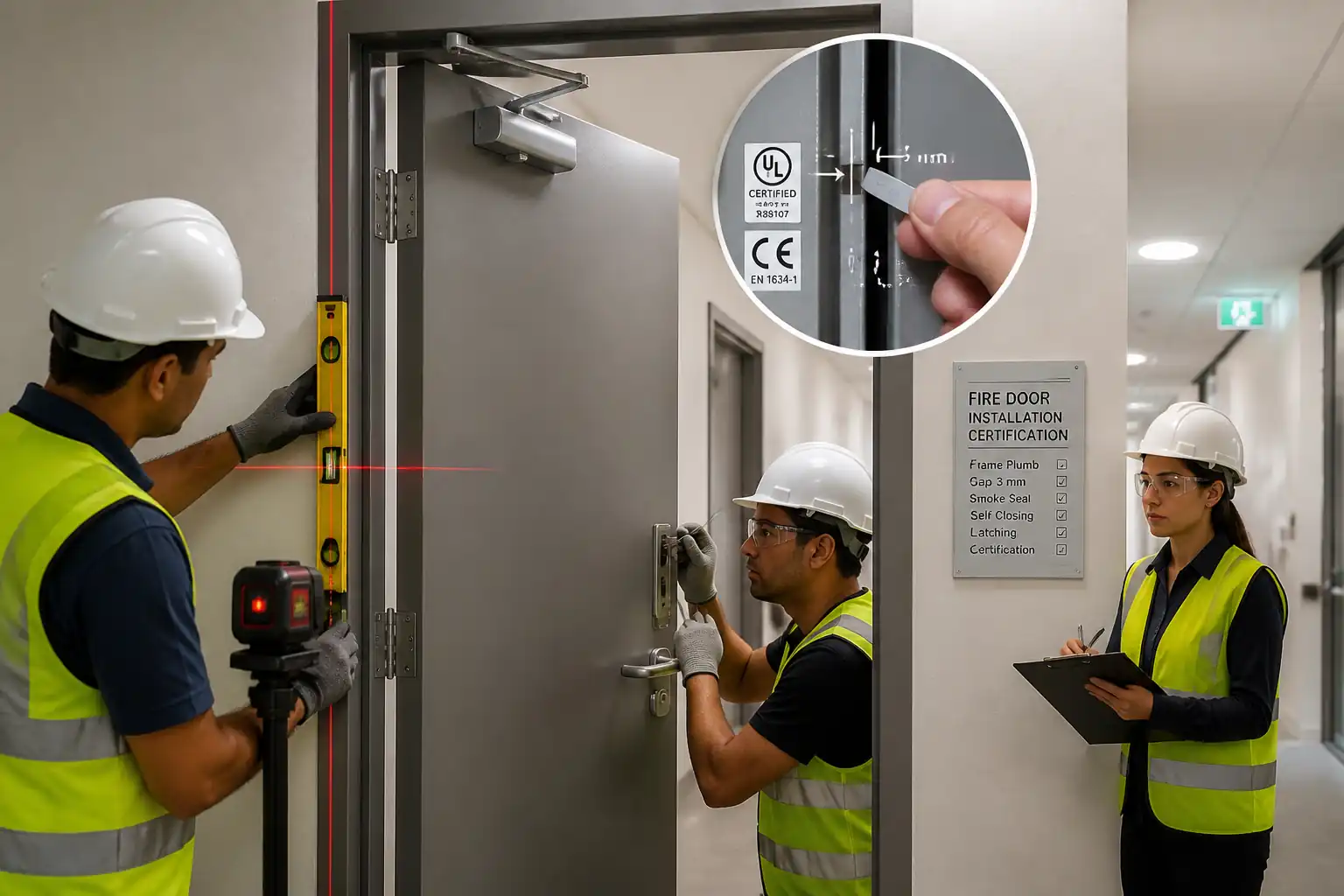
- Plumb/level: ≤1.5 mm in 2 m; diagonal difference ≤3 mm [Verify]
- Sill flatness: ≤2 mm in 1 m and ≤4 mm in full width [Verify]
- Services scan/permit to drill complete for fixing zones
- Environmental conditions: temperature and RH within sealant OEM limits
- Protection to adjacent finishes installed
Materials and Logistics
- Deliver doorsets upright on pallets; store in dry area 10–30°C, RH 35–65% [Verify]
- Verify handings and hardware preps; segregate by location
- Confirm access/hoisting and lifting plan for heavy doors (>40 kg)
Method Sequence
| Step | Activity | Description | Responsibility | Inspection / Hold Point |
|---|---|---|---|---|
| 1 | Pre-start coordination | Conduct ITP briefing, confirm approvals, and review hold/witness points; mark door locations. | PM/SE/QA-QC | Document check |
| 2 | Material receipt and inspection | Inspect delivered doorsets for damage, labels, correct ratings/handings; store per OEM. | QA-QC/Storekeeper | Visual; label check |
| 3 | Opening survey | Verify opening size, plumb, level, and substrate strength; confirm fixing zones are service-free. | SE/Supervisor | Measurement; wall scan |
| 4 | Frame isolation preparation | Apply continuous resilient isolation tape to frame contact faces; position non-bridging packers at anchor points only. | Installer | Visual |
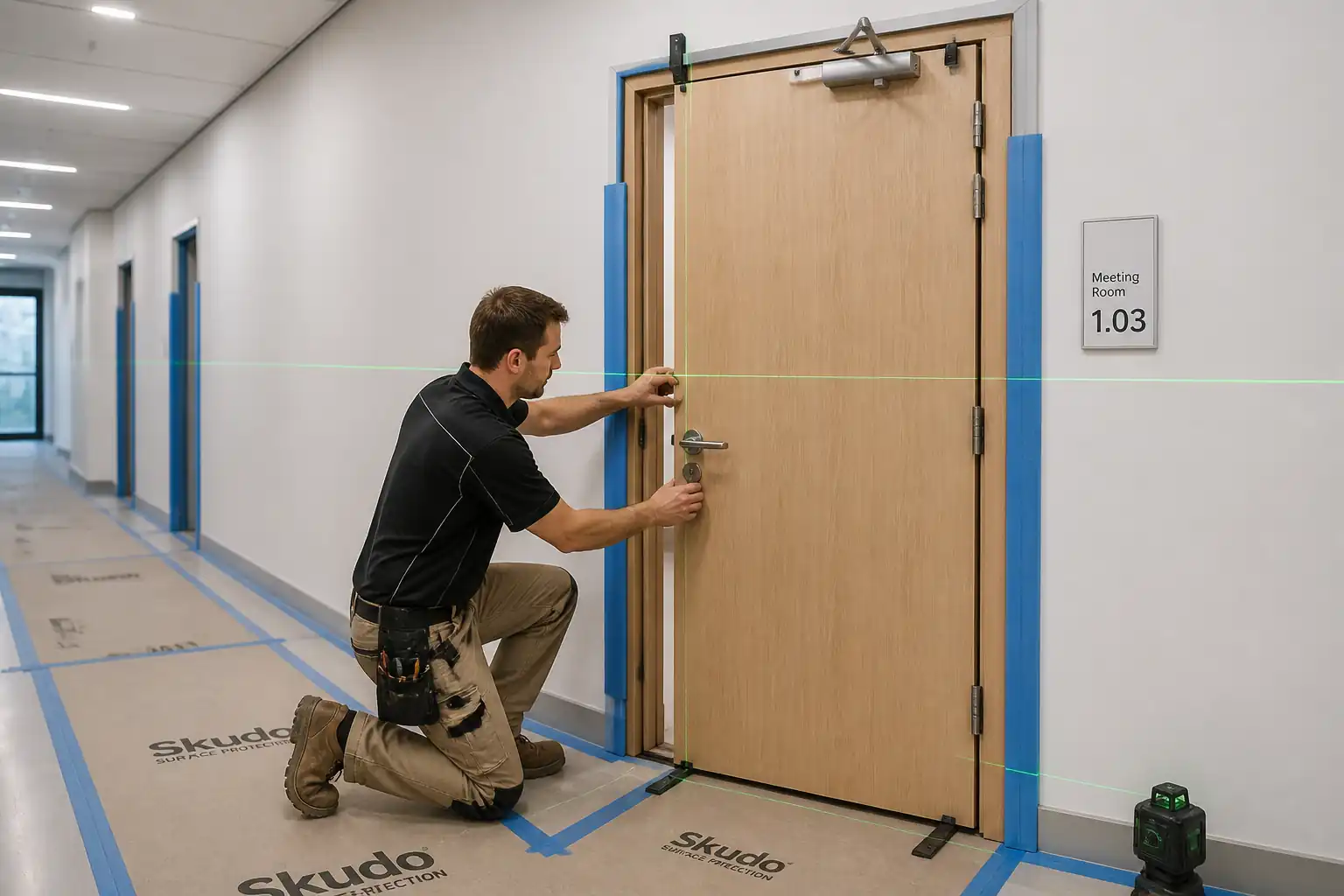
| 5 | Frame setting and temporary fixing | Place frame with spreaders; plumb/level; set clearances to floor finish. Drill fixing holes as per OEM. | Installer/SE | Measurement; level/plumb |
| 6 | Anchoring the frame | Install mechanical anchors (e.g., M8 sleeve anchors) at 450–600 mm c/c and ≤150 mm from ends [Verify]. Avoid overtightening; maintain isolation. | Installer | Visual; torque check |
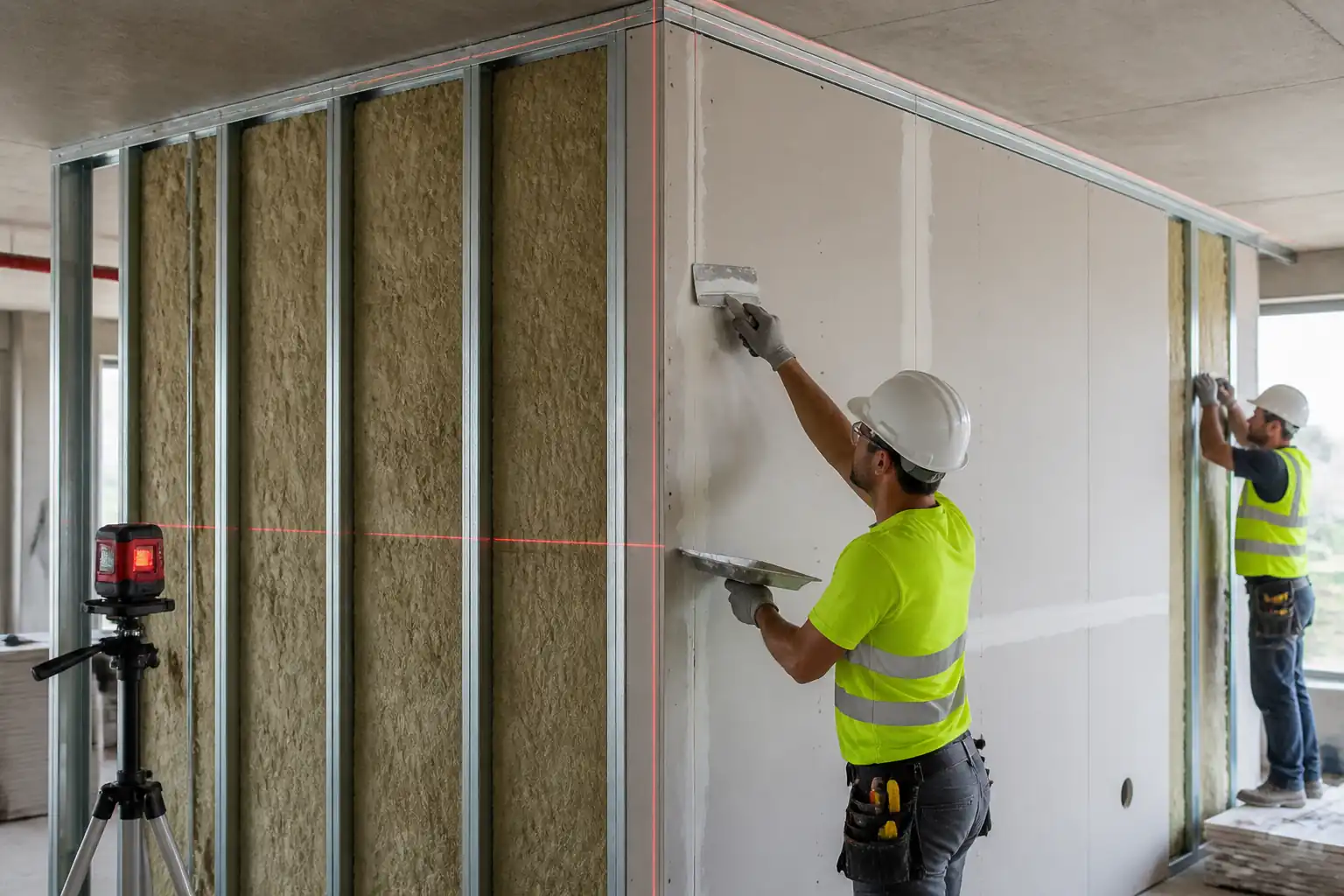
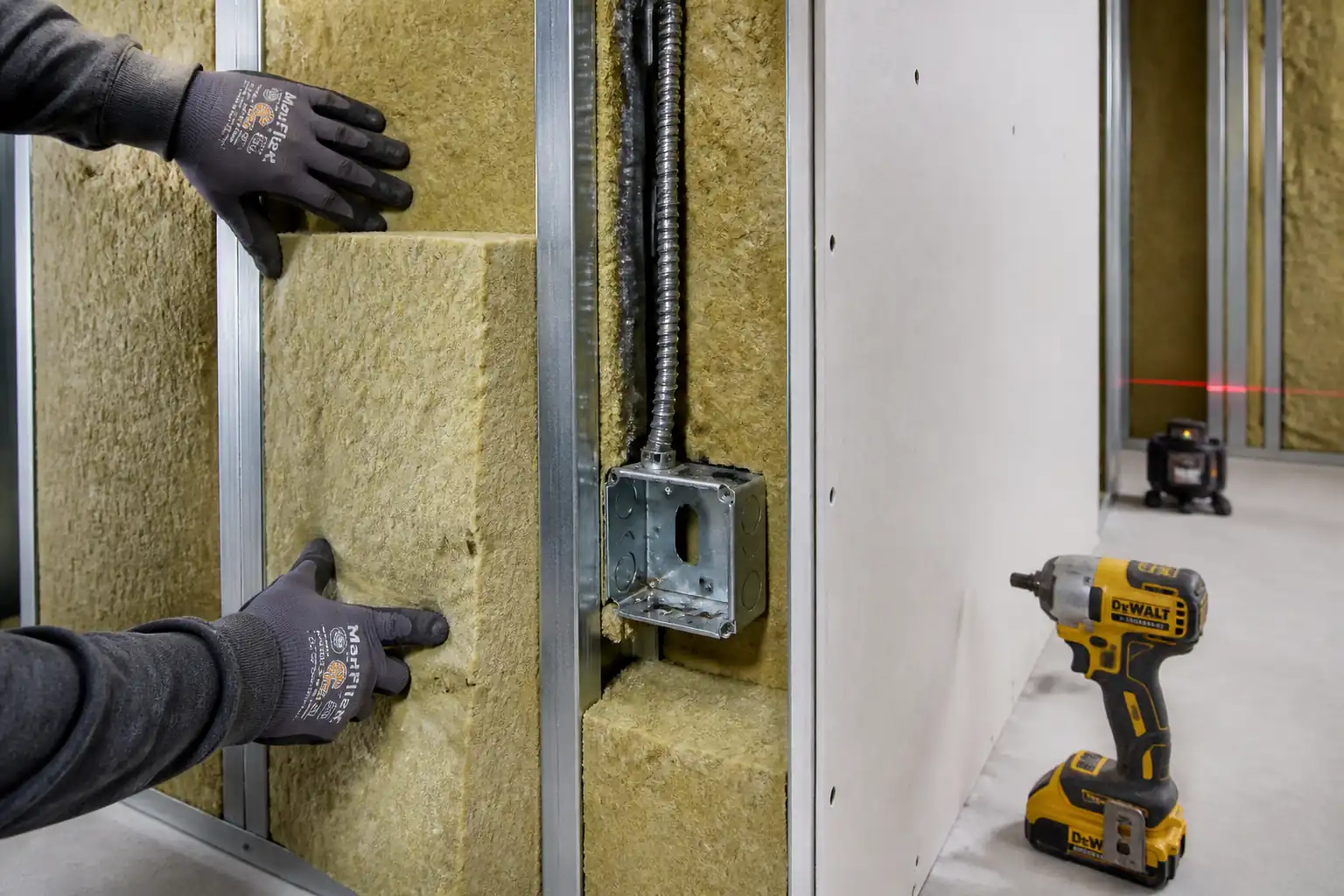
| 7 | Perimeter cavity insulation | Pack cavity with mineral wool without compression bridging frame to wall; depth to full frame depth. | Installer | Visual |
| 8 | Primary perimeter sealing | Install backer rod and apply acoustical sealant (ASTM C920/ISO 11600) as face bead; tool to concave profile. | Installer | Visual; bead continuity |
| 9 | Threshold installation | Install acoustic threshold/saddle or ramp; ensure level, fixed, and sealed to floor. Coordinate with automatic drop seal undercut. | Installer | Measurement; visual |
| 10 | Hang door leaf/leaves | Install hinges and hang leaf; set margins (head/jamb 3 ±1 mm; threshold undercut 5–8 mm pre-drop-seal setting [Verify]). | Installer | Measurement |
| 11 | Hardware installation and adjustment | Install latch/lock, closer, flush bolts, coordinators; set closer for full close and latch from 90°; adjust strikes for compression. | Installer/OEM rep (if required) | Functional test |
| 12 | Perimeter seal installation/adjustment | Fit head and jamb seals; set compression (1–2 mm typical) uniformly; verify continuity at corners. | Installer | Feeler gauge; visual |
| 13 | Double-leaf meeting stile detailing | Install astragal or interleaf seals; set flush bolts; ensure sequential closing if coordinator used. | Installer | Functional/visual |
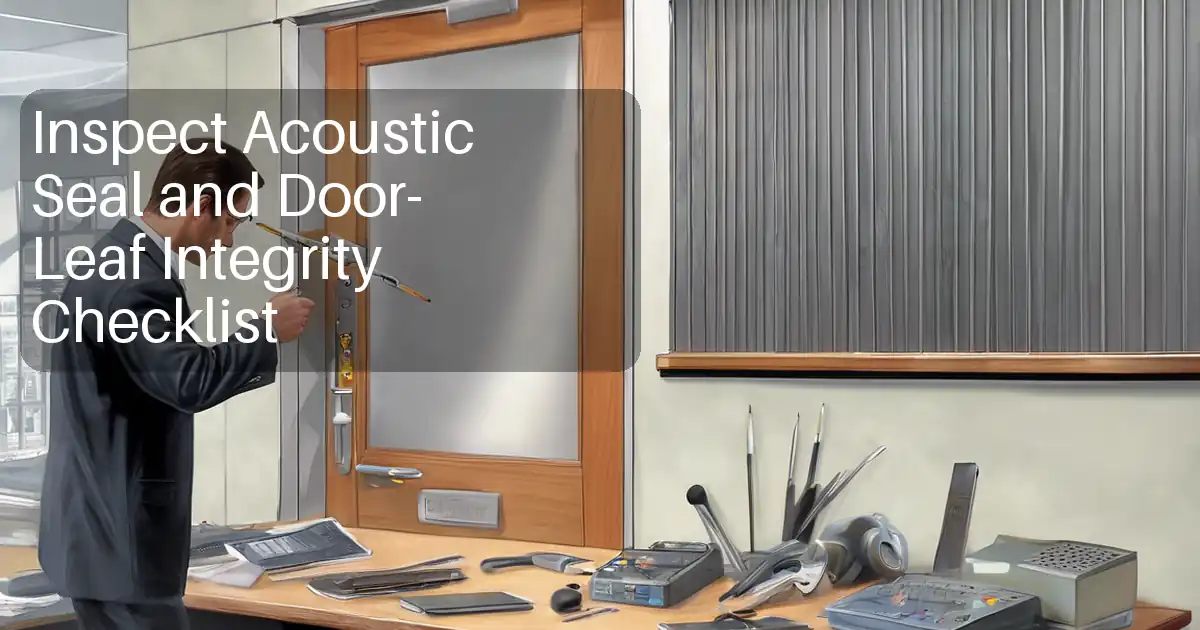
| 14 | Operational pre-checks | Cycle door 10 times; perform smoke-pencil/flashlight qualitative leak check; adjust seals/strikes as required. | Installer/QA-QC | Operational test |
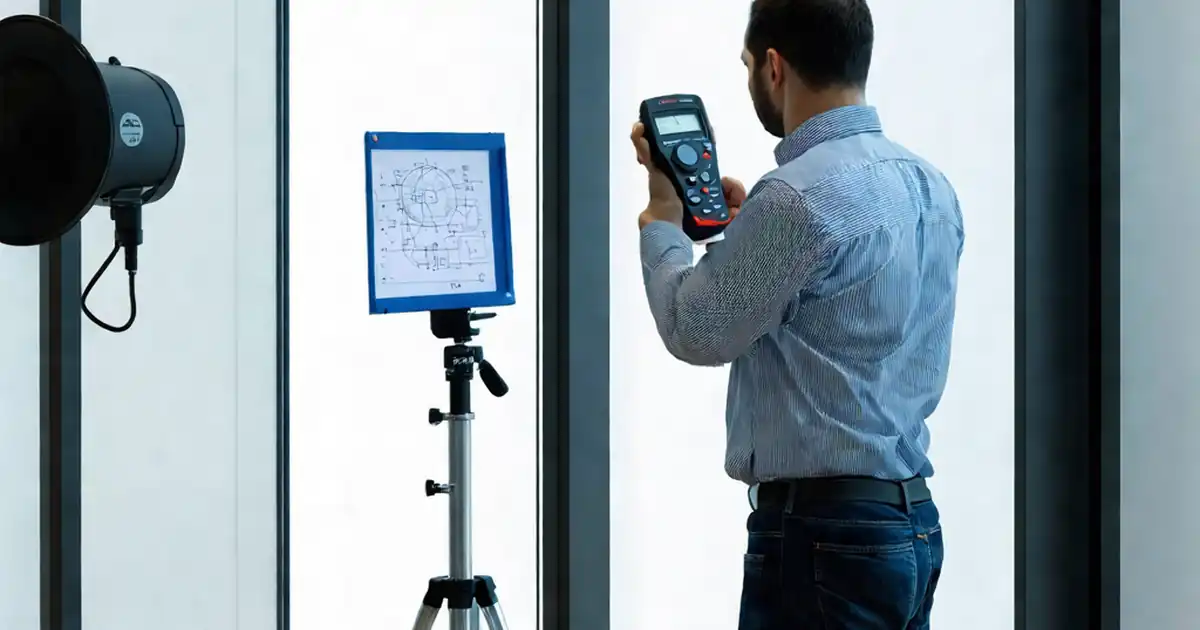
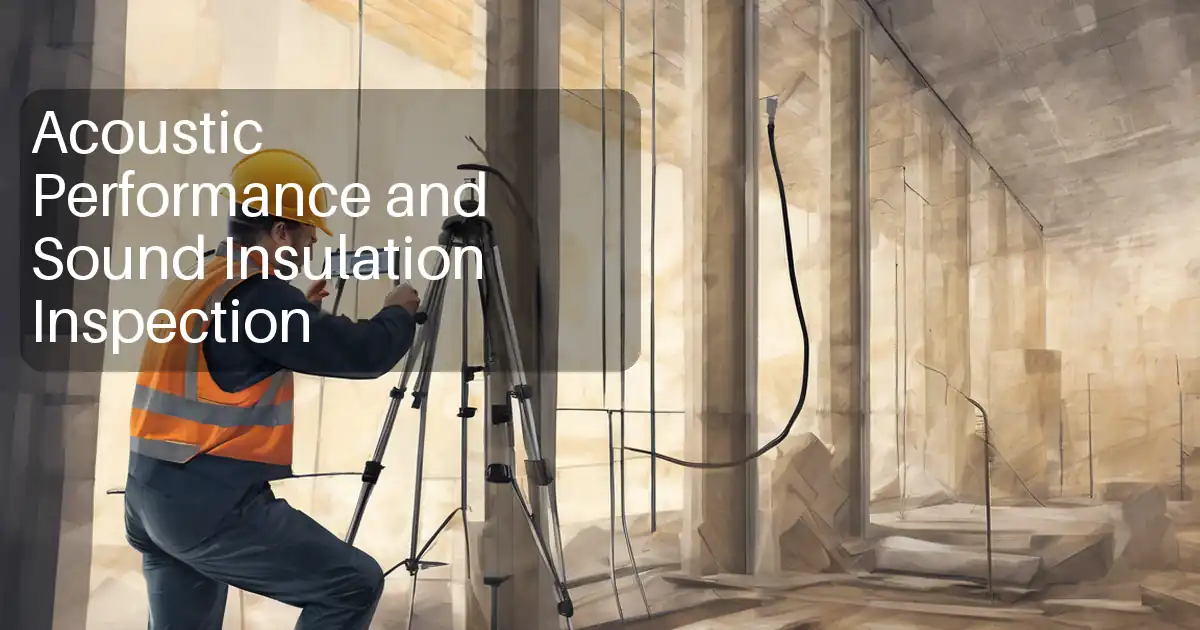
| 15 | Field acoustic verification (if specified) | ISO 16283-1/ASTM E336 test with omnidirectional source and Class 1 SLM; measure DnT,w/R′w across door. Control background noise and reverberation (T20/T30). | Acoustic Specialist | Instrument calibration; test execution |
| 16 | Final finishes and protection | Sealant touch-ups, install trims; apply protection to door faces as required. | Installer | Visual |
| 17 | Final inspection and handover | Submit IR with checklists, as-builts, O&M; obtain consultant approval. | QA-QC/Consultant | Final IR |
Health, Safety and Environment – Safety Controls
Task-Specific Hazards and Controls
- Hazard: Drilling into walls/soffits with hidden services
- Likely consequence: Electric shock, flooding, gas leak, structural damage
- Engineering/procedural control: Service scan with approved detector; review as-builts; permit to drill; set depth stops; isolate affected circuits where feasible
- Required PPE: Safety glasses, cut-resistant gloves, hearing protection, dust mask/respirator (RPE) P2/P3 as required
- Collective preventive measure: Local exhaust HEPA extraction on drills; barriers/exclusion zone
-
Inspection/permit/supervision: Permit to drill; supervisor sign-off; tool PAT/tag check [Verify per project HSE plan and local regulations]
-
Hazard: Silica dust from drilling/chiselling
- Likely consequence: Respiratory disease, eye injury
- Engineering/procedural control: On-tool extraction with HEPA vac; wet method where permitted; minimize chasing
- PPE: Tight-fitting RPE P2/P3; goggles
- Collective: Task enclosure/curtains; housekeeping with HEPA vacuum only (no dry sweeping)
-
Inspection/permit/supervision: RPE fit testing records; equipment inspection logs
-
Hazard: Manual handling of heavy doors (>40 kg)
- Likely consequence: Strains, crush injuries, dropped loads
- Engineering/procedural control: Team lift with handling aids; use door lifters/trestles; pre-plan route; remove packaging progressively
- PPE: Safety shoes with toe caps, gloves
- Collective: Mechanical aids (trolleys), clear pathways
-
Inspection/permit/supervision: Lifting plan/TBT; supervisor oversight
-
Hazard: Working at height (head/jamb installation)
- Likely consequence: Falls from ladder/step platform
- Engineering/procedural control: Use podium steps/tower scaffold; maintain three points of contact; tag and inspect access equipment
- PPE: Non-slip footwear; fall-arrest only where justified by assessment
- Collective: Guardrails on towers; exclude public below
-
Inspection/permit/supervision: Work at height permit where required; daily inspection tag
-
Hazard: Pinch and entrapment during hanging/adjustment
- Likely consequence: Hand injuries, crush points
- Engineering/procedural control: Use door jacks; keep hands clear of hinges; maintain temporary spreaders until anchored
- PPE: Cut-resistant gloves; eye protection
- Collective: Team coordination with clear signals
-
Inspection/permit/supervision: Supervisor present during hanging
-
Hazard: Power tool use (routers, drills)
- Likely consequence: Lacerations, kickback
- Engineering/procedural control: OEM guards in place; sharp bits; secure workpiece; no field routing of acoustic leaf unless OEM-approved
- PPE: Eye/ear protection, gloves
- Collective: Tool stations with clamps; RCD-protected power
-
Inspection/permit/supervision: PAT/RCD checks; competency verification
-
Hazard: Sealant/adhesive VOC exposure
- Likely consequence: Headache, dermatitis
- Engineering/procedural control: Specify low-VOC products; ensure ventilation; avoid skin contact
- PPE: Nitrile gloves; RPE if in poorly ventilated spaces per SDS
- Collective: Ventilation fans
-
Inspection/permit/supervision: Review SDS; COSHH assessment [Verify per project HSE plan and local regulations]
-
Hazard: Elevated noise during acoustic testing
- Likely consequence: Hearing damage; disturbance to occupants
- Engineering/procedural control: Notify building users; isolate test area; limit exposure time; use doors closed
- PPE: Class 4/5 hearing protection for crew
- Collective: Signage and barriers
-
Inspection/permit/supervision: Test permit/notification; SLM calibration check
-
Hazard: Housekeeping and trip hazards
- Likely consequence: Slips, trips, falls
- Engineering/procedural control: Keep area tidy; route cables overhead or with cable ramps
- PPE: Safety footwear
- Collective: Good lighting; daily clean-up
-
Inspection/permit/supervision: Supervisor inspections and close-out of snags
-
Emergency Preparedness
- First aid kit on site; trained first aider; spill kit for sealants/adhesives; clear egress routes
- Report and investigate incidents per project procedures.
Environmental Controls
Controls and Good Practice
- Noise management
- Plan drilling and acoustic tests within permitted hours; notify stakeholders; use low-vibration tools; temporary acoustic curtains if needed [Verify local limits]
- Dust control
- On-tool HEPA extraction; no dry sweeping; damp wipe; cover adjacent sensitive finishes
- VOC and indoor air quality
- Specify low-VOC sealants/adhesives [Verify per project]; ensure ventilation during and after application per SDS
- Waste segregation
- Segregate packaging (cardboard/plastic), metal offcuts, mineral wool, and sealant cartridges; dispose per local regulations; recycle where possible
- Material handling/storage
- Keep doors dry and flat/upright; protect from moisture; avoid prolonged exposure to sun/heat
- Spill prevention
- Use drip trays; keep absorbents in place; prevent sealant/adhesive entering drains
- Energy and resources
- Switch off idle tools; use LED task lighting; calibrate test equipment efficiently to reduce retests
- Records
- Maintain waste transfer notes; VOC product declarations; environmental inspection checklists
QA/QC
Submittals and Verification
- Certificates of acoustic performance (ISO 10140/ASTM E90) for each doorset model
- OEM installation manuals for doors, seals, thresholds, and hardware
- Calibration certificates: torque tools, laser, SLM and acoustic calibrator (≤12 months)
Workmanship Tolerances [Verify per project specifications]
- Frame plumb/level: ±1.5 mm in 2 m; head level ±1 mm; diagonals ≤3 mm
- Door margins: head/jamb 3 ±1 mm; undercut 5–8 mm before drop-seal engagement
- Anchor spacing: 450–600 mm, ≤150 mm from ends; torque per OEM
- Sealant bead: 10–15 mm face bead; continuous with proper tooling; adhesion to two sides only
Acceptance Criteria
- Components installed per approved shop drawings and OEM requirements
- Operational: door self-closes and latches from 90°; seals show uniform compression and no continuous light gaps
- Field acoustic test (if required): DnT,w or R′w meets project criterion; typically within 3–7 dB of lab Rw/STC rating [Verify per project specifications]
Hold/Witness Points
- Opening acceptance (Hold)
- Frame alignment before final anchoring (Hold)
- Perimeter sealing prior to leaf hanging (Hold)
- Pre-final test inspection (Hold)
- Field acoustic test (Hold – Consultant to witness)
- Final inspection/approval (Hold)
Records and Documentation
- Inspection Requests (IRs) at each hold/witness point
- Checklists: receipt, opening survey, frame alignment, sealing, operational checks
- Torque logs; photo records pre/post sealing
- Acoustic test report with calibration certificates
- As-built drawings and O&M manuals
- NCRs/SNAGs and close-out evidence if any
Attachments
Attachments (to be included with this Method Statement)
- Approved shop drawings and door schedules
- Manufacturer data sheets: doors, seals, thresholds, automatic door bottoms, hardware
- Certified acoustic laboratory reports (ISO 10140/ASTM E90) matching specified models
- Calibration certificates for torque tools, laser level, SLM and acoustic calibrator
- SDS for sealants/adhesives; COSHH assessments
- Checklists and IR templates (receipt, opening survey, frame alignment, sealing, operational checks)
- Sample ITP and test report format
- Risk assessment and permits (work at height, permit to drill)
- As-built template and O&M manual index
This content is a read-only public reference. Download or customize to get an editable version.
ITP preview
The first inspection activities from the linked ITP for Method Statement – Acoustic Door Installation Works:
| Activity | Inspection / Test | Acceptance Criteria | Responsibility | Record |
|---|---|---|---|---|
| Pre-start approvals | Review and approval of MS, ITP, shop drawings | Documents approved; calibrations in date | Contractor QA/QC; Consultant | Approval letters; registers |
| Material receipt and verification | Check delivery, ratings, handings, certificates | Conforms to schedule and approvals; no damage | QA/QC; Consultant (witness) | IR; delivery checklist; photos |
| Opening survey | Measure opening; verify substrate; scan for services; permit to drill | Within tolerances; permit issued | Site Engineer; Consultant | Survey sheet; permit |
Showing 3 of 11 inspection activities. View full ITP →
Related Inspection and Test Plan
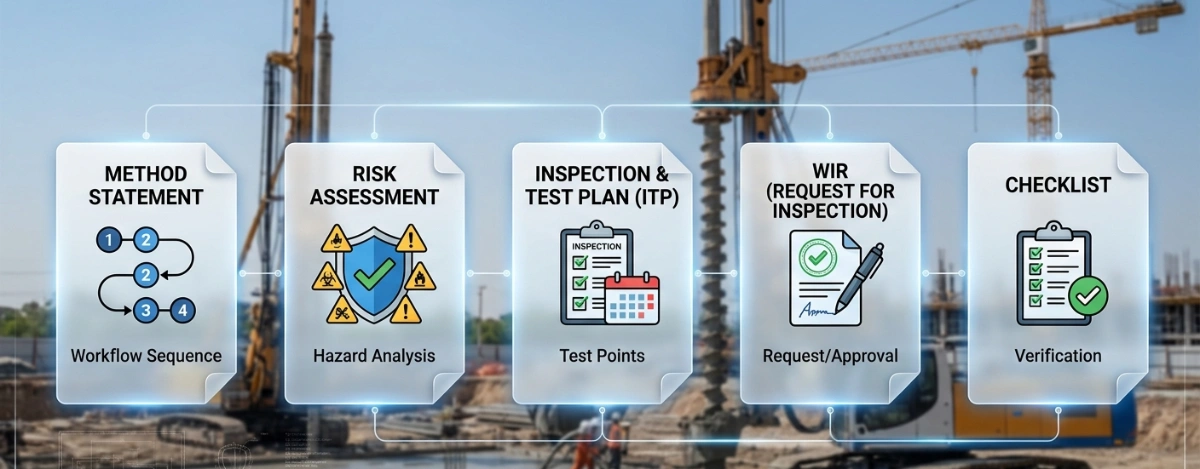
An Inspection and Test Plan (ITP) is available for Method Statement – Acoustic Door Installation Works. The ITP defines the inspection activities, acceptance criteria, hold and witness points, responsible parties, and records required to verify the work described in this method statement.
View the Method Statement – Acoustic Door Installation Works ITP →Frequently asked questions
Continue with related Quollnet resources connected to this method statement.