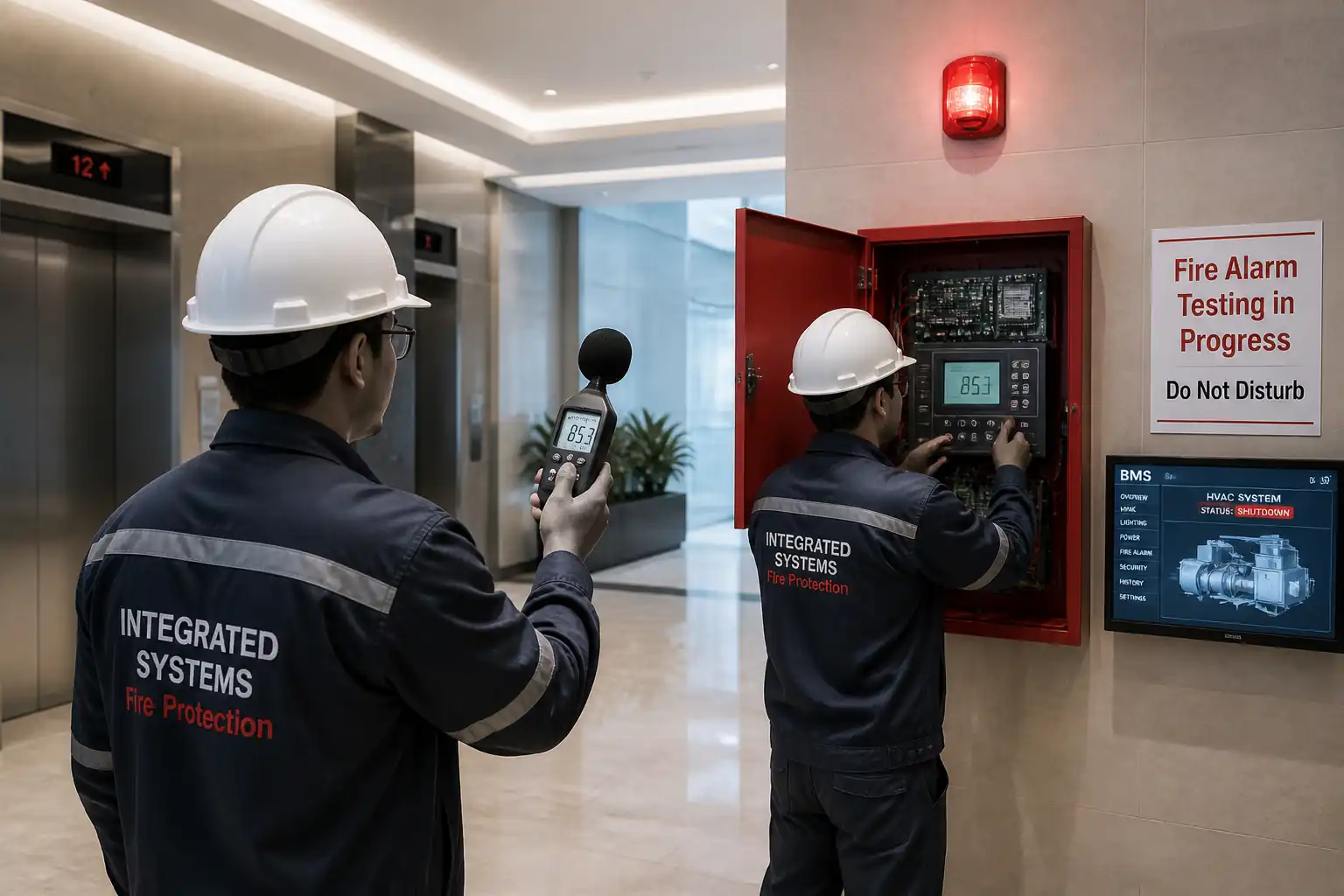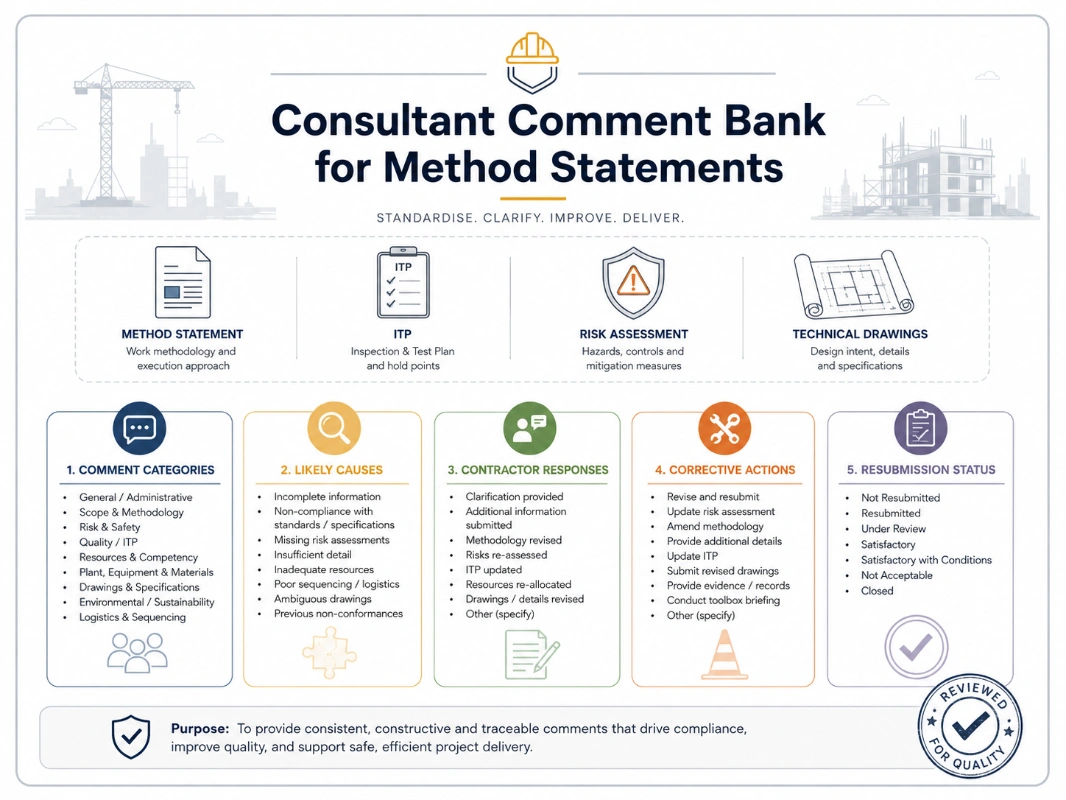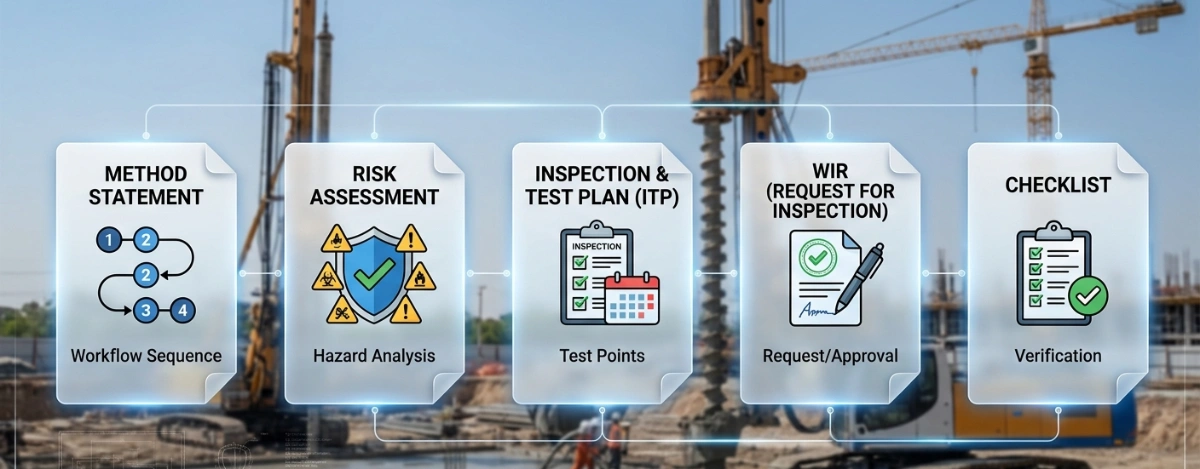

Method Statement: Elevator Door Operator and Landing Door Installation (Header, Panels, Sills, Interlocks, Closers, Light Curtain) – Method Statement
AI-assisted method statement with matching ITP, PDF download, and Excel export.
More than a static template
Unlike a downloadable Word or PDF template, this method statement is an AI-assisted editable starting point connected directly to a matching Inspection and Test Plan. Every section is structured, project-adaptable, and ready to export.
- AI-assisted drafting — Customize every section with AI for your specific project scope.
- Linked ITP — A matching inspection and test plan is generated alongside the method statement.
- Multiple export formats — Download as a formatted PDF or editable Excel spreadsheet.
- Editable starting point, not a final document — Review, verify, and adjust all content against your project requirements before use.
Static template vs. Quollnet workflow
| Feature | Static template | Quollnet |
|---|---|---|
| Project-specific content | Manual fill-in required | AI-assisted customization |
| Linked ITP | Separate document, no link | Matching ITP included |
| Export formats | Usually PDF only | PDF and Excel |
| Structured sections | Free-form layout | 13 standardized sections |
| Saved to your account | Local file only | Cloud-saved, reusable |
| Content accuracy | You verify everything | AI-assisted, you still verify |
| Cost | Often free but time-intensive | Free to customize and download |
What you can customize
When you save this method statement to your account, every section becomes editable. The following 13 sections are included:
- Scope — Defines the activity and its boundaries.
- References — Standards, specifications, and drawings.
- Responsibilities — Roles and accountabilities.
- Resources — Labour, plant, and equipment summary.
- Materials — Materials and compliance requirements.
- Equipment — Tools and equipment details.
- Prerequisites — Hold points and pre-conditions.
- Method sequence — Step-by-step construction sequence.
- Safety controls — HSE risk controls and PPE.
- Environmental controls — Environmental mitigation measures.
- QA/QC — Quality inspection and test requirements.
- ITP — Inspection and Test Plan table (has its own page).
- Attachments — Referenced drawings and documentation.
Why this method statement is used
This method statement is used to define and communicate the approved procedure for carrying out method statement: elevator door operator and landing door installation (header, panels, sills, interlocks, closers, light curtain) on site. It ensures the work is planned in advance, the correct resources and controls are in place, and all personnel understand responsibilities, sequence, quality requirements, and safety controls before work begins. It aligns site execution with the documented scope and acceptance expectations.
Who uses this method statement
This method statement is used by contractors, site supervisors, project engineers, QA/QC engineers, HSE officers, consultants, and client representatives. It serves as a shared reference for planning, execution, supervision, inspection, and approval of the activity on site.
When it is prepared and submitted
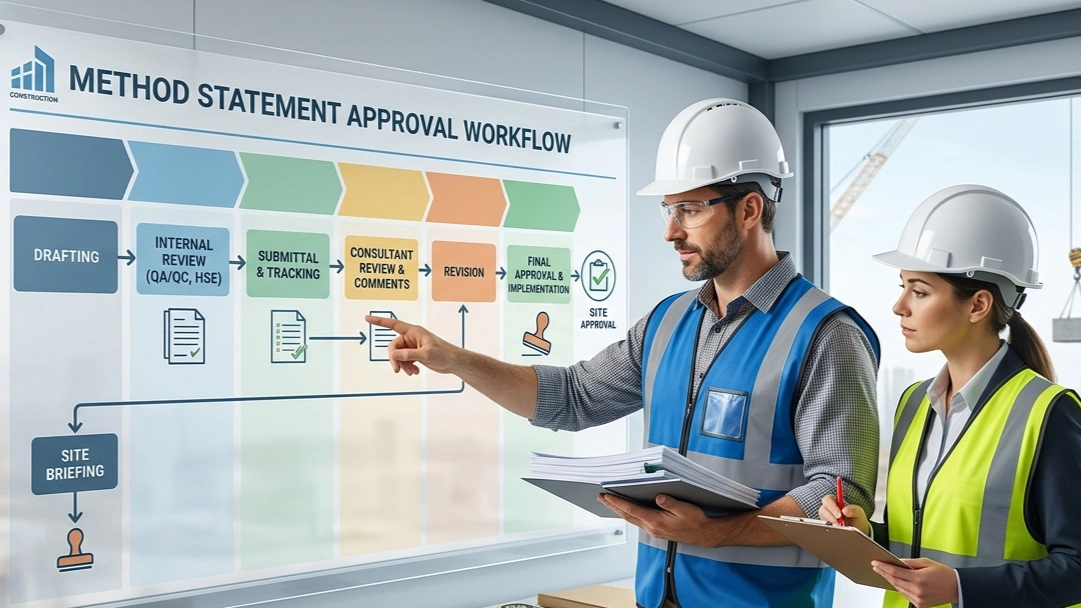
The method statement is prepared before the work activity starts and submitted as part of the pre-construction documentation package for review and approval.
Who reviews or approves it
The method statement is usually submitted to the client representative, consultant, resident engineer, or project management consultant for review and approval before the work commences.
Important approval note
This method statement is an AI-assisted editable starting point, not a pre-approved document. Before use on any project, all content must be reviewed and approved by the relevant parties (superintendent, principal contractor, or client representative) in accordance with your contract and project quality plan.
For example: if your specification requires a departure from a referenced standard, that departure must be documented and approved separately — this method statement will not capture that automatically. Always verify against your applicable drawings, specifications, and regulatory requirements.
Method statement content
Scope
Work included
- Receive, inspect, and install elevator landing door assemblies at each served floor, including frames/jambs, headers, sills, and interlocks/locks.
- Install car door header and operator, hang and align car door panels, set clutch/vanes and door operator parameters.
- Install and align landing door panels (sliding) or door closer (swing type, where specified) [Verify per project design].
- Install, wire, and commission door safety devices: light curtain (presence detection), door interlock monitoring circuits, and zone unlocking components (retiring cam/vane/actuator).
- Functional and performance testing: door opening/closing time, kinetic energy, reopening device response, and zone unlock checks.
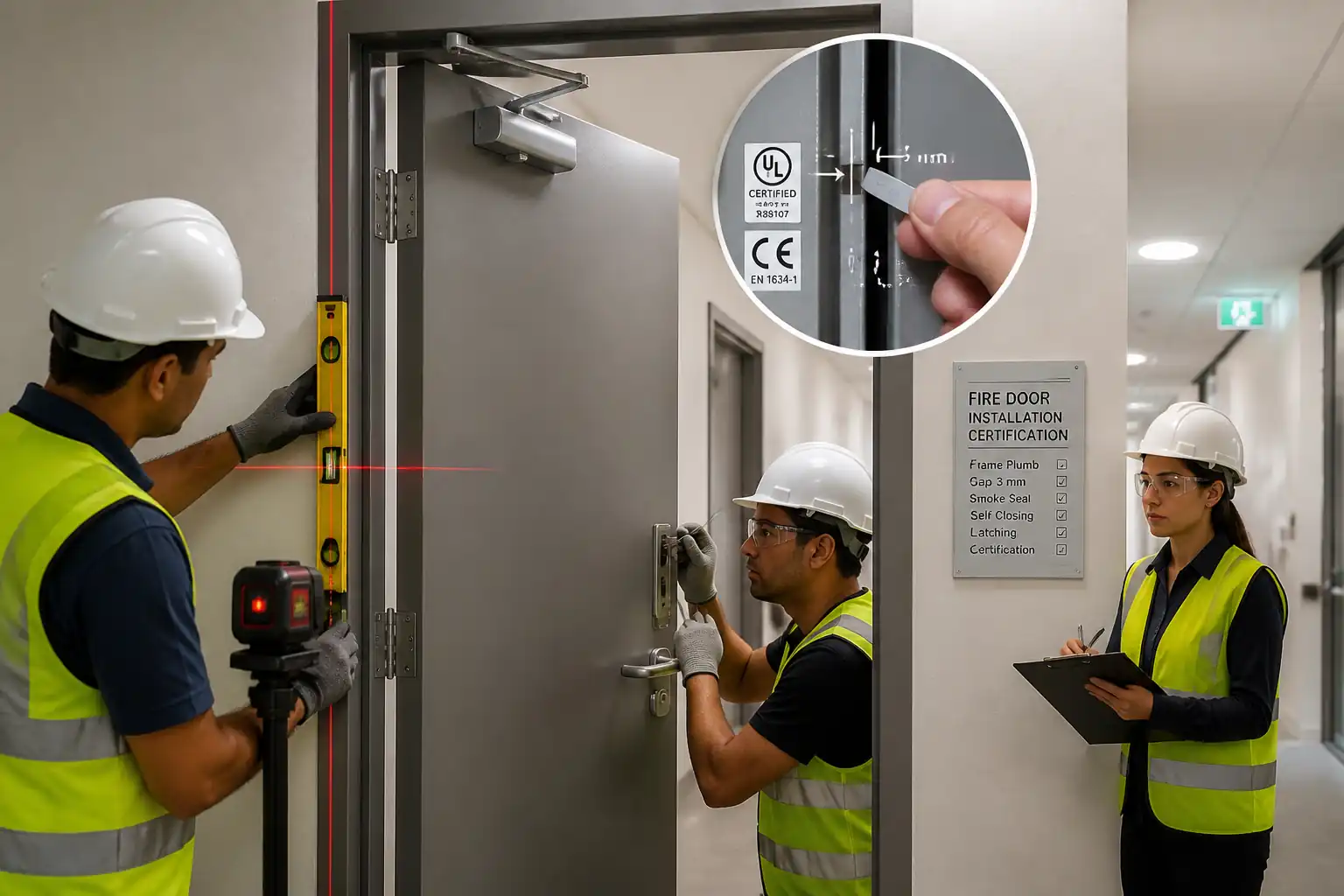
- Verification of fire-rated landing door certification and markings per specified fire resistance rating.
- Documentation: QA/QC records, ITP compliance, as-built redlines, torque logs, calibration certificates, and manufacturer O&M handover.
Exclusions
- Lift machine, car frame, guide rails, counterweight, and controller installation (by others, coordinated).
- Builder’s works to openings (structural), power feeders and main isolators (by others), unless otherwise specified.
Locations
- All lift landings and associated lift car entrances for [Verify exact floors and quantity].
Constraints/Interfaces
- Work within completed hoistway/entrances after structural openings and thresholds are handed over.
- Coordinate with electrical power availability for commissioning and with fire alarm interface testing schedule.
References
| Document Type | Reference / Number | Revision | Notes |
|---|---|---|---|
| Standard | EN 81-20, EN 81-50 | ||
| Standard | ASME A17.1/CSA B44 | ||
| Standard | EN 81-58 | ||
| Standard | EN 81-70 | ||
| Standard | IEC 60204-1 | ||
| Standard | EAD 330232 (or relevant), ETA | ||
| Contract | Spec Sections [Verify] |
Responsibilities
| Role | Responsibility | Name / Party |
|---|---|---|
| PM | Contractor PM | Contractor |
| Supervisor | Supervisor | Contractor |
| Technicians | Installers | Contractor |
| Electrician | Electrician | Contractor |
| QA/QC | QA/QC | Contractor |
| HSE | HSE | Contractor |
| OEM | OEM Rep | Supplier |
| Engineer | Consultant | Engineer |
Resources
| Resource Type | Description | Quantity | Remarks |
|---|---|---|---|
| Labor | 2–3 installers/riggers with lift-specific competencies. | Per entrance: 2–3 persons | |
| Labor | Control wiring, testing, terminations. | 1 | |
| Labor | Operator parameter tuning, complex fault diagnosis. | As required |
Materials
| Material | Specification / Grade | Quantity | Remarks |
|---|---|---|---|
| Landing door | Per approved shop drawing | Per floor | |
| Operator | OEM specification | Per car | |
| Panels | Per drawing | As scheduled | |
| Sill | Per drawing | Per entrance | |
| Light curtain | OEM | Per car | |
| Closer | Per drawing | As required | |
| Anchors | [Verify grade] | As required | |
| Cables | [Verify] | As required |
Equipment
| Equipment | Capacity / Type | Quantity | Inspection Required |
|---|---|---|---|
| 1 set | |||
| 1 set | |||
| 1 | |||
| Set | |||
| As needed | |||
| As needed |
Prerequisites
Site readiness
- Structural openings handed over with dimensional survey: clear opening width/height and plumbness within drawing tolerances [Verify].
- Hoistway clean, illuminated, and protected; pit covers/guarding in place. Edge protection at all landings.
- Power available to controller and operator circuits for commissioning; lockout/tagout procedures established.
- Approved shop drawings, setting-out drawings, and manufacturer installation manuals on site.
- Anchors/embeds locations marked and checked for edge distances and reinforcement conflicts [Verify via scanning where required].
Permits and approvals
- Permit to work at height/near shaft and energized circuits [Verify per project HSE plan and local regulations].
- Method Statement and ITP approved by Engineer/Consultant.
- Calibration certificates for instruments available.
Materials and logistics
- Material delivery inspected for damage and certification (including EN 81-58 fire test reports and rating labels).
- Storage in dry, secure area; panels kept vertical with protective edge guards; avoid distortion.
- Lifting plan for heavy panels/headers; route clear of public areas.
Coordination
- Interface confirmed with builder’s finish levels at landings (FFL), thresholds, and car sill alignment.
- Fire alarm integration plan for door behavior testing (if required by spec) coordinated with FA contractor.
- Accessibility requirements (EN 81-70) reviewed for door opening width and dwell times [Verify].
Method Sequence
| Step | Activity | Description | Responsibility | Inspection / Hold Point |
|---|---|---|---|---|
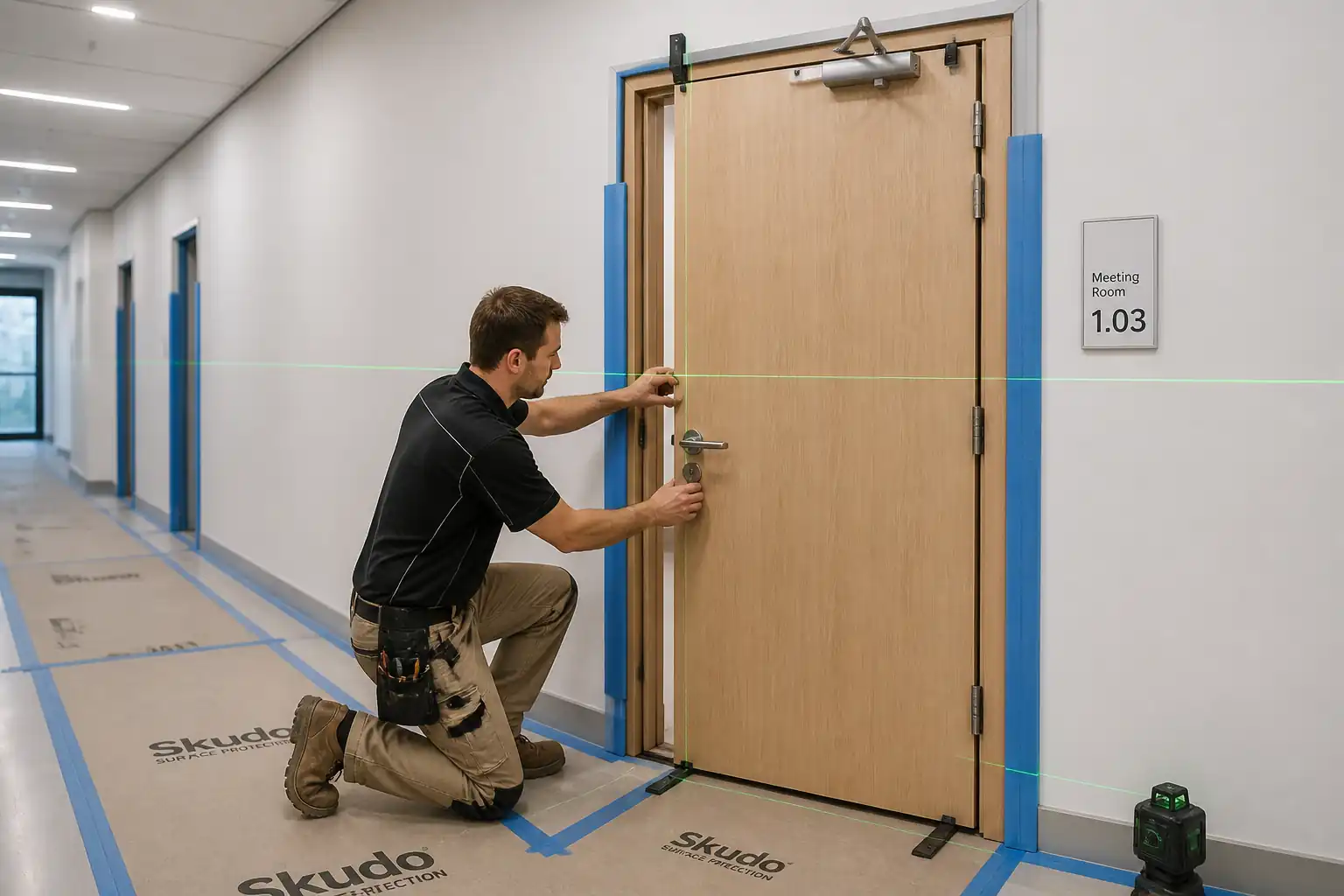
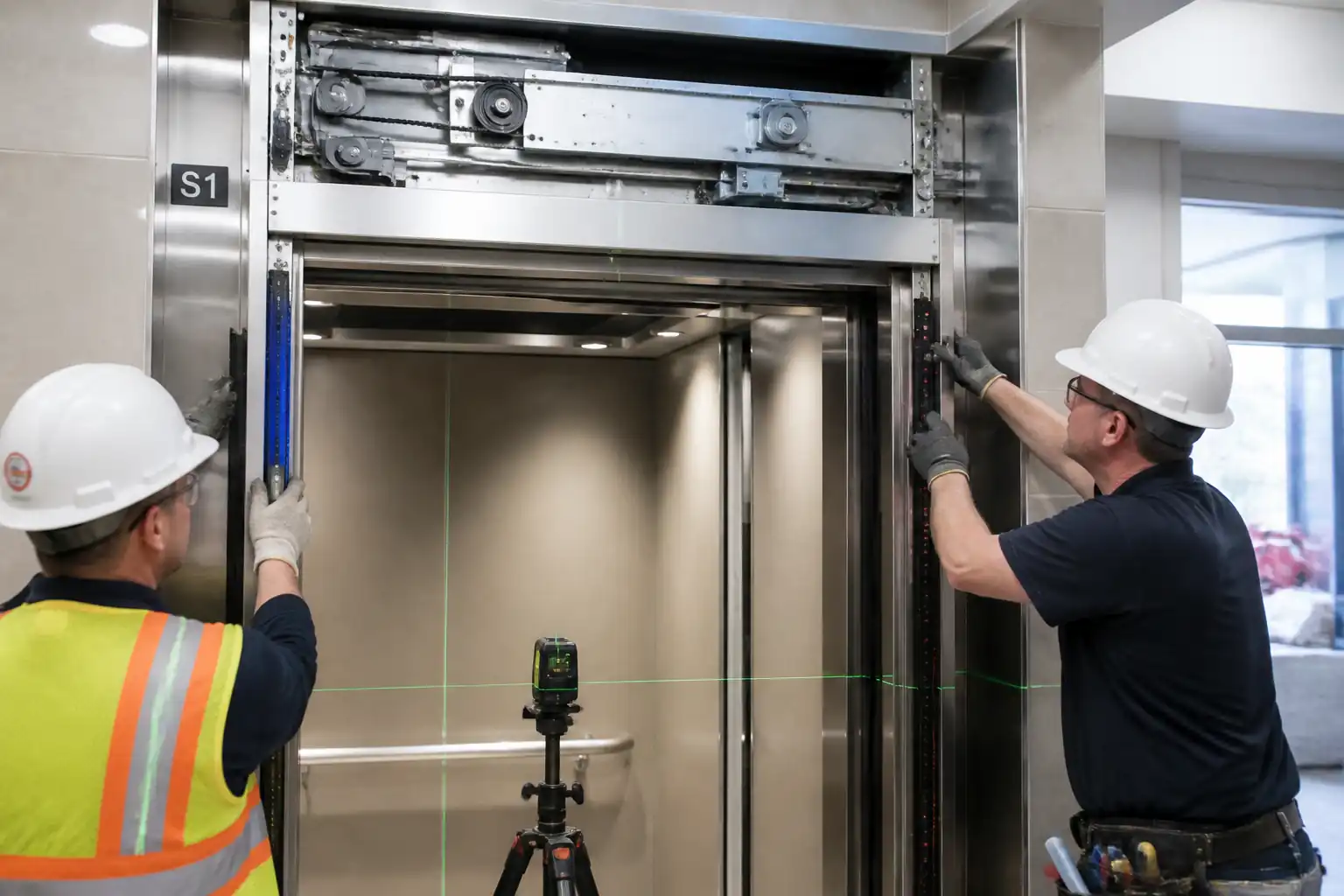
| 1 | Setting-out and verification | Mark door frame centerline, sill line, and header elevation using laser level; verify structural opening dimensions and plumb. | Supervisor | Dimensional check |
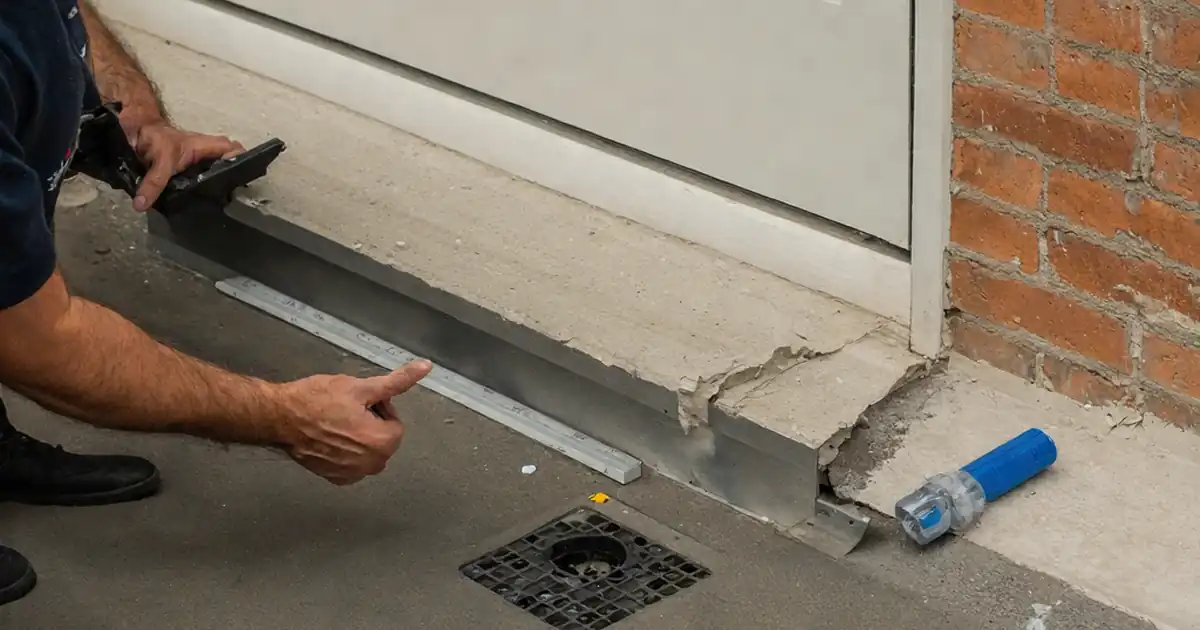
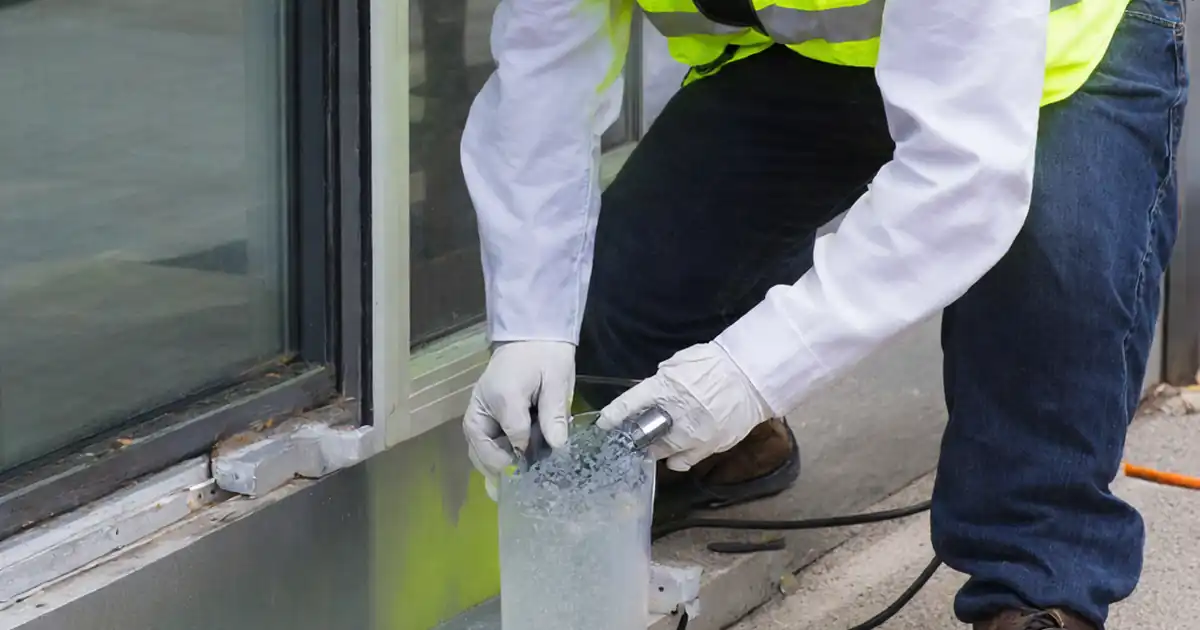
| 2 | Install landing sill/threshold | Position sill on prepared substrate; shim to level; drill and fix with ETA anchors or chemical anchors; grout/fill if required. | Installer | Levelness/straightness |
| 3 | Install landing frames/jambs and header/transom | Erect frame and header; clamp and plumb; drill and fix through slots using specified anchors; set gaps to wall finishes as per drawings. | Installer | Fixing inspection |
| 4 | Fit landing interlock/lock mechanism | Install interlock body, keeper/roller, and alignment features; connect lock monitoring switches; verify key release function. | Installer/Electrician | Functional check |
| 5 | Install car door header and operator | Mount car header to car entrance; install operator, clutch/vane, belt/chain, cams, encoder; torque fixings to spec. | Installer | Mechanical installation |
| 6 | Hang door panels (car and landing) and adjust | Install hangers/rollers; set panel height, reveal, overlap, and clearances; ensure smooth travel on track. | Installer | Alignment check |
| 7 | Install light curtain (door detector) | Mount TX/RX columns on car door posts; align beams; route cables via flex conduits to controller; set operating mode per spec. | Electrician | Electrical and alignment |
| 8 | Wire interlocks and operator | Terminate door lock circuits, door closed contacts, operator power/control, earth bonding; label cables. | Electrician | Electrical tests |
| 9 | Operator parameterization | Set door profiles (speeds, accelerations, dwell times); teach limits; enable safety inputs; save parameter set. | Installer/OEM | Functional setup |
| 10 | Functional tests – opening/closing time | Measure door opening and closing times over full travel using stopwatch or data logger; repeat 3 cycles. | QA/QC | Performance test |
| 11 | Safety test – kinetic energy | Measure closing speed at ~25–50 mm from fully closed using KE tester; input panel mass or use integrated meter; compute KE = 1/2 m v^2. | QA/QC | Safety performance |
| 12 | Safety test – light curtain response | Interrupt beams with 50 mm diameter rod at multiple heights (approx. 50 mm, 300 mm, 900 mm, 1,500 mm) and positions across width while doors close. | QA/QC | Safety device test |
| 13 | Zone unlock check | With car outside unlocking zone, verify landing door cannot be unlocked. Move car into unlocking zone and verify mechanical unlocking and electrical lock circuit closure. Test during car motion – doors must remain locked. | QA/QC | Functional interlock test |
| 14 | Door closer adjustment (swing doors, if any) | Set closing speed, latching speed, and backcheck; verify interlock engagement. | Installer | Closer function |
| 15 | Fire-rated door certification verification | Check each landing door for permanent marking/label, rating and direction, certificate/test report (EN 81-58) matching submittals and location; verify integrity of seals and fire stops around frame as per spec. | QA/QC | Document/visual |
| 16 | Final checks, snag rectification and handover | Closeout punch list; clean finishes; apply protections; submit as-builts, O&M manuals, and test records. | Supervisor/QA | Final inspection |
Health, Safety, and Environment (HSE) – Safety Controls
Task-specific hazards and controls
1) Work at open lift shafts and edges
- Hazard: Falls from height or through openings; objects falling into shaft.
- Consequence: Serious injury/fatality; damage to equipment.
- Controls (engineering/procedural): Install rigid edge protection/guardrails at all landings; fit pit covers/shaft screens; use tool lanyards; exclusion zones below. Permit to Work at height.
- Required PPE: Helmets with chin strap, fall-arrest harness when within 2 m of unprotected edge, safety footwear, gloves, safety glasses.
- Collective preventive measure: Physical barriers and signage; controlled access with barricades.
- Inspection/permit/supervision: Daily barrier inspection; PTW approval; supervisor presence during exposure [Verify per project HSE plan and local regulations].
2) Manual handling of heavy door panels and headers
- Hazard: Musculoskeletal injury, crush points.
- Consequence: Sprains, fractures, pinch injuries.
- Controls: Use rated lifters/chain blocks/suction cups; team lifts; pre-plan lifting path; store panels upright with restraints.
- PPE: Cut-resistant gloves, safety shoes, long sleeves.
- Collective measure: Mechanical aids prioritized; clear walkways.
- Inspection/permit: Lifting equipment pre-use check; SWL tags; lifting plan briefed.
3) Drilling and anchoring into concrete/masonry
- Hazard: Silica dust, hit rebar or concealed services, flying debris, vibration.
- Consequence: Respiratory illness, service strikes, eye injury.
- Controls: Scan/approve drilling locations; use dust-extraction drills; vacuum cleanup; select ETA-approved anchors; follow MFR installation torque/curing time.
- PPE: FFP2/P2 respirator, safety glasses/face shield, hearing protection, gloves.
- Collective measure: Local exhaust ventilation; barriers to contain dust.
- Inspection/permit: Anchor installation logs; spot checks by QA; hot works permit not required unless grinding/cutting.
4) Energized circuits and moving doors during commissioning
- Hazard: Electric shock, unexpected movement/pinch.
- Consequence: Electric shock, crush injury.
- Controls: Lockout/tagout for wiring; energize only for tests with clear communication; keep hands clear of moving parts; emergency stop accessible; use OEM commissioning mode at reduced speed where available.
- PPE: Insulated gloves (where required), safety glasses.
- Collective measure: Barriers and warning signs at entrances during live testing; two-person rule.
- Inspection/permit: Electrical PTW; test equipment calibration; supervisor oversight.
5) Sharp edges and stainless finishes
- Hazard: Lacerations; finish damage causing later corrosion/appearance issues.
- Consequence: Cuts; rework.
- Controls: Deburr; apply temporary protective films; handle with edge guards; use appropriate tools.
- PPE: Cut-resistant gloves, sleeves.
- Collective measure: Protected storage racks.
- Inspection/permit: Visual checks prior to install.
6) Noise and vibration from drilling/impact
- Hazard: Hearing damage; nuisance to occupants.
- Consequence: Permanent hearing loss; complaints.
- Controls: Select low-noise methods; schedule within permitted hours; provide hearing protection; monitor noise if required.
- PPE: Earplugs/earmuffs.
- Collective measure: Acoustic barriers where feasible.
- Inspection/permit: Work hour permits; noise monitoring records [Verify].
7) Fire-stopping and compatibility
- Hazard: Inadequate fire integrity around frames.
- Consequence: Compromised fire compartmentation.
- Controls: Use approved fire-stopping systems compatible with door certification; do not drill/add holes beyond OEM limits.
- PPE: As appropriate.
- Collective measure: Fire-stopping signoff.
- Inspection/permit: Inspection by competent fire-stopping installer; records retained.
Environmental Controls
Environmental risks and mitigations
- Dust from drilling and fixing
- Control: On-tool extraction and HEPA vacuums; damp wipe surfaces after works; prevent dust migration with temporary screens.
- Waste management (packaging, metal offcuts, spent anchors)
- Control: Segregate recyclable metals and cardboard; dispose of chemical anchor cartridges as hazardous waste per SDS; maintain waste transfer notes.
- Noise and working hours
- Control: Use low-noise anchors where feasible; comply with site hours; provide advance notice to stakeholders.
- Chemical use (cleaners, adhesives, paints where touch-up specified)
- Control: Use low-VOC products; spill kits available; store in bunded areas; SDS available.
- Energy consumption during testing
- Control: Limit idle energization; switch off equipment when not in use.
- Protection of finished surfaces
- Control: Use protective films and coverings; no grinding/welding near stainless finishes; clean with non-abrasive agents.
[Verify per project HSE plan and local regulations]
Quality Assurance and Quality Control
QA/QC procedures
- Use only approved materials per submittals; verify batch/serial numbers for operator and detectors.
- Calibrations: KE tester, multimeter, IR tester, torque wrench – valid certificates (<12 months) retained in QA file.
- Anchors: Record type, diameter, embedment depth, edge distance, torque, and curing time where applicable. Perform proof pull-tests if specified [Verify frequency].
- Dimensional controls: Record sill levelness, frame plumb/level, panel clearances, and overlap per OEM.
- Electrical tests: Continuity, polarity, IR, and earth bonding with results logged.
- Functional tests: Door timing, KE, light curtain response, zone unlock, closer performance (if applicable). Repeat after adjustments.
- Nonconformance management: Log NCRs; implement corrective actions; re-test until acceptance.
- Documentation: ITP sign-offs, checklists, photos, torque logs, redlined drawings, material certificates, EN 81-58 fire door certificates, operator data plates, and O&M manuals.
Attachments
Attachments and records to be submitted
- Approved shop drawings and entrance schedules (rev-controlled).
- Manufacturer installation manuals for operator, doors, interlocks, and light curtain.
- Material approvals and certificates, including EN 81-58 landing door fire resistance test reports and product labels mapping.
- Calibration certificates: torque wrench, KE tester, multimeter, IR tester, earth bond tester.
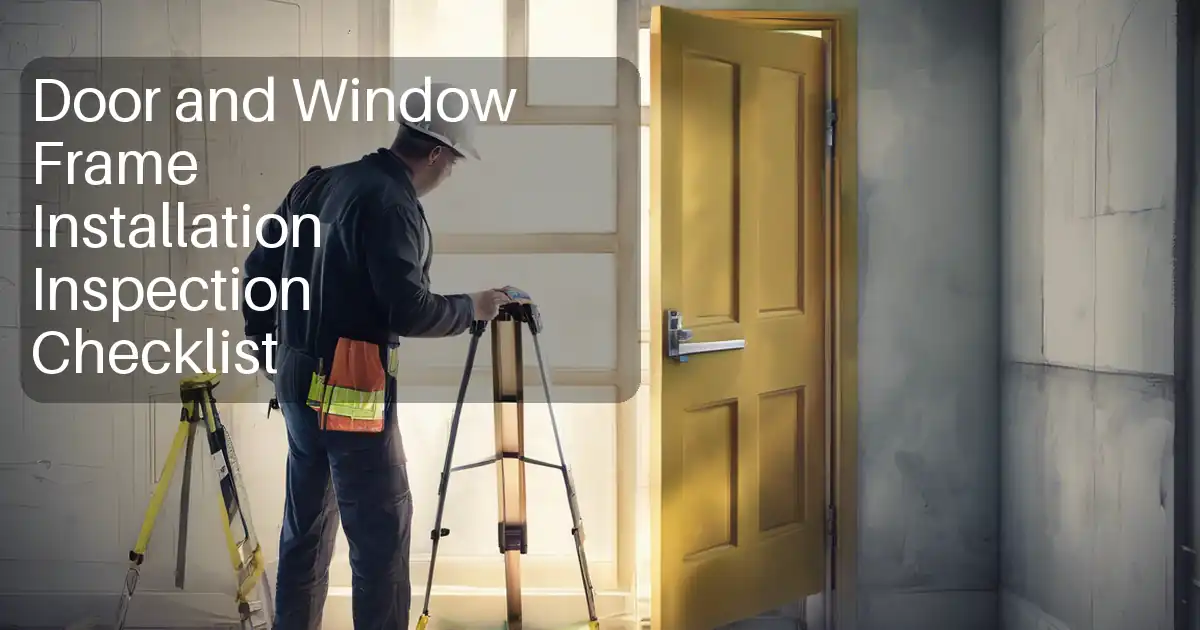
- Checklists: setting-out, sill/frame installation, interlock function, electrical tests, detector tests.
- Test records: door time tests, kinetic energy test certificates, light curtain response logs, zone unlock records.
- Anchor installation and torque logs; proof test reports (if specified).
- As-built drawings and O&M manuals including parameter sets and spares list.
- HSE documents: PTWs, risk assessments, toolbox talk attendance.
- Photo records of key hold/witness points.
This content is a read-only public reference. Download or customize to get an editable version.
ITP preview
The first inspection activities from the linked ITP for Method Statement: Elevator Door Operator and Landing Door Installation (Header, Panels, Sills, Interlocks, Closers, Light Curtain):
| Activity | Inspection / Test | Acceptance Criteria | Responsibility | Record |
|---|---|---|---|---|
| Receiving inspection – doors, operator, detectors | Verify quantity, damage, data plates, certificates (EN 81-58 for landing doors) | Matches submittals; no damage; certificates available. | QA/QC | Material Receiving Report |
| Setting-out and opening verification | Width/height/plumb/level survey | Within drawing tolerances [Verify]. | Supervisor/QA | Setting-out Sheet |
| Sill installation | Levelness/straightness; fixing type and torque | Level ±0.5 mm/m; anchors per ETA; torque per MFR. | QA/QC | Sill Checklist & Torque Log |
Showing 3 of 14 inspection activities. View full ITP →
Related Inspection and Test Plan
An Inspection and Test Plan (ITP) is available for Method Statement: Elevator Door Operator and Landing Door Installation (Header, Panels, Sills, Interlocks, Closers, Light Curtain). The ITP defines the inspection activities, acceptance criteria, hold and witness points, responsible parties, and records required to verify the work described in this method statement.
View the Method Statement: Elevator Door Operator and Landing Door Installation (Header, Panels, Sills, Interlocks, Closers, Light Curtain) ITP →Frequently asked questions
Continue with related Quollnet resources connected to this method statement.