
Inspection and Test Plan for Method Statement: Temporary Fuel Storage and Equipment Refueling Operations
AI-assisted inspection and test plan connected to a method statement, with PDF and Excel export.
More than a static template
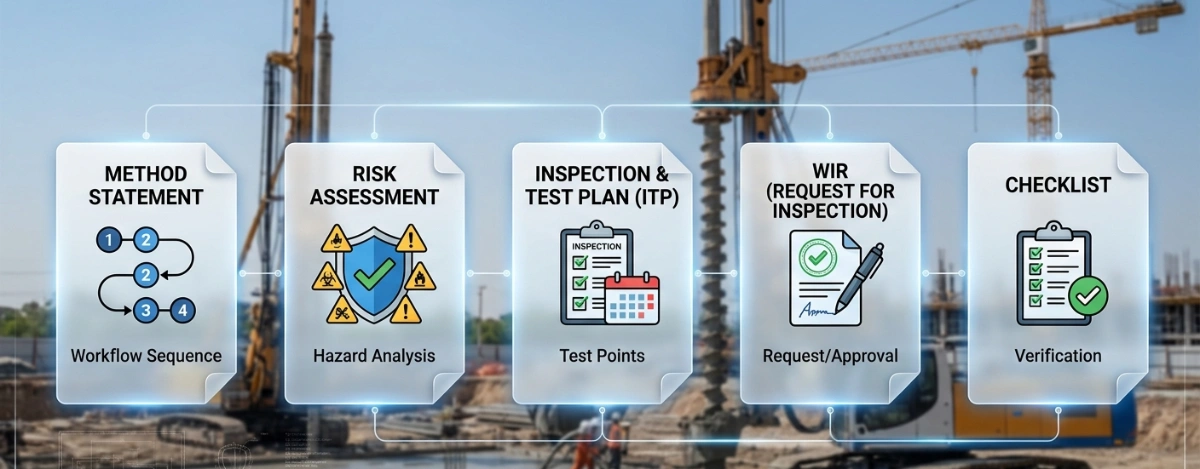
Unlike a downloadable Word or PDF template, this ITP is an AI-assisted editable starting point directly connected to its method statement. Every inspection activity, hold point, and acceptance criterion is structured and ready to adapt to your project.
- AI-assisted customization — Tailor inspection activities and acceptance criteria to your specific project scope.
- Linked method statement — This ITP is connected to the corresponding method statement describing the work sequence.
- Multiple export formats — Download as a formatted PDF or editable Excel spreadsheet.
- Editable starting point, not a final document — Review and verify all content against your project specifications and standards before use.
What you can customize
When you save this ITP to your account, every inspection row becomes editable. You can add, remove, or modify:
- Inspection activity — Description of what is being inspected.
- Inspection type — Hold point (H), Witness point (W), Review (R), or Monitor (M).
- Responsibility — Contractor, subcontractor, engineer, or client.
- Frequency — How often the inspection occurs.
- Acceptance criteria — Referenced standard or specification requirement.
- Records — Forms, test reports, or checklists required as evidence.
Why this ITP is used
To verify that temporary fuel storage and refueling installations meet safety, environmental, and quality requirements before and during operation.
Who uses this inspection and test plan
QA/QC engineers, site engineers, HSE officers, supervisors, and client representatives.
When this ITP is prepared and submitted
From site preparation through commissioning and throughout routine operation and maintenance.
Who receives or approves this ITP
Client/Engineer for approval; third-party inspector as required.
Inspection scope
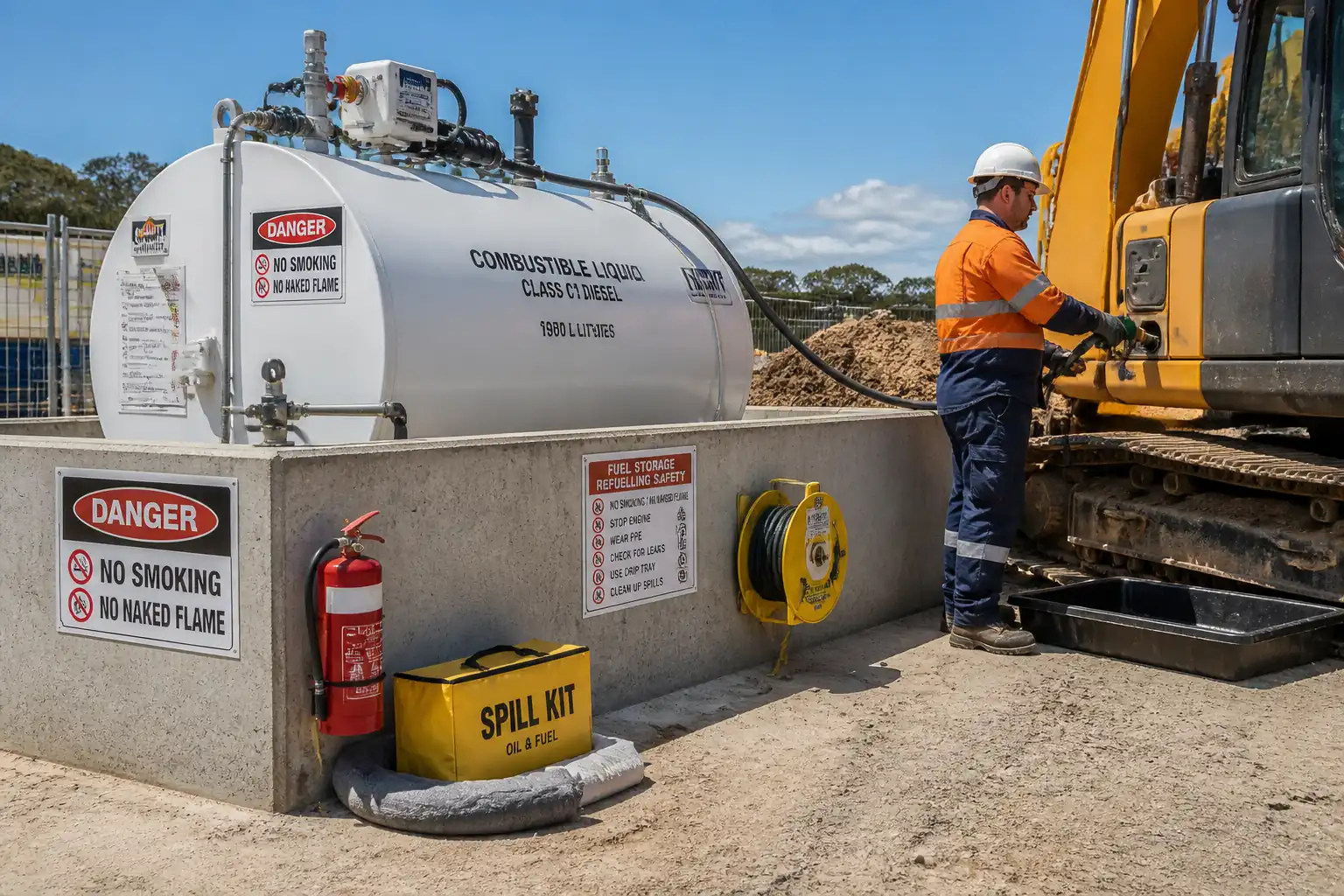
Covers base prep, bund construction and integrity testing, tank receipt/placement, piping/hoses testing, earthing/bonding, overfill/alarms, firefighting/spill equipment, first-fill checks, and routine inspections.
Typical hold, witness, and review points
Hold: bund hydrotest, overfill/alarm test, initial fuel receipt. Witness: tank receipt, placement, hose pressure test, earthing tests, firefighting/spill equipment placement.
Typical inspection records
FDT reports, bund test certificate, electrical test sheets, pressure test reports, commissioning records, routine checklists, fuel logs, discharge logs, calibration certificates.
Important approval note
This ITP is an AI-assisted editable starting point, not a pre-approved document. Before use on any project, all inspection activities, hold points, and acceptance criteria must be reviewed and approved by the relevant parties (superintendent, principal contractor, or client representative) in accordance with your contract and project quality plan.
Always verify acceptance criteria against your applicable drawings, specifications, and regulatory requirements. Hold points must be confirmed with the relevant authority before work proceeds past that point.
Inspection and test plan
| Activity | Inspection / Test | Acceptance Criteria | Responsibility | Record |
|---|---|---|---|---|
| Base preparation and compaction | Field density/plate load (if required) | Compaction ≥95% MDD; level tolerance ±10 mm; slope 1–2% [Verify]. | Site Engineer / QA/QC | FDT reports; survey records |
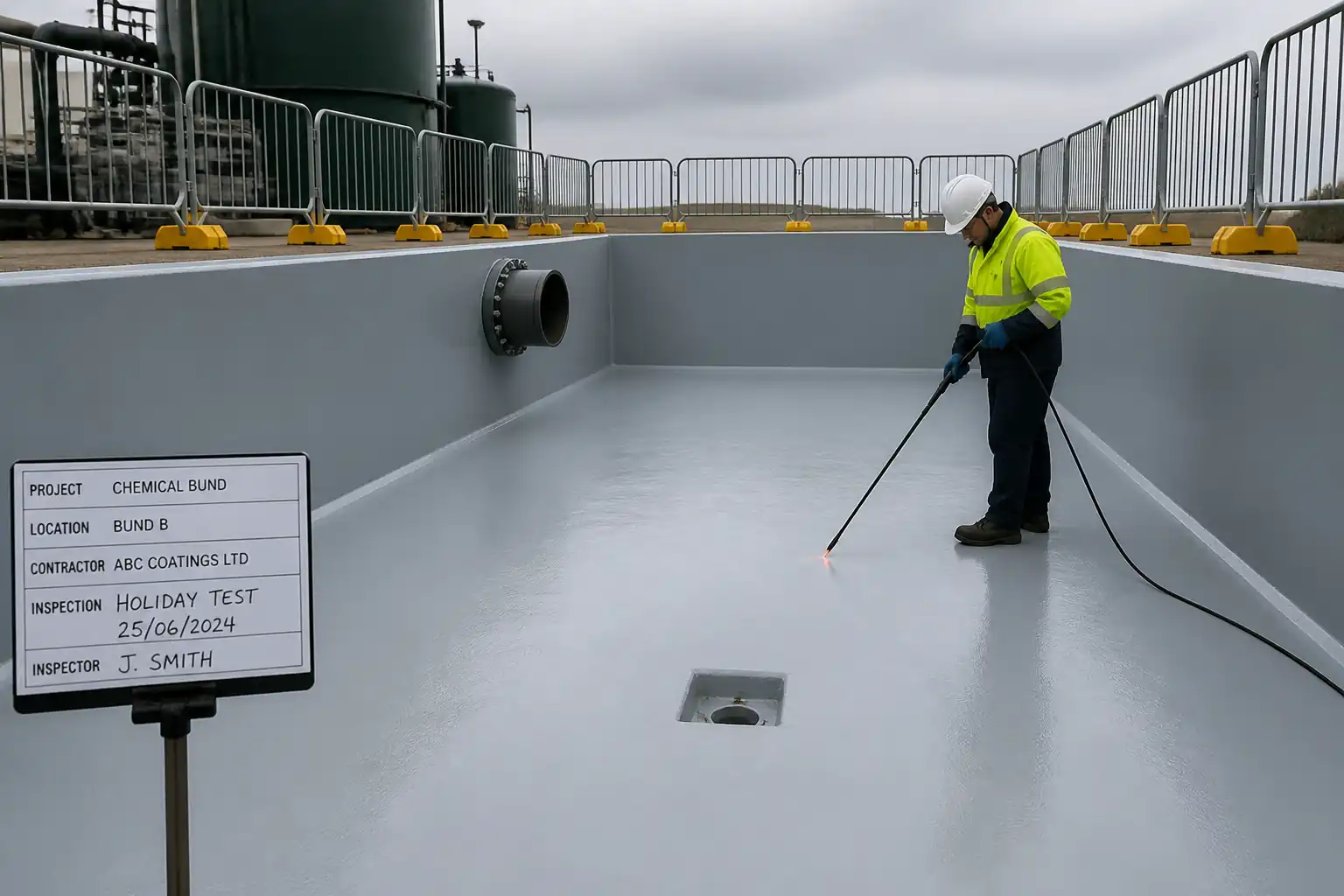
| Bund construction and liner installation | Visual/spark test | No defects; full continuity; penetrations sealed. | Site Engineer / QA/QC / Third-Party (as required) | Inspection report |
| Bund hydrostatic integrity/capacity test | 24 h water test | No visible leakage; corrected loss ≤0.5%; capacity per requirement [Verify]. | QA/QC / Client Rep | Bund test certificate |
| Tank receipt inspection | Checklist vs datasheet | Correct certification; no damage; accessories complete. | Mechanical Supervisor / QA/QC | Receipt checklist; COCs |
| Tank placement and anchoring | Level/torque check | Level within ±5 mm; anchors to torque spec [Verify]. | Lifting Supervisor / QA/QC | Placement record |
| Piping/hoses installation | Pressure/leak test | 1.5× operating pressure, 10 min hold, no leaks [Verify]. | Mechanical Supervisor / QA/QC | Pressure test report |
| Earthing and bonding | Continuity/resistance | Bonding resistance <10 Ω [Verify]. | Electrical Supervisor / QA/QC | Electrical test sheet |
| Overfill protection and alarm test | Simulated high-level | Alarm/trip at setpoint (90–95% typical) [Verify]; audible/visual working. | Mechanical/E&I / QA/QC | Commissioning report |
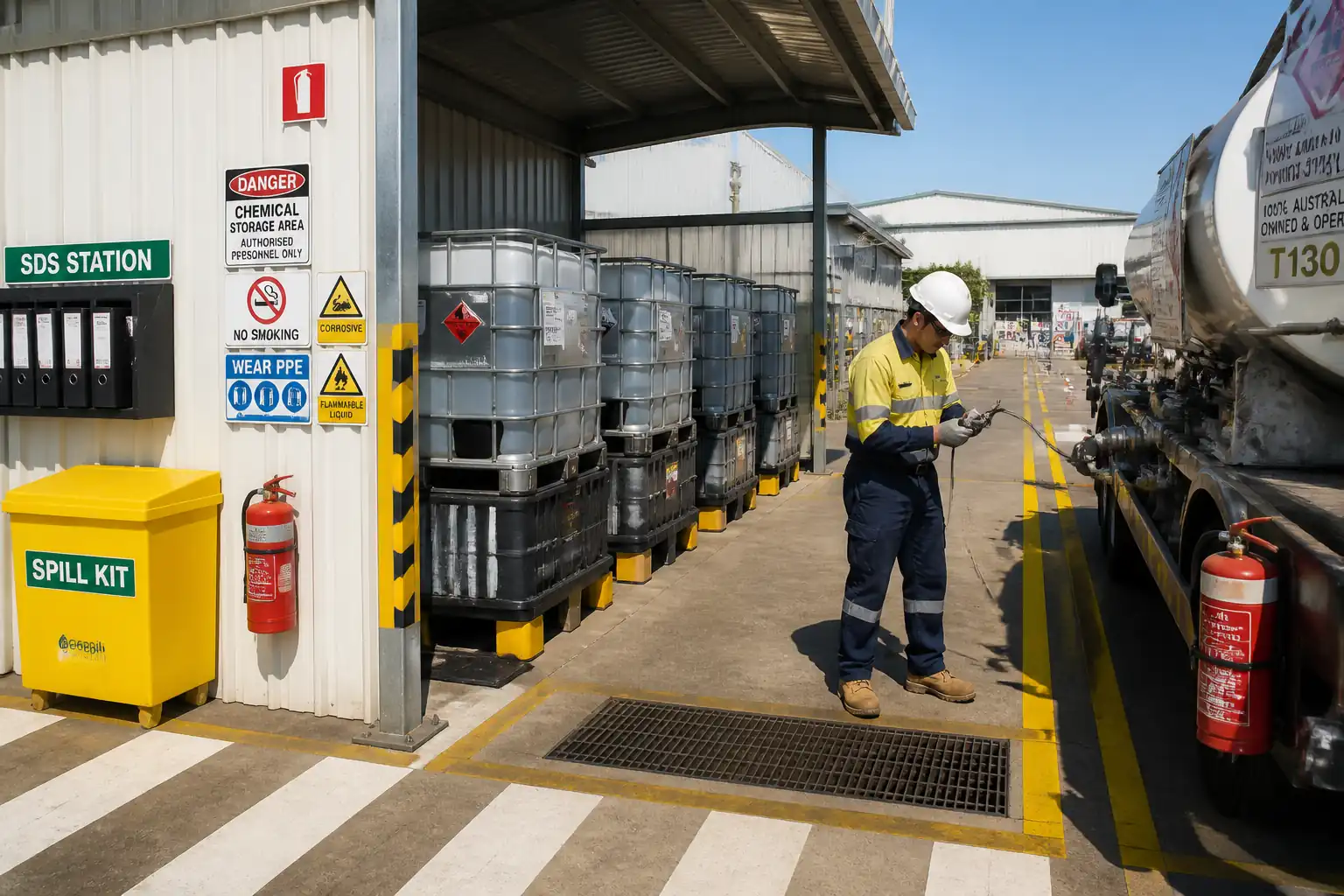
| Firefighting and spill equipment placement | Readiness check | Per NFPA 10; kits fully stocked and accessible. | HSE / QA/QC | HSE checklist |
| Initial fuel receipt and system leak check | Operational leak check and reconciliation | No leaks; variance ≤0.5% [Verify]; bonding in use. | Fuel Controller / QA/QC / Client Rep | First-fill record |
| Routine inspections (daily/weekly/monthly) | Checklists; meter/bond tests | Within limits; actions closed within 7 days [Verify]. | Fuel Controller / QA/QC / HSE | Routine checklists |
| Bund water discharge authorization | Sheen test; pH (if required) | No visible sheen; authorized permit/record. | Environmental Officer / QA/QC | Discharge log |
This table is a read-only public reference. Download the PDF or Excel version, or customize this ITP to edit it for your project.
Frequently asked questions
Related method statement
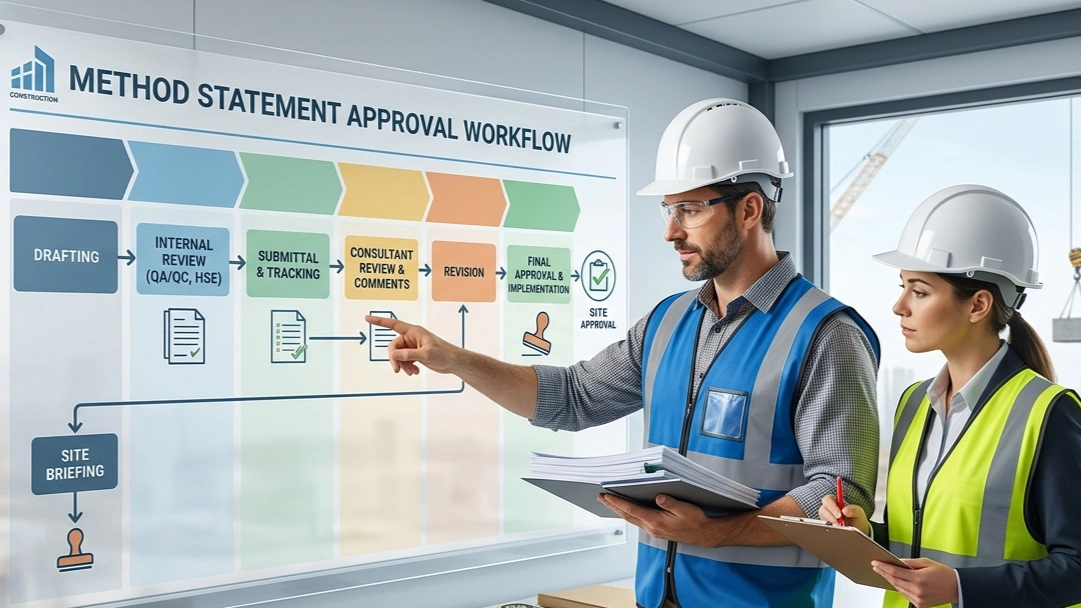
This Inspection and Test Plan is associated with the Method Statement: Temporary Fuel Storage and Equipment Refueling Operations method statement, which describes the step-by-step construction sequence, resources, materials, equipment, safety controls, and environmental controls for this activity.
View the Method Statement: Temporary Fuel Storage and Equipment Refueling Operations method statement →Continue with related inspection, method statement, article, and checklist resources.