
Inspection and Test Plan for Method Statement: Chemical Containment Bund Construction and Integrity Testing
AI-assisted inspection and test plan connected to a method statement, with PDF and Excel export.
More than a static template
Unlike a downloadable Word or PDF template, this ITP is an AI-assisted editable starting point directly connected to its method statement. Every inspection activity, hold point, and acceptance criterion is structured and ready to adapt to your project.
- AI-assisted customization — Tailor inspection activities and acceptance criteria to your specific project scope.
- Linked method statement — This ITP is connected to the corresponding method statement describing the work sequence.
- Multiple export formats — Download as a formatted PDF or editable Excel spreadsheet.
- Editable starting point, not a final document — Review and verify all content against your project specifications and standards before use.
What you can customize
When you save this ITP to your account, every inspection row becomes editable. You can add, remove, or modify:
- Inspection activity — Description of what is being inspected.
- Inspection type — Hold point (H), Witness point (W), Review (R), or Monitor (M).
- Responsibility — Contractor, subcontractor, engineer, or client.
- Frequency — How often the inspection occurs.
- Acceptance criteria — Referenced standard or specification requirement.
- Records — Forms, test reports, or checklists required as evidence.
Why this ITP is used
To systematically verify critical quality attributes that ensure liquid-tight containment and chemical compatibility.
Who uses this inspection and test plan
Contractor QA/QC, Site Engineer, Coating Supervisor, Third-Party Inspector, and the Client/Engineer.
When this ITP is prepared and submitted
From subgrade preparation through concrete pours, lining application, sealing, isolation, leak testing, to final handover.
Who receives or approves this ITP
Client/Engineer and, where specified, a Third-Party Inspector.
Inspection scope
Materials approvals, subgrade, reinforcement/formwork, waterstops, concrete QA, curing, surface preparation, moisture, coating DFT/adhesion/holidays, joints/seals, isolation, hydrotest, and disposal.
Typical hold, witness, and review points
Pre-pour inspections (base/walls) HOLD; surface prep and moisture checks HOLD; holiday testing HOLD; hydrostatic test start and acceptance HOLD; others WITNESS/SURVEILLANCE as noted.
Typical inspection records
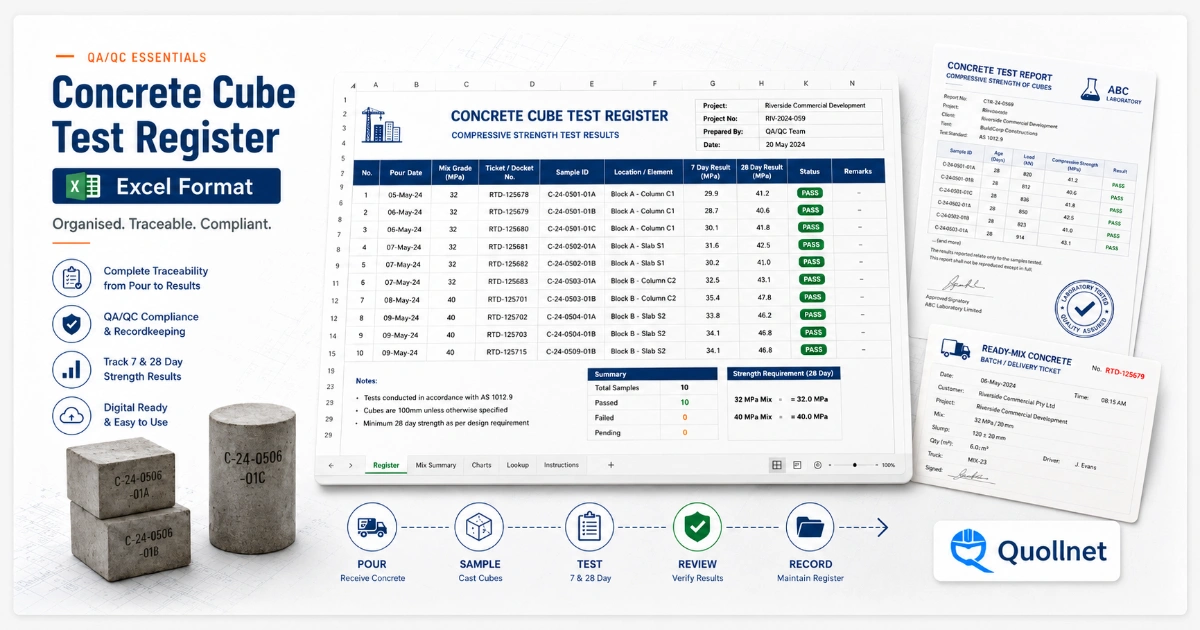
Submittal approvals, concrete test reports, curing logs, surface prep/DFT/adhesion/holiday records, moisture/env. logs, seal torque records, hydrotest certificates, disposal notes, as-builts.
Important approval note
This ITP is an AI-assisted editable starting point, not a pre-approved document. Before use on any project, all inspection activities, hold points, and acceptance criteria must be reviewed and approved by the relevant parties (superintendent, principal contractor, or client representative) in accordance with your contract and project quality plan.
Always verify acceptance criteria against your applicable drawings, specifications, and regulatory requirements. Hold points must be confirmed with the relevant authority before work proceeds past that point.
Inspection and test plan
| Activity | Inspection / Test | Acceptance Criteria | Responsibility | Record |
|---|---|---|---|---|
| Material approvals | Review of datasheets, certificates, SDS, compatibility statements | Engineer approval prior to use | QA/QC Engineer / Consultant | Submittal approval, MDR |
| Subgrade/sub-base readiness | Levels and compaction tests | Level ±10 mm; compaction ≥95% MDD [Verify] | QA/QC / Site Engineer | Survey + compaction reports |
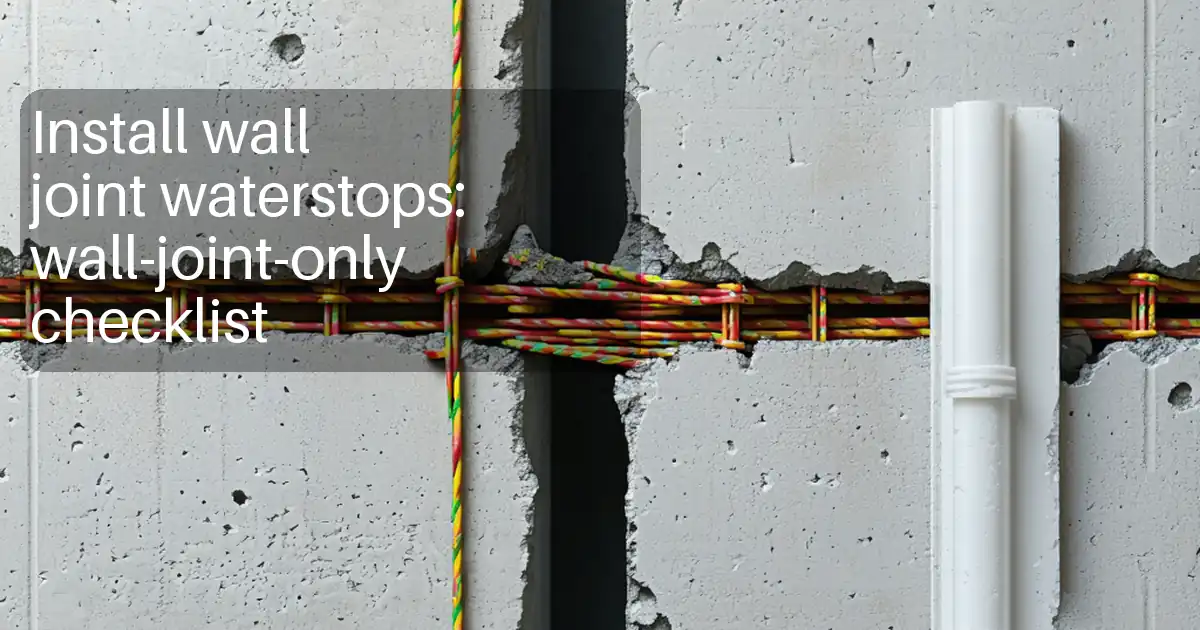
| Pre-pour (base) | Formwork, rebar, cover, waterstops, cleanliness | Conforms to drawings/spec; waterstop centered; forms stable | QA/QC / Engineer | Pre-pour checklist |
| Concrete delivery and tests | Slump, temp, air (if specified), cylinders | Within approved mix limits; cylinders achieve f'c | QA/QC | Concrete test reports |
| Surface finish and slope | Level survey; visual finish | Slope 1–2% to sump; finish free from fins/honeycombs | Site Engineer / QA/QC | Survey records |
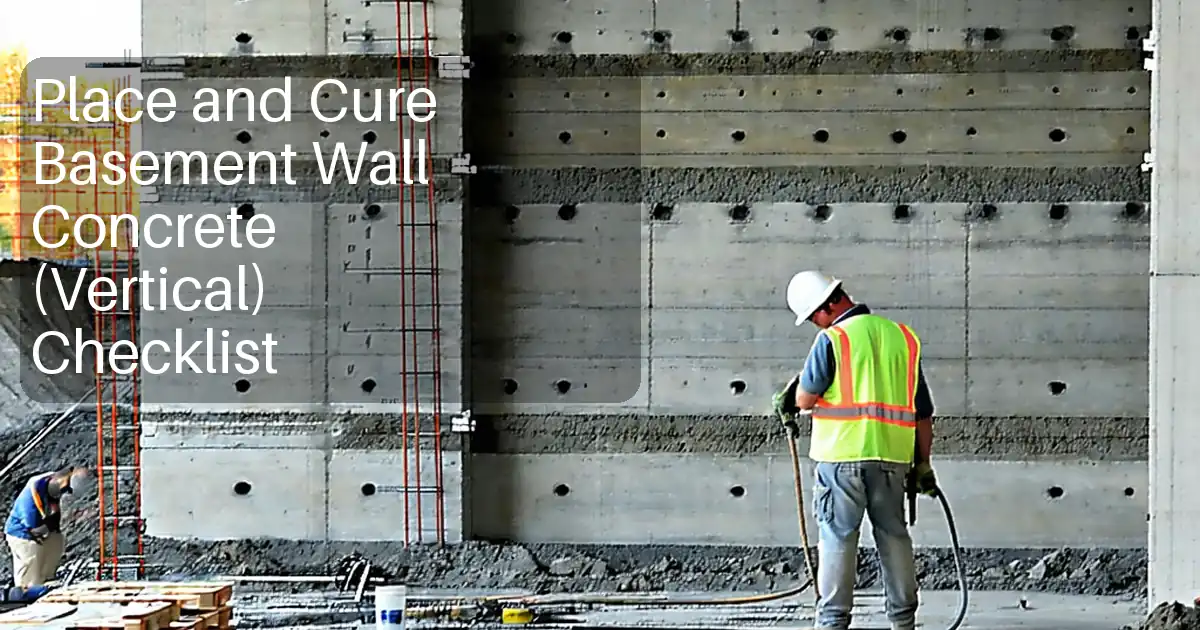
| Pre-pour (walls) | Rebar, penetrations, formwork, waterstops | Conforms to drawings/spec | QA/QC / Engineer | Checklist/photos |
| Curing verification | Curing method and duration logs | ≥7 days continuous curing [Verify] | QA/QC | Curing log |
| Surface preparation for lining | ICRI CSP comparator; cleanliness (SSPC-SP 13/NACE 6) | CSP 3–5; laitance removed; sound substrate | Coating Supv. / QA/QC | Surface prep report |
| Moisture/environmental check | ASTM D4263 or F2170; dew point spread; RH/temp | Within manufacturer limits; DP ≥3°C | QA/QC | Env. logs |
| Primer/stripe coat application | WFT; coverage | Uniform; within ±10% of target | Coating Supv. / QA/QC | Coating log |
| Build coats and DFT control | DFT measurements per SSPC-PA 9 | Total DFT 1.5–2.0 mm [Verify]; no runs/sags | Coating Supv. / QA/QC | DFT records |
| Adhesion pull-off test | ASTM D7234 pull-off | ≥1.5–2.0 MPa [Verify per service]; cohesive failure preferred | QA/QC / TPI (if required) | Adhesion test report |
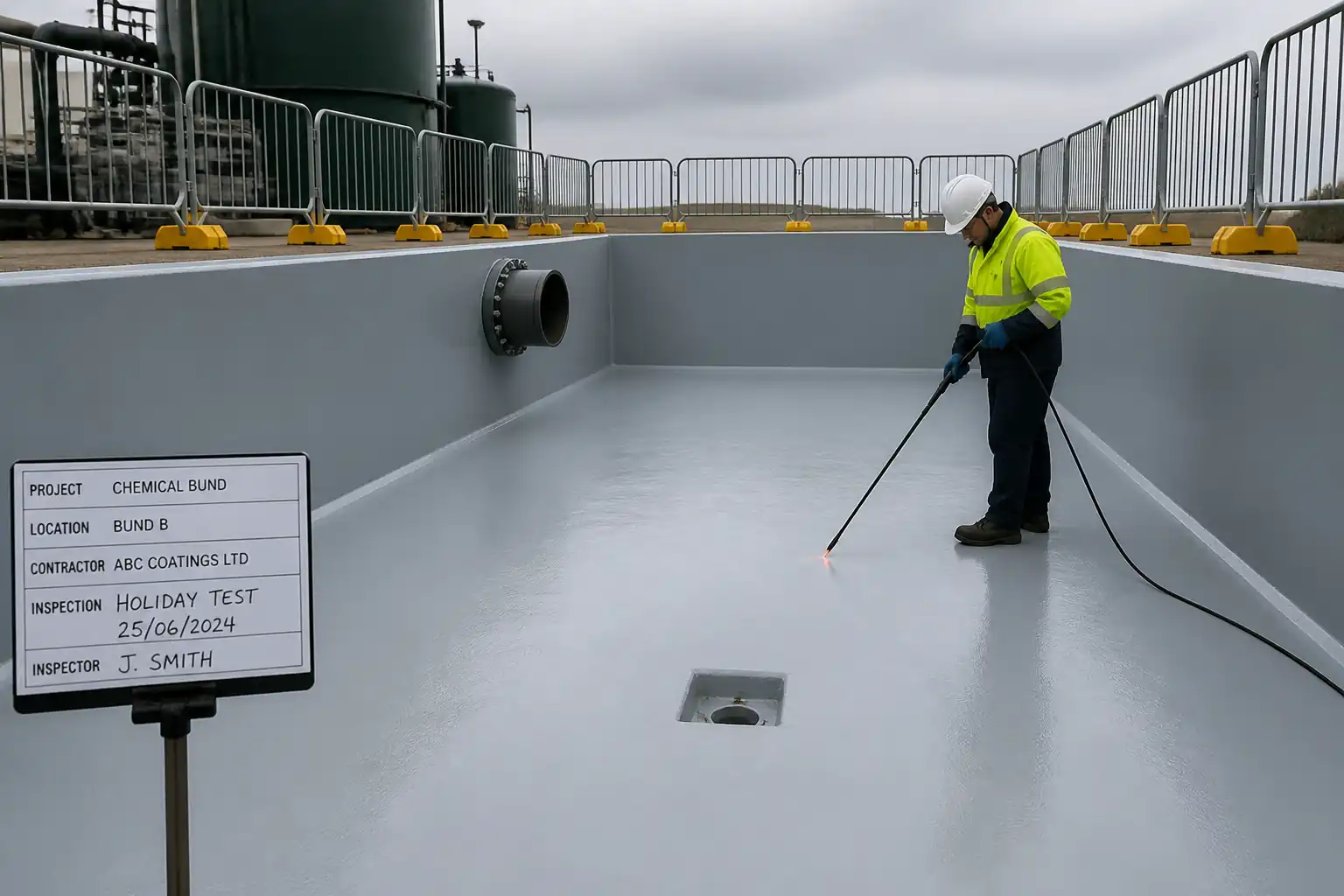
| Holiday (continuity) testing | ASTM D4787 HV spark test | Zero holidays; repaired areas retested 100% | QA/QC / Coating Supv. | Holiday test report |
| Joint sealant and penetration seals | Visual; torque check; leak soap test if pressurized | Continuous seal; torque per datasheet | QA/QC / Foreman | Seal install record |
| Drain isolation verification | Physical inspection; LOTO check | Valves locked/closed; blinds fitted | Site Engineer / HSE | LOTO record |
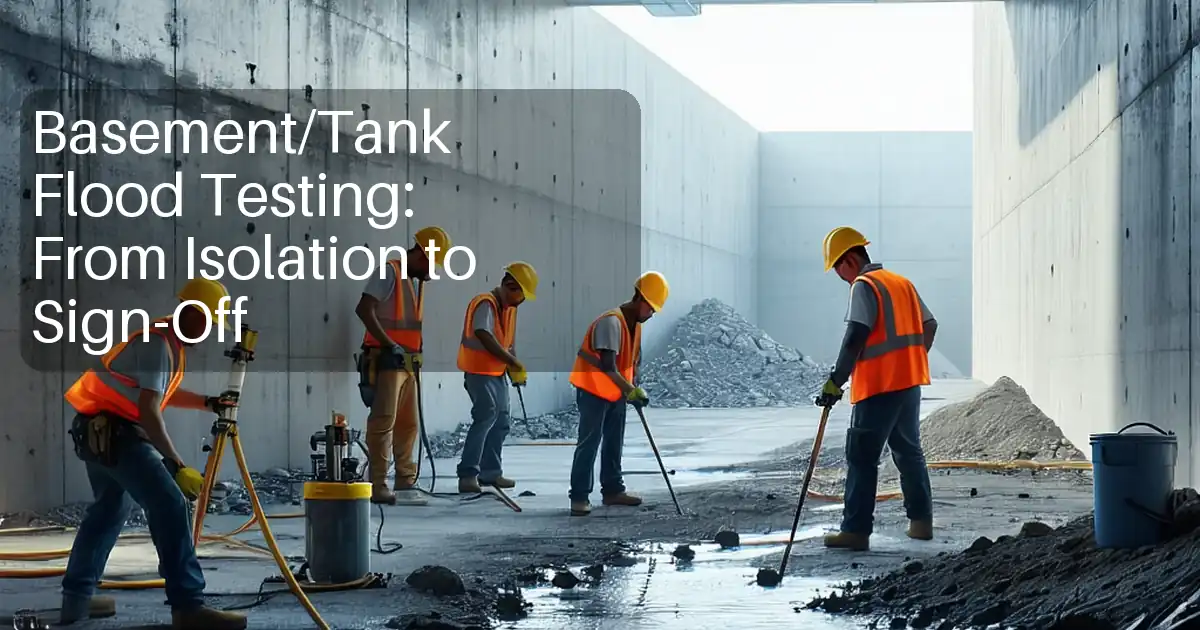
| Hydrostatic leak test | Fill, soak 24 h, monitor 24–48 h; evaporation pan | No visible leaks; corrected drop ≤1 mm/24 h [Verify] | QA/QC / Engineer / TPI (if required) | Leak test certificate; logs |
| Disposal of test water | pH/contaminant check per EMP | Disposed via approved route; no spills | HSE / Site Engineer | Waste transfer notes |
| Final inspection and handover | Punch list close; documentation review | All records complete; NCRs closed; warranties submitted | PM / QA/QC / Client | Handover dossier |
This table is a read-only public reference. Download the PDF or Excel version, or customize this ITP to edit it for your project.
Frequently asked questions
Related method statement
This Inspection and Test Plan is associated with the Method Statement: Chemical Containment Bund Construction and Integrity Testing method statement, which describes the step-by-step construction sequence, resources, materials, equipment, safety controls, and environmental controls for this activity.
View the Method Statement: Chemical Containment Bund Construction and Integrity Testing method statement →Continue with related inspection, method statement, article, and checklist resources.