G
Guest

Bar Bending Schedule and Pre-Cut Bend Steel in Concrete Construction Projects

Explore the essentials of Bar Bending Schedules (BBS) and the advantages of pre-cut bent steel in modern concrete construction. Learn how BBS enhances precision, reduces material waste, and improves project efficiency. Discover the role of advanced software tools in automating BBS creation and the benefits of adopting pre-cut and bent steel solutions for automated construction workflows.

Bar Bending Schedule And Pre Cut Bend Steel In Concrete
English version

Bar Bending Schedule and Pre Cut Bend Steel in Concrete Construction Projects
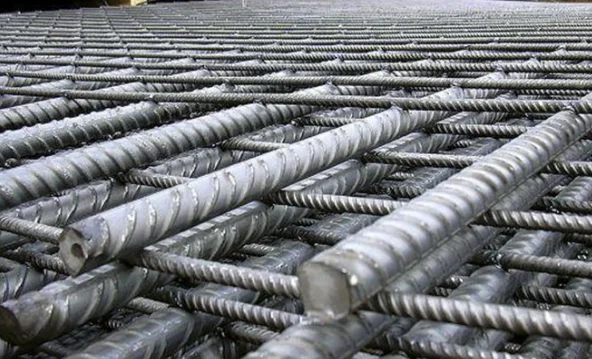

steel reinforcement cut bend quollnet


I. Introduction

What is a Bar Bending Schedule (BBS)?

In the concrete construction industry, precision matters. A Bar Bending Schedule (BBS) serves as a detailed chart that outlines every reinforcement bar—commonly referred to as rebar—required for a structure. It specifies the size, shape, length, and quantity of these bars to ensure the construction aligns with design specifications. Think of it as a detailed guide that ensures accuracy in cutting and bending steel, optimizing both time and resources.

The Concept of Pre-Cut and Bent Steel

Pre-cut and bent steel revolutionizes this process by preparing the rebar off-site based on the BBS. Delivered ready for placement, these pre-fabricated bars reduce on-site labor and improve efficiency. With growing popularity in modern construction, this method ensures accuracy while cutting down costs and time.


II. Importance of Bar Bending Schedule in Construction

Standardization and Accuracy

BBS ensures each rebar is cut and bent precisely to design specifications. This eliminates guesswork and minimizes errors, ensuring the structure’s safety and compliance with design standards.

Efficiency and Cost Savings

A well-prepared BBS reduces waste by specifying exact material requirements. This minimizes over-ordering and leads to significant cost savings. Clear instructions in the BBS also expedite construction timelines, helping projects meet deadlines more effectively.

Quality Assurance

When rebar is fabricated and placed correctly, it directly impacts the structure’s durability and strength. A BBS plays a critical role in maintaining high-quality construction standards by reducing the scope for manual errors.


III. Components of a Bar Bending Schedule

Key Elements

A typical BBS includes:

  1. Bar Number: Unique ID for each piece of rebar.

  2. Shape: Required geometry (e.g., straight, bent, or hooked).

  3. Size: Diameter of the bar, usually in millimeters.

  4. Length: Exact measurement.

  5. Quantity: Number of bars needed.

  6. Bar Type: Whether it’s a main bar, stirrup, or distribution bar.

  7. Shape Codes: Standardized codes describing bending dimensions and angles.


Shape Photos:

These photos can be used in an excel file or a word file to illustrate the shapes of different types of steel reinforcement cut and bend. the table in the excel file is called Bar Bending Schedule with abbreviation of B.B.S.


U shape bend bar steel reinforcement T shape bend bar steel reinforcement Straight shape bend bar steel reinforcement Circle shape bend bar steel reinforcement Hook shape bend bar steel reinforcement Square shape bend bar steel reinforcement Z shape bend bar steel reinforcement Spiral shape bend bar steel reinforcement


Interpreting a BBS

Presented in a tabular format alongside structural drawings, a BBS ensures every bar is fabricated and placed as per design, enhancing workflow accuracy and efficiency.

Sample Bar Bending Schedule

Bar No. Shape Bar Size (mm) Length (mm) Quantity Shape Code
1 Straight 12 6000 10 00
2 L Shape 16 2000 + 1000 8 01
3 U Shape 10 1500 + 500 + 1500 6 02
4 Hooked End 20 3000 12 03
5 Stirrups (Square) 8 500 x 500 20 04


IV. Pre-Cut and Bent Steel: A Game-Changer

Definition and Process

Pre-cut and bent steel is fabricated in specialized facilities using advanced machinery. Engineers feed BBS data into software, guiding machines to cut and bend bars precisely. These labeled bars are then delivered to the site for immediate use.

Advantages

  1. Reduced On-Site Labor: Workers focus on placement instead of fabrication.

  2. Enhanced Precision: Automation ensures exact specifications.

  3. Time Savings: Eliminates on-site cutting and bending.

  4. Improved Safety: Minimizes risks associated with manual processes.

Challenges

  1. Dependence on Accurate Designs: Errors in BBS can disrupt fabrication.

  2. Logistics: Transporting pre-fabricated steel requires careful planning.

  3. Higher Initial Costs: Though initially more expensive, savings in time and labor offset the costs.
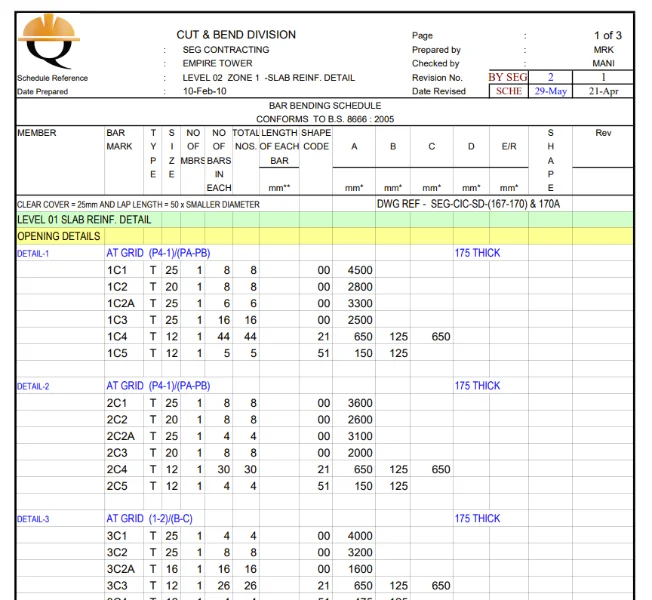
    image of bar bending schdule bbs sample quollnet


V. Comparison: Traditional Steel vs. Pre-Cut and Bent Steel

Time Efficiency

Traditional methods rely on on-site cutting and bending, often leading to delays. Pre-cut steel eliminates these steps, ensuring faster installation.

Material Optimization

Pre-cut steel reduces material waste by adhering to exact specifications, unlike traditional methods prone to errors and offcuts.

Cost Implications

While pre-cut steel may have a higher upfront cost, it reduces overall expenses by saving on labor and shortening construction timelines.


VI. Role of Technology in BBS and Pre-Cut Steel

Digital Tools

Software like AutoCAD and Revit streamline BBS preparation and integrate with automated machines for precise fabrication, reducing errors.

Integration with Pre-Cut and Bent Steel

Digital workflows between design tools and fabrication equipment ensure efficient and accurate manufacturing of steel bars.

Emerging Trends

Technologies like Building Information Modeling (BIM) and 3D printing are shaping the future of rebar design and fabrication, promising even greater efficiency.


VII. Practical Applications in Construction Projects

Examples of Structures Using BBS and Pre-Cut Steel

  1. Skyscrapers.

  2. Bridges and flyovers.

  3. Large-scale industrial facilities.

Case Study

A high-rise project that implemented pre-cut steel and BBS saw a 30% reduction in construction time and a 20% cut in material costs. This example highlights the benefits of adopting these modern practices.


VIII. Conclusion

Summarizing Benefits

Bar Bending Schedules and pre-cut steel enhance efficiency, improve safety, and ensure superior quality in construction projects. Together, they simplify workflows and optimize resource utilization.

Future Outlook

As construction embraces technology, the use of BBS and pre-cut steel will grow. Sustainability efforts, like recycling steel waste, will further drive adoption, cementing their role in modern construction.


VIX. Downloads

Download sample excel and pdf formats:


References:

Quollnet.com specialized developers for engineering IT products



Elie Saad's photo
Elie Saad
Jan 21, 2025
6
143
1.35k+
4.16k+

Related Checklists


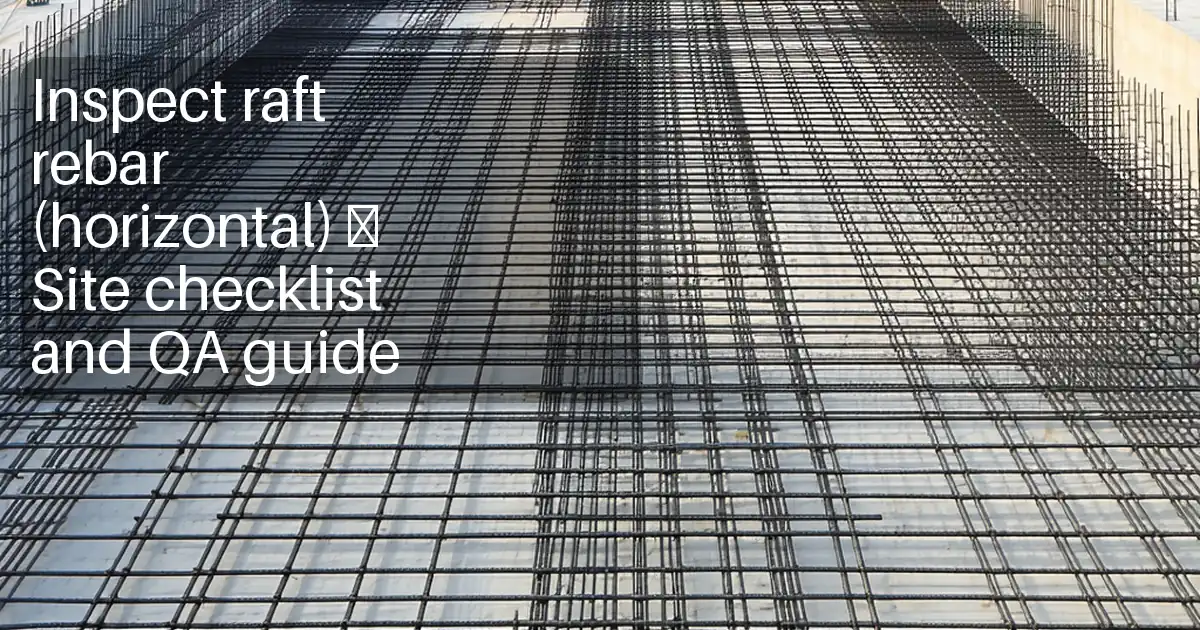
Inspect raft rebar (horizontal) – Site checklist and QA guide
✅ 29 items
Inspect raft rebar (horizontal) sets a precise, pre-concrete scope for site engineers and inspectors to validate raft slab reinforcement before any pour. This focused foundation mat rebar QA process checks cover, bar sizes, lap splices, spacing, openings, and embedded items. By keeping the scope horizontal only (excluding vertical elements and any pouring activities), you reduce corrosion risk, honeycombing, congestion, and MEP clashes that drive rework and schedule slippage. The checklist emphasizes measurable methods—tape, caliper, cover meter, and total station—plus photographic evidence and approval references per approved project specifications and authority requirements. You’ll confirm stability under foot traffic, tidy laps and couplers, correct reinforcement around blockouts, and proper positioning of sleeves, plates, and starter bars at construction joints. The result is a documented, buildable raft rebar layout with traceable sign-offs. Use the interactive features to tick items, add comments with photos, and export your report as PDF or Excel complete with a secure QR code.
Fabricate Reinforcement Cages for Piles – QA Guide
✅ 28 items
Fabricate reinforcement cages for piles with a rigorous, field-ready checklist that guides bar inspection, splicing, centralizer installation, lifting-point preparation, and dimensional verification. This resource supports pile reinforcement cage fabrication and rebar cage assembly for bored piles, ensuring compliance before dispatch to site. The checklist focuses on steel bars, lap or mechanical splices, bar bending, and cage bracing; it excludes concrete works such as placement, tremie operations, and pile concreting. By following these steps, teams reduce risks like splice failures, inadequate concrete cover from missing centralizers, bent or out-of-round cages, and unsafe lifting that can deform the assembly. Acceptance cues, tolerances, and evidence capture (photos, torque logs, and approvals) help you prove conformance per approved project specifications and authority requirements. Use the interactive features to tick items, add clarifying comments, and export records to PDF or Excel with a QR code for traceability.
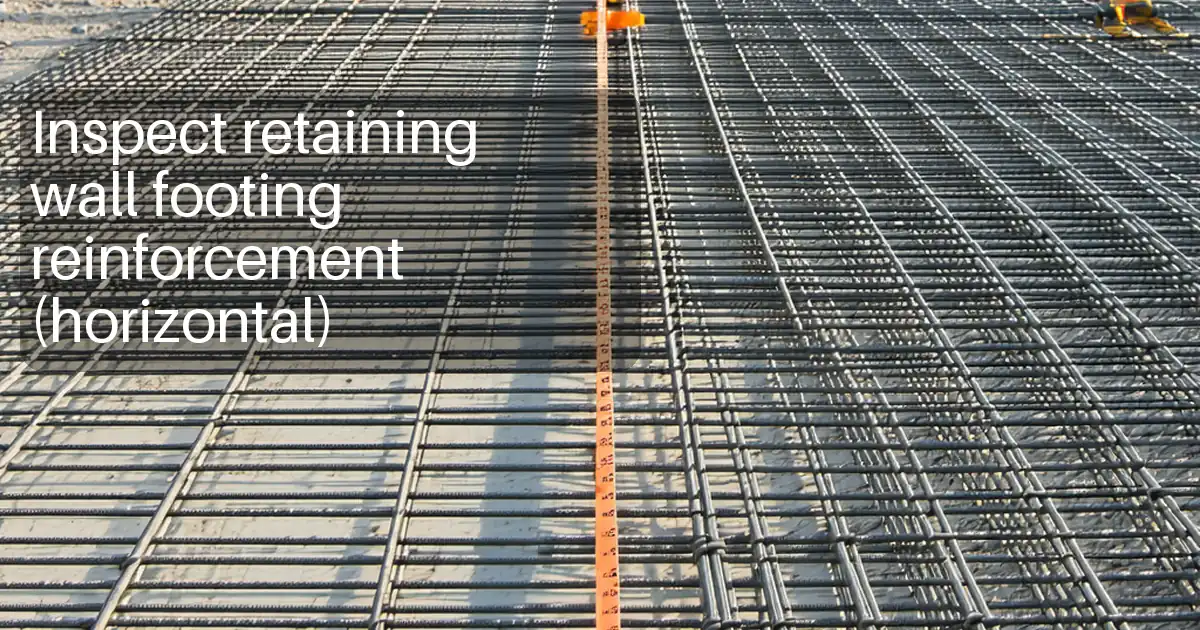
Inspect retaining wall footing reinforcement (horizontal)
✅ 26 items
Inspect retaining wall footing reinforcement (horizontal) is a critical pre-pour task that validates the rebar layout against the approved drawings and schedules. This checklist focuses on horizontal reinforcement within the footing, including bar sizes, spacing, lap splices, bar cover, supports, and the dowels that connect the footing to the wall stem. It excludes concrete-related controls and tests, keeping the scope clearly on steel placement and documentation. By verifying the reinforcement schedule, confirming chairs and spacers, checking dowel alignment, and measuring laps with a tape or rebar gauge, you prevent under-reinforcement, bar corrosion from inadequate cover, and stem misalignment due to misplaced dowels. The outcome is a compliant installation ready for form closure and further inspections, backed by photo evidence, material identification, and sign-offs per approved project specifications and authority requirements. Use this interactive checklist in the field: tick each item, add comments for nonconformances, and export your record as PDF or Excel with a QR code for authentication.
Retaining wall stem reinforcement (vertical) inspection
✅ 24 items
Retaining wall stem reinforcement (vertical) inspection confirms the vertical rebar is installed to the approved drawings before any concrete is placed. This focused checklist supports vertical rebar checking, retaining wall steel fix inspection, and bar spacing and cover checks on the stem only, excluding concreting. You will verify bar sizes and spacing, concrete cover using spacers and a covermeter/template, lap splice lengths or couplers, and detailing around openings and embedded items. By capturing measurements, photos, and approvals, you reduce risks of inadequate cover, misaligned bars, insufficient development, congestion at openings, and costly rework. The outcome is a compliant, durable stem that accepts formwork and subsequent concreting without clashes, while meeting the approved project specifications and authority requirements. Use this as a hold‑point inspection: measure, mark any corrections, and record evidence for quality assurance. Start the interactive mode to tick items, leave comments for the steel fixer, and export your completed record to PDF/Excel with a secured QR code.
Inspect couplers and lap splices for piles – checklist
✅ 22 items
Inspect couplers and lap splices for piles using this focused, field-tested checklist. It targets mechanical couplers, rebar lap splices, and pile reinforcement splicing at pile heads, joints, and extensions—while explicitly excluding cage fabrication activities. You will verify model approvals, bar compatibility, engagement lengths, torque, and witness marks to ensure a continuous load path in compression and tension. Poorly assembled splices can cause slip, head spalling, reduced axial capacity, and expensive rework. This guide sets practical acceptance cues, evidence requirements, and documentation steps so teams can act decisively and leave an auditable trail. It emphasizes calibrated torque application, measurable engagement, and clear visual indicators that withstand handling and concreting. Follow the sequence to avoid blocked pours, misaligned bars, and nonconformities that can delay foundations. Use the interactive features to tick tasks, add comments, attach photos, and export a signed PDF/Excel report embedded with a QR link to the source record.

Related Articles


Impacted As Planned
⏳ 3 min read
Impacted As-planned Analysis | Construction Delay Method
Understand how Impacted As-Planned (IAP) analysis is used to model construction delays based on baseline schedules. Learn how to perform IAP, when to use it, and how it compares to TIA and other delay methods.
Windows Analysis
⏳ 3 min read
Windows Analysis | Construction Delay Evaluation Method
Learn how Windows Analysis blends prospective and retrospective methods to accurately evaluate construction delays. Explore window selection, critical path shifts, and legal considerations.
Timely Notices In Construction
⏳ 5 min read
The Crucial Role Of Timely Notices In Construction Projects: An Engineer's Guide
An engineer's guide to understanding the importance of timely notices in construction projects, including best practices and the consequences of non-compliance.
What Is a Snag List
⏳ 3 min read
What Is a Snag List Or Punch List
Explore how Snag List Reports transform construction project management by streamlining quality assurance and enhancing stakeholder communication. Discover the benefits of SnagHere.com for digital reporting and efficient project tracking.
Managing Variation Orders Construction Projects
⏳ 6 min read
Comprehensive Guide To Managing Variation Orders In Construction Projects
Learn effective strategies for managing variation orders in construction projects. Access free, no-registration-required templates to streamline your change order processes and maintain project efficiency.