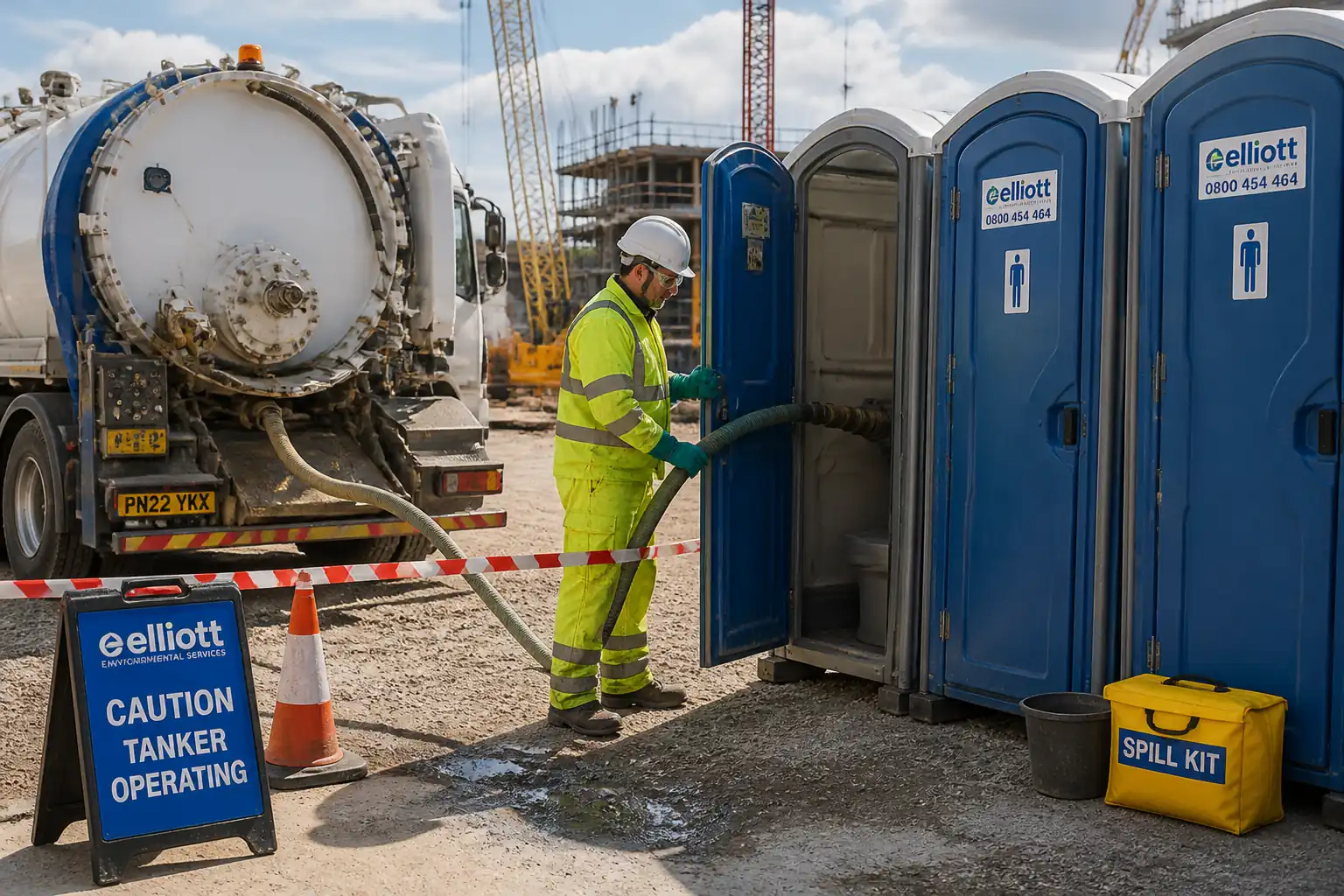

Inspection and Test Plan for Method Statement: Temporary Sanitation Facility Servicing and Maintenance
AI-assisted inspection and test plan connected to a method statement, with PDF and Excel export.
More than a static template
Unlike a downloadable Word or PDF template, this ITP is an AI-assisted editable starting point directly connected to its method statement. Every inspection activity, hold point, and acceptance criterion is structured and ready to adapt to your project.
- AI-assisted customization — Tailor inspection activities and acceptance criteria to your specific project scope.
- Linked method statement — This ITP is connected to the corresponding method statement describing the work sequence.
- Multiple export formats — Download as a formatted PDF or editable Excel spreadsheet.
- Editable starting point, not a final document — Review and verify all content against your project specifications and standards before use.
What you can customize
When you save this ITP to your account, every inspection row becomes editable. You can add, remove, or modify:
- Inspection activity — Description of what is being inspected.
- Inspection type — Hold point (H), Witness point (W), Review (R), or Monitor (M).
- Responsibility — Contractor, subcontractor, engineer, or client.
- Frequency — How often the inspection occurs.
- Acceptance criteria — Referenced standard or specification requirement.
- Records — Forms, test reports, or checklists required as evidence.
Why this ITP is used
To ensure sanitation facilities are maintained to hygiene and regulatory standards with verifiable inspections and records.
Who uses this inspection and test plan
QA/QC engineers, HSE officers, sanitation technicians, and site managers.
When this ITP is prepared and submitted
During mobilization, routine servicing, deep cleaning, waste removal, monthly audits, and spill drills.
Who receives or approves this ITP
Client/Engineer and HSE department for review and approval.
Inspection scope
Readiness checks, daily visual inspections, weekly servicing with waste removal, hygiene verification sampling, documentation and licensing checks, and spill drill performance.
Typical hold, witness, and review points
Mobilization readiness (W), Weekly service sample (W), Deep clean (W), Waste disposal record review (R), Spill response drill (W).
Typical inspection records
Service logs, dose logs, ATP logs, WTN and disposal tickets, tanker logs, calibration records, audit reports, NCR/CAR close-outs.
Important approval note
This ITP is an AI-assisted editable starting point, not a pre-approved document. Before use on any project, all inspection activities, hold points, and acceptance criteria must be reviewed and approved by the relevant parties (superintendent, principal contractor, or client representative) in accordance with your contract and project quality plan.
Always verify acceptance criteria against your applicable drawings, specifications, and regulatory requirements. Hold points must be confirmed with the relevant authority before work proceeds past that point.
Inspection and test plan
| Activity | Inspection / Test | Acceptance Criteria | Responsibility | Record |
|---|---|---|---|---|
| Mobilization of sanitation facilities (readiness) | Check siting, access, stability, signage, stock, spill kits | Units level/stable; access/clearances as specified; stock at initial setpoints; spill kits available | QA/QC Engineer (W), Site Manager | Readiness Checklist; Photos |
| Daily visual inspection | Cleanliness, stock levels, damage, odors | No visible soil; stock above triggers; defects logged | Sanitation Technician; HSE (spot) | Unit Service Log (USL) |
| Weekly service and waste removal | Pump-out, mechanical clean, disinfection contact time, recharge dose | No spill; disinfectant contact time achieved; dose within ±10%; couplings capped; volume recorded; WTN completed | Sanitation Technician; Driver; QA/QC (W) sample | USL; Dose Log; Tanker Log; WTN |
| Hygiene verification (optional) | ATP swabs on critical touchpoints (sample ≥10% units/month) | <100 RLU; if ≥100 RLU then re-clean and re-test until pass [Benchmark, Verify] | QA/QC Engineer | ATP Log; Corrective Action Record |
| Deep clean (weekly) | Scale, seals, hinges, structural condition | No scale; intact seals; hinges lubricated; structure damage ≤ allowable [Verify] | Sanitation Technician; QA/QC (W) | Deep Clean Checklist; Photos (if required) |
| Waste transport and disposal | Carrier license validity; disposal receipt | Valid license; disposal at permitted facility; records complete within 24 h | Driver; Waste Carrier; QA/QC (R) | WTN; Weighbridge/disposal ticket; License copy |
| Monthly compliance audit | Record completeness, service intervals, incident close-outs | No major NCR; minors closed within 14 days | QA/QC Engineer; HSE Officer | Audit report; NCR/CAR log |
| Emergency spill response drill | Time to respond; correct use of spill kit; notification | Containment within 15 min; correct PPE; documentation completed | HSE Officer; Crew | Drill report; Attendance |
This table is a read-only public reference. Download the PDF or Excel version, or customize this ITP to edit it for your project.
Frequently asked questions
Related method statement
This Inspection and Test Plan is associated with the Method Statement: Temporary Sanitation Facility Servicing and Maintenance method statement, which describes the step-by-step construction sequence, resources, materials, equipment, safety controls, and environmental controls for this activity.
View the Method Statement: Temporary Sanitation Facility Servicing and Maintenance method statement →Continue with related inspection, method statement, article, and checklist resources.