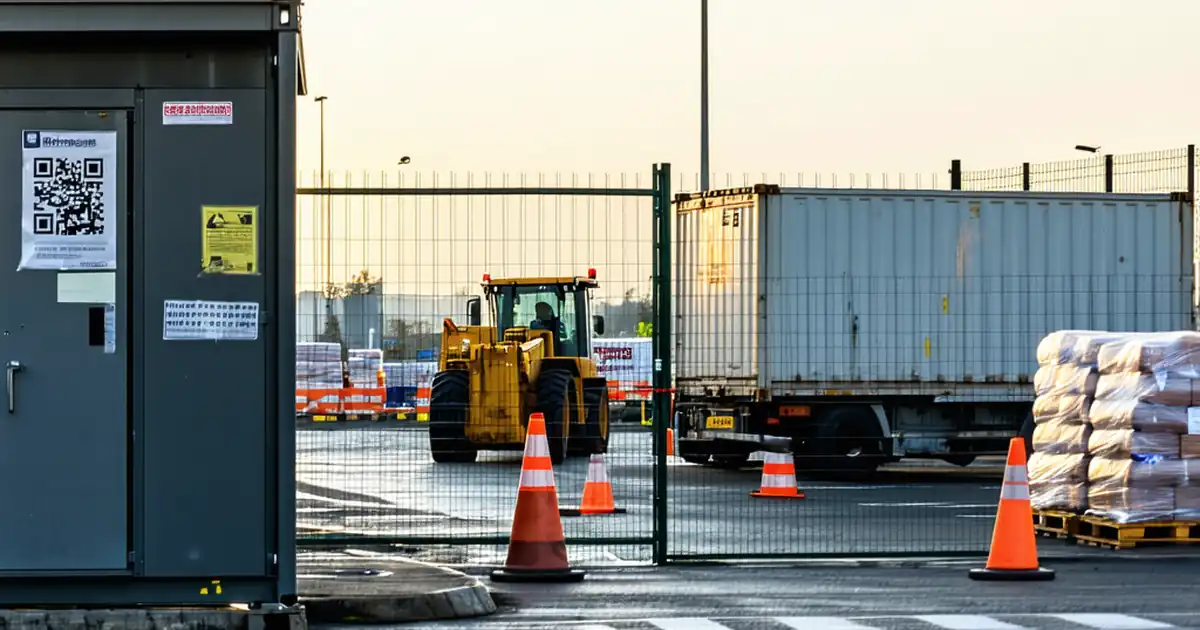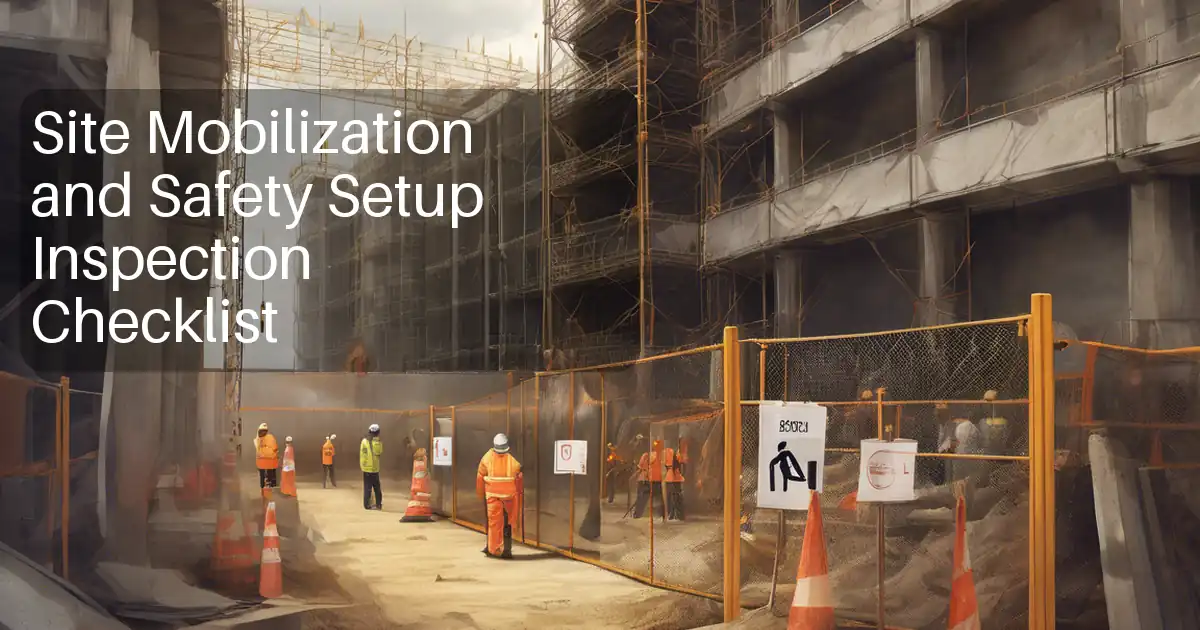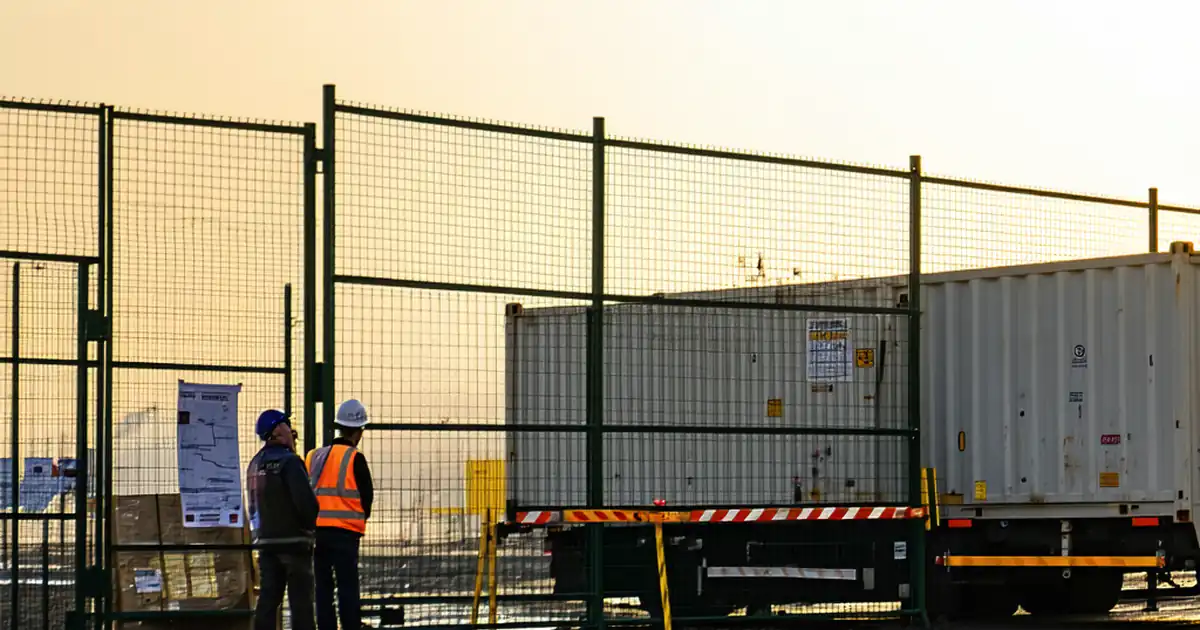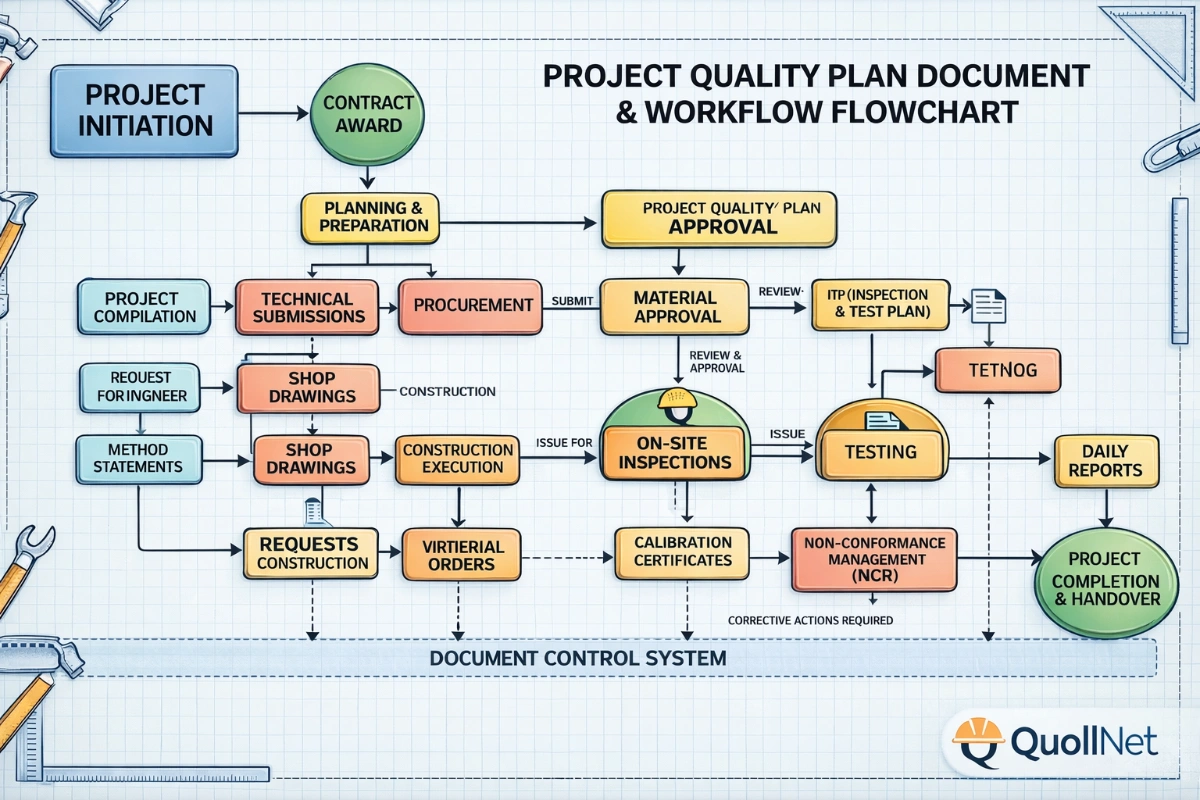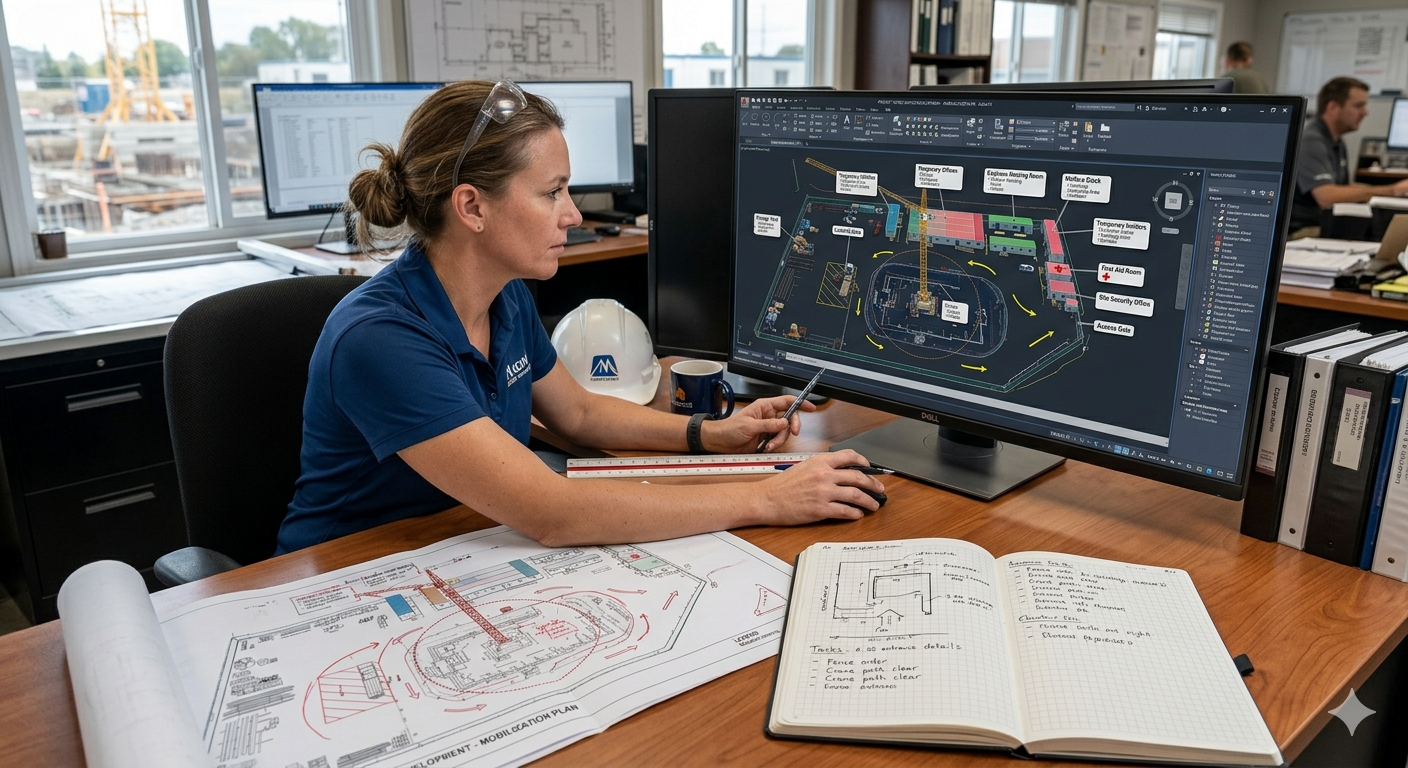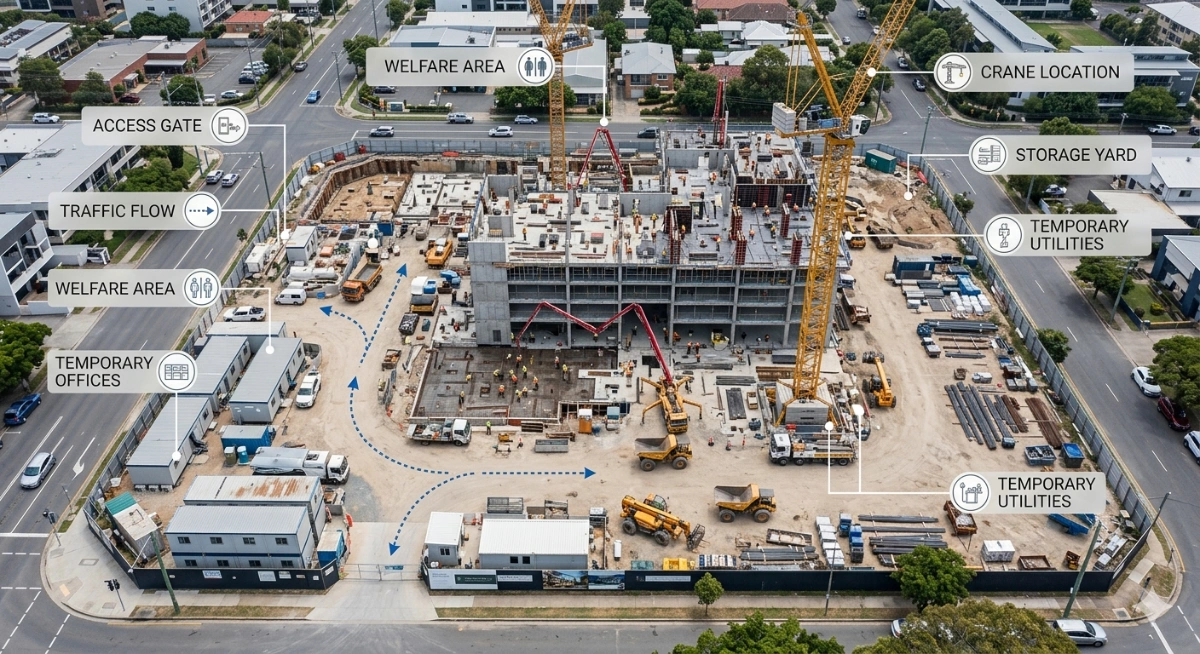
A mobilization plan in construction is the contractor’s startup roadmap for getting a project ready before major work begins. It covers site access, site plan layout, temporary facilities, utilities, labor, logistics, safety, and compliance. The site plan is a key drawing inside the wider mobilization process.
Mobilization Plan in Construction: What It Is, What It Includes, and Why It Matters
Introduction
The period between contract award and physical construction start is often underestimated.
On paper, the project may already be won. In practice, the work still cannot start properly unless the site is ready, the temporary setup is planned, access is clear, utilities are arranged, safety controls are in place, and the contractor knows how people, materials, equipment, and information will move from day one.
That is where the mobilization plan comes in.
A good mobilization plan is not just a pre-construction checklist. It is the startup strategy for the project. It helps the team move from award to organized execution instead of drifting into early confusion, rushed decisions, and preventable delays.
What Is a Mobilization Plan?
A mobilization plan is the contractor’s plan for preparing the project site and project team for the start of construction.
In simple terms, it explains how the contractor will move people, equipment, materials, temporary facilities, and control systems to site and make the project operational.
Depending on the project, the mobilization plan may cover:
- site access and possession
- temporary fencing and gates
- offices, stores, workshops, and welfare facilities
- temporary power, water, lighting, drainage, and communications
- plant and equipment arrival
- labor onboarding and inductions
- delivery routes and storage areas
- startup schedule and early milestones
- safety, security, and environmental controls
The purpose is straightforward: make sure the project can start in a controlled, safe, and efficient way.
Mobilization Plan vs. Site Plan
These two terms are closely related, but they are not the same.
A mobilization plan is the wider startup plan. It covers the process, resources, timing, responsibilities, costs, and controls needed before full construction operations begin.
A site plan, in this construction context, usually means the contractor’s temporary execution-stage site layout drawing used during the work. This is different from the permanent architectural or planning site plan prepared for design approvals.
A contractor’s site plan may show:
- site boundaries
- entry and exit gates
- haul roads and pedestrian routes
- crane locations and swing radii
- laydown and storage zones
- temporary offices and welfare units
- generators, tanks, and utility routes
- fire points, assembly areas, and signage
So the simplest distinction is this:
The mobilization plan is the overall startup roadmap.
The site plan is one of its key deliverables.
That distinction matters because contractors often search for “site plan” when what they really need is part of the broader mobilization process.
Why It Matters Before the First Shovel Hits Dirt
Many early project problems are not technical construction problems. They are startup problems.
A project can lose time before real work even begins because of issues like:
- no clear access route for deliveries
- no temporary power or water
- no approved site office setup
- poor coordination with other contractors
- no space allocated for materials
- missing worker welfare facilities
- unclear security and boundary control
- unrealistic assumptions about what can happen in the first weeks
That is why mobilization matters so much. It shapes the first impression of the project, the rhythm of early operations, and often the quality of later execution.
A poorly mobilized site usually feels reactive. Teams solve one urgent problem at a time. A well-mobilized site feels deliberate. The basics are already thought through, the layout supports the work, and the early weeks create momentum instead of friction.
What a Mobilization Plan Usually Includes
The exact format varies by project, but most good mobilization plans address the same core areas.
1. Contractual and Statutory Preliminaries
Before arranging any facilities, the plan must absorb the specific requirements hidden in the contract preliminaries, general requirements, particular specifications, employer requirements, and applicable authority rules.
This may include:
- required engineer or employer offices
- meeting rooms and furniture
- vehicles and drivers
- computers, printers, plotters, phones, radios, and internet
- mandatory supervisory or medical staff
- fencing, signage, and access-control standards
- workforce-based welfare or medical provisions required by contract or local rules
A mobilization plan that ignores these requirements may look practical on paper but still fail review, approval, or payment.
2. Site Access and Boundaries
The plan should identify how vehicles, workers, visitors, and suppliers will enter and leave the site. It should also define site limits, control points, and any restrictions caused by adjacent properties, public roads, easements, utilities, or shared work areas.
3. Temporary Facilities
This includes project offices, meeting rooms, stores, workshops, toilets, wash areas, rest areas, and other welfare facilities needed to operate the site properly.
4. Materials, Plant, and Logistics
The plan should show where materials will be stored, how deliveries will be sequenced, where lifting equipment will operate, and how congestion will be avoided during the startup period.
5. Temporary Utilities and Services
Projects often need temporary power, water, lighting, communications, drainage, and waste arrangements before permanent services are available. These should not be treated as afterthoughts.
6. Labor Mobilization
The startup period also includes people, not just equipment. The plan should address onboarding, badging, inductions, supervision, first-aid arrangements, and the practical reality of bringing the workforce onto site in a controlled way.
7. Safety, Security, and Environmental Controls
Security fencing, lighting, signage, emergency routes, fire points, exclusion zones, and environmental controls should all appear early in the thinking, not after the site is already active.
Even at overview level, three items deserve special attention: worker welfare, stormwater control, and temporary traffic control. The exact requirements vary by contract and jurisdiction, so workforce ratios, medical provisions, signage standards, and sanitation thresholds should always be verified against local rules and project documents rather than assumed from generic practice.
Mobilization Starts Before the Site Is Busy
One mistake is to think mobilization starts only when cabins, fences, and equipment begin arriving.
In reality, mobilization often starts earlier:
- during tender planning
- when pricing preliminaries
- when reviewing access assumptions
- when identifying what the employer or engineer expects on site
- when forecasting early cash needs and startup procurement
That is why mobilization is closely linked to tender preparation, advance payment strategy, site handover readiness, and early notices. A weak early review can create a strong-looking site plan but a weak actual mobilization.
Suggested internal links in this section
- Construction Tender Preparation Guide
- Temporary fencing and site access inspection
- Construction Site Handover: Legal Meaning, “Accessible Site” Clause, Checklist & Free Letter Template
A Good Mobilization Plan Also Thinks About the Exit
One sign of maturity is whether the mobilization plan only thinks about setup, or whether it also quietly considers the future dismantling of temporary works and facilities.
Good planners do not just ask:
Where will the office go?
Where will the crane sit?
Where will we store materials?
They also ask:
How will this arrangement evolve as the project progresses?
What will need to move later?
Will today’s layout become tomorrow’s bottleneck?
How will temporary facilities be removed safely and efficiently?
That is why mobilization and demobilization are closely linked. A smart mobilization plan avoids creating future problems for the project team.
A Brief Note on Site Access, Notices, and Contract Risk
Mobilization is not only a logistics matter. It is also linked to contract rights and obligations.
In standard construction contracts, site access is usually not a casual administrative matter. It is a core project obligation. If the contractor cannot access the site, or can access only part of it, the problem may quickly affect sequence, productivity, cost, and time.
For this overview article, the practical takeaway is simple:
- confirm what the contract says about access or possession
- identify when the site, or parts of it, must be available
- align the mobilization plan with those dates
- issue notices early if access is delayed or restricted
This matters because startup problems can quickly become time and cost problems.
Suggested internal links in this section
- Construction Site Handover: Legal Meaning, “Accessible Site” Clause, Checklist & Free Letter Template
- Timely Notices In Construction
- Future internal link: Site Access and Possession in Construction: FIDIC, NEC, JCT, Claims, and Notices
What Good Mobilization Looks Like in Practice
A good mobilization plan is usually easy to understand.
It does not try to impress with volume. It tries to make the project operable.
In practice, a useful mobilization package often includes:
- a short narrative explaining the startup approach
- a site plan showing the temporary site arrangement
- a mobilization schedule
- a list of temporary facilities and utilities
- a logistics and delivery strategy
- a startup manpower and equipment list
- key safety, security, and environmental controls
- responsibilities and approval requirements
If a reader can review the package and quickly understand how the site will function in the first weeks, the plan is doing its job.
Download the Mobilization Starter Kit
This overview article works best when it includes practical downloads directly on the page.
Mobilization Starter Kit
- Use Mobilization Plan Starter Checklist
- Download Basic Site Plan Example
- Use First 30 Days Site Startup Checklist
- Use Temporary Facilities and Utilities Checklist
Where to Go From Here
This article is the overview.
The next layer is practical preparation: how to actually build a mobilization plan, prepare the site plan, and avoid common setup mistakes.
Then comes the legal and commercial side: access, possession, notices, delay risk, and claims.
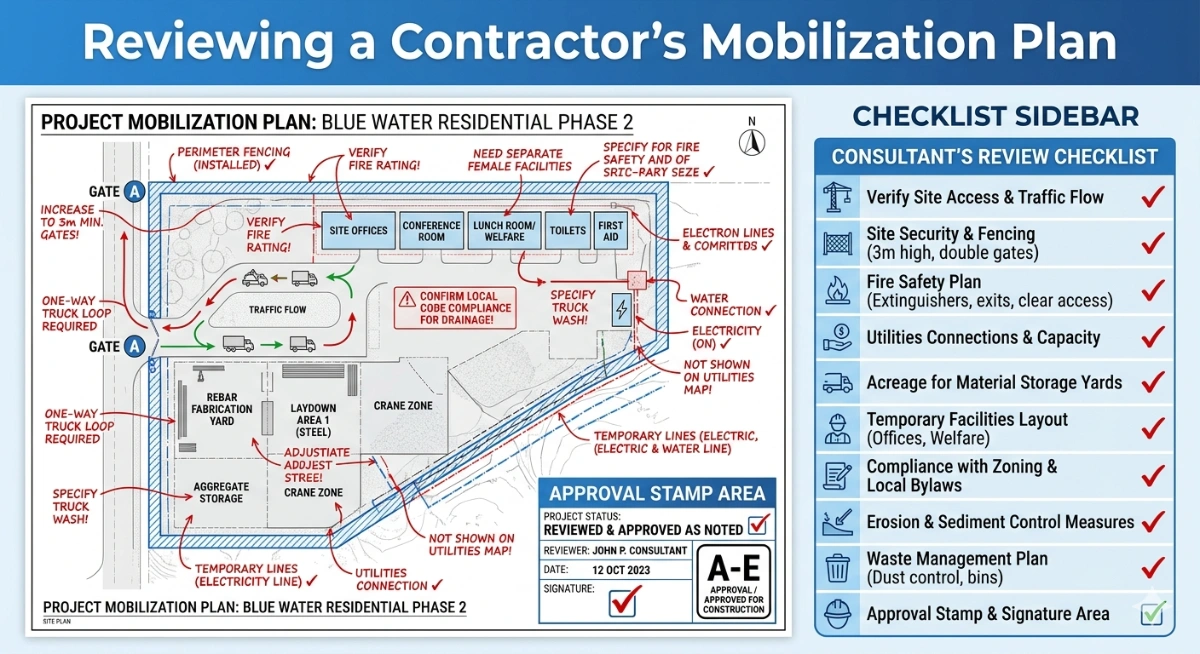
And for consultants or owner’s representatives, there is a separate review angle: how to check whether a contractor’s mobilization plan is complete, realistic, compliant, and commercially reasonable.
Suggested future internal links in this section
- How to Prepare a Construction Mobilization Plan
- Site Access and Possession in Construction: FIDIC, NEC, JCT, Claims, and Notices
- How to Review a Contractor’s Mobilization Plan
Conclusion
A mobilization plan is one of the first serious tests of project readiness.
It shows whether the contractor has thought through access, layout, logistics, temporary services, workforce needs, safety, compliance, and early coordination before the job becomes busy and expensive.
The site plan is one important part of that process, but it is not the whole story.
When a project starts well, it is usually because the startup phase was treated as real project work, not as a formality. That is the value of a good mobilization plan: it reduces early chaos, supports safety, improves site efficiency, and gives the project a more controlled beginning.
REFERENCES
- Construction Tender Preparation Guide
- Advance Payment in Construction Contracts
- Construction Site Handover: Legal Meaning, “Accessible Site” Clause, Checklist & Free Letter Template
- Site Mobilization and Safety Setup Inspection Checklist
- Demobilization Inspection: Site Facilities and Temporary Services
- The Crucial Role of Timely Notices in Construction Projects
- Construction Submittal Form Guide
- HSE Welfare Facilities on Construction Sites
- OSHA 29 CFR 1926.51 Sanitation
- EPA Stormwater Discharges From Construction Activities