
Inspection and Test Plan for Method Statement: Construction Waste Segregation and Disposal Management
AI-assisted inspection and test plan connected to a method statement, with PDF and Excel export.
More than a static template
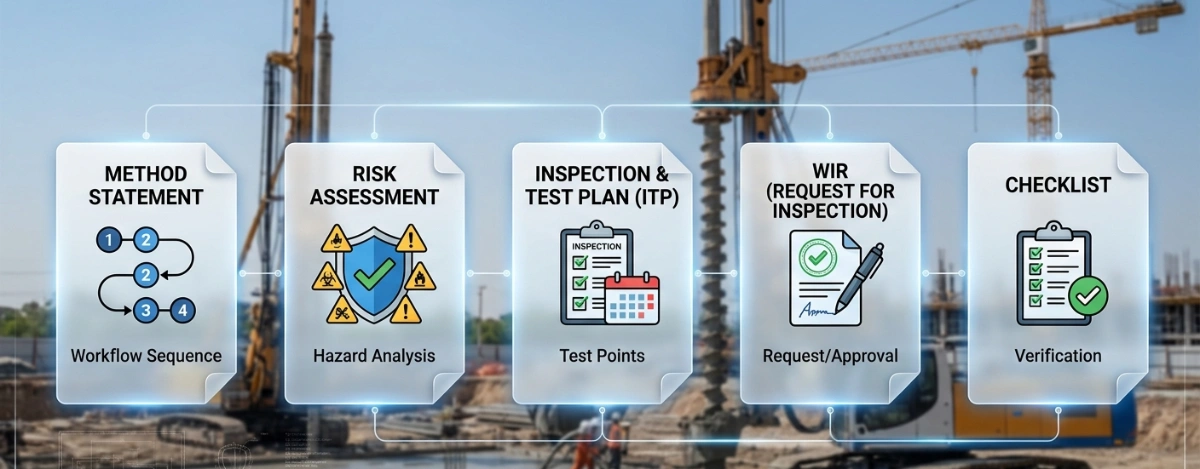
Unlike a downloadable Word or PDF template, this ITP is an AI-assisted editable starting point directly connected to its method statement. Every inspection activity, hold point, and acceptance criterion is structured and ready to adapt to your project.
- AI-assisted customization — Tailor inspection activities and acceptance criteria to your specific project scope.
- Linked method statement — This ITP is connected to the corresponding method statement describing the work sequence.
- Multiple export formats — Download as a formatted PDF or editable Excel spreadsheet.
- Editable starting point, not a final document — Review and verify all content against your project specifications and standards before use.
What you can customize
When you save this ITP to your account, every inspection row becomes editable. You can add, remove, or modify:
- Inspection activity — Description of what is being inspected.
- Inspection type — Hold point (H), Witness point (W), Review (R), or Monitor (M).
- Responsibility — Contractor, subcontractor, engineer, or client.
- Frequency — How often the inspection occurs.
- Acceptance criteria — Referenced standard or specification requirement.
- Records — Forms, test reports, or checklists required as evidence.
Why this ITP is used
To verify that waste management activities meet regulatory and contract requirements and achieve recycling targets.
Who uses this inspection and test plan
Environmental Manager, HSE Officer, Site Engineers, Waste Coordinator, and the Engineer/Client for oversight.
When this ITP is prepared and submitted
From site establishment through project closeout, at setup, during daily operations, outbound shipments, and final reporting.
Who receives or approves this ITP
Engineer/Client for review and approval before implementation.
Inspection scope
Setup of waste areas, hazardous storage, daily/weekly checks, outbound load documentation, data reconciliation, and final closeout.
Typical hold, witness, and review points
Hold before first hazardous waste receipt and first hazardous shipment; witness initial setup and labeling of segregation area.
Typical inspection records
Setup checklists, daily/weekly inspections, WTNs/Manifests, weighbridge tickets, training records, audit and reconciliation reports.
Important approval note
This ITP is an AI-assisted editable starting point, not a pre-approved document. Before use on any project, all inspection activities, hold points, and acceptance criteria must be reviewed and approved by the relevant parties (superintendent, principal contractor, or client representative) in accordance with your contract and project quality plan.
Always verify acceptance criteria against your applicable drawings, specifications, and regulatory requirements. Hold points must be confirmed with the relevant authority before work proceeds past that point.
Inspection and test plan
| Activity | Inspection / Test | Acceptance Criteria | Responsibility | Record |
|---|---|---|---|---|
| Approval of Waste Management Plan and Vendor Licenses | Review and approval | Approved WMP; current licenses/permits on file; site layout endorsed. | Project Manager / Environmental Manager / Engineer | Approval letters; Permit copies; WMP issue register |
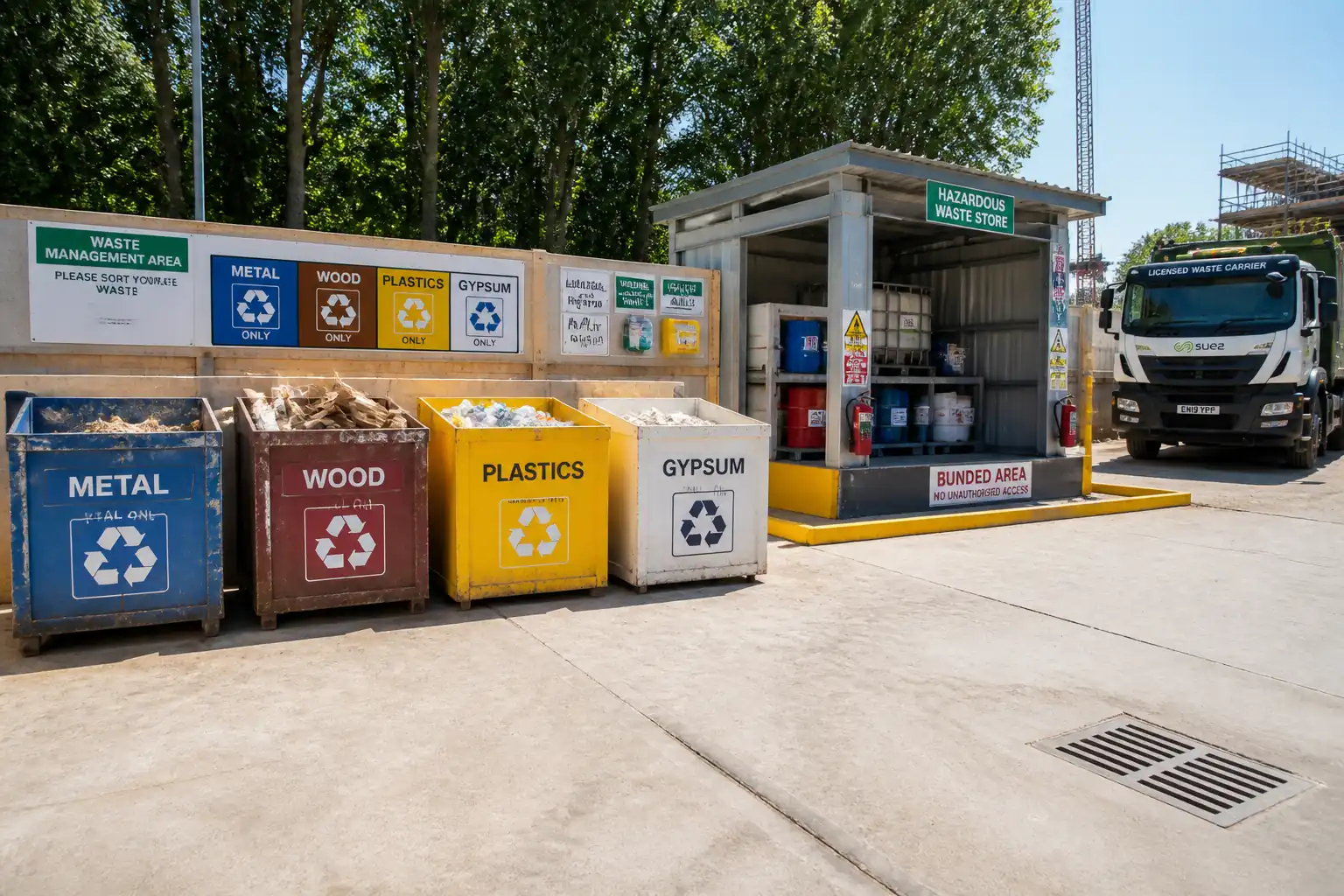
| Waste Area Setup (Skips/Bins, Signage) | Visual inspection and photo record | Correct containers per stream; labels legible; lids functional; 1 m clear zones; impermeable base. | Waste Coordinator / HSE Officer | Waste Area Setup Checklist; Photos |
| Hazardous Waste Store Commissioning | Bund capacity verification; compatibility check | Bund capacity ≥110% of largest container or ≥25% of total; segregation of incompatibles; SDS available; emergency equipment in place. | Environmental Manager / HSE Officer | Hazardous Store Commissioning Form; Bund calc |
| Daily Waste and Housekeeping Inspection | Checklist and corrective actions | Access clear; no overfilling; contamination ≤5% by volume; covers closed; spill kits stocked. | Foreman / HSE Officer | Daily Inspection Checklist; Action log |
| Weekly Formal Environmental Inspection | Walkdown and records check | All required records up to date; hazardous store inspected; no leaks/spills; signage intact. | Environmental Manager | Weekly Inspection Report |
| Outbound Load Documentation (Non-hazardous) | Document completeness check | Waste Transfer Note completed and signed; carrier license valid; destination permitted; load covered. | Waste Coordinator / Carrier | WTN; Weighbridge ticket |
| Outbound Load Documentation (Hazardous) | Manifest/Consignment verification | Correct waste codes (EWC*/RCRA), quantities, packaging, UN numbers, ADR placards; signatures from all parties; copy retained. | Environmental Manager / Carrier | Consignment Note/Manifest; Weighbridge ticket; Carrier ADR cert |
| Monthly Waste Data Reconciliation | Reconciliation and variance analysis | Weights reconcile within ±5%; discrepancies investigated and closed. | Environmental Manager / QS | Monthly Waste Summary; Vendor statements |
| Training and Competency Verification | Attendance and competency checks | 100% workforce inducted; refreshers monthly; toolbox talks after NCRs. | HSE Officer | Training matrix; Attendance sheets; Quiz results |
| Final Closeout and Reporting | Document completeness and physical closeout | All waste removed; records complete; final recycling rate reported with certificates of recovery/disposal. | Project Manager / Environmental Manager | Final Waste Report; Certificates |
This table is a read-only public reference. Download the PDF or Excel version, or customize this ITP to edit it for your project.
Frequently asked questions
Related method statement
This Inspection and Test Plan is associated with the Method Statement: Construction Waste Segregation and Disposal Management method statement, which describes the step-by-step construction sequence, resources, materials, equipment, safety controls, and environmental controls for this activity.
View the Method Statement: Construction Waste Segregation and Disposal Management method statement →Continue with related inspection, method statement, article, and checklist resources.