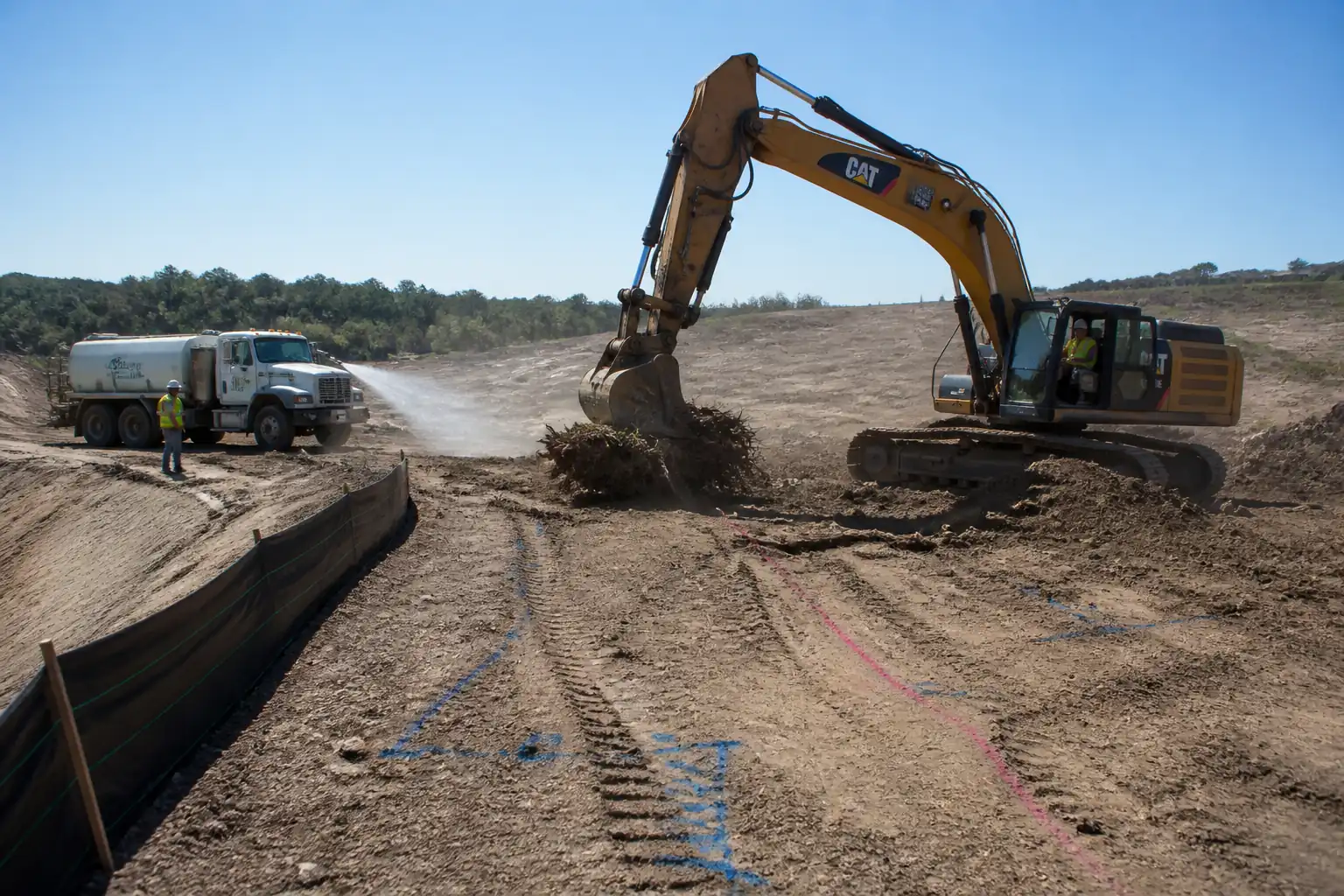

Method Statement: Site Clearance and Grubbing Works – Method Statement
AI-assisted method statement with matching ITP, PDF download, and Excel export.
More than a static template
Unlike a downloadable Word or PDF template, this method statement is an AI-assisted editable starting point connected directly to a matching Inspection and Test Plan. Every section is structured, project-adaptable, and ready to export.
- AI-assisted drafting — Customize every section with AI for your specific project scope.
- Linked ITP — A matching inspection and test plan is generated alongside the method statement.
- Multiple export formats — Download as a formatted PDF or editable Excel spreadsheet.
- Editable starting point, not a final document — Review, verify, and adjust all content against your project requirements before use.
Static template vs. Quollnet workflow
| Feature | Static template | Quollnet |
|---|---|---|
| Project-specific content | Manual fill-in required | AI-assisted customization |
| Linked ITP | Separate document, no link | Matching ITP included |
| Export formats | Usually PDF only | PDF and Excel |
| Structured sections | Free-form layout | 13 standardized sections |
| Saved to your account | Local file only | Cloud-saved, reusable |
| Content accuracy | You verify everything | AI-assisted, you still verify |
| Cost | Often free but time-intensive | Free to customize and download |
What you can customize
When you save this method statement to your account, every section becomes editable. The following 13 sections are included:
- Scope — Defines the activity and its boundaries.
- References — Standards, specifications, and drawings.
- Responsibilities — Roles and accountabilities.
- Resources — Labour, plant, and equipment summary.
- Materials — Materials and compliance requirements.
- Equipment — Tools and equipment details.
- Prerequisites — Hold points and pre-conditions.
- Method sequence — Step-by-step construction sequence.
- Safety controls — HSE risk controls and PPE.
- Environmental controls — Environmental mitigation measures.
- QA/QC — Quality inspection and test requirements.
- ITP — Inspection and Test Plan table (has its own page).
- Attachments — Referenced drawings and documentation.
Why this method statement is used
This method statement is used to define and communicate the approved procedure for carrying out method statement: site clearance and grubbing works on site. It ensures the work is planned in advance, the correct resources and controls are in place, and all personnel understand responsibilities, sequence, quality requirements, and safety controls before work begins. It aligns site execution with the documented scope and acceptance expectations.
Who uses this method statement
This method statement is used by contractors, site supervisors, project engineers, QA/QC engineers, HSE officers, consultants, and client representatives. It serves as a shared reference for planning, execution, supervision, inspection, and approval of the activity on site.
When it is prepared and submitted
The method statement is prepared before the work activity starts and submitted as part of the pre-construction documentation package for review and approval.
Who reviews or approves it
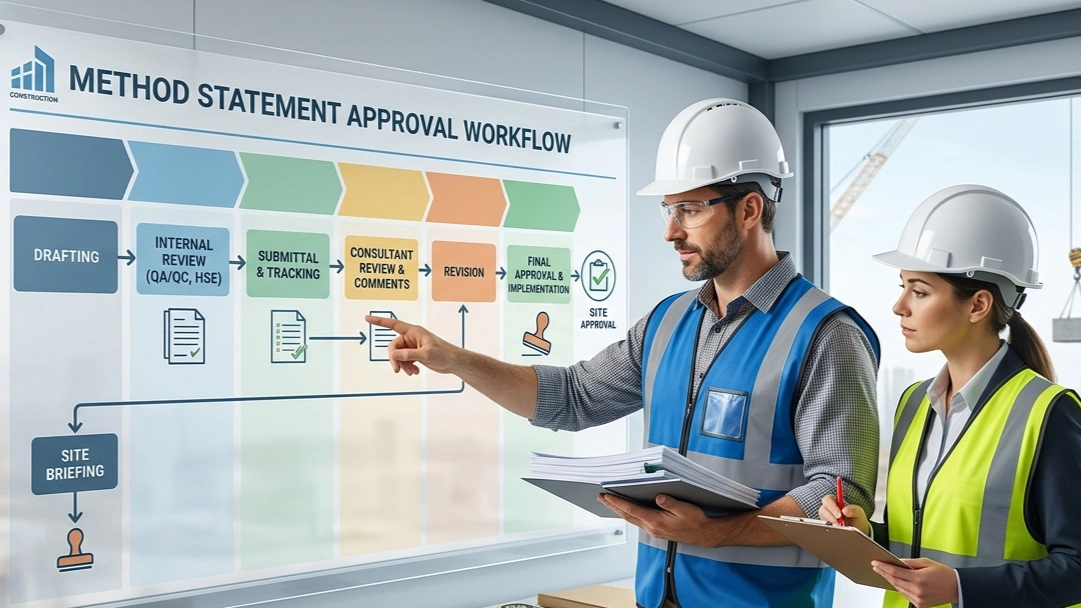
The method statement is usually submitted to the client representative, consultant, resident engineer, or project management consultant for review and approval before the work commences.
Important approval note
This method statement is an AI-assisted editable starting point, not a pre-approved document. Before use on any project, all content must be reviewed and approved by the relevant parties (superintendent, principal contractor, or client representative) in accordance with your contract and project quality plan.
For example: if your specification requires a departure from a referenced standard, that departure must be documented and approved separately — this method statement will not capture that automatically. Always verify against your applicable drawings, specifications, and regulatory requirements.
Method statement content
Scope
Work Summary
This method statement covers pre-earthworks site clearance and grubbing for , including:
- Desktop review and field verification of underground utilities.
- Establishment of protection zones, exclusion areas, and temporary access/traffic management.
- Vegetation cutting, tree/shrub removal (where permitted), grubbing of roots and stump extraction.
- Demolition and removal of minor abandoned surface/subsurface structures (e.g., small slabs, shallow footings, fences, culverts) as directed.
- Identification, segregation, and removal of unsuitable or deleterious materials (e.g., organic layers, peat pockets, rubbish, soft spots) to disposal or treatment.
- Topsoil stripping, handling, stockpiling for reuse, or off-site disposal.
- Environmental protections (dust, noise, erosion/sediment, spill prevention) and waste management.
- Proof-rolling and acceptance of cleared formation where required prior to earthworks.
- As-built survey, measurement records, and formal handover to earthworks.
Exclusions
- Bulk earthworks and engineered fill placement beyond local backfilling of stumps/voids.
- Asbestos or hazardous waste abatement (handled under a separate licensed procedure if encountered).
- Works beyond the boundary or outside approved permits.
Constraints and Interfaces
- Live underground/overhead utilities and servitudes.
- Ecological constraints (protected flora/fauna, nesting seasons) and tree preservation.
- Neighbouring properties, public roads, watercourses, and drainage infrastructure.
- Sequencing with demolition, survey, ecological supervision, and subsequent earthworks.
Key Tolerances and Benchmarks [Verify per project specifications]
- Topsoil stripping depth: typically 150–300 mm based on horizon; tolerance ±20 mm where GPS/laser guided.
- Root/stump removal: remove woody material >25 mm diameter to min 500 mm below final formation or as specified.
- Stockpiles: max height 3 m, side slopes ≤1V:2H; separation from watercourses ≥10 m; seed/mulch within 48 hours.
- Proof-rolling: no pumping; rutting ≤25 mm under specified roller/truck; soft spots treated.
- Backfill to local voids: compact to ≥95% MDD (Standard Proctor) in ≤200 mm loose lifts where required.
References
| Document Type | Reference / Number | Revision | Notes |
|---|---|---|---|
| Standard | BS 6031 | Latest [Verify per project specifications] | |
| Standard | BS 3882 | Latest [Verify per project specifications] | |
| Standard | BS EN 1997-1 | Latest [Verify per project specifications] | |
| Standard/Guideline | PAS 128:2014/2022; ASCE 38-22 | Latest [Verify per jurisdiction] | |
| Standard | ASTM D698; BS EN ISO 17892 series | Latest [Verify per project specifications] | |
| Standard | ISO 14001; ISO 45001 | Latest [Verify per project HSE plan] | |
| Regulation | [Insert applicable local laws] | Current | Verify permit-to-work, tree removal and burning restrictions. |
Responsibilities
| Role | Responsibility | Name / Party |
|---|---|---|
| PM | Approve MS/ITP; ensure permits and budget. | Contractor |
| CM | Brief crews; enforce exclusion zones; coordinate sequencing. | Contractor |
| Engineer | Provide control points; verify tolerances. | Contractor |
| HSEO | Verify controls, conduct inspections, dust/noise monitoring. | Contractor |
| EO | Confirm tree/vegetation permits; supervise sensitive zones. | Contractor |
| UC | Approve method near live services; arrange shutdowns as needed. | Contractor |
| Engineer | Approve ITP points; accept handover. | Employer/Engineer |
| Specialist | Ensure compliance with tree permits and BS recommendations. | Specialist Subcontractor |
Resources
| Resource Type | Description | Quantity | Remarks |
|---|---|---|---|
| Personnel | PM, CM, Site Engineer, Surveyor, HSE Officer, Environmental Officer, Utility Coordinator | As required | |
| Personnel | Excavator, dozer, loader, water truck, dump truck, stump grinder operators (certified). | Per approved manpower plan | |
| Personnel | Chainsaw/brushcutter operatives (certified), riggers/banksmen, demolition crew. | Per workfront | |
| Services | Accredited laboratory (ISO 17025), licensed waste carrier and disposal facility, arborist. | As needed |
Materials
| Material | Specification / Grade | Quantity | Remarks |
|---|---|---|---|
| Polypropylene geotextile | UV-stabilized, AOS per design [Verify] | As per drawings | |
| Water | As required | ||
| Diesel, oils | MSDS available | Per plant | |
| Well-graded granular fill | BS EN 13285 Type 1 or approved equivalent [Verify] | As required |
Equipment
| Equipment | Capacity / Type | Quantity | Inspection Required |
|---|---|---|---|
| Excavator | 20–30 t | 2–4 | |
| Dozer/Grader | 150–250 hp | As required | |
| Loader/Tipper | 12–20 m³ trucks | 1 loader + 4–10 trucks | |
| Water truck | 8–16 kL | 1–2 | |
| Chainsaw/Brushcutter | As required | ||
| Grinder | 1 | ||
| Vac truck | As required | ||
| Survey kit | As required | ||
| Roller/Plate | As required | ||
| Monitors | As required |
Prerequisites
Approvals and Documentation
- Approved Method Statement, Risk Assessment, and ITP.
- Permits to clear/vegetation removal permits; tree removal/pruning approvals.
- Utility clearances/NOCs; updated utility drawings and survey results (PAS 128/ASCE 38-22 compliant where applicable).
- Environmental permits for erosion/sediment controls and water use/discharge [Verify per project HSE plan and local regulations].
- Traffic Management Plan for site access and haul routes.
- Waste Management Plan and agreements with licensed carriers/disposal facilities.
- Archaeology/chance finds and UXO clearance confirmation where applicable.
Site Readiness
- Stakeout of clearing limits and protected zones; signage installed.
- Handover of ecological constraints map; pre-clearance walkover by Environmental Officer/Arborist.
- Weather forecast reviewed; high-wind dust plan in place.
- Calibration certificates for survey and monitoring equipment.
- Pre-start briefings and toolbox talks specific to utility strikes, plant-people interface, and vegetation cutting.
- Emergency response plan, spill kits, first aid, and communications verified serviceable.
Method Sequence
| Step | Activity | Description | Responsibility | Inspection / Hold Point |
|---|---|---|---|---|
| 1 | Mobilization and pre-start | Mobilize plant, establish site compound, welfare, first aid. Verify plant pre-use inspections and operator certifications. | CM / HSEO | Plant pre-start checks |
| 2 | Permits and hold points | Confirm all permits (clearance, utility NOCs, environmental) and HSE authorizations. | PM / UC / HSEO | Document review |
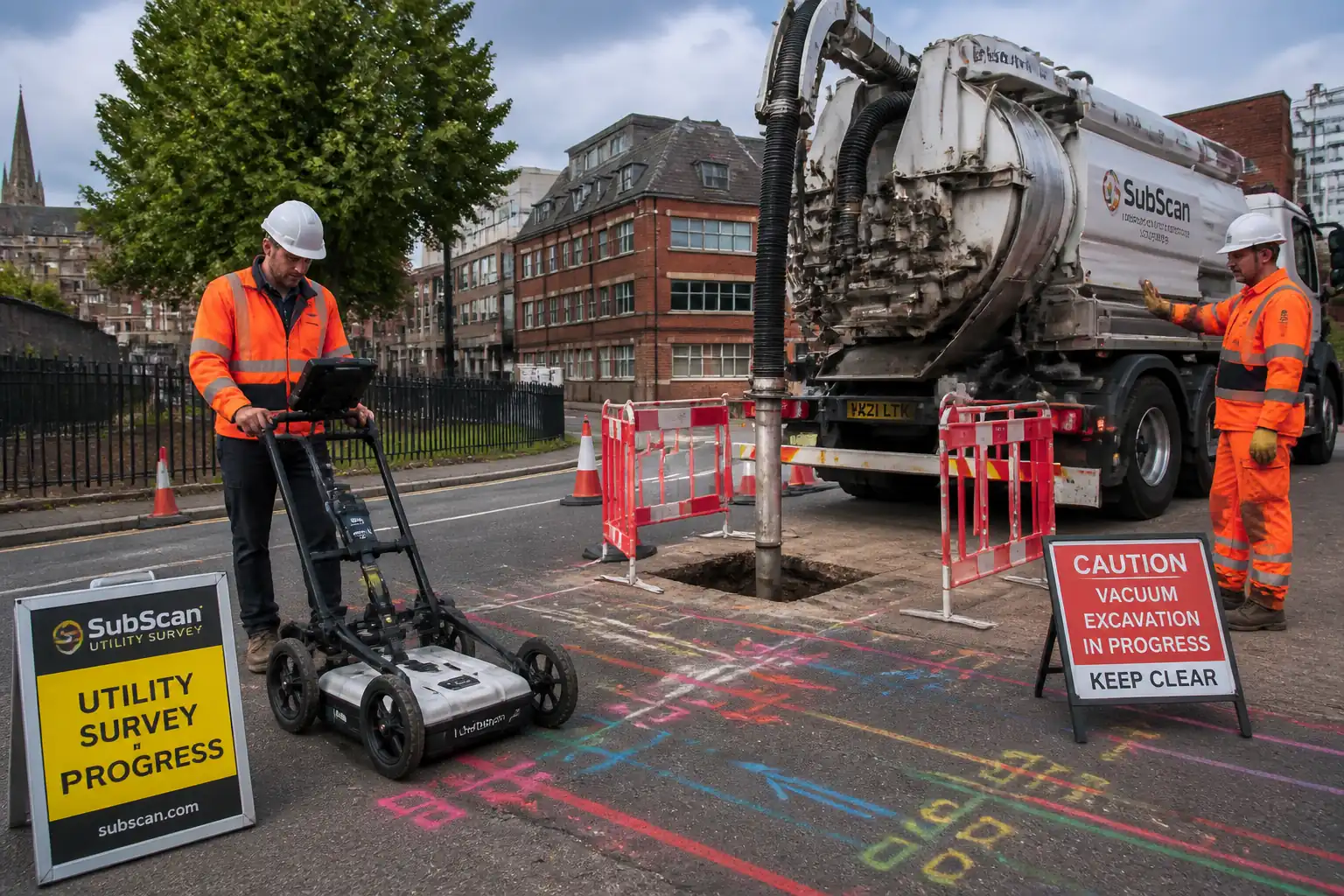
| 3 | Utility detection and marking | Desktop utility review; EM locator/GPR survey to achieve QL-B; mark services with color codes; update utility plan. | UC / Surveyor | Witness survey |
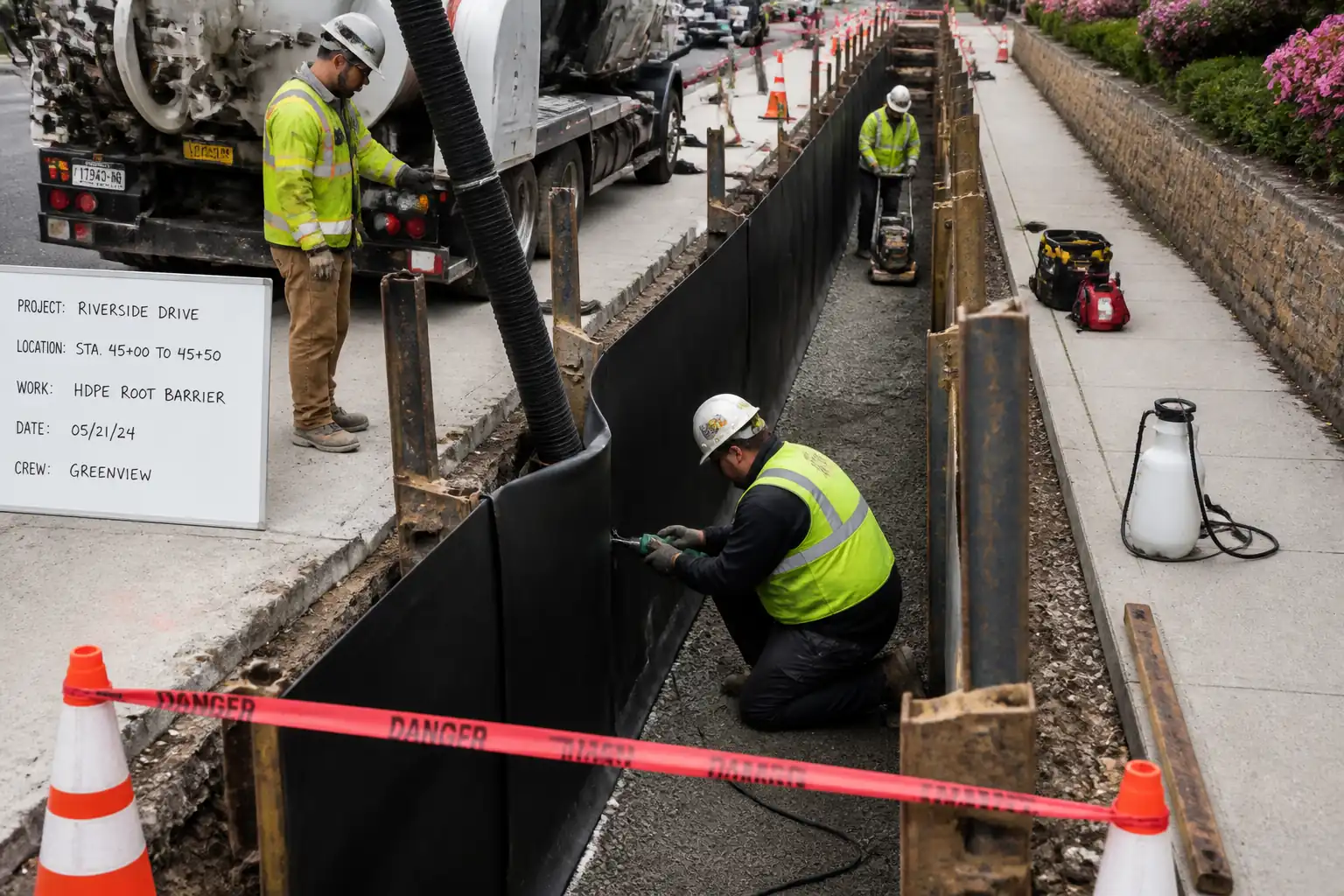
| 4 | Trial holes (potholing) | Vacuum or hand excavate to expose critical utilities to QL-A at crossings or within work area. | UC / CM | Hold point prior to excavation |
| 5 | Establish protection/exclusion zones | Install barriers around utilities, protected trees, watercourses; set traffic routes, banksman positions. | CM / HSEO / EO | Site walk |
| 6 | Erosion/sediment and monitoring setup | Install silt fences, check dams, wheel-wash; place PM10 monitor and noise meter at boundary. | CM / EO / HSEO | Witness installation |
| 7 | Vegetation cutting | Cut vegetation to near-ground level using brushcutters/chainsaws; segregate green waste. | CM / Arborist | Supervisor check |
| 8 | Grubbing and stump removal | Excavate stumps/roots using excavator or stump grinder; backfill and compact local voids. | CM | Spot inspection |
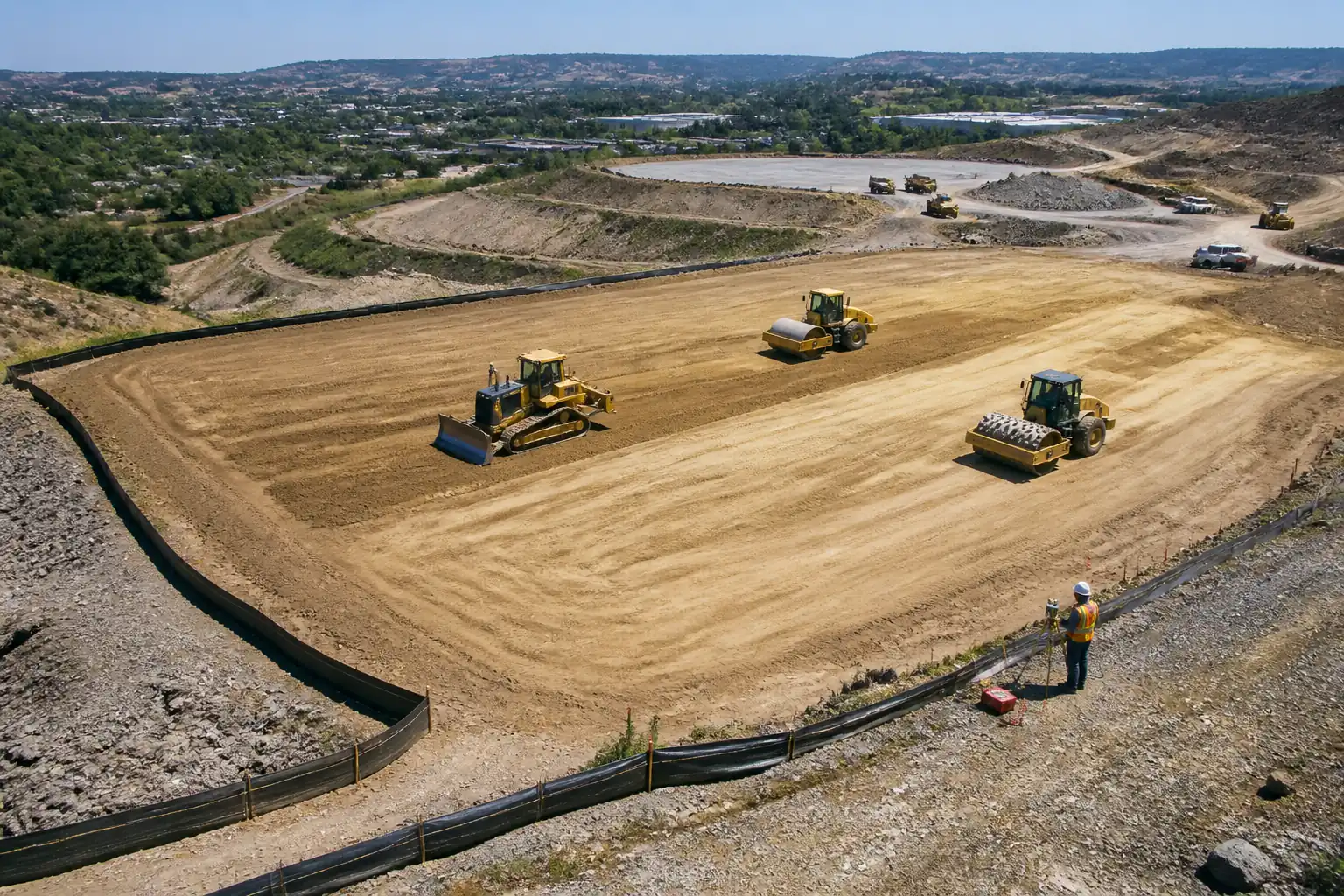
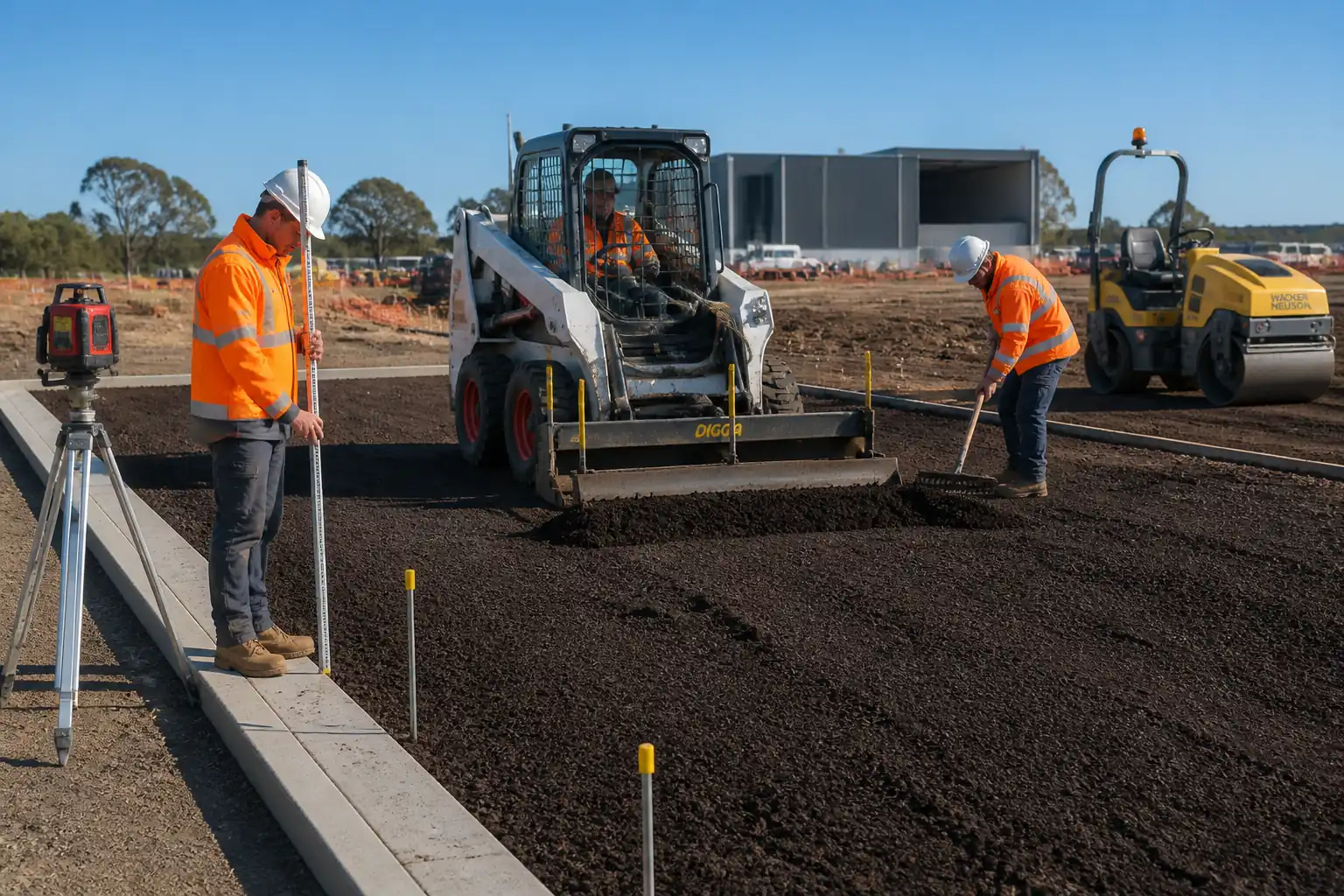
| 9 | Topsoil stripping | Strip topsoil evenly using dozer/grader/excavator with GPS where applicable; avoid mixing with subsoil. | CM / Site Engineer | Hold at trial strip |
| 10 | Topsoil handling and stockpiling | Haul topsoil to designated stockpiles; shape and protect. | CM / EO | Weekly |
| 11 | Identification and removal of unsuitable material | Probe/proof-roll; excavate soft/peaty pockets or deleterious fill; segregate for disposal or treatment. | CM / Engineer | Witness during excavation |
| 12 | Removal of abandoned minor structures | Break and remove small slabs, shallow foundations, fence footings; manage waste streams. | CM | Supervisor check |
| 13 | Waste segregation and loading | Segregate green waste, timber, scrap, inert spoil; load to covered trucks for licensed disposal or recycling. | CM / Waste Coordinator | Weighbridge reconciliation |
| 14 | Dust suppression and housekeeping | Operate water trucks; adjust routes; clean haul roads; wheel-wash enforced. | HSEO / CM | Daily monitoring |
| 15 | Proof-rolling and formation check | Roll formation with specified roller/truck to identify weak areas; mark and treat. | Engineer / CM | Witness |
| 16 | As-built survey and measurement | Survey cleared limits, stockpile extents/volumes; update BIM/GIS if applicable. | Surveyor | Document review |
| 17 | Final inspection and snag rectification | Joint walkdown with Engineer; close NCRs/observations; rectify snags. | CM / Engineer | Hold |
| 18 | Handover to earthworks | Issue completion dossier including permits, surveys, disposal tickets, test results, photos, and QA records. | PM / CM | Document review |
Health, Safety, and Environment (HSE) – Task-Specific Safety Controls
Key Hazards and Controls
1) Hazard: Underground utility strike (electric, gas, fiber, water)
- Likely consequence: Electrocution, explosion, service outage, flooding.
- Engineering/procedural control: PAS 128/ASCE 38 utility survey; potholing to QL-A; no mechanical excavation within 0.5–1.0 m of live services; use insulated tools, vacuum excavation; lock-out/tag-out where authorized.
- Required PPE: Dielectric gloves when appropriate, safety boots, eye/face protection, arc-rated clothing when required.
- Collective measure: Physical barriers and signage around services; dedicated banksman; plant slew limiters.
- Inspection/permit/supervision: Permit to Dig; utility owner liaison; UC present during crossings; [Verify per project HSE plan and local regulations].
2) Hazard: Plant–people interface and reversing vehicles
- Likely consequence: Struck-by, runover, crush injuries.
- Engineering/procedural control: Segregated routes; one-way systems; spotters/banksmen; proximity alarms and reversing cameras; exclusion zones ≥5 m around operating plant.
- Required PPE: High-visibility clothing, hard hat, safety boots, gloves.
- Collective measure: Barriers, traffic marshals, speed limits ≤15 km/h on site.
- Inspection/permit/supervision: Daily plant checks; traffic management inspections; competency verification.
3) Hazard: Chainsaw/brushcutter operations
- Likely consequence: Lacerations, kickback injuries, flying debris.
- Engineering/procedural control: Certified operators; pre-use checks; two-person rule; cut below shoulder height; maintain 10 m exclusion.
- Required PPE: Chainsaw helmet with visor, hearing protection, cut-resistant gloves and trousers, steel-toe boots.
- Collective measure: Marked exclusion zones; tool lock-out when unattended.
- Inspection/permit/supervision: Equipment inspection log; supervisor oversight.
4) Hazard: Stump extraction and suspended loads
- Likely consequence: Pinch/crush, struck-by from snapping roots or swung loads.
- Engineering/procedural control: Rated lifting points; do not work under suspended loads; controlled pull angles; use rakes/rippers not buckets where feasible.
- Required PPE: Hard hat, safety boots, gloves, eye protection.
- Collective measure: Exclusion zone ≥1.5 times stump radius; banksman control.
- Inspection/permit/supervision: Lift plan where applicable; operator certification.
5) Hazard: Demolition of minor structures
- Likely consequence: Falling debris, unanticipated collapse, dust, silica exposure.
- Engineering/procedural control: Survey for hazards; progressive demolition; water mist suppression; shoring if needed.
- Required PPE: Helmet, safety glasses/goggles, RPE (minimum FFP2/N95), gloves, boots.
- Collective measure: Debris screens; exclusion zones; spotter.
- Inspection/permit/supervision: Demolition permit; supervisor present; hot works permit if cutting.
6) Hazard: Hazardous materials discovery (e.g., asbestos-containing material, hydrocarbon hotspots)
- Likely consequence: Respiratory disease, contamination spread.
- Engineering/procedural control: Stop-work; cordon off; sampling by licensed specialist; follow asbestos/hazmat plan.
- Required PPE: As per specialist plan (e.g., P3 respirator, disposable coveralls).
- Collective measure: Isolation barriers; decontamination procedures.
- Inspection/permit/supervision: Hazardous material permit and licensed contractor engagement.
7) Hazard: Dust, noise, and vibration
- Likely consequence: Respiratory irritation, nuisance, hearing damage.
- Engineering/procedural control: Water trucks; speed control; fit mufflers; schedule high-noise tasks daytime; maintain equipment.
- Required PPE: RPE (FFP2/FFP3) when needed; hearing protection; eye protection.
- Collective measure: Boundary monitoring (PM10, noise); acoustic barriers where required.
- Inspection/permit/supervision: Monitoring logs; trigger levels per CEMP [Verify per project HSE plan and local regulations].
8) Hazard: Slips/trips, unstable ground, open excavations
- Likely consequence: Falls, sprains, engulfment.
- Engineering/procedural control: Maintain housekeeping; daylight work preferred; safe slopes or edge protection; backfill promptly.
- Required PPE: Safety boots with ankle support, gloves, head protection.
- Collective measure: Barricade edges; signage; access ways maintained.
- Inspection/permit/supervision: Daily site inspections; excavation permit where depth triggers apply.
9) Hazard: Fuel handling and spills
- Likely consequence: Fire, environmental contamination.
- Engineering/procedural control: Double-bunded storage; spill kits; trained refueling; no-smoking zones.
- Required PPE: Anti-static clothing, gloves, goggles.
- Collective measure: Fire extinguishers; spill pallets; emergency shut-offs.
- Inspection/permit/supervision: Weekly bund checks; hot work permit when needed.
10) Hazard: Heat stress/UV or adverse weather
- Likely consequence: Heatstroke, dehydration, reduced visibility hazards.
- Engineering/procedural control: Work-rest cycles; hydration; shade; suspend work in high winds/heavy rain.
- Required PPE: Weather-appropriate PPE, sunscreen.
- Collective measure: Shelter stations; weather alerts.
- Inspection/permit/supervision: Supervisor weather assessment; stop-work authority.
Environmental Controls
Dust and Air Quality
- Water application rate 0.5–1.5 L/m² per pass adjusted to conditions; suspend activities if dust cannot be controlled or wind >10 m/s [Verify].
- Cover all haul trucks; stabilize haul roads; enforce wheel-wash; boundary PM10 monitoring where required.
Noise and Vibration
- Maintain equipment; fit silencers; avoid tonal reversing alarms where possible; schedule noisy works daytime; boundary target LAeq ≤75 dBA day [Verify].
Erosion and Sediment Control
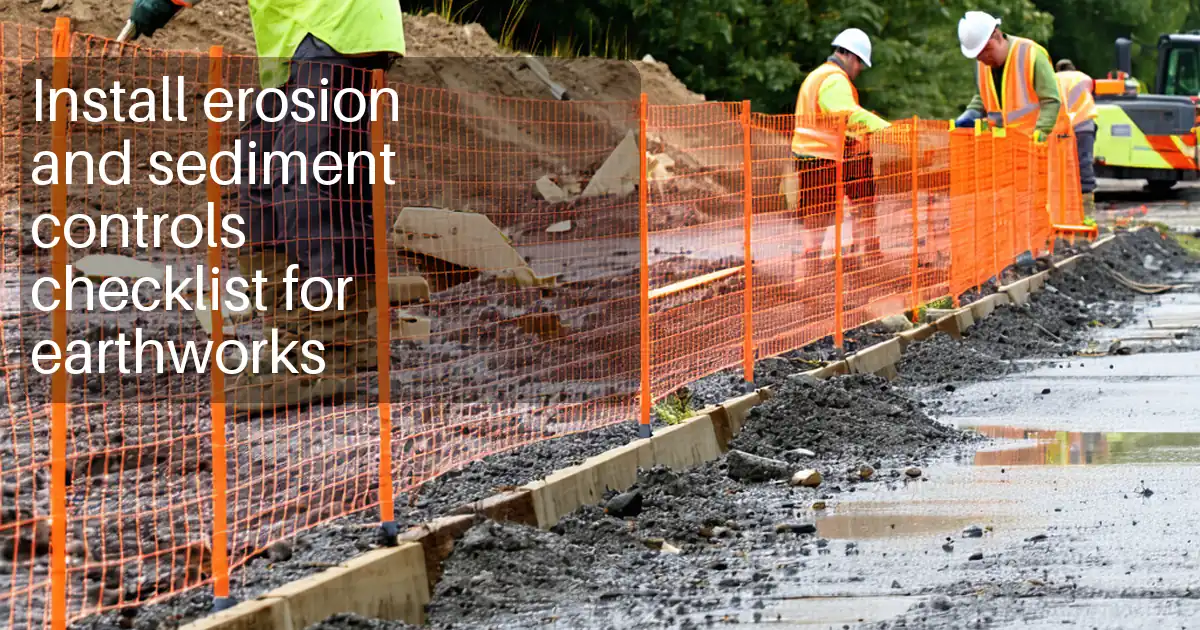
- Install silt fence downslope before stripping; maintain 150 mm toe trench; check dams in drains; inspect after rain and repair within 24 h.
- Stockpiles set ≥10 m from watercourses; seed/mulch within 48 h; perimeter swales and sediment traps.
Water Management
- No discharge of turbid water to storm drains; use settlement tanks or filtration; dewatering only under permit; record volumes and water quality where required.
Ecology and Vegetation
- Pre-clearance ecological walkover; respect no-go habitats; implement nesting bird checks in season; tree protection zones fenced; pruning/removal supervised by arborist where required.
Topsoil Preservation
- Strip by horizons; avoid contamination by subsoil; limit trafficking on stripped areas; keep stockpiles low and seeded to prevent anaerobic conditions.
Waste and Pollution Prevention
- Segregate waste streams; store fuels in 110% bunds; spill kits at refueling points; immediate containment and reporting of spills.
Cultural Heritage and Chance Finds
- Stop-work protocol for artefacts or remains; secure area; notify Engineer and authorities.
Controls and permit thresholds must be verified per project CEMP and local regulations.
QA/QC
Quality Objectives
- Provide a clean, safe, and compliant formation suitable for commencement of earthworks as per project specifications and referenced standards.
Inspections and Tests
- Pre-start documentation check: permits, approvals, calibrations.
- Utility verification: survey and potholing records signed by Utility Coordinator and, where required, utility owner.
- Trial strip: confirm stripping depth/tolerance and horizon identification prior to full-scale operations.
- Topsoil management: visual contamination check each load; stockpile geometry and protection verified weekly; sampling for reuse quality per BS 3882 if specified (typical 1 sample/250–500 m³) [Verify].
- Unsuitable material: maintain register; Engineer to witness removals; compaction tests for reinstatement to ≥95% MDD (ASTM D698) where directed.
- Dust/noise: daily logs; PM10 and LAeq where specified; corrective actions documented.
- Proof-rolling: witnessed by Engineer; defects mapped and rectified; retest until acceptance.
Records and Traceability
- Daily site diaries, manpower/plant logs, photos (geo-tagged where possible).
- Utility survey files, potholing logs, permits to dig.
- Strip plans, survey as-builts, stockpile logs and volumes.
- Waste transfer notes/manifests, weighbridge tickets, licenses of carriers/disposal sites.
- Test reports (compaction, laboratory topsoil characterization if applicable), equipment calibration certificates.
Nonconformance and Corrective Action
- Raise NCR for deviations (e.g., over-stripping, contamination, formation failures); investigate root cause; implement corrective measures; verify via re-inspection.
Handover
- Completion dossier: approvals, ITP sign-offs, inspection/test records, as-built survey, environmental monitoring data, disposal dockets, photo record, and Handover Certificate.
Attachments
- Approved drawings showing clearing limits, protected zones, and access routes.
- Utility drawings, PAS 128/ASCE 38 survey outputs, potholing logs, and Permit to Dig.
- Traffic Management Plan and signage layout.
- Environmental permits; CEMP excerpts; erosion/sediment control details.
- Tree survey/arborist report and permits; ecology constraints map.
- Plant and equipment inspection sheets; operator certifications.
- Monitoring equipment calibration certificates (PM10, noise meters, survey gear).
- Waste carrier and disposal facility licenses; waste classification records; WTN/manifests; weighbridge tickets.
- Daily records, photo logs (before/during/after), strip maps, as-built surveys.
- Handover certificate template and inspection checklists.
This content is a read-only public reference. Download or customize to get an editable version.
ITP preview
The first inspection activities from the linked ITP for Method Statement: Site Clearance and Grubbing Works:
| Activity | Inspection / Test | Acceptance Criteria | Responsibility | Record |
|---|---|---|---|---|
| Pre-start documentation and permits | Review of MS/ITP approvals, permits (clearance, utility NOCs, environmental) | All approvals current and applicable to area; permit-to-dig issued. | PM / HSEO | Approved MS/ITP, permit register, PTD form |
| Utility detection survey | EM locator/GPR to PAS 128 quality level B or better | Utilities located and marked; positional accuracy per PAS 128 QL-B; drawings updated. | Utility Coordinator / Surveyor | Utility survey report, marked plans |
| Utility potholing (trial holes) | Vacuum/hand excavation to expose services at crossings | QL-A achieved; position confirmed ±50 mm; protection installed; authorization to proceed issued. | Utility Coordinator / CM | Potholing logs, photos, PTD update |
Showing 3 of 12 inspection activities. View full ITP →
Related Inspection and Test Plan
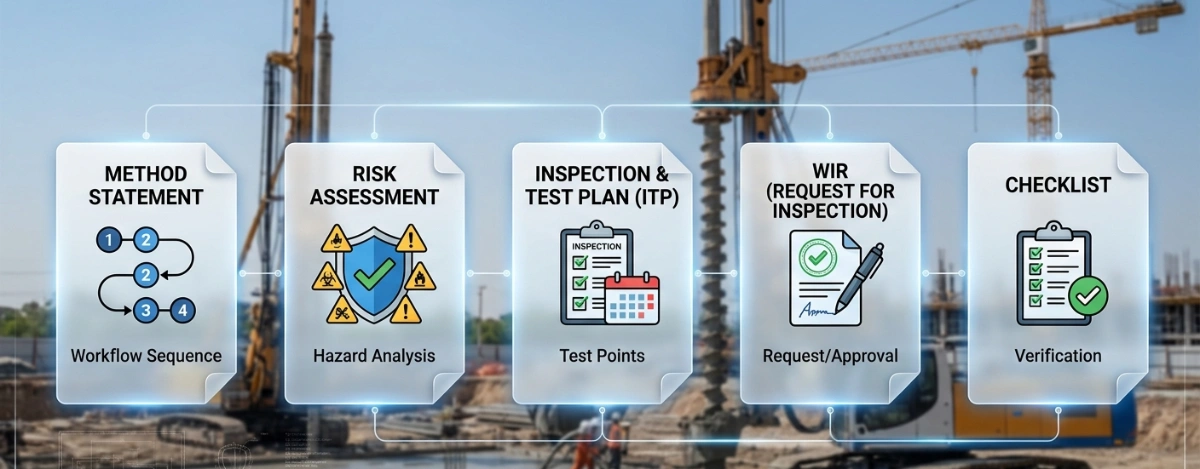
An Inspection and Test Plan (ITP) is available for Method Statement: Site Clearance and Grubbing Works. The ITP defines the inspection activities, acceptance criteria, hold and witness points, responsible parties, and records required to verify the work described in this method statement.
View the Method Statement: Site Clearance and Grubbing Works ITP →Frequently asked questions
Continue with related Quollnet resources connected to this method statement.