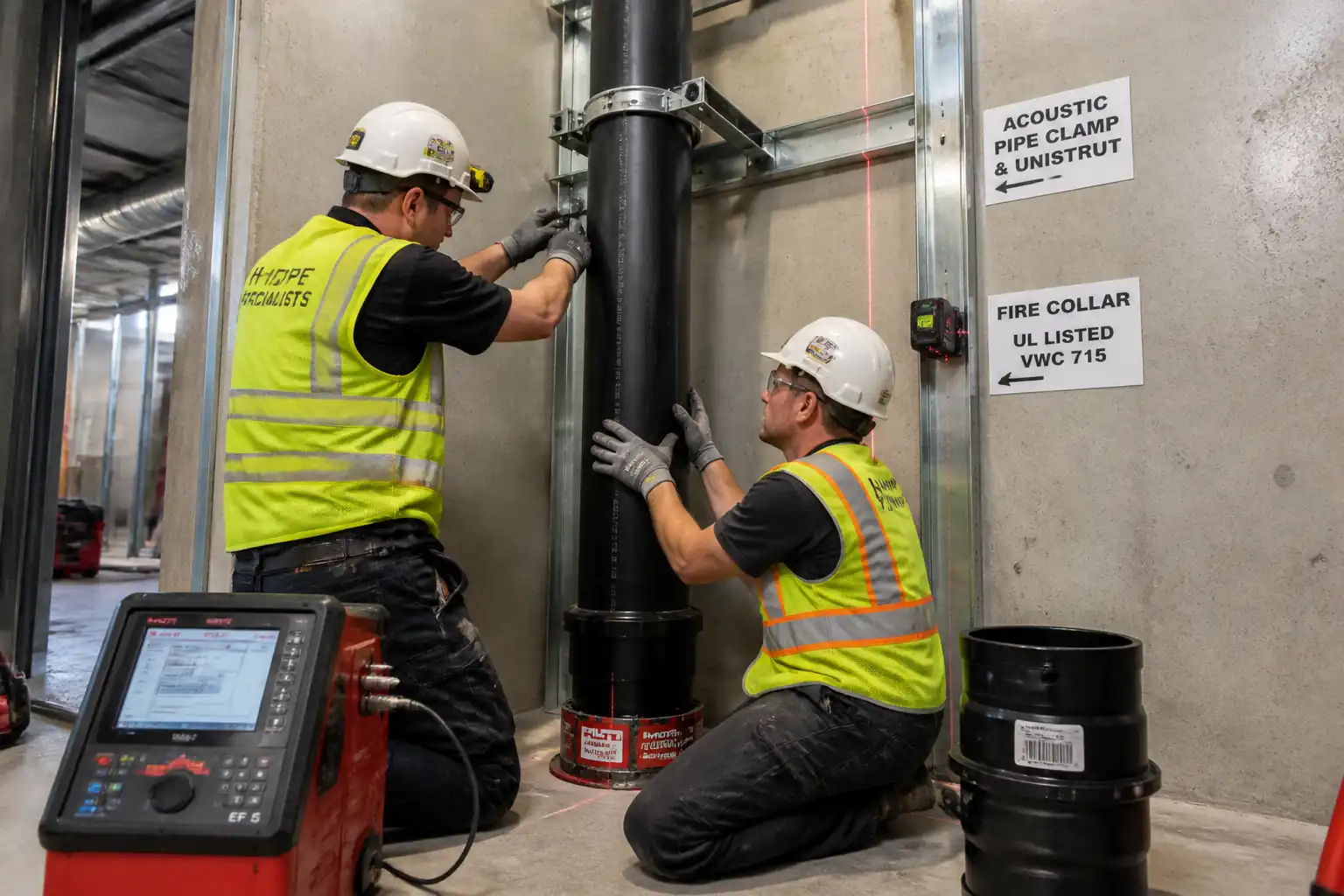

Inspection and Test Plan for Method Statement: Installation of HDPE Soil, Waste & Vent (SWV) Vertical Stacks
AI-assisted inspection and test plan connected to a method statement, with PDF and Excel export.
More than a static template
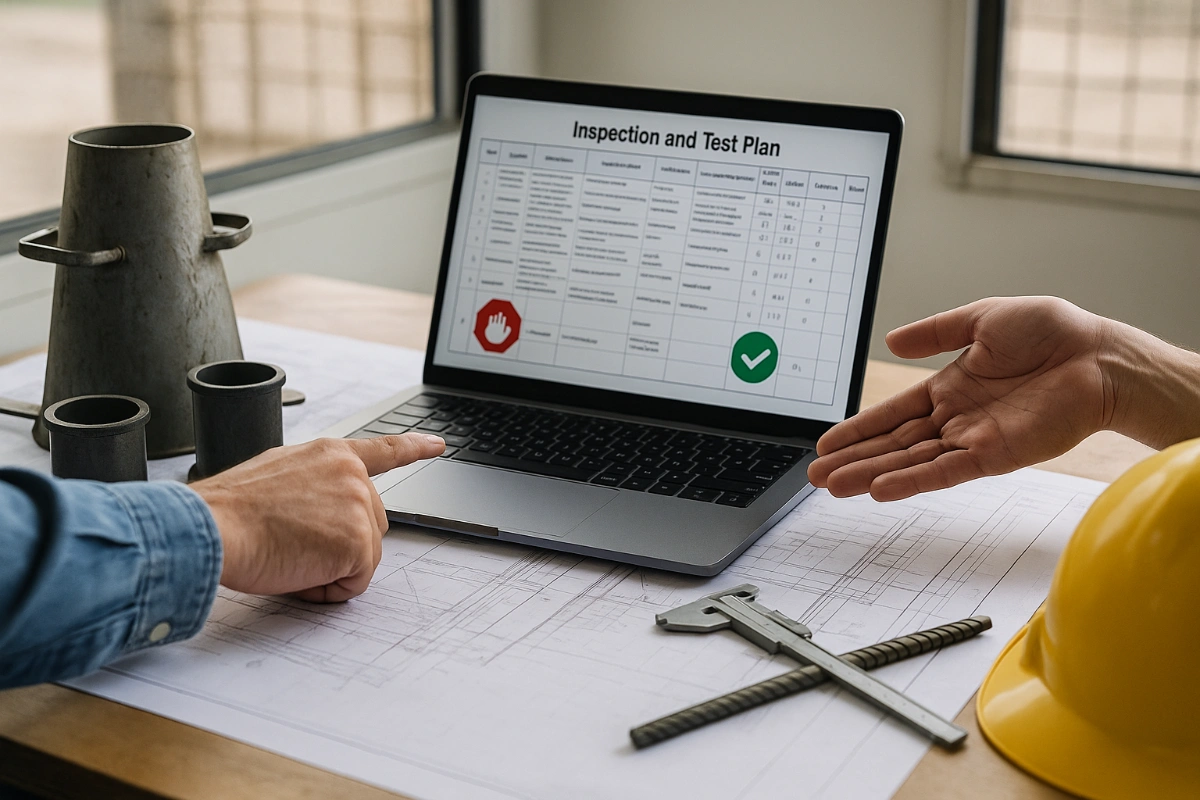
Unlike a downloadable Word or PDF template, this ITP is an AI-assisted editable starting point directly connected to its method statement. Every inspection activity, hold point, and acceptance criterion is structured and ready to adapt to your project.
- AI-assisted customization — Tailor inspection activities and acceptance criteria to your specific project scope.
- Linked method statement — This ITP is connected to the corresponding method statement describing the work sequence.
- Multiple export formats — Download as a formatted PDF or editable Excel spreadsheet.
- Editable starting point, not a final document — Review and verify all content against your project specifications and standards before use.
What you can customize
When you save this ITP to your account, every inspection row becomes editable. You can add, remove, or modify:
- Inspection activity — Description of what is being inspected.
- Inspection type — Hold point (H), Witness point (W), Review (R), or Monitor (M).
- Responsibility — Contractor, subcontractor, engineer, or client.
- Frequency — How often the inspection occurs.
- Acceptance criteria — Referenced standard or specification requirement.
- Records — Forms, test reports, or checklists required as evidence.
Why this ITP is used
To verify that installation and testing of HDPE SWV stacks meet design, standards, and manufacturer requirements.
Who uses this inspection and test plan
Contractor QA/QC, Site Engineer, Fusion Supervisor, Firestop Applicator, and Client/TPI for surveillance and witnessing.
When this ITP is prepared and submitted
From material receipt through installation, firestopping, pressure testing, and final handover.
Who receives or approves this ITP
Client/Consultant and, where specified, Third-Party Inspector.
Inspection scope
Covers materials, equipment calibration, jointing (EF and butt), supports, expansion allowance, alignment, firestopping, and system tests.
Typical hold, witness, and review points
First-of-kind EF and butt-fusion joints; firestop pre-close; hydro/air test witnessing.
Typical inspection records
Material CoCs, fusion data logs, calibration certs, support/expansion checklists, firestop ITRs, test certificates, as-builts.
Important approval note
This ITP is an AI-assisted editable starting point, not a pre-approved document. Before use on any project, all inspection activities, hold points, and acceptance criteria must be reviewed and approved by the relevant parties (superintendent, principal contractor, or client representative) in accordance with your contract and project quality plan.
Always verify acceptance criteria against your applicable drawings, specifications, and regulatory requirements. Hold points must be confirmed with the relevant authority before work proceeds past that point.
Inspection and test plan
| Activity | Inspection / Test | Acceptance Criteria | Responsibility | Record |
|---|---|---|---|---|
| Material receipt (pipes/fittings) | CoC/Delivery inspection | Conformity to BS EN 1519-1; no damage; correct OD/SDR; traceability labels present. | QA/QC Engineer | Material inspection report, CoC |
| Equipment calibration (EF & butt-fusion) | Calibration verification | Valid calibration (≤ 12 months) [Verify]; hot plate temperature within WPS; controller self-test passed. | QA/QC Engineer | Calibration certs, pre-use checklist |
| Pre-install coordination & setting-out | Survey/marking verification | Locations per approved drawings; tolerances within 5 mm [Verify]. | Site Engineer | Setting-out report |
| Core drilling & sleeves | Core OD and sleeve check | Cores to schedule; sleeve stand-off and seals per spec; no rebar compromise without approval. | Construction Manager | Permit-to-core, inspection sheet |
| EF jointing (first-of-kind then random sampling) | EF data log review; visual joint check | Parameters within barcode/WPS; indicators fully up; no contamination/burns; full cooling observed. | Fusion Supervisor / QA/QC | EF data file, EF checklist, photos |
| Butt-fusion jointing (first-of-kind then random) | Bead inspection; parameter sheet review | Bead uniform; misalignment ≤10% t or ≤1 mm; WPS parameters followed; cool time observed. | Fusion Supervisor / QA/QC | Fusion log, bead photos |
| Support and clamp installation | Spacing/anchor check | Spacing ≤ 1.5 m vertical [Verify]; anchors at floors; acoustic liners intact; torque per data sheet. | Site Engineer / QA/QC | Support checklist |
| Expansion device setting | Stroke/mid-position verification | Calculated ΔL accommodated; anchors/guides positioned to direct movement; device set mid-stroke. | Site Engineer / QA/QC | Expansion calculation sheet, photos |
| Vertical alignment | Plumbness check | ≤ 2 mm/m; ≤ 10 mm total per stack [Verify]. | Surveyor / QA/QC | Survey report |
| Fire-stopping penetrations | Listing compliance & visual check | System matches UL/ETA; annular space per listing; correct fixings; label affixed; FRL achieved. | Firestop Applicator / QA/QC | Firestop ITR, photos, system sheet |
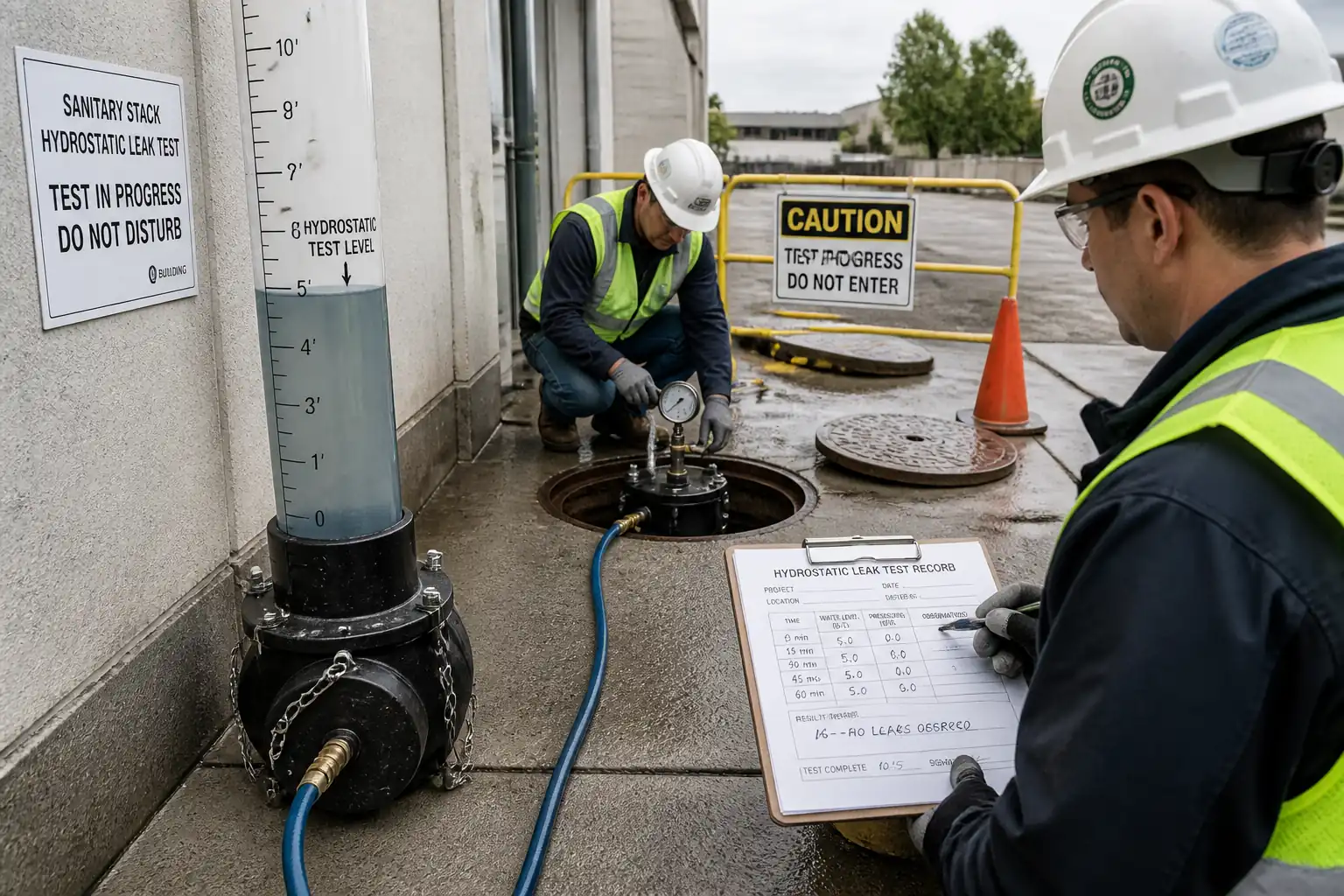
| Stack testing (hydrostatic/air) | Hydro/air test | Water head 1.5–3.0 m for 15–30 min; no leaks/level drop. Air test only if allowed; pressure/hold per code; no decay/soap bubbles. | QA/QC / TPI | Test certificate, log, photos |
| Final documentation & handover | Document completeness | All records submitted and approved; as-builts reflect installed positions and joint IDs. | Project Engineer / QA/QC | Handover dossier |
This table is a read-only public reference. Download the PDF or Excel version, or customize this ITP to edit it for your project.
Frequently asked questions
Related method statement
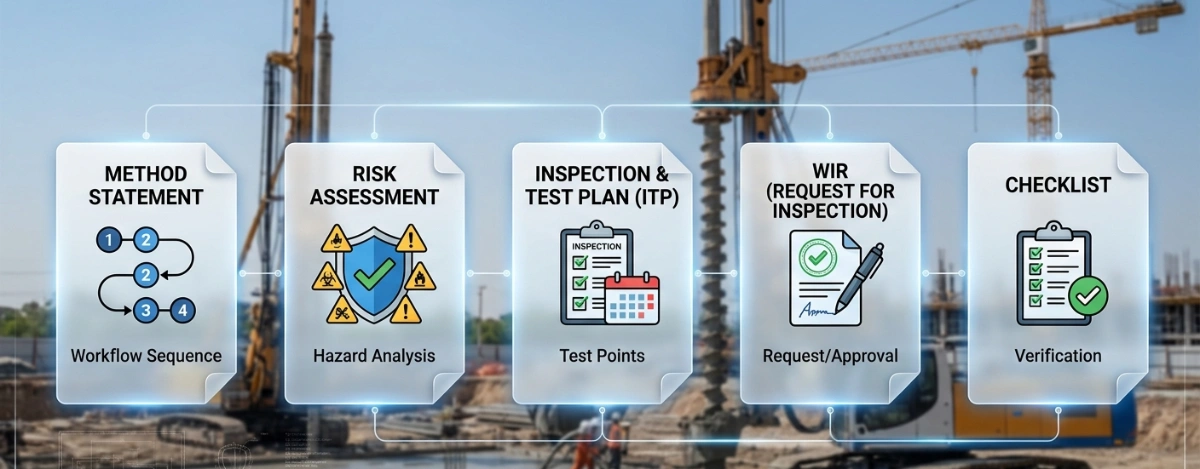
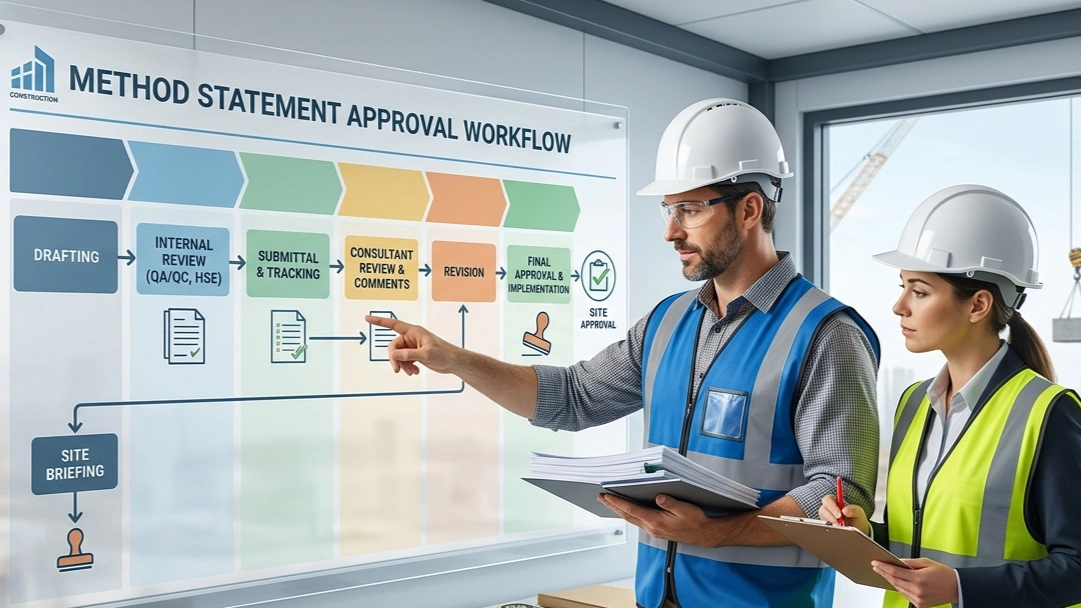
This Inspection and Test Plan is associated with the Method Statement: Installation of HDPE Soil, Waste & Vent (SWV) Vertical Stacks method statement, which describes the step-by-step construction sequence, resources, materials, equipment, safety controls, and environmental controls for this activity.
View the Method Statement: Installation of HDPE Soil, Waste & Vent (SWV) Vertical Stacks method statement →Continue with related inspection, method statement, article, and checklist resources.