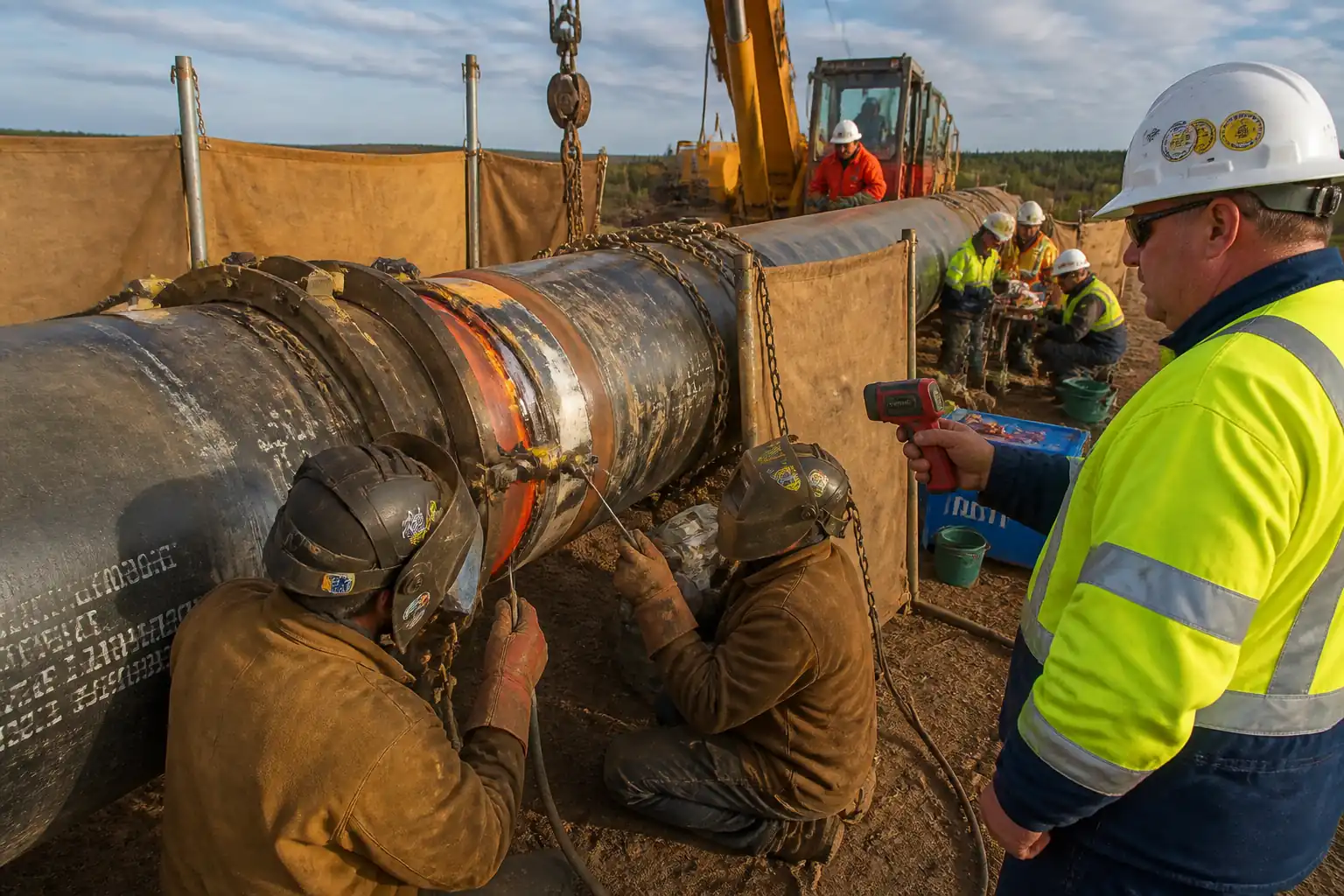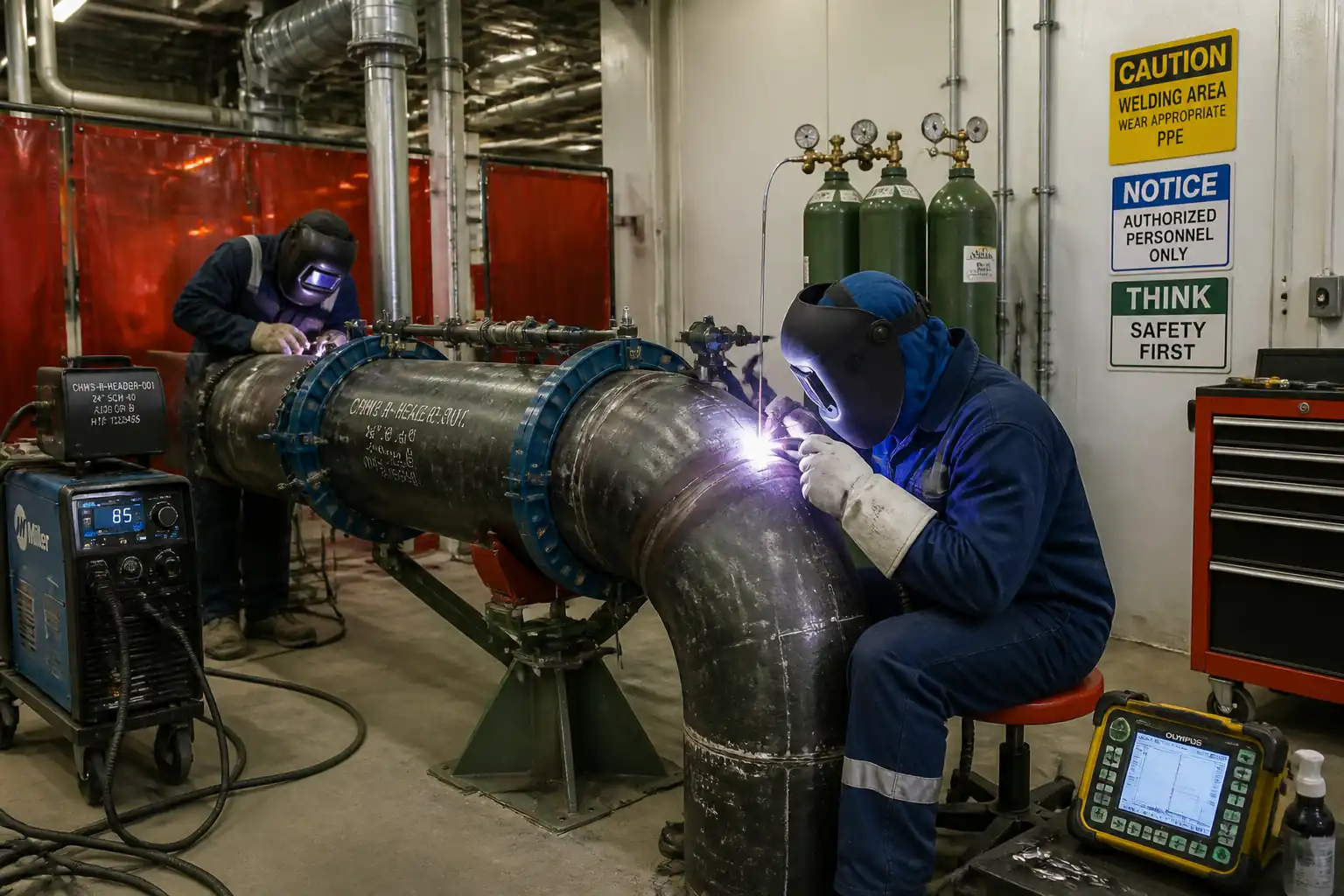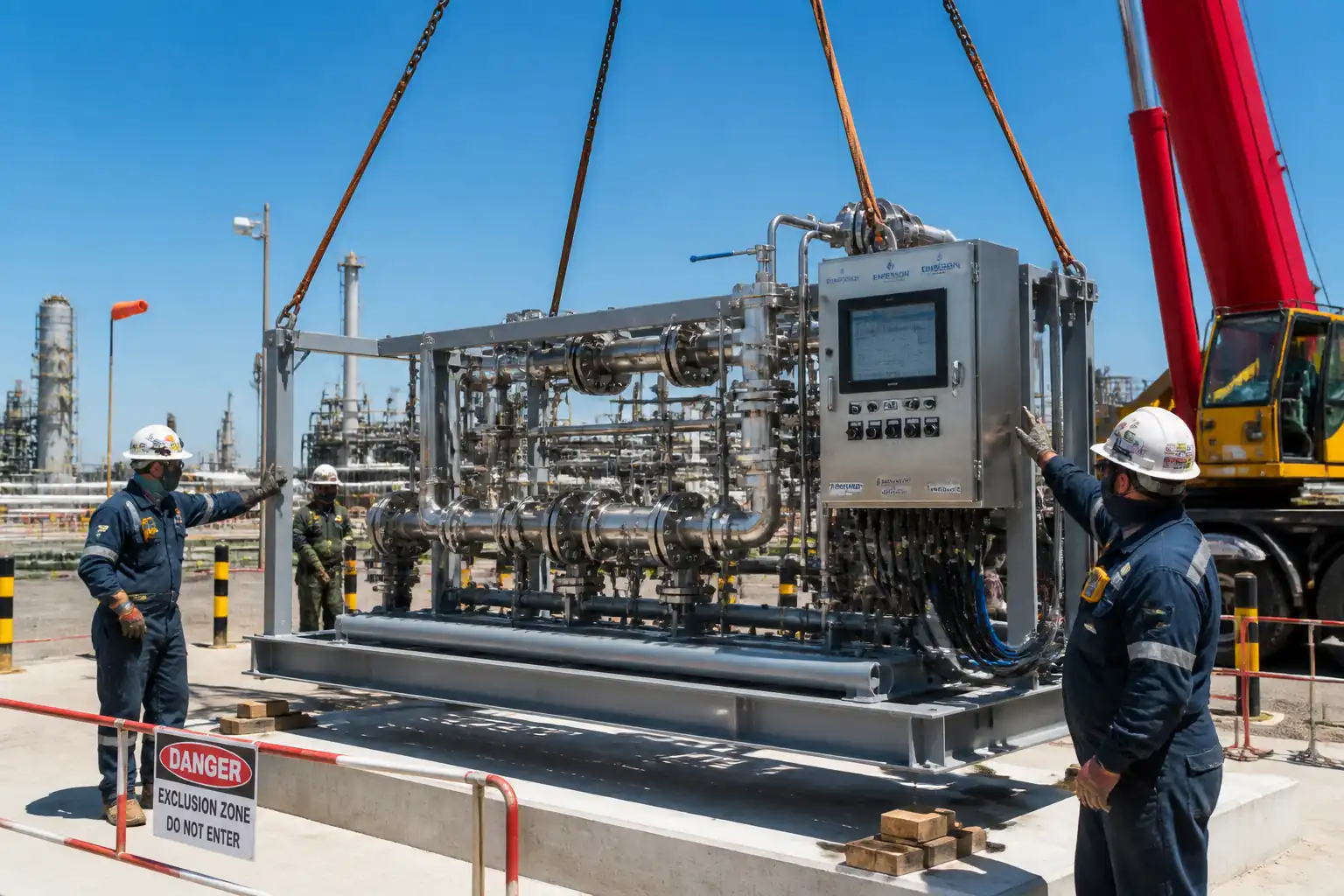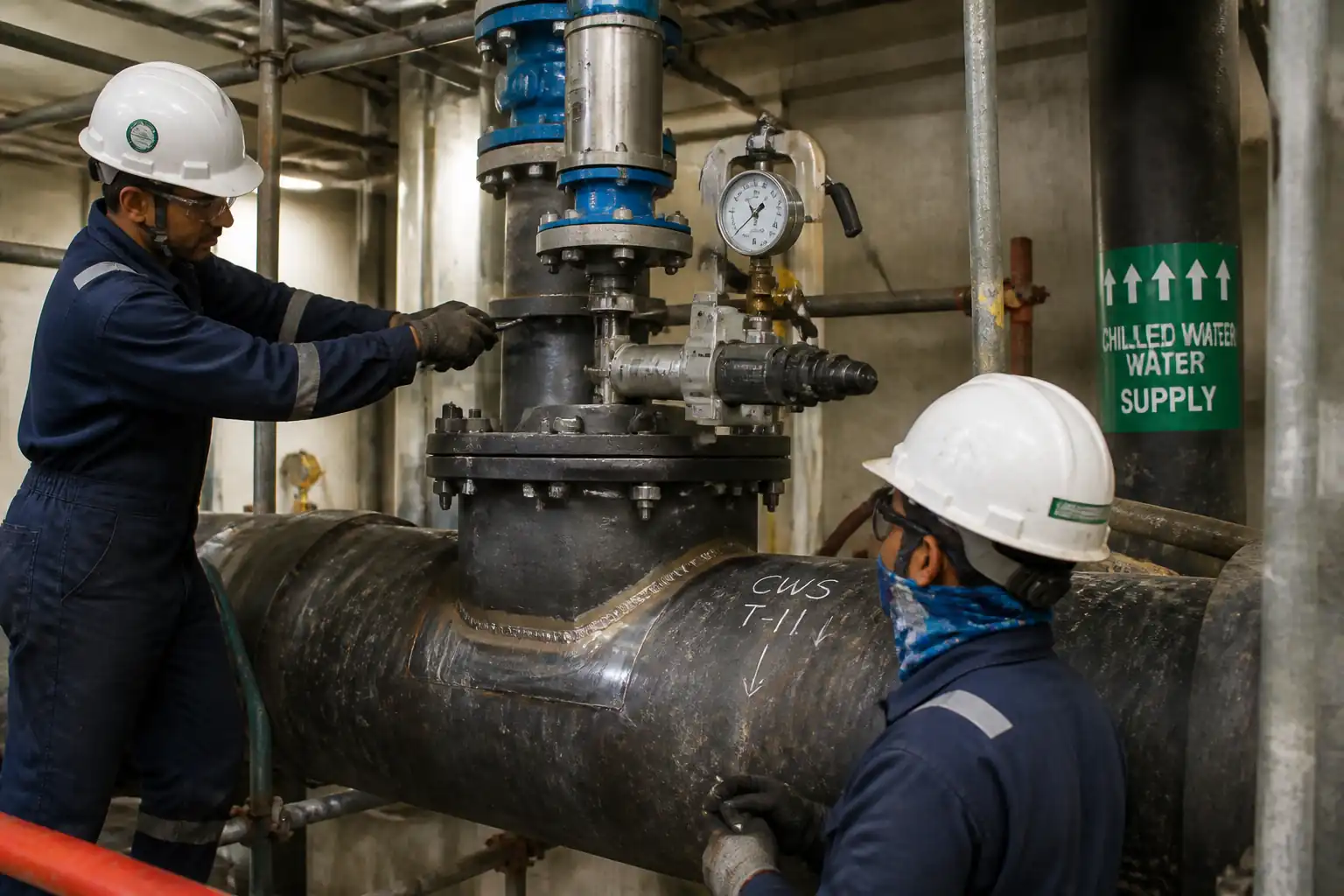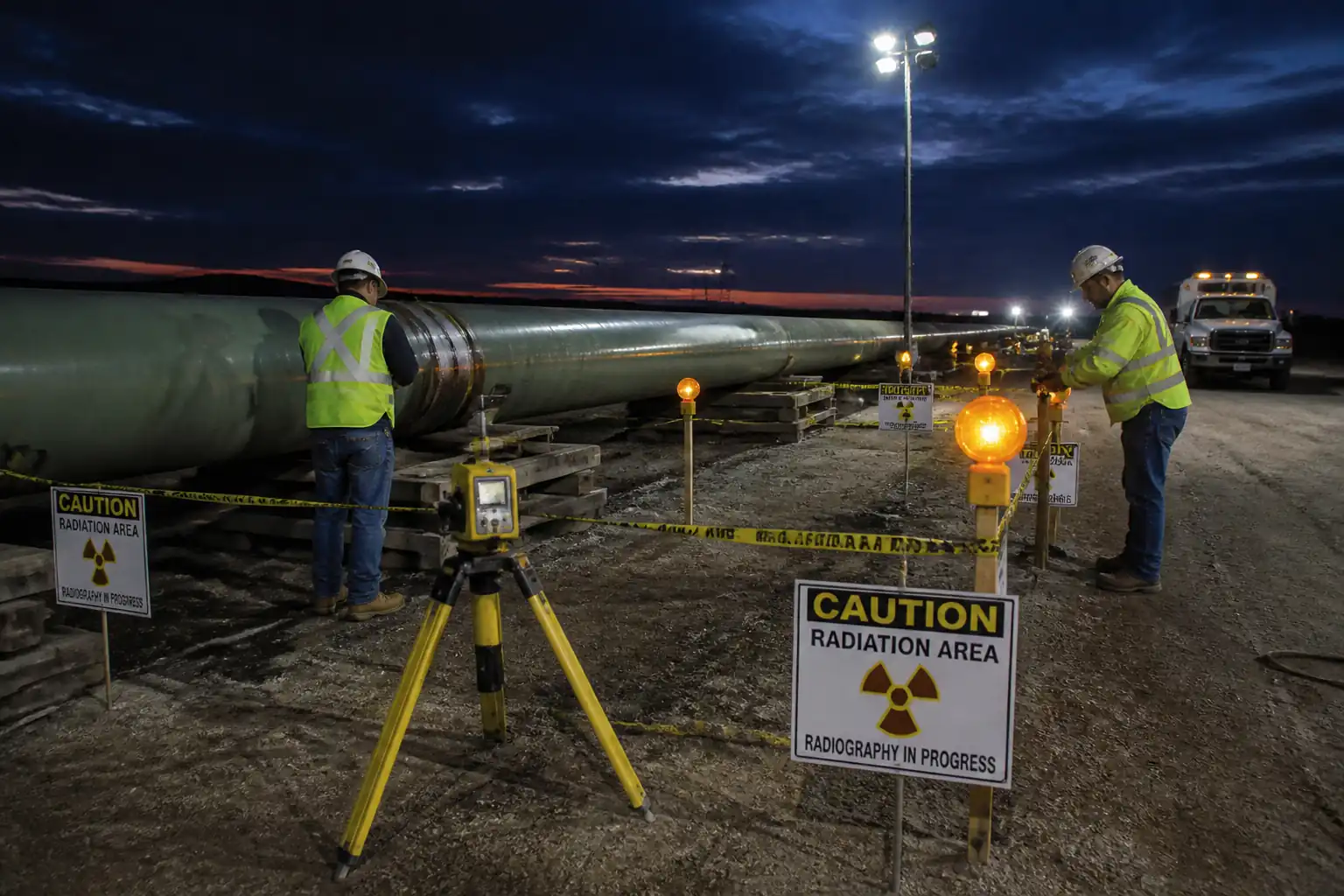

Method Statement: Coordination and Execution of NDT for Oil & Gas Pipeline Welds (RT/UT) – Method Statement
AI-assisted method statement with matching ITP, PDF download, and Excel export.
More than a static template
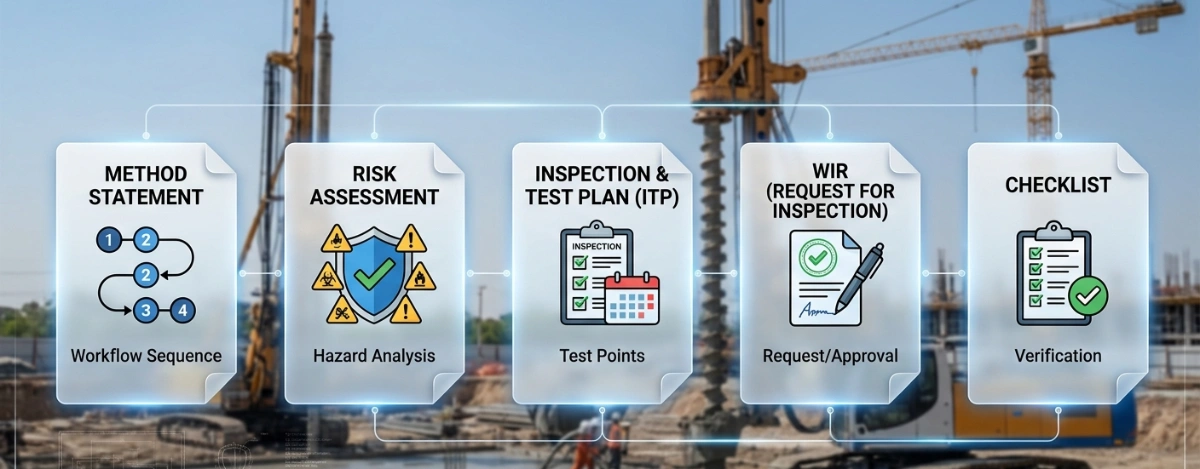
Unlike a downloadable Word or PDF template, this method statement is an AI-assisted editable starting point connected directly to a matching Inspection and Test Plan. Every section is structured, project-adaptable, and ready to export.
- AI-assisted drafting — Customize every section with AI for your specific project scope.
- Linked ITP — A matching inspection and test plan is generated alongside the method statement.
- Multiple export formats — Download as a formatted PDF or editable Excel spreadsheet.
- Editable starting point, not a final document — Review, verify, and adjust all content against your project requirements before use.
Static template vs. Quollnet workflow
| Feature | Static template | Quollnet |
|---|---|---|
| Project-specific content | Manual fill-in required | AI-assisted customization |
| Linked ITP | Separate document, no link | Matching ITP included |
| Export formats | Usually PDF only | PDF and Excel |
| Structured sections | Free-form layout | 13 standardized sections |
| Saved to your account | Local file only | Cloud-saved, reusable |
| Content accuracy | You verify everything | AI-assisted, you still verify |
| Cost | Often free but time-intensive | Free to customize and download |
What you can customize
When you save this method statement to your account, every section becomes editable. The following 13 sections are included:
- Scope — Defines the activity and its boundaries.
- References — Standards, specifications, and drawings.
- Responsibilities — Roles and accountabilities.
- Resources — Labour, plant, and equipment summary.
- Materials — Materials and compliance requirements.
- Equipment — Tools and equipment details.
- Prerequisites — Hold points and pre-conditions.
- Method sequence — Step-by-step construction sequence.
- Safety controls — HSE risk controls and PPE.
- Environmental controls — Environmental mitigation measures.
- QA/QC — Quality inspection and test requirements.
- ITP — Inspection and Test Plan table (has its own page).
- Attachments — Referenced drawings and documentation.
Why this method statement is used
This method statement is used to define and communicate the approved procedure for carrying out method statement: coordination and execution of ndt for oil & gas pipeline welds (rt/ut) on site. It ensures the work is planned in advance, the correct resources and controls are in place, and all personnel understand responsibilities, sequence, quality requirements, and safety controls before work begins. It aligns site execution with the documented scope and acceptance expectations.
Who uses this method statement
This method statement is used by contractors, site supervisors, project engineers, QA/QC engineers, HSE officers, consultants, and client representatives. It serves as a shared reference for planning, execution, supervision, inspection, and approval of the activity on site.
When it is prepared and submitted
The method statement is prepared before the work activity starts and submitted as part of the pre-construction documentation package for review and approval.
Who reviews or approves it
The method statement is usually submitted to the client representative, consultant, resident engineer, or project management consultant for review and approval before the work commences.
Important approval note
This method statement is an AI-assisted editable starting point, not a pre-approved document. Before use on any project, all content must be reviewed and approved by the relevant parties (superintendent, principal contractor, or client representative) in accordance with your contract and project quality plan.
For example: if your specification requires a departure from a referenced standard, that departure must be documented and approved separately — this method statement will not capture that automatically. Always verify against your applicable drawings, specifications, and regulatory requirements.
Method statement content
Scope
Overview
This method statement defines the coordinated workflow and controls for Non-Destructive Testing (NDT) of oil and gas pipeline welds, including:
- Weld identification and traceability
- NDT request initiation, planning, and control
- Execution of Radiographic Testing (RT) or Ultrasonic Testing (UT) on pipeline girth welds
- Radiation safety barriers and permitting
- Results interpretation and acceptance per code/project requirements
- Repair categorization, tracking, and retesting
- QA/QC hold and witness points
- Compilation of final NDT dossiers for turnover
Scope Limits
- Applies to cross-country pipelines, plant interconnecting pipelines, and tie-ins during construction and pre-commissioning. In-service inspection is excluded unless specifically authorized by the Owner.
- Covers carbon steel pipeline welds; for CRA/duplex materials or CRA overlays, procedure supplements are required [Verify per project specifications].
- Primary acceptance per API 1104 or specified project code; alternative acceptance per ISO/ASME routes where contractually required [Verify per project specifications].
Extent of NDT (Typical Benchmarks)
- Production mainline girth welds: 10–20% random RT/UT sampling per welder per day [Verify per project specifications].
- Tie-ins, crossings, station welds, and critical locations: 100% RT/UT [Verify per project specifications].
- Repairs: 100% examination of repaired area plus ≥50 mm beyond each side of repair [Verify per project specifications].
Objectives
- Demonstrate weld integrity and code compliance.
- Maintain full traceability from weld ID to NDT results and final dossier.
- Ensure radiation protection and site safety in compliance with legal and project HSE requirements.
References
| Document Type | Reference / Number | Revision | Notes |
|---|---|---|---|
| ASME B31.4 / ASME B31.8 [Verify per contract] | |||
| API 1104 [Acceptance criteria per project selection] | |||
| ISO 17635 | |||
| ISO 17636-1/2; ASTM E1742; ASME Section V, Article 2 [Verify per contract] | IQI/Wire type as per ISO 19232 | ||
| ISO 17640; ASME Section V, Article 4 [Verify per contract] | Calibration blocks per ISO 2400 / ISO 7963 | ||
| ISO 9712 or ASNT SNT-TC-1A [Verify per contract] | |||
| ISO 3999; ICRP guidance; National radiation regulations [Verify local requirements] | Permit-to-work and RPO/RSO involvement mandatory | ||
| ISO 9001 | |||
| ISO 45001; ISO 14001 [Verify per project HSE plan] |
Responsibilities
| Role | Responsibility | Name / Party |
|---|---|---|
| Client/Engineer | Approval/Witness | Owner/Engineer |
| Contractor | Management | Contractor |
| QC Manager | QA/QC Control | Contractor |
| NDT Level III | Technical Authority | NDT Subcontractor/Contractor |
| NDT Level II | Execution/Reporting | NDT Subcontractor |
| RPO/RSO | Radiation Safety | NDT Subcontractor |
| Welding Supervisor | Production Interface | Contractor |
| HSE Officer | HSE Control | Contractor |
| Surveyor | Traceability | Contractor |
| Document Controller | Records Management | Contractor |
Resources (Personnel)
| Resource Type | Description | Quantity | Remarks |
|---|---|---|---|
| Person | Procedure ownership, oversight, training | 1 [Verify] | |
| Persons | RT execution and interpretation | As required by shift/route length [Verify] | |
| Persons | UT (shear wave) execution and evaluation | As required [Verify] | |
| Person | Radiation protection and permits | 1 [Verify] | |
| Persons | VT, ITP compliance, weld/NDT log control | As required [Verify] | |
| Persons | PTW and site safety oversight | As required [Verify] |
Materials/Consumables
| Material | Specification / Grade | Quantity | Remarks |
|---|---|---|---|
| Film class C5–C7 or CR plates | ISO 17636; ISO 19232 (IQI) | As per shot schedule [Verify] | |
| Wire IQI per ISO 19232 | ISO 17636 | Per shot [Verify] | |
| UT Couplant | Compatible, non-corrosive | Sufficient for daily scans [Verify] | |
| Lead markers | Per ISO 17636 | As needed |
Equipment
| Equipment | Capacity / Type | Quantity | Inspection Required |
|---|---|---|---|
| RT Source | As required | Yes | |
| RT Processing | 1 set/crew | Yes | |
| Radiation Safety | Per crew [Verify] | Yes | |
| UT Set | Per UT crew | Yes | |
| Cal Blocks | Per UT crew | Yes | |
| Barriers | Per RT location |
Prerequisites
- Approved WPS/PQR and welder qualifications for all welding processes used [Verify per project specifications].
- Approved NDT Procedures (RT/UT) signed by NDT Level III and accepted by Client/Engineer.
- Qualified and certified NDT personnel per ISO 9712 or ASNT SNT-TC-1A [Verify per contract].
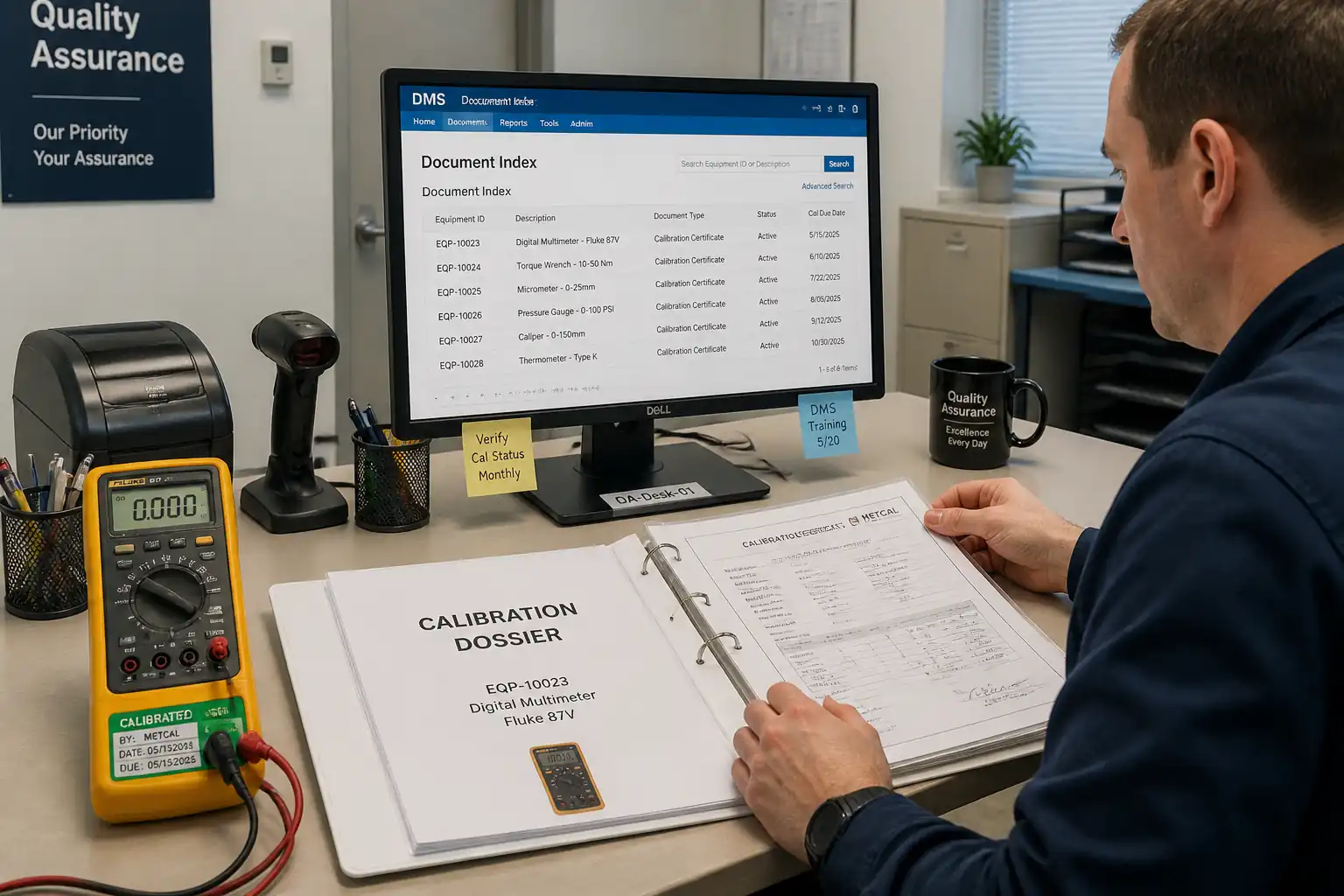
- Calibrated and in-date equipment (RT sources, UT instruments, densitometers, survey meters); calibration certificates available.
- Current radiation license for organization and RPO/RSO appointment; source leak test records in date [Verify per law].
- Agreed ITP with defined hold and witness points; approved NDT Request form and numbering system.
- Weld mapping system established (chainage/GPS) and weld tally initiated with unique IDs and welder stamps.
- Work permits: PTW for radiography, excavation/access permits, hot works isolation as required [Verify per project HSE plan and local regulations].
- Access, lighting, scaffold or platforms, and weather controls arranged.
- Pre-NDT visual inspection (VT) accepted and welds surface-prepared and dry.
Method Sequence
| Step | Activity | Description | Responsibility | Inspection / Hold Point |
|---|---|---|---|---|
| 1 | Weld identification and mapping | Assign unique weld number linked to line ID, chainage/GPS, heat numbers, joint design, and welder IDs; stencil on pipe adjacent to weld; update weld tally and isometrics. | QC Inspector / Surveyor | Document review |
| 2 | Pre-NDT VT and readiness | After weld cools and slag removal, perform VT (CSWIP/AWS CWI) for surface defects, bead profile, and cleanliness; confirm joint temperature and dryness. | QC Inspector | Hold Point (H) |
| 3 | NDT request issuance and scheduling | Raise NDT Request indicating weld ID, joint type, wall thickness, process, location, NDT method (RT/UT), extent, and timing; attach VT record and weld report. | QC Manager / Planner | Witness (W) |
| 4 | Radiography setup (if RT selected) | Confirm PTW; barricade controlled area; place IQI, lead ID markers, backscatter protection; establish SFD and exposure per technique; verify film/CR settings; conduct survey meter checks at boundary. | Radiographer Level II / RPO | Witness (W) |
| 5 | Radiography exposure and processing | Execute exposure; maintain exclusion zone; process films or scan CR/DR; perform density and IQI verification; archive raw images. | Radiographer Level II | Surveillance |
| 6 | RT interpretation | Interpret images in a controlled viewing area with calibrated viewer/densitometer; classify indications and disposition per acceptance standard. | Radiographer Level II / Level III (as needed) | Witness (W) |
| 7 | Ultrasonic testing setup (if UT selected) | Verify calibration using V1/V2 or pipe block; set DAC/TCG; select angles (45°, 60°, 70°) to cover fusion faces and HAZ; surface preparation to Sa2, smoothness adequate; couplant availability. | UT Level II | Witness (W) |
| 8 | UT scanning and evaluation | Scan 100% of weld circumference with overlapping passes from both sides where accessible; mark and size indications; prepare sketches. | UT Level II | Surveillance |
| 9 | Results review and disposition | QC reviews NDT reports; issue Repair Instructions (RI) for rejects; update repair log; notify Client per ITP. | QC Manager / Client Rep | Hold Point (H) for disposition |
| 10 | Repair execution and control | Repair by qualified welder per approved WPS; grind and blend; maintain heat input control; VT of repair area before retesting. | Welding Supervisor / QC | Witness (W) |
| 11 | Retesting after repair | Perform RT/UT of repaired area 100% plus ≥50 mm each side; different technique/parameters if needed to resolve previous limitations. | NDT Level II | Witness (W) |
| 12 | Trend analysis and escalation | Monitor welder- and crew-based repair rates; trigger increased sampling or requalification as per thresholds. | QC Manager / NDT Level III | Review |
| 13 | Final NDT dossier compilation | Assemble weld-wise RT/UT reports, images, calibration sheets, VT records, repair logs, permits, personnel certs, and equipment cal certs; index to MDR. | Document Controller / QC Manager | Hold Point (H) for handover |
Health, Safety, and Environment (HSE) – Safety Controls
Task-specific Hazards and Controls
1) Hazard: Ionizing radiation during RT exposures
- Likely consequence: Acute exposure, deterministic effects, long-term cancer risk
- Engineering/procedural control: Radiation risk assessment; establish controlled area with barriers and warning lights; ALARA planning; time–distance–shielding; use of X-ray crawler when feasible to minimize external exposure; maintain boundary where dose rate ≤ applicable limit (e.g., ≤7.5 µSv/h) [Verify per project HSE plan and local regulations]
- Required PPE: Personal alarming dosimeter, TLD badge, high-visibility vest, headlamp for night work
- Collective preventive measure: Physical barricades, lockable barriers, radiation warning signs in local language(s); night guardians
- Inspection/permit/supervision: Radiography PTW; RPO/RSO present or on-call; pre- and post-exposure radiation surveys logged; source logbook checks; regulator license verification
2) Hazard: Source loss or projector malfunction
- Likely consequence: Uncontrolled radiation field, severe exposure
- Engineering/procedural control: Daily source operability check; secure source tether; emergency retrieval kit; source leak test in date; emergency drill
- Required PPE: Dosimeters; gloves; remote handling tongs (as applicable)
- Collective preventive measure: Exclusion of non-essential personnel; emergency muster plan communicated
- Inspection/permit/supervision: RPO/RSO oversight; equipment certificates; toolbox talk before each shift
3) Hazard: Work near open trenches/uneven terrain at night
- Likely consequence: Slips, trips, falls; fracture
- Engineering/procedural control: Adequate lighting towers; cordoned walkways; maintain level staging pads for RT/UT setup
- Required PPE: Safety boots with ankle support, headlamp, hard hat
- Collective preventive measure: Temporary covers/guardrails where feasible; banksman guidance
- Inspection/permit/supervision: Night-work permit; HSE walkdowns
4) Hazard: Working at height (pipe racks/stations)
- Likely consequence: Fall from height; serious injury
- Engineering/procedural control: Certified platforms/scaffolds; 100% tie-off using fall arrest when required; tools tethered
- Required PPE: Full body harness, lanyard with shock absorber
- Collective preventive measure: Edge protection, toe boards, access control
- Inspection/permit/supervision: Scaffold tag system; work-at-height permit; competent supervisor
5) Hazard: Electrical and ignition sources in classified areas
- Likely consequence: Fire/explosion
- Engineering/procedural control: Use Ex-rated equipment where required; gas testing; maintain safe separation from live process equipment; no RT in hazardous area without gas-free certificate
- Required PPE: FR clothing, anti-static footwear
- Collective preventive measure: Area isolation and gas monitoring
- Inspection/permit/supervision: Hot work/Spark potential control permit; gas test records
6) Hazard: Noise and vibration from generators/compressors
- Likely consequence: Hearing damage
- Engineering/procedural control: Position noisy equipment away from crews; use acoustic screens where practical
- Required PPE: Ear protection (earplugs/muffs)
- Collective preventive measure: Rotating shifts, noise mapping
- Inspection/permit/supervision: Periodic noise measurements
7) Hazard: Manual handling of projectors, UT sets, and films
- Likely consequence: Musculoskeletal injury
- Engineering/procedural control: Team lift, use trolleys; limit single-lift mass per HSE standards
- Required PPE: Gloves, safety boots
- Collective preventive measure: Manual handling training
- Inspection/permit/supervision: Supervisor checks and lift plans for heavy items
8) Hazard: Chemical exposure from film processing chemicals (if wet film)
- Likely consequence: Dermatitis, respiratory irritation
- Engineering/procedural control: Closed systems; ventilation; SDS compliance; spill kits
- Required PPE: Nitrile gloves, splash goggles, apron
- Collective preventive measure: Chemical storage bunding
- Inspection/permit/supervision: COSHH/chemical permit; inspection of storage and MSDS availability
9) Hazard: Traffic interface along ROW
- Likely consequence: Vehicle–person collision
- Engineering/procedural control: Traffic management plan; spotters; cones and signage; speed limits
- Required PPE: High-vis vest, helmet
- Collective preventive measure: Temporary road closures during exposures
- Inspection/permit/supervision: Traffic permit; coordination with local authorities [Verify]
Environmental Controls
- Radiation source stewardship: Secure storage in approved containers; transport per ADR/IMDG/local regs; zero loss tolerance; audits by RPO.
- Light and noise: Aim lights away from communities; comply with night-time noise limits; schedule exposures off-peak.
- Waste management: Collect and dispose film/CR consumables, lead markers, and any developer/fixer solutions via licensed waste contractor; maintain waste manifests [Verify per local regulations].
- Spill prevention: Secondary containment for chemicals and fuel; spill kits available; immediate cleanup and reporting.
- Soil/vegetation protection: Use existing access tracks; minimize ground disturbance; reinstate any disturbed areas.
- Energy optimization: Use digital radiography where contractually permitted to reduce chemical footprint.
- Wildlife and community: Notify nearby stakeholders before night exposures; maintain safe standoff distances and security.
- Compliance monitoring: Environmental inspections logged weekly; non-conformance actions tracked to closure.
Quality Assurance / Quality Control
Controls and Metrics
- Procedure qualification: RT/UT procedures approved by Level III and Client; technique sheets maintained per thickness/OD range.
- Personnel: Valid ISO 9712 or SNT-TC-1A certifications; visual acuity tests current; continuity logs maintained.
- Equipment: Calibration certificates valid; daily function checks (UT sensitivity check; survey meter background/response; densitometer zero/standardization).
- Traceability: Weld tally links drawing/isometric, weld ID, welder ID, heat numbers, GPS/chainage, NDT request number, and result.
- NDT extent control: Random selection auditable (e.g., randomized list per welder/day); escalation rules applied when repair rate thresholds exceeded [Verify per project].
- Acceptance criteria: As specified by contract (e.g., API 1104). Deviations require NCR and approved concession.
- Records: Each NDT report uniquely numbered; images stored in non-editable format (TIFF/DICOM for DR, original films retained). Retention period typically ≥10 years [Verify per contract].
- KPIs: Repair rate by welder and by crew; turnaround time from NDT request to result; percentage of overdue retests; radiography repeat rate (<5% target) [Verify].
- Audits: Internal monthly audits by QC; external/Client audits as scheduled; corrective actions tracked.
- Handover: NDT dossier verified against MDR checklist before submission; incomplete files returned for correction.
Attachments
- Approved RT and UT Procedures (signed by Level III and Client)
- Radiography Permit-to-Work template and sample completed permits
- NDT Request form template and numbering protocol
- Weld tally log and weld mapping template (with GPS/chainage fields)
- Sample RT technique sheet and UT calibration sheet
- Personnel certifications (ISO 9712/SNT-TC-1A), eye tests, continuity logs
- Equipment calibration certificates (RT sources, densitometers, survey meters, UT sets)
- Radiation license, source leak test certificates, RPO/RSO appointment letters
- Repair instruction form and repair log template
- NDT dossier index (MDR) checklist
- Risk assessment/JSA for radiography and UT operations
This content is a read-only public reference. Download or customize to get an editable version.
ITP preview
The first inspection activities from the linked ITP for Method Statement: Coordination and Execution of NDT for Oil & Gas Pipeline Welds (RT/UT):
| Activity | Inspection / Test | Acceptance Criteria | Responsibility | Record |
|---|---|---|---|---|
| Procedure approvals (RT/UT) and personnel qualifications | Review and approval | Procedures signed by Level III and approved by Client; personnel certifications valid per ISO 9712/SNT-TC-1A. | Contractor QC / NDT Level III / Client Rep | Approved procedures, approval letters, certs |
| Equipment calibration and validity | Calibration verification | Calibration in date; daily function checks recorded; survey meters and densitometer verified. | NDT Level II / QC | Cal certs, daily checks |
| Weld identification and mapping | Document/field check | Unique weld IDs; mapping accuracy within specified tolerances. | QC / Surveyor | Weld tally, maps |
Showing 3 of 13 inspection activities. View full ITP →
Related Inspection and Test Plan
An Inspection and Test Plan (ITP) is available for Method Statement: Coordination and Execution of NDT for Oil & Gas Pipeline Welds (RT/UT). The ITP defines the inspection activities, acceptance criteria, hold and witness points, responsible parties, and records required to verify the work described in this method statement.
View the Method Statement: Coordination and Execution of NDT for Oil & Gas Pipeline Welds (RT/UT) ITP →Frequently asked questions
Continue with related Quollnet resources connected to this method statement.