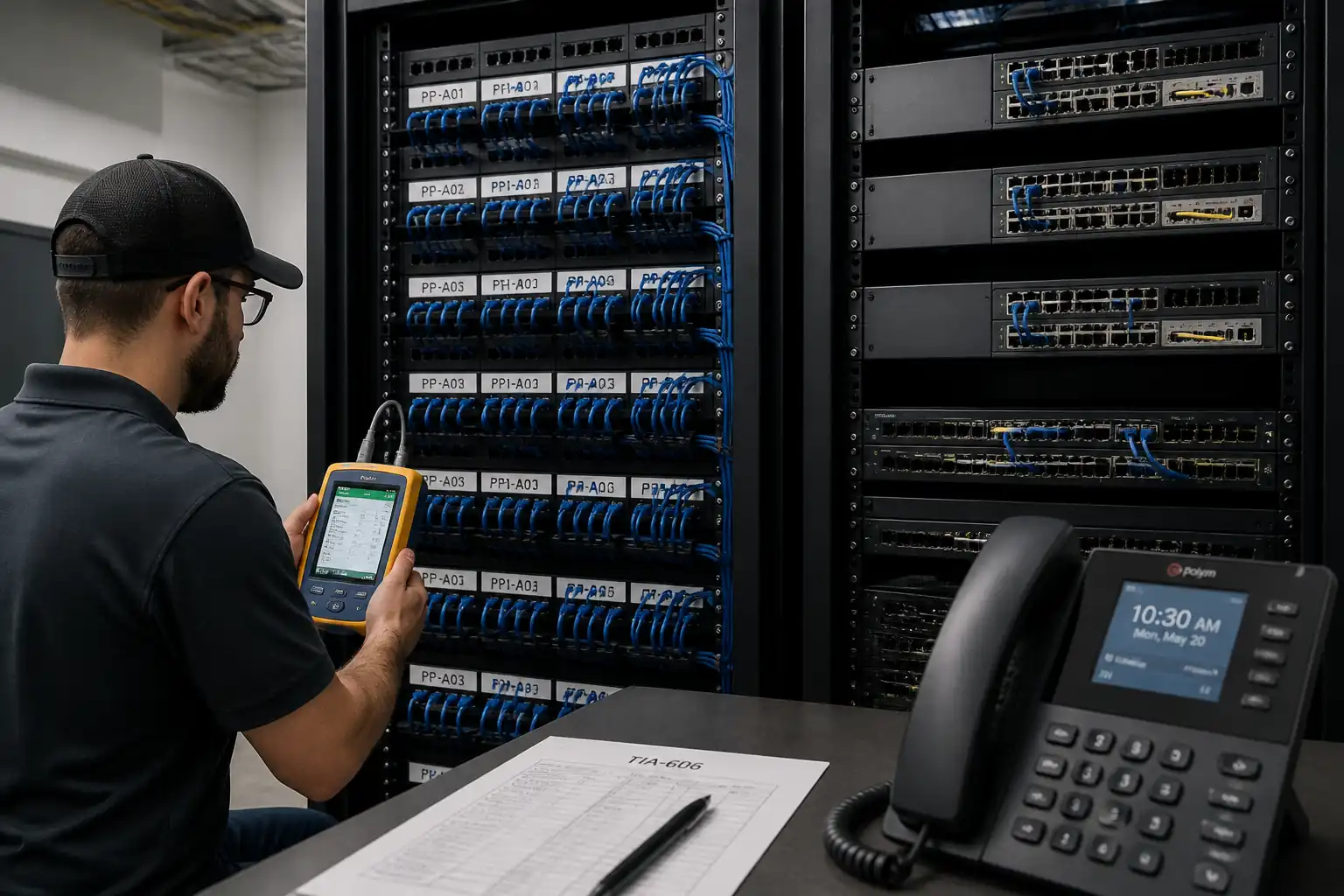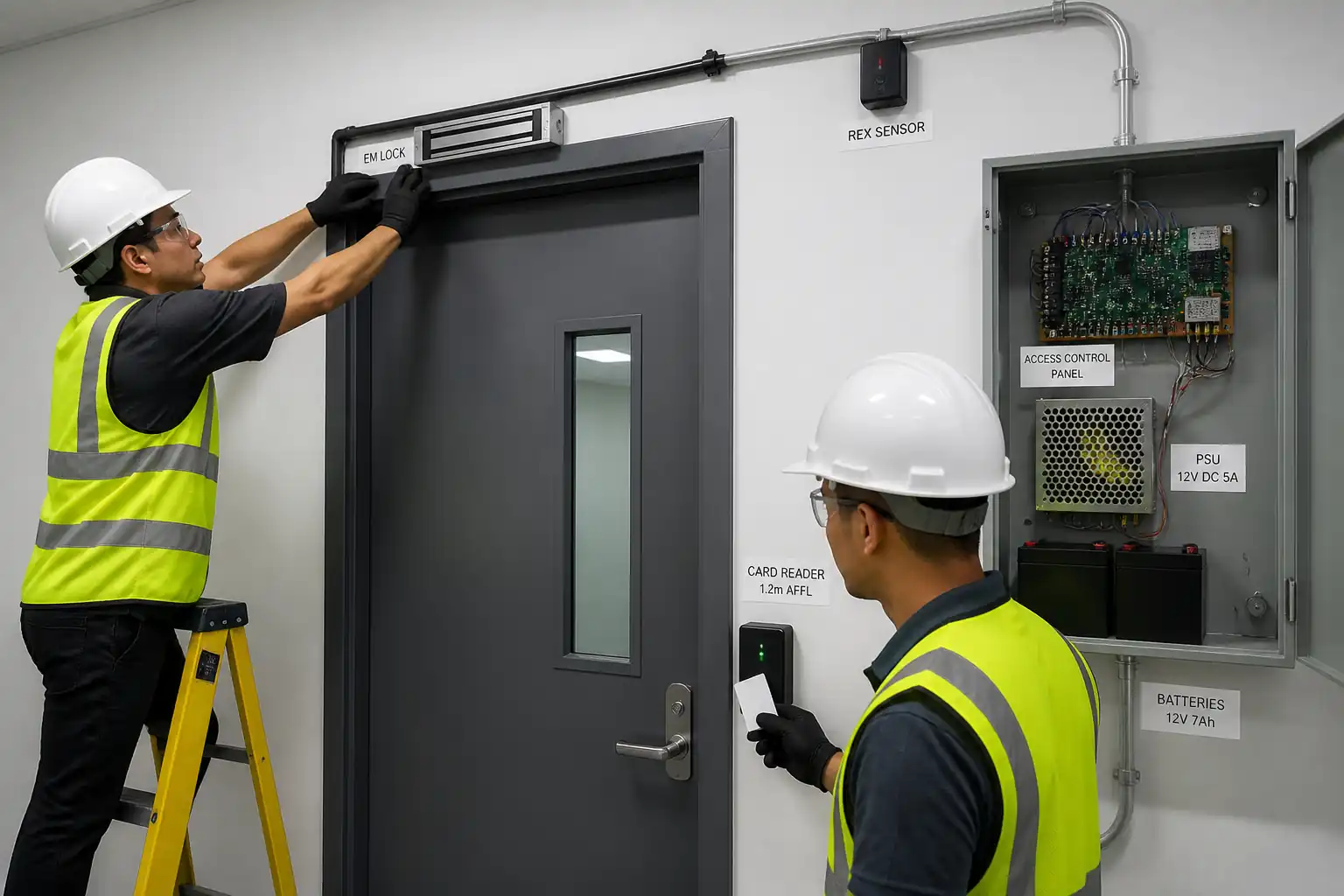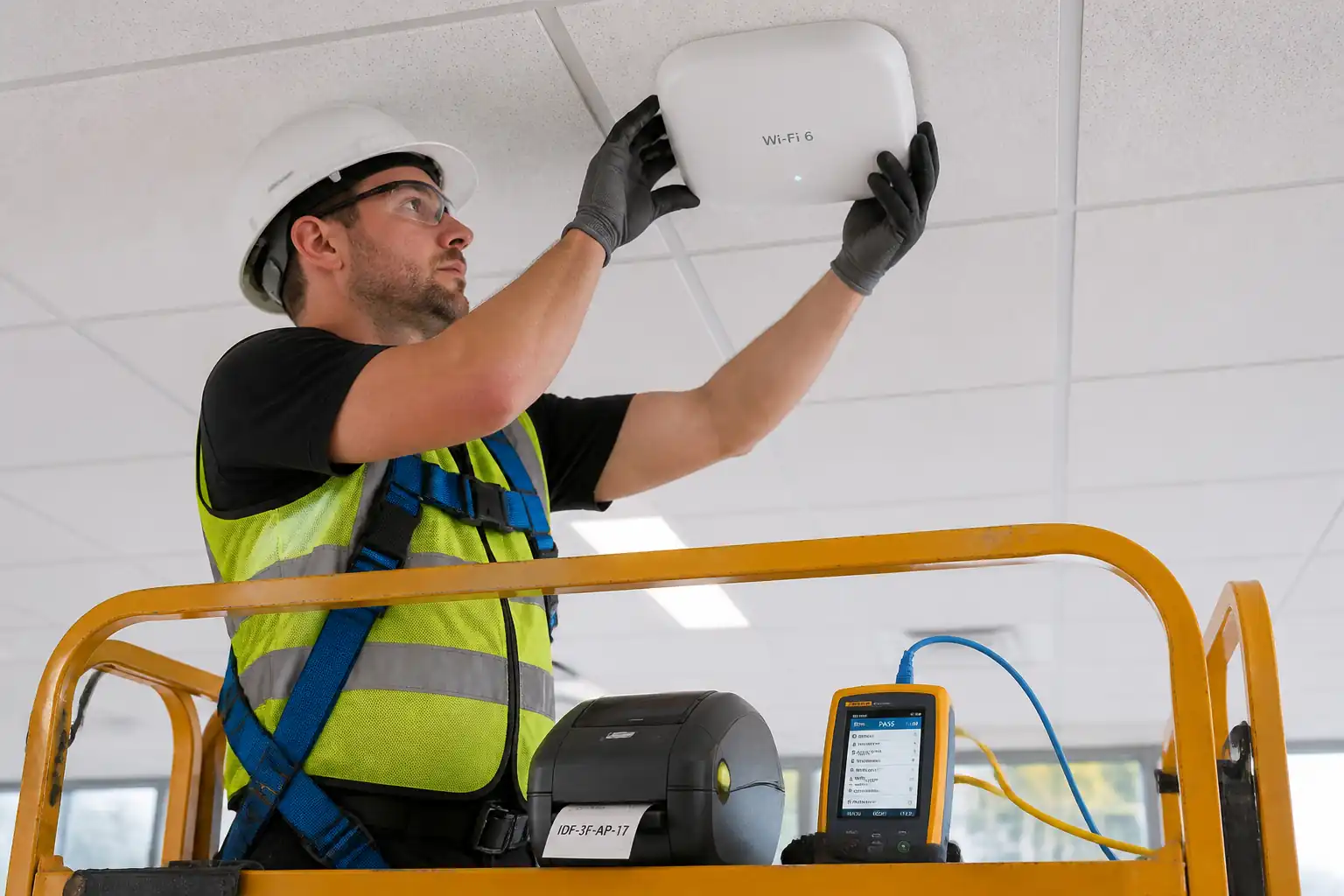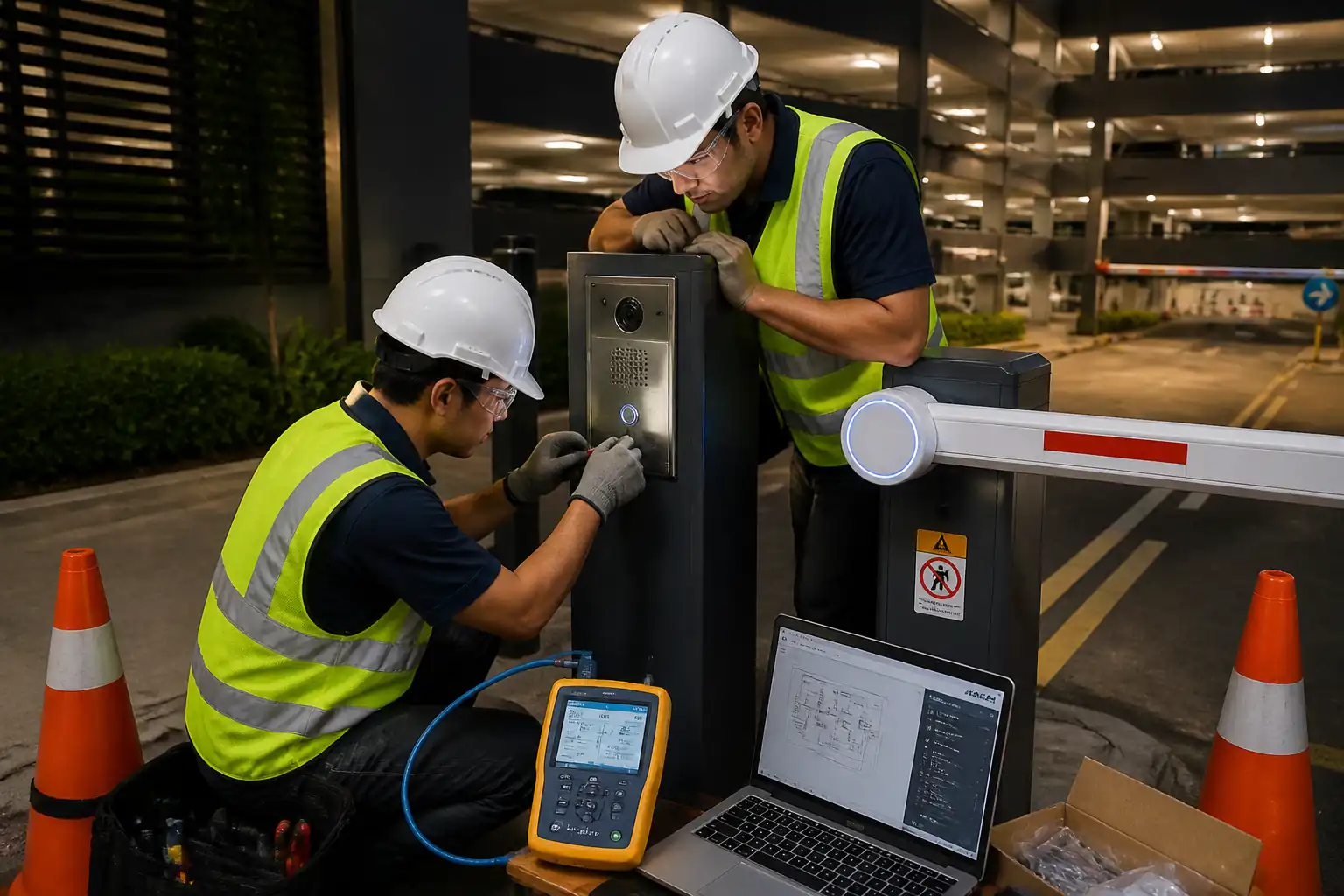

Method Statement – CCTV System Installation (IP Fixed & PTZ), NVR, Structured Cabling, Configuration & Commissioning – Method Statement
AI-assisted method statement with matching ITP, PDF download, and Excel export.
More than a static template
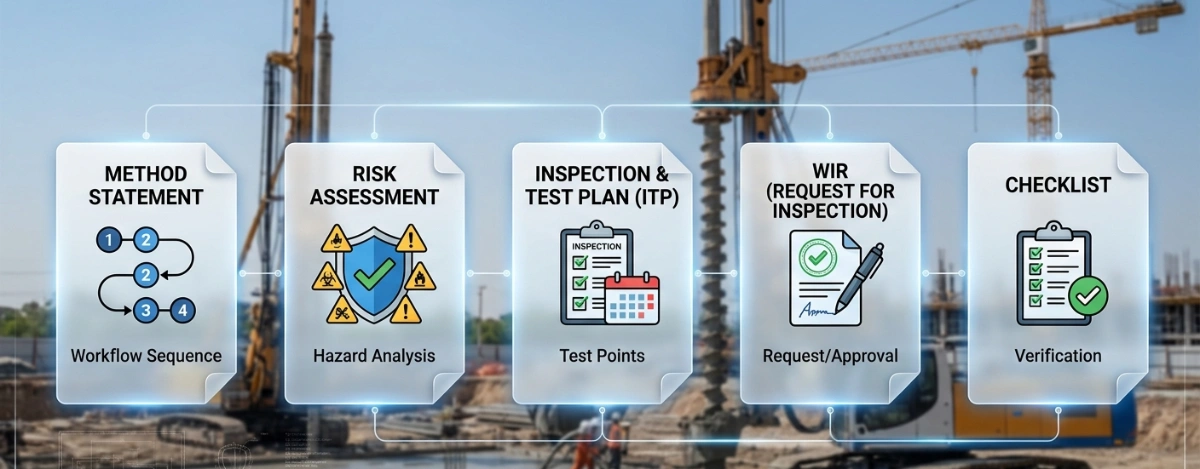
Unlike a downloadable Word or PDF template, this method statement is an AI-assisted editable starting point connected directly to a matching Inspection and Test Plan. Every section is structured, project-adaptable, and ready to export.
- AI-assisted drafting — Customize every section with AI for your specific project scope.
- Linked ITP — A matching inspection and test plan is generated alongside the method statement.
- Multiple export formats — Download as a formatted PDF or editable Excel spreadsheet.
- Editable starting point, not a final document — Review, verify, and adjust all content against your project requirements before use.
Static template vs. Quollnet workflow
| Feature | Static template | Quollnet |
|---|---|---|
| Project-specific content | Manual fill-in required | AI-assisted customization |
| Linked ITP | Separate document, no link | Matching ITP included |
| Export formats | Usually PDF only | PDF and Excel |
| Structured sections | Free-form layout | 13 standardized sections |
| Saved to your account | Local file only | Cloud-saved, reusable |
| Content accuracy | You verify everything | AI-assisted, you still verify |
| Cost | Often free but time-intensive | Free to customize and download |
What you can customize
When you save this method statement to your account, every section becomes editable. The following 13 sections are included:
- Scope — Defines the activity and its boundaries.
- References — Standards, specifications, and drawings.
- Responsibilities — Roles and accountabilities.
- Resources — Labour, plant, and equipment summary.
- Materials — Materials and compliance requirements.
- Equipment — Tools and equipment details.
- Prerequisites — Hold points and pre-conditions.
- Method sequence — Step-by-step construction sequence.
- Safety controls — HSE risk controls and PPE.
- Environmental controls — Environmental mitigation measures.
- QA/QC — Quality inspection and test requirements.
- ITP — Inspection and Test Plan table (has its own page).
- Attachments — Referenced drawings and documentation.
Why this method statement is used
This method statement is used to define and communicate the approved procedure for carrying out method statement – cctv system installation (ip fixed & ptz), nvr, structured cabling, configuration & commissioning on site. It ensures the work is planned in advance, the correct resources and controls are in place, and all personnel understand responsibilities, sequence, quality requirements, and safety controls before work begins. It aligns site execution with the documented scope and acceptance expectations.
Who uses this method statement
This method statement is used by contractors, site supervisors, project engineers, QA/QC engineers, HSE officers, consultants, and client representatives. It serves as a shared reference for planning, execution, supervision, inspection, and approval of the activity on site.
When it is prepared and submitted
The method statement is prepared before the work activity starts and submitted as part of the pre-construction documentation package for review and approval.
Who reviews or approves it
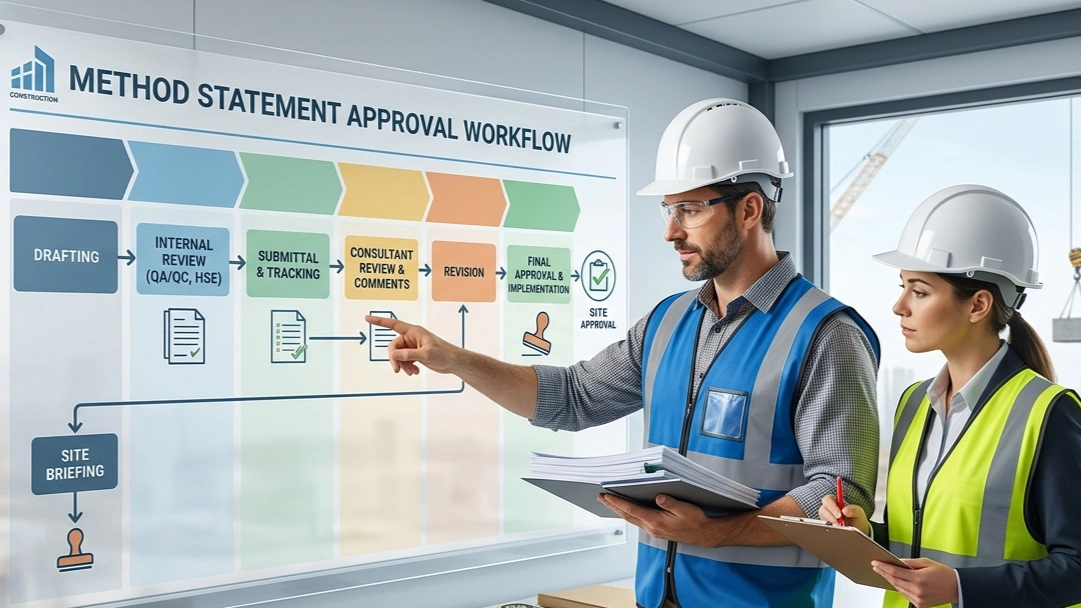
The method statement is usually submitted to the client representative, consultant, resident engineer, or project management consultant for review and approval before the work commences.
Important approval note
This method statement is an AI-assisted editable starting point, not a pre-approved document. Before use on any project, all content must be reviewed and approved by the relevant parties (superintendent, principal contractor, or client representative) in accordance with your contract and project quality plan.
For example: if your specification requires a departure from a referenced standard, that departure must be documented and approved separately — this method statement will not capture that automatically. Always verify against your applicable drawings, specifications, and regulatory requirements.
Method statement content
Scope
Overview
This method statement covers the full lifecycle installation of an IP-based CCTV system comprising fixed and PTZ cameras, PoE switches, NVRs/servers, structured cabling (copper and/or fiber), mounting brackets and supports, power supply arrangements, network configuration, commissioning, image quality verification, field-of-view alignment, and integration with the Security Management Software (SMS/VMS). It includes QA/QC, ITP with hold points for cable testing and image acceptance, HSE controls, and documentation/handover.
Included Activities
- Verification of design, submittals, and materials delivery.
- Installation of pathways (trays, conduits, trunking), pull strings, and supports.
- Structured cabling (Cat6/Cat6A copper; fiber backbone where required), terminations, labeling, bonding/earthing, and surge protection.
- Mounting of brackets, poles, junction boxes, housings, gaskets, and weatherproofing.
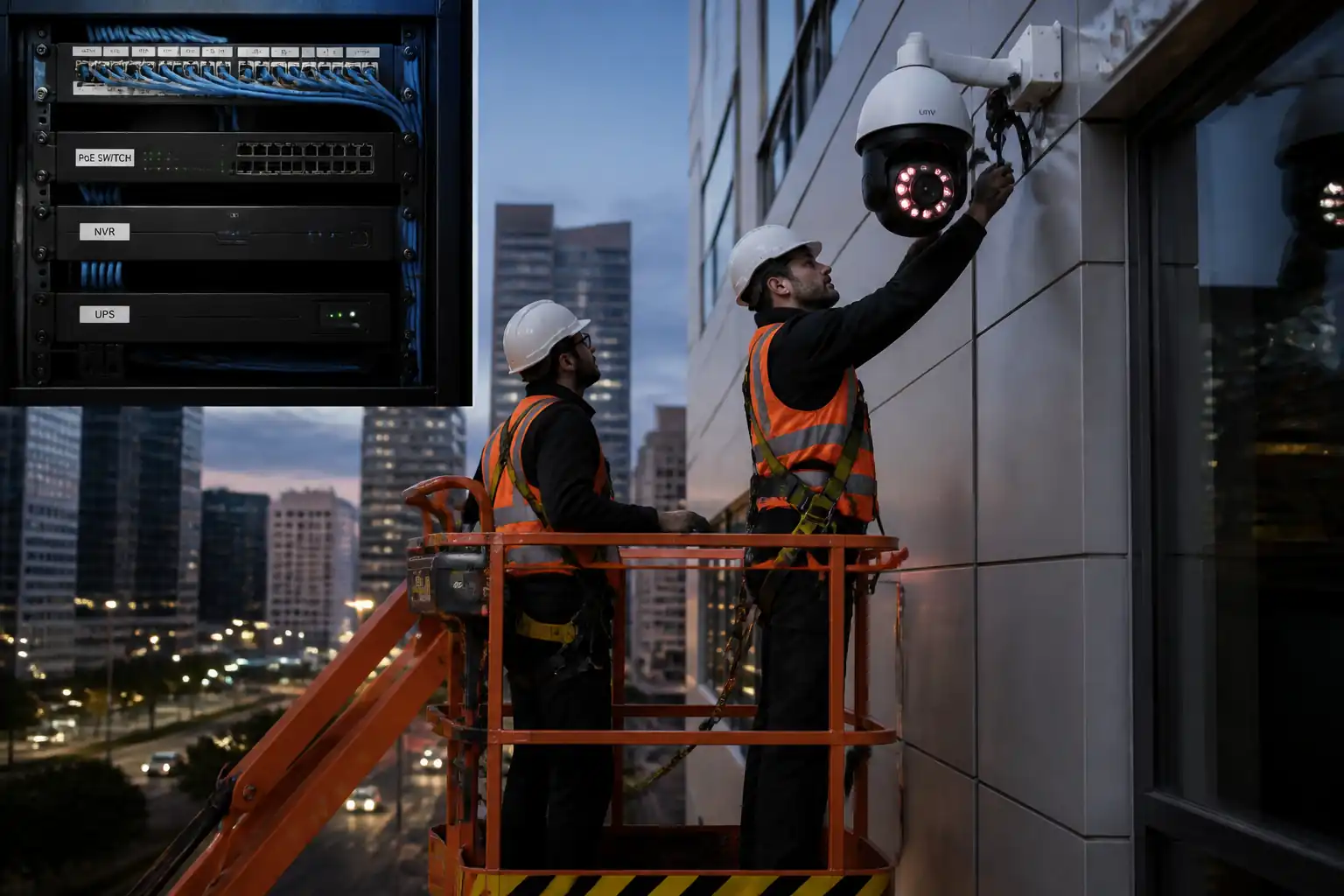
- Installation of fixed and PTZ IP cameras, PoE switches, NVR/servers, racks, patch panels, and UPS.
- Network configuration (VLANs, QoS, IP schema, NTP, security hardening), PoE budget validation.
- Functional checks, image quality verification per IEC 62676-4, PTZ presets/patrols, event/alarm tests.
- Integration to SMS/VMS, recording verification, storage retention checks.
- As-built documentation, redlines, test results, training, and handover.
Exclusions
- Civil/architectural penetrations beyond minor openings for cabling unless otherwise noted.
- Permanent power distribution beyond dedicated outlets/UPS input.
- Structural steel or pole foundations unless specified.
Locations
- Interior spaces (offices, corridors, equipment rooms) and exterior façade/roof/pole-mounted positions as per IFC drawings.
Constraints/Interfaces
- Coordination with IT/networking, electrical power, fire-stopping contractor, and façade/roof works.
- Access and shutdown windows for critical areas [Verify per project plan].
- Compliance with building fire rating and IP rating of enclosures where penetrations occur.
References
| Document Type | Reference / Number | Revision | Notes |
|---|---|---|---|
| TIA-568.2-D (Balanced Twisted-Pair Cabling), ISO/IEC 11801 | Permanent link ≤ 90 m; channel ≤ 100 m; pair balance limits; termination practices. | ||
| TIA-569-D (Pathways & Spaces), TIA-606-C (Administration & Labeling) | Labeling, records, and pathway clearances. | ||
| TIA-607-D (Bonding & Grounding for ICT), IEC 62305 (Lightning), IEC 61643 (Surge) | Common bonding network, SPD classification and installation. | ||
| IEEE 802.3af/at/bt (PoE), IEEE 802.3 (Ethernet) | Port power classes, PSE power budget, voltage at PD. | ||
| IEC/EN 62676 series (Video Surveillance Systems) incl. Part 4 (Application guidelines) | PPM/PPF metrics for detection/recognition/identification; scene illumination. | ||
| IEC 62368-1 (A/V & ICT equipment safety), IEC 61000 series (EMC) | Equipment certification, CE/UKCA/UL as applicable. | ||
| IEC 60364 (Electrical installations) or NFPA 70 (NEC) / BS 7671 as applicable [Verify] | Dedicated circuits, UPS, bonding, segregation from LV power. | ||
| IEC 60529 (IP Ratings), NEMA 250 (where applicable) | Maintain enclosure IP rating for outdoor cameras and junctions. | ||
| UL listed/ETA approved firestop systems; EN 1366/ASTM E814 equivalents | Maintain fire rating equal to penetrated barrier. | ||
| ONVIF Profile S/G/T/M (as applicable) | Camera-to-VMS compatibility and feature support. |
Responsibilities
| Role | Responsibility | Name / Party |
|---|---|---|
| Project Manager | Contractor | |
| Site/Discipline Engineer (Low Voltage) | Contractor | |
| QA/QC Engineer | Contractor | |
| HSE Officer | Contractor | |
| Network/Security Systems Engineer | Contractor | |
| LV Installation Supervisor & Technicians | Contractor | |
| Electrical Supervisor/Electrician | Contractor | |
| OEM/Vendor Representative | Vendor | |
| Client/Consultant | Client/Consultant |
Resources
| Resource Type | Description | Quantity | Remarks |
|---|---|---|---|
| Personnel | 1–2 [Verify per project] | Commissioning, configuration, testing. | |
| Personnel | 4–12 [Verify per project] | Cabling, terminations, device installation. | |
| Personnel | 1 | Permits, inspections, monitoring. | |
| Personnel | 1 | ITP and documentation. | |
| Personnel | 1–2 | External/high-level works. |
Materials
| Material | Specification / Grade | Quantity | Remarks |
|---|---|---|---|
| Fixed IP Cameras | 1080p/4MP/8MP as specified; PoE IEEE 802.3af/at; IK/IP rating per location (e.g., IK10, IP66/67) [Verify] | ||
| PTZ IP Cameras | PoE++ 802.3bt or 24VAC; optical zoom per spec (e.g., 20x/30x); heater/blower if outdoor [Verify] | ||
| PoE Network Switches | 802.3af/at/bt PoE; 1G/10G Uplinks; surge-protected ports for outdoor runs [Verify] | ||
| NVR/Recording Servers | Throughput per design; storage for ≥ 30 days at specified fps/resolution [Verify] | ||
| Cat6/Cat6A Data Cables | TIA-568.2-D compliant; 23–24 AWG; verified for 802.3bt PoE where applicable [Verify] | ||
| Fiber Optic Cables | Singlemode OS2 or Multimode OM3/OM4; IEC 61754 connectors; IEC 60794 cable [Verify] | ||
| Connectivity Hardware | TIA-568.2-D; shielded/unshielded per design; industrial IP-rated fittings as needed | ||
| Mounting Brackets, Poles, Anchors | Per structural/calcs; corrosion-resistant; UV-stable coatings [Verify] | ||
| Surge Protection Devices (SPD) | IEC 61643; RJ45 and power line SPDs; earthing to TIA-607-D | ||
| Firestop Systems | UL/ETA systems for applicable wall/floor ratings [Verify] | ||
| Racks, Enclosures, UPS, PDUs | 19" racks; UPS autonomy per design (e.g., ≥ 15–30 min) [Verify] |
Equipment
| Equipment | Capacity / Type | Quantity | Inspection Required |
|---|---|---|---|
| MEWP/Scissor Lift | Working height per location | Pre-use inspection, valid certificate [Verify] | |
| Ladders/Podiums | BS EN 131 compliant | Weekly inspection tag | |
| Rotary Hammer / Core Drill | SDS+/SDS Max; core Ø as required | PAT/visual checks | |
| Cable Pulling Tools & Fish Tapes | Rated for LV cabling | Pre-use check | |
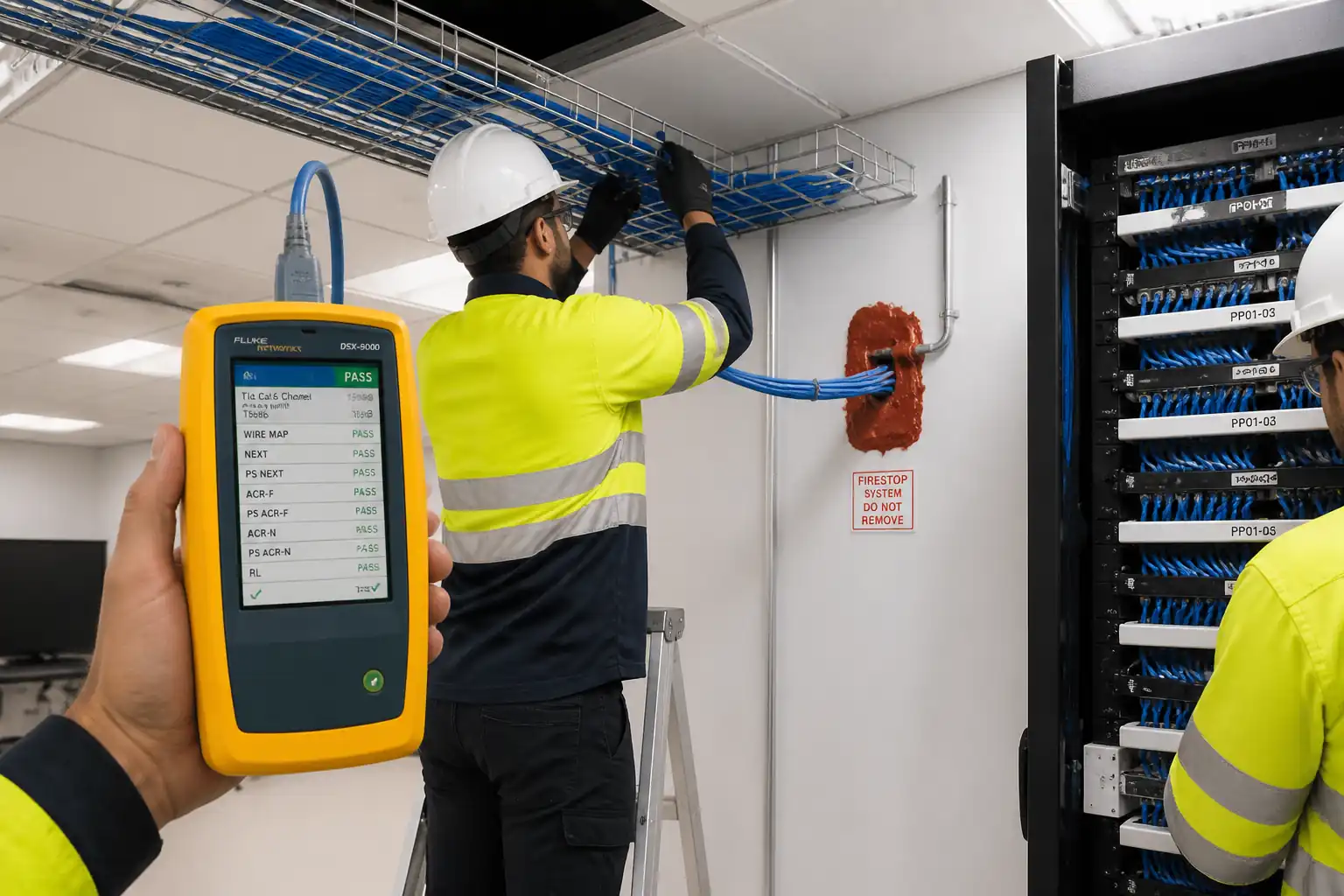
| Copper Cable Certifier | e.g., Fluke DSX-5000/8000 or equivalent | Calibration certificate | |
| Fiber OTDR/OLTS & Inspection Microscope | SM/MM at 1310/1550/850/1300 nm | Calibration certificate | |
| Laptops with Console/Network Tools | SSH/HTTPS/SNMP enabled | Antivirus per IT policy | |
| Torque Wrench & Test Puller | Range per anchor spec | Calibration certificate | |
| Wall/Slab Scanner | Cover to ~200 mm or as specified | Function check |
Prerequisites
Approvals & Documentation
- Approved shop drawings, datasheets, and method statement/ITP.
- Network/IP plan, VLANs, PoE budgets, storage calculations, camera schedule, and FOV design sheets.
- Permits to Work: Working at Height (MEWP), Electrical Isolation, Hot Works (only if required for steel work), and Confined Space (if ceiling voids are classified) [Verify per project HSE plan and local regulations].
Site Readiness
- Confirm access, scaffolds/MEWPs, and power availability (temporary/permanent) to racks and PoE switches.
- Coordination with building management for shutdowns and noisy works windows.
- Mark-up and set-out of camera positions; verify mounting substrates and rebar/utilities scanning plan.
Materials & Tools
- Inspect deliveries for damage, certification, and model/version match with submittals.
- Verify test equipment calibration certificates are current (≤ 12 months unless otherwise specified).
IT/Cybersecurity
- Approved device naming convention and passwords policy; default credentials removal plan.
- Approved NTP sources, time zone, and certificate management approach (HTTPS/TLS) [Verify per client IT policy].
Mock-ups/Trials (if specified)
- Representative camera installation with FOV check and bracket detail for client/consultant review prior to mass installation.
Method Sequence
| Step | Activity | Description | Responsibility | Inspection / Hold Point |
|---|---|---|---|---|
| 1 | Pre-start coordination & set-out | Review IFC drawings, camera schedule, and pathways. Agree IP schema, VLANs, QoS, and storage retention targets. Mark camera locations and bracket fixing points. Scan structure for services/rebar prior to drilling. | Site Engineer / Network Engineer | ITP reference |
| 2 | Install pathways & supports | Install trays, conduits, trunking, J-boxes with proper fixings and separation from power. Provide pull strings. Maintain bend radii and loading limits. | LV Supervisor | Visual |
| 3 | Pull copper/fiber cables | Pull Cat6/Cat6A and/or fiber using rollers/pull socks. Do not exceed pulling tension (UTP ≤ 110 N typical) and maintain min bend radius (UTP ≥ 4x OD; fiber per manufacturer). Avoid tight bundles for high-PoE per TIA TSB-184-A. | LV Technicians | Surveillance |
| 4 | Terminate copper/fiber | Terminate copper to jacks/patch panels per TIA-568.2-D (T568B unless specified). Untwist ≤ 13 mm at terminations. Fiber terminations/splicing per manufacturer; clean endfaces and protect with dust caps. | LV Technicians | In-process check |
| 5 | Bonding/earthing & surge protection | Bond racks, trays, and metallic J-boxes to TEBC per TIA-607-D. Install SPDs on outdoor lines and power feeds as designed. Verify continuity to earth. | Electrical Supervisor | Continuity test |
| 6 | Cable certification – HOLD POINT | Certify copper links to Cat6/Cat6A using calibrated certifier. For fiber, perform OLTS (Tier-1) and OTDR (Tier-2 if specified). | QA/QC Engineer | Witness by Consultant |
| 7 | Install brackets, poles, and housings | Drill and fix anchors per substrate; apply torque per manufacturer. Weatherproof penetrations and maintain IP rating. Verify alignment and rigidity. | LV Supervisor | Torque/pull test (sampling) |
| 8 | Install cameras and connect | Mount fixed/PTZ cameras; connect patch cords and glands; apply drip loops where external; ensure strain relief. Record MAC/serials. | LV Technicians | Visual |
| 9 | Switches, NVRs, racks, and UPS | Install network gear in racks; configure PDU/UPS; verify ventilation and cable management; secure patching per TIA-606-C. | Network Engineer | Power-on checks |
| 10 | Network configuration & PoE budget | Configure VLANs, DHCP/static IPs, NTP, HTTPS, SNMP, user roles. Validate PoE budgets and per-port classes. Update firmware to approved versions. | Network Engineer | Configuration review |
| 11 | Camera setup, focus & alignment | Set encoding (codec, resolution, fps), WDR, exposure, day/night profiles. Focus (including IR focus at night). Align FOV to cover targets per design. Program PTZ presets and patrols. | Commissioning Engineer | Engineer check |
| 12 | Image quality & FOV acceptance – HOLD POINT | Verify PPF/PPM against IEC 62676-4 levels at defined target zones (detection/recognition/identification as specified). Confirm low-light performance and motion clarity. | QA/QC + Consultant | Witness by Consultant |
| 13 | VMS/SMS integration & recording verification | Add cameras to VMS/SMS, configure streams, roles, events, analytics (if any), maps, and alarms. Verify recording and retention. | Network/Commissioning Engineer | Functional test |
| 14 | Power/UPS failover test | Simulate mains failure. Confirm UPS carries PoE switches/NVRs; verify no video loss and orderly shutdown thresholds where configured. | Electrical + Commissioning | Witness (if specified) |
| 15 | Snag rectification & training | Close punch list. Provide operator training on VMS, playback, export, and basic maintenance. | Project Manager / Vendor | Client review |
| 16 | As-builts & handover | Submit as-built drawings, labeling matrix, IP plan, test certificates, warranties, O&M manuals, and configuration backups. | QA/QC Engineer | Document review |
Health, Safety and Environment – Task-Specific Safety Controls
Key Hazards and Controls
- Hazard: Working at height (ladders/MEWP) for camera and bracket installation.
- Likely consequence: Fall from height causing serious injury/fatality.
- Engineering/procedural control: Use MEWP with suitable ground bearing; select podium/step ladder only for short-duration tasks with three points of contact; install temporary edge protection where near roof edges; maintain exclusion zones below; tool tethering to prevent dropped objects.
- Required PPE: Helmet with chin strap, full body harness with lanyard (in MEWP), safety shoes, gloves, eye protection.
- Collective preventive measure: MEWP guardrails, barricades, spotter during maneuvering.
-
Inspection/permit/supervision: Working at Height permit; pre-use checks of MEWP and ladders; operator certification; supervisor sign-off. [Verify per project HSE plan and local regulations]
-
Hazard: Drilling into walls/slabs for anchors and penetrations.
- Likely consequence: Utility strike, structural damage, silica dust inhalation, hand-arm vibration.
- Engineering/procedural control: Scan for embedded services/rebar; use drilling templates and depth stops; dust extraction/shrouds; limit exposure time; avoid drilling into structural members without approval.
- Required PPE: Eye/face protection, FFP2/FFP3 mask (or equivalent), hearing protection, gloves.
- Collective preventive measure: Local exhaust ventilation (LEV), wet drilling where suitable, barriers to segregate area.
-
Inspection/permit/supervision: Permit to drill; scan records; HAVS monitoring; equipment PAT/inspection.
-
Hazard: Electrical shock/arc from AC supplies or PoE circuits.
- Likely consequence: Electric shock, burns, fire.
- Engineering/procedural control: Isolate and lockout/tagout AC supplies; verify absence of voltage; use PoE within specification; protect terminations; no live work unless authorized.
- Required PPE: Insulated gloves (as required), eye protection, arc-rated PPE if near energized panels (as applicable).
- Collective preventive measure: Barriers/lockouts on panels; RCD protection; labeled circuits.
-
Inspection/permit/supervision: Electrical permit; competent electrician supervision; test instruments verified.
-
Hazard: Dropped objects from height (cameras, tools, anchors).
- Likely consequence: Head injury to persons below; equipment damage.
- Engineering/procedural control: Use tool lanyards; secondary safety cables on PTZ; exclusion zones; material hoists rather than carrying on ladders.
- Required PPE: Helmets with chin straps, safety footwear.
- Collective preventive measure: Toe-boards on platforms; debris nets if required.
-
Inspection/permit/supervision: Supervisor to enforce exclusion zones and tethering.
-
Hazard: Fiber optic handling (laser exposure, glass shards).
- Likely consequence: Eye injury, skin puncture.
- Engineering/procedural control: Never look into energized fiber; use power meter/visual fault locator safely; capture shards in designated containers.
- Required PPE: Safety glasses, nitrile gloves.
- Collective preventive measure: Dedicated fiber work area with mats and waste containers.
-
Inspection/permit/supervision: Toolbox talk and supervision by trained technician.
-
Hazard: Manual handling of racks/NVRs/UPS and MEWP batteries.
- Likely consequence: Musculoskeletal injury, crush injury.
- Engineering/procedural control: Team lifts or mechanical aids; respect weight limits; maintain clear routes; lift training.
- Required PPE: Gloves, safety shoes.
- Collective preventive measure: Trolleys/dollies; ramp management.
-
Inspection/permit/supervision: Supervisor planning and dynamic risk assessment.
-
Hazard: Hot works (only if welding/bracket modification is required).
- Likely consequence: Burns, fire, fumes.
- Engineering/procedural control: Use pre-fabricated brackets where possible; if hot work unavoidable, use hot work permit, fire watch, and fire blankets.
- Required PPE: Welding shield, fire-resistant gloves/clothing, eye/face protection.
- Collective preventive measure: Fire extinguishers, spark containment.
-
Inspection/permit/supervision: Hot Work permit; gas bottle storage/inspection.
-
Hazard: Ceiling void confined/poorly ventilated spaces.
- Likely consequence: Falls through ceiling tiles, poor air quality.
- Engineering/procedural control: Use crawl boards; verify ceiling tile load capacity; CO2 meter if necessary; maintain lighting.
- Required PPE: Helmet, dust mask, gloves.
- Collective preventive measure: Attendant and communication line.
-
Inspection/permit/supervision: Confined space assessment (if applicable) and permit.
-
Hazard: Noise and vibration from drilling/core cutting.
- Likely consequence: Hearing damage; building occupant disturbance.
- Engineering/procedural control: Schedule during allowed hours; use low-vibration equipment; acoustic screens.
- Required PPE: Hearing protection.
- Collective preventive measure: Notify occupants; signage.
-
Inspection/permit/supervision: Noise monitoring if required.
-
Hazard: Cybersecurity exposure during commissioning.
- Likely consequence: Unauthorized access, data breach.
- Engineering/procedural control: Change default credentials; apply approved firmware; restrict management access; enable HTTPS; align with client IT policy.
- Required PPE: N/A.
- Collective preventive measure: Network segmentation (VLANs), firewall rules.
- Inspection/permit/supervision: IT change approval and post-change review.
Environmental Controls
- Dust control during drilling using on-tool extraction or wet methods; seal work areas to prevent spread; clean with HEPA vacuums.
- Noise management: schedule noisy works within permitted windows; employ acoustic barriers where feasible; monitor noise if required.
- Waste management: segregate cable offcuts, packaging, and e-waste; dispose of batteries, SPDs, and electronics via licensed recyclers; fiber shards collected in sealed containers.
- Chemical management: store sealants/adhesives with spill kits; use low-VOC products where specified; avoid runoff to drains.
- Water ingress/weatherproofing: ensure all external penetrations are sealed; maintain IP rating; use UV-stable gaskets and glands.
- Energy: enable camera/switch power profiles and sleep functions where supported; specify efficient PoE switches [Verify per project sustainability plan].
- Environmental incidents: report and mitigate spills immediately; protect stormwater inlets with covers during external works.
Quality Assurance / Quality Control
QA/QC Strategy
- Use approved submittals only; verify model numbers, firmware baselines, and compatibility lists (ONVIF profiles).
- Calibration: maintain valid calibration for certifiers, OTDR/OLTS, torque wrenches, and pull-test equipment; keep certificates in QA file.
- Sampling: 100% testing for copper/fiber permanent links; sample anchor pull tests ≥ 5% or as specified [Verify].
- Labeling and documentation per TIA-606-C; maintain unique identifiers linked to as-built drawings and test results.
- Change control: document all network configuration changes with backups before/after; maintain version logs.
- Nonconformance: record NCRs with rectification plan; retest after rework.
- Training and O&M: provide manufacturer-approved training; handover operation manuals; define warranty and support contacts.
Acceptance Benchmarks [Verify per project specifications]
- Cabling certification: PASS to TIA-568.2-D/ISO; permanent links ≤ 90 m; channel ≤ 100 m; margins ≥ 0 dB.
- Fiber: OLTS loss within budget; OTDR traces free of excessive reflectance; connectors ≤ 0.3 dB; splices ≤ 0.3 dB typical.
- PoE: Voltage at PD within IEEE range under load; PSE budget margin ≥ 20%.
- Video performance: Meets IEC 62676-4 PPF/PPM at target zones; day/night checks completed.
- Time sync: NTP offset ≤ 1 s across all devices.
- Retention: Recording ≥ specified days at defined resolution/fps/bitrate.
- PTZ: Preset repeatability ≤ 0.5° and patrol execution without loss of focus.
- UPS: Runtime per design; no recording loss during transfer tests.
Attachments
- Approved shop drawings and camera layout plans with FOV cones and elevations.
- Cable schedules, labeling matrix (TIA-606-C), rack elevations, and patching diagrams.
- IP addressing plan, VLAN/QoS schema, NTP configuration, cybersecurity hardening checklist.
- Anchor calculations, bracket datasheets, corrosion protection details.
- SPD layout, earthing/bonding drawings, and single-line diagrams.
- Firestop system details and approvals.
- Test equipment calibration certificates.
- Copper certification reports and fiber OLTS/OTDR traces.
- Image acceptance forms with annotated screenshots and PPF/PPM calculations.
- VMS/SMS configuration backups, user/role matrix, and retention verification.
- O&M manuals, warranty letters, spare parts list, and training materials.
This content is a read-only public reference. Download or customize to get an editable version.
ITP preview
The first inspection activities from the linked ITP for Method Statement – CCTV System Installation (IP Fixed & PTZ), NVR, Structured Cabling, Configuration & Commissioning:
| Activity | Inspection / Test | Acceptance Criteria | Responsibility | Record |
|---|---|---|---|---|
| Material receipt and verification | Check models, certifications (IEC 62368, CE/UL), firmware, and quantities against submittals. | Matches approved submittals; no damage; certificates available. | QA/QC Engineer | Material inspection report |
| Pathways installation inspection | Fixings, levels, separation from power, fire-resistance continuity. | Secure, aligned, segregated; suitable capacity; no sharp edges; bonding points provided. | Site Engineer | In-process inspection sheet |
| Copper cable pulling and terminations | Visual inspection of jackets, bend radii, terminations, labeling. | No damage/kinks; terminations per TIA-568.2-D; labels per TIA-606-C. | QA/QC Engineer | Daily QA log |
Showing 3 of 14 inspection activities. View full ITP →
Related Inspection and Test Plan
An Inspection and Test Plan (ITP) is available for Method Statement – CCTV System Installation (IP Fixed & PTZ), NVR, Structured Cabling, Configuration & Commissioning. The ITP defines the inspection activities, acceptance criteria, hold and witness points, responsible parties, and records required to verify the work described in this method statement.
View the Method Statement – CCTV System Installation (IP Fixed & PTZ), NVR, Structured Cabling, Configuration & Commissioning ITP →Frequently asked questions
Continue with related Quollnet resources connected to this method statement.