
Inspection and Test Plan for Method Statement – Wireless Access Point (WAP) Installation and Commissioning
AI-assisted inspection and test plan connected to a method statement, with PDF and Excel export.
More than a static template
Unlike a downloadable Word or PDF template, this ITP is an AI-assisted editable starting point directly connected to its method statement. Every inspection activity, hold point, and acceptance criterion is structured and ready to adapt to your project.
- AI-assisted customization — Tailor inspection activities and acceptance criteria to your specific project scope.
- Linked method statement — This ITP is connected to the corresponding method statement describing the work sequence.
- Multiple export formats — Download as a formatted PDF or editable Excel spreadsheet.
- Editable starting point, not a final document — Review and verify all content against your project specifications and standards before use.
What you can customize
When you save this ITP to your account, every inspection row becomes editable. You can add, remove, or modify:
- Inspection activity — Description of what is being inspected.
- Inspection type — Hold point (H), Witness point (W), Review (R), or Monitor (M).
- Responsibility — Contractor, subcontractor, engineer, or client.
- Frequency — How often the inspection occurs.
- Acceptance criteria — Referenced standard or specification requirement.
- Records — Forms, test reports, or checklists required as evidence.
Why this ITP is used
To ensure WAP installations meet design, safety, and performance requirements before handover.
Who uses this inspection and test plan
Contractors, QA/QC engineers, IT/network teams, commissioning agents, and client representatives.
When this ITP is prepared and submitted
From material receipt through installation, testing, commissioning, and final handover.
Who receives or approves this ITP
Client/Consultant/Engineer for review and approval.
Inspection scope
Materials, pathways/firestopping, terminations, cable certification, PoE verification, mounting, labeling, RF survey, functional/security tests, and final inspection.
Typical hold, witness, and review points
Cable certification (Witness), RF survey (Witness), final inspection (Hold).
Typical inspection records
MIRs, IRs, calibration certificates, DSX reports, PoE logs, RF heatmaps, test sheets, photos, as-builts, asset registers.
Important approval note
This ITP is an AI-assisted editable starting point, not a pre-approved document. Before use on any project, all inspection activities, hold points, and acceptance criteria must be reviewed and approved by the relevant parties (superintendent, principal contractor, or client representative) in accordance with your contract and project quality plan.
Always verify acceptance criteria against your applicable drawings, specifications, and regulatory requirements. Hold points must be confirmed with the relevant authority before work proceeds past that point.
Inspection and test plan
| Activity | Inspection / Test | Acceptance Criteria | Responsibility | Record |
|---|---|---|---|---|
| Material receipt and storage | Check model, quantity, condition, certificates | Approved submittals; materials undamaged; environmental conditions within vendor limits | QA/QC, LV Supervisor | MIR, photos |
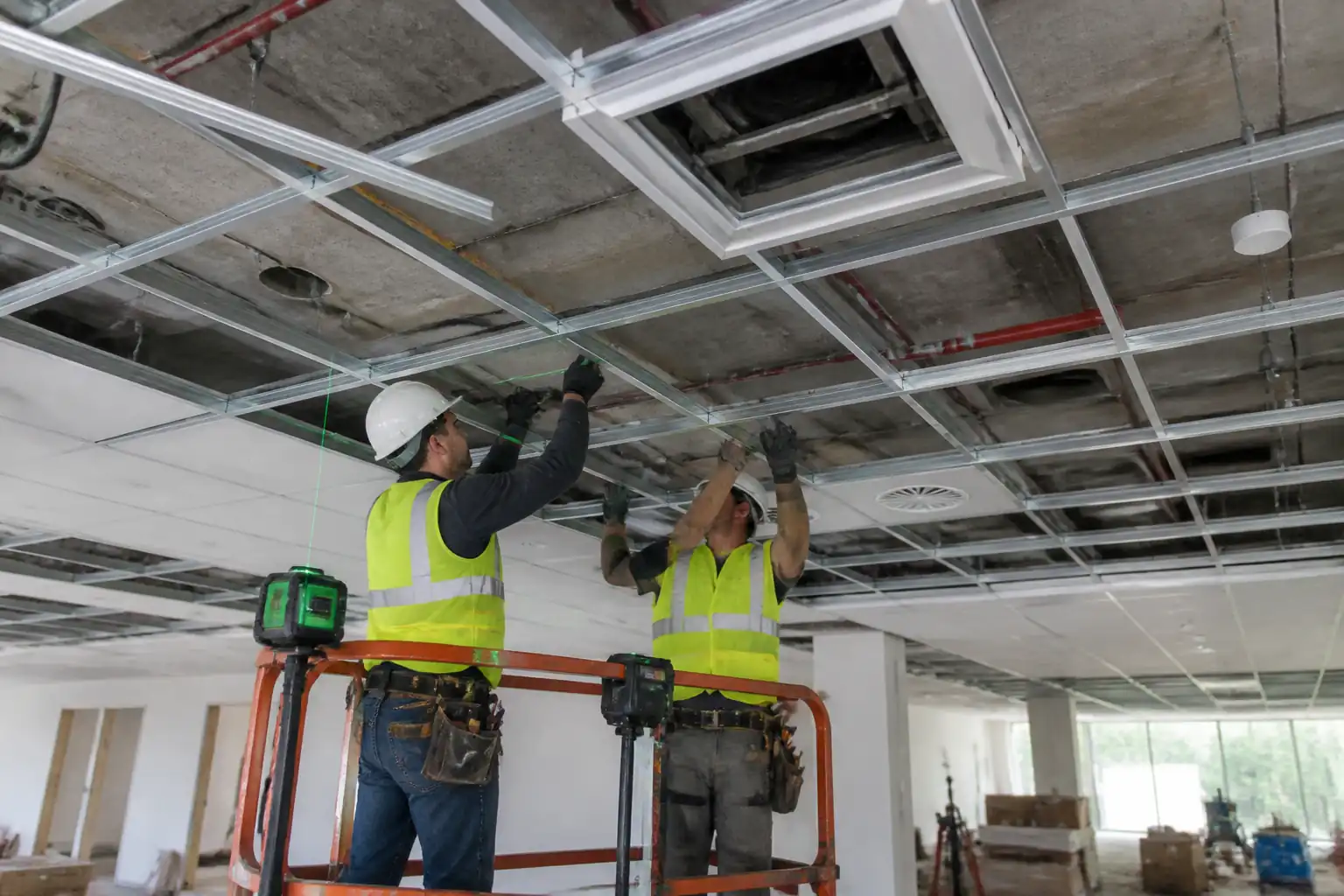
| Pre-install coordination and setting out | Location, clearances, clashes | Within ±100 mm; no conflicts; agreed ceiling fixing method | LV Supervisor, Architect/MEP, QA/QC | Setting-out checklist, redlines |
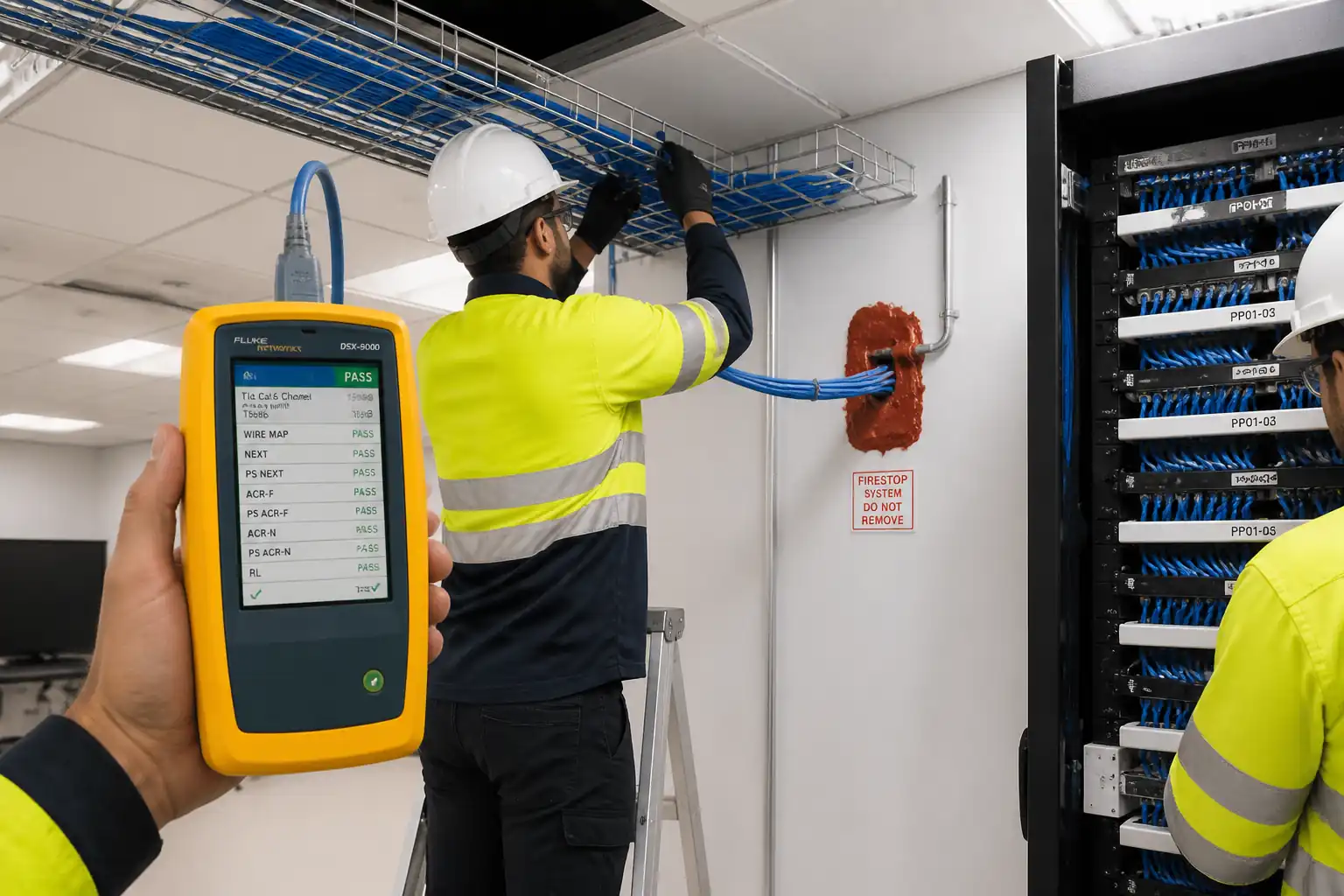
| Pathways and firestopping | Tray/conduit routes, supports, UL/EN firestop system details | Supports per TIA-569-D; firestops installed to certified detail and tagged | LV Supervisor, QA/QC | IR, photos, firestop register |
| Cable termination (AP and TR) | Visual workmanship, pinout T568B, bend radius, shield bonding (if any) | Compliant with ANSI/TIA-568.2-D and manufacturer instructions | LV Supervisor | Inspection checklist |
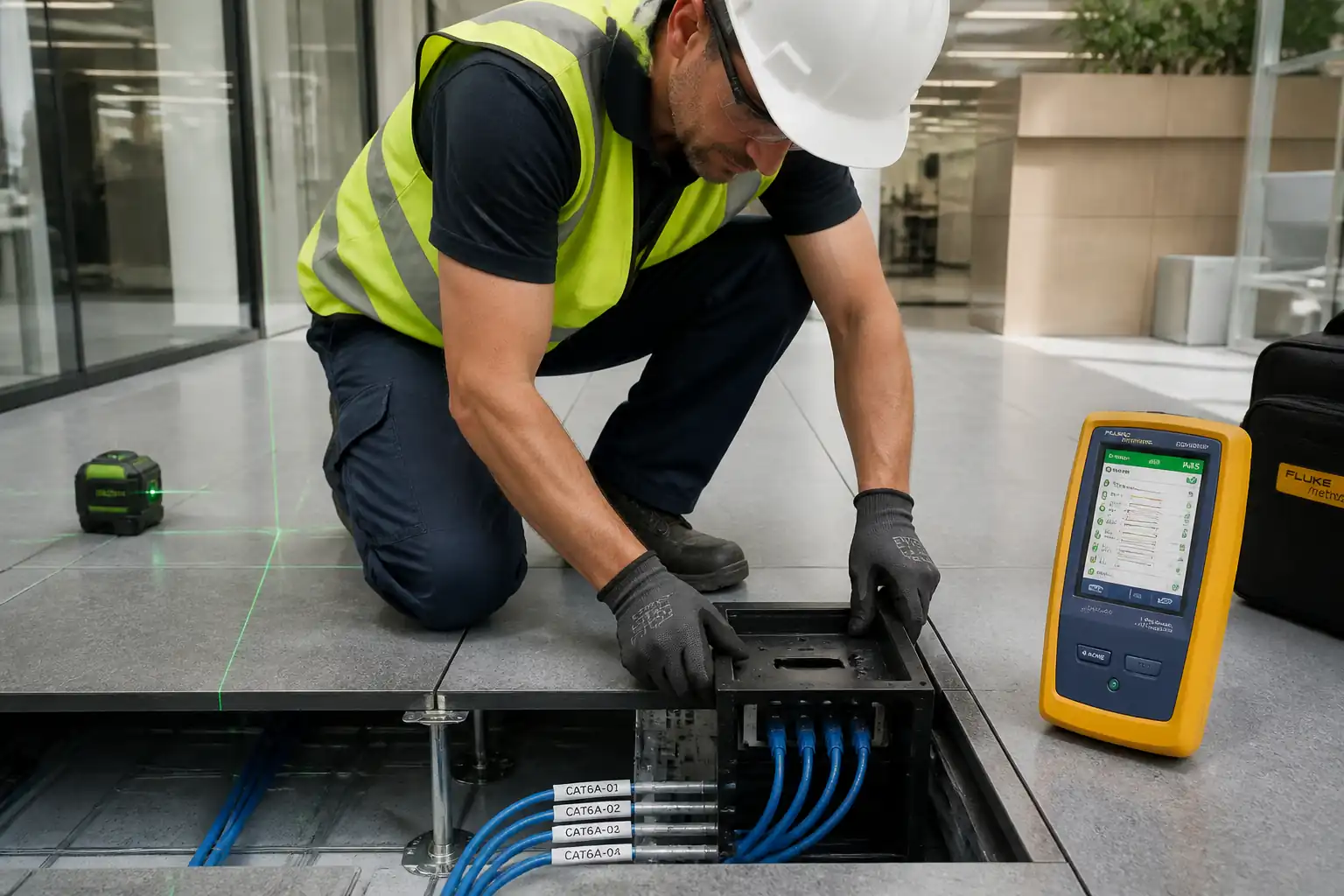
| Cabling certification | Cat6/Cat6A permanent link or MPTL auto-tests | Pass to selected category limits with Level 2G accuracy | Tester, QA/QC (Witness) | DSX test report |
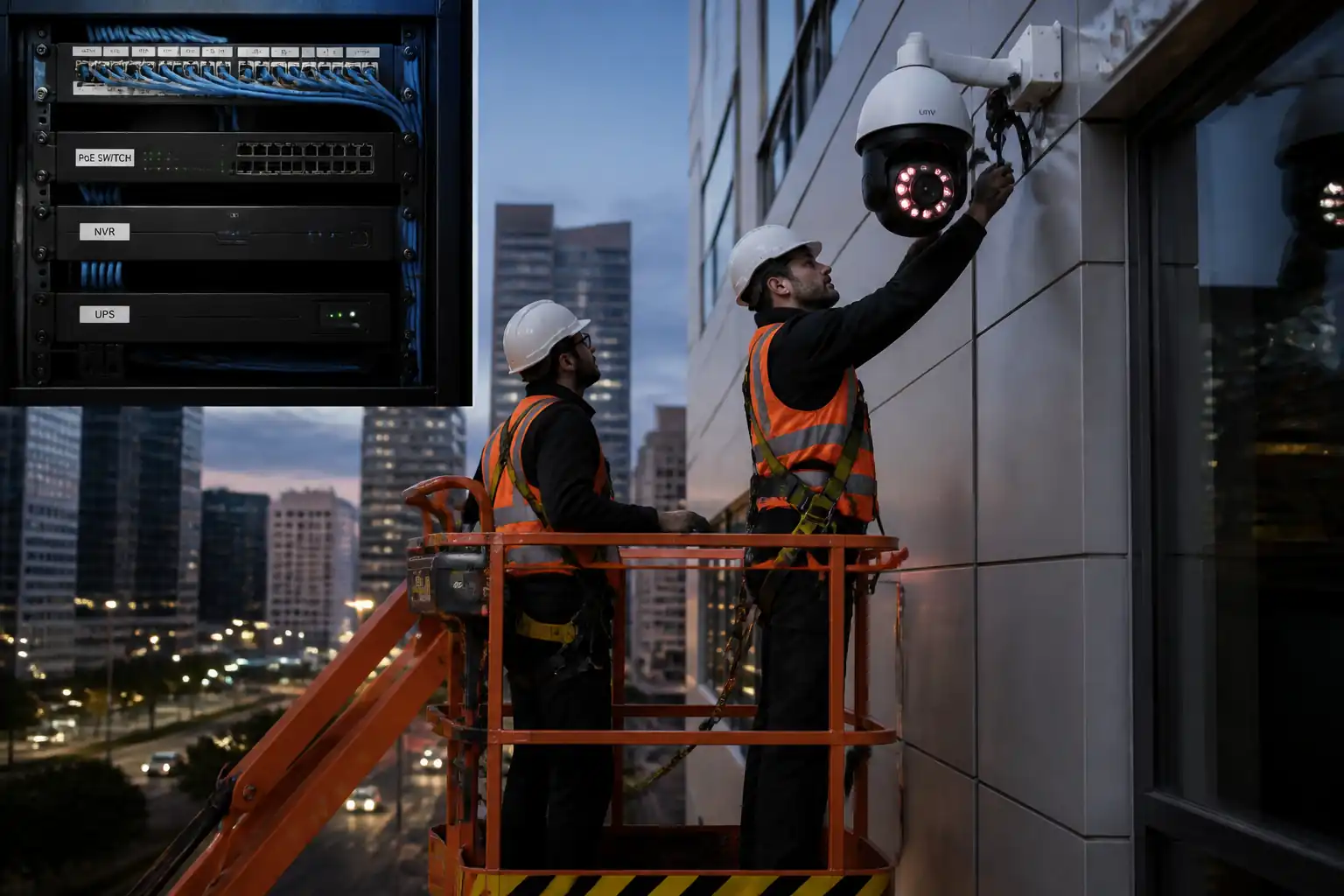
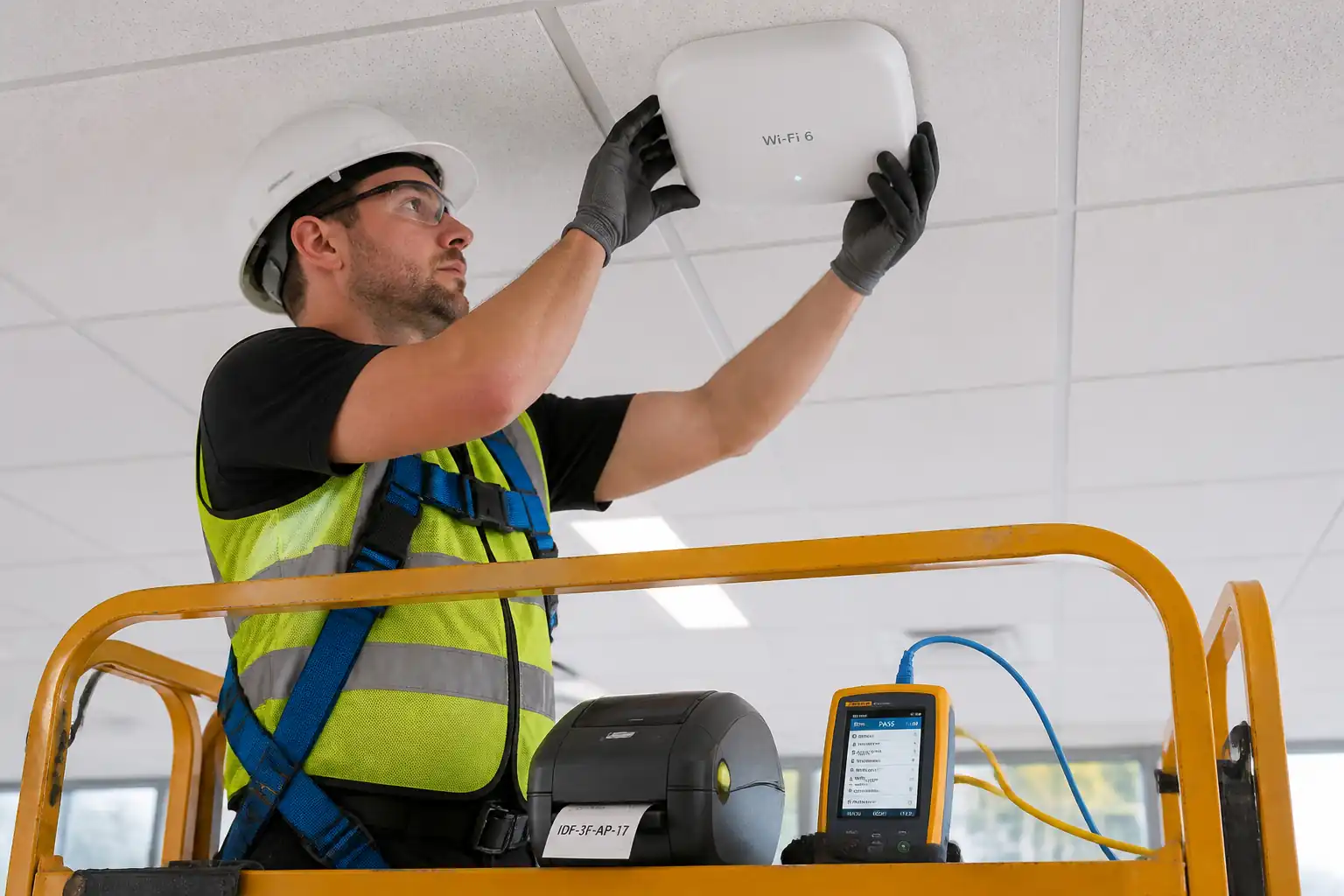
| AP mounting inspection | Fixings, level, orientation, cable strain relief | Secure mount; level ±2°; strain relief fitted; aesthetics acceptable | QA/QC, LV Supervisor | Photos, checklist |
| PoE verification | PoE class/type, voltage at PD, link speed | Correct class (af/at/bt) per design; PD voltage within IEEE limits; ≥1 Gbps link if supported | Tester, QA/QC (Witness) | PoE test logs/screenshots |
| Labeling and administration | Label format/location cross-check to schedule | Compliant to TIA-606-C; traceable to TR and port | QA/QC | Label register |
| RF coverage survey | RSSI/SNR mapping, channel overlap, roaming tests | RSSI ≥ -67 dBm (voice) or ≥ -65 dBm (data) [Verify]; SNR ≥ 25 dB; overlap per RF design | Tester, IT Engineer, CxA (Witness if appointed) | Survey report (heatmaps, logs) |
| Functional/security tests | DHCP/DNS, VLANs, 802.1X/RADIUS, ping/latency | Auth success ≥ 99%; latency ≤ 50 ms to gateway; packet loss ≤ 1% [Verify] | IT Engineer | Test sheets, controller logs |
| Final inspection and handover | Documents and site verification | All ITP items closed; O&M and as-builts accepted; defects cleared | PM, QA/QC, Client/Consultant | Handover certificate, MDR |
This table is a read-only public reference. Download the PDF or Excel version, or customize this ITP to edit it for your project.
Frequently asked questions
Related method statement
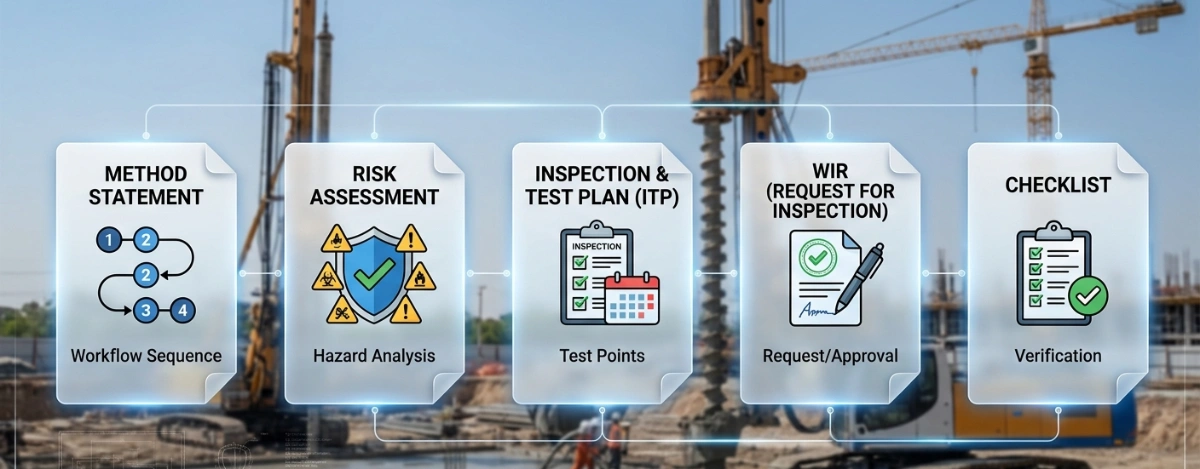
This Inspection and Test Plan is associated with the Method Statement – Wireless Access Point (WAP) Installation and Commissioning method statement, which describes the step-by-step construction sequence, resources, materials, equipment, safety controls, and environmental controls for this activity.
View the Method Statement – Wireless Access Point (WAP) Installation and Commissioning method statement →Continue with related inspection, method statement, article, and checklist resources.