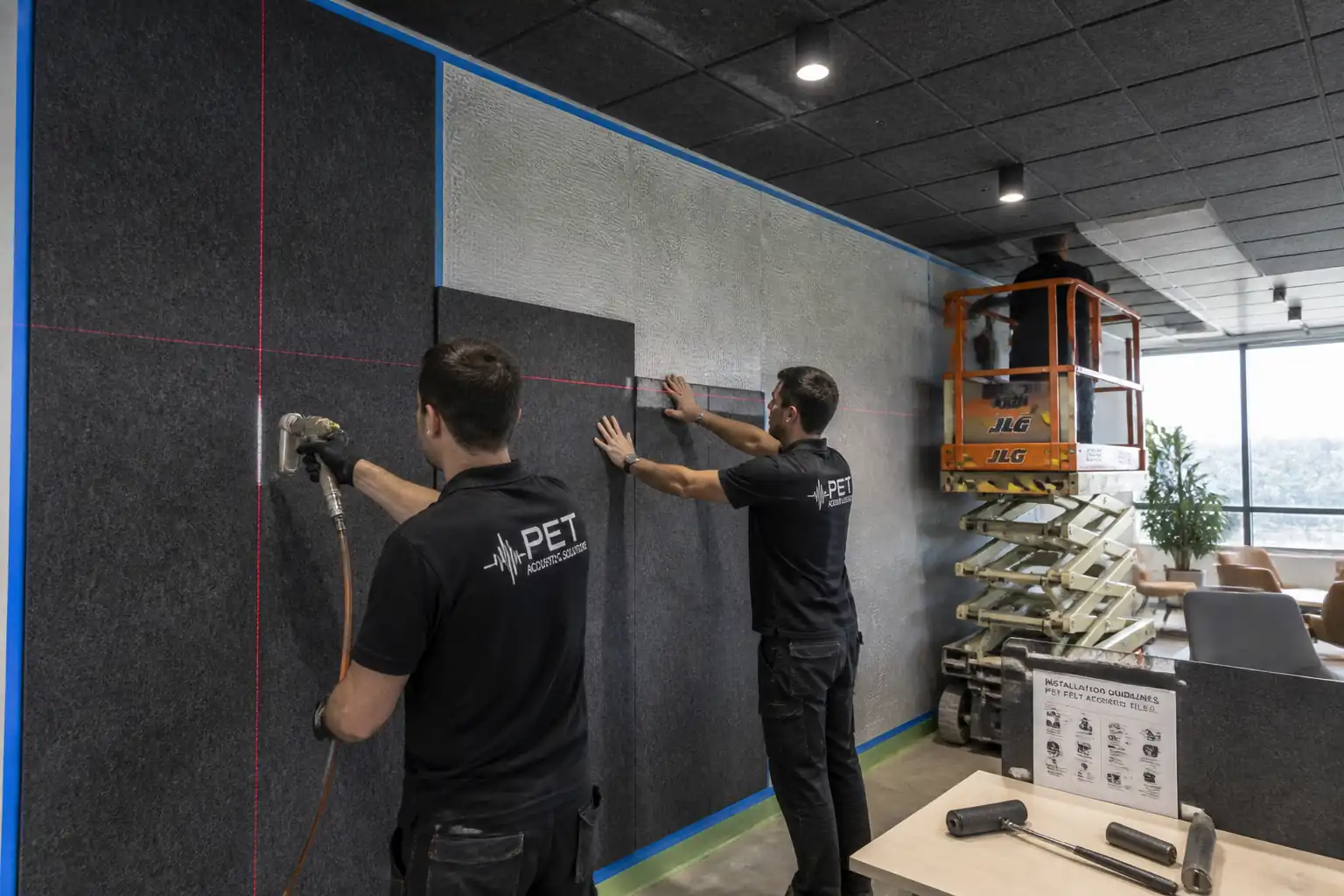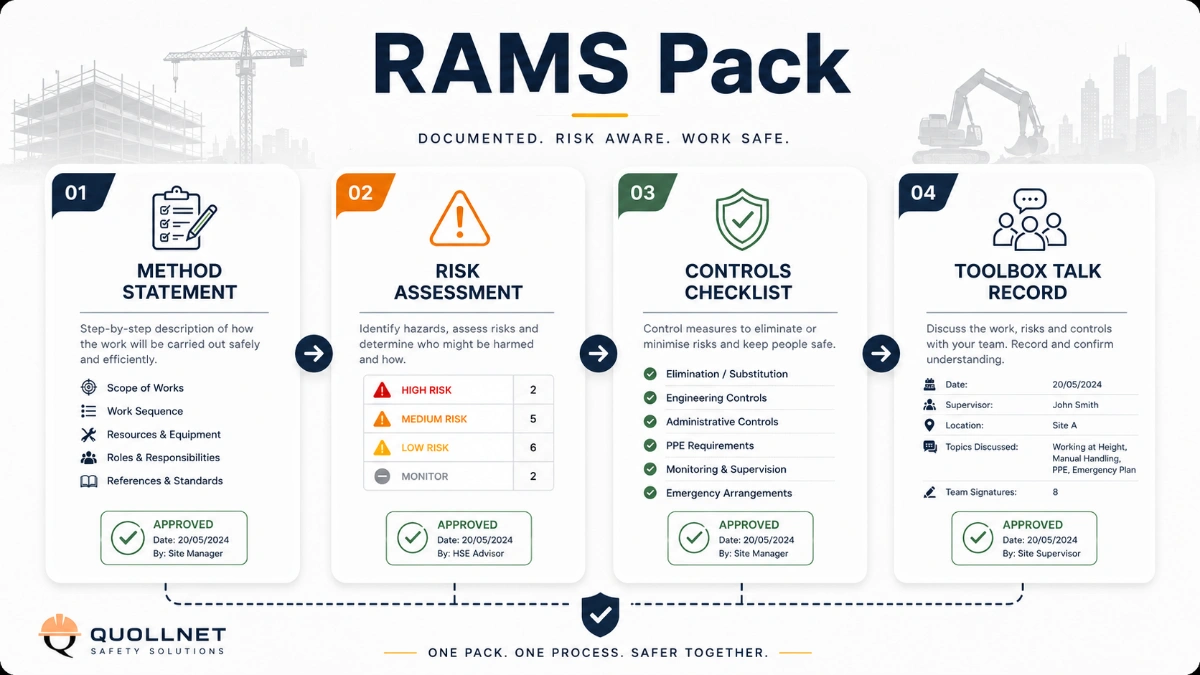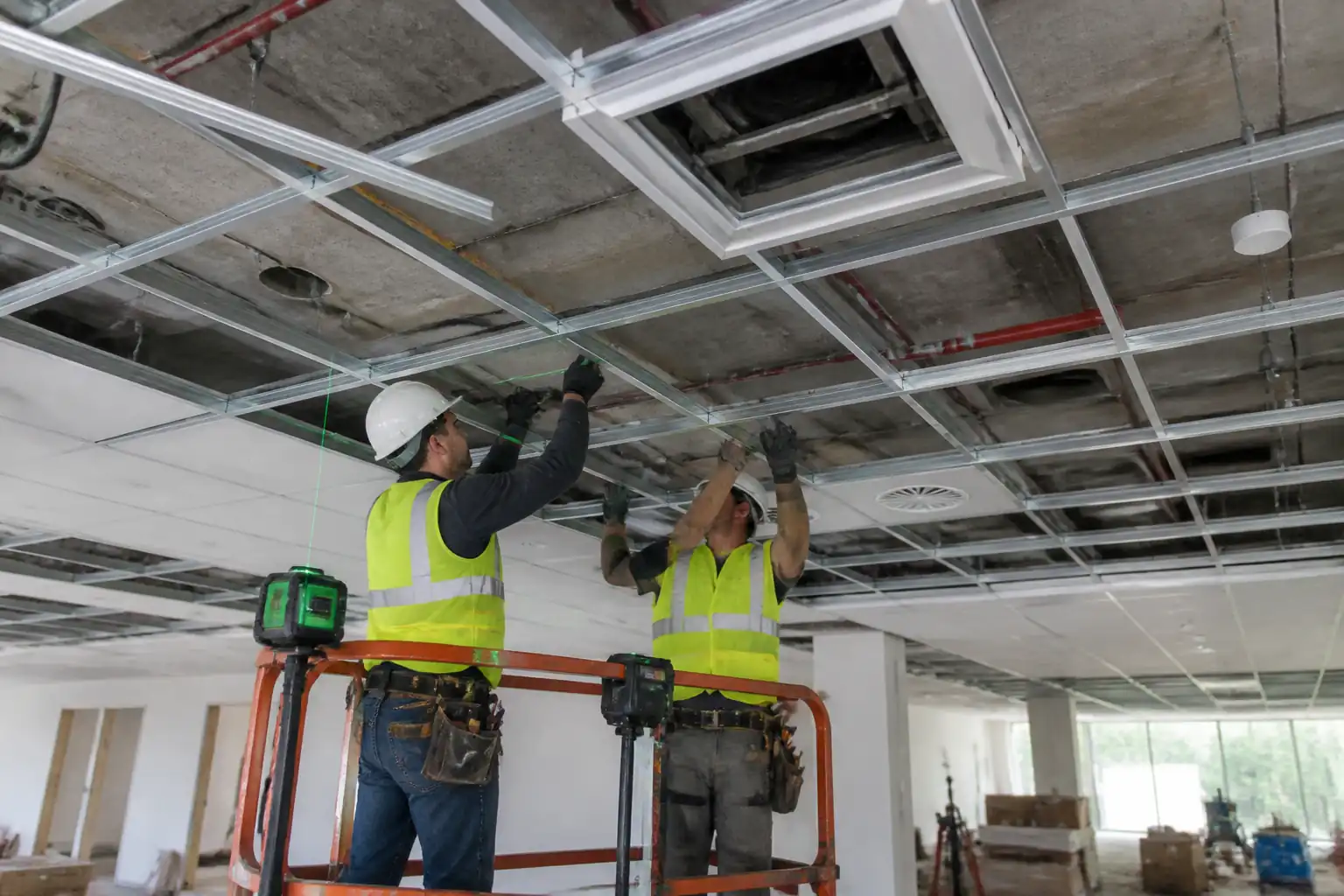

Method Statement: Suspended Ceiling Installation (Grid, Hangers, Tiles, MEP Coordination, Access Panels, QA/QC, Final Alignment) – Method Statement
AI-assisted method statement with matching ITP, PDF download, and Excel export.
More than a static template
Unlike a downloadable Word or PDF template, this method statement is an AI-assisted editable starting point connected directly to a matching Inspection and Test Plan. Every section is structured, project-adaptable, and ready to export.
- AI-assisted drafting — Customize every section with AI for your specific project scope.
- Linked ITP — A matching inspection and test plan is generated alongside the method statement.
- Multiple export formats — Download as a formatted PDF or editable Excel spreadsheet.
- Editable starting point, not a final document — Review, verify, and adjust all content against your project requirements before use.
Static template vs. Quollnet workflow
| Feature | Static template | Quollnet |
|---|---|---|
| Project-specific content | Manual fill-in required | AI-assisted customization |
| Linked ITP | Separate document, no link | Matching ITP included |
| Export formats | Usually PDF only | PDF and Excel |
| Structured sections | Free-form layout | 13 standardized sections |
| Saved to your account | Local file only | Cloud-saved, reusable |
| Content accuracy | You verify everything | AI-assisted, you still verify |
| Cost | Often free but time-intensive | Free to customize and download |
What you can customize
When you save this method statement to your account, every section becomes editable. The following 13 sections are included:
- Scope — Defines the activity and its boundaries.
- References — Standards, specifications, and drawings.
- Responsibilities — Roles and accountabilities.
- Resources — Labour, plant, and equipment summary.
- Materials — Materials and compliance requirements.
- Equipment — Tools and equipment details.
- Prerequisites — Hold points and pre-conditions.
- Method sequence — Step-by-step construction sequence.
- Safety controls — HSE risk controls and PPE.
- Environmental controls — Environmental mitigation measures.
- QA/QC — Quality inspection and test requirements.
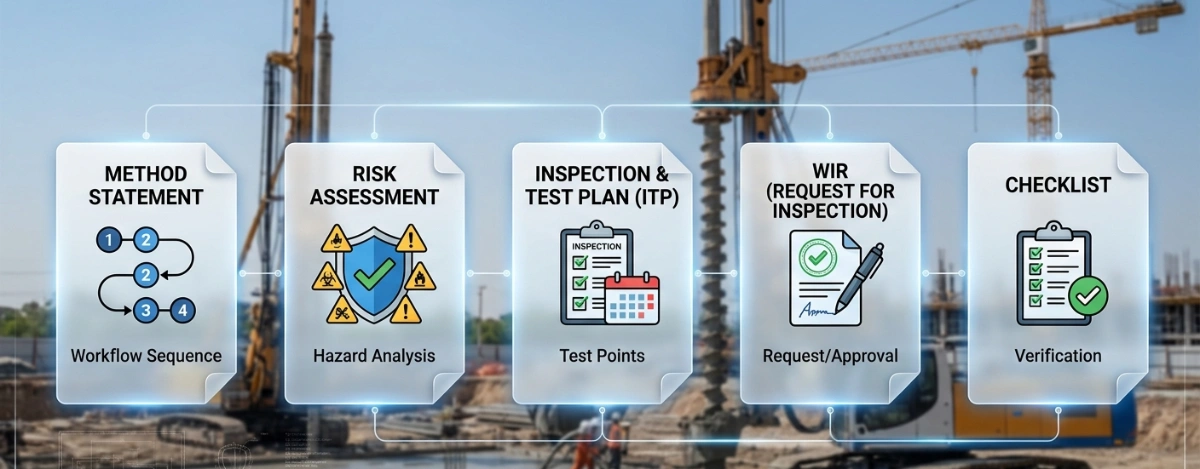
- ITP — Inspection and Test Plan table (has its own page).
- Attachments — Referenced drawings and documentation.
Why this method statement is used
This method statement is used to define and communicate the approved procedure for carrying out method statement: suspended ceiling installation (grid, hangers, tiles, mep coordination, access panels, qa/qc, final alignment) on site. It ensures the work is planned in advance, the correct resources and controls are in place, and all personnel understand responsibilities, sequence, quality requirements, and safety controls before work begins. It aligns site execution with the documented scope and acceptance expectations.
Who uses this method statement
This method statement is used by contractors, site supervisors, project engineers, QA/QC engineers, HSE officers, consultants, and client representatives. It serves as a shared reference for planning, execution, supervision, inspection, and approval of the activity on site.
When it is prepared and submitted
The method statement is prepared before the work activity starts and submitted as part of the pre-construction documentation package for review and approval.
Who reviews or approves it
The method statement is usually submitted to the client representative, consultant, resident engineer, or project management consultant for review and approval before the work commences.
Important approval note
This method statement is an AI-assisted editable starting point, not a pre-approved document. Before use on any project, all content must be reviewed and approved by the relevant parties (superintendent, principal contractor, or client representative) in accordance with your contract and project quality plan.
For example: if your specification requires a departure from a referenced standard, that departure must be documented and approved separately — this method statement will not capture that automatically. Always verify against your applicable drawings, specifications, and regulatory requirements.
Method statement content
Scope
Work Included
- Supply, install, and commission suspended (lay-in) ceiling systems comprising hangers, main runners, cross-tees, perimeter trim/angles, tiles/panels, access panels, hold-down or safety clips (where required), seismic bracing (where required), and accessories.
- Coordination with MEP and architectural trades for penetrations, fixture supports (lights, diffusers, speakers), sprinkler escutcheons, access requirements, and clearance for maintenance.
- Setting out, leveling, alignment, and final presentation of ceiling plane and module, including perimeter closure details and acoustic seals where specified.
- QA/QC inspections, testing (e.g., anchor proof tests), and documentation, including handover records and as-builts.
Work Excluded
- Independent structural supports for heavy MEP fixtures (lights, diffusers, fan coils, signage, cable trays) beyond the capacity of the ceiling grid; these must be separately supported from structure [Verify per project specifications].
- Firestopping and fire-rated ceiling systems unless specifically detailed in project documents.
- Remedial structural works to base building (slab/beam) or relocation of existing services.
Interfaces
- Architectural finishes at walls/soffits, gypsum partitions, glazing heads.
- MEP services and devices passing through or located in the ceiling plane.
- Sprinkler systems and fire detection devices, and smoke barriers (if any).
Area/Type
- Applies to suspended modular acoustic/mineral fiber/metal lay-in ceilings on exposed T-grid or similar proprietary systems per approved submittals [Verify per project specifications].
Constraints
- Install only in enclosed, conditioned spaces after wet works are completed and ambient conditions stabilized per manufacturer (typ. 10–30°C, RH 25–70%) [Verify per project specifications].
References
| Document Type | Reference / Number | Revision | Notes |
|---|---|---|---|
| Standard | BS EN 13964 | Select corrosion class per environment (e.g., Class B typical interiors) [Verify per project specifications]. | |
| Standard | ASTM C635/C635M | ||
| Standard | ASTM C636/C636M | Includes typical hanger spacing, perimeter support and leveling guidance. | |
| Standard | ASTM E580/E580M | Use if project has seismic design category; coordinates with NFPA 13 for sprinkler bracing/clearances. | |
| Standard | BS 8539 / EN 1992-4 | Anchor design/testing; use ETA/ICC approved anchors; pull testing regimes. | |
| Standard | NFPA 13 | Sprinkler heads shall not be supported by ceiling grid; clearances, escutcheons; coordination of penetrations. | |
| Standard | IEC 60364 / BS 7671 | Coordinate independent supports for luminaires if exceeding grid allowable load. | |
| Specification | Approved Submittals | Follow priority: Project Specs > Codes > Manufacturer. |
Responsibilities
| Role | Responsibility | Name / Party |
|---|---|---|
| PM | Ensure approved materials and drawings available; coordinate subcontractors. | Main Contractor |
| SE | Issue layout drawings, control lines, and elevations; supervise sequence and tolerances. | Main Contractor |
| QA/QC | Raise IRs for hold/witness points; verify acceptance criteria and records. | Main Contractor |
| HSE | Verify controls for work at height, drilling, silica dust, noise, MEWP/scaffold inspection. | Main Contractor |
| Foreman | Allocate tasks; ensure workmanship per standards. | Specialist Subcontractor |
| MEP Coord | Issue coordinated reflected ceiling plans (RCPs) and device schedules. | Main Contractor |
| Surveyor | Maintain calibration; provide as-built points. | Main Contractor |
| Vendor Rep | Attend mock-ups/first-of-kind installation; confirm compliance with product requirements. | Supplier |
| Engineer | Approve IRs and mock-up; sign off final inspections. | Client/Consultant |
Resources
| Resource Type | Description | Quantity | Remarks |
|---|---|---|---|
| Labor | Skilled fitters experienced in grid/tile systems. | As required | |
| Staff | Engineer/Coordinator + BIM tech (as needed). | 1–2 | |
| Labor | For safe access at height. | As required |
Materials
| Material | Specification / Grade | Quantity | Remarks |
|---|---|---|---|
| Tile | As per BOQ | ||
| Grid | As per layout | ||
| Perimeter | As per perimeter | ||
| Hanger | As required | ||
| Anchor | As required | ||
| Seismic | As required | ||
| Access panel | As per schedule | ||
| Accessories | As required |
Equipment
| Equipment | Capacity / Type | Quantity | Inspection Required |
|---|---|---|---|
| 1–2 | |||
| 2–4 | |||
| As required | |||
| 1 | |||
| Sets per crew |
Prerequisites
- Approved shop drawings, coordinated RCP with MEP devices and access panel schedule.
- Approved materials submittals with corrosion class, fire and acoustic performance data.
- BIM/coordination sign-off confirming no clashes in the ceiling zone and that all heavy fixtures have independent structural supports.
- Area readiness: building enclosed; wet trades complete and dried; ambient temperature and RH stabilized as per manufacturer (typ. 10–30°C; RH 25–70%) for 24–48 h pre-install and during installation [Verify per project specifications].
- Services above ceiling completed to the extent practical (piping/duct/cable tray installed and pressure tested where required), with final locations marked for penetrations.
- PTW/permits for work at height, hot works (if any), and drilling into structural elements; utility scans completed for overhead embedded services [Verify per project HSE plan and local regulations].
- Control lines and elevation benchmark established and transferred; slab/soffit condition checked for suitability of anchors (compressive strength, cracks, finishes).
- Logistics: delivery routes, laydown/staging areas protected; tiles acclimatized in the area; waste skips for metal and gypsum/mineral fiber segregation.
- Calibrations in date for laser and test instruments.
- Pre-start coordination meeting and task-specific toolbox talk completed.
Method Sequence
| Step | Activity | Description | Responsibility | Inspection / Hold Point |
|---|---|---|---|---|
| 1 | Pre-start briefing and area protection | Conduct task-specific TBT; verify permits; protect floors/walls; establish exclusion zone below work at height. | Foreman / HSE Officer | Pre-work check |
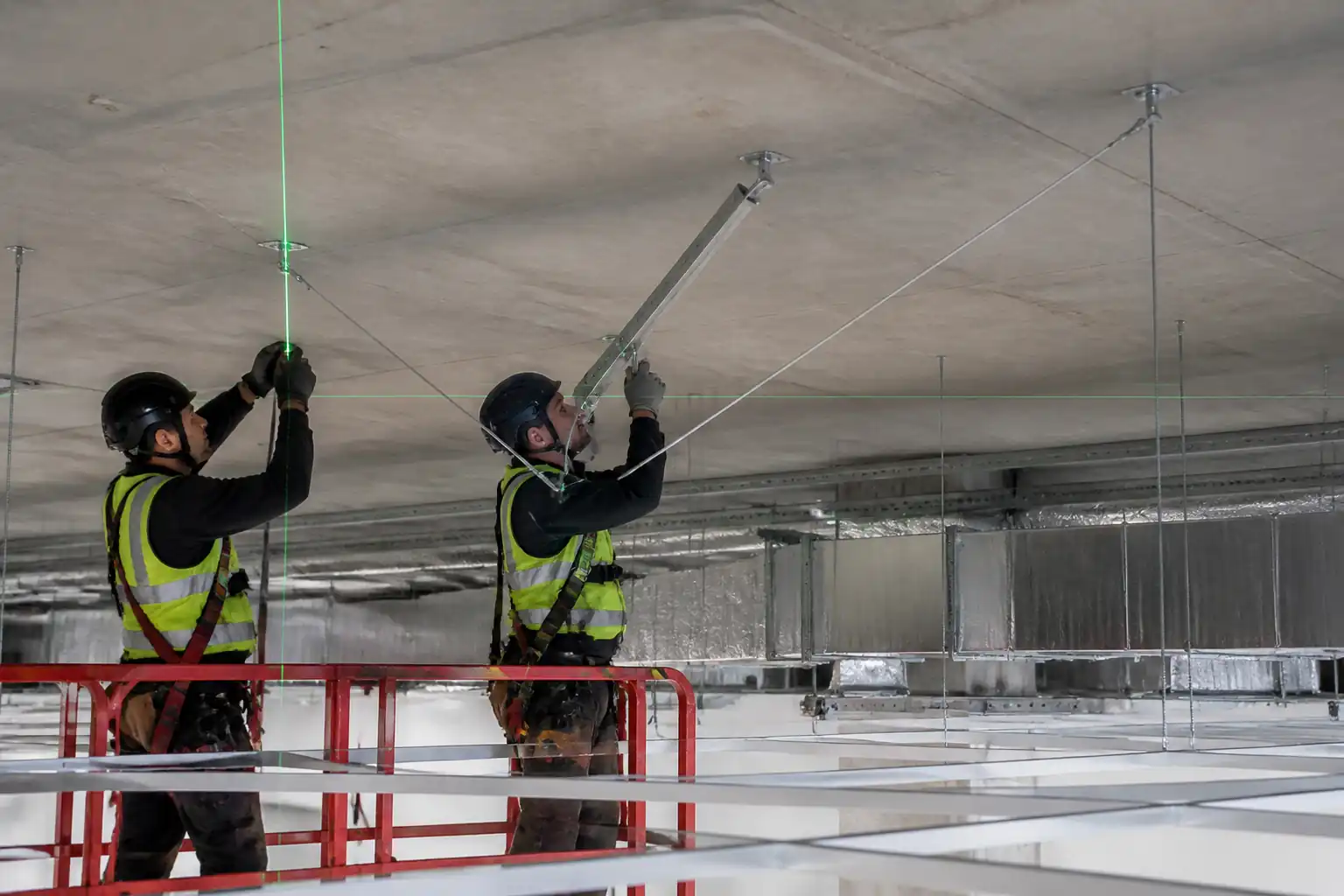
| 2 | Setting out and level control | Mark ceiling perimeter lines using laser level; transfer datum; mark main runner direction and module from RCP. | Site Engineer / Surveyor | W |
| 3 | Perimeter trim installation | Fix perimeter angles/shadowline trims along marked perimeter at specified elevation; provide expansion gaps at corners/joints. | Ceiling Installers | W |
| 4 | Hanger layout and drilling | Lay out hangers on grid lines per manufacturer; scan/verify soffit; drill for anchors with dust extraction; install anchors and hanger wires/rods. | Ceiling Installers / HSE oversight | H |
| 5 | Anchor proof testing (sample) | Perform proof tests on a minimum 5% of anchors per area, min 3 tests, or as specified. | QA/QC with Third-Party (if specified) | W |
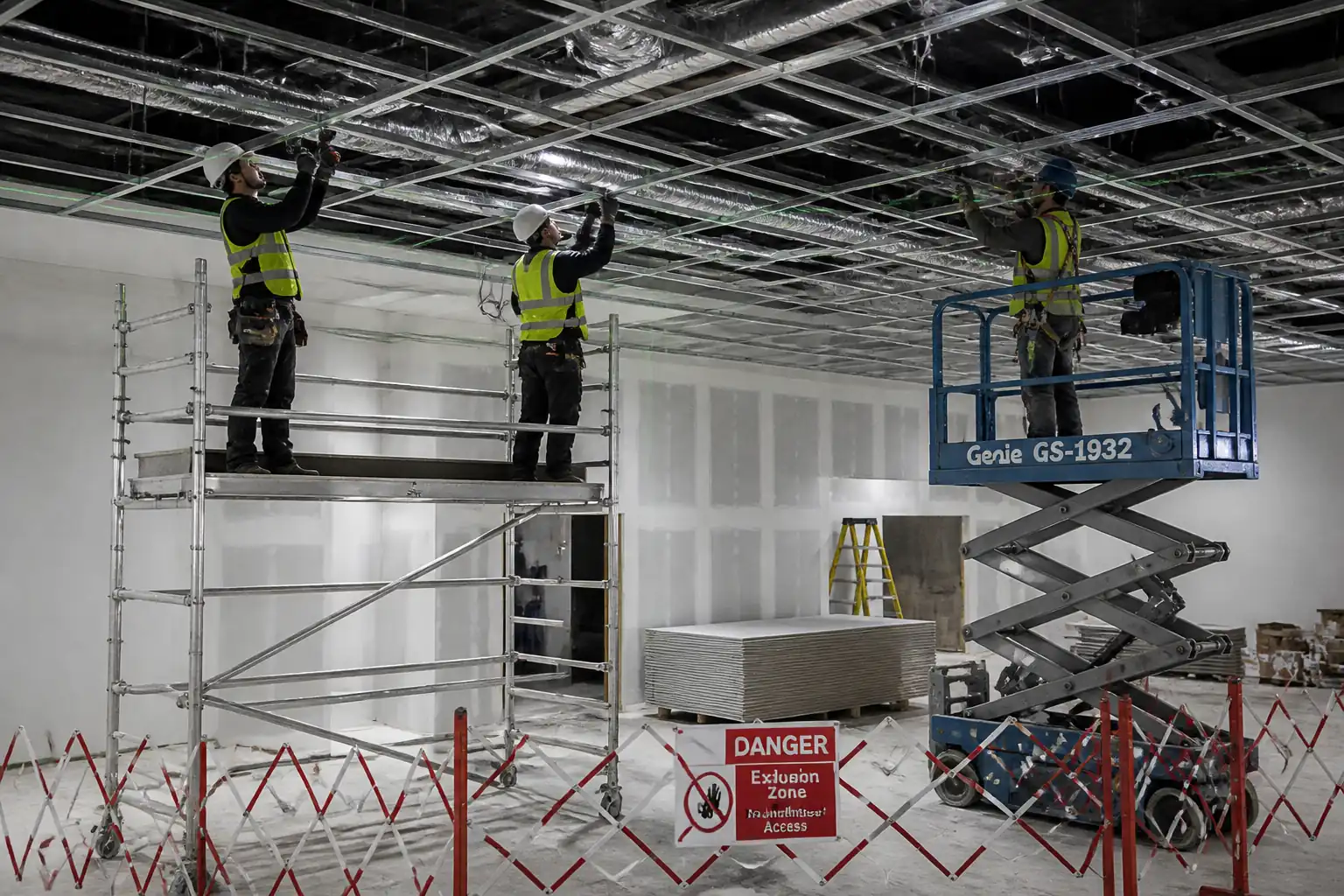
| 6 | Main runners installation | Suspend main runners from hangers; adjust preliminary level; splice per manufacturer; maintain straightness using laser/chalk lines. | Ceiling Installers | W |
| 7 | Cross-tees and module formation | Install cross-tees to form specified module; ensure tight connections and squareness; cut tees at perimeter with deburred edges. | Ceiling Installers | W |
| 8 | Seismic bracing (if required) | Install splay wires/struts, perimeter closure, and movement joints per seismic design details. | Ceiling Installers / Engineer | H |
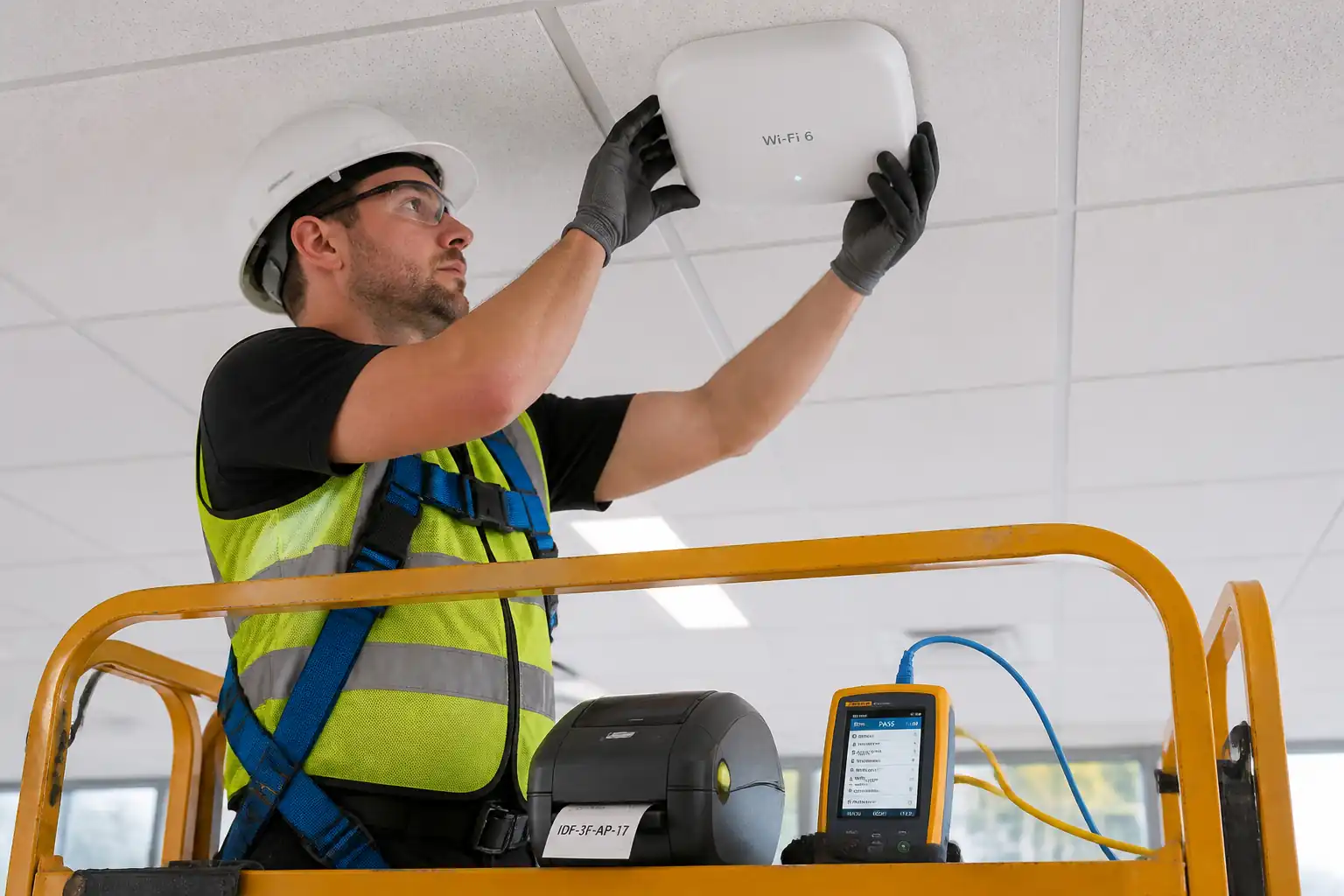
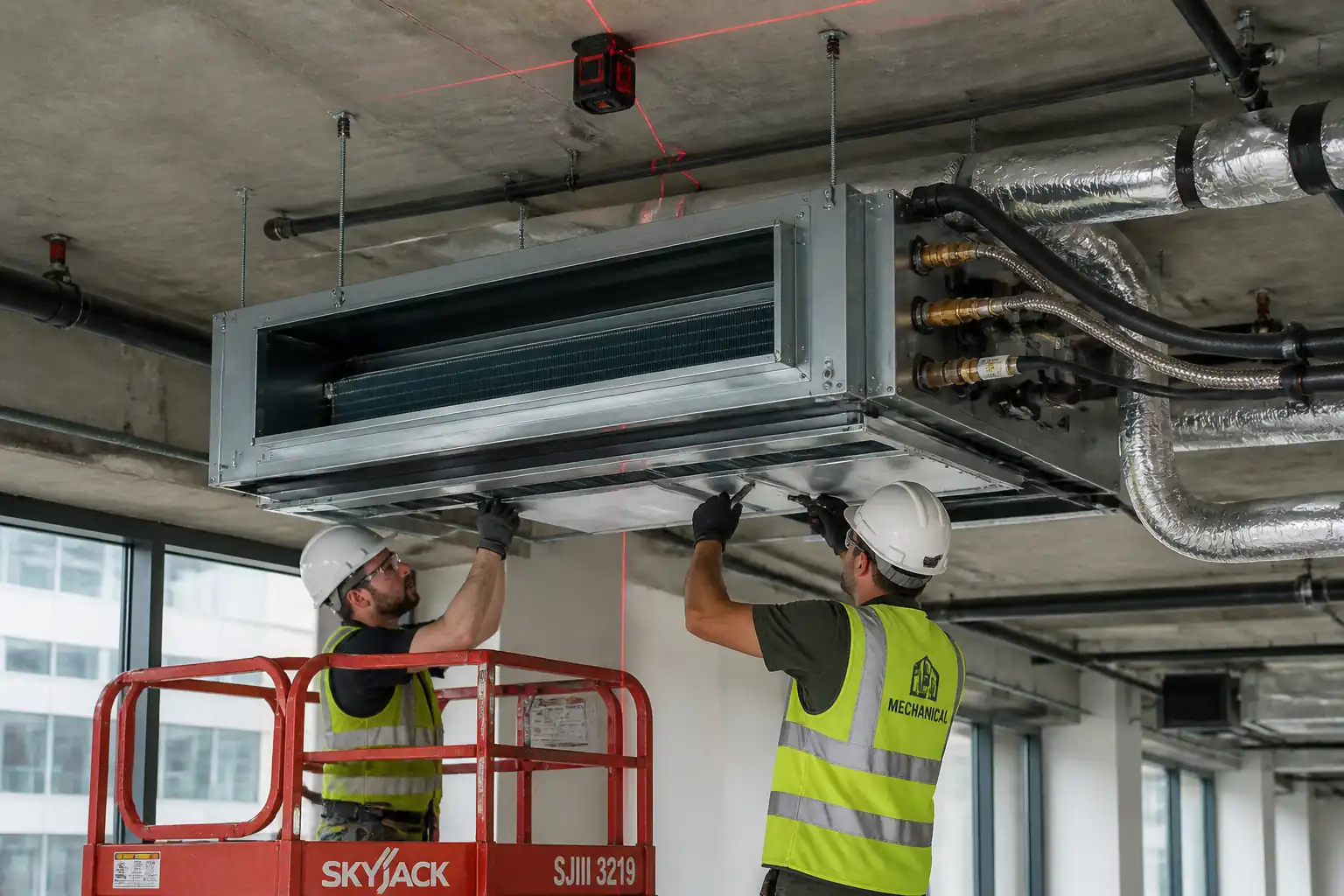
| 9 | MEP device coordination and supports | Confirm positions of luminaires, diffusers, speakers, detectors; ensure independent supports for loads exceeding grid capacity; install stabilizer rings for cut panels; coordinate sprinkler escutcheons. | MEP Coordinator / Ceiling Installers | W |
| 10 | Access panel framing and installation | Frame openings with perimeter tees; provide additional hangers within 150–200 mm of corners; install access panels plumb and flush; secure safety chains if hinged. | Ceiling Installers | W |
| 11 | Final leveling and tightening | Re-check entire ceiling level and plane; adjust hangers/turnbuckles; secure connections; install hold-down clips where specified. | Ceiling Installers / Site Engineer | W |
| 12 | Tile placement | Clean hands/gloves; place tiles diagonally to avoid edge damage; cut perimeter tiles neatly with support; install gaskets if required. | Ceiling Installers | W |
| 13 | Cleaning and protection | Clean surfaces; remove swarf/debris above ceiling; install protective polythene where subsequent works may occur; lock out access panels if required. | Foreman | Final |
| 14 | Final QA/QC and alignment inspection | Raise IR for consultant; verify tolerances, module alignment to walls/fixtures, access panel operation, and documentation completeness. | QA/QC Engineer | H |
Safety Controls (HSE)
Key Hazard Controls
- Hazard: Work at height (falls from MEWP/scaffold/podiums)
- Likely consequence: Serious injury or fatality.
- Engineering/procedural control: Use certified MEWPs/scaffolds with guardrails; exclude ladders for sustained work; maintain 3-point contact; tag scaffolds; emergency lowering procedures for MEWPs.
- Required PPE: Hard hat, safety shoes, gloves, fall-arrest harness with short lanyard when required by risk assessment.
- Collective preventive measure: Guardrails/toeboards; exclusion zones below; spotter for MEWP.
-
Inspection/permit/supervision: Daily pre-use checks; weekly scaffold inspection by competent person; PTW for work at height [Verify per project HSE plan and local regulations].
-
Hazard: Overhead drilling and anchor installation (silica dust, debris)
- Likely consequence: Respiratory illness, eye injury.
- Engineering/procedural control: On-tool HEPA dust extraction; wet suppression if permitted; drilling shields; use correct bit size/stop collars.
- Required PPE: Safety goggles/face shield, FFP2/FFP3 or N95/N100 respirator [Verify], gloves, long sleeves.
- Collective preventive measure: Area barricading; debris catch-sheets.
-
Inspection/permit/supervision: Check extraction unit filters; verify anchor type and bit size before start; supervision by foreman.
-
Hazard: Contact with live electrical services in ceiling void
- Likely consequence: Electric shock, burns.
- Engineering/procedural control: Permit-to-work with isolation/LOTO for affected circuits; use insulated tools; confirm dead via tester before working near conductors.
- Required PPE: Dielectric gloves (as required), eye protection.
- Collective preventive measure: Barriers and signage; keep covers on live DBs.
-
Inspection/permit/supervision: Electrical PTW/LOTO records; supervision by authorized electrician.
-
Hazard: Striking embedded reinforcement, post-tension (PT) ducts, or services during drilling
- Likely consequence: Structural damage, service rupture.
- Engineering/procedural control: Use as-built scans/cover meters; maintain minimum cover and no-drill zones; adjust hanger positions when conflicts found; engineer approval required for any deviation.
- Required PPE: Standard PPE; cut-resistant gloves.
- Collective preventive measure: Permit to drill with method of verification.
-
Inspection/permit/supervision: Issue drill permits; record scan results; engineer sign-off.
-
Hazard: Manual handling of grid bundles and tiles
- Likely consequence: Musculoskeletal injury.
- Engineering/procedural control: Team lifts; use carts; split loads; stage materials close to workfront to reduce carrying distance.
- Required PPE: Gloves with grip, safety shoes.
- Collective preventive measure: Mechanical aids (trolleys), safe stacking height limits.
-
Inspection/permit/supervision: Supervisor to plan drops; housekeeping to prevent trips.
-
Hazard: Sharp edges, cutting operations
- Likely consequence: Lacerations, eye injury.
- Engineering/procedural control: Deburr cut tees; use guarded tools; provide cut stations with clamps.
- Required PPE: Cut-resistant gloves, eye protection.
- Collective preventive measure: Designated cut area with waste bins.
-
Inspection/permit/supervision: Tool inspections; blades replaced regularly.
-
Hazard: Noise and vibration from drilling
- Likely consequence: Hearing loss, HAVS with prolonged use.
- Engineering/procedural control: Use low-vibration tools; rotate tasks; apply administrative limits.
- Required PPE: Hearing protection (earplugs/earmuffs).
- Collective preventive measure: Schedule noisy works in allowed hours.
-
Inspection/permit/supervision: Noise monitoring as required by HSE plan.
-
Hazard: MEWP/scaffold instability/collision
- Likely consequence: Crush injuries, falls.
- Engineering/procedural control: Firm level ground; outriggers as required; spotter; avoid overreaching; keep within SWL.
- Required PPE: Hard hat, hi-vis vest.
- Collective preventive measure: Exclusion zone and traffic management.
-
Inspection/permit/supervision: Daily MEWP checklist; operator license; lift plan if required.
-
Hazard: Fire load from packaging and offcuts
- Likely consequence: Fire and smoke.
- Engineering/procedural control: Remove packaging promptly; no hot works nearby without permit; maintain fire extinguishers.
- Required PPE: Standard PPE.
- Collective preventive measure: No-smoking enforcement; designated waste bins.
- Inspection/permit/supervision: Housekeeping checks; hot work permits as applicable.
Environmental Controls
- Dust control: Use on-tool HEPA extraction during drilling; seal drill holes with approved plugs where required; avoid compressed air blow-out; vacuum with HEPA-rated units.
- Noise and working hours: Plan drilling in permitted hours; use low-noise bits and settings; monitor if required by plan.
- Waste management: Segregate metal grid (recycle), mineral fiber tiles (dispose/recycle per manufacturer take-back where available), cardboard/plastics (recycle). Keep manifests.
- VOC/odors: Use low-VOC sealants/paints where needed; maintain ventilation without creating drafts that affect tile acclimatization.
- Resource efficiency: Optimize cut plans to reduce offcuts; stage materials close to workfront; return unused full bundles.
- Spill prevention: Store sealants/paints on trays; keep MEWP refueling outside finished areas; have spill kits on floor below work.
- Light and energy: Switch off temporary lighting when not required; protect installed luminaires from dust to avoid cleaning waste.
- Compliance: Implement site EMP and local environmental rules; record waste volumes and recycling rates [Verify per project HSE plan and local regulations].
QA/QC
Inspection and Testing
- Material receipt: Check labels, finishes, corrosion class, damage; verify batch certificates and compliance with approved submittals.
- Anchor proof testing: Sample ≥ 5% per area, min 3 tests; 1.5× design service load; no displacement > 2 mm; record data [Verify per project specifications].
- Levelness and alignment: Verify during and after grid install; target ±3 mm in 3 m; overall room variance ≤ ±5 mm [Verify].
- Module accuracy: Bay dimension ±2 mm; diagonal difference ≤ 3 mm for 1200×600 mm bays [Verify].
- Perimeter: Fixing c/c 400–600 mm [Verify]; gaps ≤ 3 mm unless detail requires reveal.
- Hanger verticality and spacing: Verticality ≤ 2°; spacing ≤ 1200 mm typical; additional hangers at heavy-load points and near access panel corners (≤ 150–200 mm).
- Seismic (if applicable): Bracing quantity, orientation, and perimeter closure per design; no hard connection to utilities not designed for seismic.
- MEP interface: Independent supports for luminaires/diffusers/speakers exceeding grid capacity; sprinkler not supported by grid; correct trim rings/escutcheons installed.
- Access panels: Independent support; flushness ≤ 1 mm; operation and labeling verified.
Documentation
- Inspection Requests (IR) at hold/witness points with checklists.
- Pull test reports with calibrated gauge details.
- As-built markups of hangers/main runner orientation and access panel coordinates.
- Manufacturer installation compliance confirmation (first-of-kind/benchmark area).
- NCR/CCR management for deviations with corrective actions.
Handover Criteria
- All IRs approved; punchlist closed.
- Surfaces clean; no visible damage; module consistent.
- O&Ms including cleaning/maintenance instructions, product warranties, and spare tiles (attic stock) delivered [Verify per project specifications].
Attachments
- Manufacturer’s installation manuals and data sheets for tiles, grid, hangers, anchors, access panels.
- Approved shop drawings and coordinated RCPs (with device schedules and access panel locations).
- Anchor design calculations and selection rationale; ETA/ICC reports; seismic details (if applicable).
- Calibration certificates (laser, hydraulic tester) and equipment inspection tags.
- Task-specific risk assessment and method statement (RAMS); PTW templates (work at height, drilling, hot works if any).
- Quality checklists (material receipt, setting out, hangers/anchors, grid, seismic, access panels, tiles, final inspection).
- Pull test reports; IRs and approvals; NCR/CCR logs (if any) with closures.
- As-built markups (PDF/DWG) indicating main runner orientation, hanger spacing rationale, access panel coordinates.
- O&M manuals including cleaning/maintenance instructions; warranties; attic stock record.
This content is a read-only public reference. Download or customize to get an editable version.
ITP preview
The first inspection activities from the linked ITP for Method Statement: Suspended Ceiling Installation (Grid, Hangers, Tiles, MEP Coordination, Access Panels, QA/QC, Final Alignment):
| Activity | Inspection / Test | Acceptance Criteria | Responsibility | Record |
|---|---|---|---|---|
| Material delivery and storage | Verify quantities, damage-free, certificates, acclimatization initiated | Conforms to approved submittals; labels intact; acclimatization in conditioned area 24–48 h [Verify]. | QA/QC Engineer / Foreman | Material inspection report; photos |
| Setting out and perimeter marking | Level transfer and perimeter line checks | Lines within ±2 mm of design; documented benchmarks. | Site Engineer | Set-out record; IR (W) |
| Perimeter trim installation | Fixing spacing, level, finish | Fixing ≤ 400–600 mm c/c; level ±2 mm/3 m; finish undamaged. | Foreman / QA/QC | IR (W) with photos |
Showing 3 of 12 inspection activities. View full ITP →
Related Inspection and Test Plan
An Inspection and Test Plan (ITP) is available for Method Statement: Suspended Ceiling Installation (Grid, Hangers, Tiles, MEP Coordination, Access Panels, QA/QC, Final Alignment). The ITP defines the inspection activities, acceptance criteria, hold and witness points, responsible parties, and records required to verify the work described in this method statement.
View the Method Statement: Suspended Ceiling Installation (Grid, Hangers, Tiles, MEP Coordination, Access Panels, QA/QC, Final Alignment) ITP →Frequently asked questions
Continue with related Quollnet resources connected to this method statement.