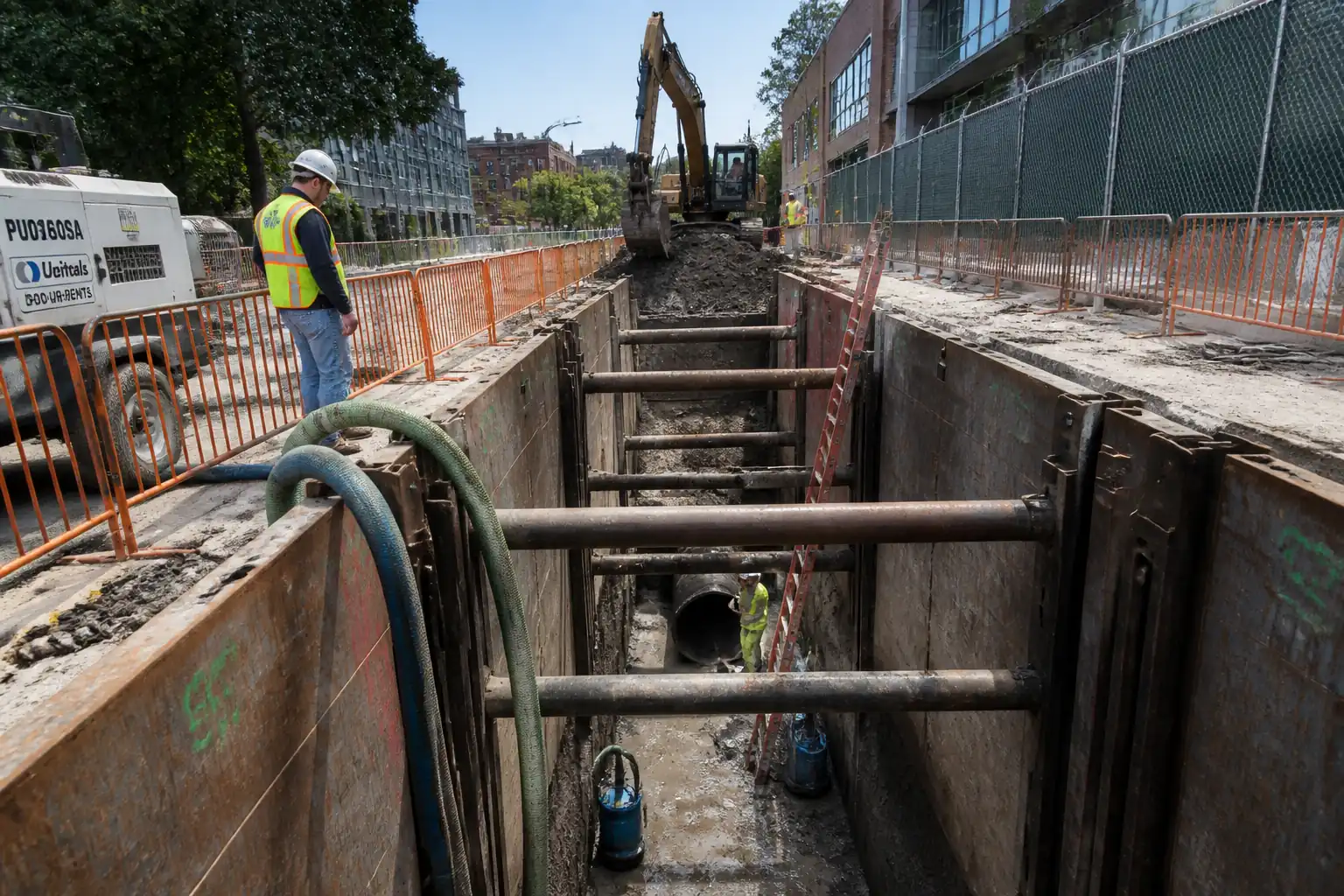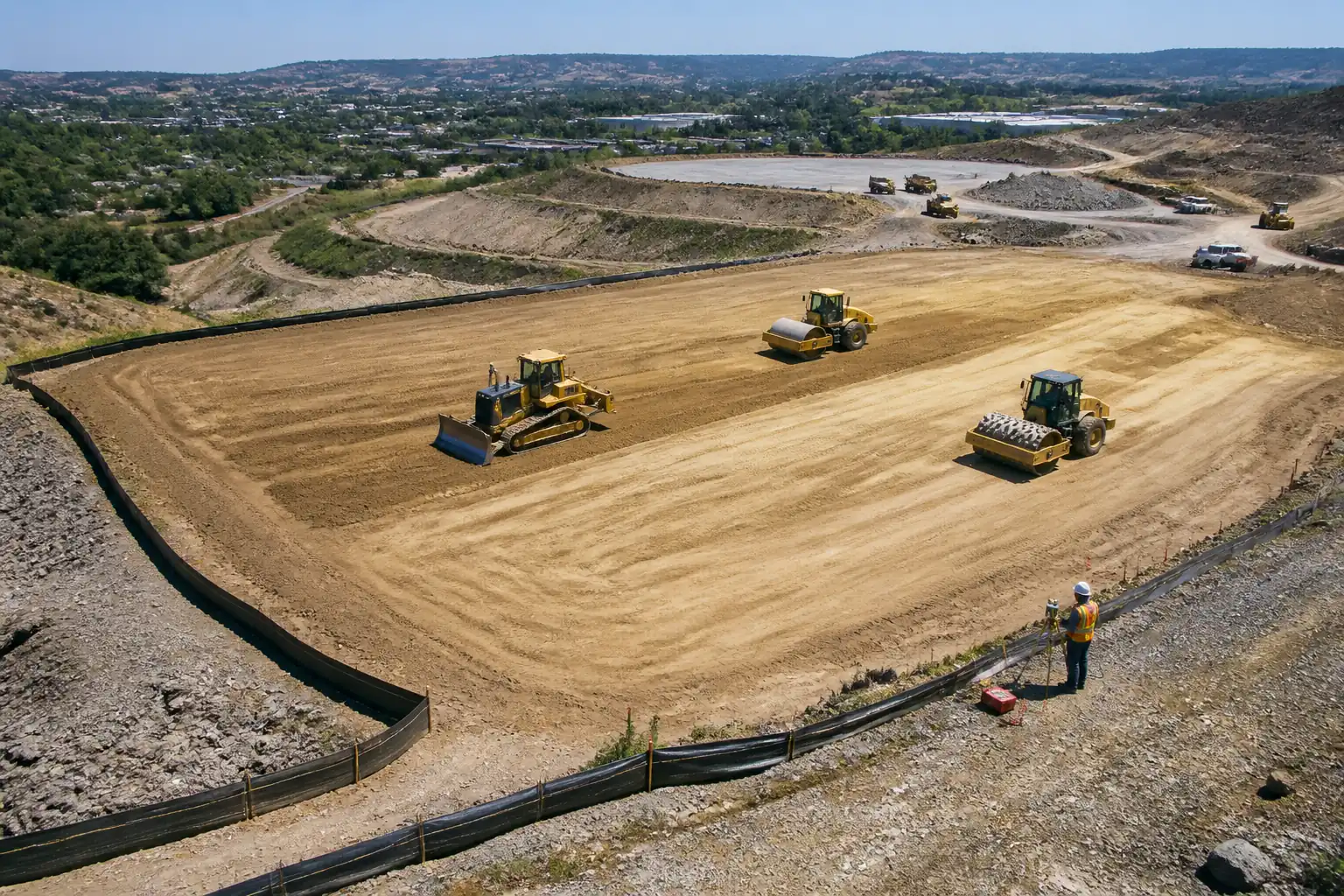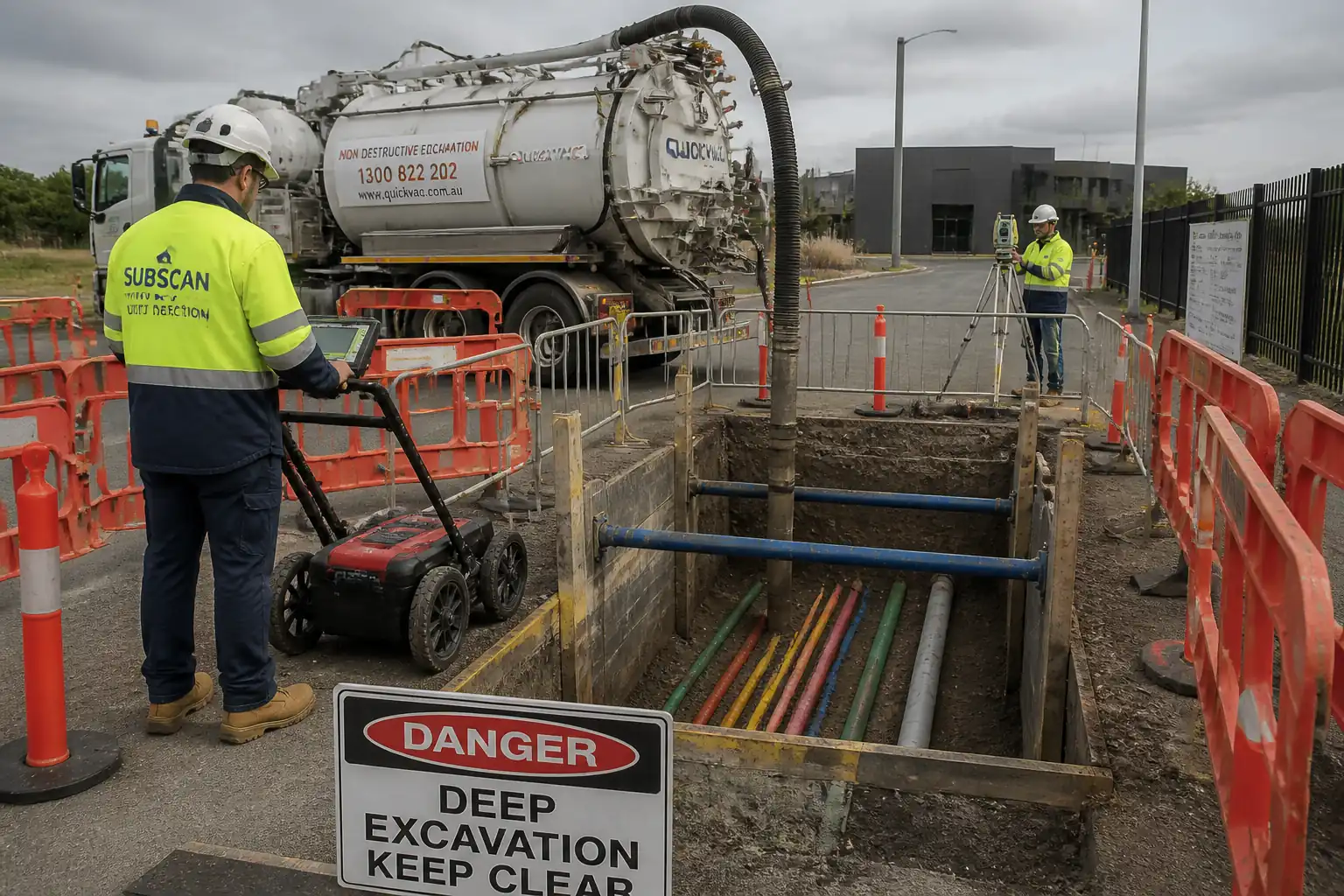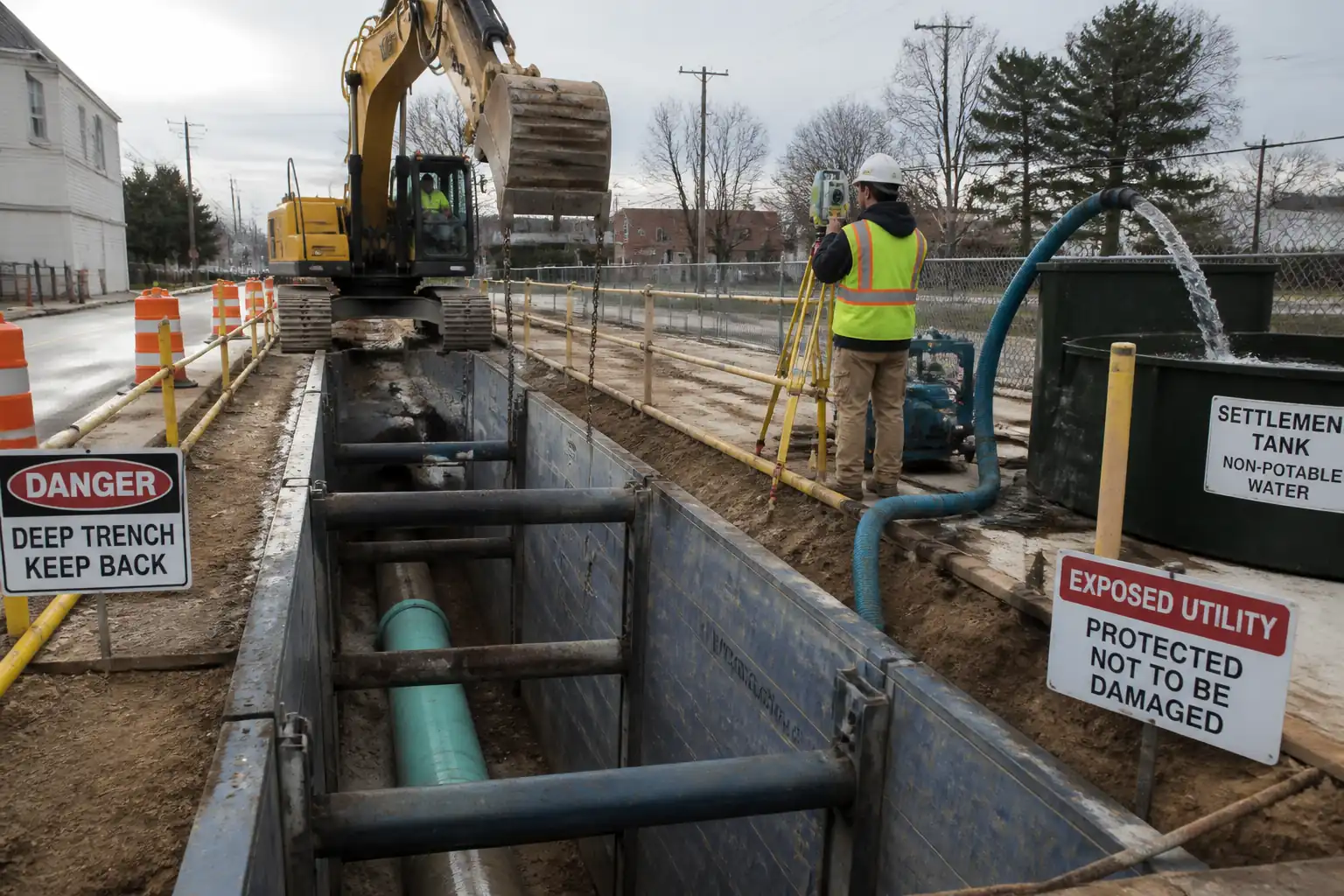

Method Statement: Borrow Pit Development, Material Winning, Overburden Stripping, Source QA/QC, Groundwater Management, Stockpiling, and Progressive Rehabilitation – Method Statement
AI-assisted method statement with matching ITP, PDF download, and Excel export.
More than a static template
Unlike a downloadable Word or PDF template, this method statement is an AI-assisted editable starting point connected directly to a matching Inspection and Test Plan. Every section is structured, project-adaptable, and ready to export.
- AI-assisted drafting — Customize every section with AI for your specific project scope.
- Linked ITP — A matching inspection and test plan is generated alongside the method statement.
- Multiple export formats — Download as a formatted PDF or editable Excel spreadsheet.
- Editable starting point, not a final document — Review, verify, and adjust all content against your project requirements before use.
Static template vs. Quollnet workflow
| Feature | Static template | Quollnet |
|---|---|---|
| Project-specific content | Manual fill-in required | AI-assisted customization |
| Linked ITP | Separate document, no link | Matching ITP included |
| Export formats | Usually PDF only | PDF and Excel |
| Structured sections | Free-form layout | 13 standardized sections |
| Saved to your account | Local file only | Cloud-saved, reusable |
| Content accuracy | You verify everything | AI-assisted, you still verify |
| Cost | Often free but time-intensive | Free to customize and download |
What you can customize
When you save this method statement to your account, every section becomes editable. The following 13 sections are included:
- Scope — Defines the activity and its boundaries.
- References — Standards, specifications, and drawings.
- Responsibilities — Roles and accountabilities.
- Resources — Labour, plant, and equipment summary.
- Materials — Materials and compliance requirements.
- Equipment — Tools and equipment details.
- Prerequisites — Hold points and pre-conditions.
- Method sequence — Step-by-step construction sequence.
- Safety controls — HSE risk controls and PPE.
- Environmental controls — Environmental mitigation measures.
- QA/QC — Quality inspection and test requirements.
- ITP — Inspection and Test Plan table (has its own page).
- Attachments — Referenced drawings and documentation.
Why this method statement is used
This method statement is used to define and communicate the approved procedure for carrying out method statement: borrow pit development, material winning, overburden stripping, source qa/qc, groundwater management, stockpiling, and progressive rehabilitation on site. It ensures the work is planned in advance, the correct resources and controls are in place, and all personnel understand responsibilities, sequence, quality requirements, and safety controls before work begins. It aligns site execution with the documented scope and acceptance expectations.
Who uses this method statement
This method statement is used by contractors, site supervisors, project engineers, QA/QC engineers, HSE officers, consultants, and client representatives. It serves as a shared reference for planning, execution, supervision, inspection, and approval of the activity on site.
When it is prepared and submitted
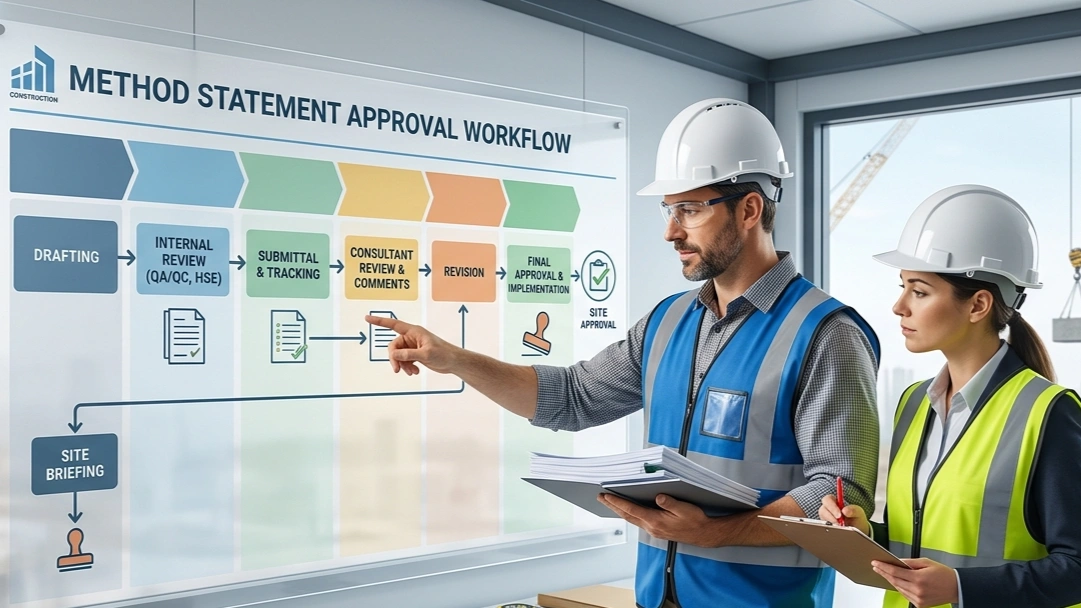
The method statement is prepared before the work activity starts and submitted as part of the pre-construction documentation package for review and approval.
Who reviews or approves it
The method statement is usually submitted to the client representative, consultant, resident engineer, or project management consultant for review and approval before the work commences.
Important approval note
This method statement is an AI-assisted editable starting point, not a pre-approved document. Before use on any project, all content must be reviewed and approved by the relevant parties (superintendent, principal contractor, or client representative) in accordance with your contract and project quality plan.
For example: if your specification requires a departure from a referenced standard, that departure must be documented and approved separately — this method statement will not capture that automatically. Always verify against your applicable drawings, specifications, and regulatory requirements.
Method statement content
Scope
Scope of Works
- Obtain/verify borrow pit licenses, environmental permits, landowner/authority consents, and rehabilitation bonds.
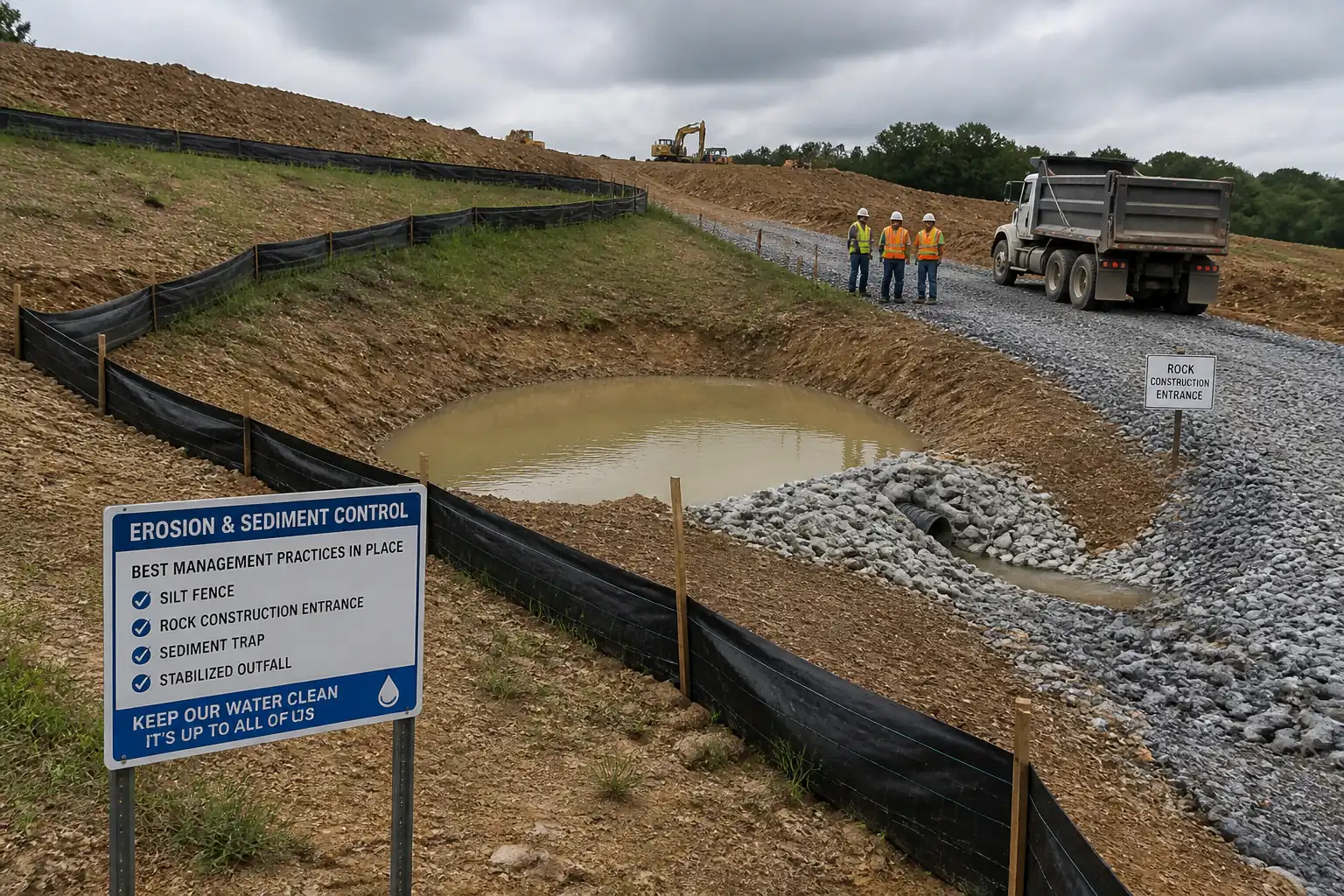
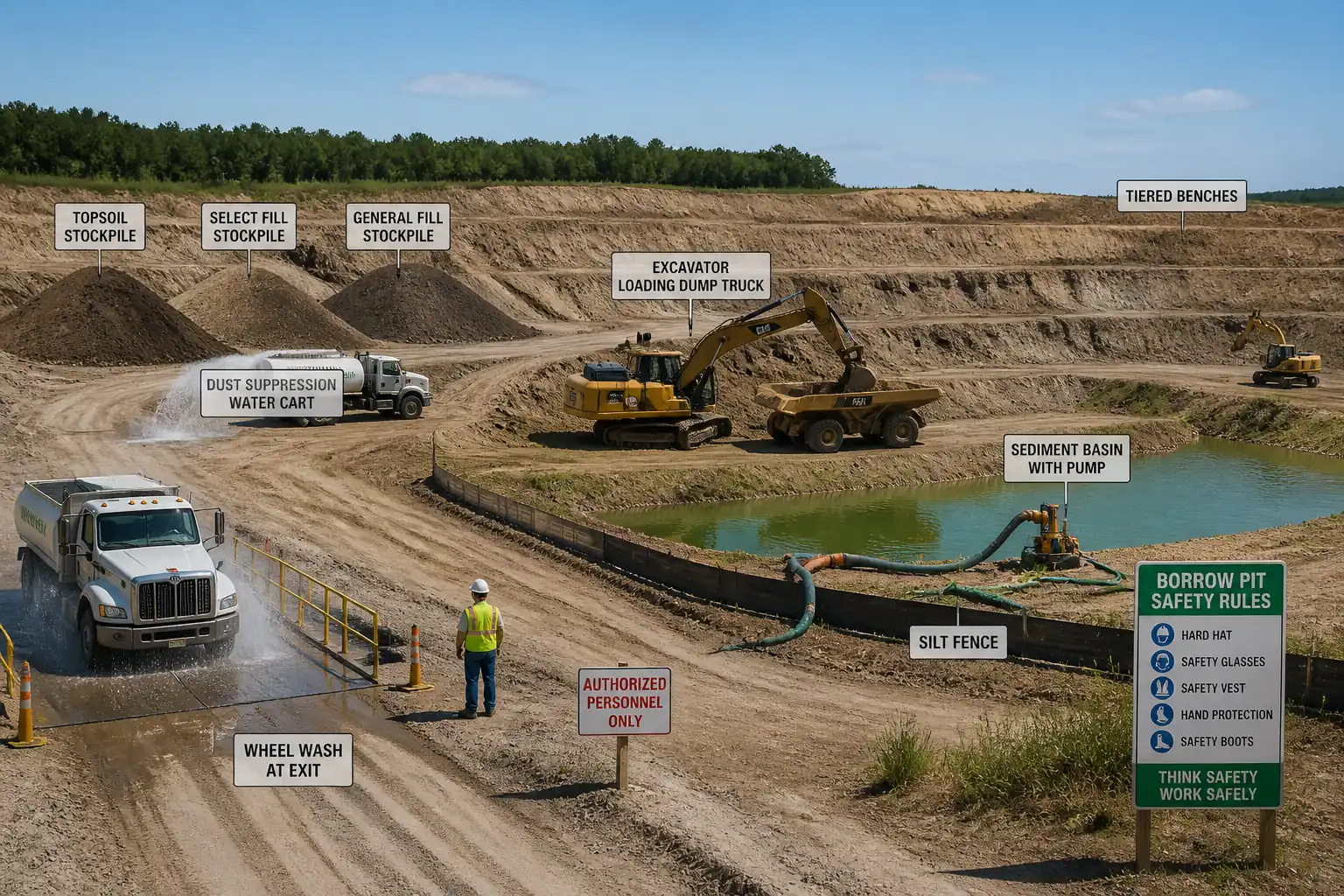
- Establish access, haul roads, laydown areas, sediment basins, silt fencing, and wheel-wash.
- Survey and demarcate pit limits, safety stand-offs, environmental buffers, and no-go zones.
- Strip and stockpile topsoil (typically 150–300 mm) for later rehabilitation. [Verify per project specifications]
- Remove overburden to designated spoil or stabilization bunds; maintain stable batters/benches.
- Conduct trial pits/borings and classify materials (USCS/AASHTO) for suitability.
- Excavate (rip/load) and win material selectively; avoid mixing unsuitable strata.
- Moisture condition and stockpile by class with clear identification, traceability, and drainage control.
- Manage groundwater: interceptor drains, sumps, pumping, treatment, and compliant discharge.
- Implement QA/QC testing at source: grading, plasticity, MDD/OMC, CBR, deleterious content; approve lots for dispatch.
- Control load-out: weighbridge, load sheets, tarping, random checks, and source certification.
- Progressive rehabilitation: regrade, topsoil respread, erosion control, revegetation, and close-out survey.
- Maintain HSE controls, environmental monitoring, records, and ITP hold/witness points throughout.
Exclusions: On-site placement/compaction at the receiving project area is covered under separate earthworks method statement.
References
| Document Type | Reference / Number | Revision | Notes |
|---|---|---|---|
| Standard | BS 6031: Code of practice for earthworks | General earthworks good practice; excavation, stockpiling, drainage. | |
| Standard | BS EN 1997-1/2 (Eurocode 7) Geotechnical design and ground investigation | Geotechnical investigation, material classification, slope stability [Verify national annex]. | |
| Standard | BS 1377 (Parts) Methods of test for soils for civil engineering purposes | Sampling, moisture, density, Atterberg, CBR, particle size. | |
| Standard | ASTM D698 / D1557 Standard Test Methods for Laboratory Compaction (Proctor) | MDD/OMC determination. | |
| Standard | ASTM D4318 Atterberg Limits; ASTM D854 Specific Gravity; ASTM D1140 Material Finer than 75 µm | Plasticity and fines content. | |
| Standard | ASTM D6913/D6913M Sieve Analysis; ASTM D7928 Hydrometer | Grading for coarse/fine fractions. | |
| Standard | ASTM D1883 CBR of Laboratory-Compacted Soils | Soaked/unsoaked CBR for suitability. | |
| Standard | ASTM D2487 Unified Soil Classification System (USCS) | Material classification. | |
| Standard | AASHTO M145 Classification; AASHTO T180/T99 Compaction; AASHTO T193 CBR | Alternative classification/compaction/CBR where AASHTO specified. | |
| Standard | ISO 9001 Quality management systems; ISO/IEC 17025 Testing laboratory competence | QMS and lab accreditation. | |
| Standard | ISO 14001 Environmental management systems | Environmental management framework. | |
| Specification | Project Specifications and Employer’s Requirements | Acceptance values, testing frequencies, rehabilitation criteria [Verify per project specifications]. |
Responsibilities
| Role | Responsibility | Name / Party |
|---|---|---|
| PM | Project Manager | Contractor |
| CM | Construction Manager | Contractor |
| Geo | Geotechnical Engineer | Contractor |
| QA/QC | QA/QC Manager | Contractor |
| Lab Manager | Laboratory Manager | Contractor/3rd Party Lab |
| Survey | Survey Manager/Engineer | Contractor |
| HSE | HSE Manager | Contractor |
| Env | Environmental Officer | Contractor |
| Supervisor | Foreman / Pit Supervisor | Contractor |
| Marshal | Traffic Marshal | Contractor |
| ER | Engineer/Employer’s Representative | Engineer |
Resources
| Resource Type | Description | Quantity | Remarks |
|---|---|---|---|
| Supervisors (Foremen) | 2–4 [Verify] | Shift-dependent. | |
| Operators (Excavator/Dozer/Loader) | 6–10 [Verify] | Competency certificates required. | |
| Truck Drivers (Rigid/ADT) | 10–20 [Verify] | Fit-for-duty and induction required. | |
| Survey Crew | 1–2 crews | GPS/UAV capability as required. | |
| Laboratory Technicians | 2–4 | Sampling and field testing at source. |
Materials
| Material | Specification / Grade | Quantity | Remarks |
|---|---|---|---|
| Topsoil | 150–300 mm depth typical; organic-rich; for rehabilitation [Verify per project]. | Strip separately; keep free of contamination; seed stockpiles if stored >30 days [Verify]. | |
| Overburden | Unsuitable material above target stratum per classification. | Place in designated spoil; may be used to form environmental bunds. | |
| General Fill (Selected/Non-Selected) | Typical: PI ≤ 15% (general), PI ≤ 6–12% (selected), Organic ≤ 1%, Sulfate ≤ 0.5% [Verify]. | Stockpile by class; identify with signage and lot IDs. | |
| Sub-base Aggregate (if produced) | Grading per project spec; LA Abrasion ≤ 35% typical; FI ≤ 30% [Verify]. | If crushing conducted; ensure grading and LA Abrasion as specified. | |
| Separation Geotextile | Nonwoven geotextile, ≥ 200 g/m² typical [Verify]. | Under stockpiles on weak ground or for separation from subgrade. | |
| Silt fence, straw wattles/bales, erosion matting | Compliant with local BMP guides [Verify per permit]. | Use per approved erosion and sediment control plan. | |
| Flocculants/Coagulants | Approved polymer/alum; dosing per jar test [Verify]. | For settlement tanks as required by WMP. |
Equipment
| Equipment | Capacity / Type | Quantity | Inspection Required |
|---|---|---|---|
| Crawler Dozer (D6–D8 class) | 150–335 HP [Verify] | 2–4 | |
| Excavator (30–45 t) | Bucket 1.6–2.5 m³ [Verify] | 2–3 | |
| Wheel Loader | 3–5 m³ bucket | 2–3 | |
| Dump Trucks (ADT or Rigid) | 20–30 t | 10–20 | |
| Padfoot/Smooth Drum Roller | 10–20 t, with vibratory function | 1–2 | |
| Water Bowser/Cart | 8–15 m³ | 1–2 | |
| Diesel/Centrifugal Pumps | 6"–8"; 50–150 L/s each [Verify] | 2–4 | |
| Weighbridge | Up to 60 t | 1 | |
| Field Density Testing Kit | Per ASTM/BS methods | 1 set | |
| GPS Survey Equipment / UAV (as needed) | RTK/PPK capability | 1–2 |
Prerequisites
Pre-Start Requirements
- Approvals: Borrow pit license/permit, EIA approval/conditions, landowner consent, rehabilitation bond, water abstraction/discharge permits. [Verify per permit]
- Documentation: Approved Method Statement, ITP, Environmental Management Plan, Water Management Plan, Traffic Management Plan, Emergency Response Plan, Community Liaison Plan.
- Survey: Control points established; pit limits, buffer zones, no-go areas set out and flagged/fenced.
- Services/Utilities: Confirm no underground utilities or obtain clearances and permits if present. Conduct GPR/records review where risk identified.
- Laboratory: ISO/IEC 17025 accredited (where practicable) or approved lab; equipment calibrated with certificates <12 months old.
- Plant/People: Operators certified; equipment inspected; maintenance logs current; pre-start checks completed.
- Training: Site induction, environmental induction, task-specific toolbox talks, spill response training.
- Materials Plan: Defined material classes, acceptance criteria, lot sizes, testing frequencies, stockpile locations and signage scheme.
- HSE: Risk assessments (JHA), permits to work as applicable (hot work, dewatering discharge, night work). Spill kits and first-aid available.
- Weather/Season: Wet-weather contingency for dewatering and erosion control; work scheduling for ecological windows if required.
- Interfaces: Confirm receiving project’s daily demand, haul route approvals, and weighbridge integration.
- Baseline Monitoring: Background dust/noise/water quality collected prior to works commencement.
- Stakeholder Notification: Notify regulators/landowners/community per permit conditions.
Method Sequence
| Step | Activity | Description | Responsibility | Inspection / Hold Point |
|---|---|---|---|---|
| 1 | Pre-start approvals and HSE/ENV setup | Obtain/verify permits, licenses, rehabilitation bond; brief teams; install welfare, first-aid, spill kits, fire extinguishers, wheel-wash, and traffic signage. | Project Manager / HSE Manager | Review approvals; site HSE inspection |
| 2 | Survey, demarcation and fencing | Set out pit limits, 10–20 m environmental buffers [Verify]; install safety fencing and no-go signs; define haul roads and dump zones. | Survey Manager / Supervisor | Engineer/Supervisor walkdown |
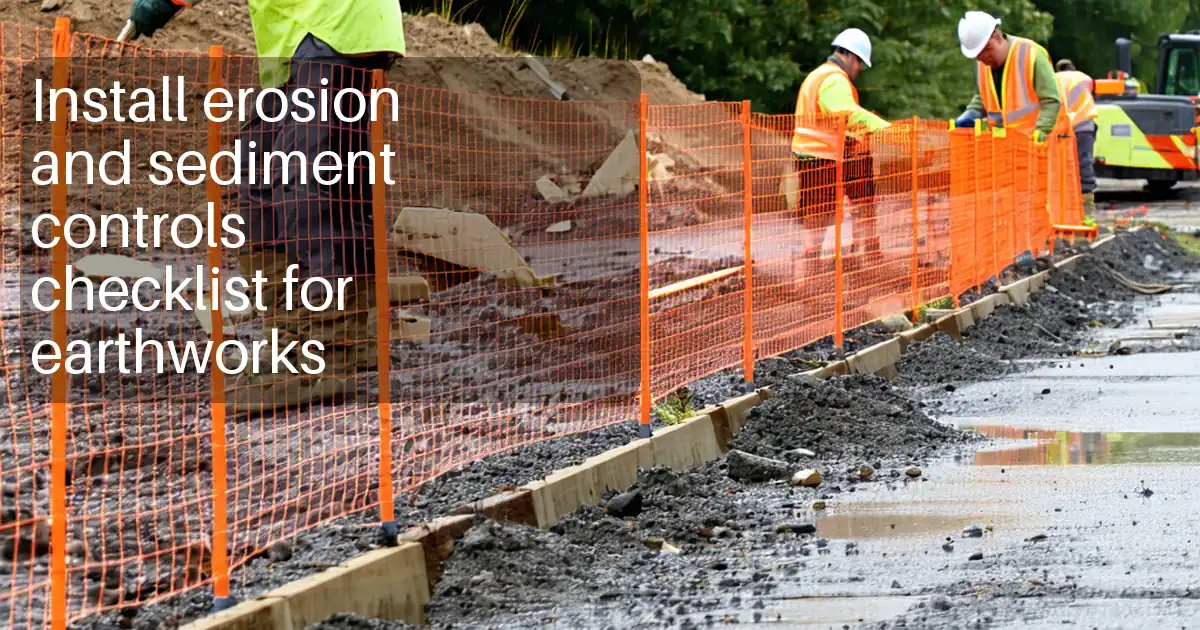
| 3 | Erosion and sediment controls | Install silt fences, diversion swales, sediment basin(s), check dams; stabilize outlets; line sumps; prepare floc dosing (if approved). | Environmental Officer / Supervisor | ESCP inspection |
| 4 | Topsoil stripping and stockpiling | Strip 150–300 mm; avoid mixing with subsoil; push to dedicated topsoil stockpiles ≤3 m high; side slopes 1V:2H; trackwalk to reduce erosion; seed if >30 days storage. | Supervisor / Dozer Operator | Surveillance; environmental check |
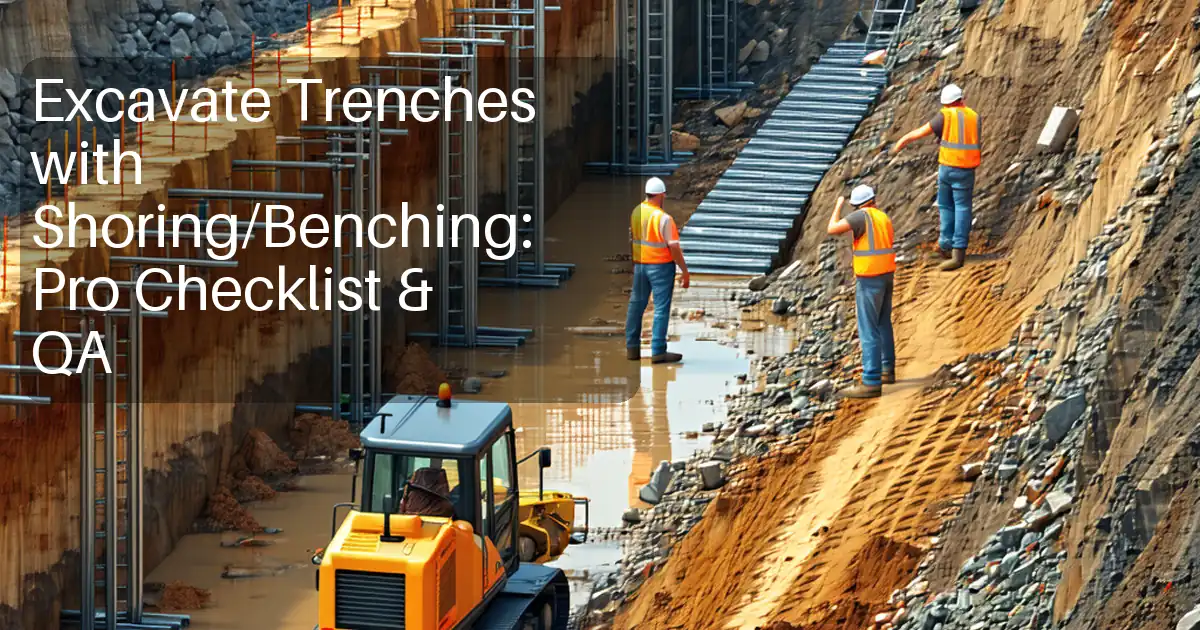
| 5 | Overburden removal | Excavate overburden to spoil or berms; maintain safe batters typically ≤1V:2H in soils [Verify]; bench every 3–5 m vertical; haul to designated area. | Supervisor / Excavator Operator | Supervisor inspection |
| 6 | Trial pits and classification | Excavate trial pits (≥3 m or to refusal); log lithology; collect bulk/disturbed samples; initial frequency: 1 per 2,000 m² and 1 per 1,000–2,000 m³ won [Verify]. | Geotechnical Engineer | Engineer witness |
| 7 | Material winning (rip/load) | Selective excavation of approved strata; avoid mixing with overburden; adjust face height ≤6 m [Verify]; maintain crest berm ≥2 m from edge for trucks. | Supervisor / Operators | Supervisor safety/quality checks |
| 8 | Moisture conditioning | Water or aerate material to target moisture for compaction later; typical placement tolerance: OMC −2% to +2% [Verify]. | Supervisor / Water Cart | Moisture checks |
| 9 | Stockpiling and segregation | Form stockpiles by class/lot ID; max height 3–5 m [Verify]; side slopes ≤1V:2H; place on firm drained platform (geotextile if weak); provide signage and drainage bunds. | Supervisor / Loader Operator | QA/QC and Environmental checks |
| 10 | Source QA/QC testing | Sample each lot per frequency: General fill 1/1000 m³; Selected fill 1/500 m³; Sub-base 1/400 m³ [Verify]. Tests: grading, LL/PL/PI, MDD/OMC, CBR (soaked 4 days if specified), organics, sulfate (if required). | QA/QC Manager / Lab | Engineer witness for selected lots (as agreed) |
| 11 | Groundwater control and dewatering | Install interceptor drains, cut-off trenches, sumps; pump to sediment basin/treatment; monitor discharge quality; inspect faces post-rain; halt if instability observed. | Supervisor / Environmental Officer | Daily dewatering check |
| 12 | Load-out and dispatch control | Inspect trucks (clean bed, tarps, no leaks); confirm lot ID; weighbridge record; issue delivery ticket with material class, lot, moisture check; random spot tests and visual checks. | Weighbridge Operator / QA/QC | Surveillance; random spot checks |
| 13 | Progressive rehabilitation | Backfill exhausted areas; regrade to stable slope (typ. ≤1V:3H); rip compacted surfaces; respread topsoil 150–200 mm; seed/hydromulch; install erosion controls; decommission drains when stable. | Environmental Officer / Supervisor | Engineer/Regulator witness (as required) |
| 14 | Final survey and close-out | Perform UAV/GNSS survey of final landform/volumes; remove temporary works; submit as-builts, QA dossier, and rehabilitation completion report. | Survey / PM / Environmental Officer | Engineer review/acceptance |
Health & Safety Controls
Task-Specific Hazards and Controls
- Hazard: Plant–people interface and reversing trucks.
- Likely consequence: Struck-by injuries/fatality.
- Engineering/procedural control: One-way haul routes; segregated walkways; spotters; proximity alarms; reversing cameras; mandatory radio comms; exclusion zones at loading face (≥10 m or OEM guidance).
- Required PPE: Helmet, high-vis, safety boots, gloves; eye protection.
- Collective preventive measure: Physical barriers, banksmen, berms at edges (≥1/2 wheel height of largest vehicle).
-
Inspection/permit/supervision: Daily pre-start plant checks; traffic management audits; competent marshals; enforce speed limits.
-
Hazard: Face/slope failure and bench collapse.
- Likely consequence: Burial/crushing of plant/personnel.
- Control: Limit face height (≤6 m [Verify]); bench every 3–5 m; geotech inspections after heavy rain; no undercutting; machines work perpendicular to face; crest stand-off ≥2 m.
- PPE: Helmet, high-vis, boots.
- Collective: Berms and batter markers; drainage to reduce pore pressure.
-
Inspection/permit/supervision: Supervisor/geotechnical daily checks; stop-work criteria during rainfall events >25 mm/hr [Verify].
-
Hazard: Vehicle roll-over at edges/ramps.
- Consequence: Serious injury/fatality.
- Control: Maintain ramp grades ≤10–12% [Verify]; edge berms; graded turning pads; no overtaking; seat belts enforced.
- PPE: Helmet, boots.
- Collective: Speed control, rumble strips, signage.
-
Inspection: Weekly road inspection and maintenance log.
-
Hazard: Groundwater/dewatering operations.
- Consequence: Drowning, slips, electrical shock (if electric pumps), slope instability.
- Control: Guard sumps; non-return valves; secure hoses; GFCI/RCD for electrical; manage discharge per WMP; monitor turbidity.
- PPE: Life jackets near deep water, gloves, boots; hearing protection near pumps.
- Collective: Barriers and signage around open water; rescue equipment available.
-
Inspection: Permit to discharge; pump inspection; water-quality tests logged.
-
Hazard: Dust (silica), airborne particulates.
- Consequence: Respiratory irritation/silicosis (long-term).
- Control: Water carts; speed limits; cover loads; halt work at high wind thresholds [Verify].
- PPE: P2/P3 respirators when visible dust plumes persist.
- Collective: Automated misting at load-out; vegetate long-term stockpiles.
-
Inspection: Dust monitoring (PM10/PM2.5) per EMP; records retained.
-
Hazard: Noise/vibration from heavy plant.
- Consequence: Hearing loss, community disturbance.
- Control: Maintain equipment; fit silencers; schedule high-noise tasks daytime; erect barriers if needed.
- PPE: Hearing protection SNR ≥25 dB.
- Collective: Noise barrier earth berms where practical.
-
Inspection: Noise monitoring vs permit limits [Verify].
-
Hazard: Fuel/hydrocarbon handling.
- Consequence: Fire, spills, contamination.
- Control: Bunded tanks (≥110%); spill kits; hot-works permit; no refueling within 30 m of watercourse [Verify].
- PPE: Flame-retardant coveralls (if required), gloves, goggles.
- Collective: Fire extinguishers, emergency shut-offs.
-
Inspection: Weekly bund integrity; permit to work; spill drills.
-
Hazard: Night or reduced visibility operations.
- Consequence: Collisions, miscommunication.
- Control: Task lighting ≥50 lux on working surfaces; reflective PPE; radio checks; reduced speed.
- PPE: High-vis Class 3.
- Collective: Light towers with glare control.
-
Inspection: Lighting inspection; night-work permit.
-
Hazard: Heat stress/UV exposure.
- Consequence: Dehydration, heat stroke.
- Control: Work-rest cycles; shaded breaks; hydration stations.
- PPE: Sun protection, cooling vests where necessary.
- Collective: Heat index monitoring.
-
Inspection: HSE checks; first-aid readiness.
-
Note: All controls to be aligned with project HSE plan and local regulations. [Verify per project HSE plan and local regulations]
Environmental Controls
Key Environmental Risks and Mitigations
- Soil and erosion control
- Risk: Sediment-laden runoff causing watercourse pollution.
- Mitigation: Install silt fences, diversion drains, sediment basins sized per storm event [Verify]; stabilize outlets; maintain weekly and after rain >10 mm.
-
Monitoring: TSS/turbidity at basin outlet; visual checks each shift.
-
Groundwater and dewatering discharge
- Risk: Elevated TSS/pH changes in receiving waters.
- Mitigation: Settlement tank/basin; flocculant dosing as approved; discharge only within permitted limits (e.g., TSS ≤ 50 mg/L, pH 6.5–8.5) [Verify].
-
Monitoring: Field turbidity/pH; monthly lab confirmation if required.
-
Dust emissions
- Risk: Nuisance and health impact to community/workers.
- Mitigation: Water carts, speed limits, covering stockpiles, seeding long-term piles, wheel-wash at exit.
-
Monitoring: PM10/PM2.5 per EMP; complaint log.
-
Noise
- Risk: Community disturbance.
- Mitigation: Maintain equipment; acoustic enclosures; limit evening work; berms/barriers where practical.
-
Monitoring: Noise surveys vs permit thresholds [Verify].
-
Biodiversity/ecology
- Risk: Habitat loss or fauna strike.
-
Mitigation: Pre-clearance ecological survey; install fauna escape ramps in basins; work within approved seasonal windows; lighting control at night.
-
Cultural heritage / chance finds
- Risk: Damage to archaeological finds.
-
Mitigation: Stop work, cordon area, notify authority/archaeologist; resume only after clearance.
-
Waste and hazardous substances
- Risk: Soil/water contamination.
-
Mitigation: Bunded storage; segregated waste skips; licensed disposal; spill response kits; training.
-
Topsoil management
- Risk: Loss of fertility/erosion.
-
Mitigation: Separate stripping; low, stable stockpiles; seed/mulch; moisture retention plan.
-
Carbon and energy
- Risk: Excess fuel consumption.
-
Mitigation: Optimize haul routes; scheduled maintenance; idle-time reduction; consider hybrid/electric plant where feasible.
-
Rehabilitation and closure
- Risk: Long-term erosion/scar.
-
Mitigation: Progressive backfilling and reshaping; topsoil respread; seeding with native species; monitoring for 6–12 months [Verify].
-
Compliance
- All actions per ISO 14001 EMS and permit conditions. Deviations require approval and corrective actions.
Quality Assurance & Quality Control
QA/QC Principles
- Lot Definition: By stockpile or continuous production of 400–1,000 m³ depending on class [Verify]. Unique lot ID linking to pit face location and date.
- Sampling Frequency (typical, verify):
- General Fill: 1 per 1000 m³.
- Selected Fill: 1 per 500 m³.
- Sub-base Aggregate: 1 per 400 m³ or per shift.
- Tests (as applicable to class): Moisture, grading (ASTM D6913/D7928), fines content (D1140), Atterberg limits (D4318), MDD/OMC (D698/D1557), CBR (D1883, soaked if specified), organic content (BS 1377), sulfate (water-soluble), deleterious matter, LA Abrasion/Flakiness (if aggregate).
- Acceptance Criteria (typical ranges – verify project):
- General Fill: PI ≤ 15%, Organic ≤ 1%, CBR ≥ 8% (soaked/unsoaked per spec), passing 75 µm ≤ 35–50% depending on class.
- Selected Fill: PI ≤ 6–12%, CBR ≥ 10–15%, fines content controlled per spec.
- Sub-base Aggregate: Grading envelope per spec; LA Abrasion ≤ 30–35%; FI ≤ 25–30%.
- Moisture Control: Target dispatch moisture near placement OMC; tolerance OMC −2% to +2% [Verify].
- Field Checks at Source: Visual lithology confirmation per face/shift; moisture by speedy/nuclear; periodic PI spot kits if approved.
- Nonconformance: Quarantine failing lots; reprocess (blend, dry/wet condition) or reject; issue NCR and corrective action.
- Traceability: Delivery tickets show source pit, material class, lot ID, test references, date/time, truck ID, and weighbridge mass.
- Calibration: Lab/field equipment calibrated per manufacturer/standard; keep certificates current (<12 months).
- Records: Maintain test reports, stockpile register, delivery dockets, water-quality logs, inspections, training, plant maintenance, and as-built surveys within QMS (ISO 9001).
Attachments
Attachments / Appendices
- Borrow Pit License/Permit and Conditions
- Approved Environmental and Water Management Plans (ESCP/WMP)
- Traffic Management Plan and Haul Route Drawings
- Survey Control Report and Set-out Coordinates
- Typical Cross-Sections of Benches and Safe Batter Details
- Stockpile Layout Plan and Identification Scheme
- Sampling and Testing Plan with Lot Definition Matrix
- Daily Inspection Checklists (HSE, ESCP, Face/Batter, Dewatering)
- Weighbridge SOP and Delivery Ticket Template
- Emergency Response Plan and Spill Response Procedure
- Rehabilitation Specification, Seed Mix Certificates, and Monitoring Plan
- Equipment Calibration Certificates and Laboratory Accreditation
- Risk Assessments/Job Hazard Analyses (JHAs) for Key Activities
This content is a read-only public reference. Download or customize to get an editable version.
ITP preview
The first inspection activities from the linked ITP for Method Statement: Borrow Pit Development, Material Winning, Overburden Stripping, Source QA/QC, Groundwater Management, Stockpiling, and Progressive Rehabilitation:
| Activity | Inspection / Test | Acceptance Criteria | Responsibility | Record |
|---|---|---|---|---|
| Pre-start permits and approvals | Review of licenses, EMP, WMP, TMP | All approvals current; conditions integrated into method statements. | PM / HSE Manager | Approval register; copies of permits |
| Survey set-out and demarcation | Check coordinate compliance vs design | Limits within ±0.1 m of design; buffers staked/fenced. | Survey Manager | As-built survey; inspection report |
| Erosion/sediment controls installation | ESCP inspection (visual and capacity) | Controls per plan; no bypass; basin capacity ≥ design [Verify]. | Environmental Officer / Supervisor | ESCP checklist; photos |
Showing 3 of 12 inspection activities. View full ITP →
Related Inspection and Test Plan
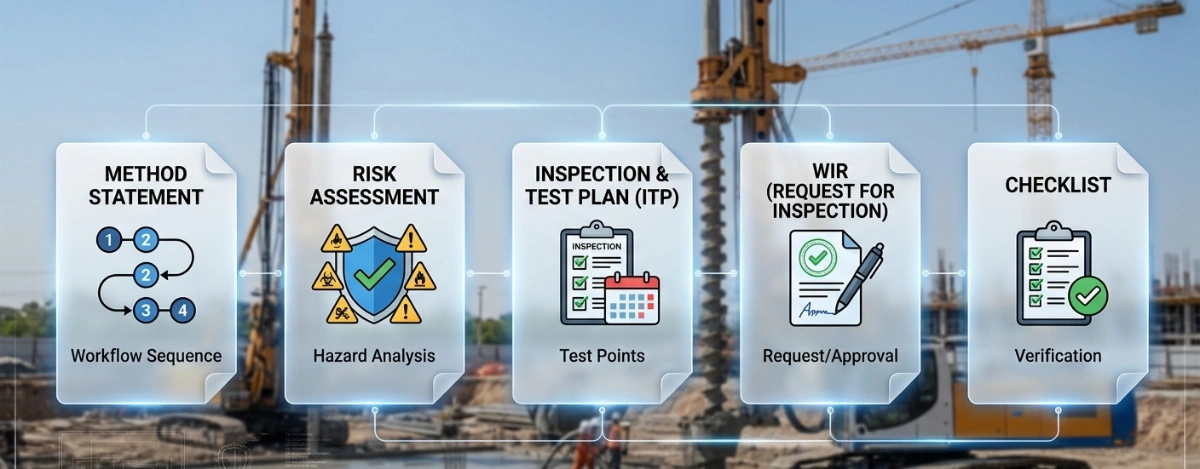
An Inspection and Test Plan (ITP) is available for Method Statement: Borrow Pit Development, Material Winning, Overburden Stripping, Source QA/QC, Groundwater Management, Stockpiling, and Progressive Rehabilitation. The ITP defines the inspection activities, acceptance criteria, hold and witness points, responsible parties, and records required to verify the work described in this method statement.
View the Method Statement: Borrow Pit Development, Material Winning, Overburden Stripping, Source QA/QC, Groundwater Management, Stockpiling, and Progressive Rehabilitation ITP →Frequently asked questions
Continue with related Quollnet resources connected to this method statement.