
Inspection and Test Plan for Method Statement: Pre-Commissioning and Final Flow Testing of Sewerage Network
AI-assisted inspection and test plan connected to a method statement, with PDF and Excel export.
More than a static template
Unlike a downloadable Word or PDF template, this ITP is an AI-assisted editable starting point directly connected to its method statement. Every inspection activity, hold point, and acceptance criterion is structured and ready to adapt to your project.
- AI-assisted customization — Tailor inspection activities and acceptance criteria to your specific project scope.
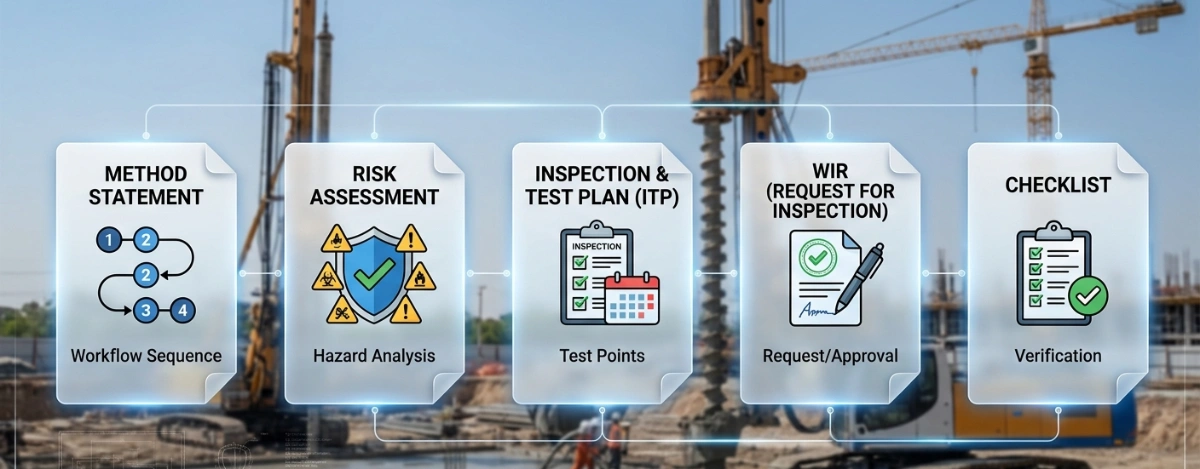
- Linked method statement — This ITP is connected to the corresponding method statement describing the work sequence.
- Multiple export formats — Download as a formatted PDF or editable Excel spreadsheet.
- Editable starting point, not a final document — Review and verify all content against your project specifications and standards before use.
What you can customize
When you save this ITP to your account, every inspection row becomes editable. You can add, remove, or modify:
- Inspection activity — Description of what is being inspected.
- Inspection type — Hold point (H), Witness point (W), Review (R), or Monitor (M).
- Responsibility — Contractor, subcontractor, engineer, or client.
- Frequency — How often the inspection occurs.
- Acceptance criteria — Referenced standard or specification requirement.
- Records — Forms, test reports, or checklists required as evidence.
Why this ITP is used
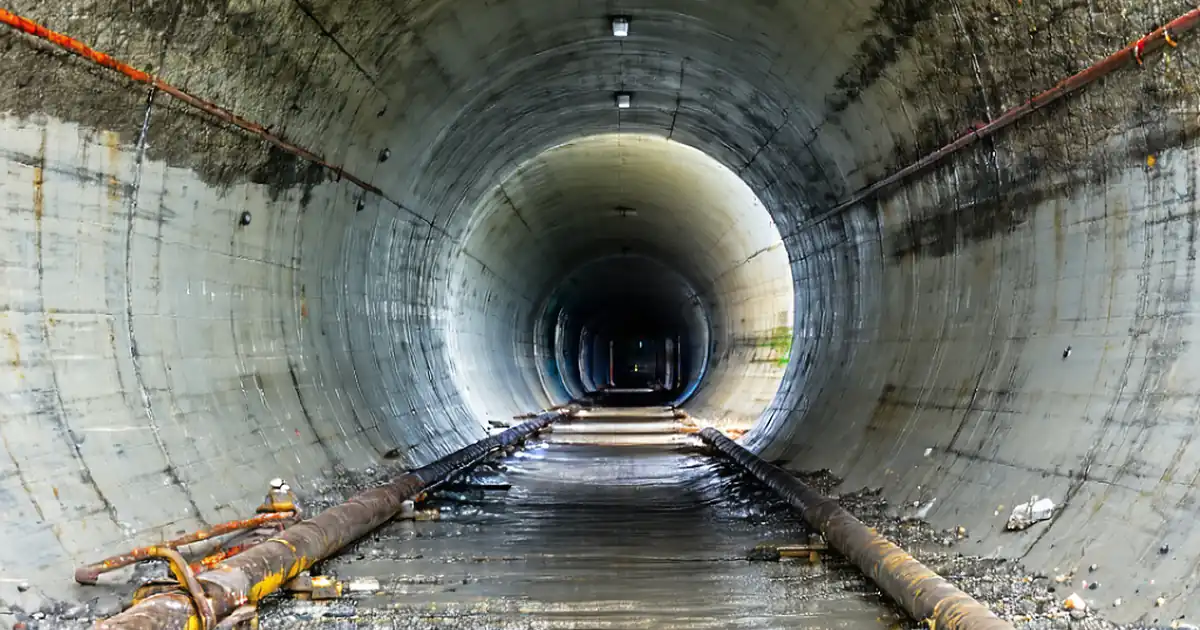
To ensure systematic verification that the sewer network is clean, hydraulically compliant, and acceptable to the Engineer/Authority.
Who uses this inspection and test plan
Contractor’s QA/QC team, Site Engineers, HSE, Specialist Subcontractors, and the Engineer/Authority representatives.
When this ITP is prepared and submitted
After construction and before handover, and again following any remedial works or alterations.
Who receives or approves this ITP
Engineer/Authority for review and approval before commencement.
Inspection scope
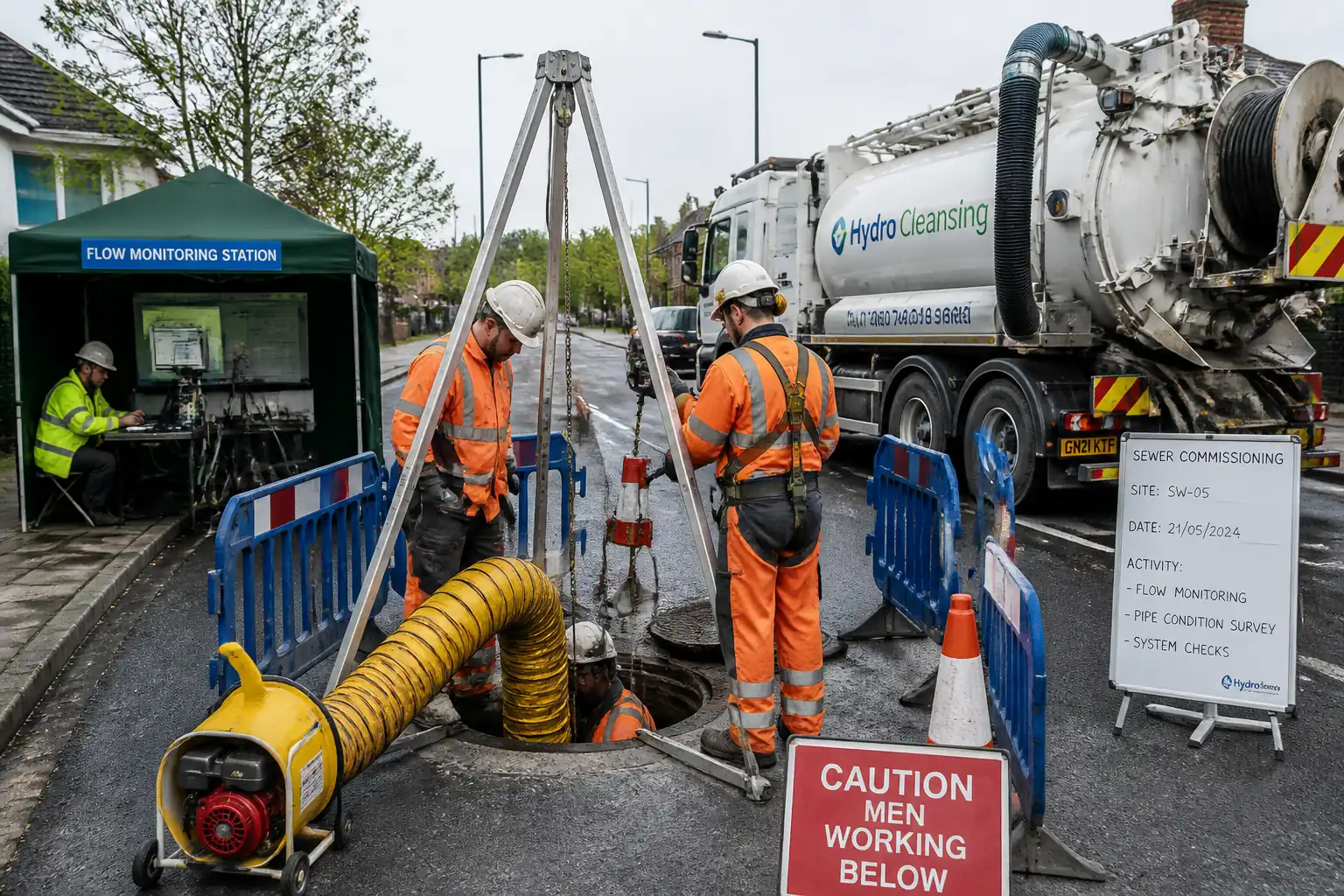
Permits, cleaning, CCTV surveys, flushing, dye tracing, hydraulic measurements, optional leakage tests, and environmental compliance.
Typical hold, witness, and review points
CSE setup; post-clean CCTV review; hydraulic verification test; leakage test (if specified); final CCTV; handover sign-off.
Typical inspection records
Permits, calibration certs, jetting/flushing logs, dye and hydraulic logs, CCTV reports, leak test sheets, waste tickets, acceptance forms.
Important approval note
This ITP is an AI-assisted editable starting point, not a pre-approved document. Before use on any project, all inspection activities, hold points, and acceptance criteria must be reviewed and approved by the relevant parties (superintendent, principal contractor, or client representative) in accordance with your contract and project quality plan.
Always verify acceptance criteria against your applicable drawings, specifications, and regulatory requirements. Hold points must be confirmed with the relevant authority before work proceeds past that point.
Inspection and test plan
| Activity | Inspection / Test | Acceptance Criteria | Responsibility | Record |
|---|---|---|---|---|
| Permits and pre-start briefing | Verify active permits (CSE, TMP, abstraction/discharge) and TBT conducted | All permits valid; attendees signed | Site Engineer / HSE Officer | PTW, TBT attendance |
| Equipment calibration and checks | Verify calibration dates and functionality (bump test, AV meter check) | Valid certificates; daily function tests passed | QA/QC Engineer | Calibration certs; daily checklists |
| Initial manhole/line inspection | Access/egress, benching, covers, downstream path | Safe access; no immediate hazards | Site Engineer | Checklist; photos |
| Debris clearance (jetting/vacuum) | Pressure/flow within limits; debris removal efficiency | Residual silt ≤ 5 mm or ≤ 2% DN [Verify] | Jetting Operator / QA/QC | Jetting log; waste tickets |
| Interim CCTV post-clean | BS EN 13508-2 coding; obstruction/defect check | No Grade 4–5 structural defects; laterals ≤ 10% DN protrusion [Verify] | CCTV Operator / Engineer | CCTV report/video |
| Water source set-up and backflow prevention | Backflow device fitted; leak-free; meter zeroed | Compliant with BS EN 1717; meter operational | Site Engineer / Authority | Meter log; photo |
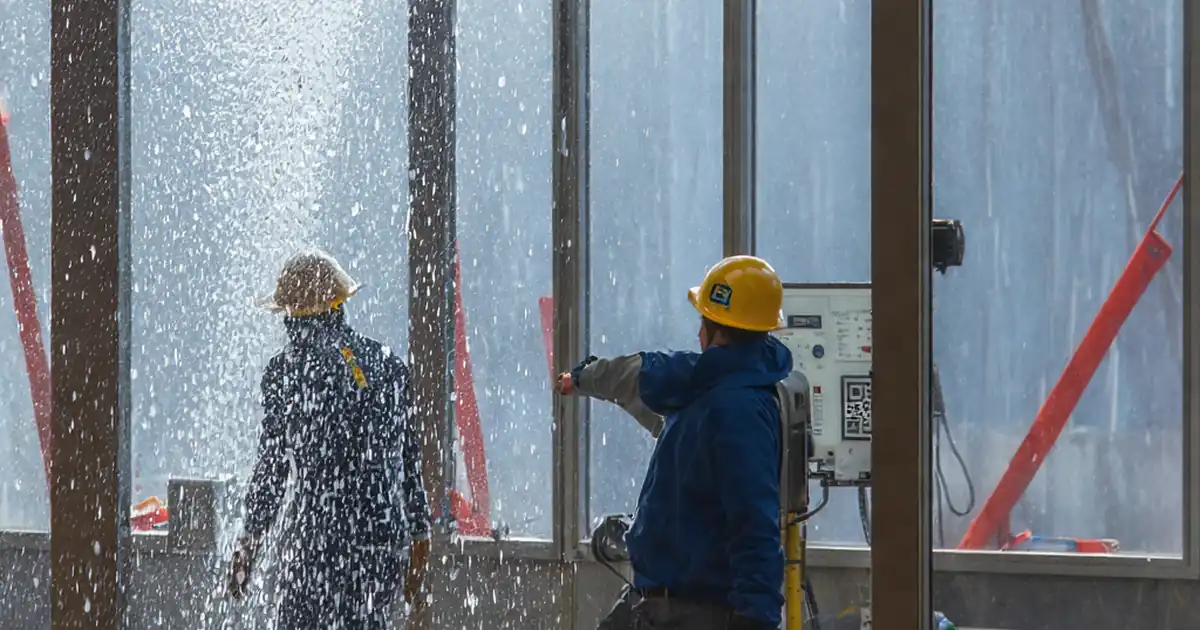
| High-velocity water flushing | Achieve target velocity/time; effluent clarity | Vt 1.0–1.5 m/s for ≥2–5 min or ≥3 pipe volumes [Verify] | Site Engineer / QA/QC | Flushing log (flow/time/volume) |
| Dye tracing (connectivity) | Transit time vs calculation; correct downstream arrival | Within ±25% of predicted; correct connectivity | Flow Testing Engineer | Dye test sheet; media |
| Hydraulic verification (depth/velocity) | AV meter depth/velocity under steady inflow | Measured y, v within ±10–15% of design; no surcharge | Flow Testing Engineer / Engineer | AV logs; calc sheet |
| Drain-down and ponding check | Standing water after cessation of flow | No ponding >10 mm or >1 x DN length [Verify] | Site Engineer / CCTV Operator | Photos; CCTV clip |
| Leakage test (if specified) | BS EN 1610 water test (10–50 kPa) | ≤0.15–0.20 L/m²·h loss [Verify] | QA/QC Engineer / Engineer | Leak test record |
| Final CCTV | Final condition and cleanliness | Meets project acceptance; no residual defects | CCTV Operator / Engineer | Final CCTV report/video |
| Environmental compliance | Discharge quality; spill control; waste documentation | Within consent; zero uncontrolled release | HSE Officer | Sampling results; waste tickets |
| Handover documentation | Completeness and sign-offs | All records submitted and accepted; no open NCRs | QA/QC Engineer / Engineer | Signed acceptance; dossier index |
This table is a read-only public reference. Download the PDF or Excel version, or customize this ITP to edit it for your project.
Frequently asked questions
Related method statement
This Inspection and Test Plan is associated with the Method Statement: Pre-Commissioning and Final Flow Testing of Sewerage Network method statement, which describes the step-by-step construction sequence, resources, materials, equipment, safety controls, and environmental controls for this activity.
View the Method Statement: Pre-Commissioning and Final Flow Testing of Sewerage Network method statement →Continue with related inspection, method statement, article, and checklist resources.