
Inspection and Test Plan for Method Statement: Installation of PVC and Hydrophilic Swellable Waterstops in Concrete Construction and Expansion Joints
AI-assisted inspection and test plan connected to a method statement, with PDF and Excel export.
More than a static template
Unlike a downloadable Word or PDF template, this ITP is an AI-assisted editable starting point directly connected to its method statement. Every inspection activity, hold point, and acceptance criterion is structured and ready to adapt to your project.
- AI-assisted customization — Tailor inspection activities and acceptance criteria to your specific project scope.
- Linked method statement — This ITP is connected to the corresponding method statement describing the work sequence.
- Multiple export formats — Download as a formatted PDF or editable Excel spreadsheet.
- Editable starting point, not a final document — Review and verify all content against your project specifications and standards before use.
What you can customize
When you save this ITP to your account, every inspection row becomes editable. You can add, remove, or modify:
- Inspection activity — Description of what is being inspected.
- Inspection type — Hold point (H), Witness point (W), Review (R), or Monitor (M).
- Responsibility — Contractor, subcontractor, engineer, or client.
- Frequency — How often the inspection occurs.
- Acceptance criteria — Referenced standard or specification requirement.
- Records — Forms, test reports, or checklists required as evidence.
Why this ITP is used
To ensure watertightness by verifying material compliance, proper fixing and splicing, and controlled concreting around joints.
Who uses this inspection and test plan
QA/QC engineers, site engineers, supervisors, and the Engineer/Client representative.
When this ITP is prepared and submitted
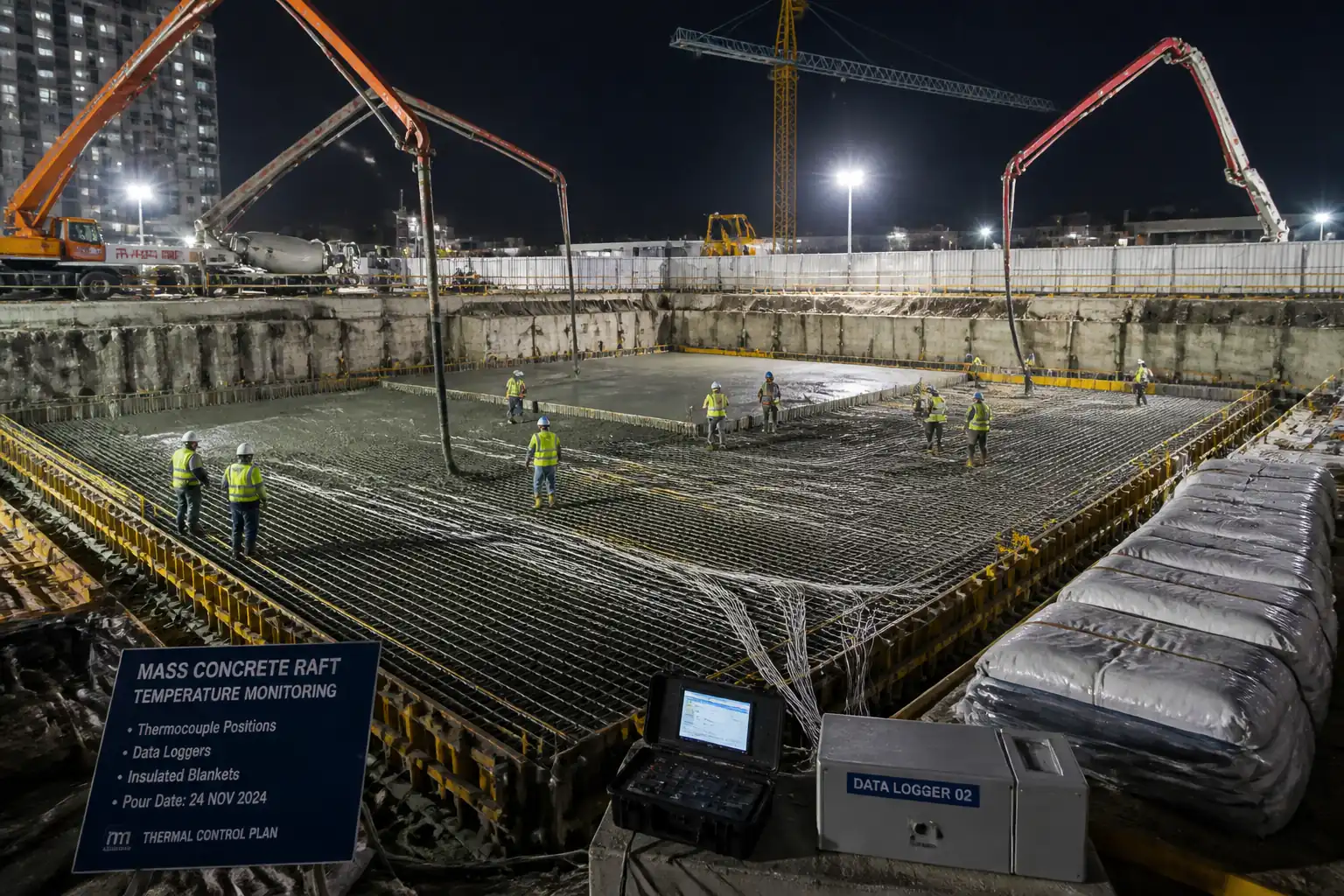
From material receipt through pre-pour checks, during concrete placement, and post-pour inspections; also during any water testing.
Who receives or approves this ITP
Engineer/Client Representative for review and approval before commencement.
Inspection scope
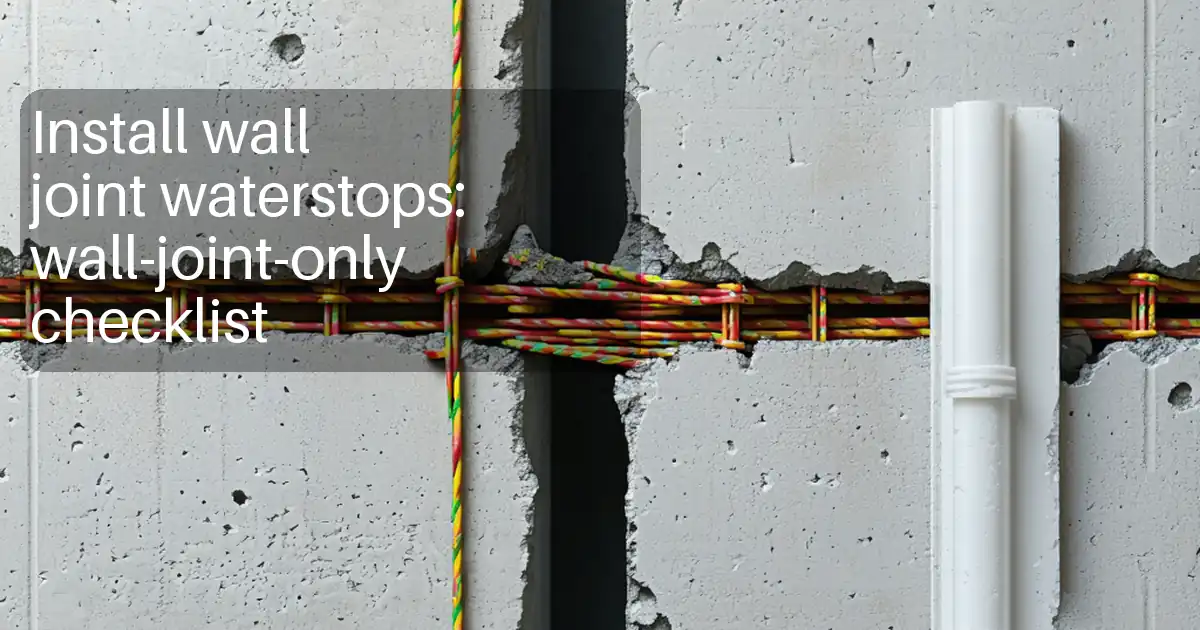
Material verification, welder trial splices, positioning and fastening of waterstops, formwork closure, hydrophilic strip installation, and concrete placement near waterstops.
Typical hold, witness, and review points
Hold: material receipt, PVC fixing alignment, formwork closure, pre-pour final, hydrotest if applicable. Witness: splices, hydrophilic prep/install, concreting.
Typical inspection records
MIR/MRR, weld trial reports, weld register, ITP checklists, HP releases, photos, pour records, NCR/close-out reports.
Important approval note
This ITP is an AI-assisted editable starting point, not a pre-approved document. Before use on any project, all inspection activities, hold points, and acceptance criteria must be reviewed and approved by the relevant parties (superintendent, principal contractor, or client representative) in accordance with your contract and project quality plan.
Always verify acceptance criteria against your applicable drawings, specifications, and regulatory requirements. Hold points must be confirmed with the relevant authority before work proceeds past that point.
Inspection and test plan
| Activity | Inspection / Test | Acceptance Criteria | Responsibility | Record |
|---|---|---|---|---|
| Material delivery inspection (PVC and hydrophilic) | Visual check, documents review (CoC, SDS) | Materials undamaged; certificates match specs; batch numbers recorded. | QA/QC + Engineer | MIR/MRR, photos, material log |
| Welder qualification and trial splice | Bend/peel test on sample weld | No cracking/delamination; strength ≥80% of parent web [Verify]. | QA/QC + Engineer | Weld trial report, sample label |
| Setting out of joint and waterstop type confirmation | Check vs IFC drawings | Correct joint location/type; transitions confirmed. | Site Engineer | Setting-out check sheet |
| Rebar clearance around waterstop zone | Measure clearance at intervals | Min 50 mm cover to edges; vibrator access available [Verify]. | Site Engineer/QA | Rebar inspection report |
| PVC waterstop fixing/alignment pre-pour (HOLD POINT) | Dimensional check, tie spacing count | Centerline ±10 mm; ties 200–300 mm c/c; no twist/sag. | QA/QC + Engineer | HP release form, photos |
| PVC splice inspection (WITNESS) | Visual 100%; peel test per frequency | Continuous beads; no pores; alignment offset ≤3 mm; test passes. | QA/QC + Engineer | Weld register, test results |
| Formwork closure around waterstop (HOLD POINT) | Dry-fit closure | No gaps; no pinching; expansion fillers as detailed. | Formwork Supervisor/Engineer | Formwork HP sign-off |
| Hydrophilic strip substrate prep (WITNESS) | Cleanliness/primer check | Sound, dry, dust-free; primer per datasheet. | QA/QC | Prep checklist |
| Hydrophilic strip installation (WITNESS) | Continuity/adhesion check | Continuous; fixings 150–200 mm c/c; tight butt joints; min 50 mm cover [Verify]. | QA/QC + Engineer | Installation log, photos |
| Pre-pour final inspection (HOLD POINT) | Full checklist review | All previous ITP points closed; forms/rebar/cleanliness acceptable. | Engineer/QA/QC | HP release to pour |
| Concrete placement near waterstops (WITNESS) | Observe pour, record slump and vibration | No displacement; lift 300–450 mm; correct vibrator head; slump as specified [Verify]. | QA/QC + Concrete Supervisor | Pour report |
| Post-pour inspection of joint line | Visual inspection after strike | No honeycombing/voids; repairs completed as approved. | QA/QC | Post-pour report, repairs NCR/close-out |
| Hydrostatic/watertightness test (if required) (HOLD POINT) | Water retention/observation period | No leakage at joints; loss within limits [Verify per specs]. | Engineer/QA/QC | Water test certificate |
This table is a read-only public reference. Download the PDF or Excel version, or customize this ITP to edit it for your project.
Frequently asked questions
Related method statement
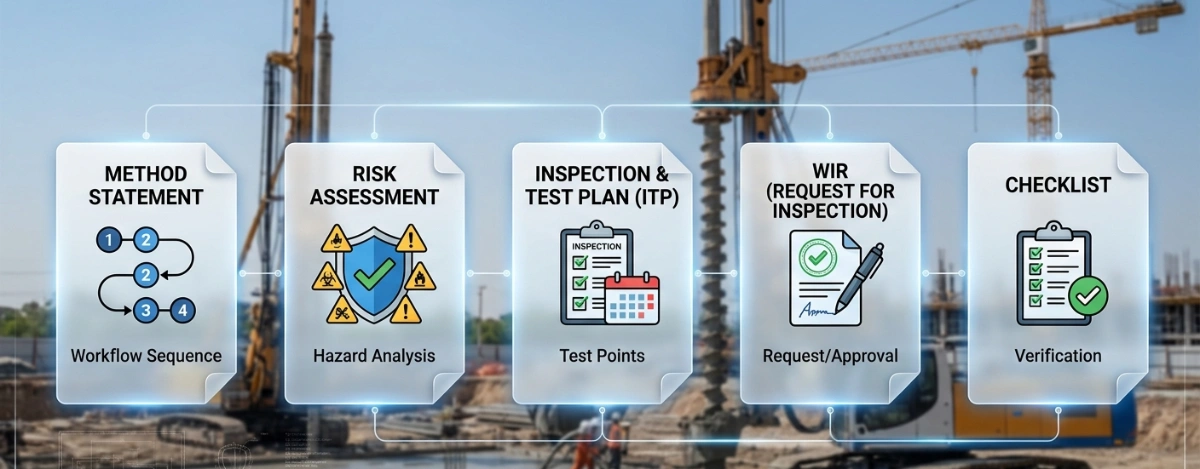
This Inspection and Test Plan is associated with the Method Statement: Installation of PVC and Hydrophilic Swellable Waterstops in Concrete Construction and Expansion Joints method statement, which describes the step-by-step construction sequence, resources, materials, equipment, safety controls, and environmental controls for this activity.
View the Method Statement: Installation of PVC and Hydrophilic Swellable Waterstops in Concrete Construction and Expansion Joints method statement →Continue with related inspection, method statement, article, and checklist resources.