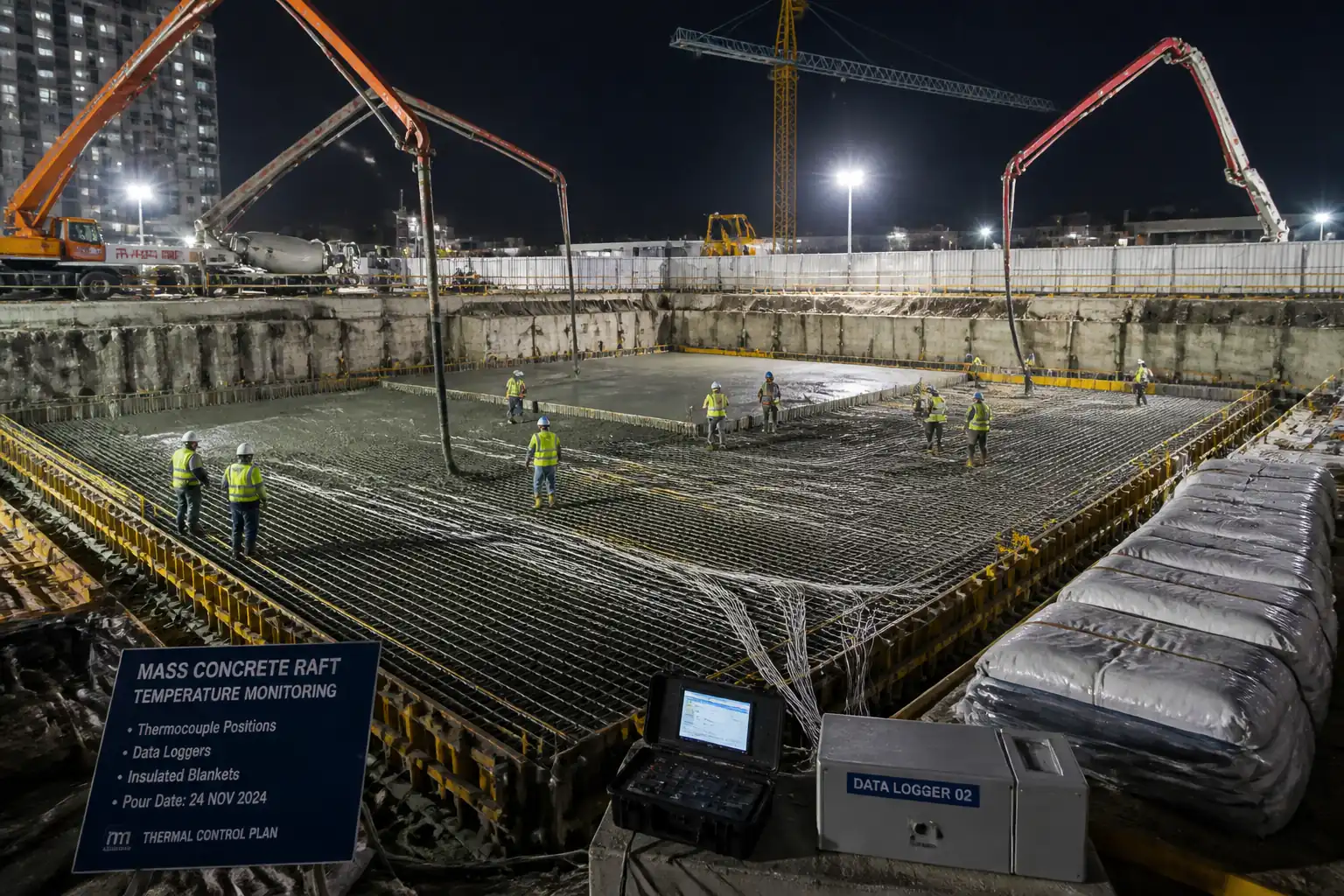

Method Statement: Mass Concrete Raft Foundation Pour (Blinding, Waterproofing, Heavy Reinforcement, Thermal Control, Temperature Monitoring, Final QA/QC) – Method Statement
AI-assisted method statement with matching ITP, PDF download, and Excel export.
More than a static template
Unlike a downloadable Word or PDF template, this method statement is an AI-assisted editable starting point connected directly to a matching Inspection and Test Plan. Every section is structured, project-adaptable, and ready to export.
- AI-assisted drafting — Customize every section with AI for your specific project scope.
- Linked ITP — A matching inspection and test plan is generated alongside the method statement.
- Multiple export formats — Download as a formatted PDF or editable Excel spreadsheet.
- Editable starting point, not a final document — Review, verify, and adjust all content against your project requirements before use.
Static template vs. Quollnet workflow
| Feature | Static template | Quollnet |
|---|---|---|
| Project-specific content | Manual fill-in required | AI-assisted customization |
| Linked ITP | Separate document, no link | Matching ITP included |
| Export formats | Usually PDF only | PDF and Excel |
| Structured sections | Free-form layout | 13 standardized sections |
| Saved to your account | Local file only | Cloud-saved, reusable |
| Content accuracy | You verify everything | AI-assisted, you still verify |
| Cost | Often free but time-intensive | Free to customize and download |
What you can customize
When you save this method statement to your account, every section becomes editable. The following 13 sections are included:
- Scope — Defines the activity and its boundaries.
- References — Standards, specifications, and drawings.
- Responsibilities — Roles and accountabilities.
- Resources — Labour, plant, and equipment summary.
- Materials — Materials and compliance requirements.
- Equipment — Tools and equipment details.
- Prerequisites — Hold points and pre-conditions.
- Method sequence — Step-by-step construction sequence.
- Safety controls — HSE risk controls and PPE.
- Environmental controls — Environmental mitigation measures.
- QA/QC — Quality inspection and test requirements.
- ITP — Inspection and Test Plan table (has its own page).
- Attachments — Referenced drawings and documentation.
Why this method statement is used
This method statement is used to define and communicate the approved procedure for carrying out method statement: mass concrete raft foundation pour (blinding, waterproofing, heavy reinforcement, thermal control, temperature monitoring, final qa/qc) on site. It ensures the work is planned in advance, the correct resources and controls are in place, and all personnel understand responsibilities, sequence, quality requirements, and safety controls before work begins. It aligns site execution with the documented scope and acceptance expectations.
Who uses this method statement
This method statement is used by contractors, site supervisors, project engineers, QA/QC engineers, HSE officers, consultants, and client representatives. It serves as a shared reference for planning, execution, supervision, inspection, and approval of the activity on site.
When it is prepared and submitted
The method statement is prepared before the work activity starts and submitted as part of the pre-construction documentation package for review and approval.
Who reviews or approves it
The method statement is usually submitted to the client representative, consultant, resident engineer, or project management consultant for review and approval before the work commences.
Important approval note
This method statement is an AI-assisted editable starting point, not a pre-approved document. Before use on any project, all content must be reviewed and approved by the relevant parties (superintendent, principal contractor, or client representative) in accordance with your contract and project quality plan.
For example: if your specification requires a departure from a referenced standard, that departure must be documented and approved separately — this method statement will not capture that automatically. Always verify against your applicable drawings, specifications, and regulatory requirements.
Method statement content
Scope
Work Scope
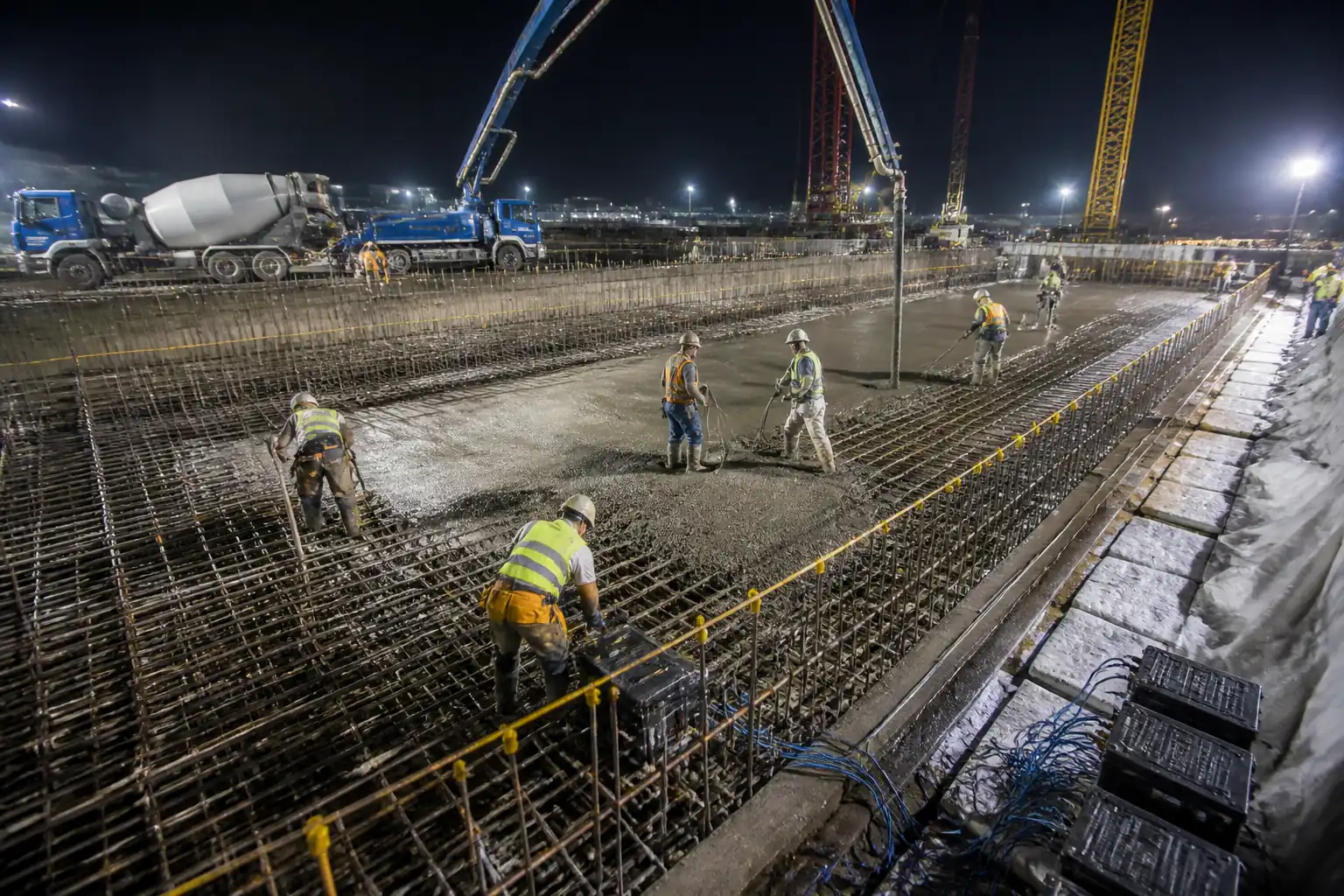
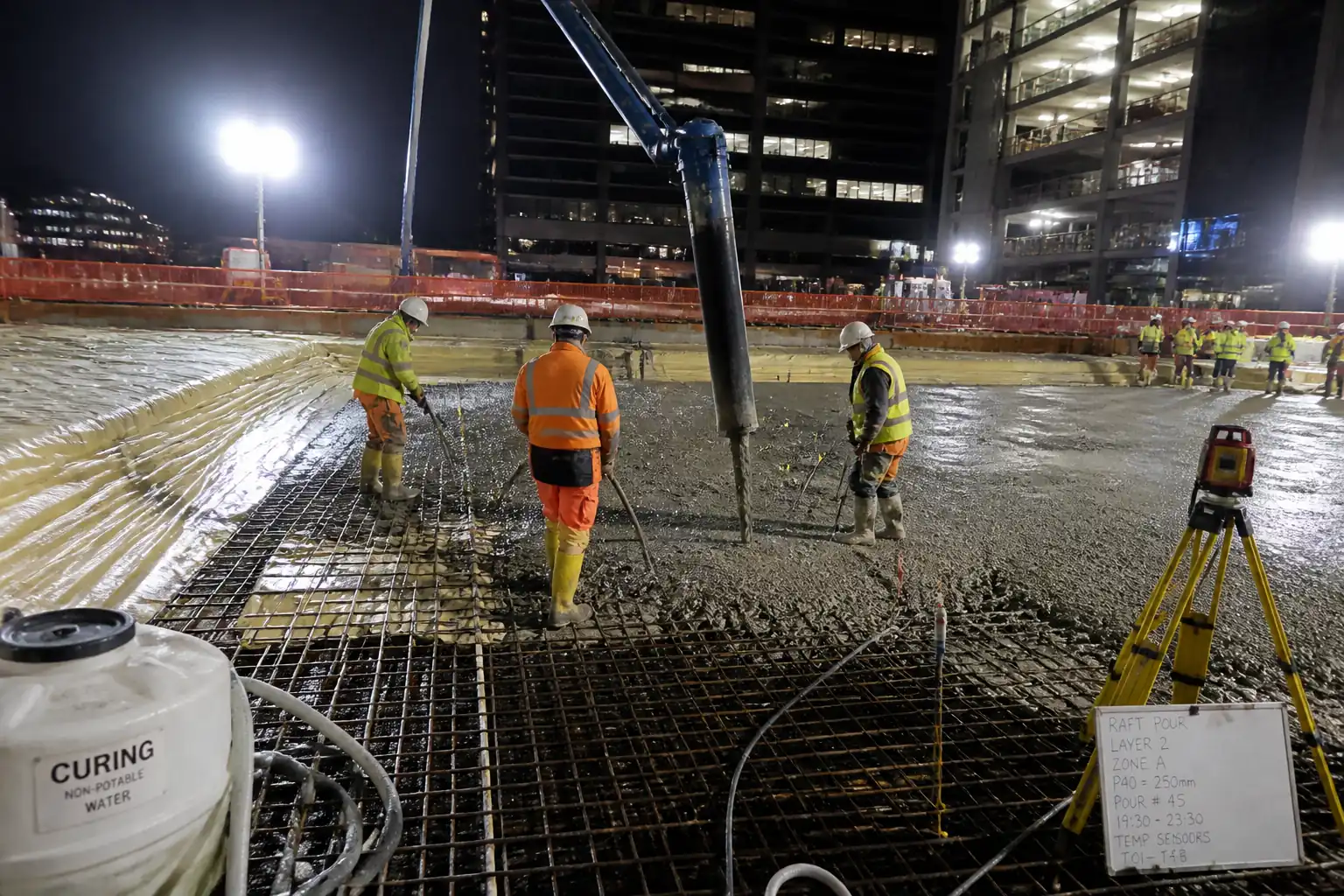
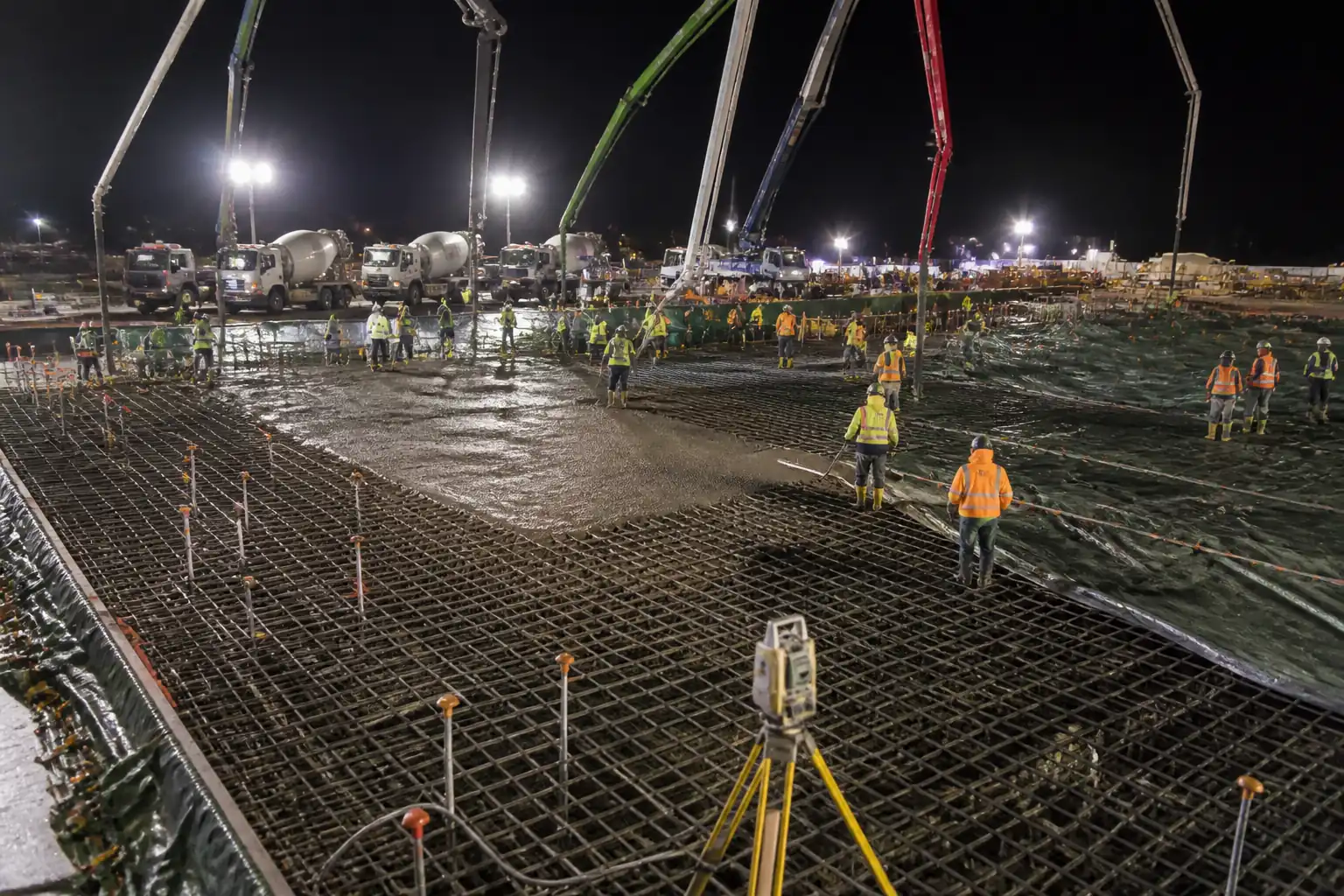
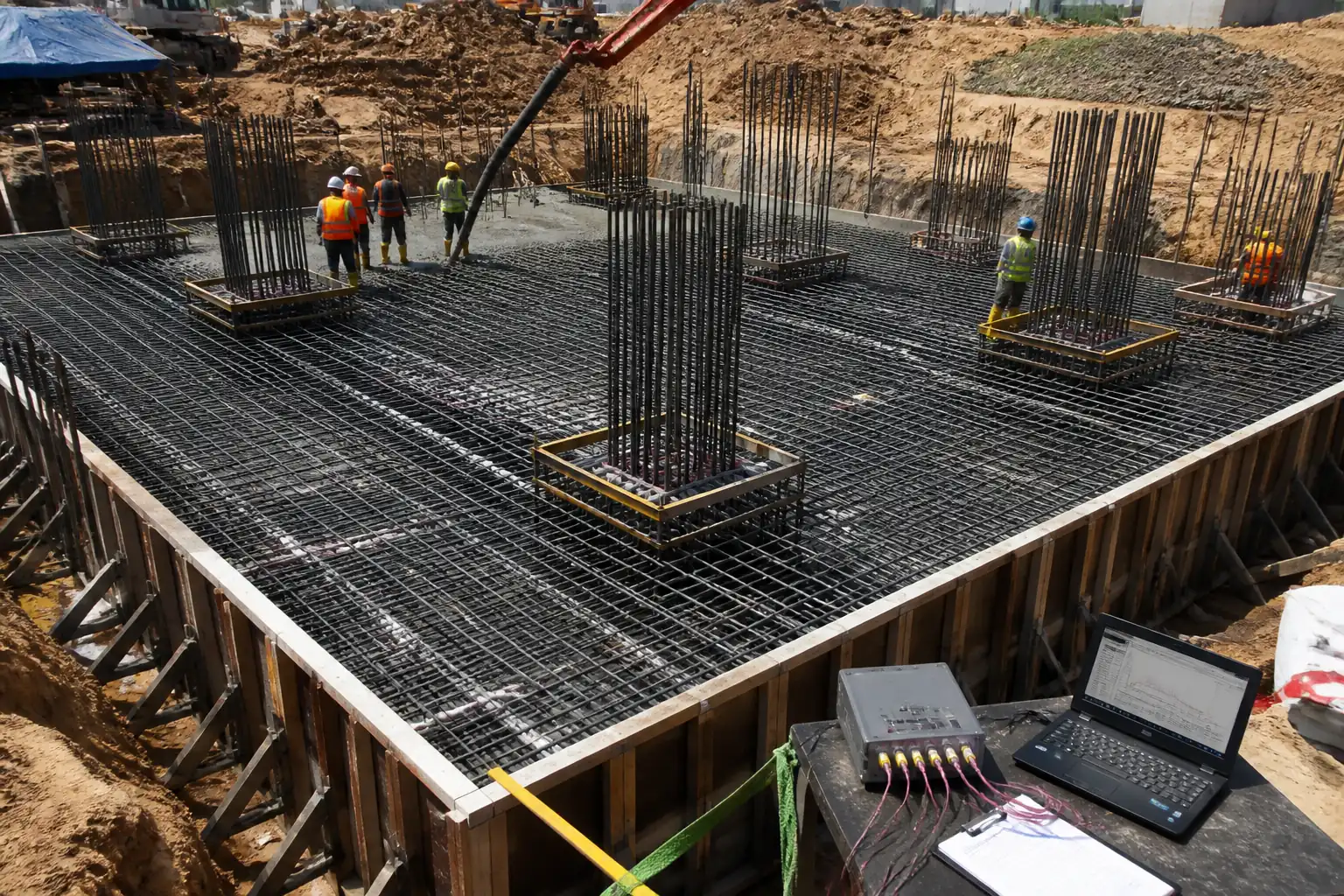
This method statement covers all activities required to execute a mass concrete raft foundation pour, including:
- Setting out, sub-base preparation, and placement of a lean concrete blinding layer.
- Coordination and installation protection of below-slab waterproofing system (fully bonded sheet or spray-applied) including waterstops and detailing at penetrations.
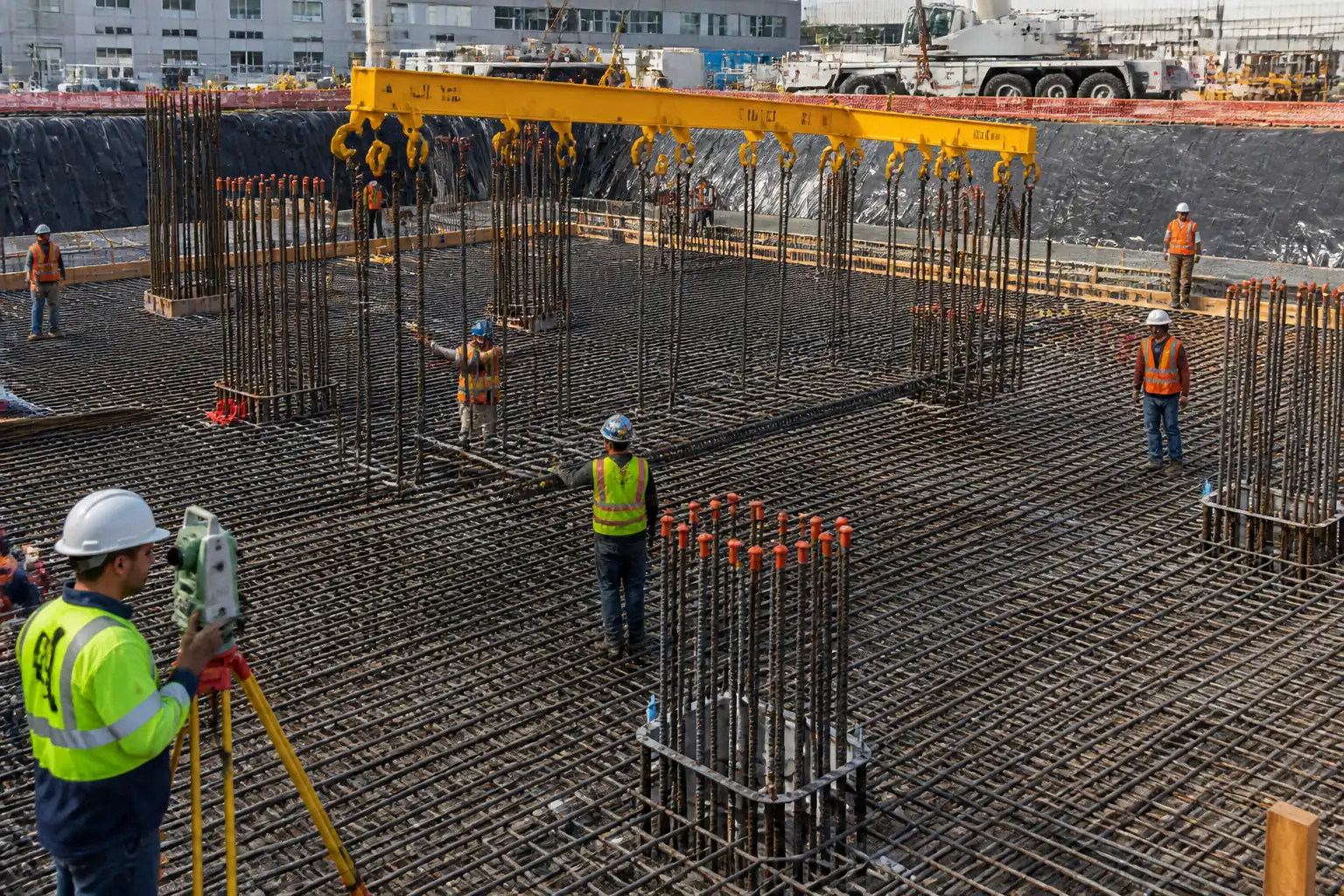
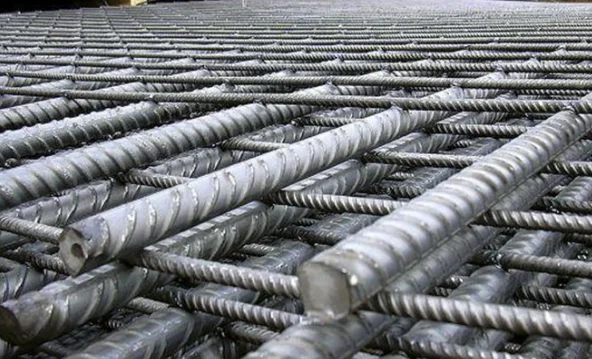
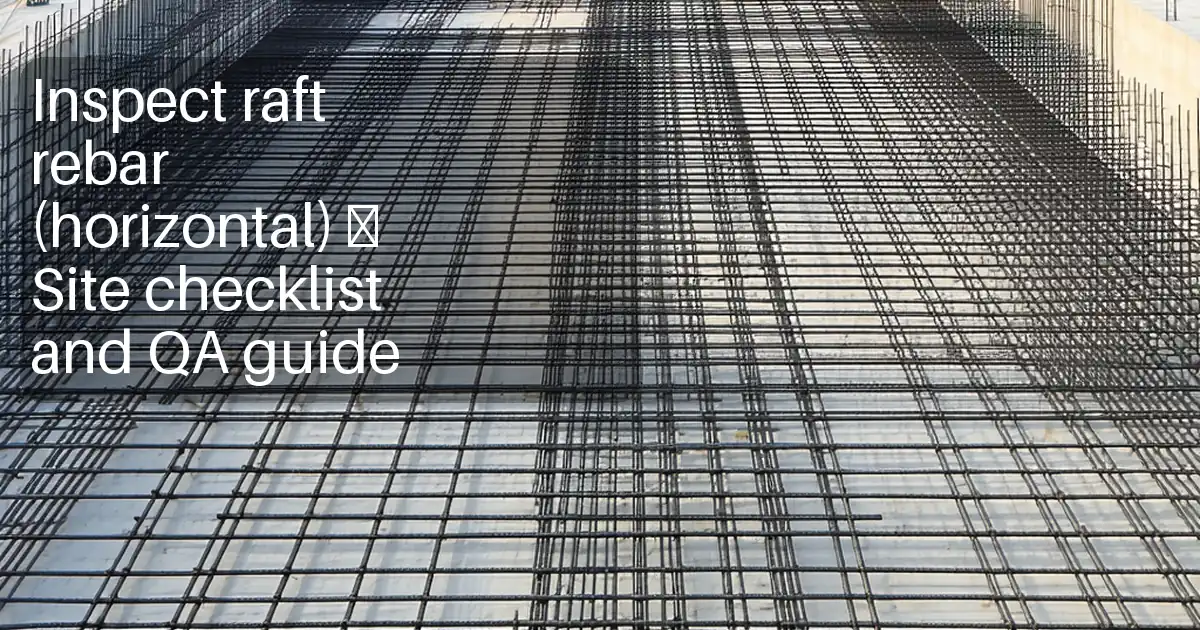
- Fabrication, assembly, and installation of heavy reinforcement (bottom and top mats), chairs/spacers, and coordination with embedded items (sleeves, anchors, conduits, earthing).
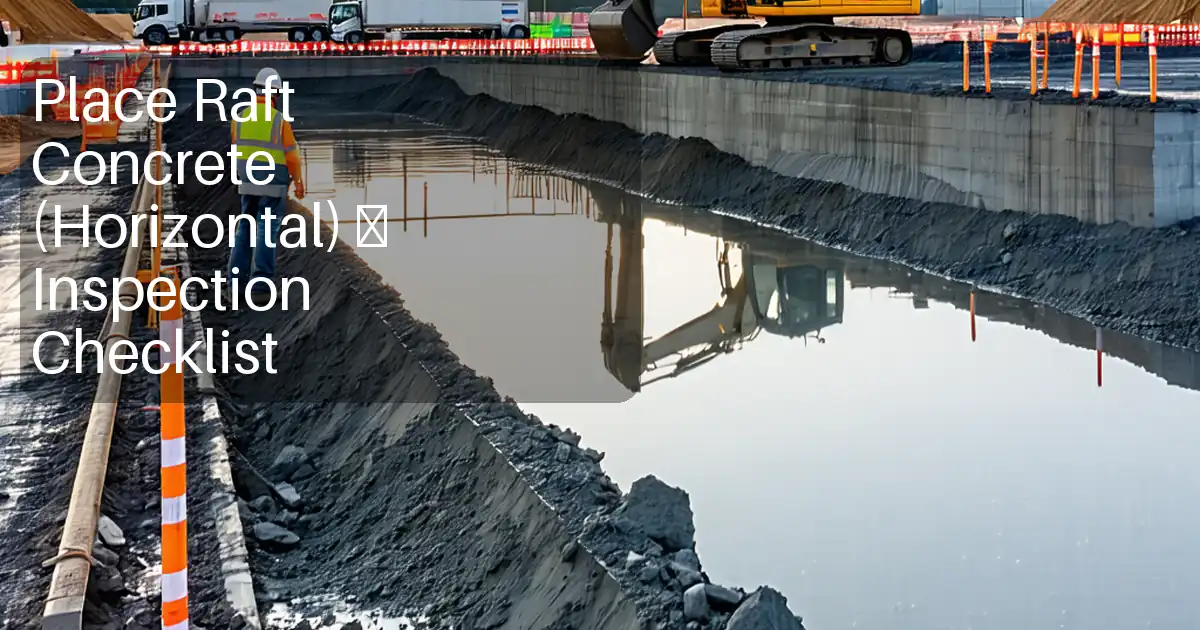
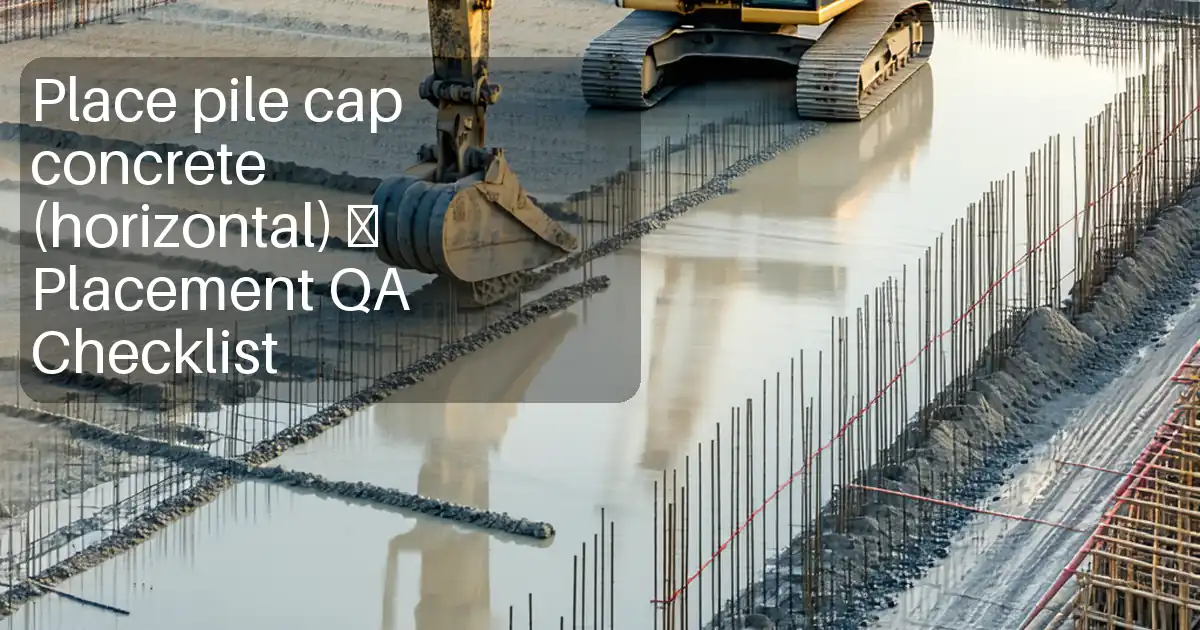
- Edge formwork/kicker, pour planning, logistics, and continuous placement of mass concrete.
- Thermal control plan implementation (pre-cooling, insulation, pour sequence) and early-age temperature monitoring using embedded thermocouples/data loggers.
- Concrete finishing and curing regime suitable for mass concrete.
- Monitoring and controlling temperature rise and temperature differentials to mitigate thermal cracking risk.
- Quality control testing (fresh and hardened concrete), record keeping, non-conformance management, and final acceptance.
Out of scope: Excavation and dewatering works, superstructure works, permanent waterproofing above raft unless stated in project documents.
Objectives
- Deliver a structurally sound, watertight raft foundation that meets design strength, serviceability, durability, and watertightness requirements.
- Control early-age thermal gradients to within project-specified limits to prevent thermal cracking [Verify per project specifications].
- Achieve compliance with applicable standards, ITP, and approved drawings/specifications.
References
| Document Type | Reference / Number | Revision | Notes |
|---|---|---|---|
| Standard | ACI 207 | Guidance for heat generation and thermal cracking control | |
| Standard | ACI 301 | Concrete materials, placing, curing, tolerances | |
| Standard | ACI 305, ACI 306 | Controls for extreme temperatures during placement and curing | |
| Standards | ASTM C94, C143, C1064, C231, C138, C31, C39 | Fresh and hardened concrete testing | |
| Standards | EN 1992-1-1, EN 13670, EN 206 | European practice where applicable [Verify per project specifications] | |
| Standards | BS 4449, BS 8666 | Reinforcement properties and scheduling | |
| Standard | AWS D1.4 | Welding of reinforcement [Use only if specified] | |
| Guide | ACI 304R | Placement practice and pumpability | |
| Standards | ASTM D903, ASTM D5385 | Waterproofing adhesion and resistance tests (if required by manufacturer) |
Responsibilities
| Role | Responsibility | Name / Party |
|---|---|---|
| Project Manager | Project Manager | Contractor |
| Construction Manager | Construction Manager | Contractor |
| Site Engineer | Site Engineer | Contractor |
| QA/QC Engineer | QA/QC Engineer | Contractor |
| HSE Manager/Officer | HSE Manager/Officer | Contractor |
| Rebar Superintendent/Foreman | Rebar Superintendent/Foreman | Contractor |
| Waterproofing Subcontractor | Waterproofing Specialist Subcontractor | Subcontractor |
| Supplier / Technologist | Ready-Mix Supplier / Concrete Technologist | Supplier |
| Testing Agency | Independent Testing Agency | Independent |
Resources
| Resource Type | Description | Quantity | Remarks |
|---|---|---|---|
| Manpower | Site Engineers | 2-3 | |
| Manpower | Surveyor | 1 | |
| Manpower | QA/QC Technicians (field tests, cylinders) | 2-4 | |
| Manpower | HSE Officers (shift coverage) | 1-2/shift | |
| Manpower | Concrete Pump Operators and Hosemen | Per pump | |
| Manpower | Rebar Fixers | As per bar tonnage | |
| Manpower | Finishers/Floats | 3-6 |
Materials
| Material | Specification / Grade | Quantity | Remarks |
|---|---|---|---|
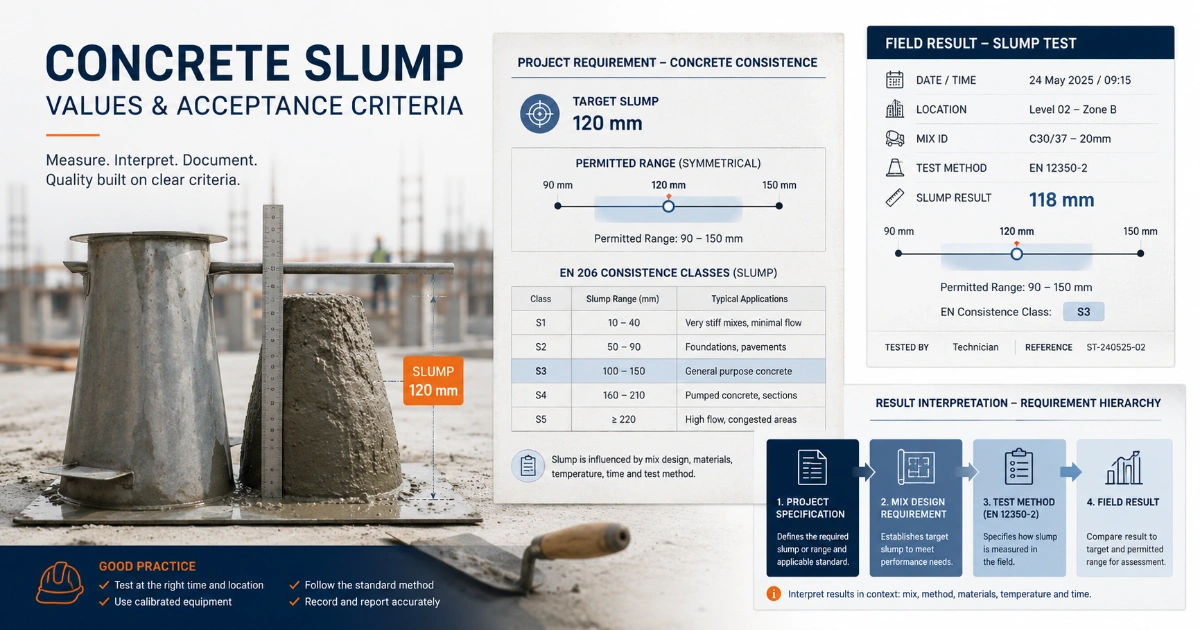
| Ready-mix mass concrete | EN 206 / ACI 301 compliant; max w/c ≤ 0.45–0.50 [Verify]; slump 100–180 mm pumpable [Verify]; chloride class ≥ Cl 0.2 [Verify] | Use SCMs (e.g., 30–60% GGBS or 15–30% fly ash) and retarder as required | |
| Supplementary Cementitious Materials (GGBS, Fly Ash, Silica Fume as specified) | Proportions per approved mix design [Verify per project specifications] | ||
| Chemical admixtures | Set retarder, HRWR (ASTM C494 Types B/D/F/G) dosage per supplier design | ||
| Blinding concrete | Thickness typically 50–100 mm [Verify per project specifications] | ||
| Waterproofing system | Manufacturer system data sheet; laps ≥100 mm [Verify]; adhesion per ASTM D903 as applicable; hydrostatic resistance per manufacturer | ||
| Waterstops | Width 200–300 mm for PVC typical [Verify]; continuous with factory/mitered welds per manufacturer | ||
| Spacers/chairs/cover blocks | Provide cover as per drawings (e.g., 75–100 mm bottom cover) [Verify] | ||
| Reinforcing steel | BS 4449 / ASTM A615/A706; laps/couplers per design; mill certs required | ||
| Curing materials and insulation | Curing compound (ASTM C309/C1315) [Verify]; insulation R-value per thermal plan | ||
| Temperature monitoring system | Accuracy ±0.5°C typical [Verify]; logging interval configurable (5–30 min) |
Equipment
| Equipment | Capacity / Type | Quantity | Inspection Required |
|---|---|---|---|
| Truck-mounted concrete pumps / placing booms | 50–60 m boom length typical | 2–4 units [Verify] | Daily pre-use inspection; third-party certification valid [Verify] |
| Immersion vibrators | 50–75 mm heads; 10–12 kN; radius ~150–250 mm | 4–6 units + spares | Function test and spare heads available |
| Screed/beam vibrators and bull floats | 2–3 | Check straightness and vibration function | |
| Mobile crane | 35–80 t [Verify] | 1–2 | Approved lift plan; operator certification |
| Thermocouples & data loggers | ≥16 channels/logger typical | As required | Calibration certificates |
| Concrete field test kits | Full set per pump | Calibration within validity |
Prerequisites
Approvals and Preparations
- Approved construction drawings, bar bending schedules, waterproofing shop drawings, and method statements (including thermal control plan and pour sequence) obtained.
- Concrete mix design approved with thermal calculations (adiabatic temperature rise, predicted core temperature, predicted differential) [Verify per project specifications].
- Pre-pour coordination meeting completed (Contractor, Designer, Employer, Ready-mix Supplier, Waterproofing Subcontractor, Testing Agency). Minutes issued.
- Logistics plan approved: truck route, pump locations, pour lane/strip sequence, backup pumps, power, lighting, access, emergency egress, and spill response.
- Permits completed: Excavation permit, Lifting plan/permit, Confined space (if applicable), Night work/noise permit, Hot work (for rebar welding if allowed) [Verify per project HSE plan and local regulations].
- Instrumentation plan: thermocouple layout drawing, depths, numbering, cable routing, logger positions, sampling frequency, alarm thresholds.
- Trial mix or mock-up (if specified) completed with temperature rise verification and placement trial (pumpability, finishing, curing).
- Calibration certificates current: slump cone, thermometers, air meter, unit weight bucket, data loggers, crane and pump certifications.
- Weather forecast reviewed (48–72 hours). Hot/cold weather measures and contingency materials available (chilled water, ice, windbreaks, heaters, curing blankets) as applicable.
- Waterproofing materials, primers, tapes, waterstops, and protection boards delivered with manufacturer approvals and MSDS.
- Inspection request (IR) notifications issued to Employer/Engineer per ITP.
Method Sequence
| Step | Activity | Description | Responsibility | Inspection / Hold Point |
|---|---|---|---|---|
| 1 | Setting out and sub-base preparation | Verify levels and bearing strata. Prepare sub-base to design level, compact to required modulus/CBR [Verify], trim and proof-roll. Remove loose/wet spots and replace with compacted fill. | Site Engineer / Surveyor | Check levels ±10 mm [Verify] |
| 2 | Blinding concrete placement | Place lean concrete blinding (50–100 mm) to provide clean, level base and protect waterproofing. Finish smooth trowel or wood float as specified. Cure for ≥24 h or as required before waterproofing. | Construction Manager | Visual & level checks |
| 3 | Waterproofing installation | Apply primer (if required), lay fully bonded membrane with laps ≥100 mm [Verify], roll for adhesion. Install protection boards over membrane. Detail around penetrations. Maintain cleanliness; no rebar traffic unless protected paths provided. | Waterproofing Subcontractor | Manufacturer rep inspection (if specified) |
| 4 | Waterstop installation at construction joints/penetrations | Fix PVC/hydrophilic waterstops centrally in joint plane using clips and ties. Ensure continuity across splices with factory or site welds per manufacturer. At penetrations, install compatible hydrophilic rings and sealing collars. | Site Engineer / Waterproofing Subcontractor | Dimensional and position check |
| 5 | Reinforcement installation – bottom mats and supports | Place approved chairs/spacers to achieve bottom cover (e.g., 75–100 mm) [Verify]. Install bottom mat per BBS; tie wires secured; provide continuity at laps/couplers per drawings. Avoid damaging waterproofing by using protection boards and spreader access. | Rebar Superintendent | Cover gauges and spacings |
| 6 | Embedded items and MEP coordination | Install sleeves, box-outs, earthing, anchor bolts, and conduits fixed to reinforcement; maintain clear pathways for vibrator access; ensure no clash with waterstops. Verify elevations and coordinates before top mat. | Site Engineer / MEP Coordinator | Dimensional checks |
| 7 | Reinforcement installation – top mats and final checks | Install top reinforcement mats with chairs/spacers for top cover (e.g., 50–75 mm) [Verify]. Provide bar supports to prevent flotation. Prepare pour lanes/strips (e.g., advancing front). | Rebar Superintendent | Cover and stability checks |
| 8 | Formwork/edge shutter and kicker | Install edge shutters/kickers to required elevations. Provide grout-tight joints and pressure capability for head of concrete. Apply release agent where needed. | Construction Manager | Formwork check |
| 9 | Thermocouple installation and commissioning | Install thermocouples at specified grid spacing (e.g., 10–15 m) and depths (surface ~50 mm below, mid-depth, and near core). Route armored cables to loggers outside pour area. Label channels. Program logging interval (e.g., 5–15 min for first 48 h, then 30–60 min). | QA/QC Engineer | Continuity check and channel mapping |
| 10 | Pre-pour meeting and checklist | Confirm readiness: ITP holds cleared, manpower, equipment redundancy, lighting, traffic plan, communication plan, emergency plan, test kits, cylinders, curing materials, insulation, admixture contingency. Approve start time considering temperature/wind. | Project Manager / QA/QC | Sign-off by Engineer/Employer |
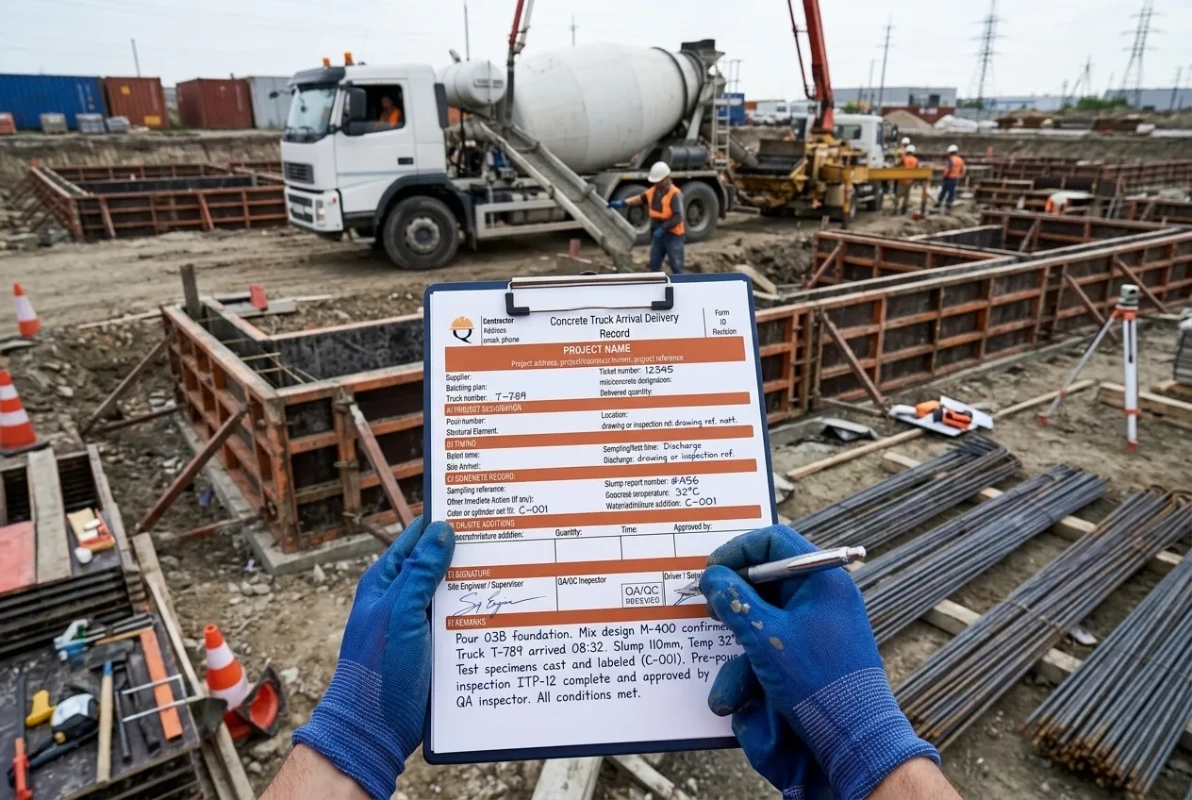
| 11 | Concrete delivery, acceptance, and placement | Verify delivery tickets for mix ID, time, water added, temperature. Reject trucks exceeding time limit [e.g., 90 min] or temperature (>30–32°C) [Verify]. Place in lifts 450–600 mm; maintain a live leading edge; avoid cold joints. Use pumps/booms per sequence. | Construction Manager / QA/QC | Ticket check; fresh tests |
| 12 | Vibration/compaction | Systematically insert poker vertically, spacing ~8–10 times head diameter; penetrate 50–100 mm into previous layer; duration 5–15 s until air release ceases and mortar sheen appears. Avoid over-vibration and displacing bars/waterstops. | Pump Crew / Finishers | Supervisor observation |
| 13 | Finishing and initial curing | Screed to level; finish per specification (typically float finish). Immediately commence curing: continuous wet cure or curing compound plus insulation blankets/boards according to thermal plan. | Finishers | Surface check |
| 14 | Thermal control during curing | Maintain insulation to limit temperature differential (typ. ≤20°C) and peak core temperature (typ. ≤65–70°C) [Verify]. Adjust insulation layers, apply windbreaks, or use surface cooling if needed. Do not strip insulation until differential ≤10°C [Verify]. | QA/QC Engineer | Review logger data |
| 15 | Concrete testing and strength verification | Cast cylinders/cubes at start, middle, and end of pour; cure as per ASTM C31/BS EN 12390. Test at 7 and 28 days or as specified. Consider maturity method (ASTM C1074) if approved for early loading decisions. | QA/QC / Testing Agency | Specimen ID and curing checks |
| 16 | Inspection of surface and defects | Inspect for cracks, laitance, honeycombing, or surface defects. Map any cracks; measure widths. Execute approved repairs. Investigate causes if thermal cracking observed. | Site Engineer / QA/QC | Visual and crack gauge |
| 17 | Final acceptance | Submit as-builts (rebar, embeds, thermocouple layout), material certs, test results, temperature history, waterproofing warranties, and inspection records for Engineer approval. | Project Manager / QA/QC | Document review |
Health, Safety, and Environment (HSE) – Safety Controls
Key Task-Specific Hazards and Controls
1) Hazard: Deep excavation edges and access/egress
- Likely consequence: Falls from height; entrapment; vehicle rollover
- Engineering/procedural control: Edge protection (toe boards + guardrails); designated access ramps; anti-slip walkways; controlled one-way traffic; spotters at ramps
- Required PPE: Helmet, high-vis, safety boots, gloves
- Collective preventive measure: Physical barriers, edge protection nets where needed
- Inspection/permit/supervision: Daily excavation/edge inspections; Excavation Permit; banksman for vehicle movements [Verify per project HSE plan and local regulations]
2) Hazard: Crane and rebar mat lifting operations
- Likely consequence: Dropped loads, struck-by, crush injuries
- Engineering/procedural control: Approved lift plan and rigging; certified slings/shackles; exclusion zones; taglines; weather/wind limits [e.g., stop >9–12 m/s, verify]
- Required PPE: Helmet with chin strap, gloves, safety boots, eye protection
- Collective preventive measure: Barriers and banksmen; radio communication protocol
- Inspection/permit/supervision: Appointed person sign-off; crane inspection and operator certification; pre-lift checklist
3) Hazard: Concrete pump hose whipping/line burst
- Likely consequence: Impact injuries; exposure to wet concrete
- Engineering/procedural control: Secure end-hose; use anti-whip devices; controlled priming; pressure relief before disconnection
- Required PPE: Face shield or safety glasses, chemical-resistant gloves, rubber boots, long sleeves
- Collective preventive measure: Exclusion zone around end-hose; trained hosemen only
- Inspection/permit/supervision: Daily pump/line inspection; pressure gauges functional; supervisor authorization for line changes
4) Hazard: Contact with wet concrete (alkaline burns)
- Likely consequence: Chemical burns, dermatitis, eye injury
- Engineering/procedural control: Provide wash stations; minimize direct contact; barrier creams; safe removal of contaminated clothing
- Required PPE: Alkali-resistant gloves, goggles/face shield, rubber boots, long sleeves
- Collective preventive measure: Task briefings; SDS available on site
- Inspection/permit/supervision: HSE inspections; first-aid readiness; eyewash stations
5) Hazard: Working over waterproofing membrane
- Likely consequence: Puncture leading to leakage risk
- Engineering/procedural control: Lay protection boards and temporary walkways; prohibit sharp tools; use spreader plates under ladders/props
- Required PPE: Soft-soled boots, gloves
- Collective preventive measure: Dedicated access routes and supervision
- Inspection/permit/supervision: Waterproofing specialist to sign off before rebar works
6) Hazard: Thermal effects during mass pour (hot surfaces, steam) and heat stress/cold stress
- Likely consequence: Heat exhaustion or hypothermia; thermal shock to concrete if improper cooling
- Engineering/procedural control: Shift rotation; hydration and rest areas; staged insulation removal; control cooling rate ≤2–3°C/h [Verify]
- Required PPE: Weather-appropriate PPE; hydration packs
- Collective preventive measure: Shade structures/heaters as needed
- Inspection/permit/supervision: Weather monitoring; HSE oversight; implement ACI 305/306 measures
7) Hazard: Night work, limited visibility
- Likely consequence: Trips, struck-by, poor quality control
- Engineering/procedural control: Lighting ≥50 lux on general areas and ≥100–150 lux at workfaces [Verify]; backup generators; reflective signage
- Required PPE: High-vis, headlamps if needed, eye protection
- Collective preventive measure: Light towers positioned outside exclusion zones
- Inspection/permit/supervision: Night work permit; lighting inspection log
8) Hazard: Noise and vibration from equipment
- Likely consequence: Hearing damage; hand–arm vibration syndrome
- Engineering/procedural control: Maintain equipment; limit exposure time; low-vibration tools
- Required PPE: Hearing protection (SNR per site), anti-vibration gloves
- Collective preventive measure: Noise barriers where feasible
- Inspection/permit/supervision: Occupational monitoring as required
9) Hazard: Slips/trips on wet surfaces and hoses
- Likely consequence: Sprains, fractures
- Engineering/procedural control: Hose management; keep walkways clear; anti-slip mats on ramps
- Required PPE: Slip-resistant boots
- Collective preventive measure: Housekeeping regime with assigned steward
- Inspection/permit/supervision: Supervisor walkdowns hourly during pour
10) Hazard: Hot works on rebar (if permitted)
- Likely consequence: Fire, fumes, burns
- Engineering/procedural control: Hot Work Permit; fire watch; fire blankets over waterproofing; local extraction
- Required PPE: Welding hood, fire-resistant clothing, gauntlets
- Collective preventive measure: Fire extinguishers and spark containment
- Inspection/permit/supervision: Permit-to-work; gas test if confined space [Verify per project HSE plan]
Environmental Controls
Controls and Mitigations
- Concrete washout: Provide lined, bunded washout pit ≥110% volume of a truck washout. Collect and dispose via licensed recycler. Prevent discharge to storm drains.
- Alkaline runoff: Manage curing water and rainwater on fresh concrete. Test and treat to pH 6–9 before discharge [Verify per local regulations].
- Noise/working hours: Comply with noise permit, use acoustic shrouds for pumps where feasible, schedule loud activities during permitted hours.
- Dust and debris: Minimal during concrete placement; maintain clean access roads; wheel wash as needed.
- Waterproofing primers/solvents: Store in ventilated, bunded areas; use spill kits; avoid ignition sources. Follow SDS requirements.
- Fuel and oil management: Spill kits at pumps/cranes; drip trays under static plant; refuel in designated areas only.
- Waste segregation: Separate scrap steel, packaging, plastic membranes; track via waste transfer notes.
- Light pollution for night pours: Direct light away from residences; use shielded towers.
- Water use: Optimize curing water; prefer membrane curing in water-scarce environments if compatible with thermal plan.
- Ecology: Prevent contamination of groundwater; ensure dewatering discharges (if any) are filtered and permitted.
- Verification: Environmental inspections each shift; non-conformance to trigger corrective action plan.
QA/QC
Quality Assurance and Control Plan
- Document Controls: Use approved drawings/specs; maintain RFI/NCR logs; issue IRs per ITP milestones.
- Materials Verification: Mill certificates for rebar; waterproofing product datasheets and warranties; concrete mix approval; admixture certifications. Traceability maintained via delivery tickets and batch IDs.
- Calibration: Field test apparatus and data loggers within calibration validity; maintain certificates on-site.
- Mock-ups/Trials: Conduct where specified for waterproofing seams and concrete pumpability/thermal performance.
- Inspection and Testing: Follow ITP frequencies. Minimum fresh concrete tests per ASTM standards; compressive strength at 7/28 days; temperature logging as per thermal plan; cover checks pre-pour.
- Acceptance Criteria: Strength ≥ specified; slump/air/temp within limits; temperature differential and peak within thermal plan; waterproofing continuous without defects; rebar cover within tolerance.
- Thermal Management: Implement controls based on logger data; adjust insulation layers; record interventions.
- Nonconformance: Raise NCR for deviations; investigate root cause; corrective measures approved by Engineer.
- Records/Handover: Include IRs, test results, logger data, as-built drawings, waterproofing inspection records, delivery tickets, curing logs, and acceptance certificates.
- Training/Competency: Operators certified; waterproofing installers approved by manufacturer; QC technicians competent in ASTM/EN test methods.
- Interfaces: Coordinate with MEP for penetrations; ensure waterstops continuity and embedment. Protect waterproofing during rebar installation with walkways/protection boards.
Attachments
- Approved drawings: raft foundation GA, sections, rebar details, waterstops and waterproofing layouts
- Thermal Control Plan: calculations, predicted temperature rise/differential, insulation strategy, contingency measures
- Pour Sequence and Logistics Plan: pump layout, pour strips, traffic management, lighting plan
- Mix Design Submittals: cementitious contents, SCMs, admixtures, aggregate gradation, trial results
- Manufacturer Data Sheets: waterproofing system, primers, tapes, protection boards, curing compounds
- Calibration Certificates: testing devices, data loggers, pumps, crane
- Risk Assessments and Method Statements (RAMS): lifting, pumping, night work, hot/cold weather concreting
- Pre-pour Checklists and ITP Inspection Requests
- Emergency Response Plan and Spill Control Procedures
This content is a read-only public reference. Download or customize to get an editable version.
ITP preview
The first inspection activities from the linked ITP for Method Statement: Mass Concrete Raft Foundation Pour (Blinding, Waterproofing, Heavy Reinforcement, Thermal Control, Temperature Monitoring, Final QA/QC):
| Activity | Inspection / Test | Acceptance Criteria | Responsibility | Record |
|---|---|---|---|---|
| Sub-base preparation and levels | Survey check; compaction/plate load if specified | Levels within ±10 mm; no soft spots or standing water | Site Engineer / QA/QC | IR, survey report |
| Blinding concrete placement | Random coring or depth probe (if required) | Thickness 50–100 mm; surface smooth and sound [Verify] | QA/QC / Engineer | IR, photos |
| Waterproofing membrane installation | Adhesion check (ASTM D903) if specified; spark/holiday test if applicable | Continuous, defect-free, laps sealed; protection boards installed | Waterproofing Subcontractor / QA/QC / Engineer | IR, manufacturer inspection sheet |
Showing 3 of 19 inspection activities. View full ITP →
Related Inspection and Test Plan
An Inspection and Test Plan (ITP) is available for Method Statement: Mass Concrete Raft Foundation Pour (Blinding, Waterproofing, Heavy Reinforcement, Thermal Control, Temperature Monitoring, Final QA/QC). The ITP defines the inspection activities, acceptance criteria, hold and witness points, responsible parties, and records required to verify the work described in this method statement.
View the Method Statement: Mass Concrete Raft Foundation Pour (Blinding, Waterproofing, Heavy Reinforcement, Thermal Control, Temperature Monitoring, Final QA/QC) ITP →Frequently asked questions
Continue with related Quollnet resources connected to this method statement.