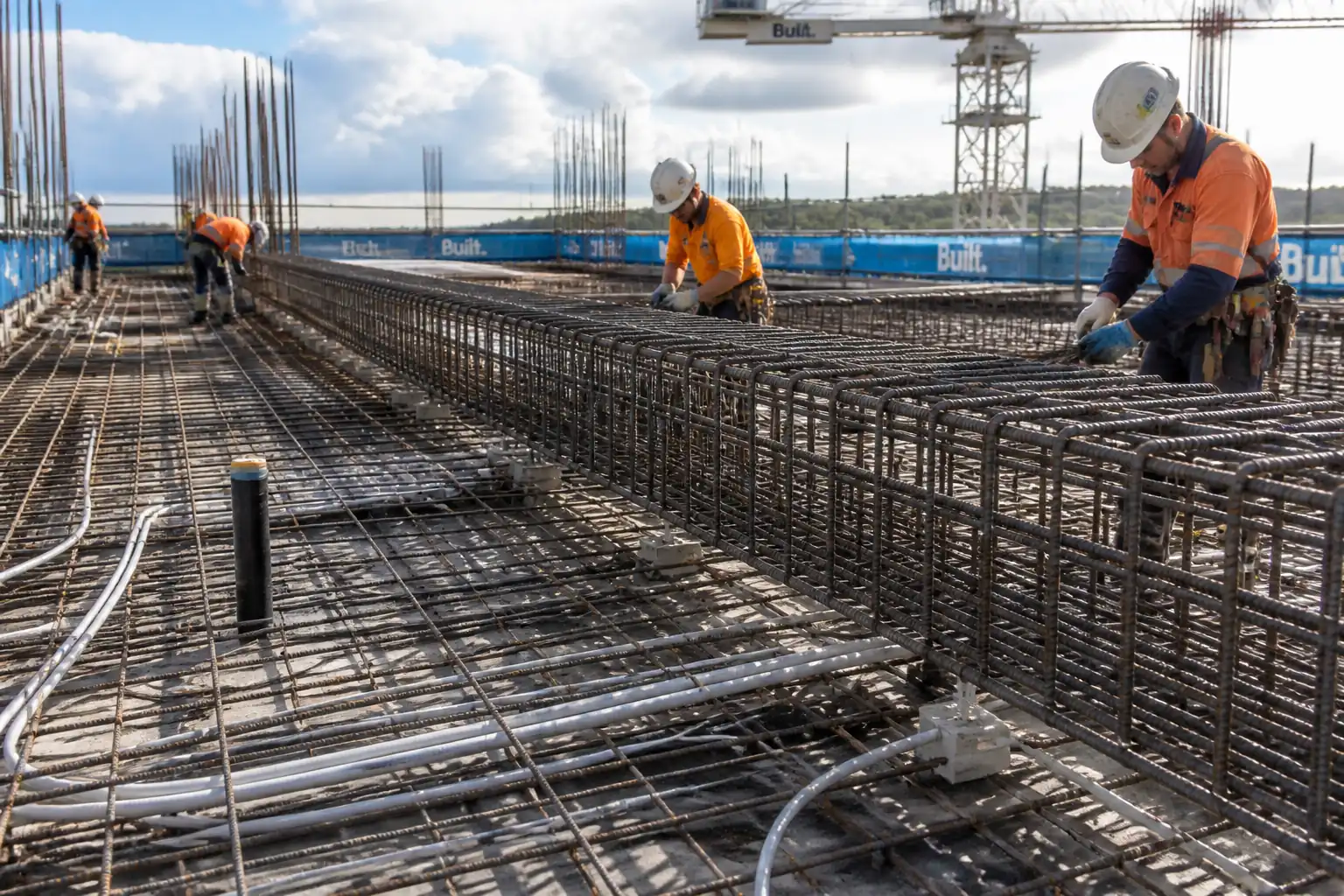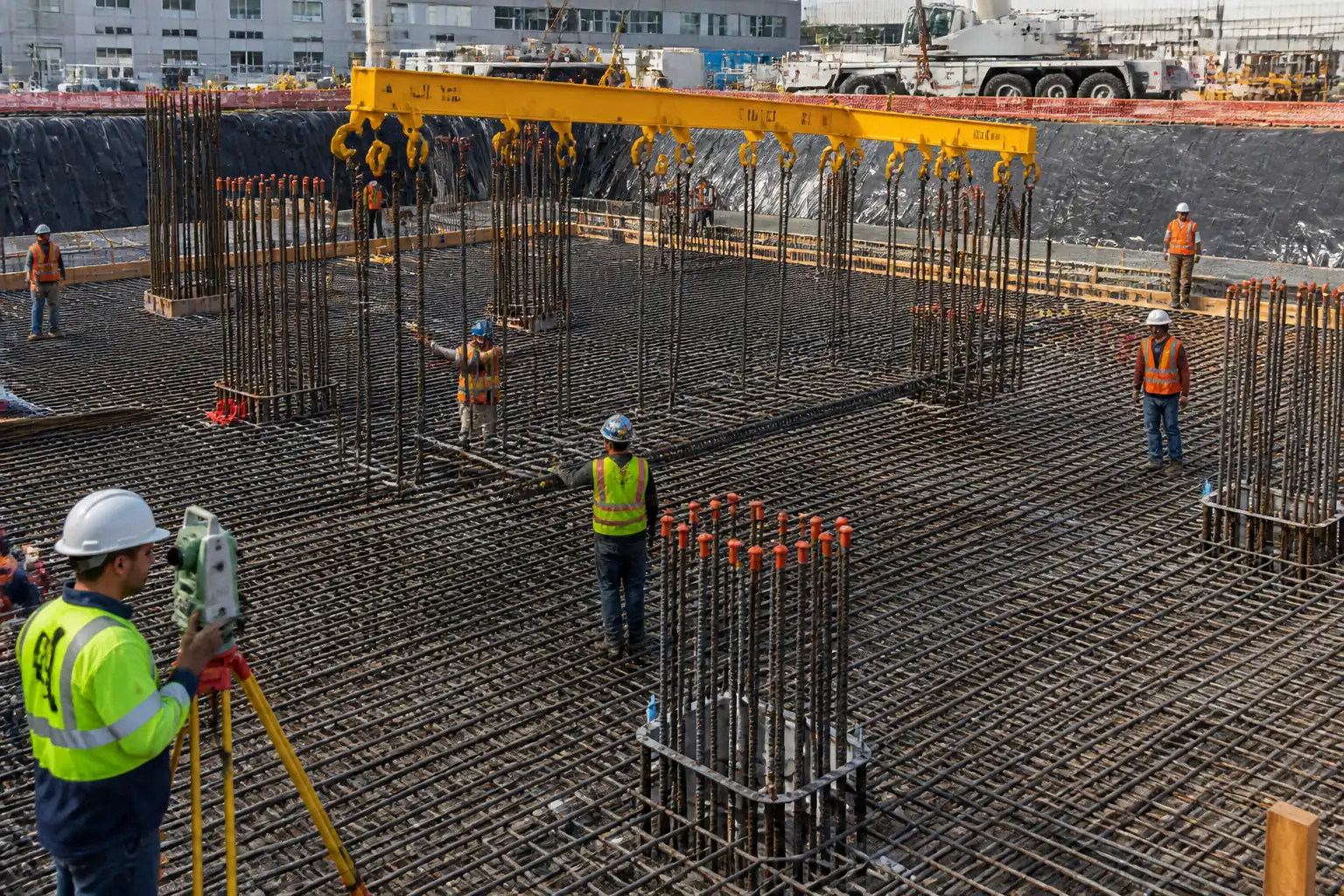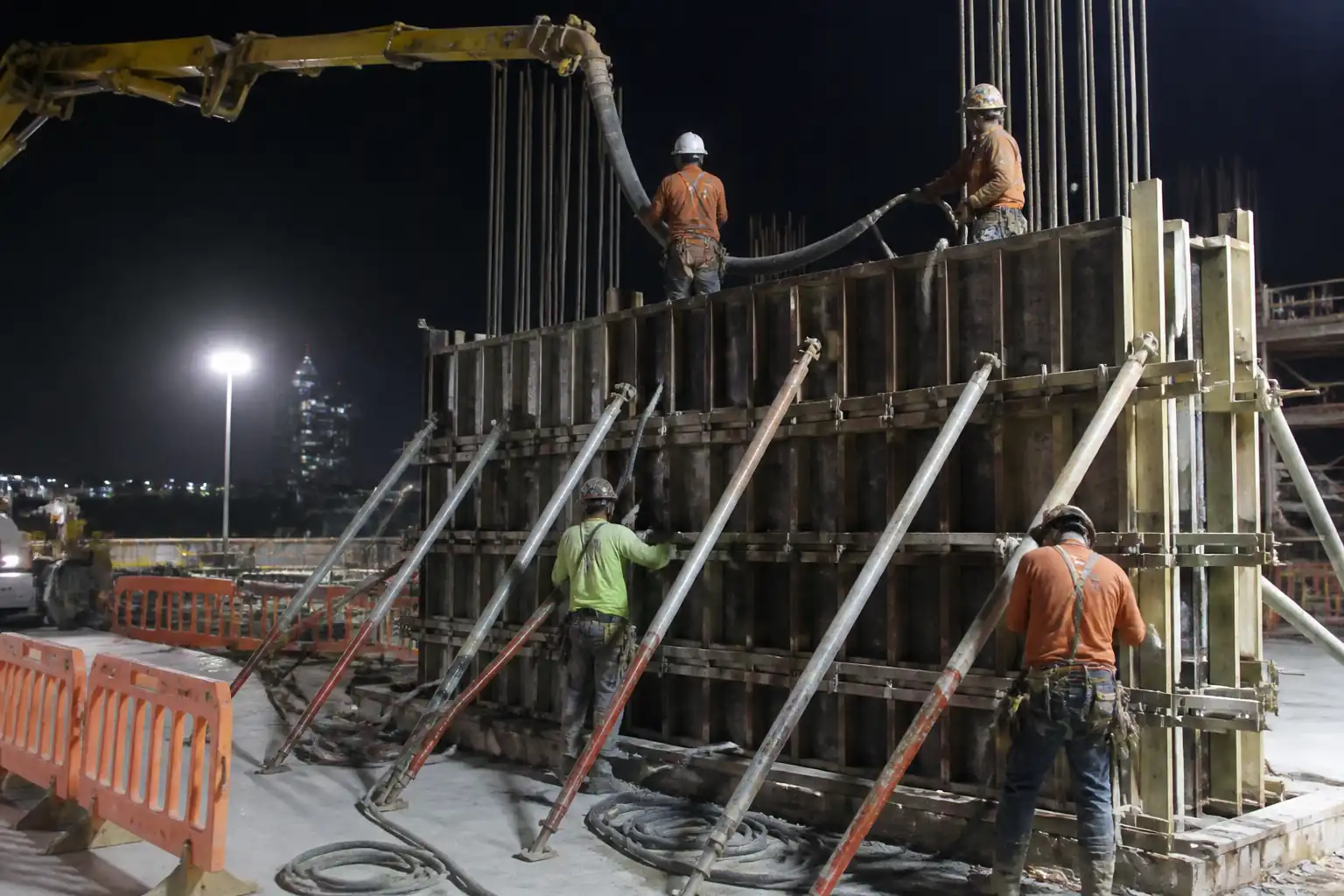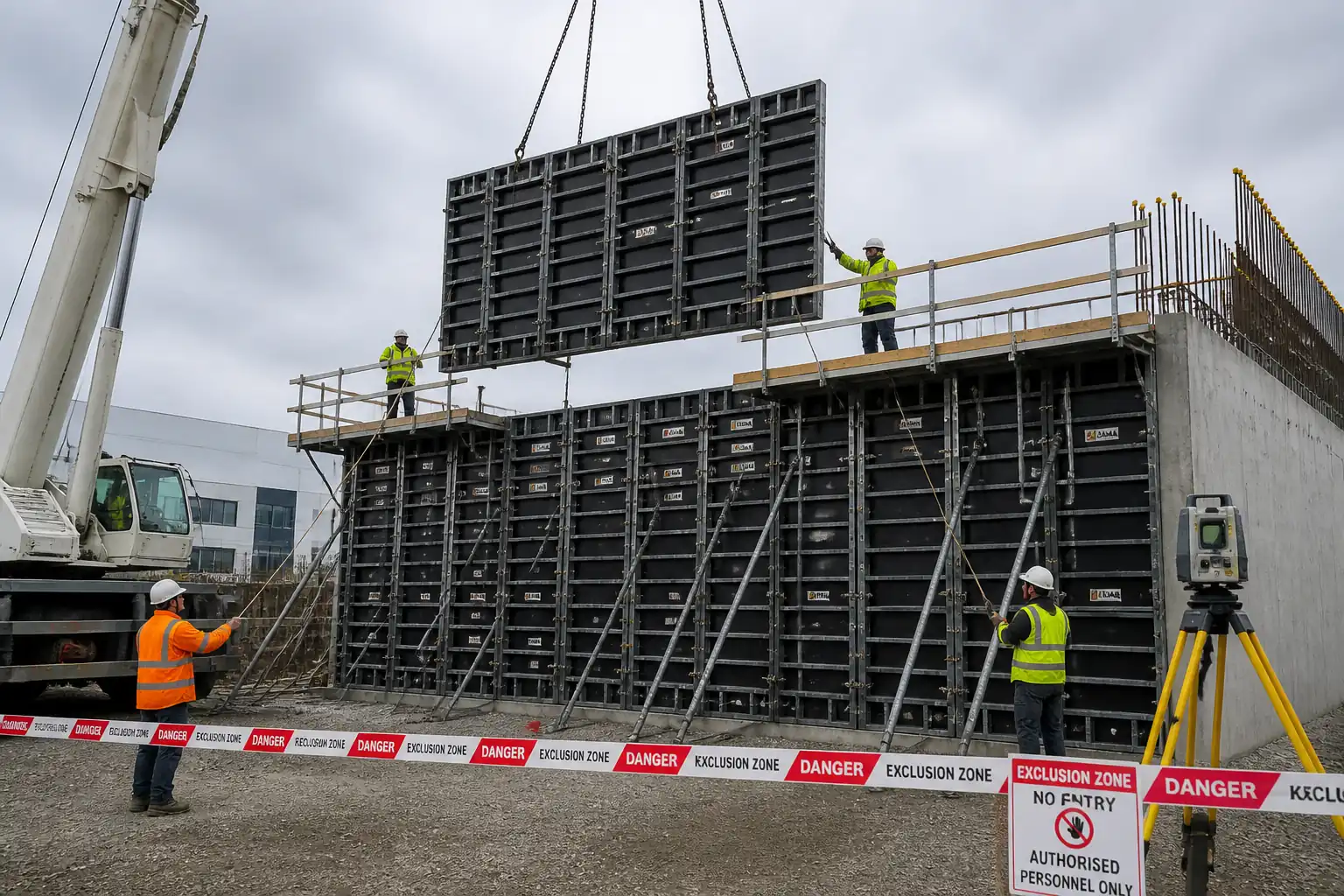

Inspection and Test Plan for Method Statement: Fixing and Tying of Vertical Reinforcement Cages for Structural Columns and Shear Walls
AI-assisted inspection and test plan connected to a method statement, with PDF and Excel export.
More than a static template
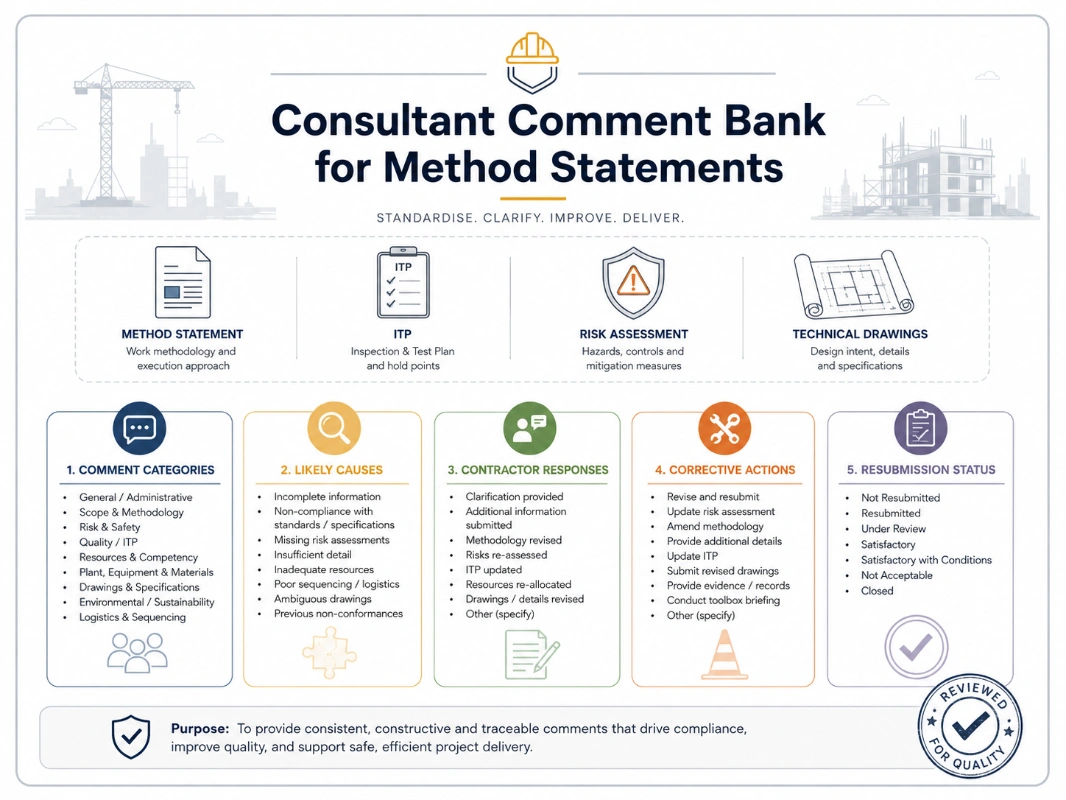
Unlike a downloadable Word or PDF template, this ITP is an AI-assisted editable starting point directly connected to its method statement. Every inspection activity, hold point, and acceptance criterion is structured and ready to adapt to your project.
- AI-assisted customization — Tailor inspection activities and acceptance criteria to your specific project scope.
- Linked method statement — This ITP is connected to the corresponding method statement describing the work sequence.
- Multiple export formats — Download as a formatted PDF or editable Excel spreadsheet.
- Editable starting point, not a final document — Review and verify all content against your project specifications and standards before use.
What you can customize
When you save this ITP to your account, every inspection row becomes editable. You can add, remove, or modify:
- Inspection activity — Description of what is being inspected.
- Inspection type — Hold point (H), Witness point (W), Review (R), or Monitor (M).
- Responsibility — Contractor, subcontractor, engineer, or client.
- Frequency — How often the inspection occurs.
- Acceptance criteria — Referenced standard or specification requirement.
- Records — Forms, test reports, or checklists required as evidence.
Why this ITP is used
To ensure rebar cages meet design and code requirements before concrete placement, reducing rework and structural risk.
Who uses this inspection and test plan
QA/QC engineers, site engineers, foremen, and the Engineer/Consultant for witness and approval.
When this ITP is prepared and submitted
From material receipt through cage assembly, erection, and immediately before concrete pour.
Who receives or approves this ITP
Engineer/Consultant per contract procedures.
Inspection scope
Material compliance, lap/mechanical splices, tie spacing and hooks, cover blocks, cage plumb and position, stability bracing, cleanliness.
Typical hold, witness, and review points
Material receiving (W), lap and coupler inspections (H/W), final pre-pour inspection (H).
Typical inspection records
MIRs, inspection checklists, torque logs, RFIs/IRs, calibration certificates, photo records.
Important approval note
This ITP is an AI-assisted editable starting point, not a pre-approved document. Before use on any project, all inspection activities, hold points, and acceptance criteria must be reviewed and approved by the relevant parties (superintendent, principal contractor, or client representative) in accordance with your contract and project quality plan.
Always verify acceptance criteria against your applicable drawings, specifications, and regulatory requirements. Hold points must be confirmed with the relevant authority before work proceeds past that point.
Inspection and test plan
| Activity | Inspection / Test | Acceptance Criteria | Responsibility | Record |
|---|---|---|---|---|
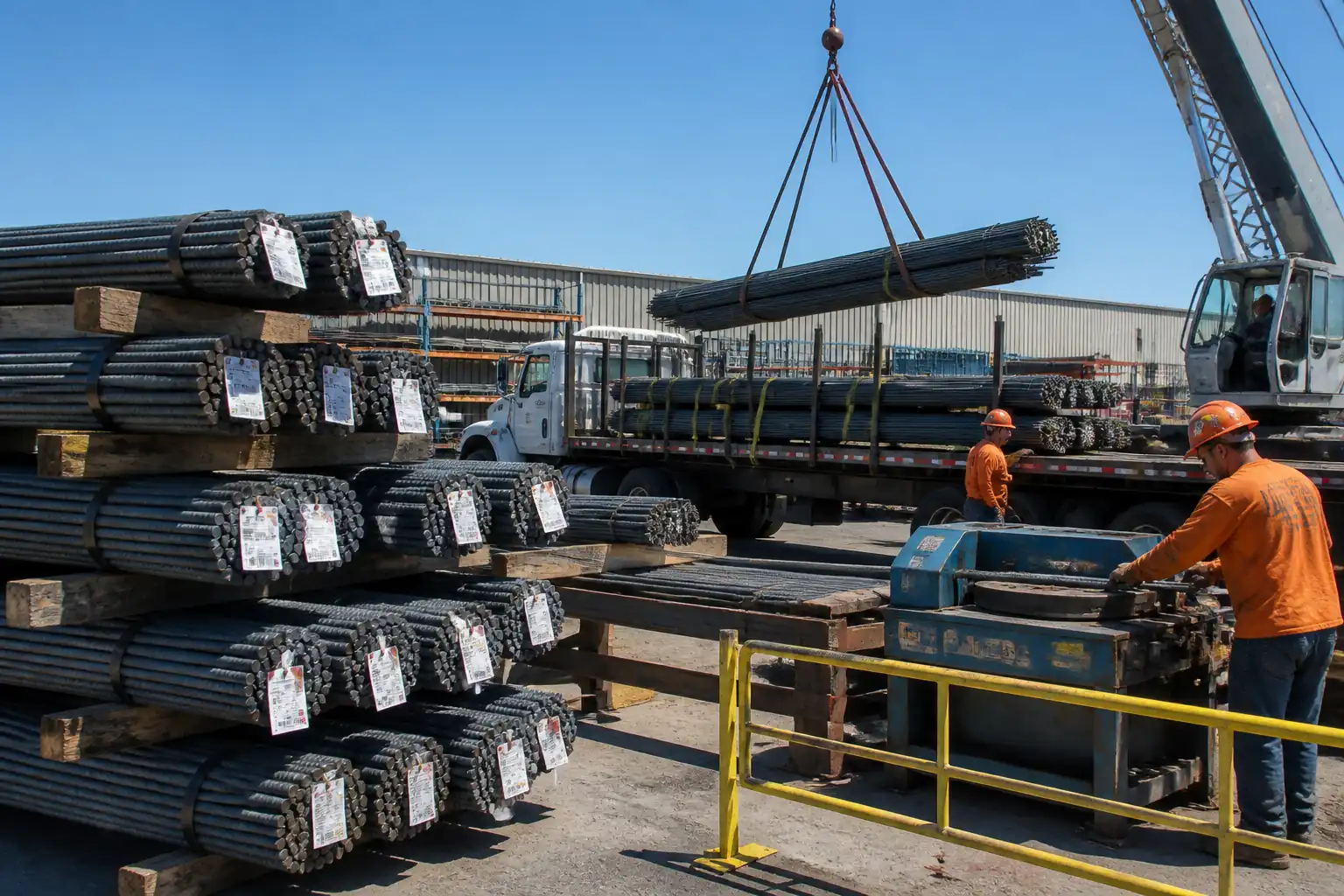
| Material receiving – rebar and accessories | Verify grade, diameter, heat numbers; review MTCs and compliance | Materials comply with ASTM A615/A706 or BS 4449; certificates approved; no damage/contamination | QA/QC Engineer (Contractor) / Witness: Engineer | MIR; Material inspection checklist |
| Couplers – product verification | Check coupler type/class against drawings; verify lot/batch certs | Qualified to ISO 15835 or ACI Type 2 as specified; size and thread match bars | QA/QC Engineer / Witness: Engineer | MIR; Product approvals |
| Cutting/bending inspection (if on site) | Measure lengths/angles; inspect bend radius and bar condition | Dimensional tolerance per BS 8666; no cracks or re-bend without approval | QA/QC Engineer | In-process QC log; photos |
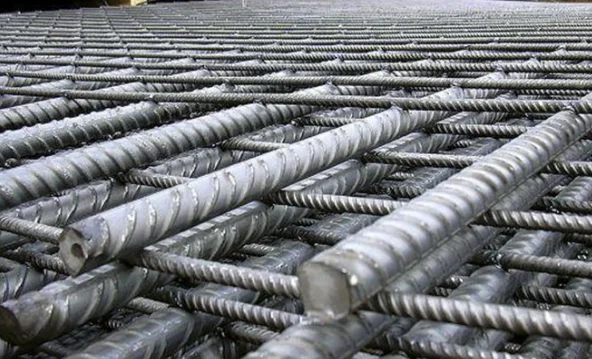
| Cage pre-assembly check | Count/size of longitudinal bars; initial tie spacing; corner tie hooks | Bar quantity and sizes as drawings; tie spacing layout within ±10 mm | Site Engineer / QA/QC | Pre-assembly checklist |
| Lap length verification | Measure laps; verify stagger and location within permitted zones | Tension lap typically 40–60 db; compression 30–50 db [Verify]; location and staggering as drawings/code | QA/QC Engineer / Witness: Engineer | Lap inspection record; IR |
| Mechanical splice installation | Check thread cleanliness; bar insertion depth marks; torque value achieved | Full engagement; torque within ±10% of manufacturer requirement; splice alignment tolerance ≤ 0.1 d [Verify] | Coupler Technician / QA/QC / Witness: Engineer | Torque log; IR; photos |
| Tie spacing and hook geometry | Measure tie spacing; verify 135° hooks and extensions where specified | s ≤ min(16 db_long, 48 db_tie, least column dimension) and ≤ 300–450 mm [Verify]; tie laps ≥ 10 db or per spec | QA/QC Engineer | Tie spacing checklist |
| Cover blocks/spacers check | Verify spacer type, frequency, and thickness; measure cover to form line | c_nom per drawings/spec; Δc_dev typically 10 mm (EC2) or ACI 117 tolerances [Verify] | QA/QC Engineer | Cover inspection sheet |
| Cage alignment and stability bracing | Check plumb, position vs control lines; inspect bracing/anchors | Plumb ≤ H/1000 or 10 mm [Verify]; position ±10 mm; braces installed and secured to adequate supports; exclusion zone in place | Site Engineer / QA/QC | Alignment/Bracing checklist; photos |
| Final pre-pour inspection | Comprehensive verification of all items; cleanliness and readiness | All prior inspections passed; RFI/IR signed; no loose debris or oil; tags present | QA/QC Engineer / Witness: Engineer | IR; signed checklist; photo record |
This table is a read-only public reference. Download the PDF or Excel version, or customize this ITP to edit it for your project.
Frequently asked questions
Related method statement
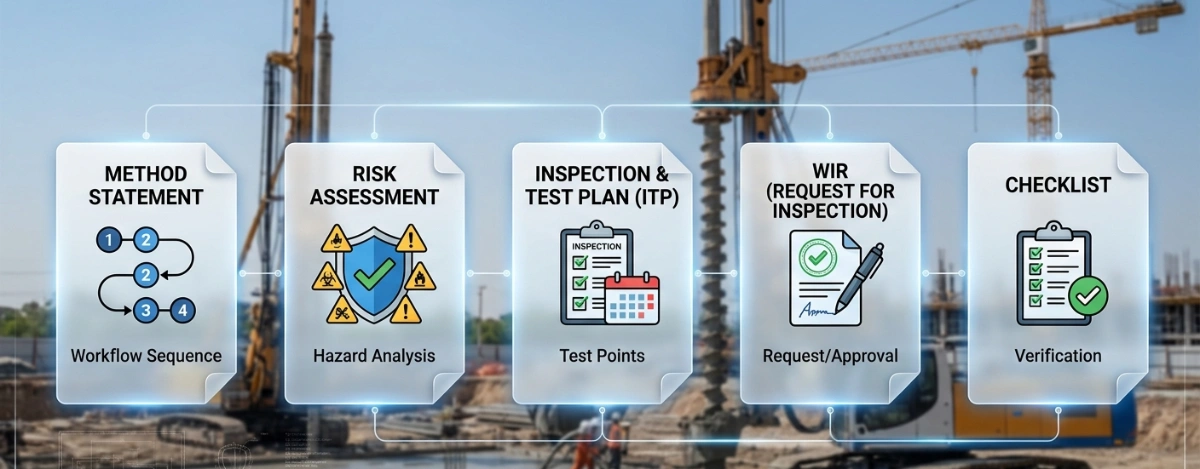
This Inspection and Test Plan is associated with the Method Statement: Fixing and Tying of Vertical Reinforcement Cages for Structural Columns and Shear Walls method statement, which describes the step-by-step construction sequence, resources, materials, equipment, safety controls, and environmental controls for this activity.
View the Method Statement: Fixing and Tying of Vertical Reinforcement Cages for Structural Columns and Shear Walls method statement →Continue with related inspection, method statement, article, and checklist resources.