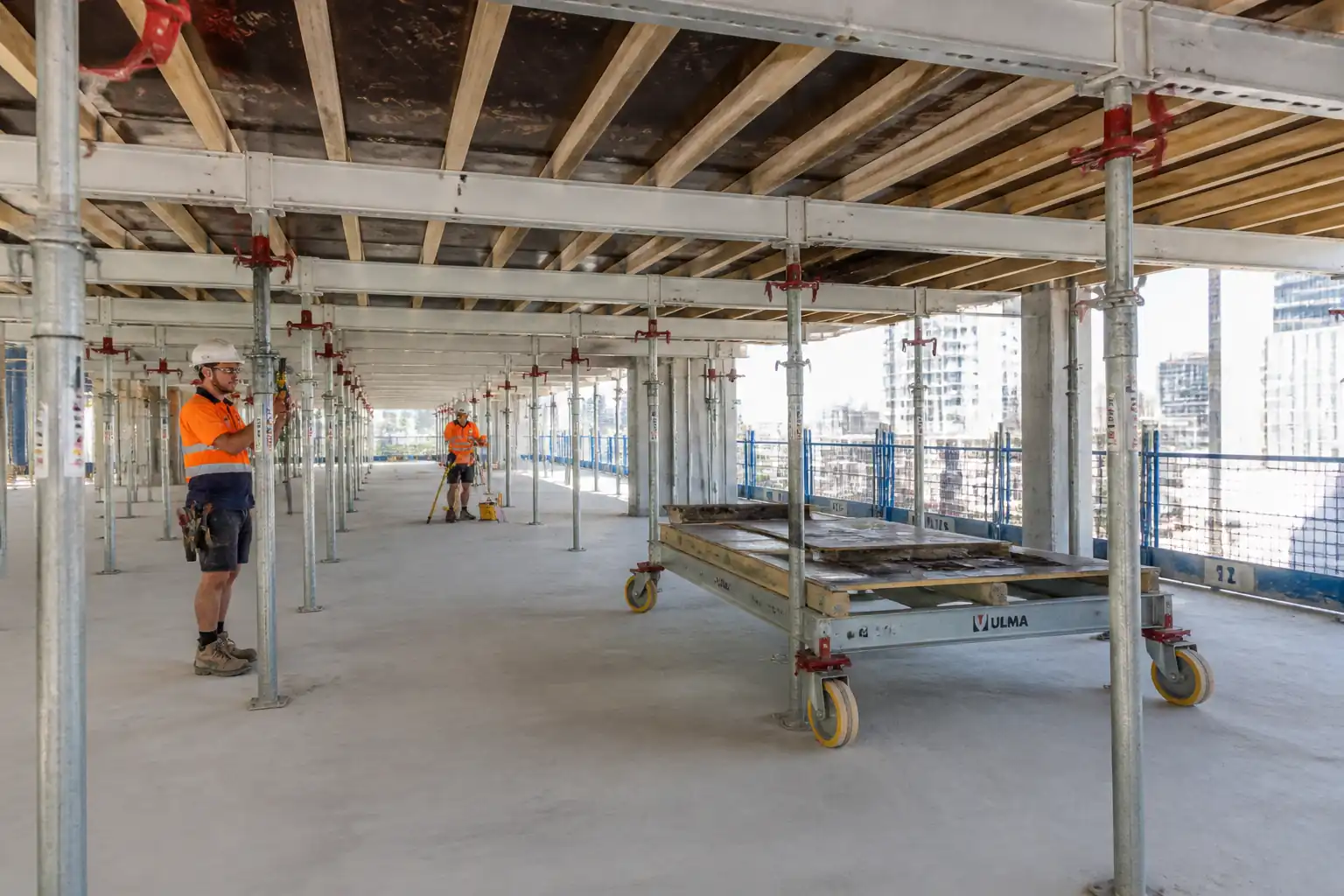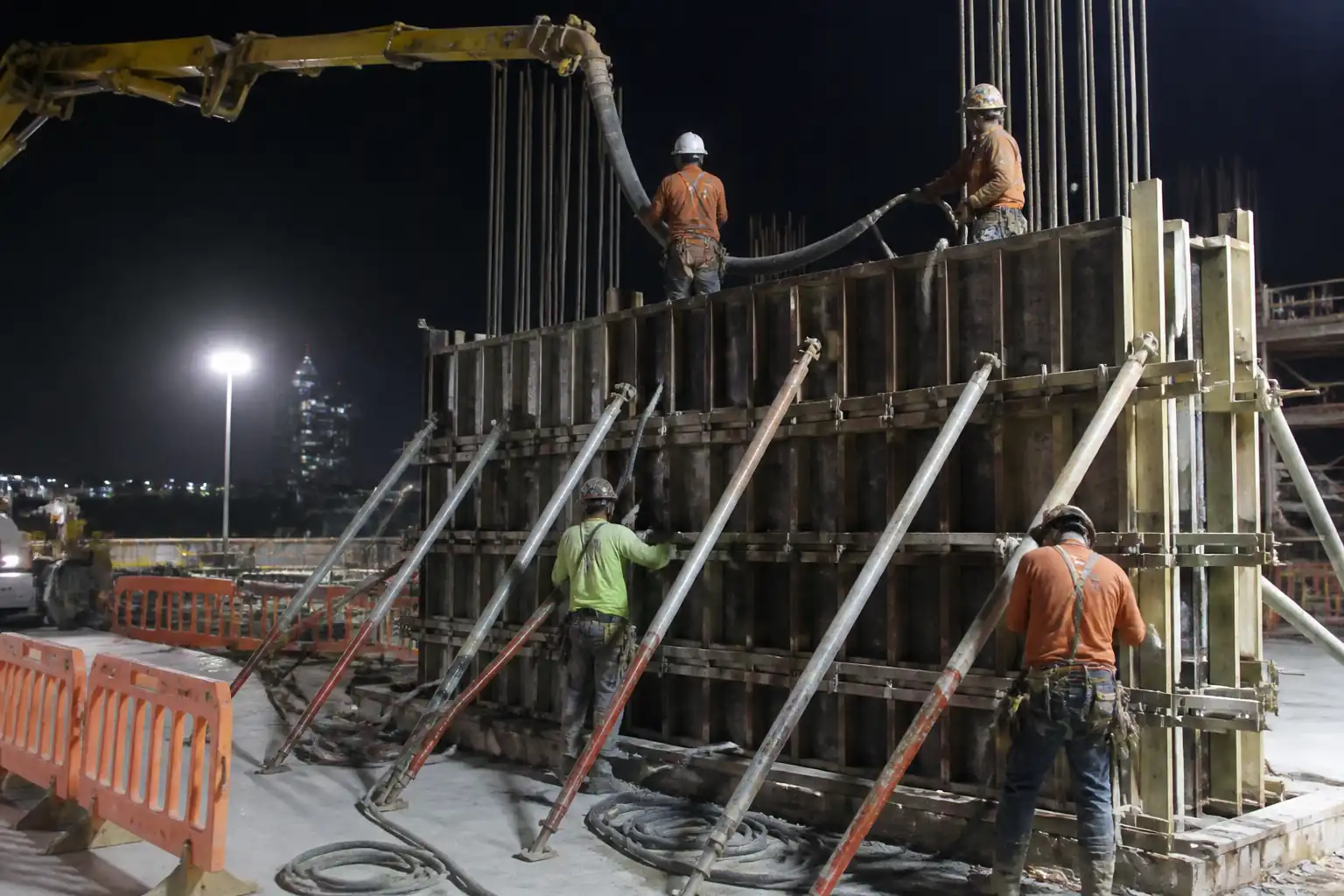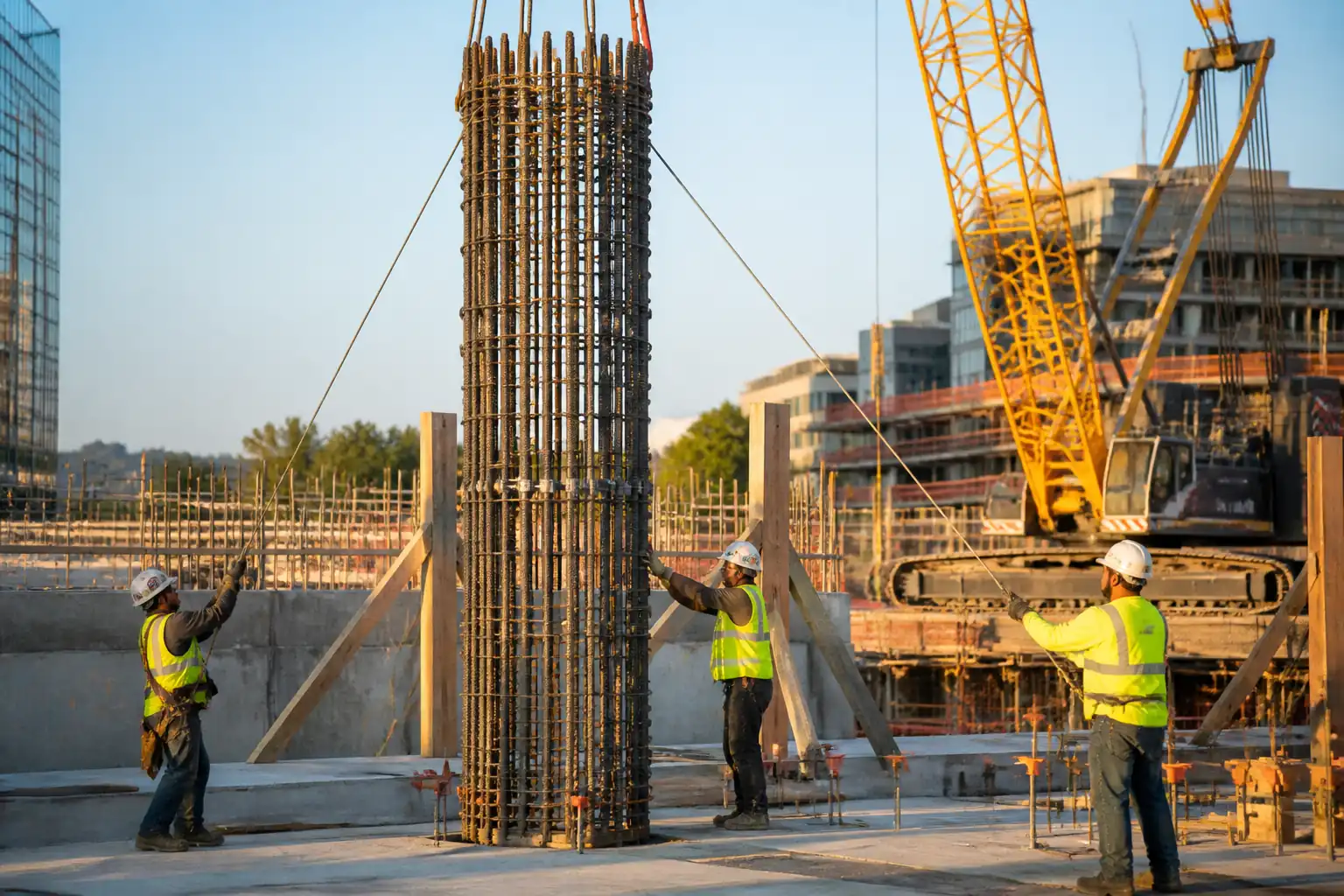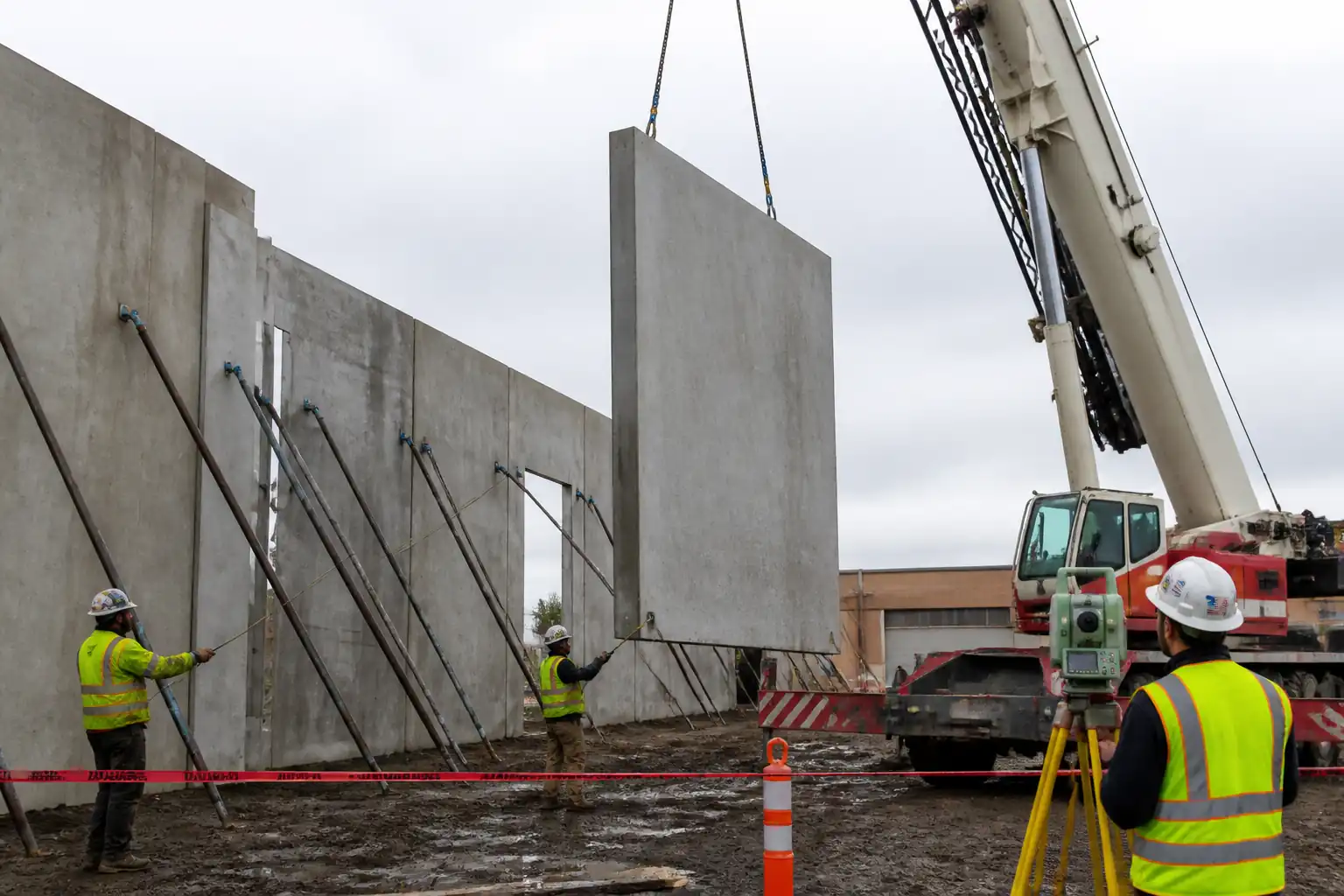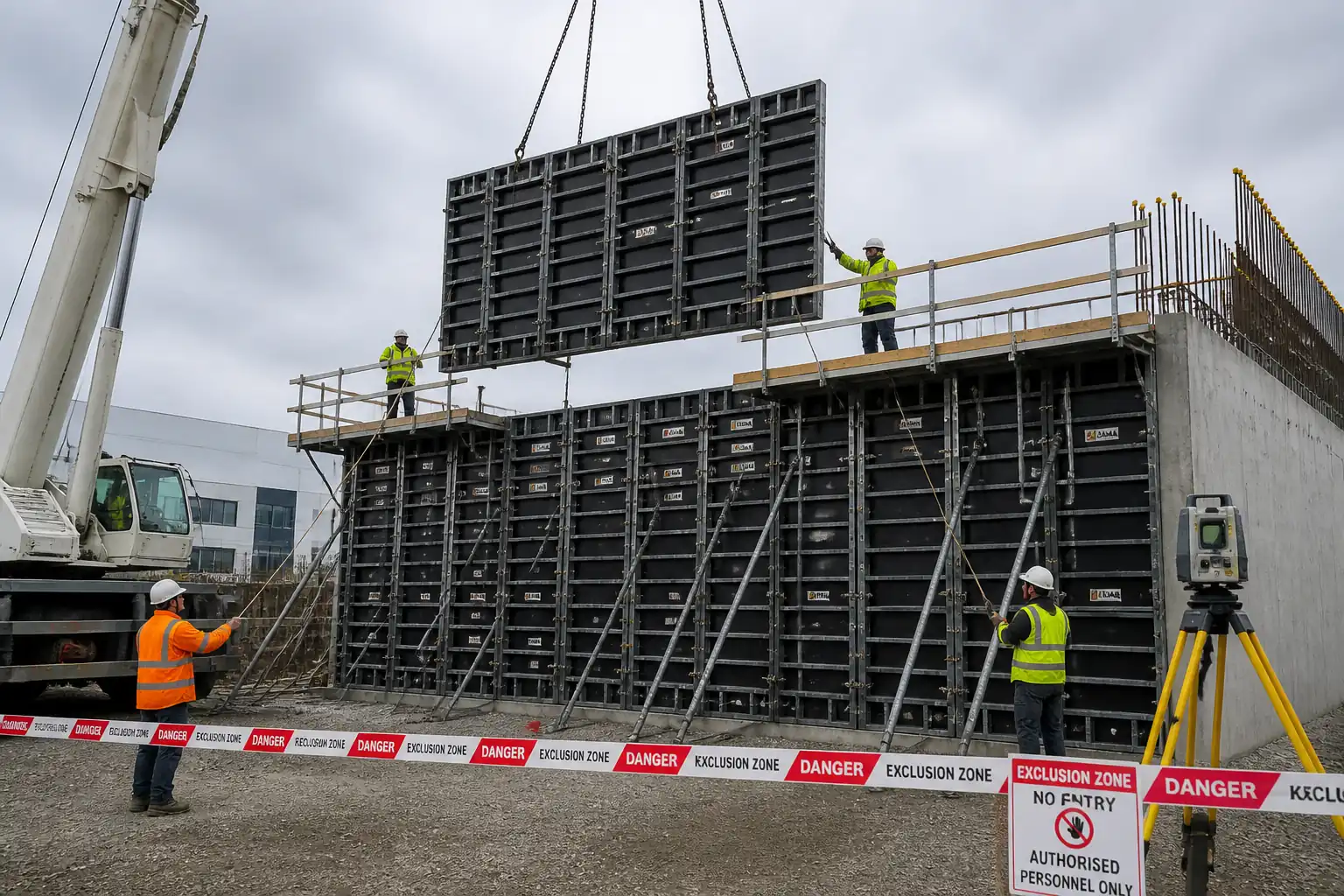

Inspection and Test Plan for Method Statement: Assembly and Erection of Heavy Modular Steel/Aluminum Panel Formwork for Retaining and Shear Walls
AI-assisted inspection and test plan connected to a method statement, with PDF and Excel export.
More than a static template
Unlike a downloadable Word or PDF template, this ITP is an AI-assisted editable starting point directly connected to its method statement. Every inspection activity, hold point, and acceptance criterion is structured and ready to adapt to your project.
- AI-assisted customization — Tailor inspection activities and acceptance criteria to your specific project scope.
- Linked method statement — This ITP is connected to the corresponding method statement describing the work sequence.
- Multiple export formats — Download as a formatted PDF or editable Excel spreadsheet.
- Editable starting point, not a final document — Review and verify all content against your project specifications and standards before use.
What you can customize
When you save this ITP to your account, every inspection row becomes editable. You can add, remove, or modify:
- Inspection activity — Description of what is being inspected.
- Inspection type — Hold point (H), Witness point (W), Review (R), or Monitor (M).
- Responsibility — Contractor, subcontractor, engineer, or client.
- Frequency — How often the inspection occurs.
- Acceptance criteria — Referenced standard or specification requirement.
- Records — Forms, test reports, or checklists required as evidence.
Why this ITP is used
To ensure erected formwork meets safety, dimensional, and structural integrity requirements prior to concrete placement.
Who uses this inspection and test plan
QA/QC engineers, site engineers, formwork supervisors, TWC, HSE officers, and client representatives.
When this ITP is prepared and submitted
From receiving components through pre-pour checks and immediate post-pour stability verification.
Who receives or approves this ITP
Client/Engineer for approval before works commence.
Inspection scope
Materials, lifting equipment, setting out, coupling torque, gaskets, walers, props/anchors, tie spacing, alignment, thickness, and pre-pour integrity.
Typical hold, witness, and review points
HP-01 Pre-pour integrity; WP-01 Monitoring during pour; Witness torque and anchor tests as specified.
Typical inspection records
Checklists, torque logs, survey reports, anchor test reports, calibration certificates, permits, OEM manuals, photographic records.
Important approval note
This ITP is an AI-assisted editable starting point, not a pre-approved document. Before use on any project, all inspection activities, hold points, and acceptance criteria must be reviewed and approved by the relevant parties (superintendent, principal contractor, or client representative) in accordance with your contract and project quality plan.
Always verify acceptance criteria against your applicable drawings, specifications, and regulatory requirements. Hold points must be confirmed with the relevant authority before work proceeds past that point.
Inspection and test plan
| Activity | Inspection / Test | Acceptance Criteria | Responsibility | Record |
|---|---|---|---|---|
| Material receiving inspection (panels, ties, clamps, walers) | Random dimensional checks | Undamaged; certificates valid; no deformation >2 mm over 2 m | QA/QC Engineer | Receiving ITR, photos |
| Rigging and lifting gear verification | N/A | In-date inspection; WLL adequate; tags present | Appointed Person / HSEO | Rigging register |
| Setting out and base/kicker level | Instrument readings | Line/level within drawings; base level ±5 mm | Site Engineer / Surveyor | Survey report |
| First panel plumb and anchorage | Anchor verification | Plumb within 6 mm/3 m; anchors per design | Site Engineer / QA/QC | Checklist; photos |
| Panel coupling/clamp torque | Calibrated wrench | OEM torque (e.g., 70–120 N·m) [Verify] | Formwork Supervisor / QA/QC | Torque log |
| Gasket/seal installation | Compression observation during closure | Continuous; 30–50% compression [Verify] | QA/QC | Checklist; photos |
| Walers/strongbacks installation | Spot torque | Spacing and fixity per design/OEM | Supervisor / QA/QC | Torque log; checklist |
| Push–pull props and anchors | Pull test if specified | Prop WLL adequate; anchors pass test (1.25–1.5× service) [Verify] | TWC / QA/QC | Anchor test report |
| Tie-rod installation and spacing | Torque/tension spot check if specified | Spacing per drawings; full thread engagement ≥1×dia beyond nut | QA/QC / Site Engineer | Tie log; sketch |
| Wall thickness and spacers | Gauges/spacers | ±10 mm of nominal [Verify] | QA/QC | Inspection sheet |
| Line and plumb final survey | Instrument readings | Plumb 6 mm/3 m; line ≤5 mm/10 m [Verify] | Surveyor / QA/QC | Survey report |
| Pre-pour integrity and pressure check (HP-01) | Calcs vs OEM charts; torque logs | Predicted pressure ≤ allowable; pour rate limit set and briefed | TWC / QA/QC / Site Engineer | HP-01 ITR; calc sheet |
| Monitoring during pour (WP-01) | Observe deflection/leakage | No progressive bulging; leakage controlled; rate not exceeded | Supervisor / HSEO / QA | Pour log; observations |
| Post-pour stability check | Instrument as needed | Form stable; no unauthorised release of ties/props | Supervisor / QA | Post-pour checklist |
This table is a read-only public reference. Download the PDF or Excel version, or customize this ITP to edit it for your project.
Frequently asked questions
Related method statement
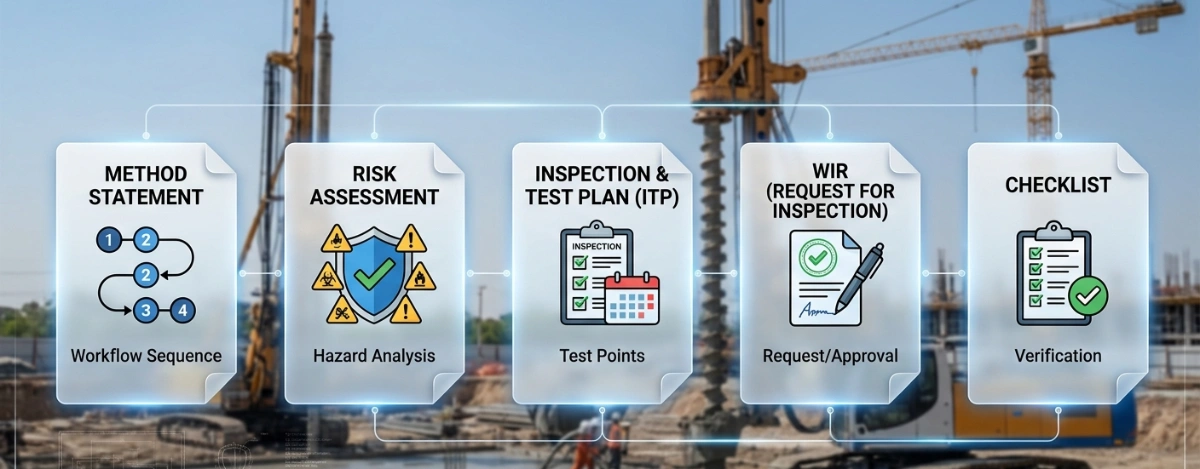
This Inspection and Test Plan is associated with the Method Statement: Assembly and Erection of Heavy Modular Steel/Aluminum Panel Formwork for Retaining and Shear Walls method statement, which describes the step-by-step construction sequence, resources, materials, equipment, safety controls, and environmental controls for this activity.
View the Method Statement: Assembly and Erection of Heavy Modular Steel/Aluminum Panel Formwork for Retaining and Shear Walls method statement →Continue with related inspection, method statement, article, and checklist resources.