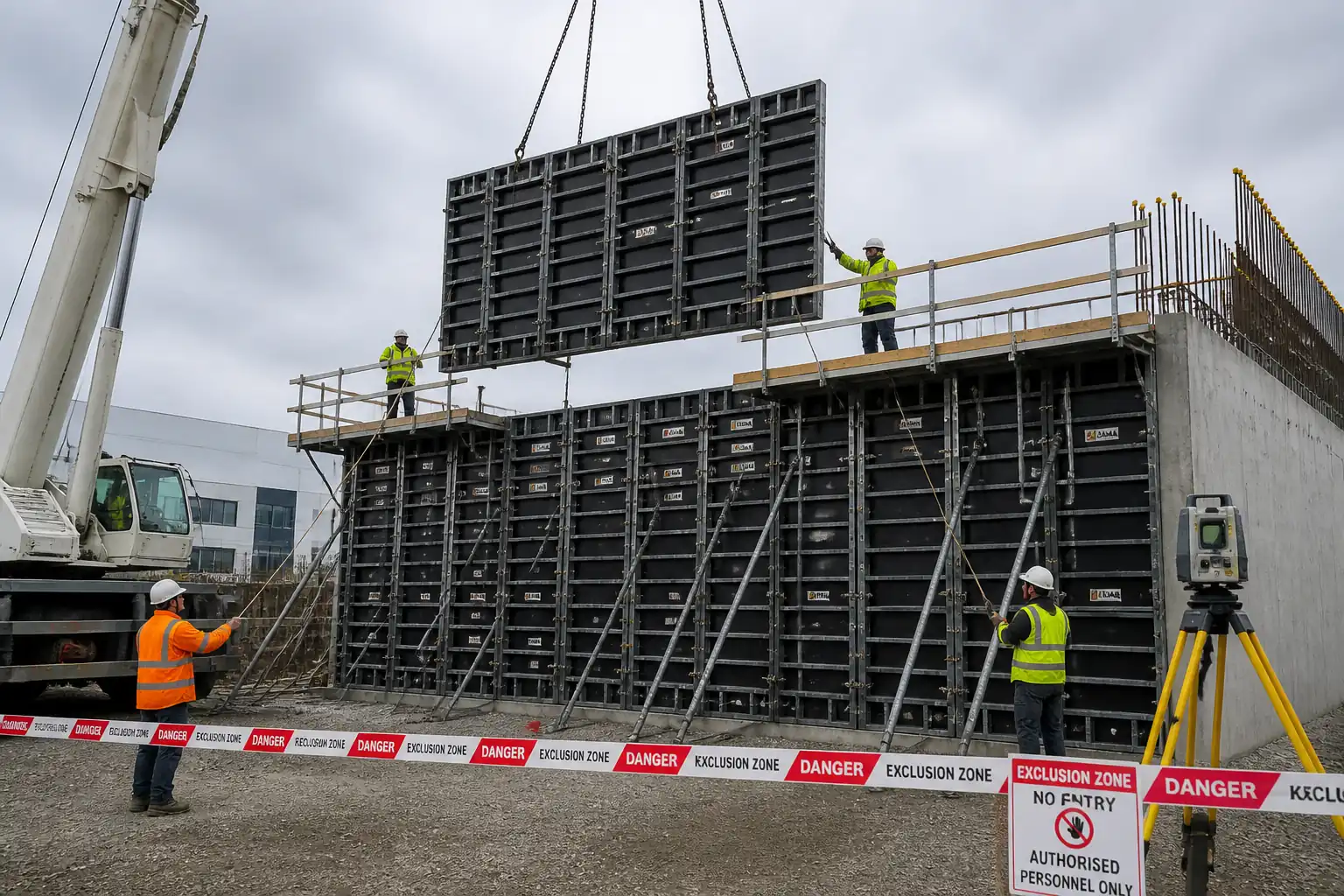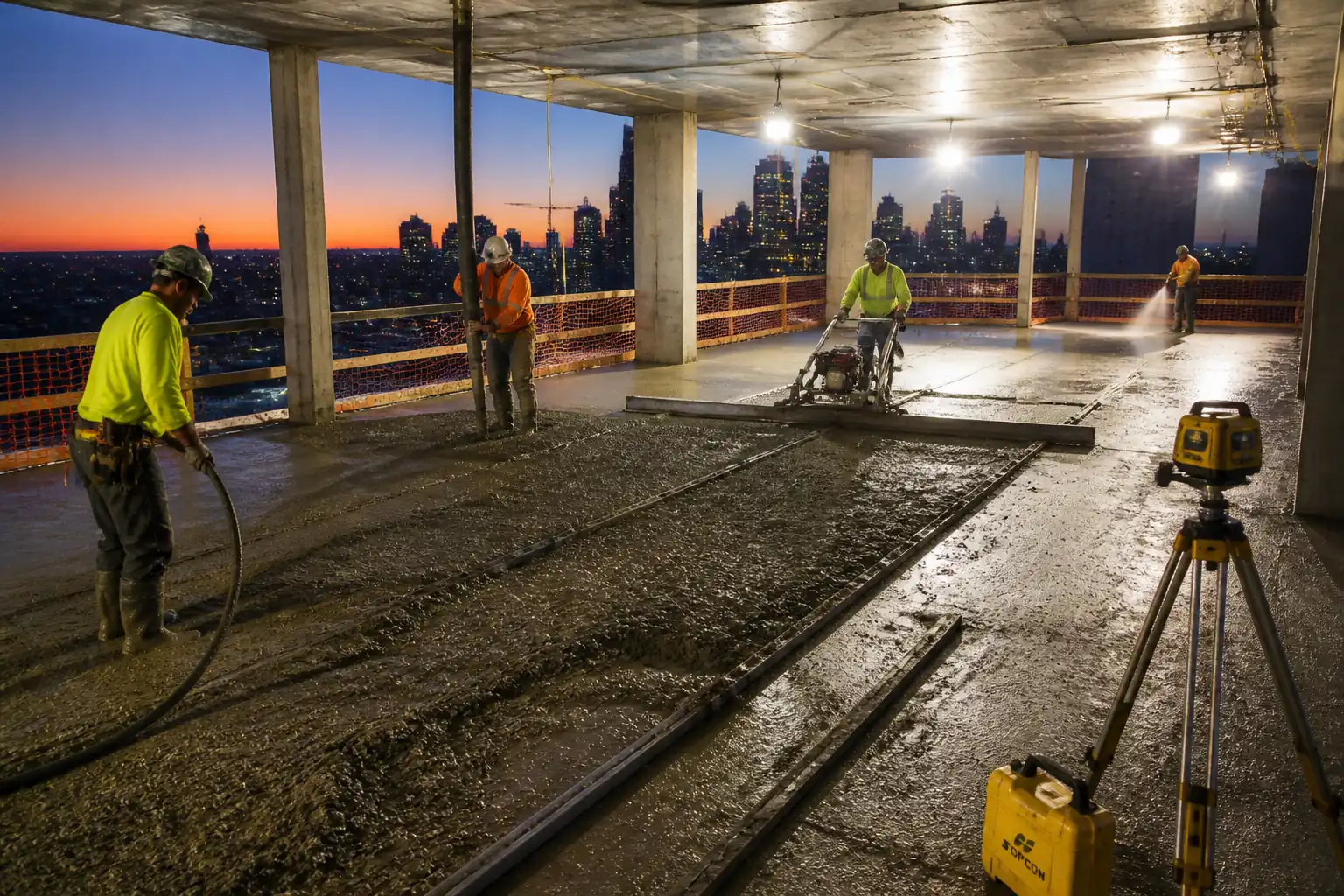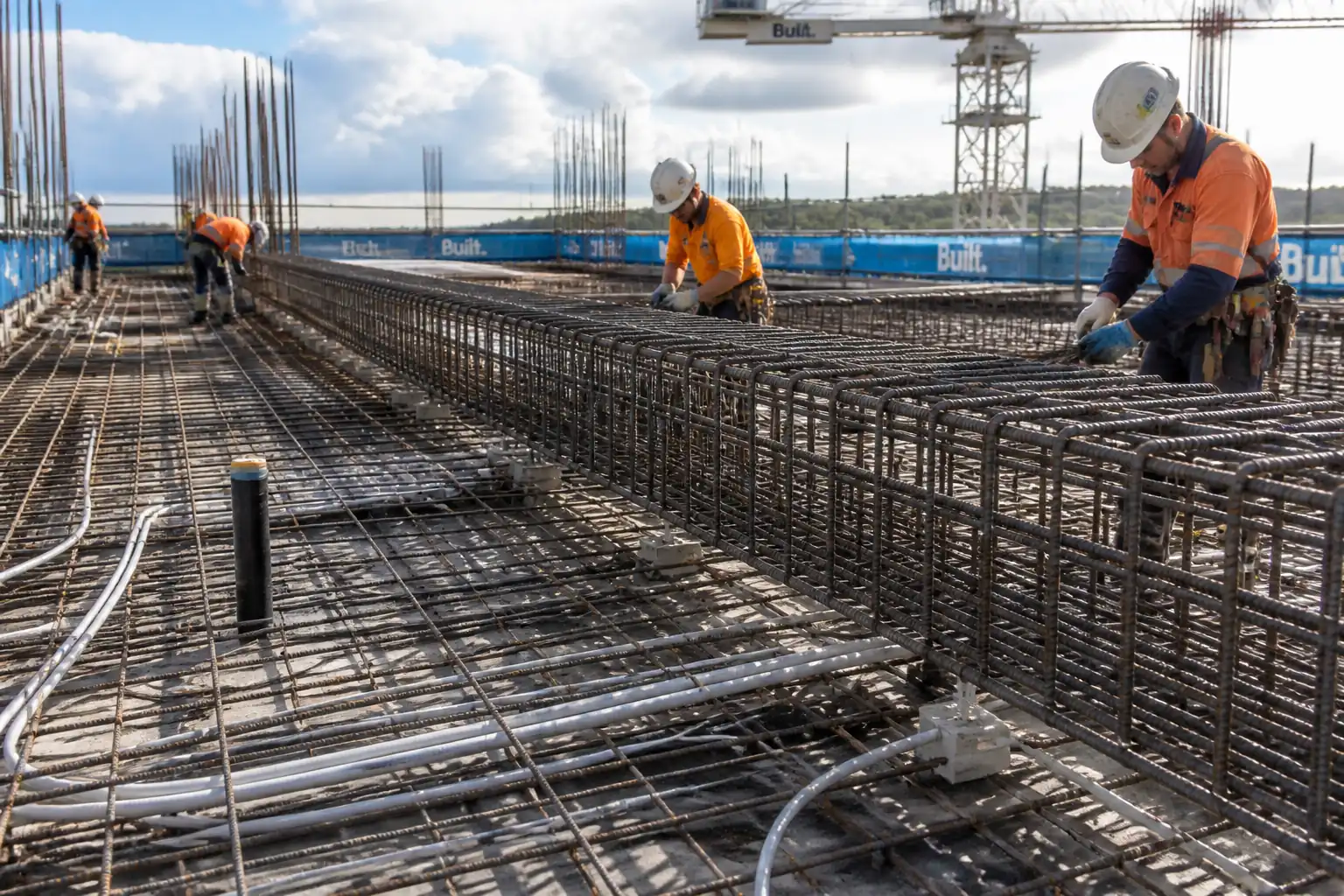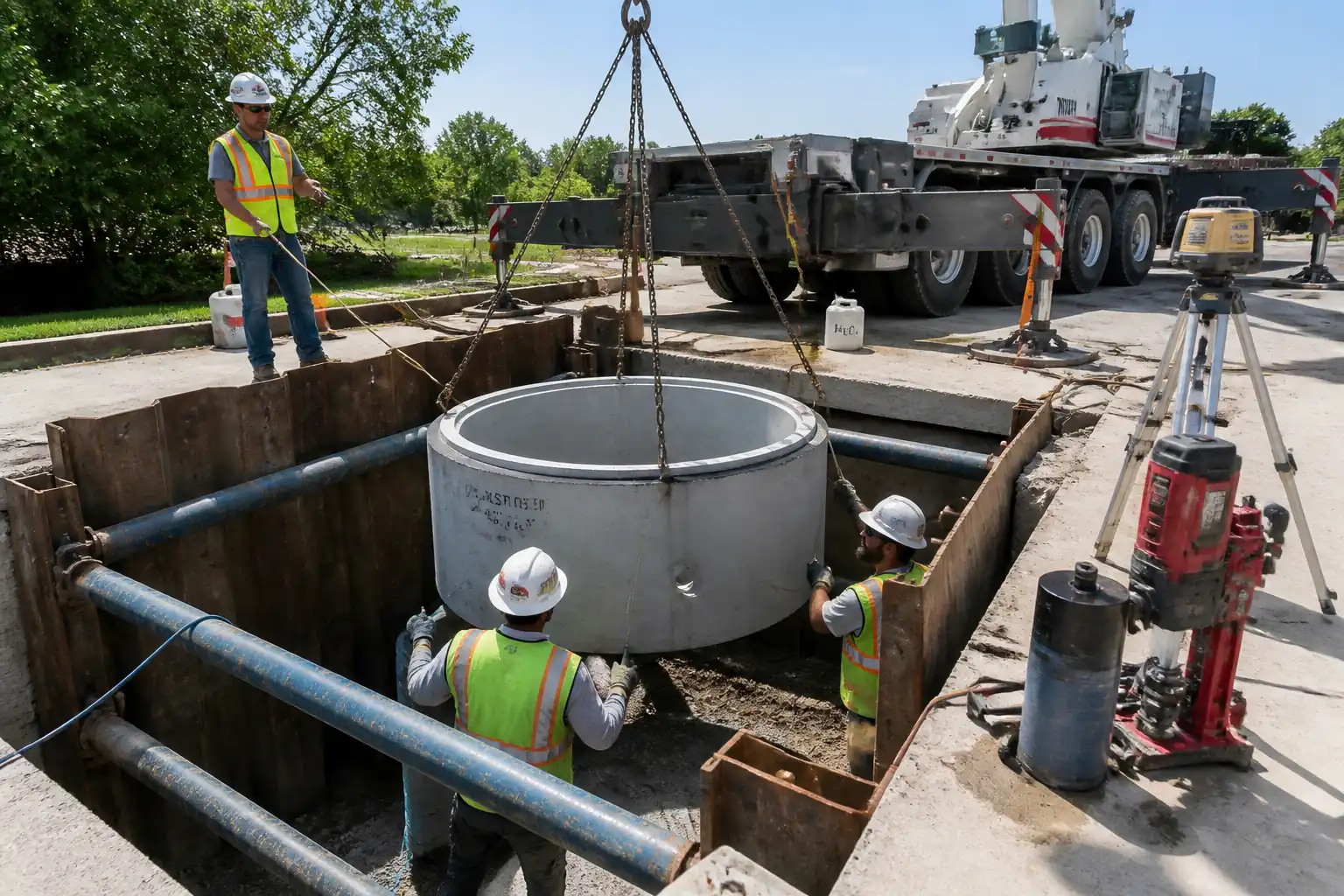

Inspection and Test Plan for Method Statement: Erection and Shifting of Modular Slab Soffit Table Formwork Systems
AI-assisted inspection and test plan connected to a method statement, with PDF and Excel export.
More than a static template
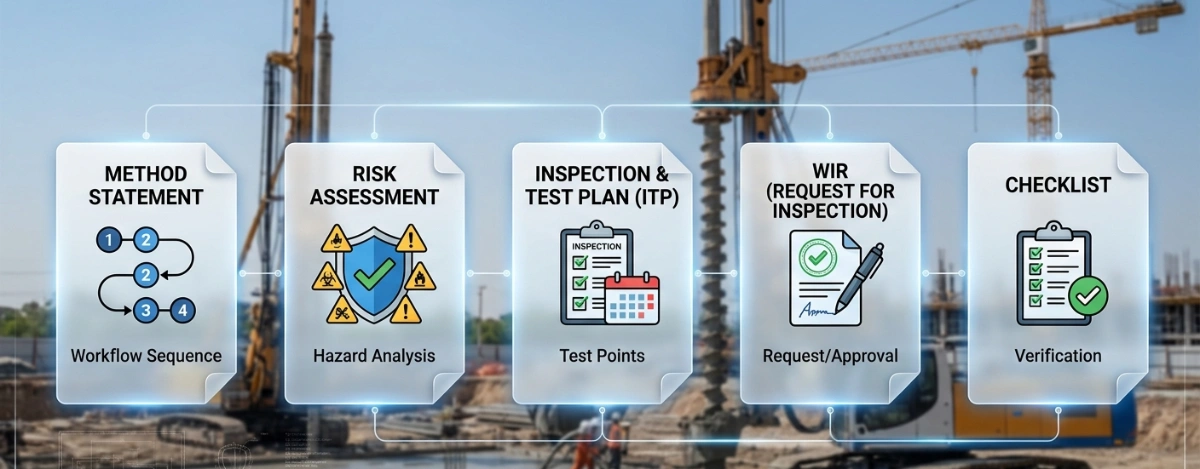
Unlike a downloadable Word or PDF template, this ITP is an AI-assisted editable starting point directly connected to its method statement. Every inspection activity, hold point, and acceptance criterion is structured and ready to adapt to your project.
- AI-assisted customization — Tailor inspection activities and acceptance criteria to your specific project scope.
- Linked method statement — This ITP is connected to the corresponding method statement describing the work sequence.
- Multiple export formats — Download as a formatted PDF or editable Excel spreadsheet.
- Editable starting point, not a final document — Review and verify all content against your project specifications and standards before use.
What you can customize
When you save this ITP to your account, every inspection row becomes editable. You can add, remove, or modify:
- Inspection activity — Description of what is being inspected.
- Inspection type — Hold point (H), Witness point (W), Review (R), or Monitor (M).
- Responsibility — Contractor, subcontractor, engineer, or client.
- Frequency — How often the inspection occurs.
- Acceptance criteria — Referenced standard or specification requirement.
- Records — Forms, test reports, or checklists required as evidence.
Why this ITP is used
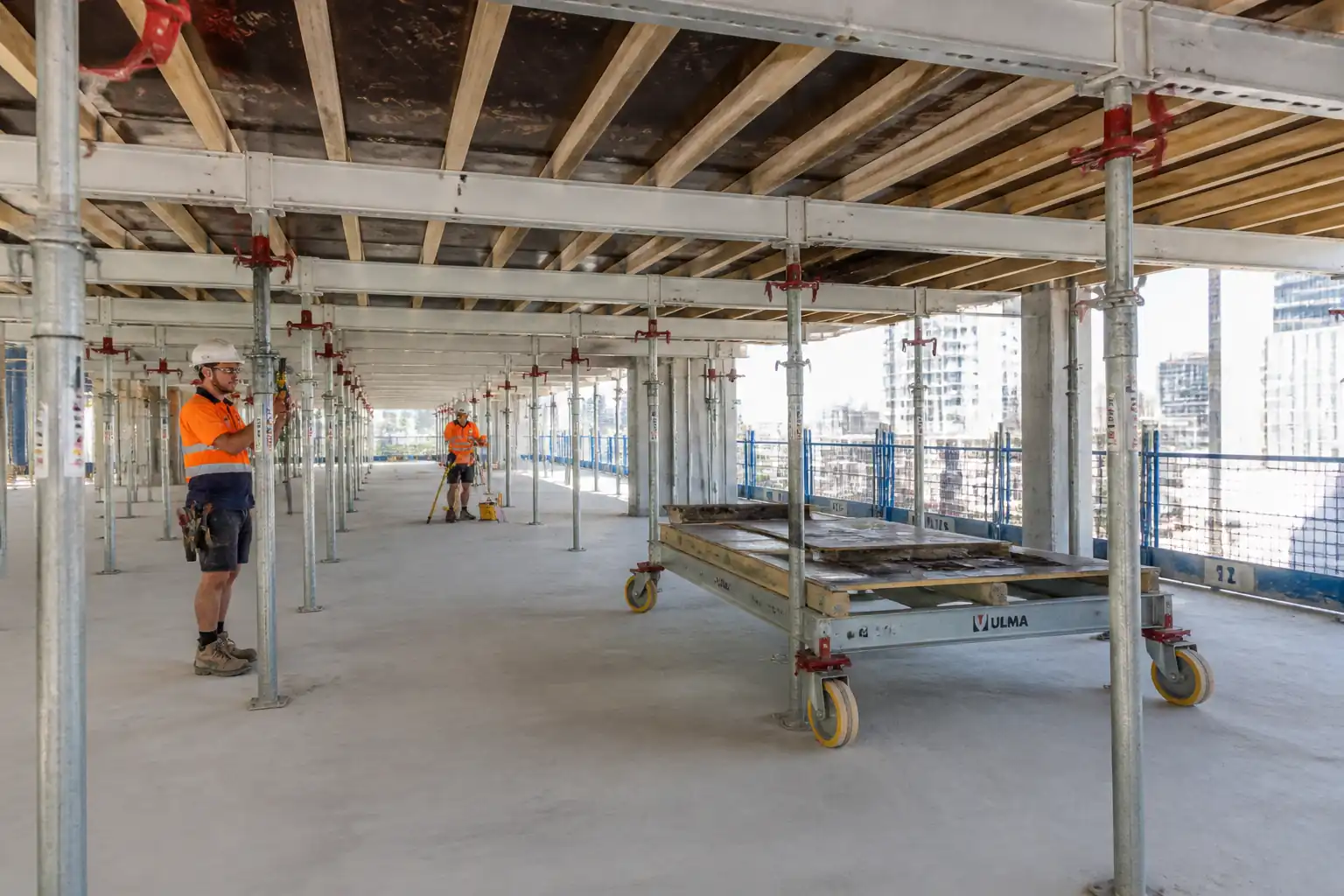
To verify that table formwork and associated temporary works comply with the TWD and safety standards at each critical stage.
Who uses this inspection and test plan
QA/QC engineers, TWC, Site Engineers, Formwork Supervisors, HSE, and the Lifting Supervisor.
When this ITP is prepared and submitted
From receipt of materials through assembly, pre-pour, early striking, table shift, reset, and final striking/hand-over.
Who receives or approves this ITP
The ITP is usually submitted to the client representative, consultant, resident engineer, or project management consultant for review and approval before the related work activity starts.
Inspection scope
Design approvals, component condition, geometry/spacing, level/camber, edge protection compliance, permits to load/strike, and controlled shifting/flying.
Typical hold, witness, and review points
HOLD: Pre-pour; Early strike; Final strike. WITNESS: During pour; Table shifting/flying.
Typical inspection records
Approved TWD, ITRs, permits, calibration certificates, lifting certificates, cube/maturity results, checklists, NCRs, and closeout dossier.
Important approval note
This ITP is an AI-assisted editable starting point, not a pre-approved document. Before use on any project, all inspection activities, hold points, and acceptance criteria must be reviewed and approved by the relevant parties (superintendent, principal contractor, or client representative) in accordance with your contract and project quality plan.
Always verify acceptance criteria against your applicable drawings, specifications, and regulatory requirements. Hold points must be confirmed with the relevant authority before work proceeds past that point.
Inspection and test plan
| Activity | Inspection / Test | Acceptance Criteria | Responsibility | Record |
|---|---|---|---|---|
| TWD Approval and Briefing | Review and sign-off of calculations/drawings; team briefing | Approved documents; personnel briefed; Temporary Works Register updated | TWC / TWD / PM | Approved TWD; briefing attendance; TWR entry |
| Material/Component Receipt Inspection | Visual check; verify certificates and WLL; check drop-head function | Conforming components; no damage/deformation; certificates present | QA/QC Engineer / Formwork Foreman | Material receiving ITR; photos |
| Setting Out Verification | Check gridlines and levels | Within ±5 mm of control; elevations confirmed | Site Engineer / QA | Survey records |
| Table Pre-Assembly | Check primary/secondary spacings; plywood thickness; screw spacing | As per TWD; screws: edges ~150 mm, field ~300 mm [Verify] | Formwork Foreman / QA | Assembly checklist; ITR |
| Prop/Drop-Head Layout | Measure grid spacing; plumb check; base/sole boards | Spacing per TWD; plumb ≤1/200; base fully bearing | Site Engineer / QA | Prop layout ITR |
| Level/Camber Set | Laser level survey; camber checks | Level ±5 mm/3 m; camber per TWD (typ. L/500) | Site Engineer | Level report |
| Edge Protection Installation | Check top/mid rails, toe boards, fixings | EN 13374/OSHA-compliant; height 1.0–1.2 m; toe ≥150 mm | Edge Protection Supervisor / HSE / QA | Edge protection ITR |
| Pre-Pour Inspection (Hold Point) | Complete ITP checklist; release agent; closures; access | All previous ITP points closed; Permit to Load issued | QA/QC Engineer / TWC | Pre-pour ITR; PTL |
| Monitoring During Pour | Observe deflection and stability | Deflections within TWD; no distress | Formwork Foreman / Site Engineer | Pour log |
| Early Strike Authorization (Hold Point) | Review cube/maturity results; inspect slab and support | Min. concrete strength for early strike met (typ. ≥10 MPa) [Verify]; re-shoring installed | TWC / QA/QC / Structural Engineer | Permit to Strike; test results |
| Table Shifting/Rolling or Flying | Route clearance; castor capacity; wind speed; exclusion zones | Complies with plan; wind ≤ limit; no unprotected edges | Lifting Supervisor / HSE / QA | Shifting checklist; lifting records |
| Reset Verification in New Bay | Repeat checks of spacing, level, edge protection | Meets Steps 4–8 criteria | QA/QC / Site Engineer | Reset ITR |
| Final Striking and Re-shore Removal (Hold) | Verify target strength and sequence | Strength per TWD/Engineer achieved; safe sequence followed | TWC / QA/QC / Structural Engineer | Final Strike Permit |
| Closeout and Handover | Verify records completeness | All ITRs, permits, certificates filed; NCRs closed | QA/QC / PM | Handover dossier |
This table is a read-only public reference. Download the PDF or Excel version, or customize this ITP to edit it for your project.
Frequently asked questions
Related method statement
This Inspection and Test Plan is associated with the Method Statement: Erection and Shifting of Modular Slab Soffit Table Formwork Systems method statement, which describes the step-by-step construction sequence, resources, materials, equipment, safety controls, and environmental controls for this activity.
View the Method Statement: Erection and Shifting of Modular Slab Soffit Table Formwork Systems method statement →Continue with related inspection, method statement, article, and checklist resources.