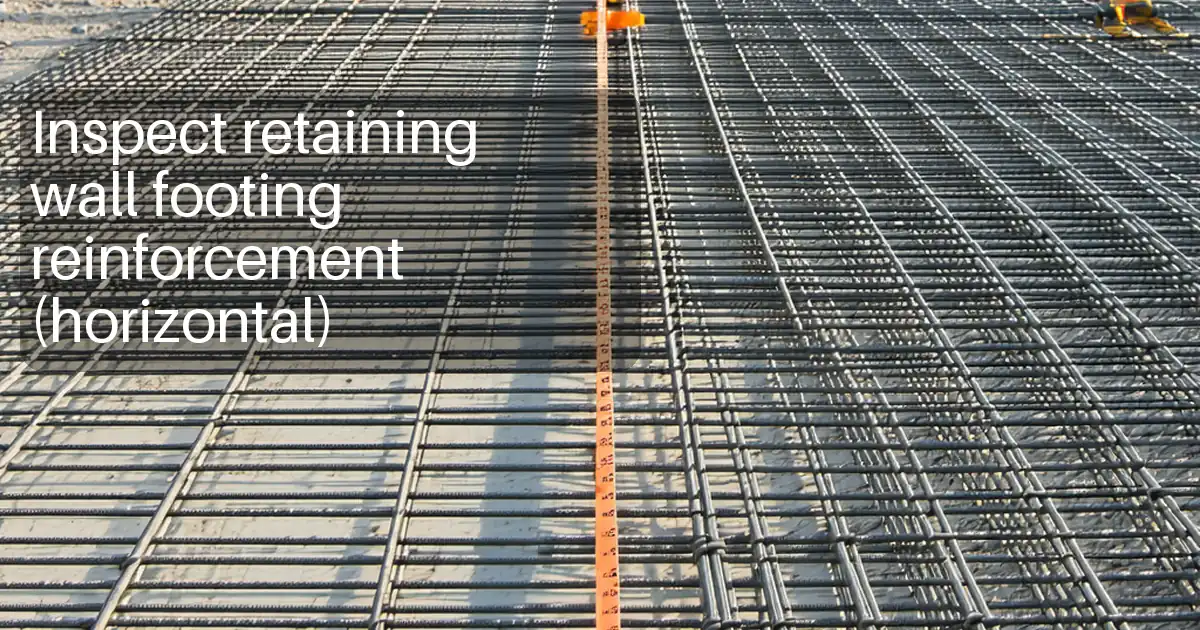
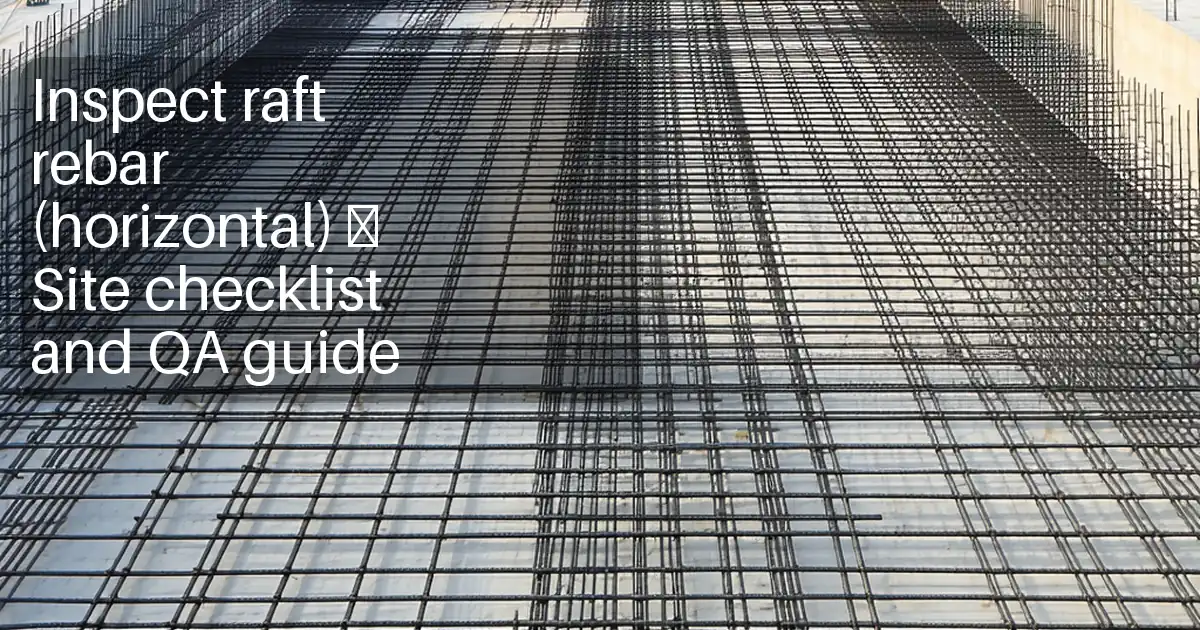
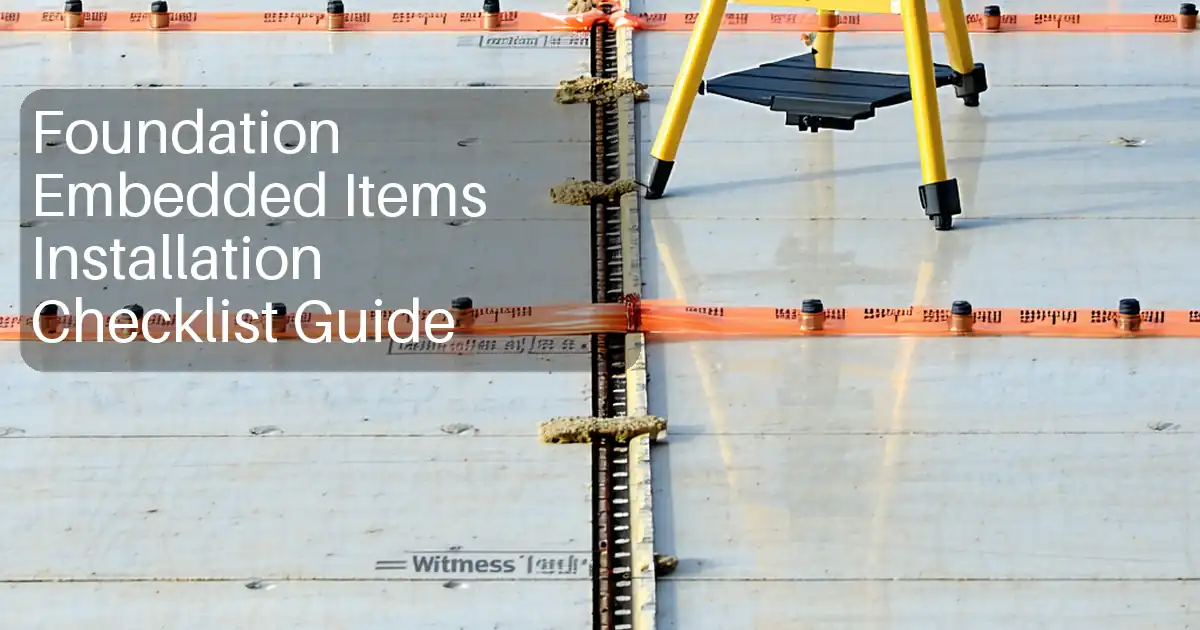
Pile Cap Formwork/Rebar Inspection (Horizontal) Checklist
Definition: Pile Cap Formwork/Rebar Inspection (Horizontal) provides site teams a focused, pre-pour verification of formwork geometry, reinforcement, cover, chamfers, sleeves, and embeds, excluding concrete placement activities.
- Verify dimensions, levels, and stability against approved drawings and specifications.
- Confirm reinforcement size, spacing, laps, and concrete cover with measurable evidence.
- Check chamfers, sleeves, blockouts, and embeds for position and orientation compliance.
- Interactive, commentable checklist with export and QR code authentication.
Pile Cap Formwork/Rebar Inspection (Horizontal) ensures a controlled, pre-pour verification of the pile cap’s formwork geometry and reinforcement. This horizontal inspection focuses on formwork dimensional checks, rebar cover verification, and rigorous confirmation of chamfers, sleeves, blockouts, and embedded items. It excludes concrete works, curing, and pour operations. By concentrating on reinforcement layout, laps, couplers, and supports, plus formwork stability and tightness, you prevent misalignment, honeycombing risk from gaps, insufficient cover, and clashes caused by poorly coordinated embeds. The outcome is a compliant, build-ready pile cap that meets approved project specifications and authority requirements, reduces rework, and protects downstream schedule. Use this checklist to record measurements, photos, batch numbers, and sign-offs, so findings are traceable and auditable. Begin in interactive mode to tick items, add comments, attach evidence, and export your record as PDF/Excel with a QR link for fast retrieval.
- Control risk before concrete by confirming geometry, stability, and reinforcement readiness. Inspect plan dimensions, soffit levels, bar sizes, spacing, laps, and cover, plus chamfers, sleeves, and embeds. Capture photos, measurements, and approvals to create a defensible, traceable record aligned with project specifications.
- Improve coordination and avoid rework by verifying anchor bolts, plates, ducts, and blockouts with survey tools and templates. Validate positions, projections, and orientations relative to grid lines and finished surfaces, preventing clashes with reinforcement and MEP penetrations before closing the formwork.
- Interactive online checklist with tick, comment, and export features secured by QR code. Use structured evidence fields to attach geo-tagged photos, cover readings, torque logs, and survey reports, then instantly share the signed package with stakeholders for rapid release to concrete operations.
- Consistent acceptance cues help teams decide quickly: typical dimensional tolerances, cover targets, spacing checks, and verticality limits. When contract tolerances differ, the checklist prompts reference to approved project specifications and authority requirements, ensuring compliance without guesswork across multiple crews and shifts.
Pre-Inspection & Documents
Survey & Setout
Formwork Geometry & Stability
Rebar Layout & Cover
Chamfers, Sleeves & Embeds
Access, Protection & Sign-off
Dimensional Control and Stability of Horizontal Formwork
Dimensional accuracy underpins a durable pile cap. Start by tying the survey grid to reliable control and confirming the internal formwork dimensions against drawings. Use a total station for setout and a steel tape for inside-face checks, targeting ±10 mm unless the project dictates tighter limits. Confirm soffit elevation and uniformity with an auto level; a consistent base prevents cover variation and rebar misalignment. Side forms must be plumb and square; deviations greater than 3 mm per metre can cause finishing issues and embed misfits. Tight joints and continuous liners limit grout loss and honeycombing risk. Finally, inspect bracing, walers, and ties for a coherent load path so the assembly resists construction loads and vibration from reinforcement fixing. Real-world tip: take corner-to-corner diagonal checks to quickly reveal racking before it becomes a costly rework.
- Tie grid setout to verified control points.
- Aim for ±10 mm internal dimensions unless specified.
- Keep verticality within 3 mm per metre.
- Seal gaps over 3 mm to prevent grout loss.
- Document braces, ties, and walers with clear photos.
Reinforcement Arrangement, Support, and Concrete Cover
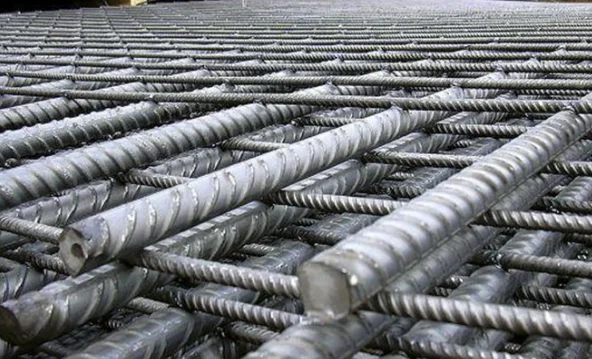
Rebar layout errors compound quickly in pile caps, so verify bar marks, diameters, and spacing directly against the bar bending schedule. Measure actual spacing; keep it within ±5 mm. Achieve specified concrete cover using approved, non-absorbent spacers and chairs that won’t compress on the soffit. Validate both bottom and top cover; inconsistent cover invites durability issues. Check lap splice lengths, staggering, and tie quality per approved project specifications and authority requirements. Where couplers are used, record torque and lot numbers. Stools must maintain the mat separation with minimal deflection during foot traffic. Keep bars clean and free from oil or loose rust so bond is not compromised. A quick cleanliness test is a white rag wipe on random bars; any staining warrants cleaning.
- Match bar marks and spacing to the BBS.
- Use non-absorbent spacers for reliable cover.
- Record cover readings and locations.
- Log coupler torque and batch numbers.
- Keep laps straight, clean, and well-tied.
Chamfers, Sleeves, Blockouts, and Embedded Items
Finishes and fit-up depend on precise detailing. Confirm chamfer strips are the right size and continuous on visible edges. Check sleeves and ducts for diameter, position, and angle; poor alignment creates rework for downstream trades. Blockouts and void formers need firm fixing so they do not drift during handling. For anchor bolts and plates, use templates or jigs to confirm position, projection, and plumb; survey spot checks strengthen the record. Coordinate embeds with reinforcement to maintain minimum clearances and cover per drawings. Cap open sleeves to keep debris out. Document each component with a scale in photos and uniquely identify them to match the drawings.
- Template anchors to control projection and plumb.
- Keep sleeve centerlines within ±10 mm and ±2°.
- Fix and seal blockouts to prevent movement.
- Cap open sleeves to stop debris and water.
- Photo each embed with a visible scale.
How to Use This Horizontal Pile Cap Formwork/Rebar Checklist
- Preparation: gather total station or tape and auto level, rebar gauge, cover meter, spirit level/laser, torque wrench, calibrated camera, marking paint, approved drawings/BBS, and required PPE. Confirm area is accessible and safe.
- Start interactive mode, select project, structure, and pile cap ID. Review scope notes and tolerances per approved project specifications and authority requirements.
- Walk the workface systematically by group (survey, formwork, rebar, embeds). Measure, mark, and photograph each check. Enter readings and tag locations.
- Use comments to flag nonconformances, assign owners and due dates, and attach sketches or annotated photos for clarity.
- Re-verify after corrections. Update statuses from open to closed with new measurements and photos as evidence.
- Export the completed, commentable record as PDF/Excel. Share links with stakeholders and store source files in the project repository.
- Sign-off: capture digital signatures from contractor, QC, and client representative. Archive with QR authentication for rapid retrieval before releasing to concrete operations.
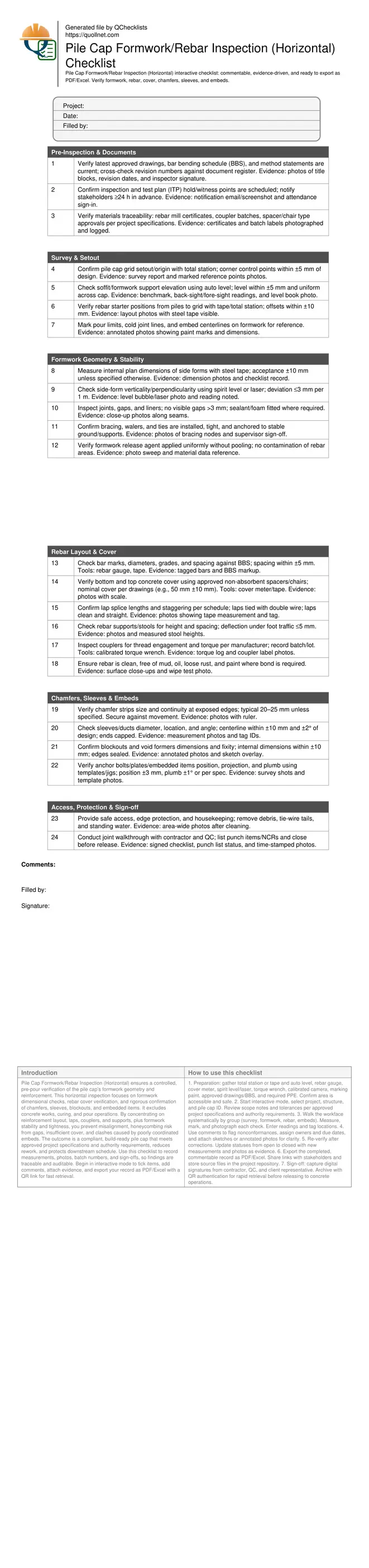
Call to Action
- Start Checklist Tick off tasks, leave comments on items or the whole form, and export your completed report to PDF or Excel—with a built-in QR code for authenticity.
- Download Excel - Pile Cap Formwork/Rebar Inspection (Horizontal)
- Download PDF - Pile Cap Formwork/Rebar Inspection (Horizontal)
- View Image - Pile Cap Formwork/Rebar Inspection (Horizontal)
Cite & Embed
“Pile Cap Formwork/Rebar Inspection (Horizontal) by Quollnet”
with a link to
this source page.

FAQ
Question: What concrete cover should I target for pile caps?
Question: How can I accurately position anchor bolts and plates before the pour?
Question: What is the best way to verify rebar spacing and laps in a congested pile cap?
Question: Can I reuse formwork if there are minor dents or holes?
Related Articles
Broader reading and guidance connected to this checklist topic.



Master Construction Project Cashflow With Cashflowpot
Related Checklists
Keep the workflow moving with nearby templates chosen from similar checklist content.