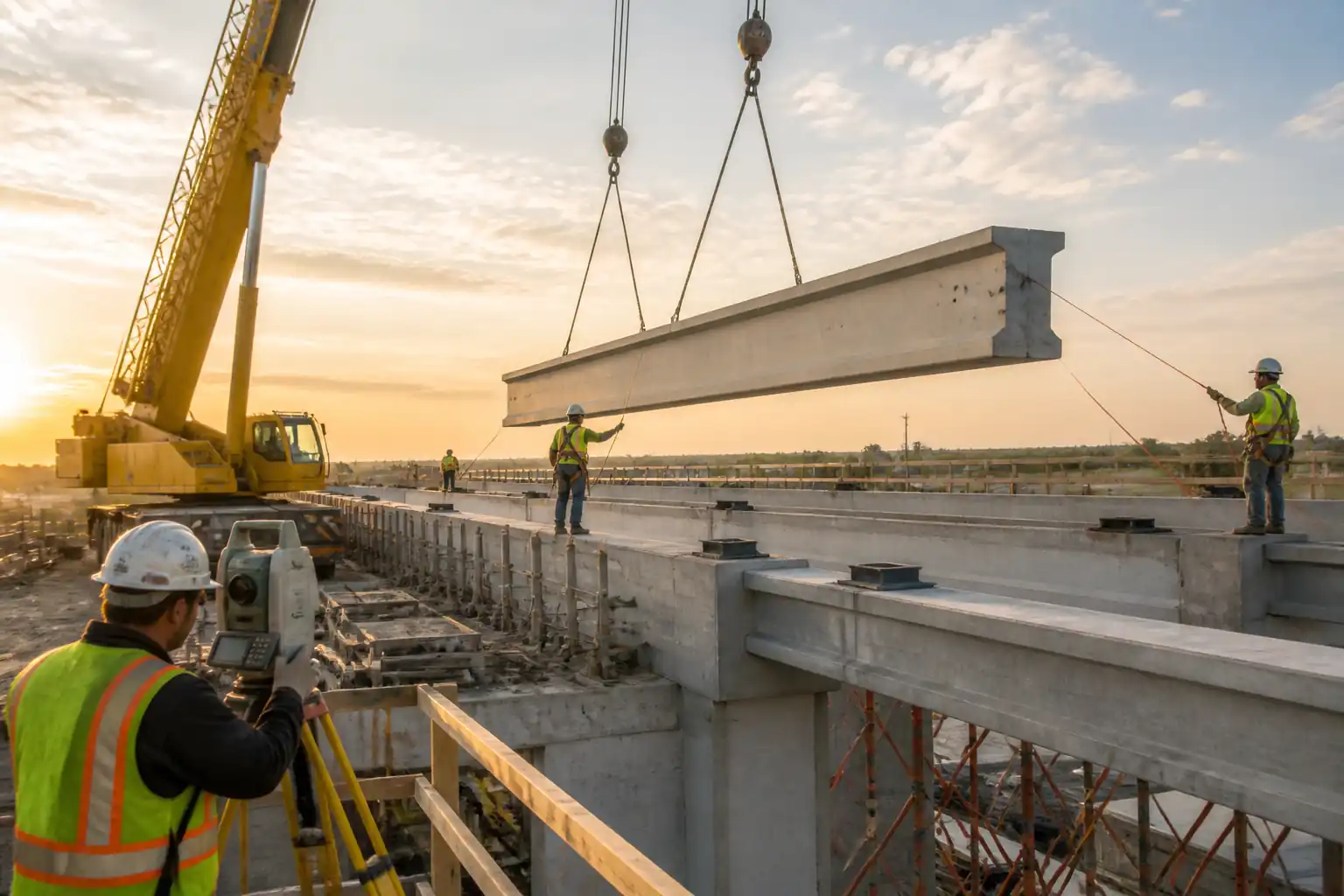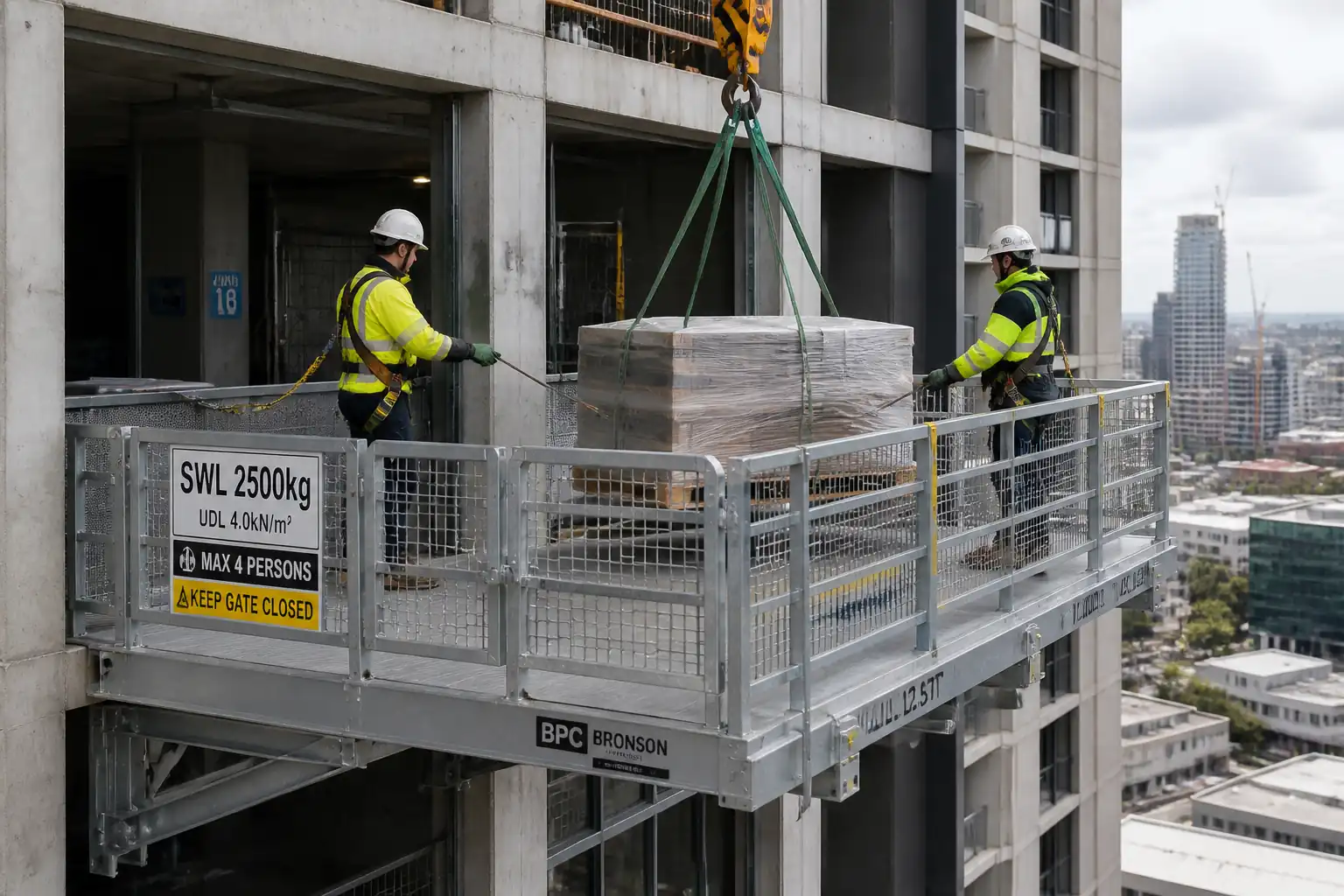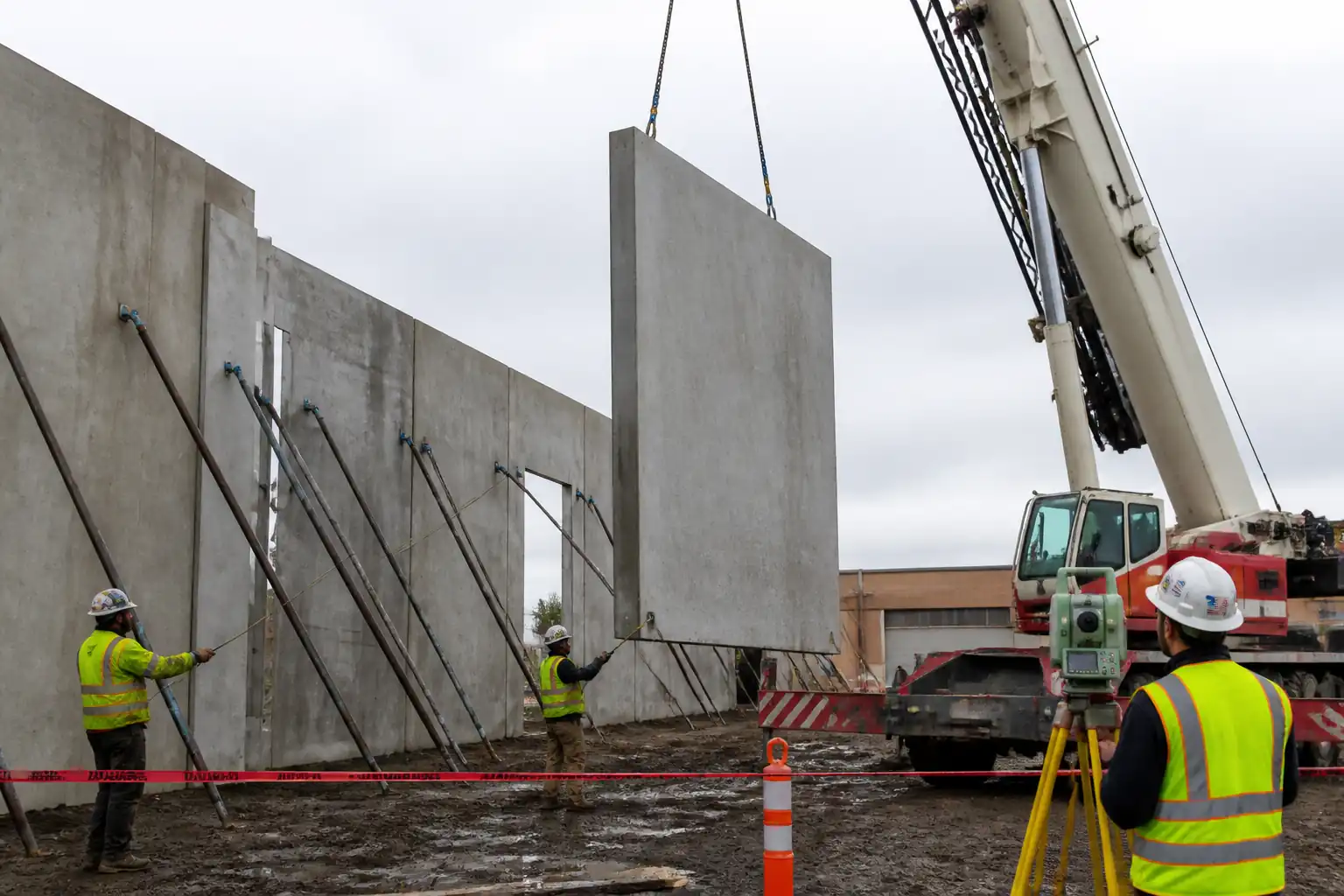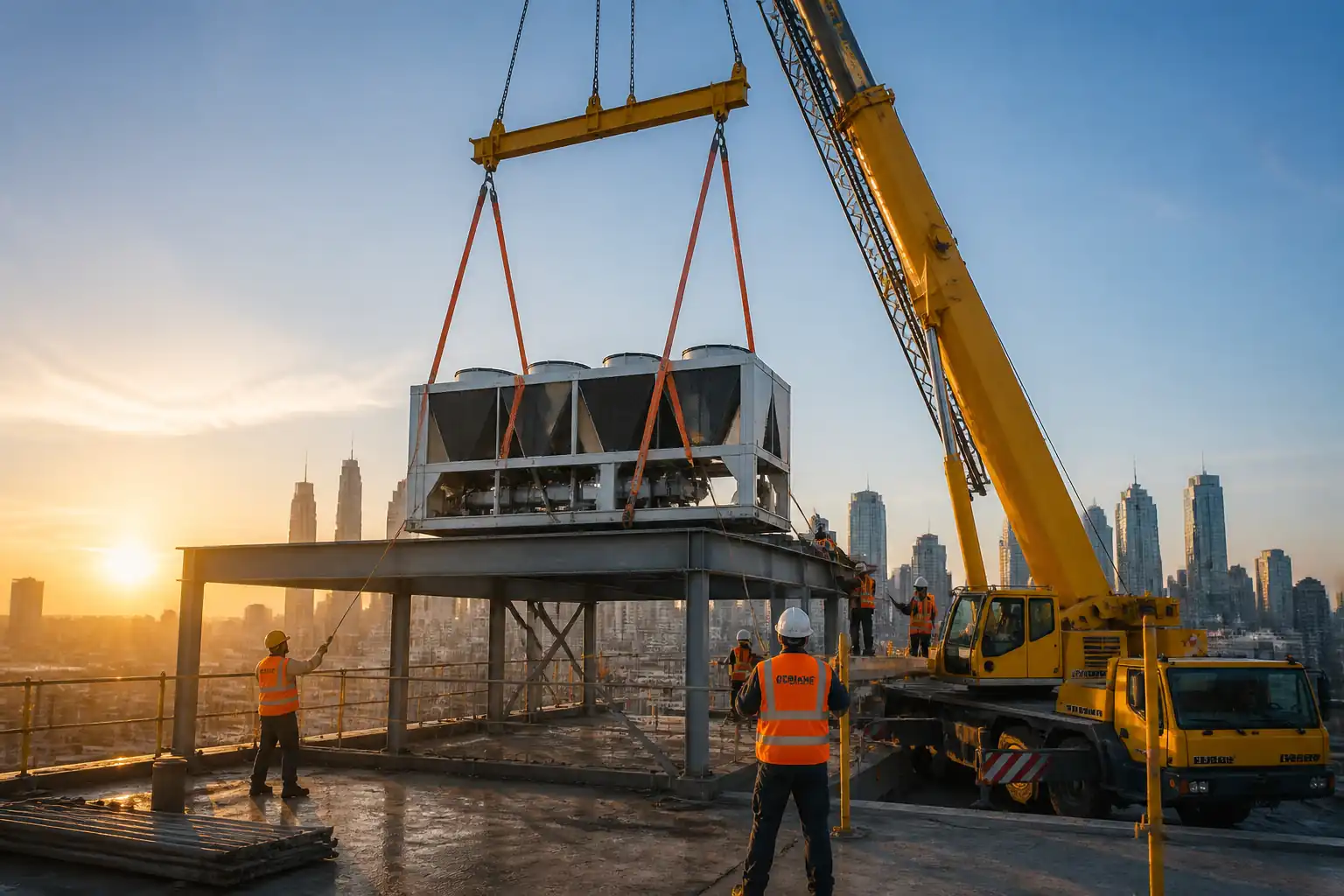

Inspection and Test Plan for Method Statement: Installation of Air-Cooled Chillers on Rooftop Structural Steel Frames
AI-assisted inspection and test plan connected to a method statement, with PDF and Excel export.
More than a static template
Unlike a downloadable Word or PDF template, this ITP is an AI-assisted editable starting point directly connected to its method statement. Every inspection activity, hold point, and acceptance criterion is structured and ready to adapt to your project.
- AI-assisted customization — Tailor inspection activities and acceptance criteria to your specific project scope.
- Linked method statement — This ITP is connected to the corresponding method statement describing the work sequence.
- Multiple export formats — Download as a formatted PDF or editable Excel spreadsheet.
- Editable starting point, not a final document — Review and verify all content against your project specifications and standards before use.
What you can customize
When you save this ITP to your account, every inspection row becomes editable. You can add, remove, or modify:
- Inspection activity — Description of what is being inspected.
- Inspection type — Hold point (H), Witness point (W), Review (R), or Monitor (M).
- Responsibility — Contractor, subcontractor, engineer, or client.
- Frequency — How often the inspection occurs.
- Acceptance criteria — Referenced standard or specification requirement.
- Records — Forms, test reports, or checklists required as evidence.
Why this ITP is used
To ensure critical inspections and tests verify compliance with design, codes, and manufacturer requirements before proceeding to subsequent stages.
Who uses this inspection and test plan
QA/QC engineers, site managers, lifting supervisors, structural engineers, client representatives, and vendor technicians.
When this ITP is prepared and submitted
From pre-mobilization document checks through lifting, installation, pipe testing, and pre-commissioning readiness.
Who receives or approves this ITP
Engineer/Consultant and Client’s Representative for review/approval.
Inspection scope
Documentation review, crane setup, structural frame survey, chiller placement, isolation settings, restraint anchorage, piping fit-up and pressure tests, and final readiness.
Typical hold, witness, and review points
Hold: crane setup verification; first anchor installation; pressure test. Witness: trial lift; isolator leveling; final walkdown.
Typical inspection records
Lift plan approvals, crane and rigging certs, survey/level reports, isolator logs, anchor logs and pull test reports, torque logs, pressure test certificates, checklists, as-builts.
Important approval note
This ITP is an AI-assisted editable starting point, not a pre-approved document. Before use on any project, all inspection activities, hold points, and acceptance criteria must be reviewed and approved by the relevant parties (superintendent, principal contractor, or client representative) in accordance with your contract and project quality plan.
Always verify acceptance criteria against your applicable drawings, specifications, and regulatory requirements. Hold points must be confirmed with the relevant authority before work proceeds past that point.
Inspection and test plan
| Activity | Inspection / Test | Acceptance Criteria | Responsibility | Record |
|---|---|---|---|---|
| Document approvals (drawings, lift plan, calculations) | Verification of approvals prior to works | All required approvals in place and current | PM / QA-QC | Approval matrix, transmittals |
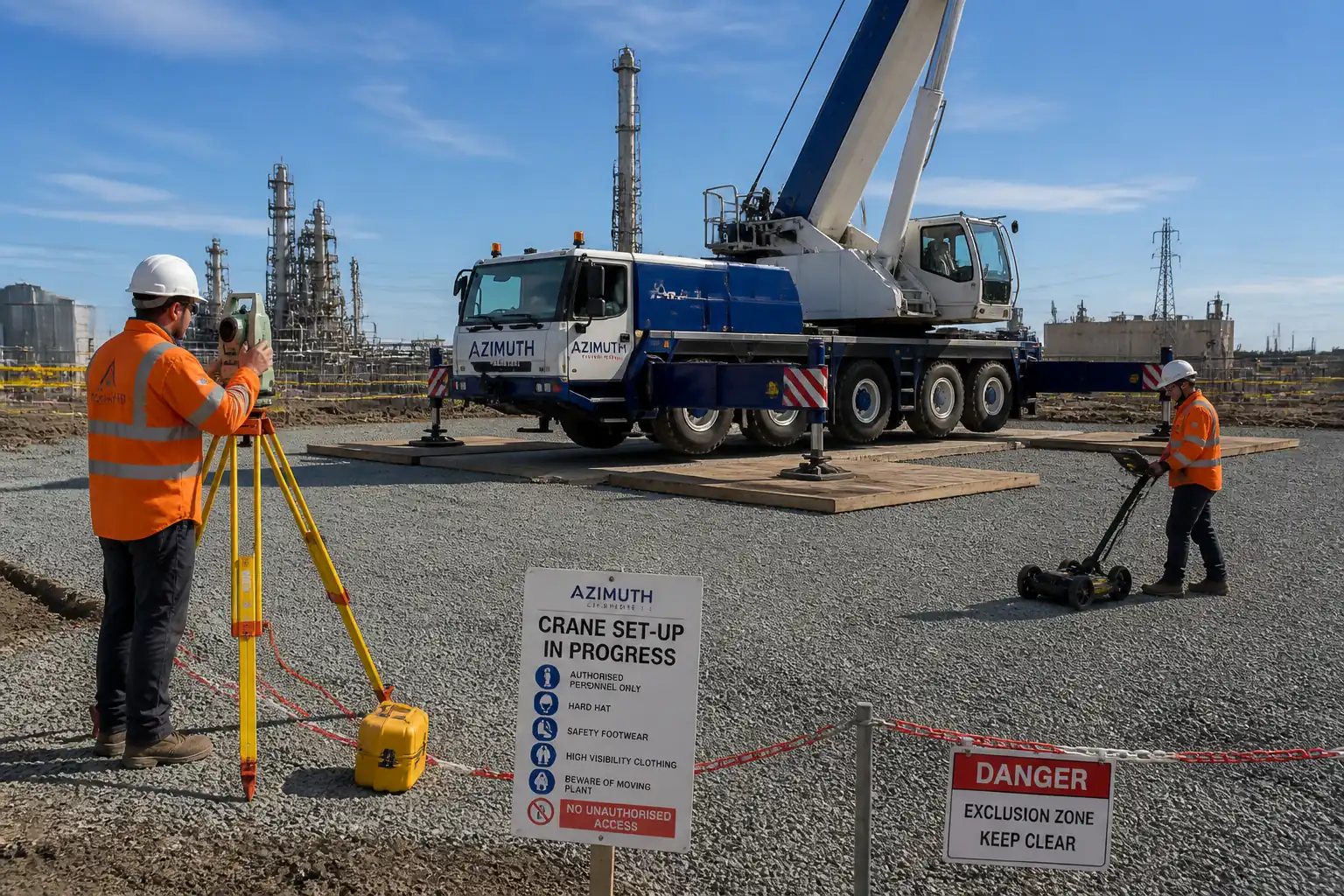
| Crane certification and setup verification | Check certs, load chart, pad/outrigger mats, level | Compliant with lift plan and OEM; level within tolerance | Lifting Supervisor / QA-QC | Crane setup checklist |
| Rigging inspection and trial lift | Visual inspection, WLL check, trial lift | Rigging certified; balanced lift; taglines fitted | Lifting Supervisor | Rigging inspection form |
| Rooftop frame survey and fastener condition | Dimension/level survey; bolt and coating check | Levels/tolerances within design; defects recorded/rectified | Structural Engineer / QA-QC | Survey report |
| Chiller delivery/receipt inspection | Check for transit damage; verify lifting points/COG | No damage; lifting lugs intact; documentation complete | QA-QC / Vendor Rep | MIR, photos |
| Placement accuracy on frame | Check against set-out marks | Position within ±10 mm | QA-QC / Site Engineer | Placement record |
| Isolator installation and leveling | Level check; spring deflection measurement | ±2 mm/m level; deflection within ±10% of calc; snubber gaps per vendor | MEP Supervisor / QA-QC | Isolation setting log |
| Wind/seismic restraint anchor installation | Embed/edge distance check; torque check | Per design and anchor ETA/ESR; torque achieved | Structural/MEP / QA-QC | Anchor install log, torque sheet |
| Anchor proof load testing (if specified) | Pull test on sample set (e.g., 5–10%) | Meets specified proof load without failure/excess displacement | QA-QC / Third-party tester | Pull test report |
| Pipework fit-up at chiller nozzles | Alignment check; support verification | No induced strain; misalignment ≤ 1 mm/100 mm | MEP Supervisor / QA-QC | Fit-up report |
| Joint makeup torque and visual | Torque/witness marks; gasket seating | Per manufacturer torque; no visible defects/leaks | QA-QC | Torque log |
| Hydro/pressure test of CHW spools | Pressurize to 1.3–1.5 × design; hold test | Zero visible leaks; pressure drop ≤ 1% [Verify] | MEP / QA-QC | Pressure test certificate |
| Initial flushing and strainer check (if in scope) | Velocity check; debris inspection | Effluent clear; strainers clean | MEP / QA-QC | Flushing report |
| Final inspection and pre-commissioning readiness | Checklist review of restraints, isolation, clearances | All items closed; approval to proceed to commissioning | QA-QC / Vendor Rep | Signed checklist |
This table is a read-only public reference. Download the PDF or Excel version, or customize this ITP to edit it for your project.
Frequently asked questions
Related method statement
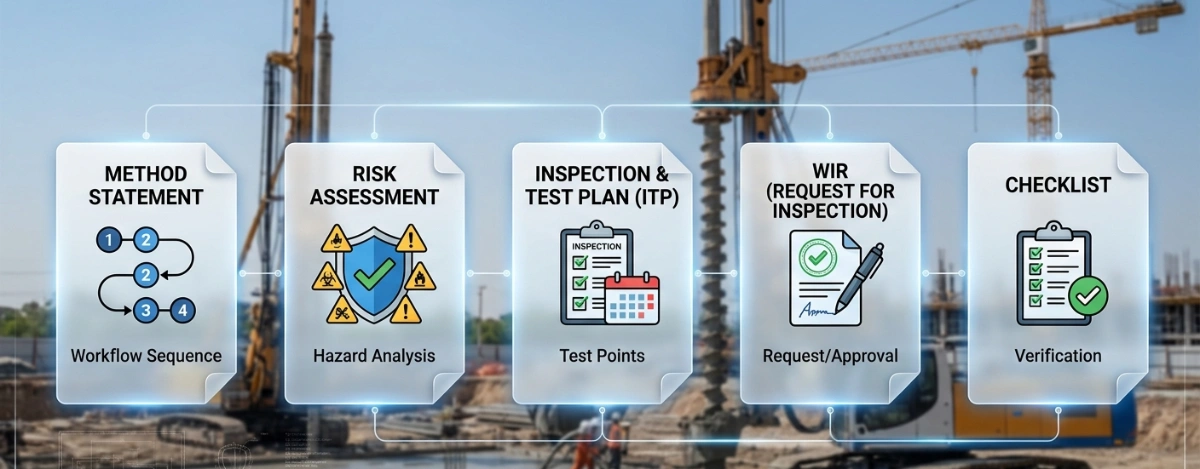
This Inspection and Test Plan is associated with the Method Statement: Installation of Air-Cooled Chillers on Rooftop Structural Steel Frames method statement, which describes the step-by-step construction sequence, resources, materials, equipment, safety controls, and environmental controls for this activity.
View the Method Statement: Installation of Air-Cooled Chillers on Rooftop Structural Steel Frames method statement →Continue with related inspection, method statement, article, and checklist resources.