
Inspection and Test Plan for Method Statement: Precast Concrete Beam Erection Works
AI-assisted inspection and test plan connected to a method statement, with PDF and Excel export.
More than a static template
Unlike a downloadable Word or PDF template, this ITP is an AI-assisted editable starting point directly connected to its method statement. Every inspection activity, hold point, and acceptance criterion is structured and ready to adapt to your project.
- AI-assisted customization — Tailor inspection activities and acceptance criteria to your specific project scope.
- Linked method statement — This ITP is connected to the corresponding method statement describing the work sequence.
- Multiple export formats — Download as a formatted PDF or editable Excel spreadsheet.
- Editable starting point, not a final document — Review and verify all content against your project specifications and standards before use.
What you can customize
When you save this ITP to your account, every inspection row becomes editable. You can add, remove, or modify:
- Inspection activity — Description of what is being inspected.
- Inspection type — Hold point (H), Witness point (W), Review (R), or Monitor (M).
- Responsibility — Contractor, subcontractor, engineer, or client.
- Frequency — How often the inspection occurs.
- Acceptance criteria — Referenced standard or specification requirement.
- Records — Forms, test reports, or checklists required as evidence.
Why this ITP is used
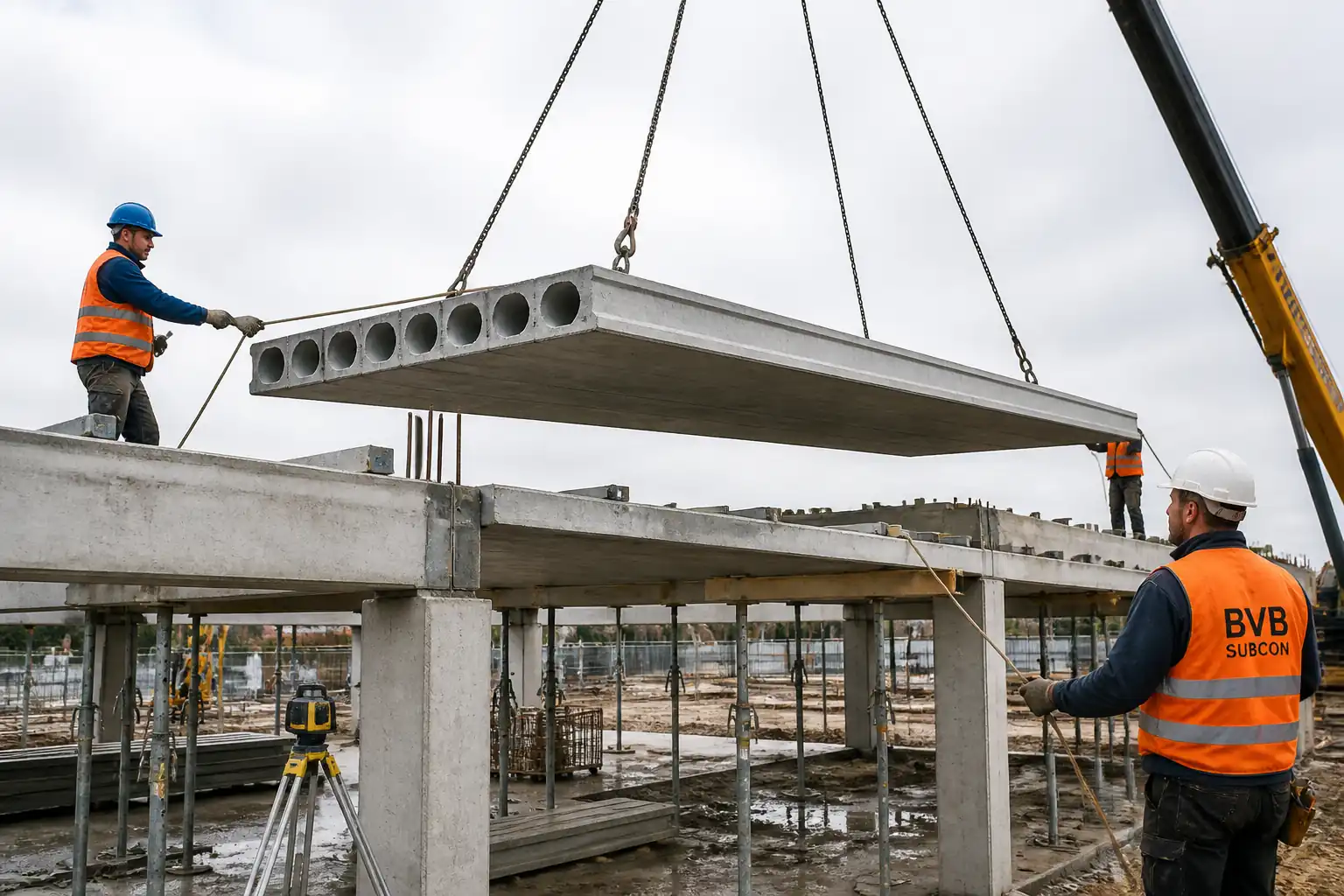
To ensure all critical inspections and tests are completed and verified at defined checkpoints for safe and compliant beam erection.
Who uses this inspection and test plan
QA/QC engineers, site engineers, lifting supervisors, TWC, and the Engineer/Consultant for witnessing and approvals.
When this ITP is prepared and submitted
From pre-erection through final handover, with hold/witness points before lifting, after placement, during grouting, and before releasing temporary works.
Who receives or approves this ITP
Engineer/Consultant and Employer’s Representative for review and approval.
Inspection scope
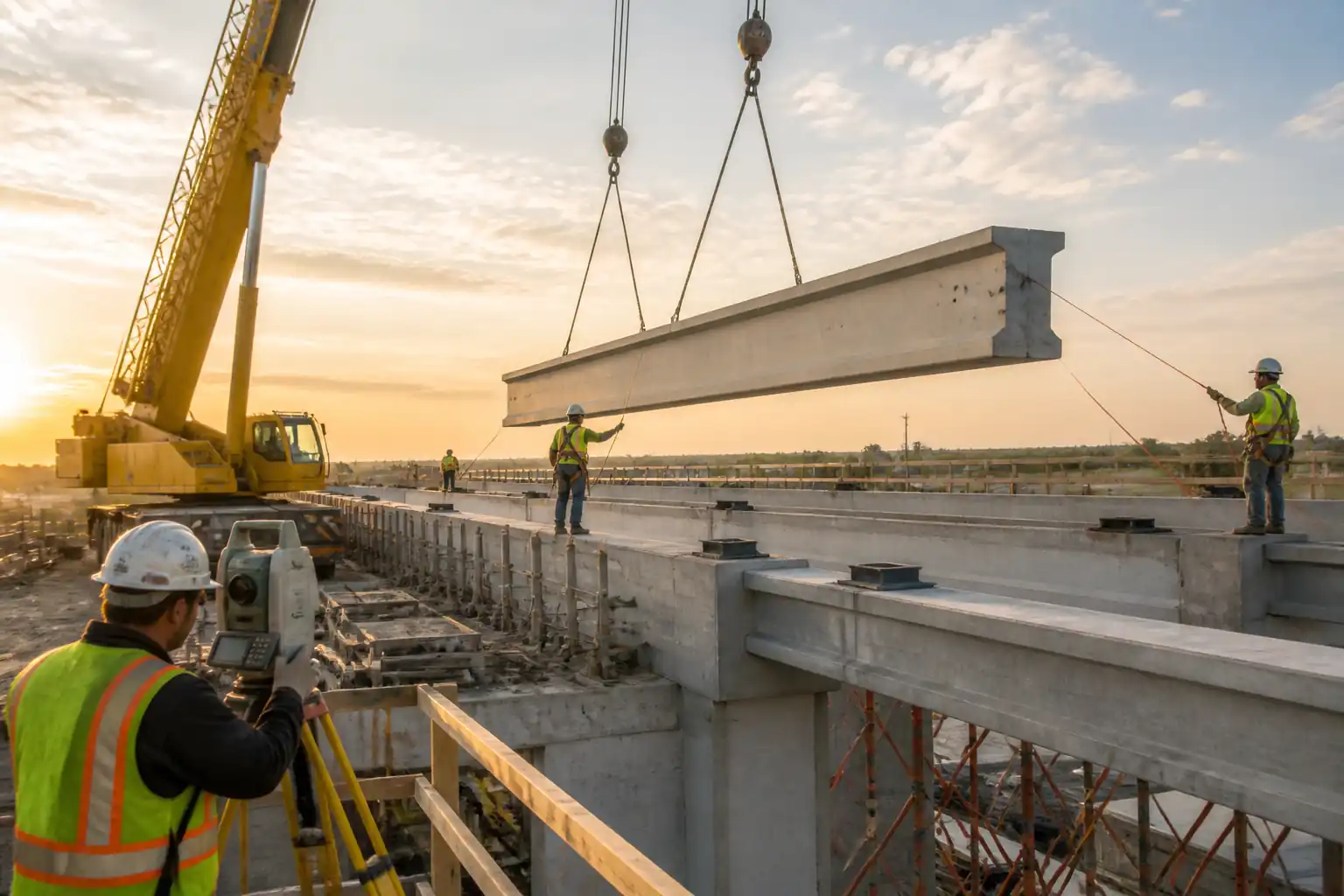
Documentation, materials, bearings survey, rigging checks, placement controls, temporary stability, alignment, connection detailing, grouting, curing, and release.
Typical hold, witness, and review points
Hold: temporary stability before sling release; release of bracing. Witness: bearings survey, grouting, alignment. Review: documentation and final handover.
Typical inspection records
Checklists, survey reports, torque logs, grout logs and cube results, WPS/WPQ and NDT (if applicable), permits to load/strike, as-built drawings.
Important approval note
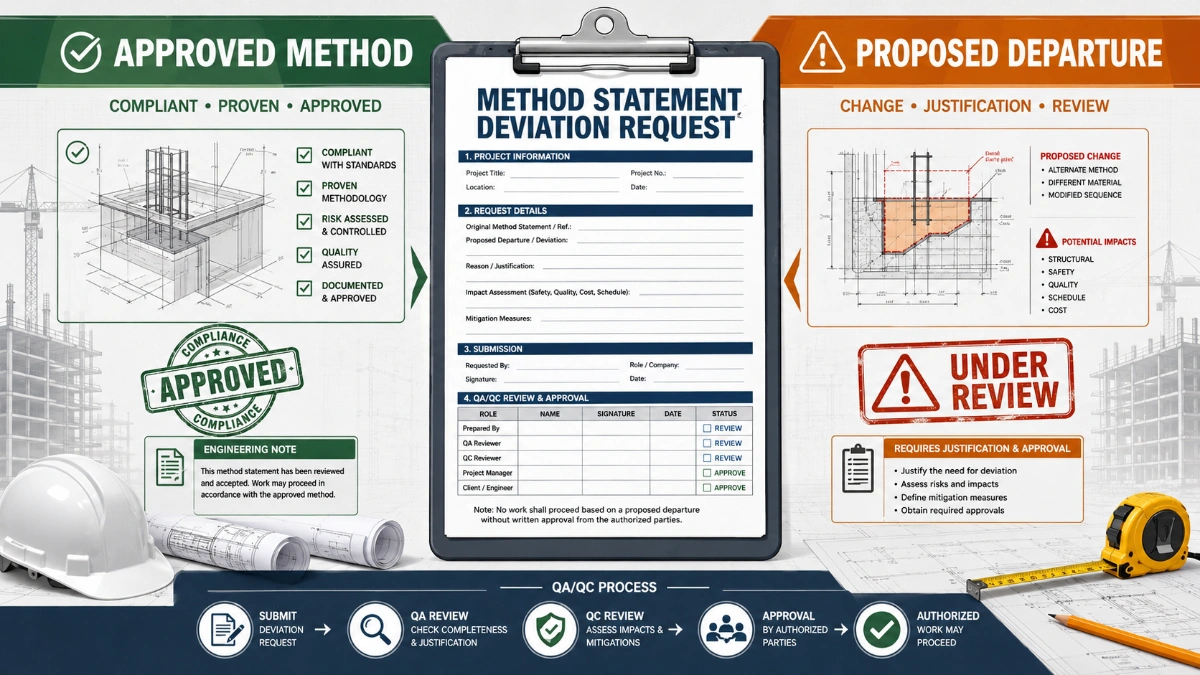
This ITP is an AI-assisted editable starting point, not a pre-approved document. Before use on any project, all inspection activities, hold points, and acceptance criteria must be reviewed and approved by the relevant parties (superintendent, principal contractor, or client representative) in accordance with your contract and project quality plan.
Always verify acceptance criteria against your applicable drawings, specifications, and regulatory requirements. Hold points must be confirmed with the relevant authority before work proceeds past that point.
Inspection and test plan
| Activity | Inspection / Test | Acceptance Criteria | Responsibility | Record |
|---|---|---|---|---|
| Pre-erection documentation check | Review approvals, lift plan, TWD, permits, certificates | All approvals current; risk assessments and permits signed; certificates valid | QA/QC Engineer | Checklist; copies of approvals |
| Bearing installation & survey | Level/position survey using calibrated instrument | Level within ±3 mm between seats; alignment within ±6–10 mm; surfaces clean/dry [Verify] | Site Engineer / Engineer (Witness) | Survey report; photos; bearing schedule |
| Rigging and lifting gear inspection | Visual check of slings/shackles/spreader; certificate review; sling angle calculation | WLL adequate with deration; no defects; certs in date | Lifting Supervisor | Rigging log; pre-use checklist |
| Trial lift & positioning | Observation of lift, taglines, approach to bearings | Controlled movement; no shock loads; clear exclusion zone | Lifting Supervisor / Engineer (Witness) | Daily lift report; photos |
| Temporary bracing installation | Check brace type, anchorage, orientation; torque measurement | Per TWD; torque within ±10% of spec; stability achieved | TWC / QA/QC | Permit to load; torque records; photos |
| Alignment survey after placement | Total station/level check: line, level, plumb, camber | Within specified tolerances [Verify] | Site Engineer / Engineer (Witness) | As-built survey sheet; NCR if nonconforming |
| Connections preparation and installation | Verify dowels/rebar, pocket cleanliness; weld visual/NDT (if required) | Per drawings/WPS; free of defects; dimensions correct | QA/QC / Engineer (Hold for welding if specified) | Connection inspection report; WPS/WPQ; NDT reports (if any) |
| Grouting works | Check mix, flow (ASTM C939), placement method, venting, curing; take cubes (ASTM C109) | Flow within supplier limits; complete filling without voids; cube strengths ≥ specified | QA/QC / Engineer (Witness) | Grout logs; cube results; photos |
| Release of temporary works | Review strength results; check connections/ stability | Required strength achieved; permit to strike signed | TWC / Engineer (Hold) | Permit to strike; test reports |
| Final inspection and handover | Checklist of finishes, tolerances, records complete | All ITP items closed; as-builts and O&M submitted | QA/QC / Engineer | Completion certificate; handover file |
This table is a read-only public reference. Download the PDF or Excel version, or customize this ITP to edit it for your project.
Frequently asked questions
Related method statement
This Inspection and Test Plan is associated with the Method Statement: Precast Concrete Beam Erection Works method statement, which describes the step-by-step construction sequence, resources, materials, equipment, safety controls, and environmental controls for this activity.
View the Method Statement: Precast Concrete Beam Erection Works method statement →Continue with related inspection, method statement, article, and checklist resources.