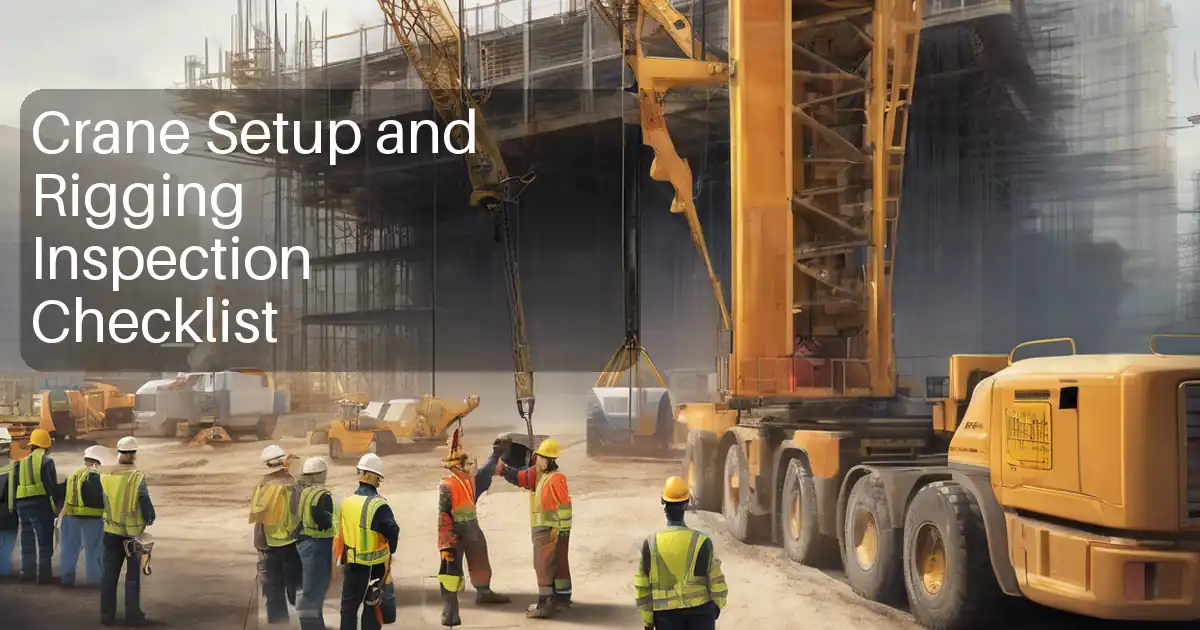

Method Statement – Heavy/Complex Precast Lifting, Crane Selection, Spreader Beams, Rigging Geometry, COG Verification, Exclusion Zones, and Tandem Lifts – Method Statement
AI-assisted method statement with matching ITP, PDF download, and Excel export.
More than a static template
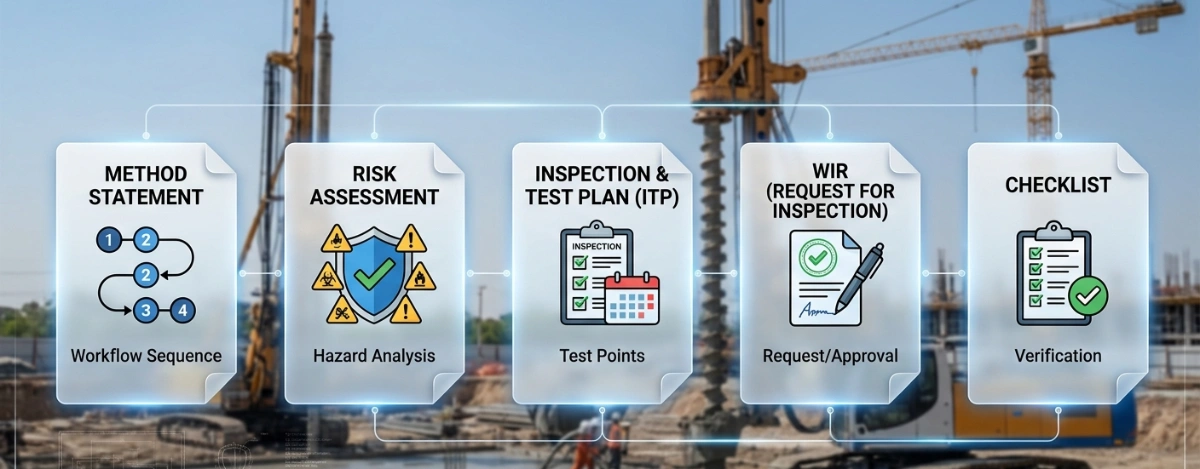
Unlike a downloadable Word or PDF template, this method statement is an AI-assisted editable starting point connected directly to a matching Inspection and Test Plan. Every section is structured, project-adaptable, and ready to export.
- AI-assisted drafting — Customize every section with AI for your specific project scope.
- Linked ITP — A matching inspection and test plan is generated alongside the method statement.
- Multiple export formats — Download as a formatted PDF or editable Excel spreadsheet.
- Editable starting point, not a final document — Review, verify, and adjust all content against your project requirements before use.
Static template vs. Quollnet workflow
| Feature | Static template | Quollnet |
|---|---|---|
| Project-specific content | Manual fill-in required | AI-assisted customization |
| Linked ITP | Separate document, no link | Matching ITP included |
| Export formats | Usually PDF only | PDF and Excel |
| Structured sections | Free-form layout | 13 standardized sections |
| Saved to your account | Local file only | Cloud-saved, reusable |
| Content accuracy | You verify everything | AI-assisted, you still verify |
| Cost | Often free but time-intensive | Free to customize and download |
What you can customize
When you save this method statement to your account, every section becomes editable. The following 13 sections are included:
- Scope — Defines the activity and its boundaries.
- References — Standards, specifications, and drawings.
- Responsibilities — Roles and accountabilities.
- Resources — Labour, plant, and equipment summary.
- Materials — Materials and compliance requirements.
- Equipment — Tools and equipment details.
- Prerequisites — Hold points and pre-conditions.
- Method sequence — Step-by-step construction sequence.
- Safety controls — HSE risk controls and PPE.
- Environmental controls — Environmental mitigation measures.
- QA/QC — Quality inspection and test requirements.
- ITP — Inspection and Test Plan table (has its own page).
- Attachments — Referenced drawings and documentation.
Why this method statement is used
This method statement is used to define and communicate the approved procedure for carrying out method statement – heavy/complex precast lifting, crane selection, spreader beams, rigging geometry, cog verification, exclusion zones, and tandem lifts on site. It ensures the work is planned in advance, the correct resources and controls are in place, and all personnel understand responsibilities, sequence, quality requirements, and safety controls before work begins. It aligns site execution with the documented scope and acceptance expectations.
Who uses this method statement
This method statement is used by contractors, site supervisors, project engineers, QA/QC engineers, HSE officers, consultants, and client representatives. It serves as a shared reference for planning, execution, supervision, inspection, and approval of the activity on site.
When it is prepared and submitted
The method statement is prepared before the work activity starts and submitted as part of the pre-construction documentation package for review and approval.
Who reviews or approves it
The method statement is usually submitted to the client representative, consultant, resident engineer, or project management consultant for review and approval before the work commences.
Important approval note
This method statement is an AI-assisted editable starting point, not a pre-approved document. Before use on any project, all content must be reviewed and approved by the relevant parties (superintendent, principal contractor, or client representative) in accordance with your contract and project quality plan.
For example: if your specification requires a departure from a referenced standard, that departure must be documented and approved separately — this method statement will not capture that automatically. Always verify against your applicable drawings, specifications, and regulatory requirements.
Method statement content
Scope
Overview
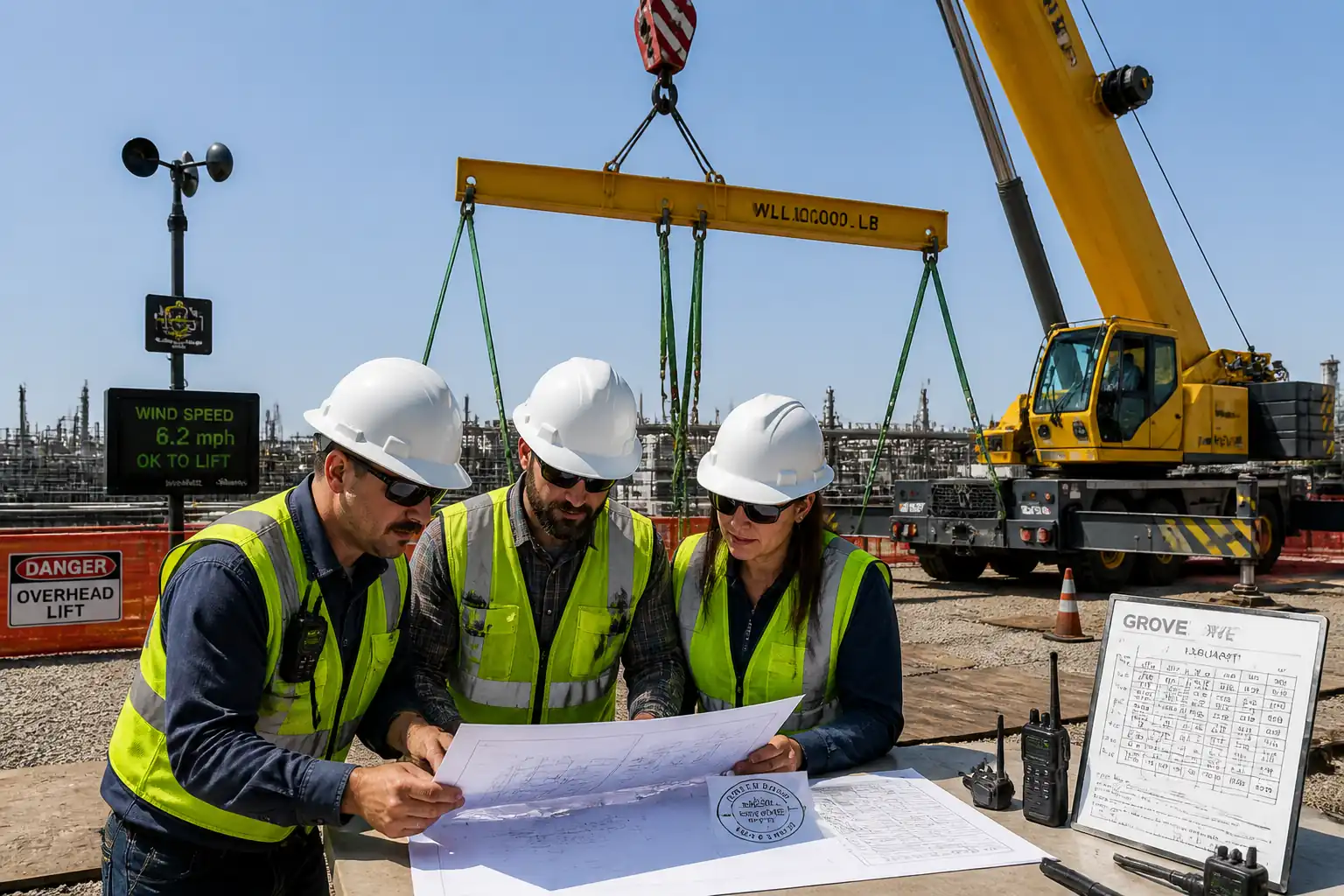
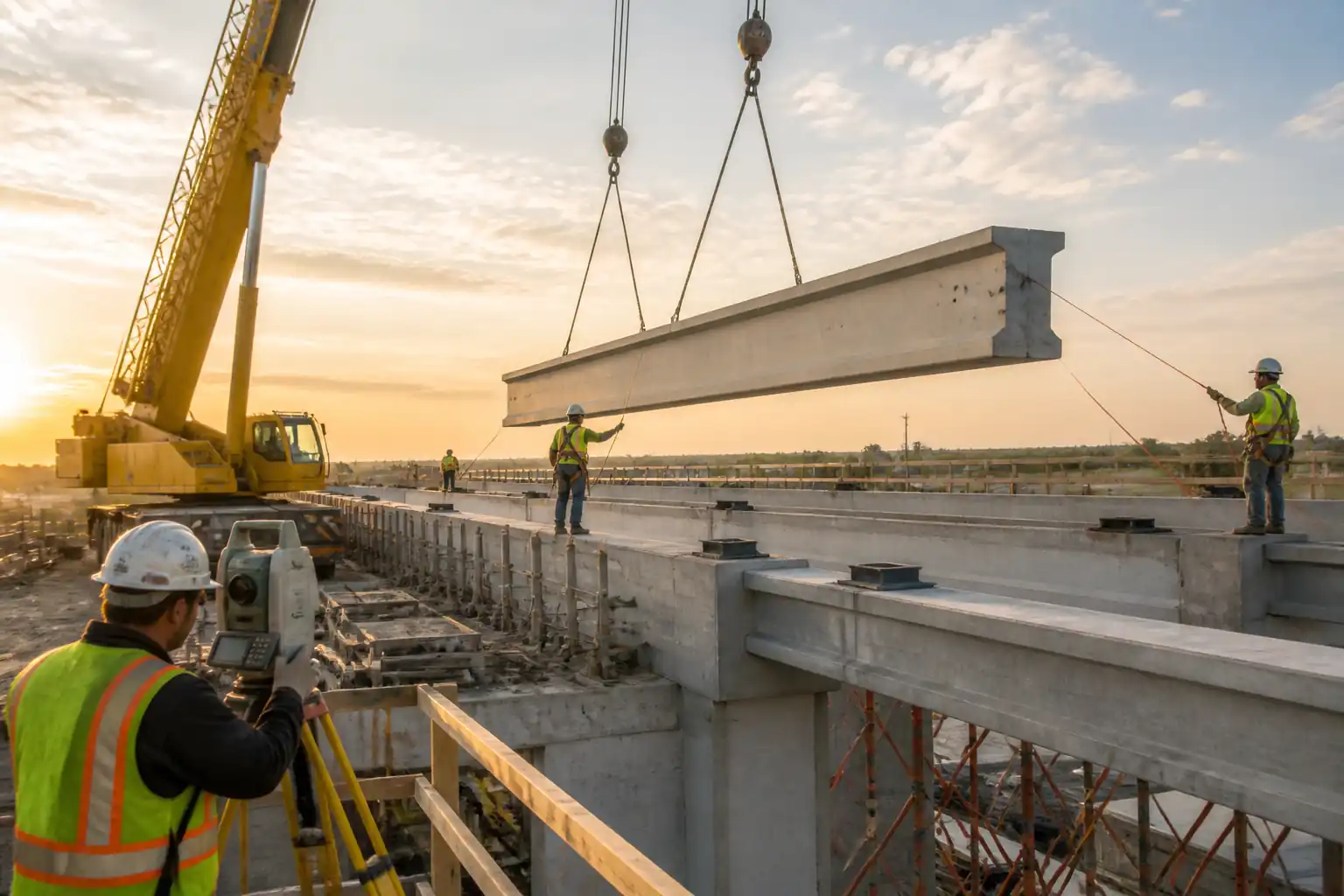
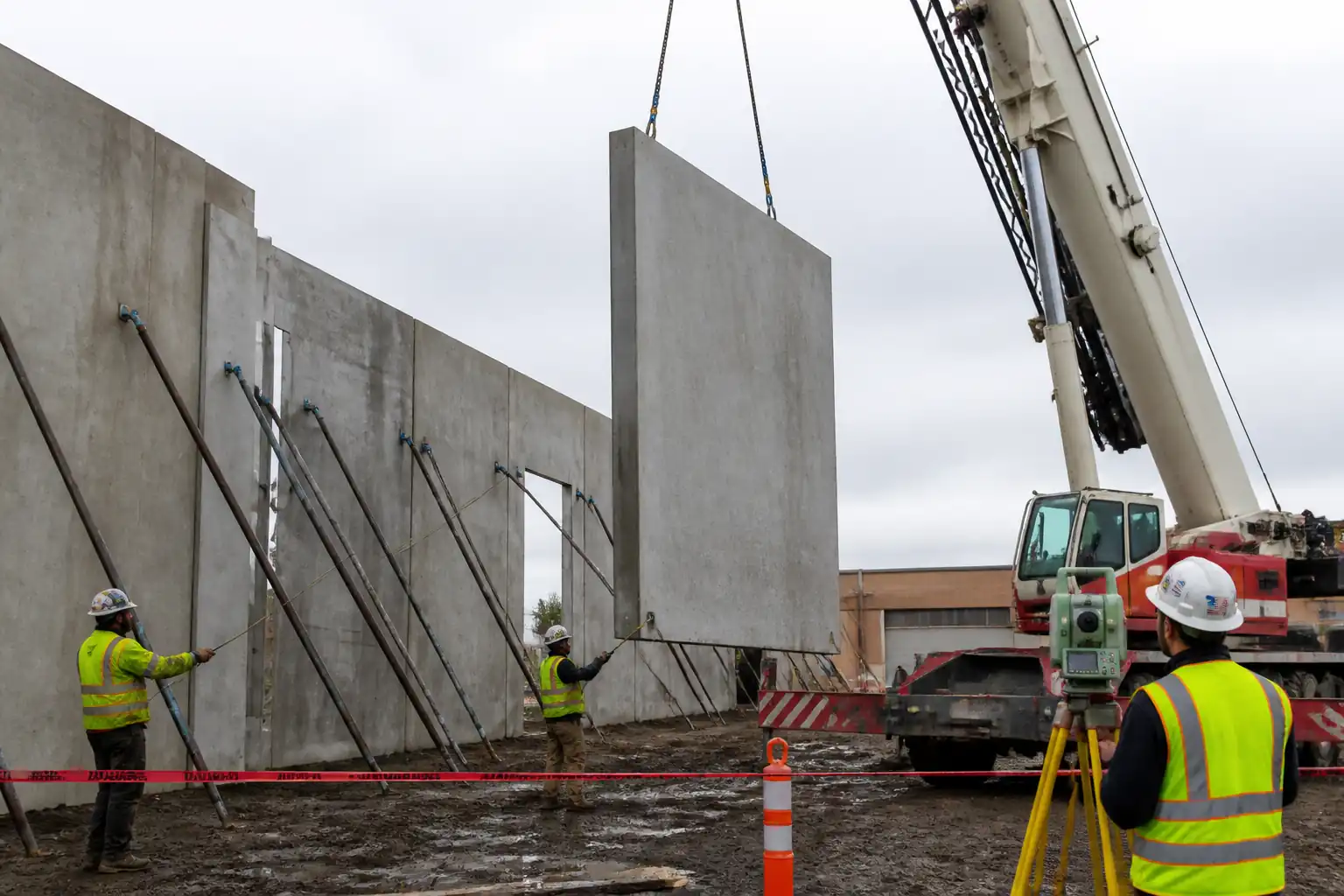
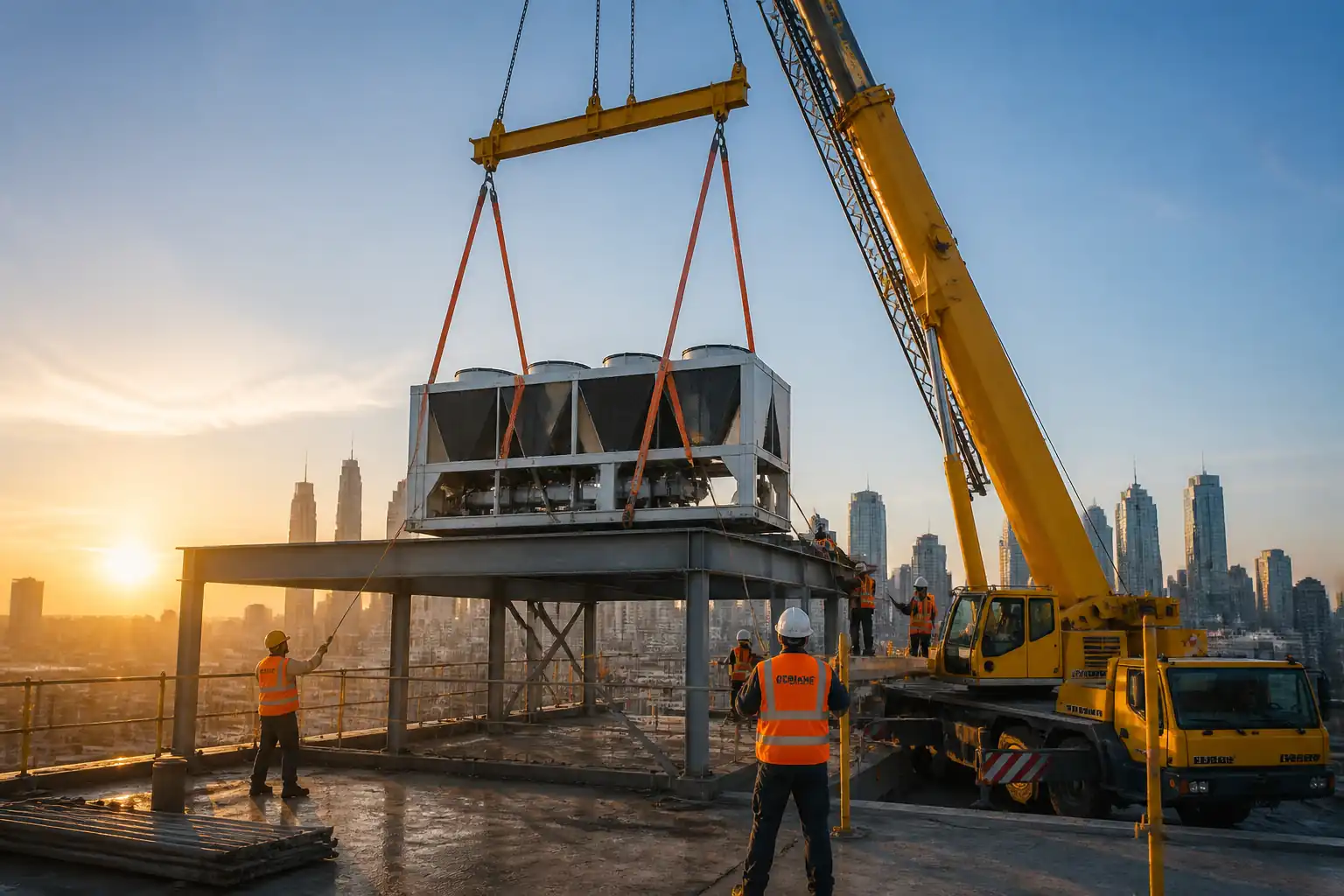
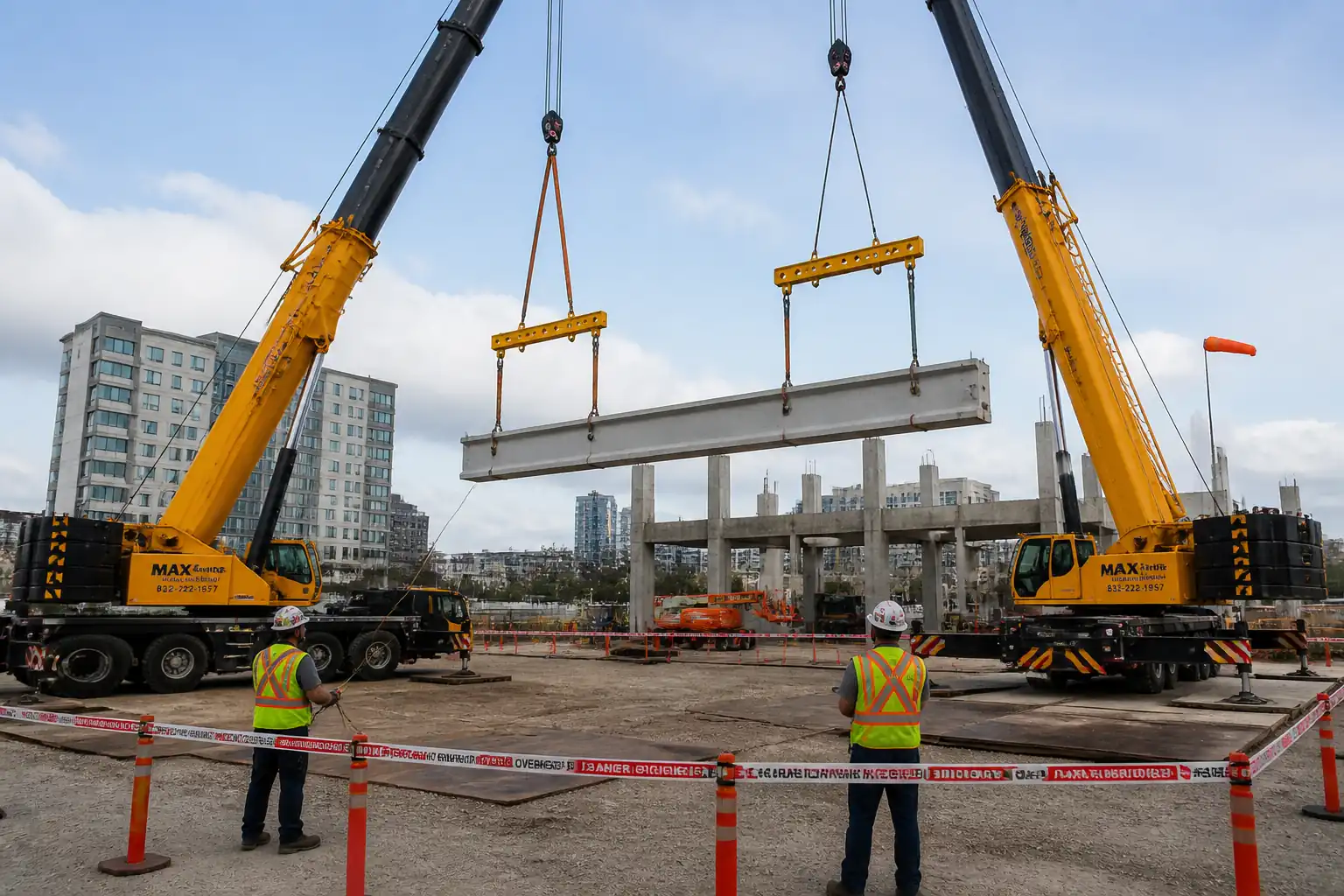
This method statement defines the procedures and controls for planning and executing heavy or complex lifts of precast elements (e.g., wall panels, beams, bridge segments, staircase flights) using mobile/crawler cranes, spreader beams, and certified rigging. It includes single-crane critical lifts and tandem lifts requiring synchronized operations, communication protocols, and engineered lift plans.
Inclusions
- Engineering of crane selection and configuration (radius, boom, counterweight, outrigger/mat design)
- Ground bearing pressure assessment and crane mat design/verification
- Rigging design (spreader/lifting beams, slings, shackles), rigging angles and geometry
- Centre of Gravity (COG) determination and verification
- Precast lifting insert/padeye verification and concrete strength checks
- Exclusion/fall zone planning and control
- Pre-lift meetings, toolbox talks, and permit-to-lift process
- Trial lift, load-sharing checks, and controlled execution (including tandem lifts)
- Weather/wind controls, communication protocols, contingency and emergency procedures
- Inspection, testing, records, and quality control requirements
Exclusions
- Structural installation tolerances beyond lifting/placement unless specified
- Permanent works design outside the lifting phase
Definitions
- Critical Lift: Any tandem lift; or single-crane lift >75% of rated capacity at planned radius; or with exceptional risk/complexity [Verify per project HSE plan].
- Fall Zone: Area where load or crane components could fall if failure occurs [BS 7121 guidance; Verify per project].
- WLL: Working Load Limit of lifting accessories.
- LMI: Load Moment Indicator.
References
| Document Type | Reference / Number | Revision | Notes |
|---|---|---|---|
| Standard | BS 7121 | Principal guidance for UK/International best practice [Verify local adoption]. | |
| Standard | ISO 12480-1 | ||
| Standard | ISO 9927 | ||
| Standard | ISO 4309 | ||
| Standard | EN 13155 | Includes marking, WLL, proof testing [Verify manufacturer data]. | |
| Standard | EN 818; EN 13414; EN 1492 | ||
| Standard | ASME B30 series | Where contractually permitted [Verify per project specifications]. | |
| Manufacturer | Various | Always govern specific limits/ratings. | |
| Regulation | [Verify per jurisdiction] | Adopt stricter of project or legal requirements. |
Responsibilities
| Role | Responsibility | Name / Party |
|---|---|---|
| Appointed Person | Lead | Contractor |
| Supervisor | Supervise | Contractor |
| Operator | Execute | Crane Supplier |
| Rigger/Signaler | Execute | Contractor |
| Engineer | Verify | Consultant |
| Engineer | Verify | Supplier/Consultant |
| HSE | Oversight | Contractor |
| Surveyor | Support | Contractor |
Resources
| Resource Type | Description | Quantity | Remarks |
|---|---|---|---|
| Personnel | Appointed Person (1), Lift Supervisor (1), Crane Operators (2 for tandem), Riggers/Slingers (4–6), Signalers (2), Banksman (1–2), HSE Officer (1), Surveyor (1), Traffic Marshal (as required). | As listed | |
| Permits | Permit to Lift, Hot Works (if cutting), Night Works Permit, Road Closure/Traffic Management, Electrical Isolation/Permit-to-Work near utilities. |
Materials
| Material | Specification / Grade | Quantity | Remarks |
|---|---|---|---|
| Precast concrete | Project specs; insert manufacturer | Include 5–10% weight contingency in planning [Verify]. | |
| Steel | EN 1090/Manufacturer |
Equipment
| Equipment | Capacity / Type | Quantity | Inspection Required |
|---|---|---|---|
| Crane | Per chart | 1–2 | Yes |
| Spreader Beam | As specified | As per rigging drawing | Yes |
| Slings | As tagged | Set per lift | Yes |
| Rigging hardware | As tagged | Set per lift | Yes |
| Mats | As required | Yes | |
| Load Cell | As required | 1–2 | Yes |
| Anemometer | 1 | Yes | |
| Comms | As required | Yes | |
| Accessories | As required | Yes |
Prerequisites
- Approved Lift Plan with calculations, rigging drawing, and sequence signed by Appointed Person and accepted by the Engineer [Verify per contract].
- Geotechnical verification of allowable ground bearing capacity and mat design approval.
- Utilities clearance: GPR/CAT scan and permits for work near buried/overhead services; minimum approach distances to powerlines per local law [Verify].
- Valid certificates for cranes, spreader beams, slings, shackles (thorough examination within 6–12 months per regulation [Verify]).
- Precast element data: verified weight (incl. tolerance/attachments), COG, lifting insert ratings, concrete compressive strength meet manufacturer requirement (typical 15–25 MPa prior to lift) [Verify].
- Weather forecast within limits for duration + contingency; wind thresholds defined in plan.
- Traffic and pedestrian management plan implemented; road closures approved if required.
- Emergency response plan and rescue arrangements briefed.
- Pre-start inspections completed: crane, rigging, mats, comms, anemometer calibration check.
Method Sequence
| Step | Activity | Description | Responsibility | Inspection / Hold Point |
|---|---|---|---|---|
| 1 | Planning and Engineering | Develop lift plan with calculations: load, COG, rigging geometry, sling angles, dynamic factors, crane configuration, radius, heights, and path; define acceptance criteria and hold points. | Appointed Person | Internal check/approval |
| 2 | Survey & Services Clearance | Mark crane positions and slew radii; scan for underground utilities; verify overhead obstructions and powerlines; set minimum approach distances. | Surveyor/Lift Supervisor | HSE/Client witness if required |
| 3 | Ground Bearing and Matting | Calculate outrigger/tracks loads incl. dynamic factors; design mats/plates to limit GBPA ≤ allowable with FS≥2.0; install and level. | Geotech/Contractor | Hold point: mat design acceptance |
| 4 | Crane Mobilization & Assembly | Mobilize and rig cranes per OEM; set counterweights; test LMI; set slew/radius limits; fit anemometer and radio comms. | Crane Supplier | Pre-use inspection |
| 5 | Rigging Assembly & Inspection | Assemble spreader beams and slings per rigging drawing; check sling angles (prefer ≥60° to horizontal where practicable); check D/d per manufacturer; fit load cells if required. | Riggers | Hold point: rigging inspection |
| 6 | Precast Verification | Confirm weight, COG, lifting inserts/padeyes, and concrete strength. Inspect lifter seating, edge conditions, and sharp corners; fit protectors. | Structural Engineer/Precast Supplier | Witness if required |
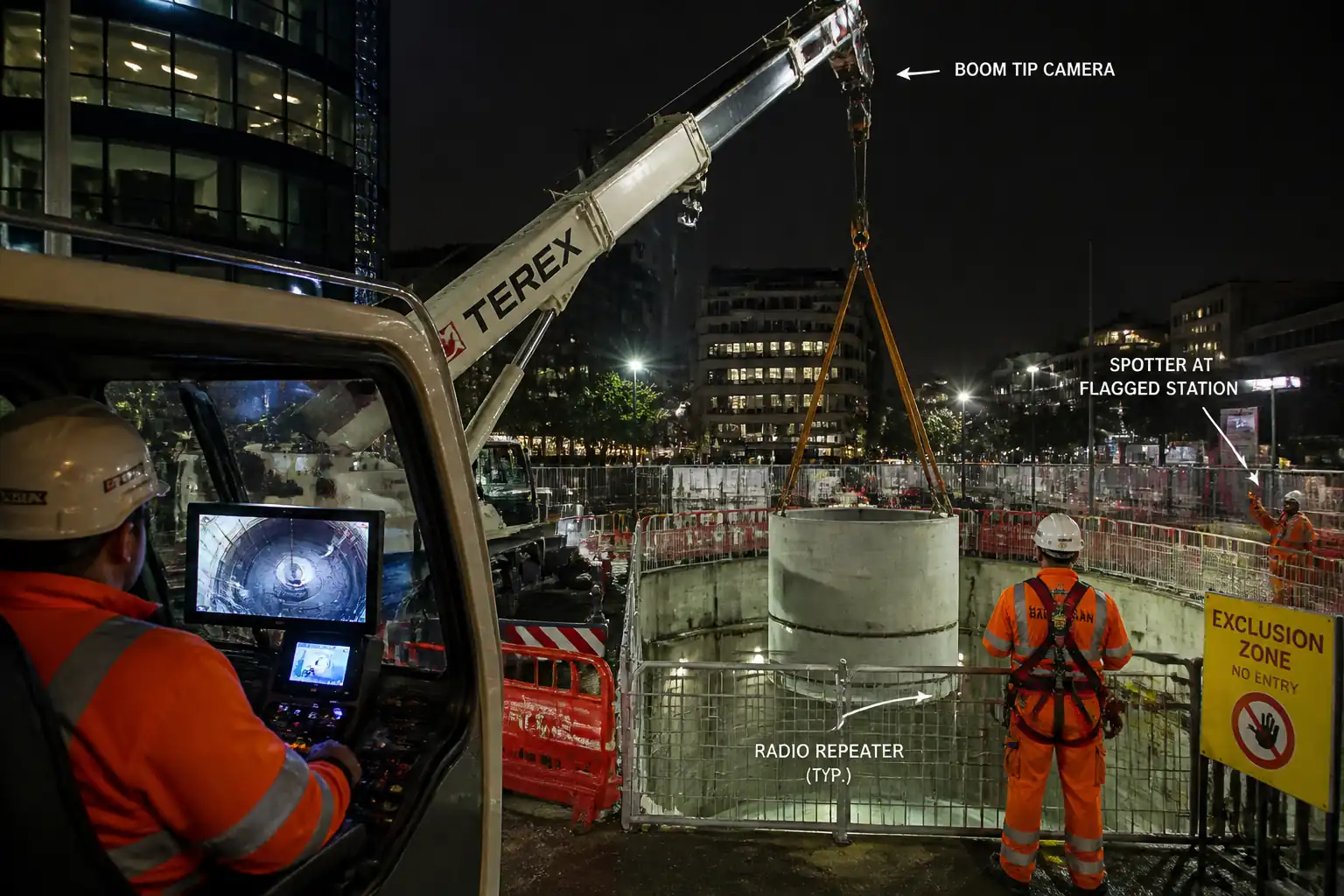
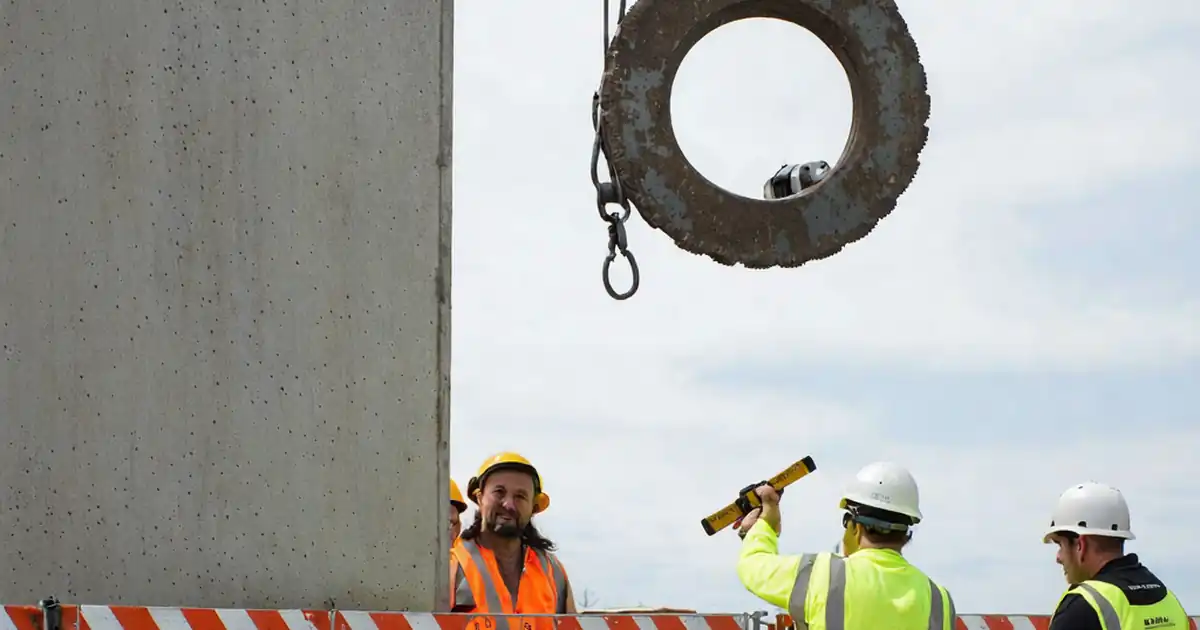
| 7 | Exclusion/Fall Zone Setup | Install barriers, signage, spotters; define fall zone per plan; prevent non-essential access; set traffic diversions. | Lift Supervisor | HSE inspection |
| 8 | Pre-Lift Briefing & Comms Test | Toolbox talk covering sequence, roles, signals/radio protocol, weather limits, emergency stops; designate lead crane (tandem). | Lift Supervisor | Attendance record |
| 9 | Trial Lift / COG & Load-Share Check | Hoist 100–200 mm off support; verify balance and orientation; confirm load share on each crane (tandem) via load cells; adjust rigging as needed. | Lift Supervisor/Operators | Witness point |
| 10 | Main Lift Execution (Single Crane) | Lift, slew, and place per path; maintain minimum swing over non-occupied zones; maintain taglines; stop if wind exceeds threshold. | Operator under Supervisor | Continuous supervision |
| 11 | Main Lift Execution (Tandem) | Lead crane controls vertical hoist; secondary follows to maintain constant share; synchronize hoist speeds; avoid side loading; maintain planned boom angles; communications via single signaler/controller. | Operators under Supervisor | Hold point at start; then continuous witness |
| 12 | Setting & Release | Lower onto temporary works or final bearings; confirm seating/levels; slack slings; detach in reverse order; remove taglines. | Riggers/Surveyor | Survey check if required |
| 13 | Demobilization & Post-Lift Review | Inspect rigging for damage; record any deviations; sign off permits; remove exclusion; update lessons learned. | Lift Supervisor/HSE | Final inspection |
Safety Controls
Task-Specific Hazards and Controls
- Hazard: Crane overturning due to inadequate ground bearing
- Likely Consequence: Major injury/fatality, asset loss
- Engineering/Procedural Control: Geotechnical verification; mat design to limit GBPA ≤ allowable with FS ≥ 2.0 [Verify]; levelness ≤ 0.3°; daily mat inspection
- Required PPE: Hard hat with chin strap, safety boots, high-vis, gloves
- Collective Measure: Exclusion zone around crane and outriggers; edge protection at excavations
-
Inspection/Permit/Supervision: Hold point on mat design approval; daily crane pre-use check; Lift Supervisor sign-off
-
Hazard: Contact with overhead powerlines
- Likely Consequence: Electrocution, arc flash
- Engineering/Procedural Control: Survey and define approach limits; de-energize or install physical barriers/baffles; dedicated spotter for clearances
- Required PPE: Dielectric gloves if required, arc-rated clothing where applicable [Verify]
- Collective Measure: Physical barriers and signage at no-go zones
-
Inspection/Permit/Supervision: Permit-to-work near services; utility owner coordination; HSE oversight
-
Hazard: Load drop or rigging failure
- Likely Consequence: Fatality, property damage
- Engineering/Procedural Control: Certified rigging; WLL verification incl. sling angle factors; NDT on padeyes if specified; trial lift 100–200 mm; no personnel under suspended loads
- Required PPE: Hard hat with chin strap, safety boots, gloves, eye protection
- Collective Measure: Exclusion zone covering fall path; taglines for control
-
Inspection/Permit/Supervision: Rigging inspection hold point; sling register; appointed person approval
-
Hazard: Tandem lift synchronization failure
- Likely Consequence: Unbalanced loading, overload, structural damage
- Engineering/Procedural Control: Defined load-share; load cells; single lead crane and single signaler; rehearsed commands; planned speed limits
- Required PPE: As above, plus radios/headsets
- Collective Measure: Restricted access; raised supervisor platform for visibility if needed
-
Inspection/Permit/Supervision: Witness point at trial lift; continuous monitoring of load-share; stop-work authority
-
Hazard: Wind-induced load swing or sail effect on large panels
- Likely Consequence: Collision, instability, overload
- Engineering/Procedural Control: Wind thresholds set (typ. 9–10 m/s for large panels; lower for gusty conditions) [Verify]; anemometer at height; postpone if exceeded; use taglines/secondary support if required
- Required PPE: As standard; eye protection
- Collective Measure: Wind socks; wind alarms
-
Inspection/Permit/Supervision: Weather log; Supervisor authorization to proceed
-
Hazard: Struck-by during slewing/limited visibility
- Likely Consequence: Serious injury
- Engineering/Procedural Control: Banksman controls; defined path; blind lift protocol; cameras where available; night lighting plan
- Required PPE: High-vis, helmet, gloves; hearing protection if >85 dB(A)
- Collective Measure: Barriers, lighting towers, spotters
-
Inspection/Permit/Supervision: Night work permit; lighting lux checks [Verify]
-
Hazard: Pinch/crush points during rigging attachment/removal
- Likely Consequence: Hand injuries
- Engineering/Procedural Control: Taglines; keep hands clear of bights; torque-controlled pins; use tools not fingers
- Required PPE: Cut-resistant gloves, eye protection
- Collective Measure: Work positioning to avoid trapping; non-slip access
-
Inspection/Permit/Supervision: Supervisor verification during attachment/removal
-
Hazard: Communication failure
- Likely Consequence: Conflicting movements, collision
- Engineering/Procedural Control: Radio check; dedicated channel; backup hand signals; single signaler; communication script for tandem lifts
- Required PPE: Radios/headsets
- Collective Measure: Noise management; clear line-of-sight where possible
- Inspection/Permit/Supervision: Comms test recorded; Lift Supervisor oversight
[Verify per project HSE plan and local regulations].
Environmental Controls
- Noise and Vibration: Schedule heavy lifts in daytime where possible; use broadband alarms; maintain equipment to reduce noise; provide hearing protection zones; monitor if near receptors [Verify].
- Air Emissions: Maintain cranes to reduce exhaust; avoid prolonged idling; consider Stage V/Tier 4 equipment where feasible.
- Ground/Water Protection: Drip trays under hydraulic connections; spill kits at crane; refuel in designated areas; mats to prevent soil rutting; no storage in drainage lines.
- Waste Management: Collect damaged slings/hardware for proper disposal; recycle packaging; segregate waste streams as per site plan.
- Dust/Soiling: Clean access routes; wheel wash if required; cover stockpiles.
- Light Pollution (night lifts): Directional, shielded lighting; avoid light spill to neighbors; monitor lux levels [Verify].
- Wildlife/Vegetation: Avoid lifting over protected habitats where practicable; implement buffer zones.
- Weather: Cease operations during storms/heavy rain that may soften ground; re-verify GBPA after significant precipitation.
Quality Assurance / Quality Control
QA/QC Controls
- Documentation Control: Approved lift plan, rigging drawings, load charts, mat design, permits, and risk assessments available on site.
- Certifications: Cranes, spreaders, slings, shackles with current thorough examination and calibration certificates (load cells, anemometer) — typically within 6–12 months [Verify].
- Precast Verification: Supplier weight sheet; COG confirmation; compressive strength evidence per lifter manufacturer (typ. 15–25 MPa before lift) [Verify]; visual check for cracks at lifting points.
- Rigging Geometry: Confirm sling angles per drawing; record actual angles if deviating; apply sling angle factor to WLL when angle <60°.
- Ground Bearing: Signed calculation and inspection record; levelness measured and recorded (≤0.3°).
- Trial Lift: Record load-share readings; accept only if within ±10% planned; adjust rigging and repeat if outside tolerance.
- Weather: Wind log maintained; stop criteria captured.
- LMI/Limiters: Function tests recorded at start of shift; no bypassing permitted.
- Non-Conformance: Record NCRs for deviations; corrective actions before proceeding.
- Records Retention: Maintain in project QA system for duration per contract (e.g., 10 years) [Verify].
Attachments
- Approved Lift Plan and Rigging Drawing (with sling angle calculations and spreader beam selection)
- Crane Load Charts for specific configuration (boom length, counterweight, radius)
- Ground Bearing Pressure calculations and Crane Mat design/approval
- Precast element data: weight sheets, COG, lifting insert/padeye certificates and any NDT
- Inspection certificates: cranes, slings, shackles, spreader beams; calibration certs (load cells, anemometer)
- Permits: Permit-to-Lift, services permits, traffic management approvals, night work permits (if applicable)
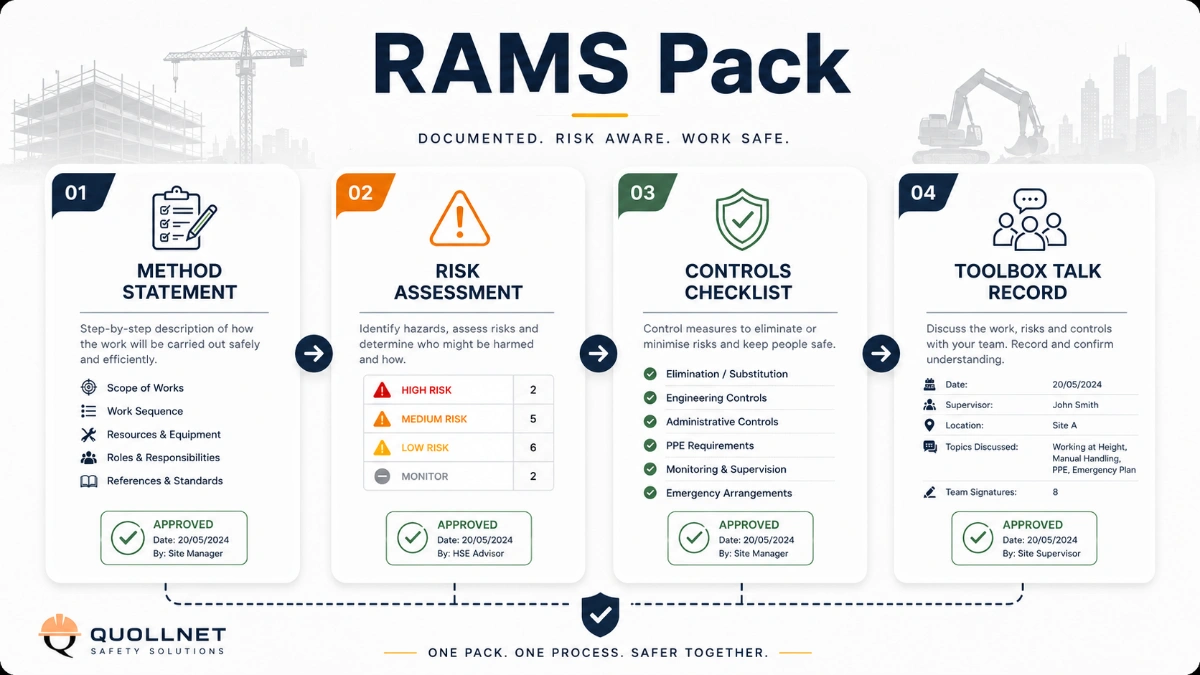
- Risk Assessment/Method Statement (RAMS) and Emergency Plan
- Toolbox Talk attendance records and Communication protocol sheet
- Weather logs, trial lift logs, load-share records
- As-placed survey checks and close-out report
This content is a read-only public reference. Download or customize to get an editable version.
ITP preview
The first inspection activities from the linked ITP for Method Statement – Heavy/Complex Precast Lifting, Crane Selection, Spreader Beams, Rigging Geometry, COG Verification, Exclusion Zones, and Tandem Lifts:
| Activity | Inspection / Test | Acceptance Criteria | Responsibility | Record |
|---|---|---|---|---|
| Lift Plan Preparation and Approval | Document review against standards and OEM charts | Plan complete; calculations checked; approvals obtained | Appointed Person / Engineer | Approved Lift Plan |
| Ground Bearing Capacity & Mat Installation | Review outrigger loads; inspect mats for level and integrity | GBPA ≤ allowable; levelness ≤0.3°; mats undamaged | Geotechnical Engineer / Supervisor | Mat Calc & Inspection Sheet |
| Crane Assembly & Pre-use Checks | Functional checks (LMI, hoist, slew, brakes, alarms) | All systems operational; no defects | Crane Supplier / Lift Supervisor | Pre-use Checklist |
Showing 3 of 10 inspection activities. View full ITP →
Related Inspection and Test Plan
An Inspection and Test Plan (ITP) is available for Method Statement – Heavy/Complex Precast Lifting, Crane Selection, Spreader Beams, Rigging Geometry, COG Verification, Exclusion Zones, and Tandem Lifts. The ITP defines the inspection activities, acceptance criteria, hold and witness points, responsible parties, and records required to verify the work described in this method statement.
View the Method Statement – Heavy/Complex Precast Lifting, Crane Selection, Spreader Beams, Rigging Geometry, COG Verification, Exclusion Zones, and Tandem Lifts ITP →Frequently asked questions
Continue with related Quollnet resources connected to this method statement.