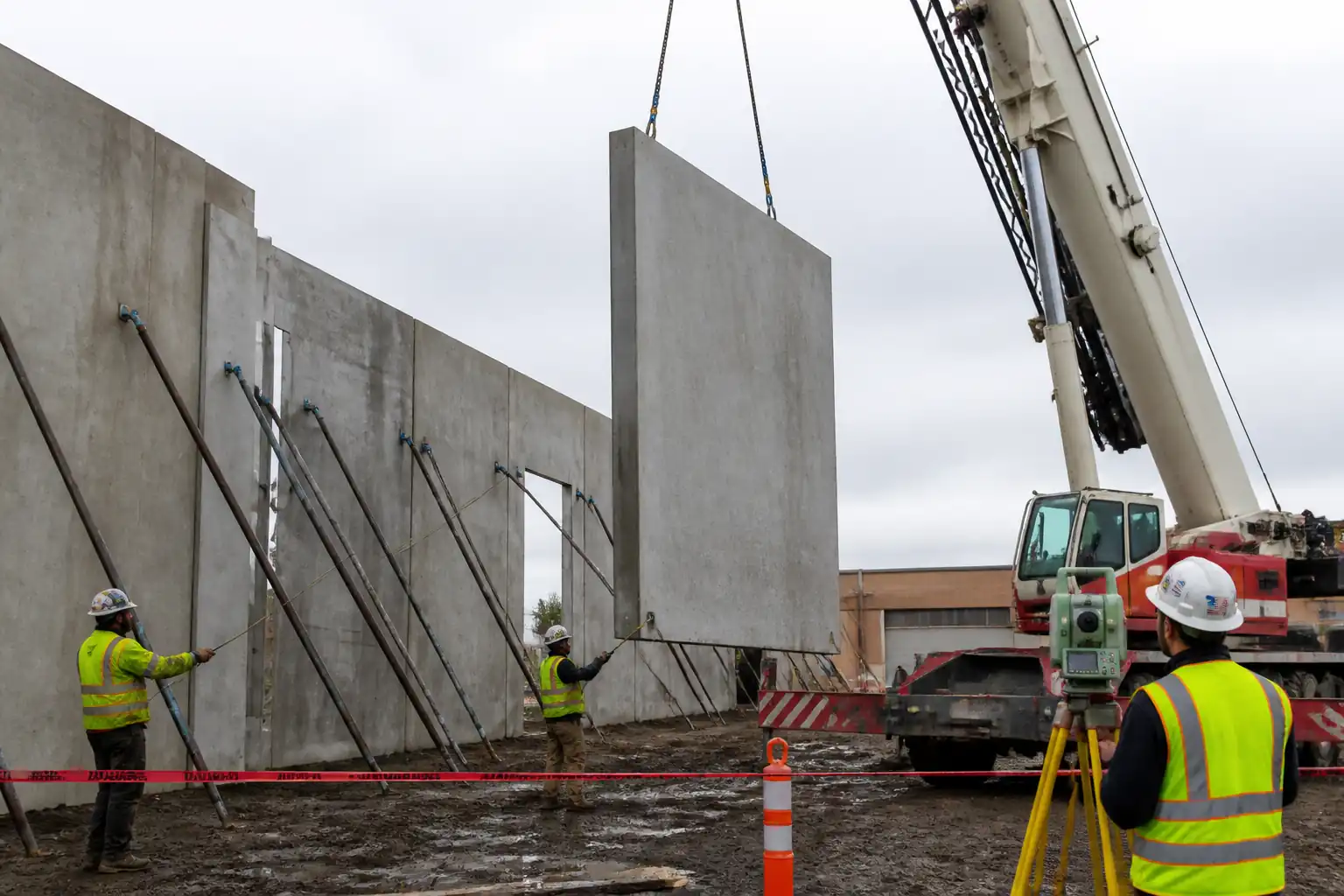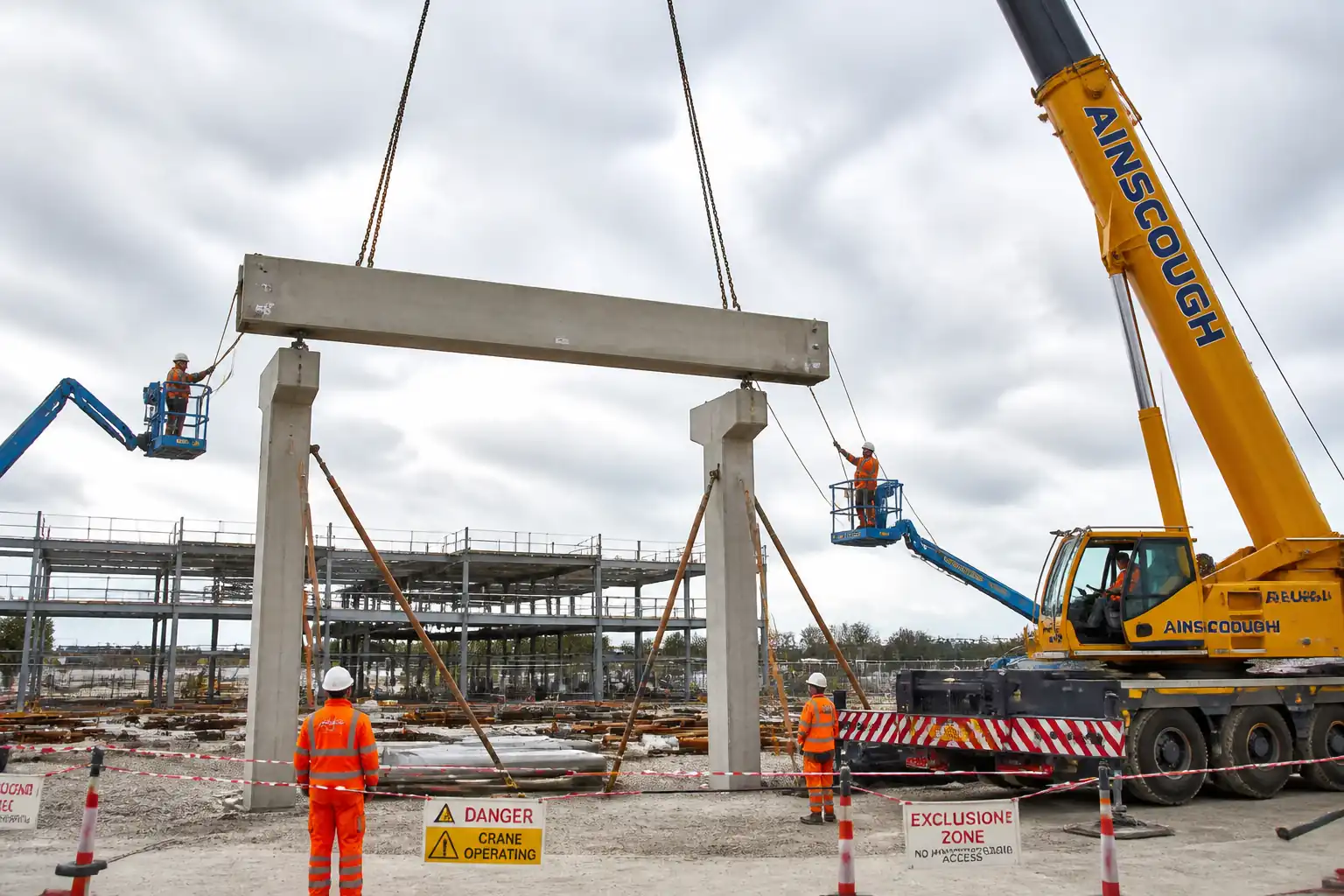

Inspection and Test Plan for Method Statement – Heavy/Complex Precast Lifting, Crane Selection, Spreader Beams, Rigging Geometry, COG Verification, Exclusion Zones, and Tandem Lifts
AI-assisted inspection and test plan connected to a method statement, with PDF and Excel export.
More than a static template
Unlike a downloadable Word or PDF template, this ITP is an AI-assisted editable starting point directly connected to its method statement. Every inspection activity, hold point, and acceptance criterion is structured and ready to adapt to your project.
- AI-assisted customization — Tailor inspection activities and acceptance criteria to your specific project scope.
- Linked method statement — This ITP is connected to the corresponding method statement describing the work sequence.
- Multiple export formats — Download as a formatted PDF or editable Excel spreadsheet.
- Editable starting point, not a final document — Review and verify all content against your project specifications and standards before use.
What you can customize
When you save this ITP to your account, every inspection row becomes editable. You can add, remove, or modify:
- Inspection activity — Description of what is being inspected.
- Inspection type — Hold point (H), Witness point (W), Review (R), or Monitor (M).
- Responsibility — Contractor, subcontractor, engineer, or client.
- Frequency — How often the inspection occurs.
- Acceptance criteria — Referenced standard or specification requirement.
- Records — Forms, test reports, or checklists required as evidence.
Why this ITP is used
To verify that critical lifting operations are engineered, controlled, and executed within defined safety and quality parameters.
Who uses this inspection and test plan
Appointed Person, Lift Supervisor, Crane Operators, HSE, Geotechnical and Structural Engineers, and the Client’s Representative.
When this ITP is prepared and submitted
For all heavy or complex precast lifts, especially tandem lifts or lifts classified as critical by the project HSE plan.
Who receives or approves this ITP
Client/Engineer for review and approval prior to lifting.
Inspection scope
Covers document approvals, ground bearing verification, crane configuration, certified rigging, trial lift acceptance, weather limits, and placement checks.
Typical hold, witness, and review points
Mat design acceptance; rigging inspection; trial lift witness; start of tandem main lift; placement verification.
Typical inspection records
Approved lift plan, rigging register, crane checklists, mat calc/inspections, wind logs, trial lift logs, load-share readings, as-placed records, close-out report.
Important approval note
This ITP is an AI-assisted editable starting point, not a pre-approved document. Before use on any project, all inspection activities, hold points, and acceptance criteria must be reviewed and approved by the relevant parties (superintendent, principal contractor, or client representative) in accordance with your contract and project quality plan.
Always verify acceptance criteria against your applicable drawings, specifications, and regulatory requirements. Hold points must be confirmed with the relevant authority before work proceeds past that point.
Inspection and test plan
| Activity | Inspection / Test | Acceptance Criteria | Responsibility | Record |
|---|---|---|---|---|
| Lift Plan Preparation and Approval | Document review against standards and OEM charts | Plan complete; calculations checked; approvals obtained | Appointed Person / Engineer | Approved Lift Plan |
| Ground Bearing Capacity & Mat Installation | Review outrigger loads; inspect mats for level and integrity | GBPA ≤ allowable; levelness ≤0.3°; mats undamaged | Geotechnical Engineer / Supervisor | Mat Calc & Inspection Sheet |
| Crane Assembly & Pre-use Checks | Functional checks (LMI, hoist, slew, brakes, alarms) | All systems operational; no defects | Crane Supplier / Lift Supervisor | Pre-use Checklist |
| Rigging Gear Certification & Inspection | Visual inspection; certificate verification; WLL and angle compliance | Tagged/undamaged; WLL ≥ demand incl. angle factor | Lift Supervisor / Rigger | Rigging Register & Checklist |
| Precast Element Readiness | Weight/COG confirmation; concrete strength evidence; insert/padeye check | Meets manufacturer requirements; no defects | Structural Engineer / Supplier | Supplier Certs; Test Reports |
| Exclusion Zone and Comms Setup | Site walkdown; radio function test | Zones signed/barriered; comms clear | Lift Supervisor / HSE | HSE Checklist; Comms Log |
| Trial Lift (COG and Load Share) | Hoist 100–200 mm; monitor load cells; check balance | Load share within ±10% plan; stable; no twist | Lift Supervisor / Operators | Trial Lift Log |
| Main Lift – Weather Compliance | Wind speed monitoring at height | Wind ≤ threshold set in plan [Verify] | Lift Supervisor | Wind Log |
| Placement Tolerances | Check position/level vs drawings | Within specified tolerances [Verify] | Surveyor / Supervisor | As-placed Check Record |
| Post-Lift Inspection & Close-out | Rigging condition; NCR review if any | No damage; documents complete | Lift Supervisor / HSE | Close-out Report |
This table is a read-only public reference. Download the PDF or Excel version, or customize this ITP to edit it for your project.
Frequently asked questions
Related method statement
This Inspection and Test Plan is associated with the Method Statement – Heavy/Complex Precast Lifting, Crane Selection, Spreader Beams, Rigging Geometry, COG Verification, Exclusion Zones, and Tandem Lifts method statement, which describes the step-by-step construction sequence, resources, materials, equipment, safety controls, and environmental controls for this activity.
View the Method Statement – Heavy/Complex Precast Lifting, Crane Selection, Spreader Beams, Rigging Geometry, COG Verification, Exclusion Zones, and Tandem Lifts method statement →Continue with related inspection, method statement, article, and checklist resources.