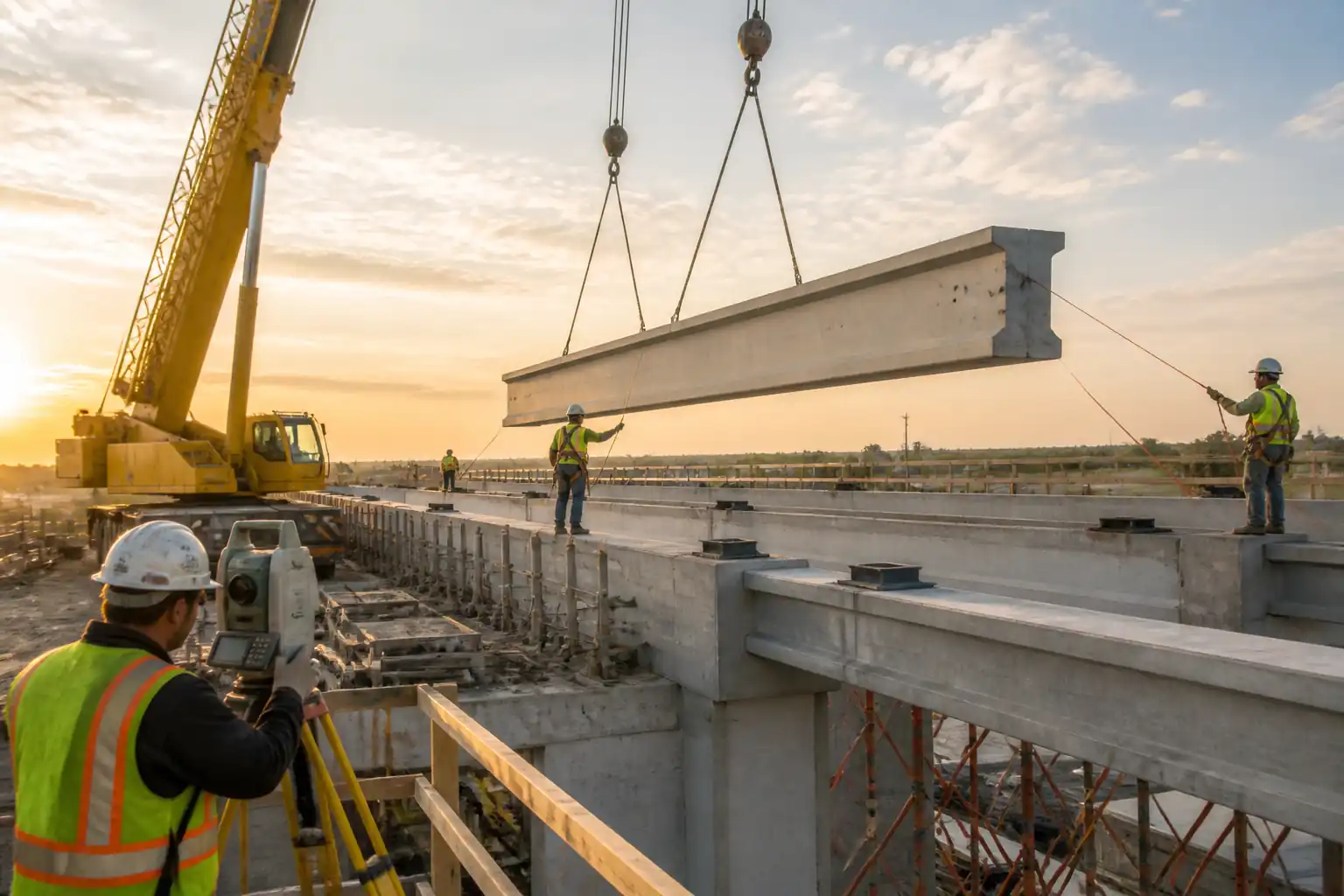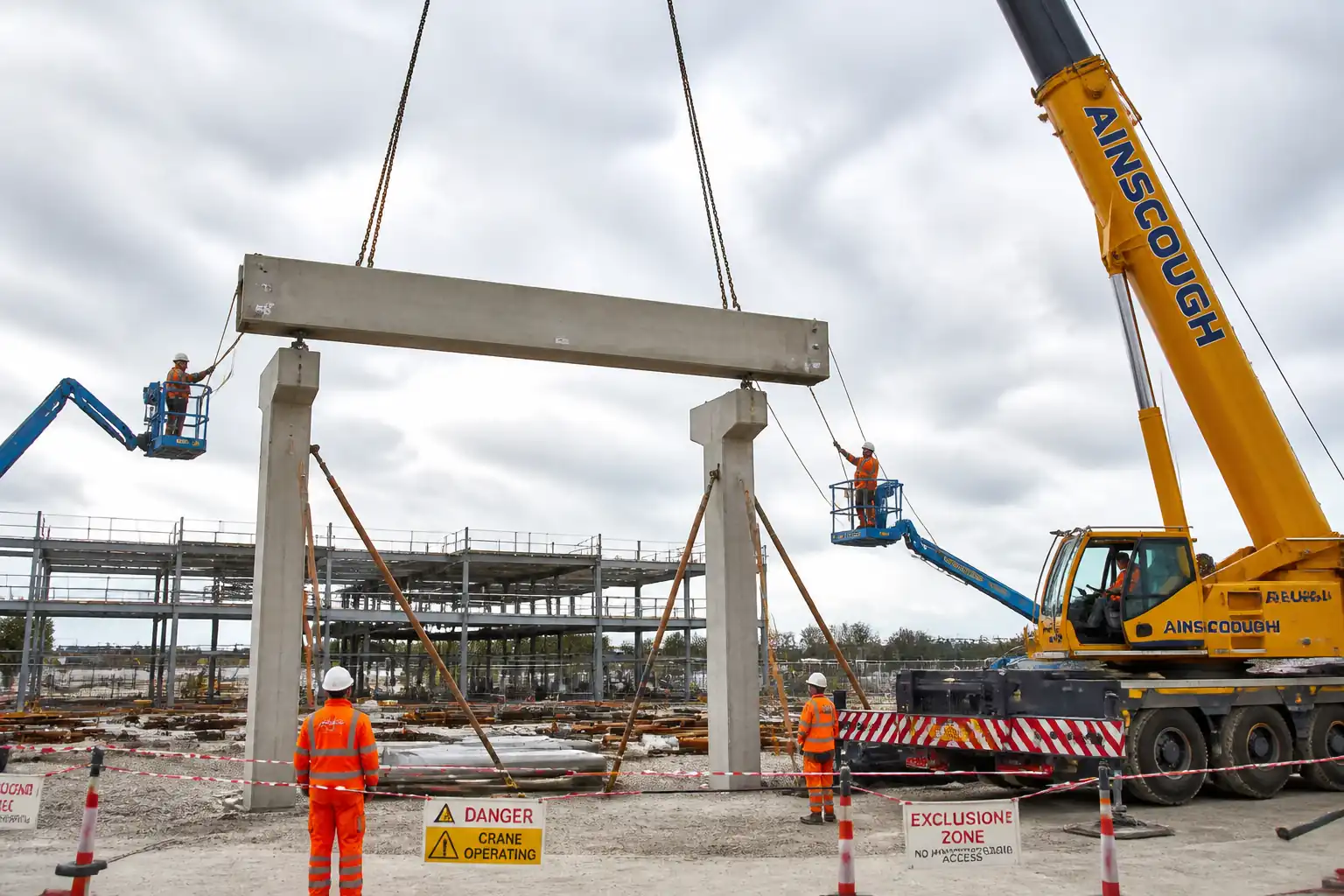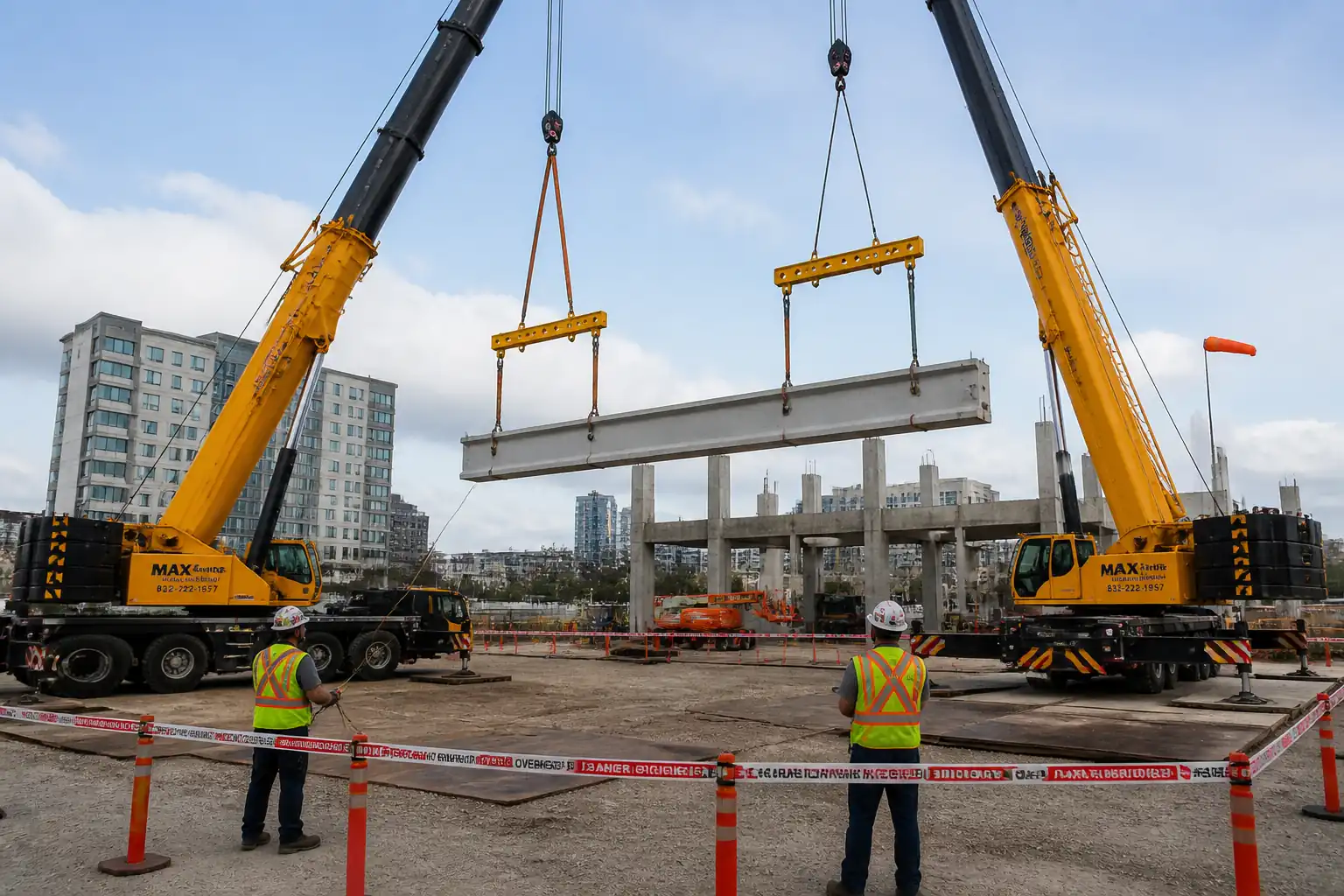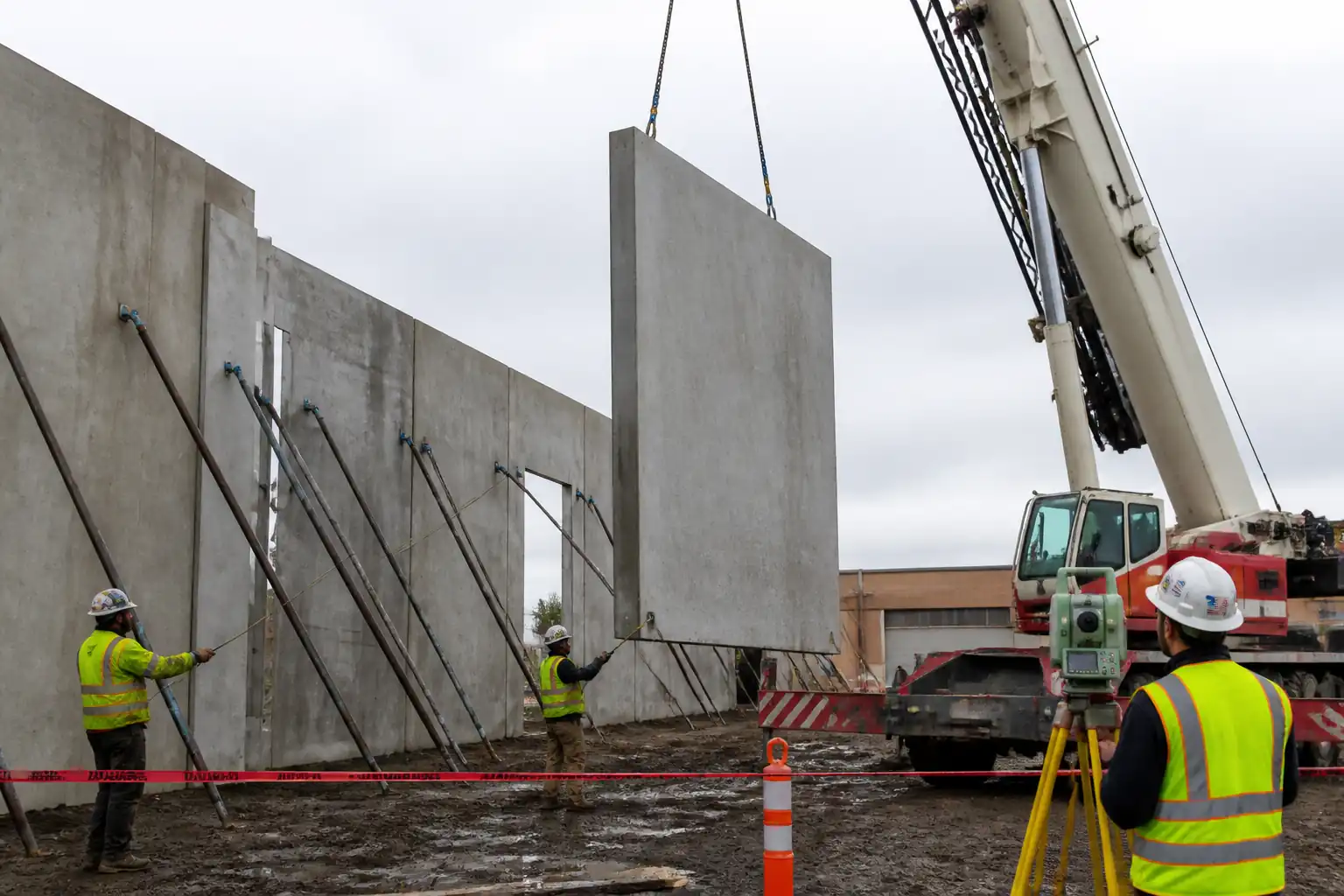

Method Statement: Laying Prestressed Hollowcore Slabs – Bearings, Edge Angles, Propping, Joint Grouting, and Differential Camber Control – Method Statement
AI-assisted method statement with matching ITP, PDF download, and Excel export.
More than a static template
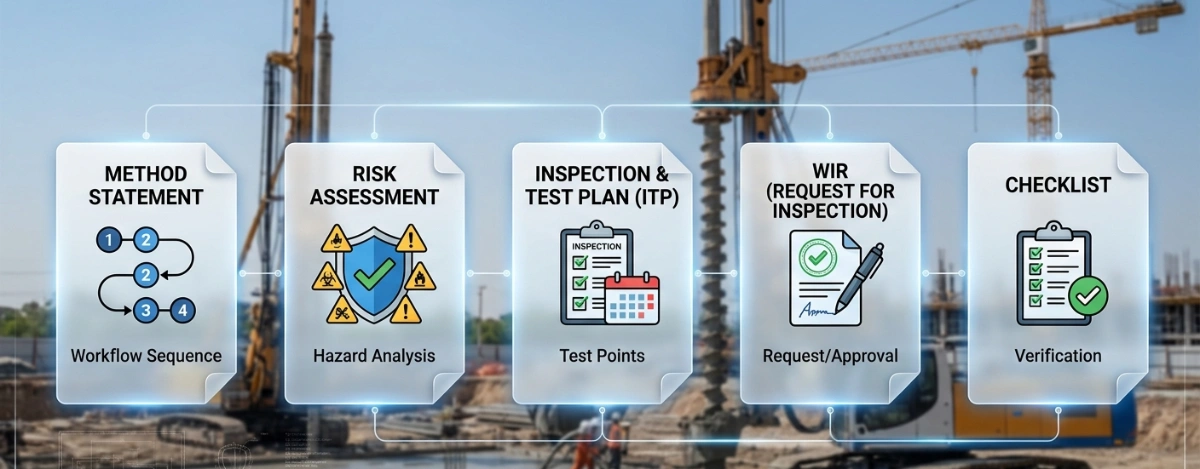
Unlike a downloadable Word or PDF template, this method statement is an AI-assisted editable starting point connected directly to a matching Inspection and Test Plan. Every section is structured, project-adaptable, and ready to export.
- AI-assisted drafting — Customize every section with AI for your specific project scope.
- Linked ITP — A matching inspection and test plan is generated alongside the method statement.
- Multiple export formats — Download as a formatted PDF or editable Excel spreadsheet.
- Editable starting point, not a final document — Review, verify, and adjust all content against your project requirements before use.
Static template vs. Quollnet workflow
| Feature | Static template | Quollnet |
|---|---|---|
| Project-specific content | Manual fill-in required | AI-assisted customization |
| Linked ITP | Separate document, no link | Matching ITP included |
| Export formats | Usually PDF only | PDF and Excel |
| Structured sections | Free-form layout | 13 standardized sections |
| Saved to your account | Local file only | Cloud-saved, reusable |
| Content accuracy | You verify everything | AI-assisted, you still verify |
| Cost | Often free but time-intensive | Free to customize and download |
What you can customize
When you save this method statement to your account, every section becomes editable. The following 13 sections are included:
- Scope — Defines the activity and its boundaries.
- References — Standards, specifications, and drawings.
- Responsibilities — Roles and accountabilities.
- Resources — Labour, plant, and equipment summary.
- Materials — Materials and compliance requirements.
- Equipment — Tools and equipment details.
- Prerequisites — Hold points and pre-conditions.
- Method sequence — Step-by-step construction sequence.
- Safety controls — HSE risk controls and PPE.
- Environmental controls — Environmental mitigation measures.
- QA/QC — Quality inspection and test requirements.
- ITP — Inspection and Test Plan table (has its own page).
- Attachments — Referenced drawings and documentation.
Why this method statement is used
This method statement is used to define and communicate the approved procedure for carrying out method statement: laying prestressed hollowcore slabs – bearings, edge angles, propping, joint grouting, and differential camber control on site. It ensures the work is planned in advance, the correct resources and controls are in place, and all personnel understand responsibilities, sequence, quality requirements, and safety controls before work begins. It aligns site execution with the documented scope and acceptance expectations.
Who uses this method statement
This method statement is used by contractors, site supervisors, project engineers, QA/QC engineers, HSE officers, consultants, and client representatives. It serves as a shared reference for planning, execution, supervision, inspection, and approval of the activity on site.
When it is prepared and submitted
The method statement is prepared before the work activity starts and submitted as part of the pre-construction documentation package for review and approval.
Who reviews or approves it
The method statement is usually submitted to the client representative, consultant, resident engineer, or project management consultant for review and approval before the work commences.
Important approval note
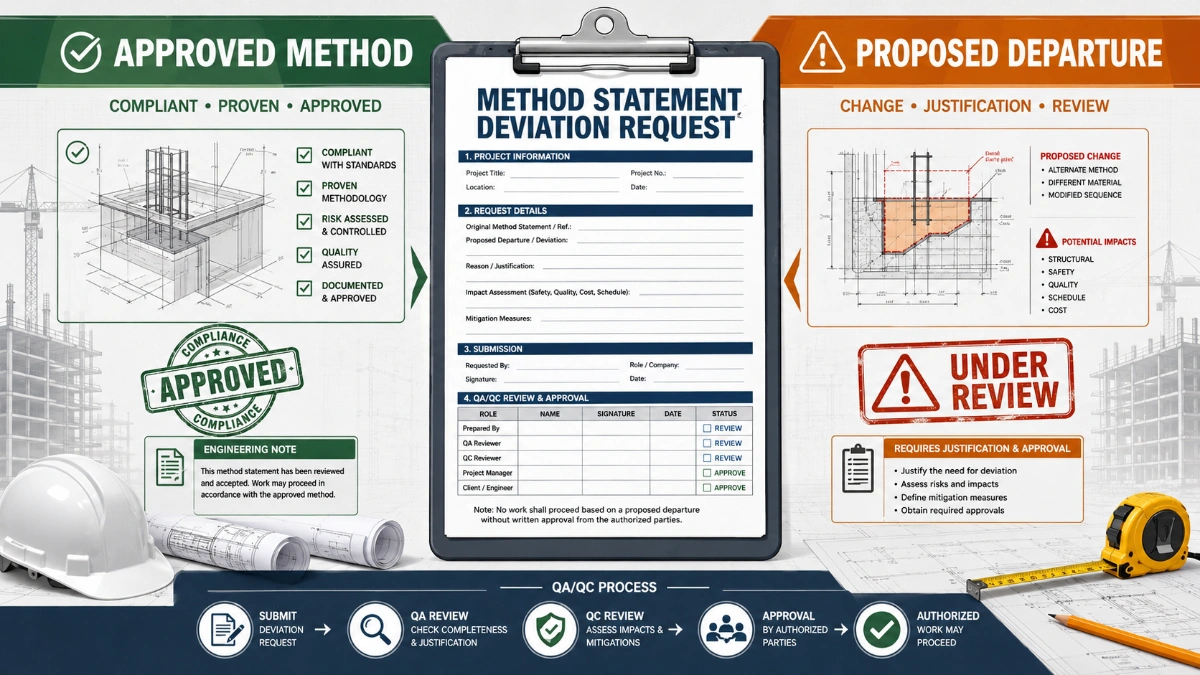
This method statement is an AI-assisted editable starting point, not a pre-approved document. Before use on any project, all content must be reviewed and approved by the relevant parties (superintendent, principal contractor, or client representative) in accordance with your contract and project quality plan.
For example: if your specification requires a departure from a referenced standard, that departure must be documented and approved separately — this method statement will not capture that automatically. Always verify against your applicable drawings, specifications, and regulatory requirements.
Method statement content
Scope
Works Included
- Receipt, inspection, and installation of prestressed precast hollowcore slabs to designated bays/spans.
- Verification and provision of minimum bearing length and bearing preparation to concrete, masonry or steel supports.
- Installation of galvanized steel edge support angles and fixings where specified.
- Installation and removal of temporary propping/towers as per manufacturer’s/shop drawings and approved Temporary Works Design (TWD), if required.
- Placement of continuity reinforcement and grouting of longitudinal keyways/joints.
- Control and checking of differential camber and level/alignment tolerances.
- Associated HSE controls, quality control, and records per the Inspection & Test Plan (ITP).
Exclusions
- Design of the hollowcore units and permanent works (by Others/Designer).
- In-situ structural toppings and finishes unless specifically stated.
- Fire stopping, edge protection to permanent works, and MEP openings (unless shown on approved drawings).
Key Objectives
- Install units to correct line and level while achieving specified minimum bearing lengths.
- Ensure safe, stable temporary condition prior to joint grouting and until strength is achieved.
- Achieve monolithic action across joints with full-depth grout and continuity bars where detailed.
References
| Document Type | Reference / Number | Revision | Notes |
|---|---|---|---|
| Standard | BS EN 1168 | ||
| Standard | EN 1992-1-1 / ACI 318 | ||
| Standard | BS EN 13670 | ||
| Standard | BS EN 13369 | ||
| Code of Practice | BS 5975 | [Verify per project HSE plan and local regulations] | |
| Standard | BS 7121-1 / ISO 12480 | [Verify per project HSE plan and local regulations] | |
| Standard | ASTM C1107, EN 1504-3 | [Verify per project specifications] |
Responsibilities
| Role | Responsibility | Name / Party |
|---|---|---|
| PM | Lead | Main Contractor |
| CM | Manage | Main Contractor |
| TWC | Control T/W | Main Contractor |
| AP (Lifting) | Plan lifts | Main Contractor |
| Supervisor | Supervise | Erection Subcontractor |
| QA/QC | QA/QC | Main Contractor |
| Surveyor | Survey | Main Contractor |
| HSE | HSE | Main Contractor |
| Operator/Signaller | Operate/Signal | Cranage Subcontractor |
Resources
| Resource Type | Description | Quantity | Remarks |
|---|---|---|---|
| Labour | Erection Supervisor (1), Skilled erectors/riggers (4–8), Slinger/Signaller (2), Crane Operator (1), Banksman (1), Surveyor (1), QA/QC (1). | As noted | |
| Temporary Works | Props/towers, head jacks, base spreaders, restraint straps, edge protection. | As per TWD |
Materials
| Material | Specification / Grade | Quantity | Remarks |
|---|---|---|---|
| Concrete C50/60 [Verify] | EN 1168 | As per BOQ | |
| ASTM C1107 / EN 1504-3 | As required | ||
| As required | |||
| S275/S355 | EN ISO 1461 | As required | |
| ETAG/ETA approved | As required |
Equipment
| Equipment | Capacity / Type | Quantity | Inspection Required |
|---|---|---|---|
| 80–200 t [Verify] | 1 | Yes | |
| Set | Yes | ||
| 1 set | Yes | ||
| ≥ design kN [Verify] | As per TWD | Yes | |
| 1 | Yes | ||
| As required | Yes | ||
| Set | Yes |
Prerequisites
- Approved shop drawings, erection layout, bearing details, and manufacturer’s method notes.
- TWD for propping/restraint approved by TWC; Permit to Load/Strike templates prepared.
- Approved Lift Plan and crane selection; ground bearing check for outriggers and mats.
- Edge support angle design/size and fixing schedule approved.
- Material approvals: hollowcore COC, grout data sheets and batch certs, anchors ETA, galvanizing certs.
- Set-out complete: grid lines on supports, bearing lines, reference datums.
- Bearing surfaces completed, clean, and level; any mortar levelling beds cured to required strength.
- Fall protection and collective measures installed (guardrails/nets) [Verify per project HSE plan].
- Exclusion zones and traffic management established; weather forecast checked; wind monitoring in place.
- Toolbox talks for lifting, working at height, silica dust control, and grout handling.
- Emergency and rescue plans for working at height and crane incidents.
Method Sequence
| Step | Activity | Description | Responsibility | Inspection / Hold Point |
|---|---|---|---|---|
| 1 | Pre-start coordination | Hold start-up meeting; review latest drawings, lift plan, TWD, sequence, access, and weather. | Site Manager / AP (Lifting) | Yes |
| 2 | Survey & set-out | Mark bearing lines and slab centrelines. Verify support levels using laser/total station. | Surveyor | Yes |
| 3 | Bearing preparation | Clean supports. Install bearing pads (10–15 mm) or levelling mortar as detailed. Ensure minimum bearing length: masonry ≥ 75 mm; RC/steel ≥ 60 mm [Verify per project]. | Erection Supervisor | Yes |
| 4 | Edge support angles | Fix galvanized angles to steel/RC edges as detailed. Use ETA anchors; respect edge distances. Shim to level. | Erection Supervisor | Yes |
| 5 | Temporary propping (if required) | Install props/towers per TWD with head jacks and restraint. Provide base spreaders; plumb and brace. | TWC / Site Team | Hold |
| 6 | Crane setup | Set crane on mats; rig as per plan; conduct pre-lift checks; establish exclusion zone and comms. | AP / Crane Operator | Yes |
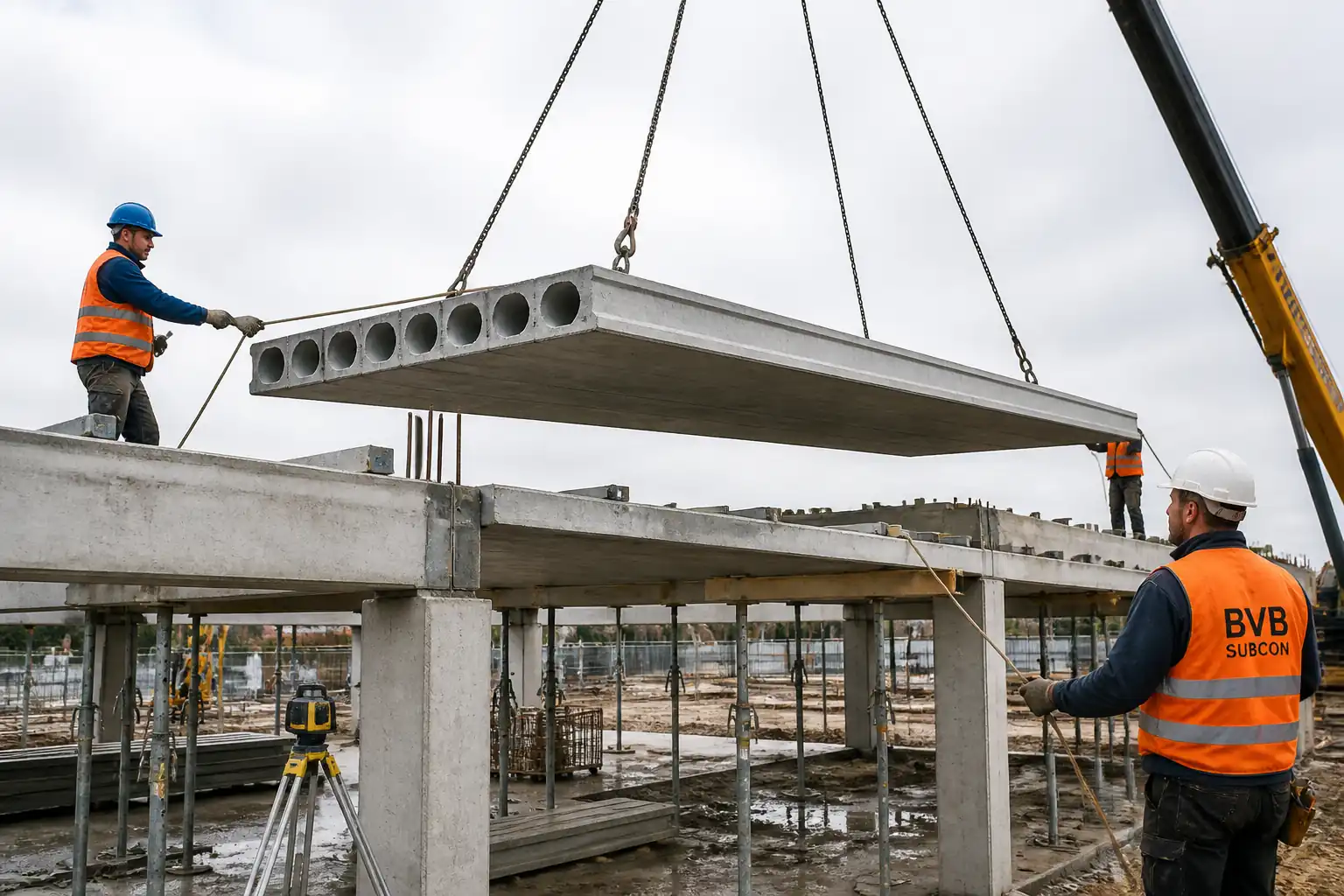
| 7 | First unit placement (benchmark) | Trial lift and place first slab to datum; check orientation of cores; seat on bearings/angles; align. | Erection Supervisor | Hold |
| 8 | Progressive installation | Install subsequent units bay-by-bay. Maintain temporary restraints/straps. Keep joint keyways clean. | Erection Crew | Yes |
| 9 | Differential camber check | Measure top surface at quarter, midspan, and supports using laser/straightedge. | Surveyor / QA | Yes |
| 10 | Continuity reinforcement | Place tie bars/dowels or mesh in keyways/openings as detailed. | Erection Crew | Witness |
| 11 | Joint preparation | Blow/vacuum clean keyways; pre-wet to SSD; install end dams/foam to prevent grout loss. | Erection Crew | Yes |
| 12 | Grouting of longitudinal joints | Mix flowable non-shrink grout; place/pump from one end until refusal and clean return at vents; rod/tap to release air; finish top flush. | Erection Crew / QA | Witness |
| 13 | Curing and protection | Protect grout from traffic, vibration, and drying; apply curing per data sheet; maintain barriers. | Site Team | Yes |
| 14 | Removal of props (if used) | Strike props only after achieving required strengths (grout and any topping) and as per TWD sequence; release gradually. | TWC / Site Team | Hold |
| 15 | Final inspection & survey | Check bearings, alignment, levels, grouting completeness, fixings; conduct as-built survey. | QA/QC / Surveyor | Yes |
Health, Safety and Environment (HSE) – Safety Controls
Task-Specific Hazards and Controls
1) Hazard: Crane lifting of long precast units
- Likely consequence: Crush injuries, dropped load, structural damage.
- Engineering/procedural control: Appointed Person lift plan; certified crane and gear; exclusion zone with barriers; tag lines; two-way radio; wind monitoring (cease lifts typically ≥ 12 m/s or as per lift plan) [Verify].
- Required PPE: Hard hat with chin strap, hi-vis, gloves, safety boots, eye protection.
- Collective preventive measure: Physical exclusion/barricades, banksman control, no work under suspended loads.
- Inspection/permit/supervision: Daily crane/rigging inspections; in-date certificates; Lift Permit signed by AP and SM.
2) Hazard: Working at height and open edges/voids
- Likely consequence: Falls leading to severe injury/fatality.
- Engineering/procedural control: Install edge protection/guardrails or safety nets before erection; fall restraint on MEWPs; controlled access.
- Required PPE: Full-body harness and lanyard when required, hard hat, non-slip boots.
- Collective preventive measure: Edge protection to EN 13374 Class A/B [Verify]; platformed access.
- Inspection/permit/supervision: Daily inspection of edge protection; MEWP pre-use checks; Working at Height Permit.
3) Hazard: Instability of units before grouting/prop removal
- Likely consequence: Slab movement, collapse.
- Engineering/procedural control: Temporary propping/restraint per TWD; maintain bearing pads; do not overload until grout reaches specified strength; staged release.
- Required PPE: Standard site PPE.
- Collective preventive measure: Physical barriers and signage “No loading – curing”.
- Inspection/permit/supervision: TWC Permit to Load/Strike; supervisory sign-off after inspections.
4) Hazard: Pinch points during seating and alignment
- Likely consequence: Hand injuries, fractures.
- Engineering/procedural control: Use tag lines/pry bars; keep hands clear of crush zones; brief crew on hand signals and stop-works.
- Required PPE: Impact-resistant gloves.
- Collective preventive measure: Exclusion from load swing radius.
- Inspection/permit/supervision: Supervisor to control final positioning; dynamic risk assessment during lift.
5) Hazard: Drilling/fixing edge angles (silica dust, noise, kickback)
- Likely consequence: Respiratory harm, hearing loss, eye injuries.
- Engineering/procedural control: Use on-tool extraction with HEPA; wet suppression where practicable; low-vibration tools; noise mapping and time limits.
- Required PPE: FFP3 respirator, eye/ear protection, gloves.
- Collective preventive measure: Local dust extraction and acoustic screens where needed.
- Inspection/permit/supervision: Tool PAT/inspection; exposure records; [Verify per project HSE plan and local regulations].
6) Hazard: Chemical exposure from grout (alkaline)
- Likely consequence: Skin/eye burns, dermatitis.
- Engineering/procedural control: Closed mixing; follow SDS; emergency eyewash nearby; prohibit bare-hand contact.
- Required PPE: Chemical-resistant gloves, goggles/face shield, long sleeves.
- Collective preventive measure: Controlled mixing area with spill kit and bund.
- Inspection/permit/supervision: SDS on site; COSHH assessment; HSE audits.
7) Hazard: Outrigger punch-through/ground failure
- Likely consequence: Crane instability and collapse.
- Engineering/procedural control: Ground bearing pressure check; mats sized by AP; exclusion of underground services.
- Required PPE: Standard PPE.
- Collective preventive measure: Barriers around outrigger zones.
- Inspection/permit/supervision: AP sign-off; daily mat inspection.
8) Hazard: Weather (wind, lightning, rain)
- Likely consequence: Loss of control, slips, reduced visibility.
- Engineering/procedural control: Weather monitoring; stop work during lightning; anti-slip housekeeping; adjust lift orientation to wind.
- Required PPE: Weather-appropriate PPE.
- Collective preventive measure: Non-slip access and lighting.
- Inspection/permit/supervision: Supervisor to enforce hold points during adverse weather.
9) Hazard: Manual handling of packers and shims
- Likely consequence: Musculoskeletal injury.
- Engineering/procedural control: Use mechanical aids; team lifts; limit loads < 20 kg/person [Verify].
- Required PPE: Gloves, boots.
- Collective preventive measure: Work positioning to waist height where possible.
- Inspection/permit/supervision: Manual handling training and supervision.
Environmental Controls
- Grout and washout management: Use lined mixing area and sealed containers; collect wash water for pH-neutralization before disposal; prevent discharge to drains [Verify per local regulations].
- Dust control: HEPA extraction on drilling; wet methods where practical; regular sweeping/vacuuming (no dry sweeping).
- Noise management: Comply with permitted hours; use quieter equipment; provide acoustic screens where required; monitor LAeq if stipulated.
- Waste: Segregate pallets, steel offcuts, grout bags; dispose via licensed carriers; maintain waste transfer notes.
- Spills/fuels: Spill kits at crane and mixing areas; drip trays under plant; refuel in designated bunded zone.
- Traffic/deliveries: Stagger deliveries to reduce idling; defined routes; banksman at pinch points.
- Materials handling: Protect galvanizing from damage; cover grout to avoid contamination or rain ingress.
- Ecology and nuisance: Control lighting spill; minimize night glare; prevent debris dropping off edges with toe-boards or netting.
Quality Assurance / Quality Control
Controls and Tolerances
- Identification: Verify slab tags vs layout; damaged units quarantined and reported.
- Bearings: Min. bearing length masonry ≥ 75 mm; RC/steel ≥ 60 mm [Verify per project]. Full contact ≥ 90% after placement. Level tolerance across support ≤ 3 mm.
- Alignment/Levels: Grid ±10 mm; adjacent top surface level difference ≤ 6 mm over 2 m straightedge; end alignment ≤ 5 mm.
- Differential Camber: Adjacent unit camber difference ≤ span/1000 or 10 mm, whichever is less [Verify]. Record actuals.
- Edge Angles: Level within ±3 mm; fixings per design; torque per data sheet; edge distance as manufacturer.
- Grout: ASTM C1107 Type C or EN 1504-3 R4 equivalent [Verify]. Flow (ASTM C939) 20–30 s [Verify]. 28-day compressive strength ≥ specified (typ. 40 MPa) and ≥ 20 MPa before temporary construction loading [Verify].
- Propping: Installed per TWD; permits to load/strike; staged release observed; no visible distress.
Testing and Inspection Frequency
- Bearings and bearing length: 100% units (both ends) with recorded measurements.
- Anchors: Torque 100%; pull-out test sample ≥ 2% per type/diameter, minimum 5 tests [Verify].
- Grout tests: 1 set of cubes (3 nos.) per grout batch or per shift, whichever governs; test at 1, 7, 28 days [Verify method per lab].
- Surveys: Pre-install support levels; camber/level checks per bay; final as-built survey.
Documentation
- ITP checklists, torque logs, cube results, delivery dockets, TWC permits, lift plan and daily crane logs, survey reports, NCRs/corrective actions if any.
Attachments
- Manufacturer’s slab layout drawings, unit schedules, and camber sheets.
- Temporary Works Design (propping/restraint) and TWC permits (load/strike).
- Lift Plan, crane certificates, rigging register, wind action plan.
- Anchor/fixing schedules, ETA certificates, torque values, and pull-test plan.
- Material approvals: grout datasheets, batch/COC; bearing pad specs; galvanizing certs.
- Method-specific checklists (bearing, placement, camber, grouting) and ITP forms.
- SDS for grout and chemical anchors.
- As-built survey drawings and QA dossier on completion.
This content is a read-only public reference. Download or customize to get an editable version.
ITP preview
The first inspection activities from the linked ITP for Method Statement: Laying Prestressed Hollowcore Slabs – Bearings, Edge Angles, Propping, Joint Grouting, and Differential Camber Control:
| Activity | Inspection / Test | Acceptance Criteria | Responsibility | Record |
|---|---|---|---|---|
| Pre-start document review | Approved MS, ITP, TWD, Lift Plan, drawings available on site. | PM / QA-QC | Approved docs list | |
| Support level and set-out survey | Support level ±3 mm over 2 m; grid ±10 mm [Verify]. | Surveyor / QA-QC | Survey report | |
| Bearing preparation | Bearing pads/mortar installed; min. bearing length: masonry ≥ 75 mm; RC/steel ≥ 60 mm [Verify]; ≥90% contact. | Erection Supervisor / QA-QC | Bearing checklist, photos |
Showing 3 of 15 inspection activities. View full ITP →
Related Inspection and Test Plan
An Inspection and Test Plan (ITP) is available for Method Statement: Laying Prestressed Hollowcore Slabs – Bearings, Edge Angles, Propping, Joint Grouting, and Differential Camber Control. The ITP defines the inspection activities, acceptance criteria, hold and witness points, responsible parties, and records required to verify the work described in this method statement.
View the Method Statement: Laying Prestressed Hollowcore Slabs – Bearings, Edge Angles, Propping, Joint Grouting, and Differential Camber Control ITP →Frequently asked questions
Continue with related Quollnet resources connected to this method statement.