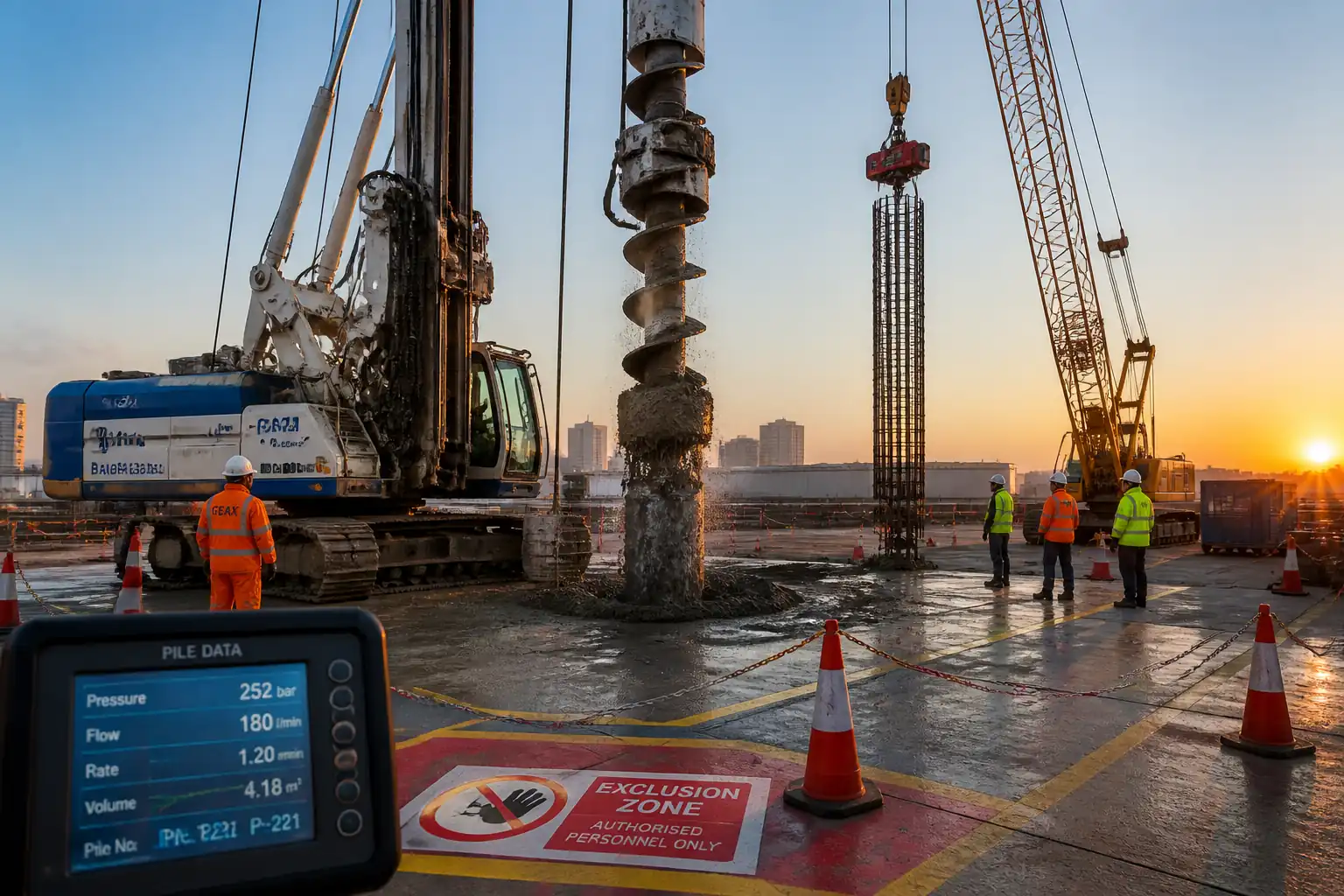

Inspection and Test Plan for Method Statement – Bored Cast-in-Place Concrete Piles (Dry Drilling Method)
AI-assisted inspection and test plan connected to a method statement, with PDF and Excel export.
More than a static template
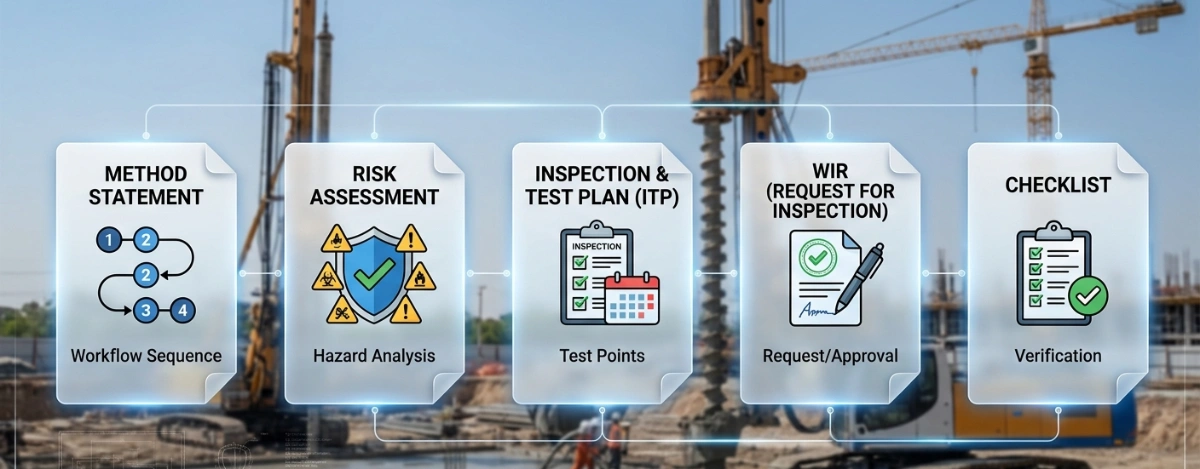
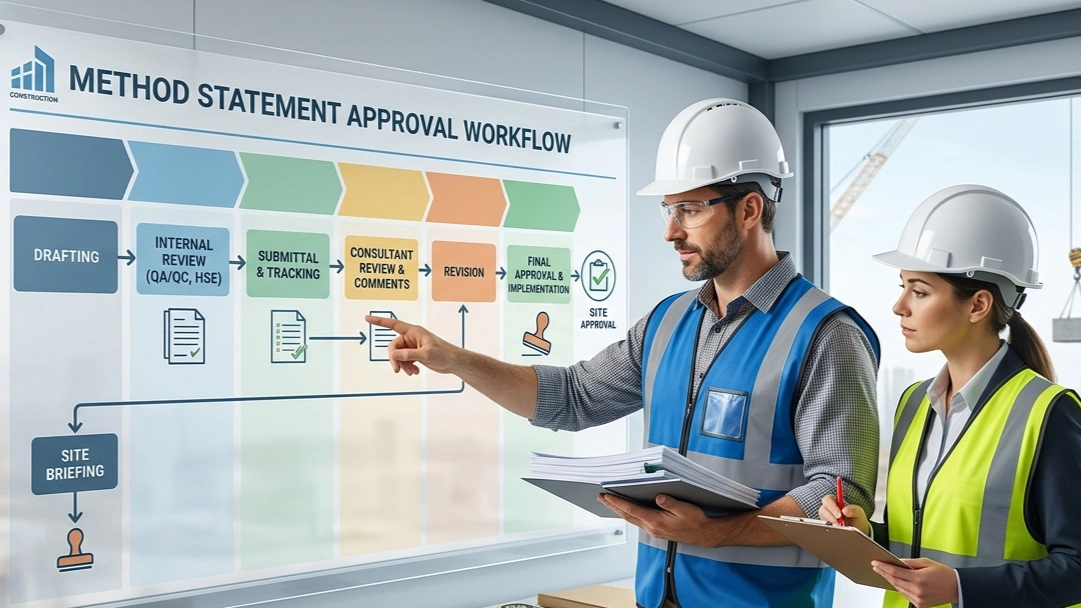
Unlike a downloadable Word or PDF template, this ITP is an AI-assisted editable starting point directly connected to its method statement. Every inspection activity, hold point, and acceptance criterion is structured and ready to adapt to your project.
- AI-assisted customization — Tailor inspection activities and acceptance criteria to your specific project scope.
- Linked method statement — This ITP is connected to the corresponding method statement describing the work sequence.
- Multiple export formats — Download as a formatted PDF or editable Excel spreadsheet.
- Editable starting point, not a final document — Review and verify all content against your project specifications and standards before use.
What you can customize
When you save this ITP to your account, every inspection row becomes editable. You can add, remove, or modify:
- Inspection activity — Description of what is being inspected.
- Inspection type — Hold point (H), Witness point (W), Review (R), or Monitor (M).
- Responsibility — Contractor, subcontractor, engineer, or client.
- Frequency — How often the inspection occurs.
- Acceptance criteria — Referenced standard or specification requirement.
- Records — Forms, test reports, or checklists required as evidence.
Why this ITP is used
To control workmanship and verify that each pile meets design, safety, and quality requirements before proceeding to subsequent stages.
Who uses this inspection and test plan
Contractor’s QA/QC, Piling Superintendent, Engineer/Employer’s Representative, Testing Laboratory, and HSE team.
When this ITP is prepared and submitted
Applied from setting out through drilling, base verification, cage placement, concreting, trimming, and integrity testing.
Who receives or approves this ITP
Engineer/Employer’s Representative for review and approval prior to piling operations.
Inspection scope
Covers setting out, platform certification, plant readiness, casing, drilling, base cleanliness/dryness, reinforcement, concrete tests, placement monitoring, trimming, and integrity testing.
Typical hold, witness, and review points
Hold: platform certification, base cleanliness/dryness, reinforcement before pour. Witness: casing verticality, drilling depth, concrete tests, concreting progress, pile head trimming.
Typical inspection records
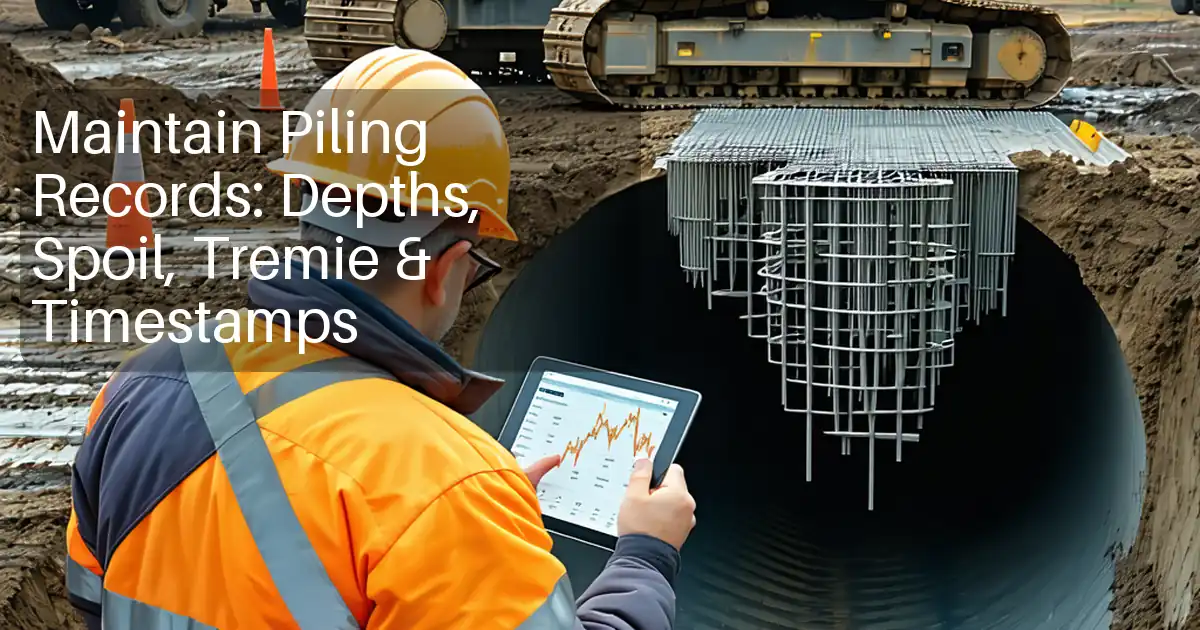
Survey/as-built reports, piling logs, base inspection checklists, rebar inspection sheets, concrete test reports, batch tickets, integrity test reports, photos, NCR/CAR if any.
Important approval note
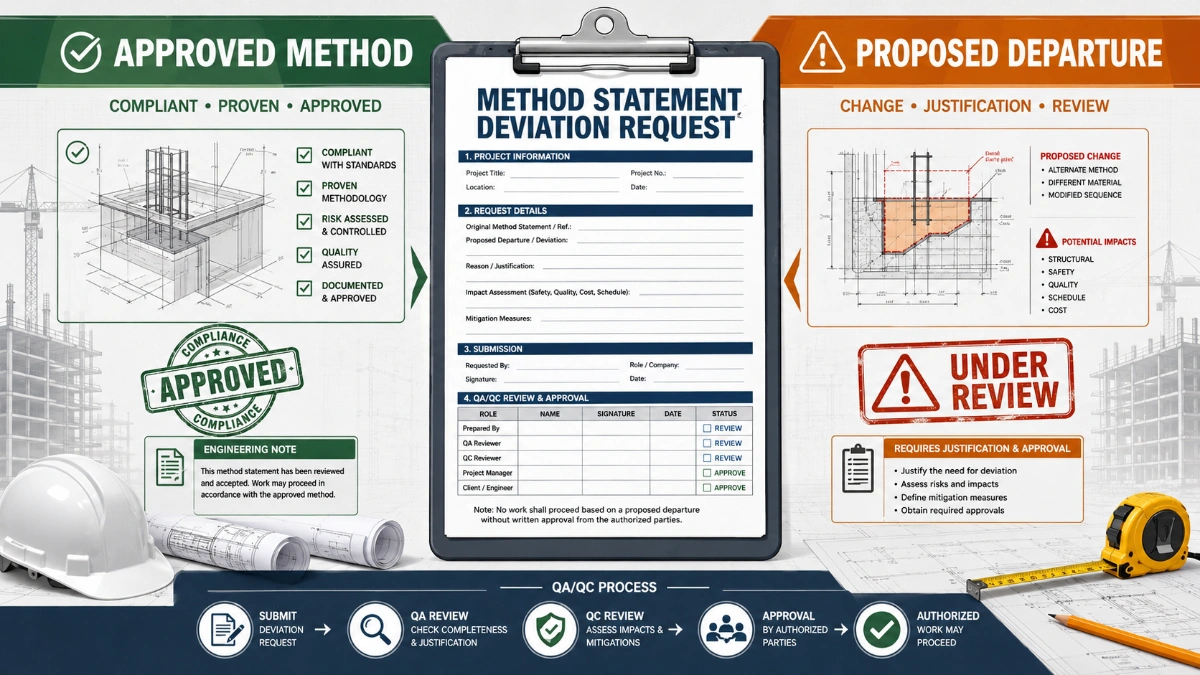
This ITP is an AI-assisted editable starting point, not a pre-approved document. Before use on any project, all inspection activities, hold points, and acceptance criteria must be reviewed and approved by the relevant parties (superintendent, principal contractor, or client representative) in accordance with your contract and project quality plan.
Always verify acceptance criteria against your applicable drawings, specifications, and regulatory requirements. Hold points must be confirmed with the relevant authority before work proceeds past that point.
Inspection and test plan
| Activity | Inspection / Test | Acceptance Criteria | Responsibility | Record |
|---|---|---|---|---|
| Setting out verification | Check pile coordinates vs grid; Witness point | Within ±75 mm of design centerline or per spec | Surveyor / QA | Survey report; IR approval |
| Piling platform certification | Review platform certificate; visual inspection; Hold point | Certified safe bearing and drainage; no soft spots | Contractor / Engineer | Platform certificate; checklist |
| Plant and lifting gear | Verify inspection tags; load charts; daily checklists | Valid certifications; no defects | Contractor / HSE | Plant logs; lifting gear register |
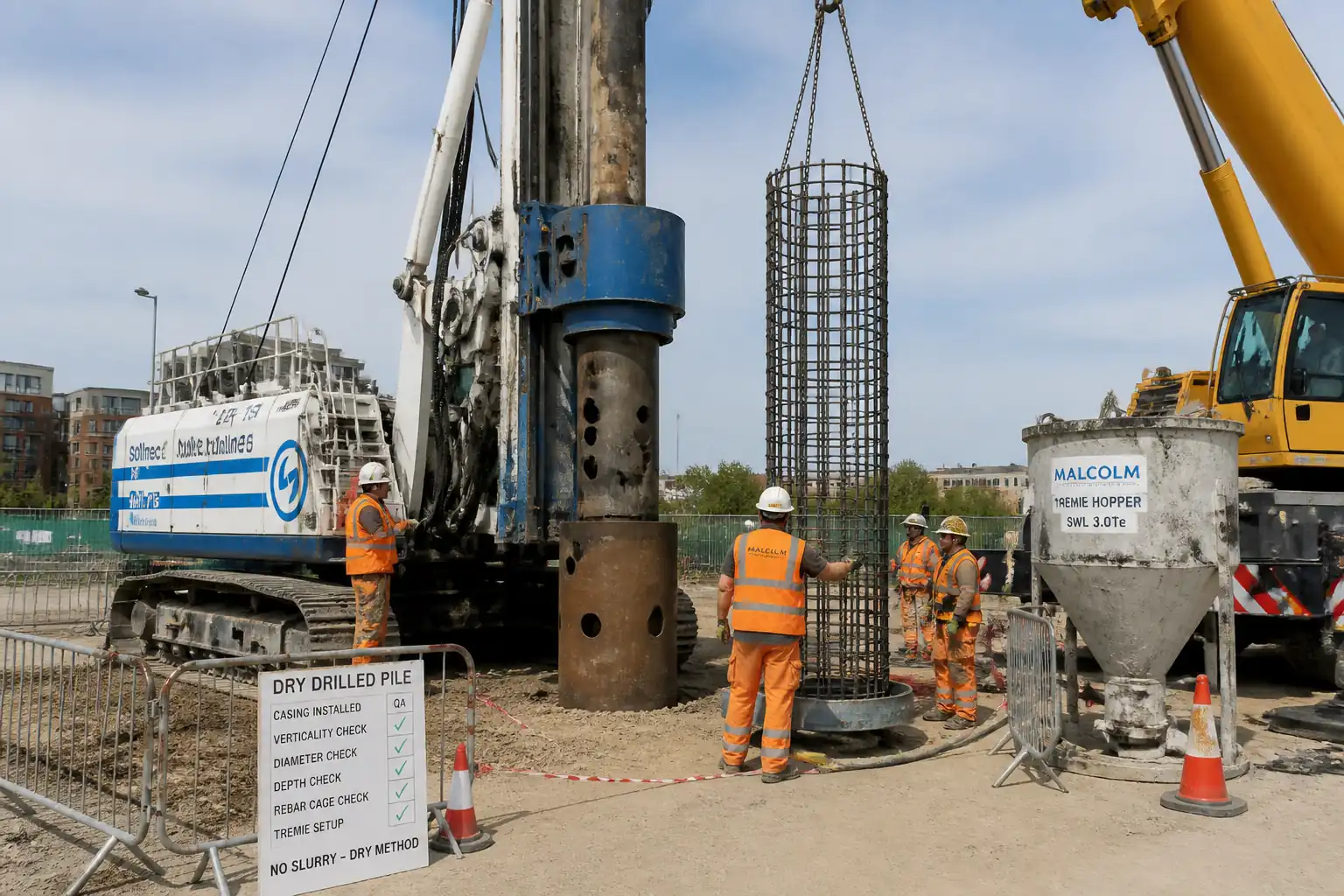
| Temporary casing installation | Check verticality and embedment; Witness | Verticality ≤ 1:200; sufficient embedment to prevent collapse/inflow | Piling Superintendent / Engineer | Casing log; photos |
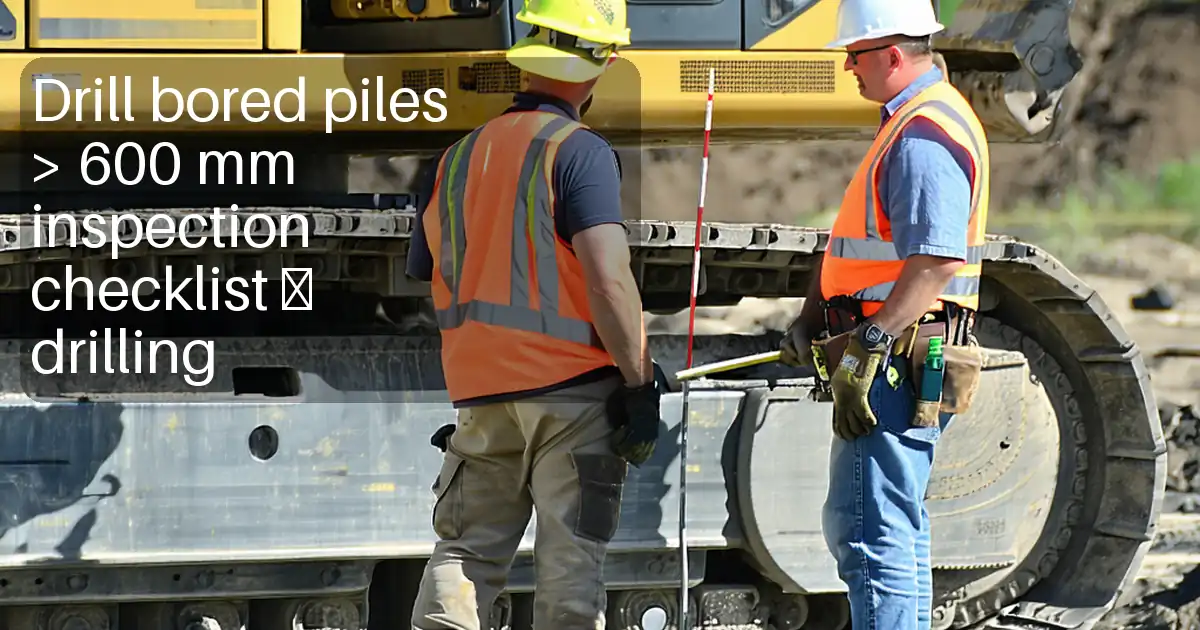
| Drilling to depth | Depth measurement; verticality; spoil inspection | Design depth achieved; diameter not less than design; verticality within tolerance | Piling Superintendent / QA | Piling log; depth record |
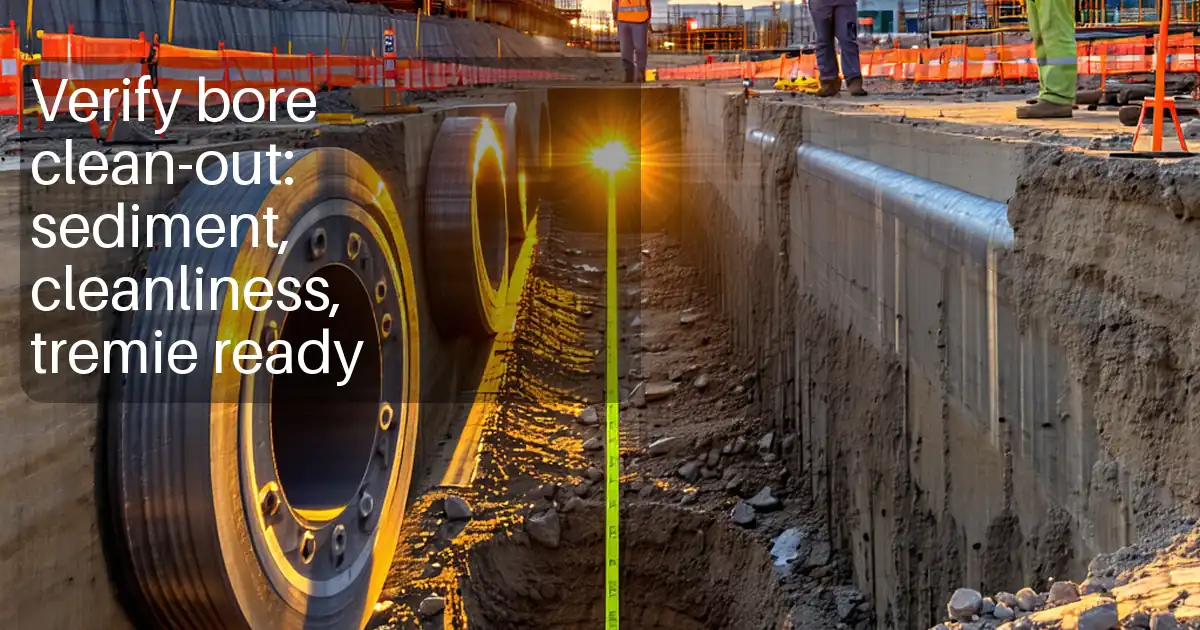
| Base cleaning and dryness check | Weighted tape/camera check; Hold point | Loose debris ≤ 50 mm; standing water ≤ 50 mm or inflow ≤ 20–50 L/min [Verify] | QA/QC / Engineer | Base inspection checklist; IR approval |
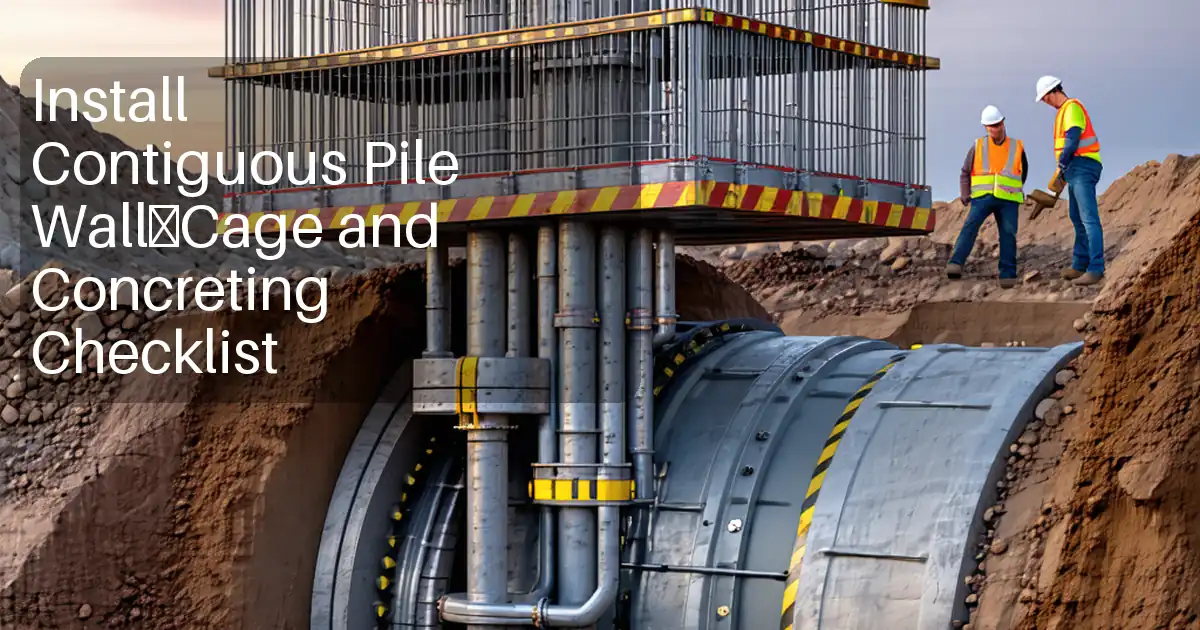
| Reinforcement cage inspection | Check bar size/spacing, splices, cover spacers, cage length | Per approved bar schedule; cover ≥ 75 mm; splices/couplers approved | QA/QC / Engineer | Rebar inspection report; photos |
| Fresh concrete tests | Slump (ASTM C143/EN 12350-2), temp (ASTM C1064), air (ASTM C231 if specified); sampling (ASTM C31/EN 12350-1) | Slump 150–220 mm [Verify]; temp 5–32°C; air per mix design | QC Technician | Concrete test reports; batch tickets |
| Concrete placement monitoring | Continuous pour; head maintained; casing withdrawal control | No interruptions; no segregation/soil inclusion; volume within +10%/-5% vs theoretical [Verify] | Piling Superintendent / QA | Pour log; site diary |
| Specimen curing and strength tests | Curing and compression tests (ASTM C39/EN 12390-3) | 28-day strength ≥ specified f'c; early age results per requirement | QC / Lab | Lab reports |
| Pile head trimming inspection | Visual/hammer sounding; rebar exposure; level check | Sound concrete at cut-off; level ±10 mm; bars per detail | QA/QC / Engineer | Pile head inspection report |
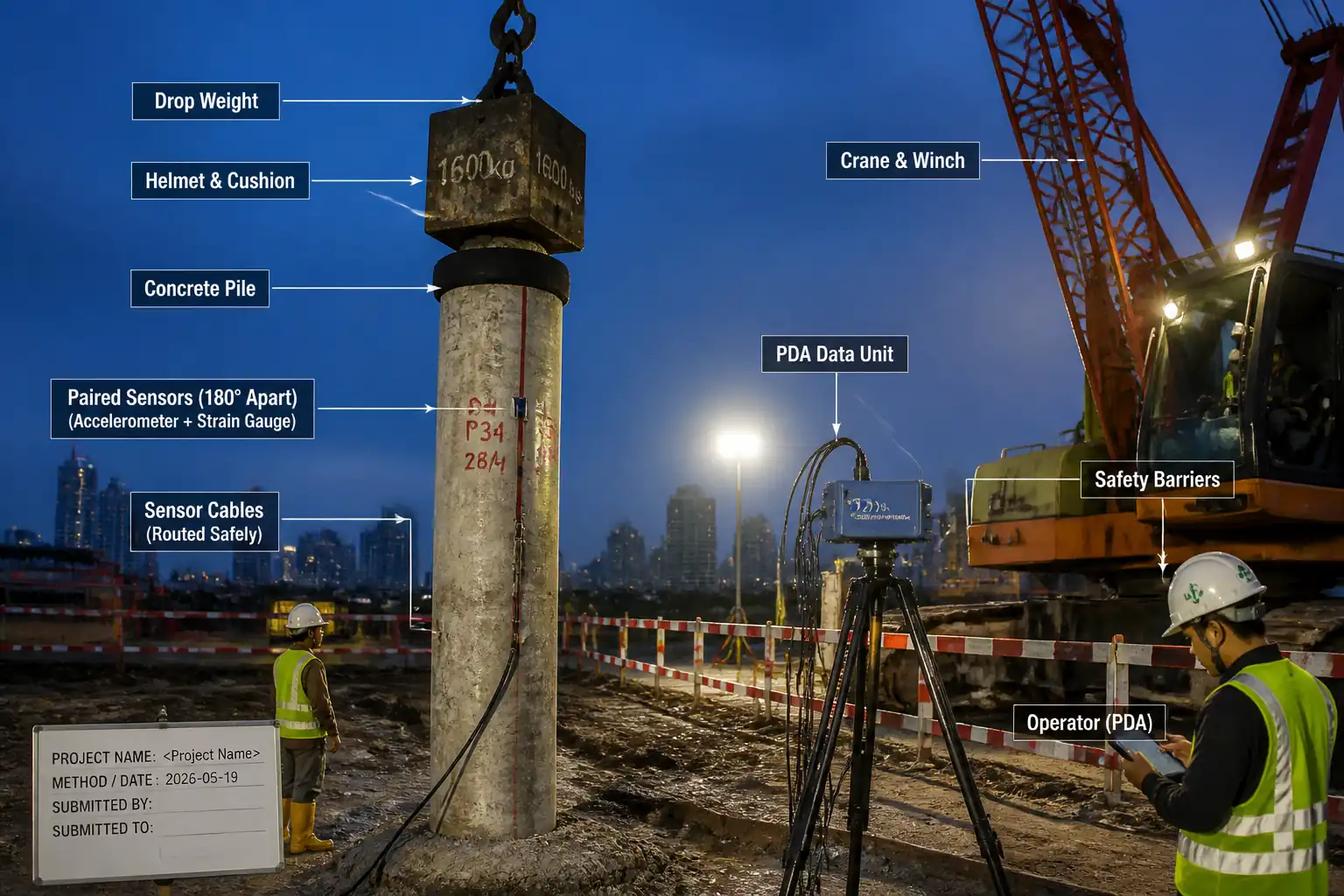
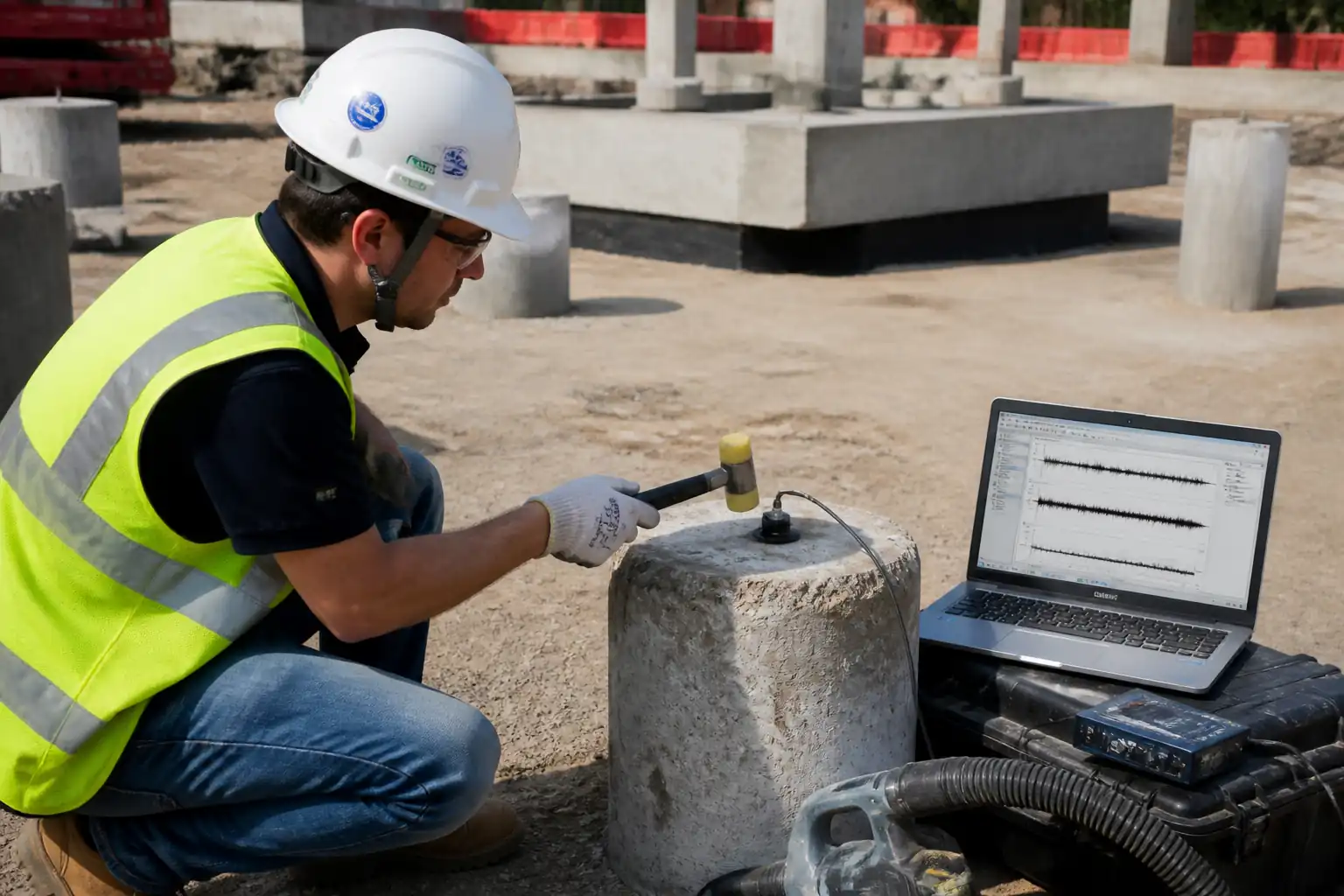
| Integrity testing (PIT/CSL) if specified | Low strain PIT per ASTM D5882; CSL per ASTM D6760 where tubes exist | No major defects; acceptance per Engineer criteria/spec | Specialist / QA / Engineer | Integrity test report |
This table is a read-only public reference. Download the PDF or Excel version, or customize this ITP to edit it for your project.
Frequently asked questions
Related method statement
This Inspection and Test Plan is associated with the Method Statement – Bored Cast-in-Place Concrete Piles (Dry Drilling Method) method statement, which describes the step-by-step construction sequence, resources, materials, equipment, safety controls, and environmental controls for this activity.
View the Method Statement – Bored Cast-in-Place Concrete Piles (Dry Drilling Method) method statement →Continue with related inspection, method statement, article, and checklist resources.