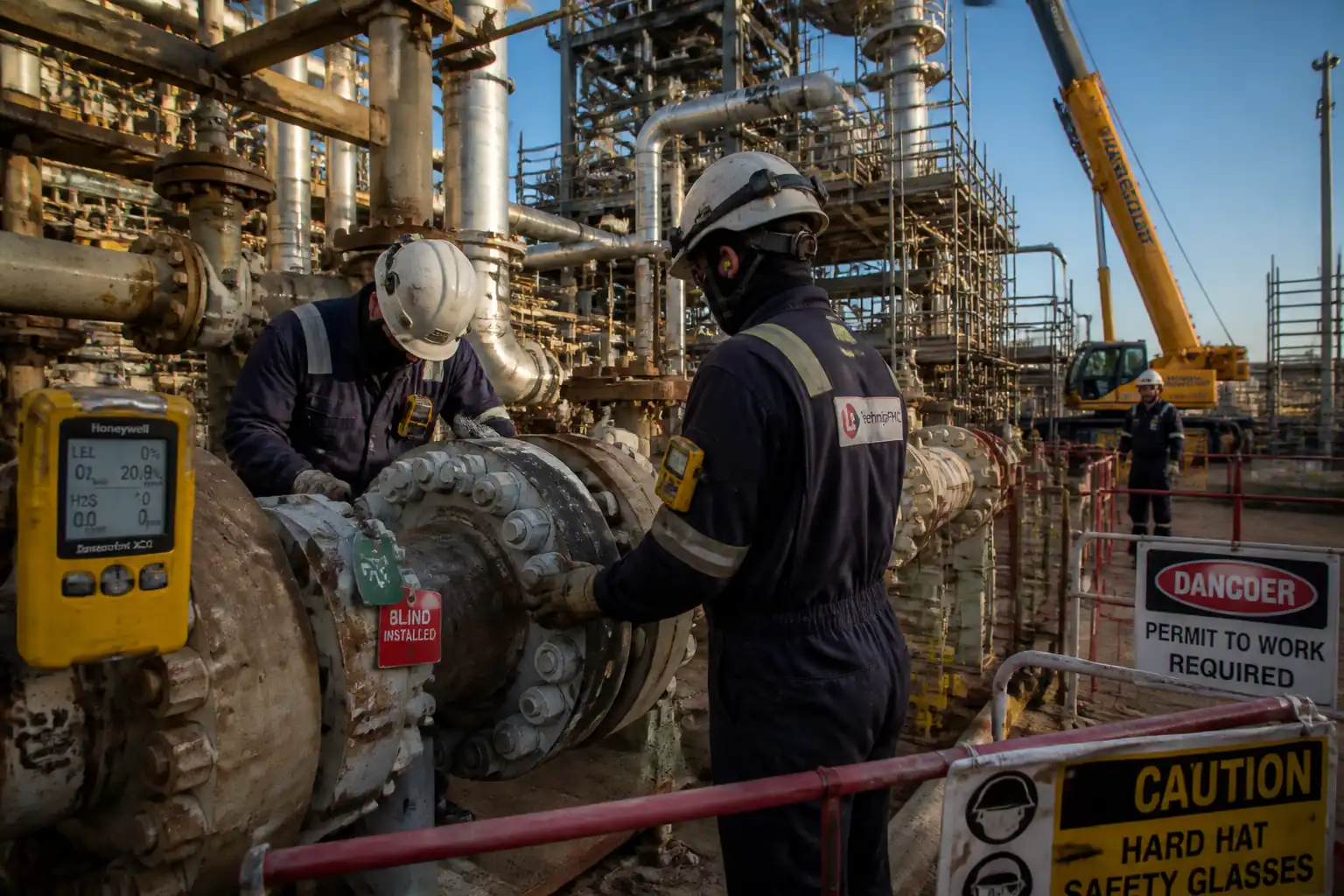

Method Statement: Tie‑In Works Inside a Live Oil & Gas Plant (Shutdown, Isolation, SIMOPS, Testing, Reinstatement) – Method Statement
AI-assisted method statement with matching ITP, PDF download, and Excel export.
More than a static template
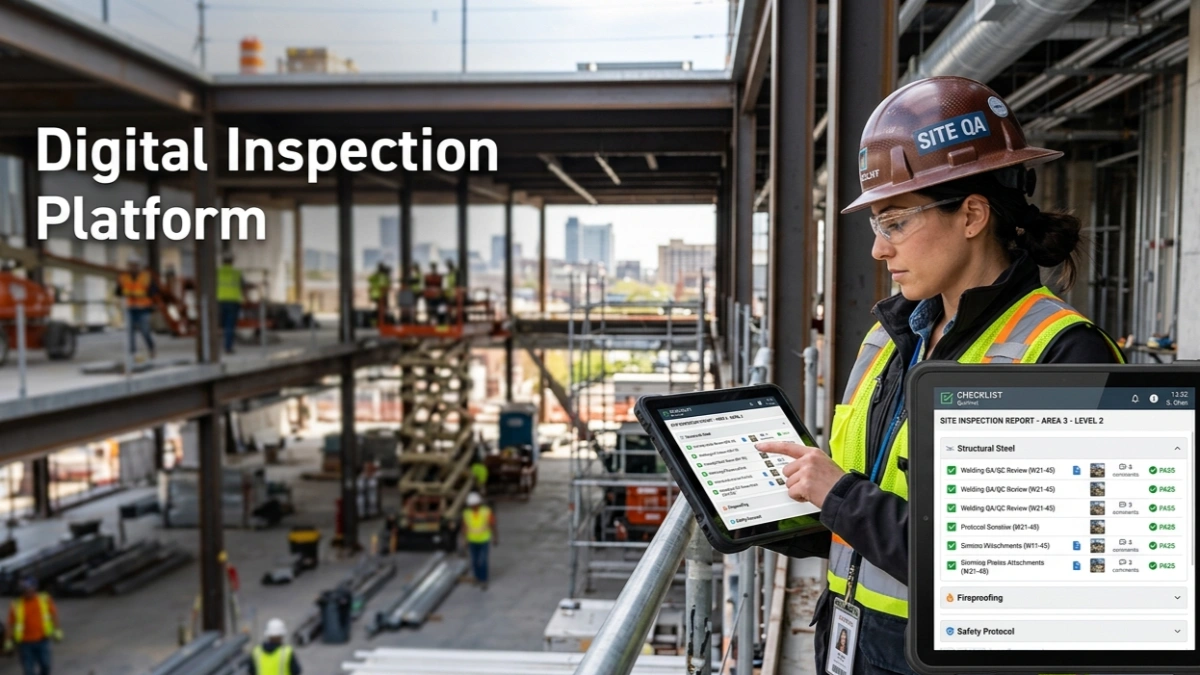
Unlike a downloadable Word or PDF template, this method statement is an AI-assisted editable starting point connected directly to a matching Inspection and Test Plan. Every section is structured, project-adaptable, and ready to export.
- AI-assisted drafting — Customize every section with AI for your specific project scope.
- Linked ITP — A matching inspection and test plan is generated alongside the method statement.
- Multiple export formats — Download as a formatted PDF or editable Excel spreadsheet.
- Editable starting point, not a final document — Review, verify, and adjust all content against your project requirements before use.
Static template vs. Quollnet workflow
| Feature | Static template | Quollnet |
|---|---|---|
| Project-specific content | Manual fill-in required | AI-assisted customization |
| Linked ITP | Separate document, no link | Matching ITP included |
| Export formats | Usually PDF only | PDF and Excel |
| Structured sections | Free-form layout | 13 standardized sections |
| Saved to your account | Local file only | Cloud-saved, reusable |
| Content accuracy | You verify everything | AI-assisted, you still verify |
| Cost | Often free but time-intensive | Free to customize and download |
What you can customize
When you save this method statement to your account, every section becomes editable. The following 13 sections are included:
- Scope — Defines the activity and its boundaries.
- References — Standards, specifications, and drawings.
- Responsibilities — Roles and accountabilities.
- Resources — Labour, plant, and equipment summary.
- Materials — Materials and compliance requirements.
- Equipment — Tools and equipment details.
- Prerequisites — Hold points and pre-conditions.
- Method sequence — Step-by-step construction sequence.
- Safety controls — HSE risk controls and PPE.
- Environmental controls — Environmental mitigation measures.
- QA/QC — Quality inspection and test requirements.
- ITP — Inspection and Test Plan table (has its own page).
- Attachments — Referenced drawings and documentation.
Why this method statement is used
This method statement is used to define and communicate the approved procedure for carrying out method statement: tie‑in works inside a live oil & gas plant (shutdown, isolation, simops, testing, reinstatement) on site. It ensures the work is planned in advance, the correct resources and controls are in place, and all personnel understand responsibilities, sequence, quality requirements, and safety controls before work begins. It aligns site execution with the documented scope and acceptance expectations.
Who uses this method statement
This method statement is used by contractors, site supervisors, project engineers, QA/QC engineers, HSE officers, consultants, and client representatives. It serves as a shared reference for planning, execution, supervision, inspection, and approval of the activity on site.
When it is prepared and submitted
The method statement is prepared before the work activity starts and submitted as part of the pre-construction documentation package for review and approval.
Who reviews or approves it
The method statement is usually submitted to the client representative, consultant, resident engineer, or project management consultant for review and approval before the work commences.
Important approval note
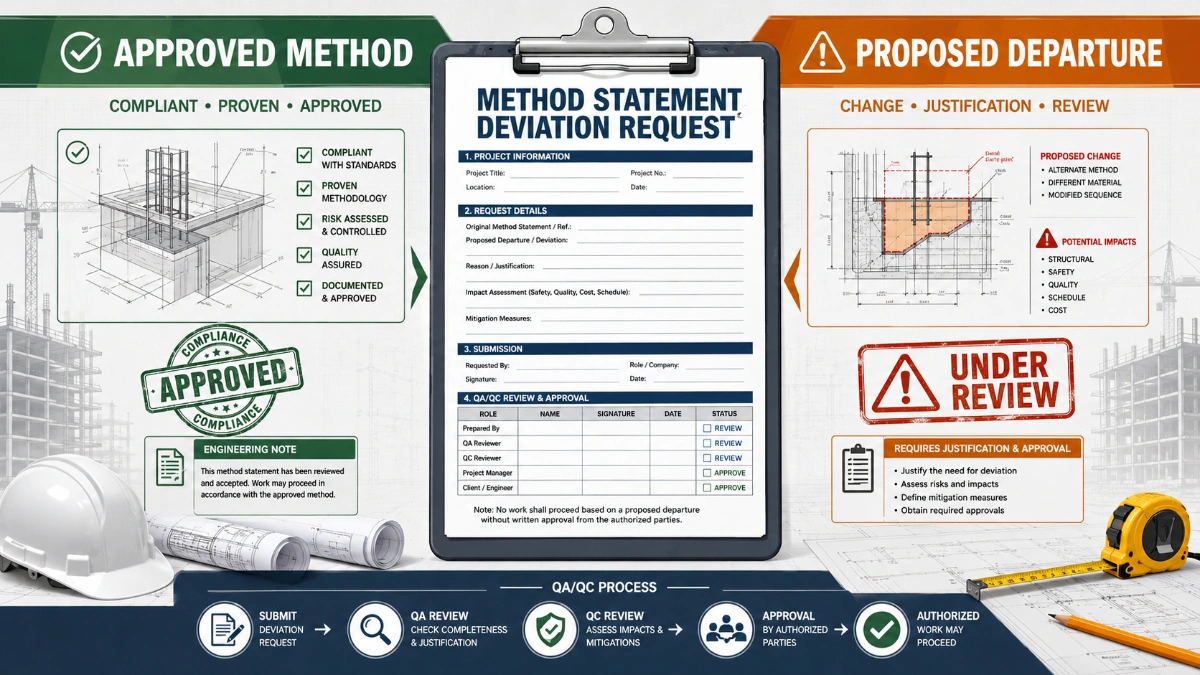
This method statement is an AI-assisted editable starting point, not a pre-approved document. Before use on any project, all content must be reviewed and approved by the relevant parties (superintendent, principal contractor, or client representative) in accordance with your contract and project quality plan.
For example: if your specification requires a departure from a referenced standard, that departure must be documented and approved separately — this method statement will not capture that automatically. Always verify against your applicable drawings, specifications, and regulatory requirements.
Method statement content
Scope
Workscope
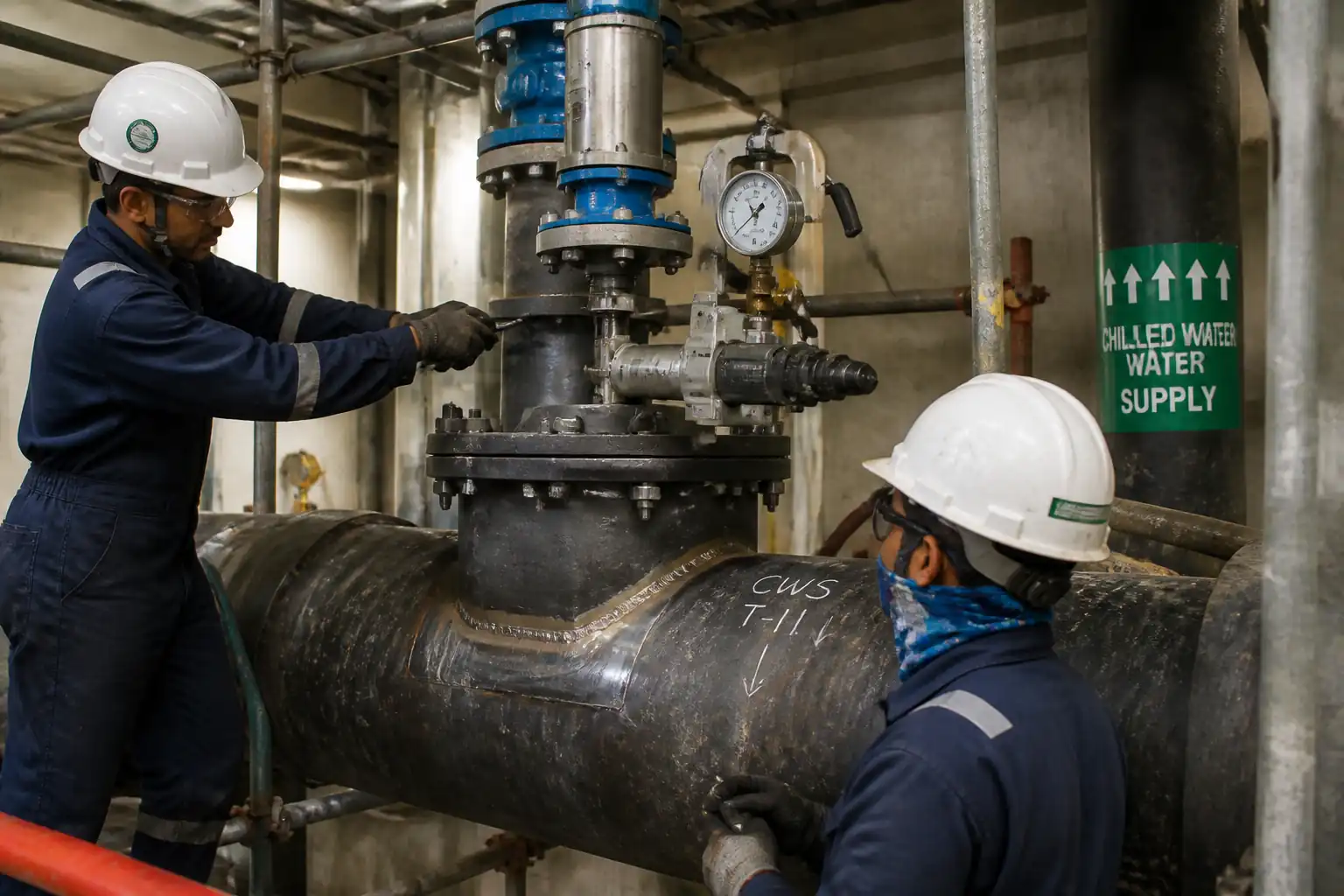
- Planning and execution of tie-in works on existing process piping/equipment within a live oil & gas plant during a defined shutdown/turnaround window.
- Development and approval of isolation philosophies (LOTO, DDB/DBB, spading/blinding), blind management, gas freeing and purging, and permit-to-work controls for SIMOPS.
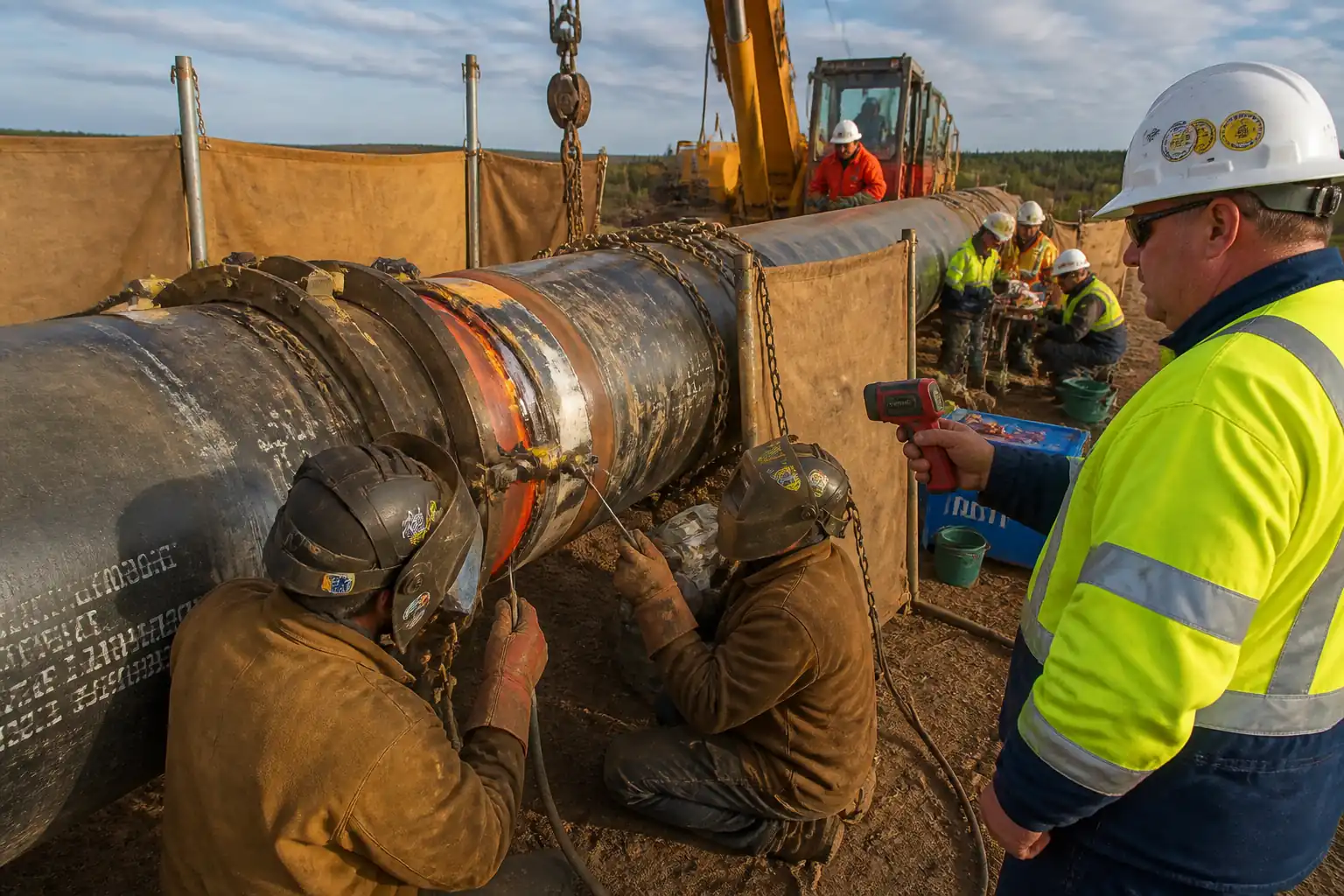
- Safe breaking of containment, removal/installation of spools, welding, NDE/NDT, pressure testing (hydrostatic or pneumatic), drying, leak checks, reinstatement, and system handback.
- QA/QC control including hold and witness points, test packs, punchlist clearance, and as-built documentation.
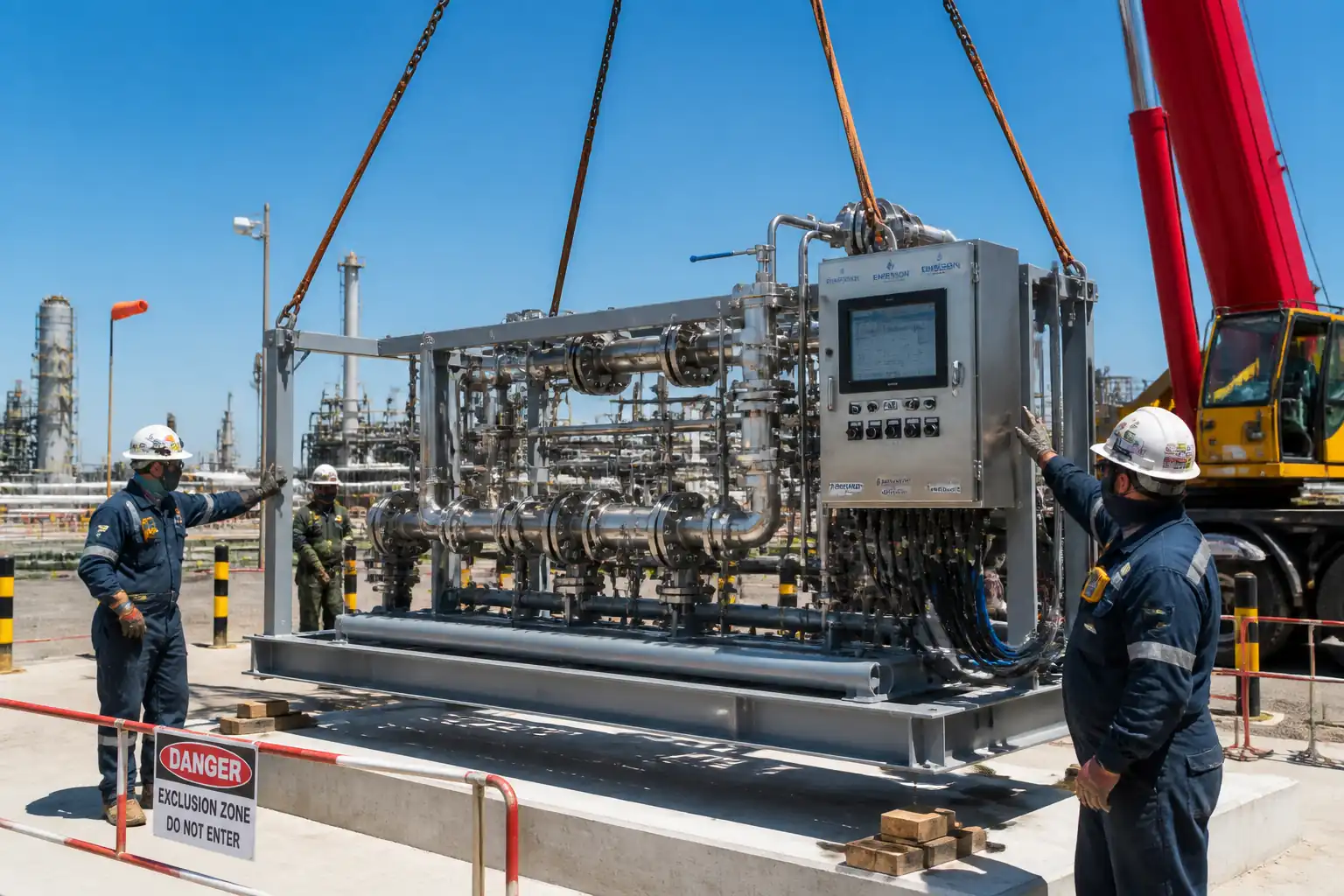
- HSE controls for hazardous area work, including continuous gas monitoring, ignition control, lifting near live equipment, and emergency preparedness.
Exclusions
- Hot tapping and line stopping are excluded unless separately authorized and engineered; if required, comply with API RP 2201 [Verify per project].
- New greenfield piping outside brownfield battery limits unless specified elsewhere.
Interfaces
- Operations/Area Authority for isolations, depressurization, gas testing, and reinstatement.
- Commissioning team for system acceptance, leak tests, flushing/drying criteria, and handover documentation.
- Other SIMOPS contractors for congestion management, access, and crane movements.
Constraints
- All works executed within approved shutdown window(s) and live plant constraints for hazardous areas (IEC 60079 zones). Tools and equipment must be suitable for the area classification or controls applied.
References
| Document Type | Reference / Number | Revision | Notes |
|---|---|---|---|
| Code | ASME B31.3 – Process Piping | Design, fabrication, examination, and testing requirements for process piping in hydrocarbon service. | |
| Code | ASME Boiler & Pressure Vessel Code, Section V – Nondestructive Examination | NDE technique qualification, calibration, and reporting. | |
| Code | ASME Boiler & Pressure Vessel Code, Section IX – Welding Qualifications | WPS/PQR and welder performance qualifications. | |
| Recommended Practice | API 570 – Piping Inspection Code | Integrity requirements for existing piping systems during tie-in planning and post-work verification. | |
| Recommended Practice | API RP 2201 – Safe Hot Tapping Practices in the Petroleum and Petrochemical Industries | Only if hot tapping is explicitly authorized [Verify per project]. | |
| Standard | IEC 60079 Series – Explosive Atmospheres | Selection of Ex-rated equipment, gas detectors, and controls for hazardous areas. | |
| International Standard | ISO 12944 – Paints and varnishes — Corrosion protection of steel structures | Coating repair and DFT verification after tie-in works [Verify project system]. | |
| International Standard | ISO 9712 – Non-destructive testing — Qualification and certification of NDT personnel | NDT personnel certification levels II/III. | |
| Standard | ASME PCC‑1 – Guidelines for Pressure Boundary Bolted Flange Joint Assembly | For gasket selection, bolt stress targets, tightening sequences, and leak avoidance. | |
| Management Standards | ISO 14001 / ISO 45001 | Framework for environmental and occupational health & safety controls [Verify per project HSE plan]. | |
| Project Documents | Project P&IDs, Isometrics, Line List, Tie‑in Index, Blind List, PTW Procedure, SIMOPS Plan | Use latest AFC/IFI revisions and approved MOC. |
Responsibilities
| Role | Responsibility | Name / Party |
|---|---|---|
| Project Manager | Ensures method adherence and timely completion | Contractor |
| Construction Manager / Mechanical Superintendent | Implements sequence, supervises field teams, resolves site issues | Contractor |
| PTW Coordinator / Area Authority (Operations) | Issues/controls PTW, verifies gas tests, maintains isolation and blind lists | Operations / Contractor |
| SIMOPS Coordinator | Coordinates work windows, conflicts, lifting and access with other parties | Operations / Contractor |
| Isolation Authority / Operations Supervisor | Defines and approves isolation certificates and depressurization steps | Operations |
| QA/QC Manager / Welding Inspector | Approves ITP, WPS/PQR, NDE procedures; releases hold points; records | Contractor |
| HSE Manager / HSE Officer | Verifies task-specific controls, gas monitoring, emergency readiness | Contractor |
| Authorized Gas Tester | Performs initial/continuous gas tests; issues gas-free/N2-asphyxiation warnings | Operations / Contractor |
| Lifting Supervisor / Appointed Person | Develops lift plans, supervises rigging, sets exclusion zones | Contractor |
| Commissioning Lead / Operations Representative | Witnesses leak checks, reinstatement, and accepts system handback | Operations / Contractor |
Resources
| Resource Type | Description | Quantity | Remarks |
|---|---|---|---|
| Supervision | Lead mechanical supervision | 1 | |
| Labor | Qualified pipefitters for carbon/stainless steel | 6–12 [Verify per scope] | |
| Labor | ASME IX qualified welders (SMAW/GTAW) | 4–8 [Verify per scope] | |
| Labor | Rigging and lifting crew | 4–6 | |
| Labor | NDT personnel Level II/III | 2–4 | |
| Labor | HSE officers and fire watch | 2–4 | |
| Labor | Authorized gas testers | 1–2 per shift |
Materials
| Material | Specification / Grade | Quantity | Remarks |
|---|---|---|---|
| Spectacle blinds / Spades / Paddles | Material grade per piping class; color-coded | Per blind list +10% spares | |
| Spiral wound SS/graphite or kammprofile | Per ASME B16.20; piping class | As per MTO + spares | |
| ASTM A193 B7 / A194 2H (or per spec) | Per ASME B16.5 dimensions | As per MTO | |
| CS/SS/Alloy per line class | MTC EN 10204 3.1; PMI if alloy | Per IFC isos | |
| SMAW/GTAW fillers | Per WPS/PQR [Verify] | As required | |
| Water/Nitrogen/Compressed air (pneumatic only if justified) | Clean, oil-free; O2 < 1% for N2 purge [Verify] | Per test volume + contingency | |
| LEL mix (e.g., methane), H2S span gas, O2 | Traceable calibration certificate | As required |
Equipment
| Equipment | Capacity / Type | Quantity | Inspection Required |
|---|---|---|---|
| Gas detectors | 1 per workface + standby | ||
| Portable radios | Sufficient for crews | ||
| Cold cutter / beveller | As required | ||
| Welding machines | As required | ||
| Cranes / Hoists | As per lift study | Per lift plan | |
| Test pump and manifold | Up to test pressure +10% margin | Per test pack | |
| Bolting tools | As required | ||
| Access systems | As required |
Prerequisites
- Approved MOC and risk assessments covering tie-in scope, isolation method, and test method.
- Current AFC P&IDs, isometrics, tie-in index, blind list, and line list; constructability walkdown completed and recorded.
- Approved shutdown window and SIMOPS plan with clearly defined battery limits and exclusion zones.
- Isolation certificates approved by Operations, with LOTO equipment available and serially controlled.
- PTW package prepared: task-specific JSA, hot work permit (if any), confined space permit (if any), lifting plan, excavation permit (if any), and gas test requirements.
- WPS/PQR approved; welders with valid WPQ for required materials, processes, positions.
- NDE procedures approved; NDT personnel certifications verified (ISO 9712) and valid.
- Calibration certificates for gas detectors, pressure gauges, torque tools, chart recorders (within validity).
- Materials verified: CMTRs (EN 10204 3.1), PMI requirements defined for alloy lines, gasket/bolt kits available, spools preserved and dimensionally checked.
- Emergency response plan briefed: firewater availability, extinguishers, spill kits, rescue plan, first aid, emergency communications.
- Toolbox talks completed; workers inducted for hazardous areas and H2S awareness where applicable.
- Interfaces confirmed: Commissioning/Operations availability for witness and hold points; inspectors assigned.
- Waste management plan approved for hydrocarbons, test water, scrap, and contaminated materials.
- Weather and environmental constraints considered (e.g., wind limits for crane operations).
Method Sequence
| Step | Activity | Description | Responsibility | Inspection / Hold Point |
|---|---|---|---|---|
| 1 | Pre-shutdown planning and tie-in dossier | Compile tie-in package: scope, P&IDs mark-ups, isos, line list, tie-in index, blind list, test packs, WPS/NDE plan, lift plan, SIMOPS interfaces. | Construction Manager / QA-QC Manager | Document review (WP) |
| 2 | Site walkdown and constructability | Joint operations/contractor survey; verify tie-in locations, hazards, access, scaffolds, lifting path, live lines proximity. | SIMOPS Coordinator / HSE | Field verification (WP) |
| 3 | Isolation planning and certificates | Define isolation philosophy (DBB + bleed or positive isolation with blinds/spades). Prepare isolation certificates and LOTO plan. | Isolation Authority | Hold Point HP-1 |
| 4 | Shutdown readiness review | Confirm materials, blinds, gaskets, tools, test equipment, scaffolding, permits and inspectors are available for shutdown D-1. | Project Manager / Operations | Readiness review (WP) |
| 5 | Depressurization, draining, venting | Operations de-inventory targeted lines per procedure: depressurize to flare or safe vent, drain liquids to closed system, open bleeds. | Operations | HP-2 Operations sign-off |
| 6 | Nitrogen purging/gas freeing (if required) | Purge with N2 to displace hydrocarbons; vent to safe location/flare. Verify atmosphere: O2 19.5–23.5%, LEL <10%, H2S <10 ppm [Verify]. | Operations / Gas Tester | WP with gas test record |
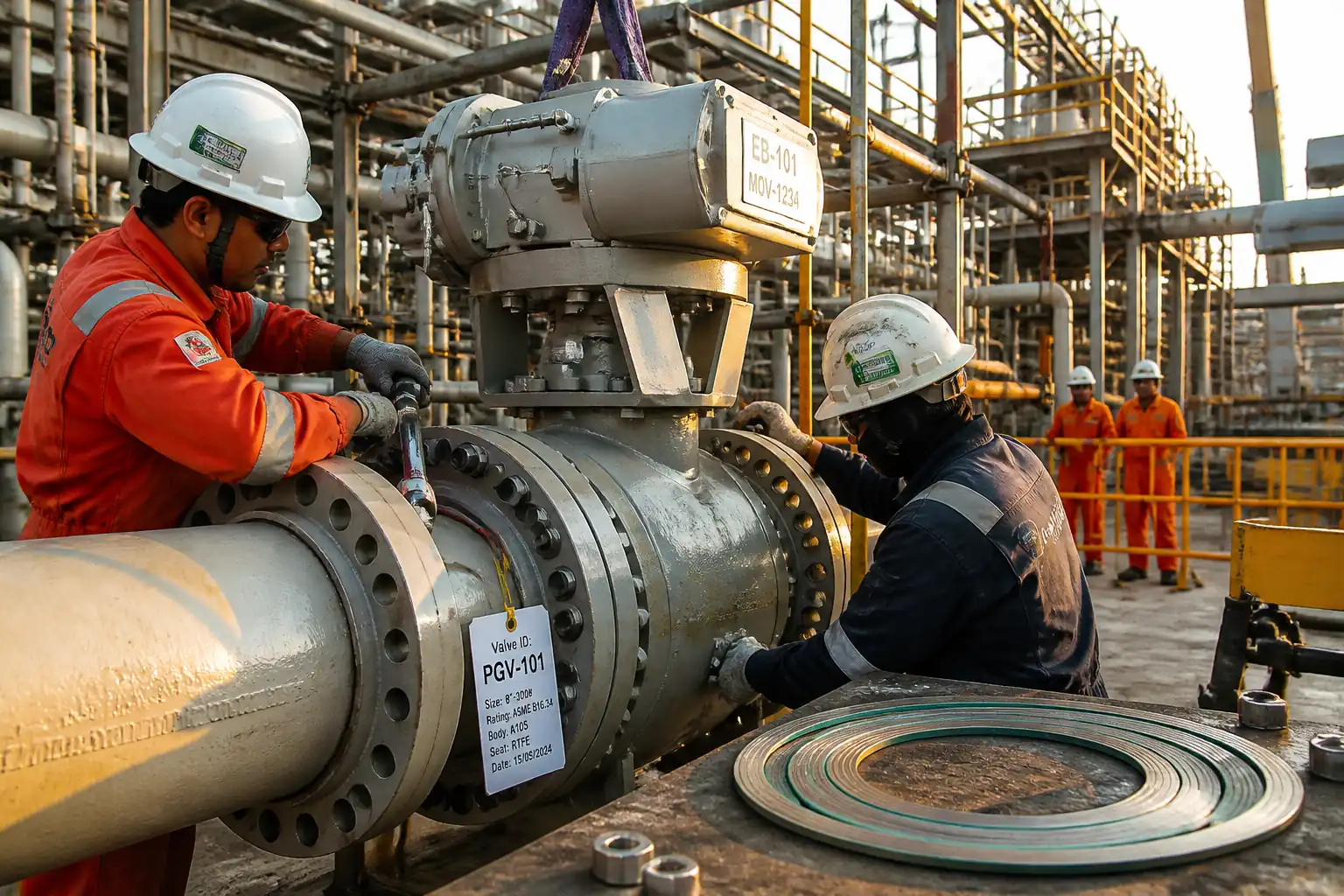
| 7 | Install positive isolations (blinds/spades) | Fit blinds per blind list with unique tags, torque bolts per ASME PCC‑1. Update blind board. Verify zero flow at bleeds after installation. | Mechanical Supervisor | HP-3 Blind inspection |
| 8 | Permit to Work activation / SIMOPS controls | Issue PTW(s): cold work for breaking containment; hot work only if authorized; lifting permits. Establish exclusion zones and fire coverage. | PTW Coordinator / HSE | Permit audit (WP) |
| 9 | Breaking containment (cold cutting preferred) | Bond/earth, set drip trays. Cold cut/remove existing spool. Capture residues; plug/blank open ends; maintain continuous gas monitoring. | Mechanical Supervisor / Fire Watch | HP-4 Before first break |
| 10 | Fit-up and alignment of new spools | Verify material traceability; conduct PMI if specified. Align to tolerances: offset ≤3 mm, gap per WPS; ensure slope on drain/vent lines per design. | Mechanical / QA-QC | WP Dimensional check |
| 11 | Welding | Execute welding per approved WPS/PQR (ASME IX). Control preheat/interpass (e.g., CS 75–150°C; SS per WPS) [Verify]. Purge SS/Alloy as required. | Welding Supervisor | WP + in-process surveillance |
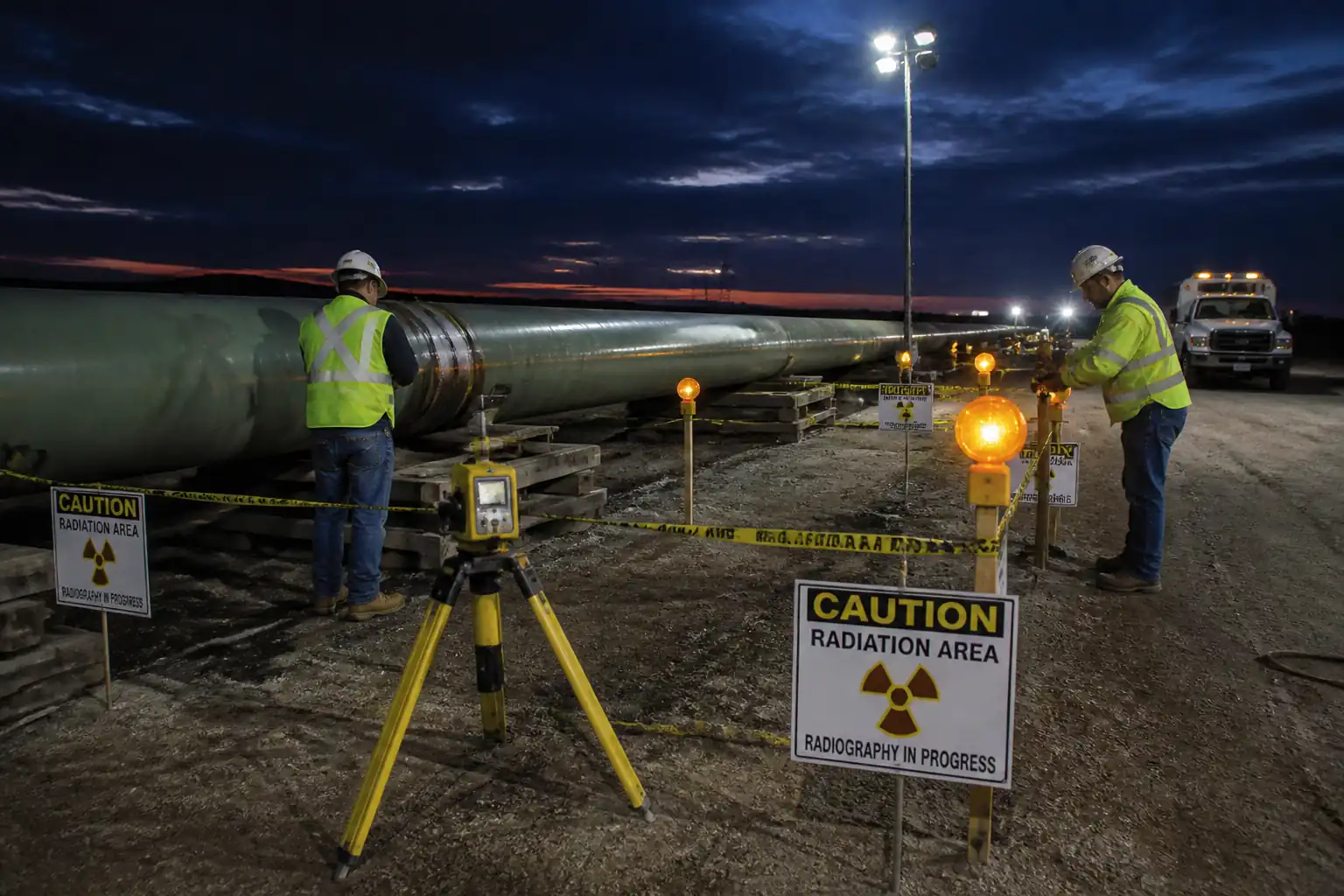
| 12 | NDE of welds and joints | VT 100%. RT/UT/PT/MT per service class: typical 10–100% based on criticality [Verify]. Hardness/ferite/replica if specified. | NDT Technician / QA-QC | HP-5 NDE release |
| 13 | Pressure test preparation | Install test blinds, temporary vents/drains, calibrated gauges (≥2), relief valve set to ≤1.1× test pressure, barricade test area, brief crew. | Hydrotest Supervisor | HP-6 Pre-test check |
| 14 | Pressure testing | Hydrotest per ASME B31.3: typically 1.5× design pressure adjusted for allowable stresses [Verify]. Hold per spec (e.g., 10 min stabilization + 30 min tightness). Pneumatic only with formal risk assessment at ~1.1× design pressure [Verify]. | Hydrotest Supervisor / QA-QC / Operations | HP-7 Test witness |
| 15 | Dewatering, drying, preservation | Drain to closed system, blow with dry air/N2 to required dew point (e.g., ≤−20°C or per process) [Verify]. Install protective caps. | Commissioning / Mechanical | WP Dryness check |
| 16 | Coating and insulation reinstatement | Surface prep per ISO 8501-1 (e.g., Sa 2.5), apply system per ISO 12944; verify DFT. Reinstall insulation with proper weather seals. | Coating/Insulation Supervisor | WP Coating inspection |
| 17 | Controlled reinstatement and blind removal | In presence of Operations, remove temporary test blinds as per sequence. Install final gaskets/bolts, torque per PCC‑1. Stepwise pressurization and leak check (soap test if applicable). | Mechanical / Operations | HP-8 Reinstatement witness |
| 18 | Support adjustment and final alignment | Verify pipe supports/springs, cold settings, and expansions; adjust as per design. | Mechanical / QA-QC | WP Support check |
| 19 | Documentation, punch closure, and handback | Compile as-builts, weld/NDE dossiers, test certificates, torque logs, coating records, LOTO and blind list closeout, punchlist A/B/C clearance. | QA-QC / Commissioning / Operations | HP-9 Final handover |
| 20 | Demobilization and housekeeping | Remove scaffolds, restore area, dispose of wastes per plan, remove barricades and signage. | Construction Manager / HSE | WP Area release |
| 21 | Emergency response (contingency) | In the event of gas detection >10% LEL, H2S alarm, or leak: stop work, evacuate to muster, isolate ignition sources, inform control room, implement ER plan. | All / HSE / Operations | Drill (as planned) |
Safety Controls
Task-Specific Hazards and Controls
1) Hazard: Residual hydrocarbons release during breaking containment
- Likely consequence: Fire/explosion, chemical exposure
- Engineering/procedural control: Positive isolation (blinds/spades) verified; DBB with open bleed; continuous gas monitoring; cold cutting preferred; bonding/earthing; drip trays and absorbents ready; firewater on standby
- Required PPE: FR coveralls, chemical-resistant gloves, goggles/face shield, anti-static safety boots, half-mask respirator (A2/P2) if indicated
- Collective preventive measure: Exclusion zone with fire watch and extinguishers (foam/dry powder) at points; no ignition sources; intrinsically safe tools
- Inspection/permit/supervision: Isolation certificate approval; PTW (cold/hot work); gas test record; supervisor and fire watch present
2) Hazard: Explosive atmosphere ignition (LEL exceedance)
- Likely consequence: Explosion, fatalities
- Engineering/procedural control: Maintain LEL <10% to proceed; stop work at ≥10% LEL; evacuate at ≥20% LEL [Verify per HSE plan]; use Ex-rated equipment; hot work ban unless specifically permitted
- Required PPE: FR clothing, intrinsically safe comms, hearing protection if alarms
- Collective measure: Fixed and portable gas detection; ignition source control; zoning and signage
- Inspection/permit/supervision: Continuous gas monitoring logs; PTW; HSE oversight
3) Hazard: Oxygen deficiency/asphyxiation from nitrogen purging
- Likely consequence: Loss of consciousness, fatality
- Engineering/procedural control: Control purge rates; vent to safe location; O2 monitoring; barriers and signage “N2 Purge – Asphyxiation Hazard”; rescue plan
- PPE: O2 monitor on person; FR clothing; harness if at height
- Collective measure: Access control and attendant; ventilation
- Inspection/permit/supervision: Gas test certificates; confined space permit if applicable; supervisor authorization
4) Hazard: Pressure testing energy release
- Likely consequence: Projectile/rupture injuries, fatalities
- Engineering/procedural control: Prefer hydrotest; pneumatic only with formal risk assessment and minimum personnel; barricade at calculated hazard radius; relief valve set ≤1.1× test pressure; remote pressurization
- PPE: Face shield, gloves, FR clothing, safety boots, hearing protection
- Collective measure: Exclusion zones and barriers; test control station
- Inspection/permit/supervision: Calibrated instruments; approved test diagram; HP witness by QA/QC and Operations
5) Hazard: Hot work (if authorized)
- Likely consequence: Fire, burns, ignition of vapors
- Engineering/procedural control: Hot work permit; pre/post fire watch (≥30 min or per spec); gas readings continuous; remove combustibles; screens and fire blankets; flashback arrestors
- PPE: FR clothing, leather gloves, face shield/welding hood, safety glasses
- Collective measure: Firewater hose and extinguishers; designated hot work area when possible
- Inspection/permit/supervision: PTW; gas test record; HSE supervision
6) Hazard: Lifting near live equipment
- Likely consequence: Dropped objects, plant damage, injury
- Engineering/procedural control: Approved lift plan; certified crane/rigging; tag lines; weather/wind limits; banksman
- PPE: Helmet with chin strap, gloves, safety boots, eye protection
- Collective measure: Exclusion zone; overhead hazard signage; tool tethering for work at height
- Inspection/permit/supervision: Pre-lift inspection; operator certification; lifting permit
7) Hazard: Confined space entry (pits, enclosed areas)
- Likely consequence: Toxic exposure, asphyxiation, entrapment
- Engineering/procedural control: Confined space permit; continuous gas monitoring; ventilation; standby attendant; rescue equipment
- PPE: Harness, retrieval line, gas monitor, FR clothing
- Collective measure: Barriers, entry log, rescue team on standby
- Inspection/permit/supervision: Permit authorization; periodic gas test; rescue plan drill [Verify]
8) Hazard: Noise/vibration from cutting and testing
- Likely consequence: Hearing loss, HAVS
- Engineering/procedural control: Time limits for vibrating tools; job rotation; maintain tools; noise mapping
- PPE: Ear plugs/muffs; anti-vibration gloves
- Collective measure: Acoustic screens; signage
- Inspection/permit/supervision: HAVS records; equipment inspection
9) Hazard: Chemical exposure from residues and coatings
- Likely consequence: Dermatitis, inhalation hazard
- Engineering/procedural control: Closed draining; MSDS review; use low-VOC systems where feasible
- PPE: Nitrile gloves, goggles, respirator as per SDS
- Collective measure: Spill kits and eyewash
- Inspection/permit/supervision: SDS available; COSHH assessments [Verify per local regs]
10) Hazard: Slips, trips, falls and working at height
- Likely consequence: Injury, fractures
- Engineering/procedural control: Proper scaffolds with toe boards and handrails; maintain housekeeping; 100% tie-off at height
- PPE: Harness and lanyard, non-slip FR boots, helmet
- Collective measure: Scafftags; fall arrest systems
- Inspection/permit/supervision: Scaffolding inspection by competent person; work at height permit where required
Note: Where exact thresholds/permit requirements vary, verify per project HSE plan and local regulations.
Environmental Controls
- Hydrocarbon management: Drain to closed systems; no open discharge. Use drip trays and absorbents during breaking containment. Dispose of contaminated materials via licensed waste contractor.
- Test water control: Use clean water; sample prior to discharge. Typical acceptance: pH 6–9, visible oil-free sheen, TSS per local consent (e.g., <30 mg/L) [Verify per permit]. Route via oily water separator if needed.
- VOC emissions: Prefer cold cutting; control venting to flare where possible. If venting to atmosphere is permitted, use elevated safe vent points and monitor LEL downwind.
- Nitrogen and air purging: Vent to designated safe locations; prevent wildlife/asphyxiation hazards with barriers and signage; avoid confined plumes.
- Noise: Adhere to site noise windows; use acoustic screens for high dB tools; monitor dB(A) if required by consent.
- Waste segregation: Metals, gaskets/bolts, coating wastes, used solvents, spent cartridges, rags managed in labeled containers. Maintain waste transfer notes and chain-of-custody.
- Soil and water protection: Spill kits staged; booms for nearby drains; cover drains during cutting/washing. Immediate containment and reporting of spills.
- Coating works: Control overspray and run-off; collect spent abrasives; comply with ISO 12944 system requirements.
- Dust and particulate: Wet methods or local extraction for cutting where safe; Ex-rated vacuums in hazardous zones.
- Environmental monitoring: Record volumes of drained product, test water, and purge gas; log any flaring or venting per Operations reporting.
QA/QC
- ITP and Hold/Witness Points: Implement ITP with defined HP/WP as listed. No advancement past HP without approvals from QA/QC and Operations.
- Material Control: Verify CMTRs to EN 10204 3.1. Heat numbers traceable to isometric weld map. PMI on alloy lines per project (typ. 10–100% on critical services) [Verify].
- Welding Control: Approved WPS/PQR per ASME IX; welders WPQ current, process/material/position matched. Record preheat, interpass, heat input. Low-hydrogen controls for CS; purging for SS/Alloy.
- NDE: Techniques and acceptance per ASME V and ASME B31.3. VT 100%. Additional NDE extent per criticality/class/service [Verify]. Calibrations current and traceable.
- Flange Management: Assemble per ASME PCC-1. Use correct gasket type/size/class; lubricate threads; apply star-pattern torque; record final torque/tension. Flange face condition checked.
- Pressure Testing: Boundaries confirmed; calibrated instruments; relief valve sized/set; hold times and pressures per ASME B31.3 and project. Pneumatic only with risk assessment and increased controls.
- Drying/Cleanliness: Verify dew point/cleanliness where specified; protect open ends with caps; foreign material exclusion (FME) controls in place.
- Coating/Insulation: Surface preparation verified (e.g., ISO 8501-1 Sa 2.5); DFT measured and recorded; cure times observed; insulation reinstated with correct jacketing and seals.
- Documentation: Maintain rev-controlled test packs including checklists, isolation and blind records, weld/NDE logs, torque logs, calibration certs, gas test logs, permits, punchlists, and handover certificates.
- Nonconformance: Log NCRs, corrective actions, and re-inspection records. Lessons learned captured for future shutdowns.
Attachments
- Typical tie-in package table of contents (index, P&IDs, isos, blind list, weld map, ITP, permits, lift plans, test packs)
- Sample blind list and tagging scheme
- Example hydrotest diagram and calculation sheet
- Example WPS/PQR summary sheet and welder matrix
- Toolbox talk template for breaking containment and pressure testing
- Emergency response flowchart for hydrocarbon release or gas alarm
This content is a read-only public reference. Download or customize to get an editable version.
ITP preview
The first inspection activities from the linked ITP for Method Statement: Tie‑In Works Inside a Live Oil & Gas Plant (Shutdown, Isolation, SIMOPS, Testing, Reinstatement):
| Activity | Inspection / Test | Acceptance Criteria | Responsibility | Record |
|---|---|---|---|---|
| Tie-in dossier and document review | Checklist/document conformity | All required documents approved, current revisions, MOC/permits in place | QA/QC Manager (C), Operations Rep (W) | ITR-00 Dossier Review Sign-off |
| Materials receipt and traceability | Visual, CMTR verification, PMI (if specified) | Materials per line class, CMTR EN 10204 3.1, PMI results acceptable | QC Inspector (C), Client/Operations (W) | ITR-MAT-01; PMI Report |
| Isolation and LOTO verification | Isolation certificate review; valve position check; bleed verification | Approved isolation certificate; DBB/Blind installed; zero energy confirmed | Operations/Isolation Authority (C), QA/QC (W) | ITR-ISO-02; LOTO Log |
Showing 3 of 13 inspection activities. View full ITP →
Related Inspection and Test Plan
An Inspection and Test Plan (ITP) is available for Method Statement: Tie‑In Works Inside a Live Oil & Gas Plant (Shutdown, Isolation, SIMOPS, Testing, Reinstatement). The ITP defines the inspection activities, acceptance criteria, hold and witness points, responsible parties, and records required to verify the work described in this method statement.
View the Method Statement: Tie‑In Works Inside a Live Oil & Gas Plant (Shutdown, Isolation, SIMOPS, Testing, Reinstatement) ITP →Frequently asked questions
Continue with related Quollnet resources connected to this method statement.