
Method Statement: Structural Performance Testing of Facade Mock-Up – Method Statement
AI-assisted method statement with matching ITP, PDF download, and Excel export.
More than a static template
Unlike a downloadable Word or PDF template, this method statement is an AI-assisted editable starting point connected directly to a matching Inspection and Test Plan. Every section is structured, project-adaptable, and ready to export.
- AI-assisted drafting — Customize every section with AI for your specific project scope.
- Linked ITP — A matching inspection and test plan is generated alongside the method statement.
- Multiple export formats — Download as a formatted PDF or editable Excel spreadsheet.
- Editable starting point, not a final document — Review, verify, and adjust all content against your project requirements before use.
Static template vs. Quollnet workflow
| Feature | Static template | Quollnet |
|---|---|---|
| Project-specific content | Manual fill-in required | AI-assisted customization |
| Linked ITP | Separate document, no link | Matching ITP included |
| Export formats | Usually PDF only | PDF and Excel |
| Structured sections | Free-form layout | 13 standardized sections |
| Saved to your account | Local file only | Cloud-saved, reusable |
| Content accuracy | You verify everything | AI-assisted, you still verify |
| Cost | Often free but time-intensive | Free to customize and download |
What you can customize
When you save this method statement to your account, every section becomes editable. The following 13 sections are included:
- Scope — Defines the activity and its boundaries.
- References — Standards, specifications, and drawings.
- Responsibilities — Roles and accountabilities.
- Resources — Labour, plant, and equipment summary.
- Materials — Materials and compliance requirements.
- Equipment — Tools and equipment details.
- Prerequisites — Hold points and pre-conditions.
- Method sequence — Step-by-step construction sequence.
- Safety controls — HSE risk controls and PPE.
- Environmental controls — Environmental mitigation measures.
- QA/QC — Quality inspection and test requirements.
- ITP — Inspection and Test Plan table (has its own page).
- Attachments — Referenced drawings and documentation.
Why this method statement is used
This method statement is used to define and communicate the approved procedure for carrying out method statement: structural performance testing of facade mock-up on site. It ensures the work is planned in advance, the correct resources and controls are in place, and all personnel understand responsibilities, sequence, quality requirements, and safety controls before work begins. It aligns site execution with the documented scope and acceptance expectations.
Who uses this method statement
This method statement is used by contractors, site supervisors, project engineers, QA/QC engineers, HSE officers, consultants, and client representatives. It serves as a shared reference for planning, execution, supervision, inspection, and approval of the activity on site.
When it is prepared and submitted
The method statement is prepared before the work activity starts and submitted as part of the pre-construction documentation package for review and approval.
Who reviews or approves it
The method statement is usually submitted to the client representative, consultant, resident engineer, or project management consultant for review and approval before the work commences.
Important approval note
This method statement is an AI-assisted editable starting point, not a pre-approved document. Before use on any project, all content must be reviewed and approved by the relevant parties (superintendent, principal contractor, or client representative) in accordance with your contract and project quality plan.
For example: if your specification requires a departure from a referenced standard, that departure must be documented and approved separately — this method statement will not capture that automatically. Always verify against your applicable drawings, specifications, and regulatory requirements.
Method statement content
Scope
Overview
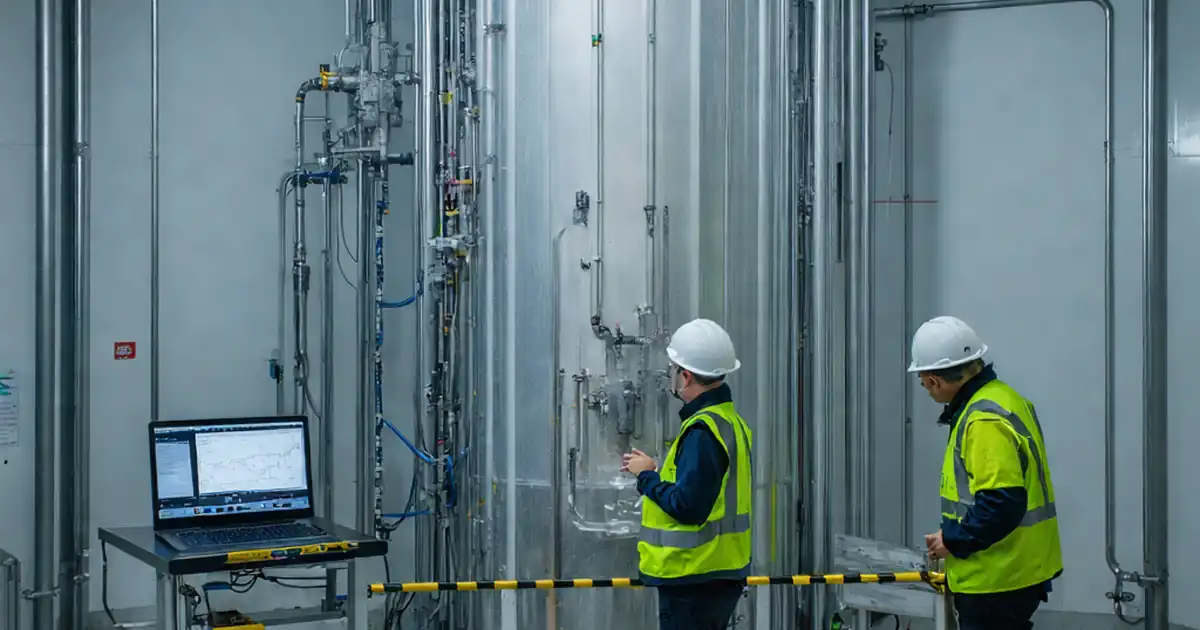
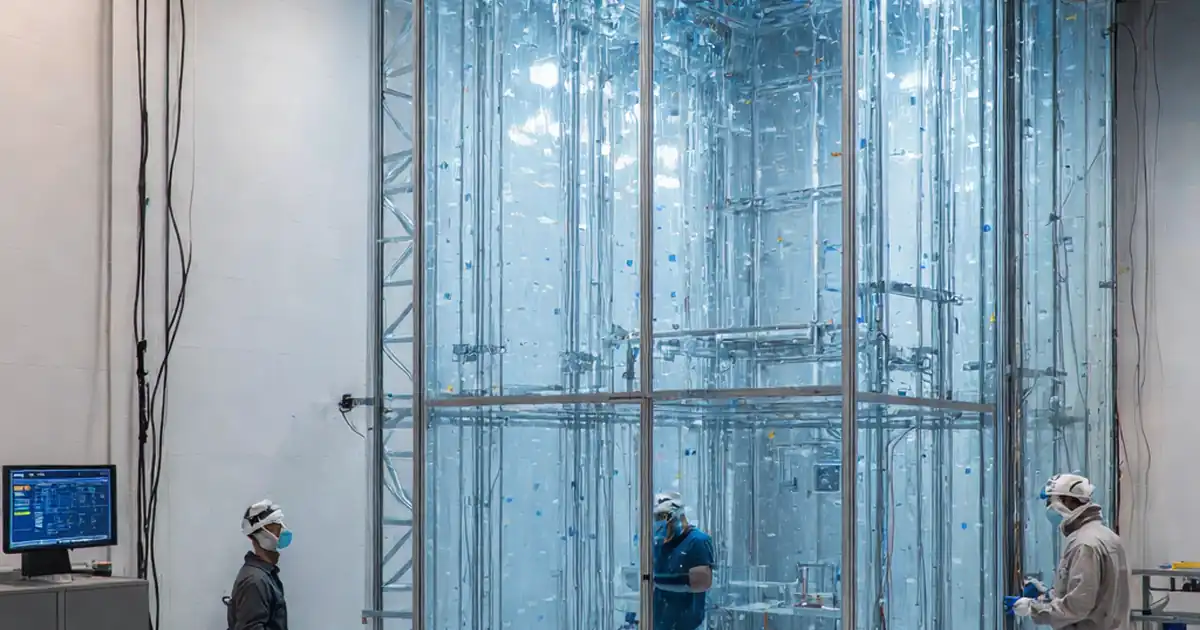
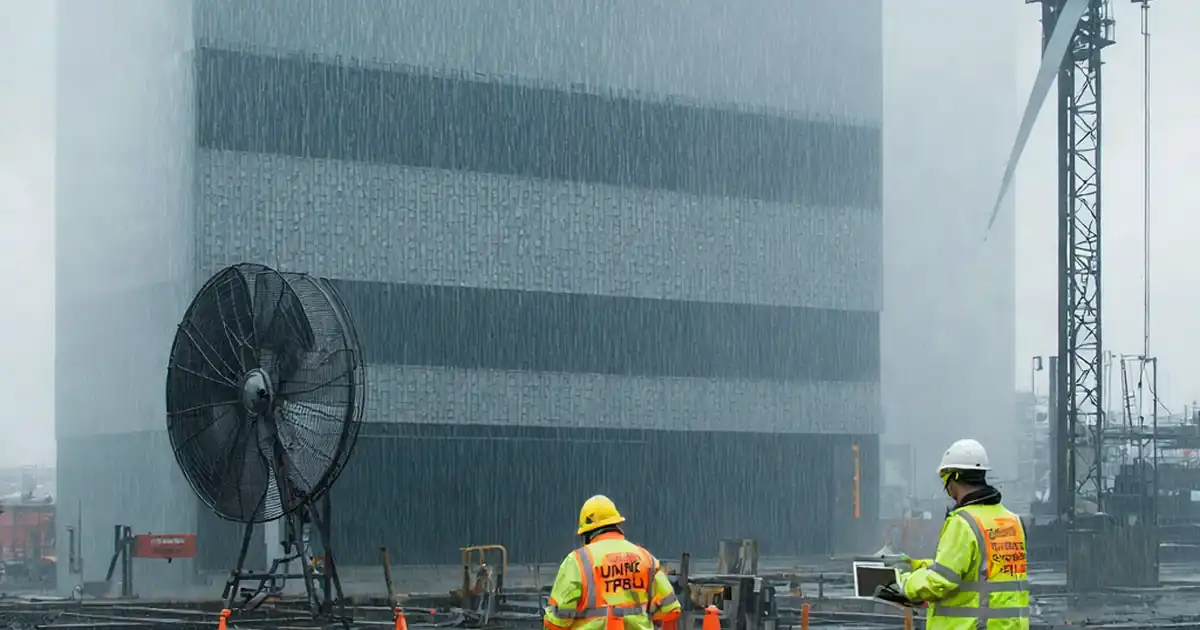
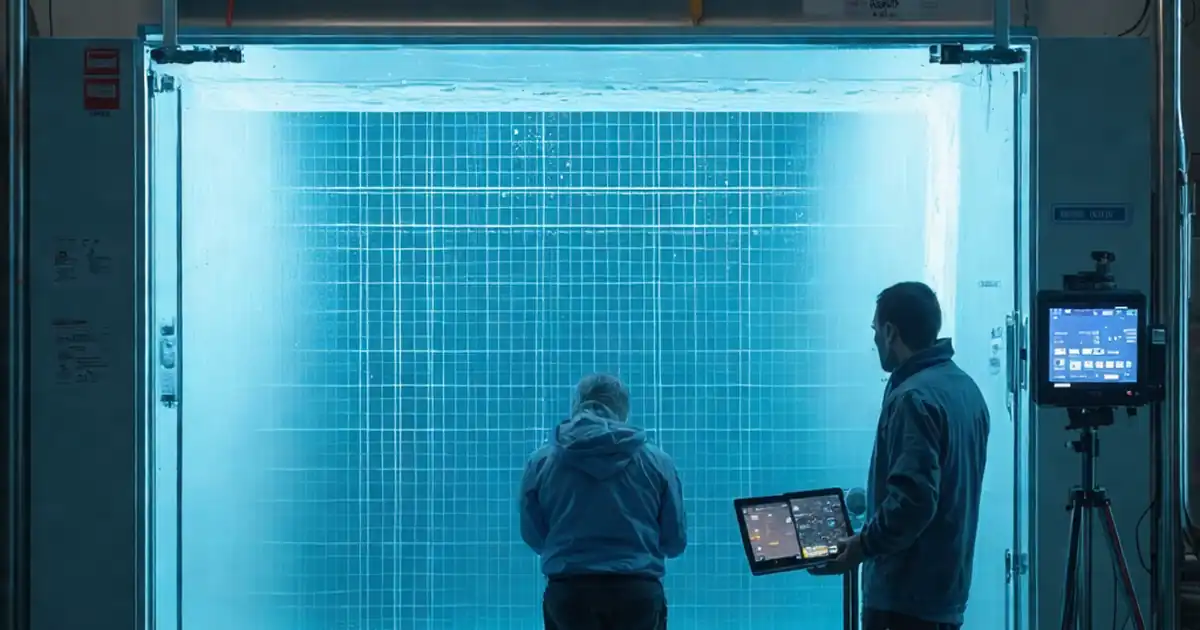
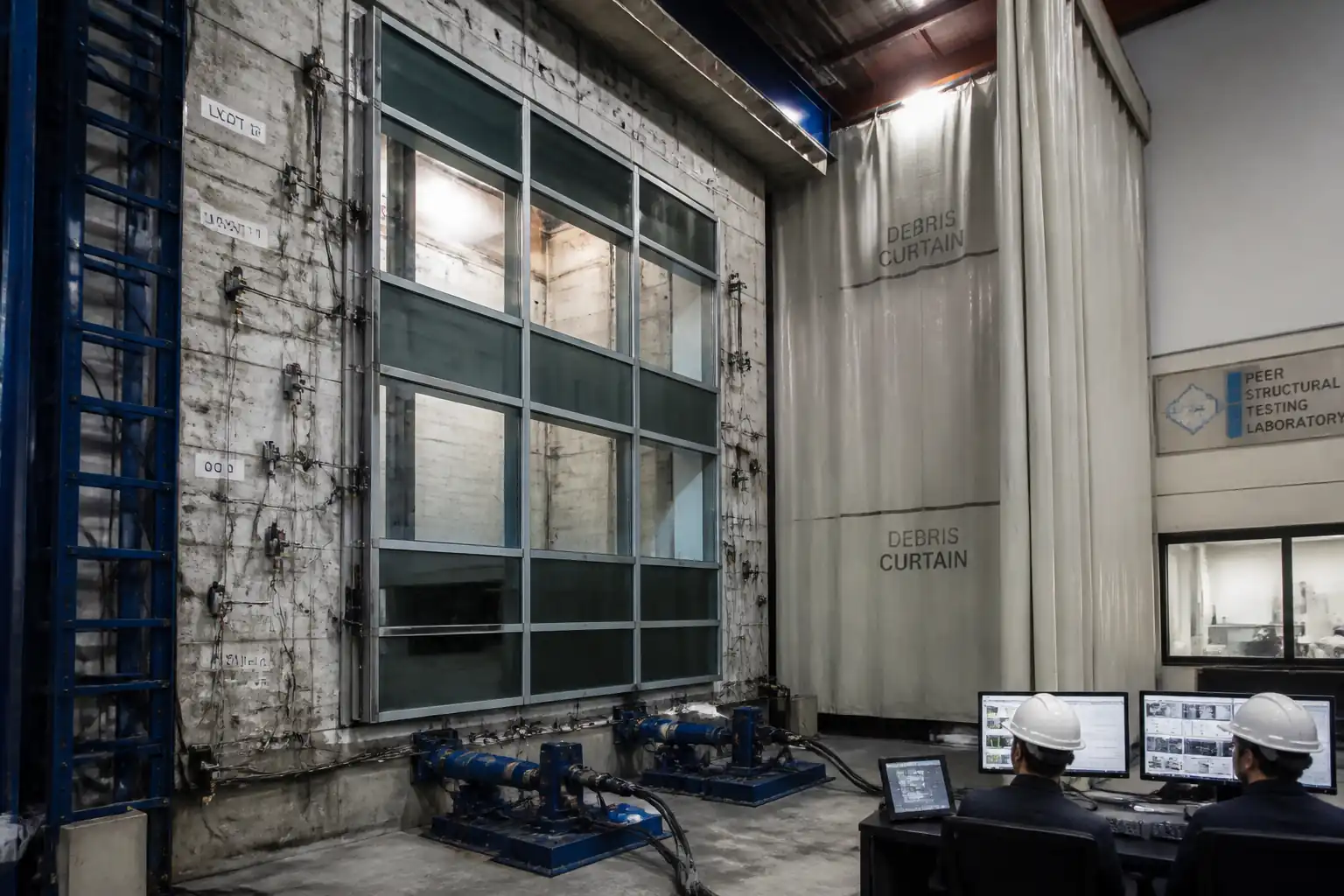
This method statement defines the procedures, acceptance criteria, resources, QA/QC, and HSE controls for structural performance testing of a full-scale facade/curtain wall mock-up. Testing includes:
- Wind load simulation (static positive and negative pressure)
- Deflection measurement of framing members and panels
- Glass stress/strain measurement and verification
- Anchor/insert pull-out and failure mode characterization
- In-plane cyclic movement (racking/seismic simulation)
- Failure mode observation and documentation
- QA/QC record compilation and ITP hold/witness sign-offs
Location & Conditions
- Testing to be performed in an accredited laboratory or controlled test yard with a calibrated pressure chamber and servo-hydraulic equipment. Environmental conditions (temperature, humidity) to be logged. [Verify per project specifications]
Exclusions
- Air and water penetration tests unless specifically added by the contract (e.g., ASTM E283/E331 or EN 12153/12155).
References
| Document Type | Reference / Number | Revision | Notes |
|---|---|---|---|
| Standard | ASTM E330/E330M - Structural Performance of Exterior Windows, Doors, Skylights and Curtain Walls by Uniform Static Air Pressure Difference | Wind load simulation and deflection/strength evaluation [Verify applicability] | |
| Standard | EN 13116 - Curtain walling: Resistance to wind load; EN 13830 - Curtain walling Product standard | European equivalent acceptance framework [Project to nominate governing code] | |
| Standard | AAMA 501.4 - Recommended Static Racking Test Method for Curtain Walls; AAMA 501.6 - Recommended Dynamic Seismic Drift Causing Inter-Story Movement | Cyclic racking/seismic simulation regime and acceptance | |
| Standard | ASTM E488/E488M - Strength of Anchors in Concrete and Masonry Elements (test methods) | Anchor pull-out/proof load and failure mode characterization | |
| Standard | ACI 318 (Anchoring to Concrete) & ACI 355.2 (Qualification of Post-Installed Mechanical Anchors) | Design and qualification framework for interpretation of anchor test outcomes | |
| Standard | ASTM E1300 - Determining Load Resistance of Glass in Buildings | Glass stress/strength verification under applied pressure [Analytical acceptance] | |
| Standard | ISO/IEC 17025 - General requirements for competence of testing and calibration laboratories | Lab competence and instrument calibration traceability | |
| Guideline | AAMA 501/501.1/501.2 Series (general facade test guidance) | Supplemental procedural guidance [If specified] |
Responsibilities
| Role | Responsibility | Name / Party |
|---|---|---|
| Contractor Test Manager | Overall implementation, coordination, and compliance with method statement and ITP | Main Contractor |
| Lead Test Engineer | Develop test plan, instrumentation layout, run tests, analyze data, prepare report | Accredited Test Laboratory |
| Engineer/Consultant Representative | Witness hold points, verify compliance vs specs and codes, approve results | Engineer |
| Facade Subcontractor | Ensure mock-up fabrication, materials, anchors, and installation per approved drawings | Specialist Subcontractor |
| HSE Supervisor | Site-specific risk assessment, permits, emergency plan, toolbox talks, HSE monitoring | Main Contractor |
| Instrumentation Engineer | Calibration verification, sensor installation, data acquisition integrity, backups | Test Lab |
Resources
| Resource Type | Description | Quantity | Remarks |
|---|---|---|---|
| Organization | 1 | With pressure chamber and racking rig | |
| Personnel | 1 Lead + 2–4 Technicians [Verify] | Experienced in facade testing | |
| Personnel | 1 | NEBOSH or equivalent [Verify] | |
| Personnel | 3–6 [Verify] | Qualified installers for mock-up build |
Materials
| Material | Specification / Grade | Quantity | Remarks |
|---|---|---|---|
| Curtain wall framing (mullions, transoms, brackets) | Alloy grade, temper, and finish per contract [Verify] | ||
| Glazing units | Make-up per drawings; interlayers per design [Verify] | ||
| Anchors/inserts/fasteners | Type/grade (e.g., A4-70 SS), qualified per ACI/ETA [Verify] | ||
| Sealants and accessories | Compatible systems; ETAG/EAD approvals where required [Verify] |
Equipment
| Equipment | Capacity / Type | Quantity | Inspection Required |
|---|---|---|---|
| Pressure chamber with variable-speed fans or vacuum system | Up to design pressure + safety margin (e.g., ±6 kPa to ±10 kPa) [Verify] | Pre-test leak/functional check | |
| Pressure transducers and manometers | Accuracy ≤ ±1% of reading [Verify] | Calibration within 12 months | |
| Deflection gauges | Range 0–50 mm or as required; accuracy ±0.1 mm [Verify] | Calibration certificates | |
| Strain measurement system | Gauge factor verified; DAQ 24-bit; temp-compensated [Verify] | Calibration shunt check | |
| Anchor pull-out tester with load cell | Up to 2.0× expected failure load; displacement LVDT | Load cell calibration within 6 months | |
| Racking/seismic simulation frame | Stroke to achieve up to 2.5% story drift [Verify] | Pre-test functional check | |
| DAQ system and synchronized video/photography | Min 50 Hz logging; time-synced to pressure/actuator channels | Time sync verification | |
| Safety barriers and debris containment | Rated for glass fragment containment [Verify] | Pre-test setup inspection |
Prerequisites
Submittals and Approvals
- Approved shop drawings and mock-up assembly drawings.
- Test plan and instrumentation layout approved by Engineer.
- Risk assessment and method statement (RAMS) approved by HSE and Engineer.
- Calibration certificates (ISO/IEC 17025 traceable) for all sensors and load cells.
- Material certificates for glazing, framing, anchors, and sealants.
Mock-Up Preparation
- Fabricate mock-up per approved drawings, including anchorage details, splices, and operables if applicable.
- Install glazing, gaskets, sealants, and all intended components using production methods.
- Cure times respected for sealants/adhesives per manufacturer datasheets [Verify].
Utilities and Environment
- Stable power supply for fans/actuators/DAQ with UPS for data integrity.
- Ambient temperature and humidity recorded at start/end of each test series.
Hold Points (No Work Beyond Without Approval)
- HP1: Pre-test readiness review: mock-up vs drawings; instrumentation; calibration; HSE controls in place.
- HP2: Wind pressure test plan confirmation (test pressures, durations, deflection points).
- HP3: Cyclic racking amplitude protocol and fixture verification.
- HP4: Anchor pull-out test setup verification (reaction frame, load path, safety shield).
- HP5: Post-test inspection and acceptance review prior to demobilization.
Permits and Briefings
- Pressure system operation authorization and isolation plan.
- Toolbox talk covering glass breakage, pressurization hazards, and exclusion zones.
- Emergency response plan and first-aid provisions. [Verify per project HSE plan and local regulations]
Method Sequence
| Step | Activity | Description | Responsibility | Inspection / Hold Point |
|---|---|---|---|---|
| 1 | Pre-test inspection and dimensional verification | Verify mock-up geometry, anchor installation, sealant cure, and glazing fit vs approved drawings. Mark deflection measurement points and strain gauge locations. | Lead Test Engineer / Facade Subcontractor | Visual check; measure key spans (±2 mm) and panel squareness (±3 mm) [Verify] |
| 2 | Instrumentation installation and calibration check | Install pressure transducers, LVDTs/lasers, strain gauges on representative mullions/transoms and selected glass lites. Configure DAQ channels, sample rate ≥ 50 Hz, time sync to video. | Instrumentation Engineer | Shunt calibration; zero readings; cable strain relief; gauge adhesion cured |
| 3 | Chamber integrity and leak check | Mount mock-up to chamber, seal per lab protocol, and perform low-pressure leak check to ensure stable pressure control. | Lead Test Engineer | Stabilization at ±0.2 kPa for 2 min |
| 4 | Wind serviceability test (ASTM E330 / EN 13116) | Apply uniform static pressure difference to specified service test pressure P_s (positive and negative). Ramp in increments (25%, 50%, 75%, 100%) with 60 s hold at P_s. | Lead Test Engineer | Monitor deflections at pre-defined points; inspect glazing and seals during hold |
| 5 | Wind strength test (ASTM E330) | From zero, apply pressure to ±1.5 × P_s (or as specified) with 10 s hold at peak. After unloading, record permanent set. | Lead Test Engineer | Visual check for permanent deformation, glass cracking, hardware distress |
| 6 | Glass stress/strain verification | Under service and/or strength pressure plateaus, record strains on selected glass surfaces using bonded gauges or optical sensors. Compute stresses using modulus and thickness. | Instrumentation Engineer | Verify temperature compensation and gauge factor |
| 7 | Anchor pull-out/proof test (ASTM E488) | Set up reaction frame; apply load normal to substrate at specified rate. Conduct: (a) proof load test at 1.25–1.5 × service tension (hold 60 s); (b) ultimate test to failure on sacrificial anchors to document failure mode. | Lead Test Engineer | Measure displacement vs load; monitor substrate condition |
| 8 | Cyclic racking/seismic simulation (AAMA 501.4/501.6) | Impose in-plane displacements per approved protocol (e.g., drift ratios 0.25%, 0.5%, 0.75%, 1.0%, 1.5%, up to 2.5% as specified), in cycles at each level. Inspect during/after cycles. | Lead Test Engineer | Monitor anchorage, glazing bite, gaskets, and operable functions |
| 9 | Post-test inspection and failure mode documentation | Detailed visual and tactile inspection. Document cracks, permanent set, fastener distress, sealant cohesion/adhesion, frame yielding/buckling. Collect samples if required. | Lead Test Engineer / Facade Specialist | Checklist-based survey; dye penetrant/visual aids as needed |
| 10 | Data analysis and reporting | Compile calibrated data, plots, and calculations. Compare measured responses against acceptance criteria and design predictions; prepare certificate of compliance or NCRs. | Lead Test Engineer | Internal technical review and QA sign-off |
Health, Safety, and Environment — Safety Controls
Hazard Controls (Task-Specific)
- Hazard: Pressurization of chamber (implosion/explosion risk)
- Consequence: Sudden failure causing debris ejection, injury/fatality
- Engineering/Procedural Control: Certified chamber; pre-test integrity and leak checks; automatic over-pressure relief; pressure ramps with interlocks; exclusion zone with rigid barriers
- Required PPE: Safety helmets with face shields, cut-resistant gloves, safety footwear, hearing protection
- Collective Preventive Measure: Physical blast shields/debris nets; remote control station during peak loads
-
Inspection/Permit/Supervision: Pre-test permit to pressurize; daily checklist; supervision by Lead Test Engineer; [Verify per project HSE plan and local regulations]
-
Hazard: Glass breakage and falling fragments
- Consequence: Lacerations, eye injuries
- Engineering/Procedural Control: Safety film on non-critical panes where allowed; debris curtains; restrict personnel access; stop-test triggers on acoustic/pressure anomalies
- Required PPE: ANSI Z87.1/EN 166 eye protection, cut-resistant sleeves and gloves, long sleeves
- Collective Preventive Measure: Rated containment curtains around test face
-
Inspection/Permit/Supervision: Pre-test inspection of glazing edges; HSE Supervisor to verify barriers
-
Hazard: Hydraulic/racking actuator failure or sudden movement
- Consequence: Crush injuries, structural collapse of rig
- Engineering/Procedural Control: Load path verification; mechanical stops; software travel limits; lock-out/tag-out during setup
- Required PPE: Hard hat, safety boots, gloves
- Collective Preventive Measure: Interlocked guarding around actuators
-
Inspection/Permit/Supervision: Functional checks; calibration verification; permit-to-work for energization
-
Hazard: Anchor pull-out testing under high load
- Consequence: Projectile components, reaction frame instability
- Engineering/Procedural Control: Secure reaction frame to substrate; proof shields; use rated components; keep line-of-fire clear
- Required PPE: Face shield, gloves, safety footwear
- Collective Preventive Measure: Physical barriers and exclusion perimeter
-
Inspection/Permit/Supervision: Setup sign-off (HP4); load cell calibration check; HSE oversight
-
Hazard: Electrical hazards from DAQ, fans, pumps
- Consequence: Shock, fire
- Engineering/Procedural Control: PAT-tested equipment; RCD protection; cable management; dry environment
- Required PPE: Dielectric gloves where needed, standard PPE
- Collective Preventive Measure: Distribution boards with RCDs, spill control to prevent water ingress
-
Inspection/Permit/Supervision: Electrical inspection tags; competent electrician available
-
Hazard: Noise (>85 dB(A)) during high fan speeds
- Consequence: Hearing loss
- Engineering/Procedural Control: Noise assessment; limit exposure time; remote monitoring
- Required PPE: Hearing protection (SNR/NRR adequate)
- Collective Preventive Measure: Acoustic barriers where feasible
-
Inspection/Permit/Supervision: Dosimetry spot checks
-
Hazard: Manual handling and component lifting
- Consequence: Musculoskeletal injuries, crush
- Engineering/Procedural Control: Use lifting frames, slings with edge protection; team lifts; certified operators for MEWPs/cranes if used
- Required PPE: Gloves, safety footwear, helmets
- Collective Preventive Measure: Exclusion zones; tag lines
-
Inspection/Permit/Supervision: Lifting plan and equipment certification review
-
Hazard: Chemical exposure (sealants/adhesives/solvents)
- Consequence: Dermatitis, respiratory irritation
- Engineering/Procedural Control: Use manufacturer’s SDS; ventilation; correct mixing and cure times
- Required PPE: Nitrile gloves, goggles, respirator if indicated by SDS
- Collective Preventive Measure: Local exhaust or outdoor setup away from intakes
-
Inspection/Permit/Supervision: COSHH/chemical permit; SDS available onsite
-
Hazard: Slips, trips, and falls around test rigs/cables
- Consequence: Injury
- Engineering/Procedural Control: Cable trays, matting, housekeeping; anti-slip footwear
- Required PPE: Safety footwear
- Collective Preventive Measure: Marked walkways; illumination >300 lux
- Inspection/Permit/Supervision: Daily housekeeping inspection
Health, Safety, and Environment — Environmental Controls
- Waste Glass and Metal: Collect in labeled, rigid containers; recycle where facilities exist; do not compact laminated glass mechanically. Waste transfer notes retained.
- Noise: Schedule high-noise tests during permitted hours; use acoustic screens; provide hearing protection. [Verify per local regulations]
- Dust/Fragments: Debris curtains and sweeping with HEPA vacuums; no dry sweeping of glass fines.
- Oils/Hydraulic Fluids: Drip trays under hydraulic equipment; spill kits available; immediate cleanup and reporting.
- Energy Use: Optimize test cycles and fan speeds; shut down non-essential loads between tests.
- Chemical Handling: Store sealants/adhesives in bunded area; dispose of cartridges per SDS.
- Water (if any cooling/cleaning): Prevent discharge to storm drains; use designated washdown area.
QA/QC
Acceptance Summary
- Wind Serviceability: Deflections within specified limits (e.g., L/175 members; absolute limit 19–25 mm) [Verify per project specifications]. No damage/impairment.
- Wind Strength: No glass breakage or loss of structural integrity; residual set within specified limit.
- Glass Stress: Measured stresses under test loads within ASTM E1300-derived capacity for load duration; safety margin per spec.
- Anchors: Proof load without excessive displacement or damage; ultimate capacity and failure mode consistent with design assumptions.
- Cyclic Racking: No loss of anchorage or glazing retention; no glass fallout; operables functional after cycling.
Test Frequency
- Minimum one full-size mock-up per facade system type and major variant; additional mock-ups upon significant design/material change. [Verify]
Calibration and Traceability
- All instruments with current ISO/IEC 17025 calibration; field verification (zero/shunt) recorded pre- and post-test.
Documentation
- Checklists, calibration certs, raw data files (CSV), plots, photographs/video, nonconformance reports, and certificate of compliance signed by Engineer.
Hold/Witness Points
- HP1 Pre-test readiness; HP2 Wind test plan; HP3 Racking protocol; HP4 Anchor test setup; HP5 Post-test review.
Nonconformance
- Any deviations trigger NCR; root cause analysis and corrective action plan; re-test as directed by Engineer.
Attachments
- Approved shop drawings and mock-up assembly details
- Test plan and risk assessment (RAMS)
- Calibration certificates (pressure transducers, LVDTs, load cells, DAQ)
- Material certificates (glass, frames, anchors, sealants)
- Pre-test checklists and dimensional survey sheets
- Raw data files (CSV) and synchronized video/photo archive
- Final test report and certificate of compliance
- Nonconformance reports (if any) and corrective actions
This content is a read-only public reference. Download or customize to get an editable version.
ITP preview
The first inspection activities from the linked ITP for Method Statement: Structural Performance Testing of Facade Mock-Up:
| Activity | Inspection / Test | Acceptance Criteria | Responsibility | Record |
|---|---|---|---|---|
| Pre-test documentation and calibration review | Verify certificates (ISO 17025), expiry dates, and sensor ranges | All equipment within calibration; ranges adequate for target loads | Lead Test Engineer / Engineer Representative | ITP checklist; calibration register |
| Mock-up dimensional verification | Measure key spans and panel alignments | Within approved drawing tolerances [Verify] | Lead Test Engineer / Facade Subcontractor | Dimension log; as-built sketch |
| Instrumentation installation/zeroing | Shunt/zero checks; DAQ time sync | Stable baseline; drift within ±0.1 mm over 10 min | Instrumentation Engineer | Zero log; time-sync record |
Showing 3 of 10 inspection activities. View full ITP →
Related Inspection and Test Plan
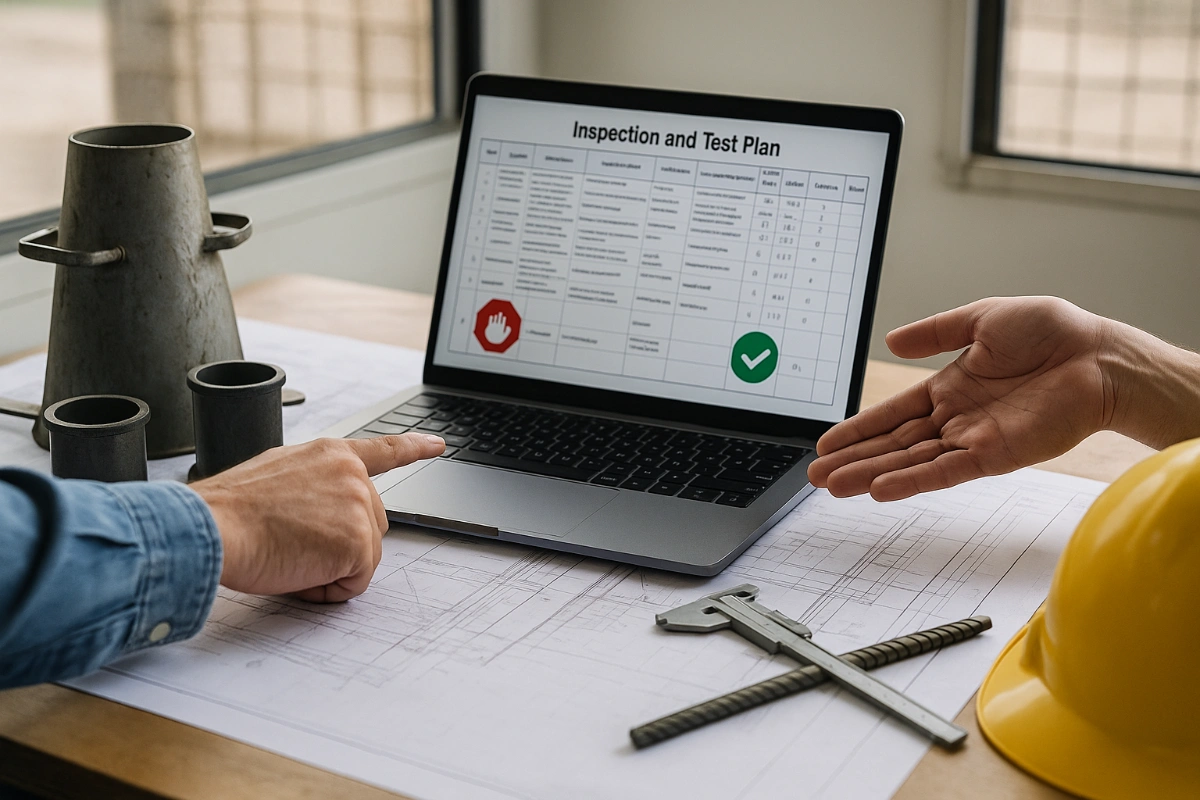
An Inspection and Test Plan (ITP) is available for Method Statement: Structural Performance Testing of Facade Mock-Up. The ITP defines the inspection activities, acceptance criteria, hold and witness points, responsible parties, and records required to verify the work described in this method statement.
View the Method Statement: Structural Performance Testing of Facade Mock-Up ITP →Frequently asked questions
Continue with related Quollnet resources connected to this method statement.